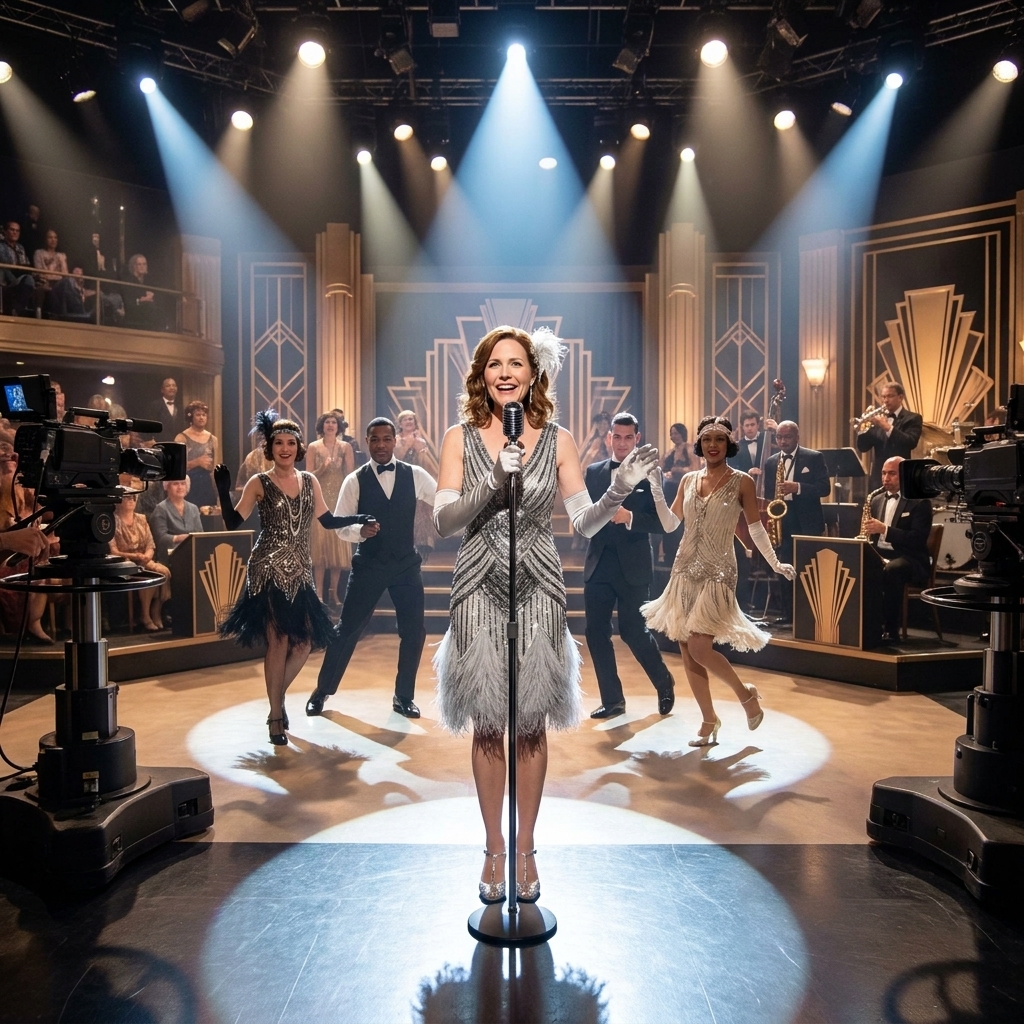
There is a particular thrill to watching a beloved Broadway musical cross the footlights and land on the movie screen. It is like seeing an old friend under new lighting. Sometimes you notice details you never caught from the mezzanine. Sometimes you miss the electricity of sharing a room with a thousand people holding their breath at the same time.
Great stage-to-film adaptations do not try to “film the show.” They re-compose it. They ask the central question: what does this story want to do with a camera that it could not do from the proscenium stage? To answer it, filmmakers tend to make three big, consequential choices: they reshape pacing, rethink the physical world, and recalibrate vocals for a microphone instead of the back row.

Pacing: applause vs. a cut
Onstage, time has texture. You feel scene changes, you feel the band inhale, you feel the moment a performer waits for laughter or rides the swell of applause. Film does not have that built-in breathing room. A movie musical has to create rhythm through editing, camera movement, and the placement of songs like stepping-stones rather than showstoppers.
How film speeds up
Successful adaptations often tighten the connective tissue. That does not necessarily mean fewer songs, although cuts are common. It means fewer pauses that exist primarily to accommodate theatre logistics. A staircase that takes a full minute to climb onstage can become a single cut. A scene change that needs a blackout and crew can become a glide through a hallway.
- Montage replaces scene change. Film can compress time with a few images and a musical phrase, where theatre often needs a transitional beat to move scenery.
- Intercutting creates simultaneity. A stage musical typically commits to one playing space at a time. Film can show us what is happening across town, across the street, or across someone’s mind.
- Close-ups do emotional fast forwarding. Onstage, you build an arc through sustained performance energy. On camera, a tiny shift in the eyes can do what a full-body moment does in a house.
Case: Les Misérables (2012)
The stage version of Les Misérables has a famously propulsive structure already, but theatre momentum is different from cinematic momentum. Tom Hooper’s film leans into forward motion by keeping the camera close, sometimes uncomfortably so, and by letting scenes bleed into songs with minimal reset.
What that buys you is a sense of inevitability. The story does not pause to let you clap, because in this world, no one is clapping. The plot rolls like weather. When it works, it makes the tragedy feel less like a series of set pieces and more like a current you cannot swim against.
Case: West Side Story (1961 vs. 2021)
The 1961 West Side Story has the sheen and formality of its era, with dance sequences often framed in a more classical, presentational way. Steven Spielberg’s 2021 version, while reverent, treats pacing as something physical. The camera moves like another dancer, and editing becomes percussion.
Crucially, the 2021 film also uses pacing to clarify social geography. You do not just know the Jets and Sharks are feuding. You feel where they live, where they run, and where they cannot safely stand still.
Sets: metaphor vs. lived-in
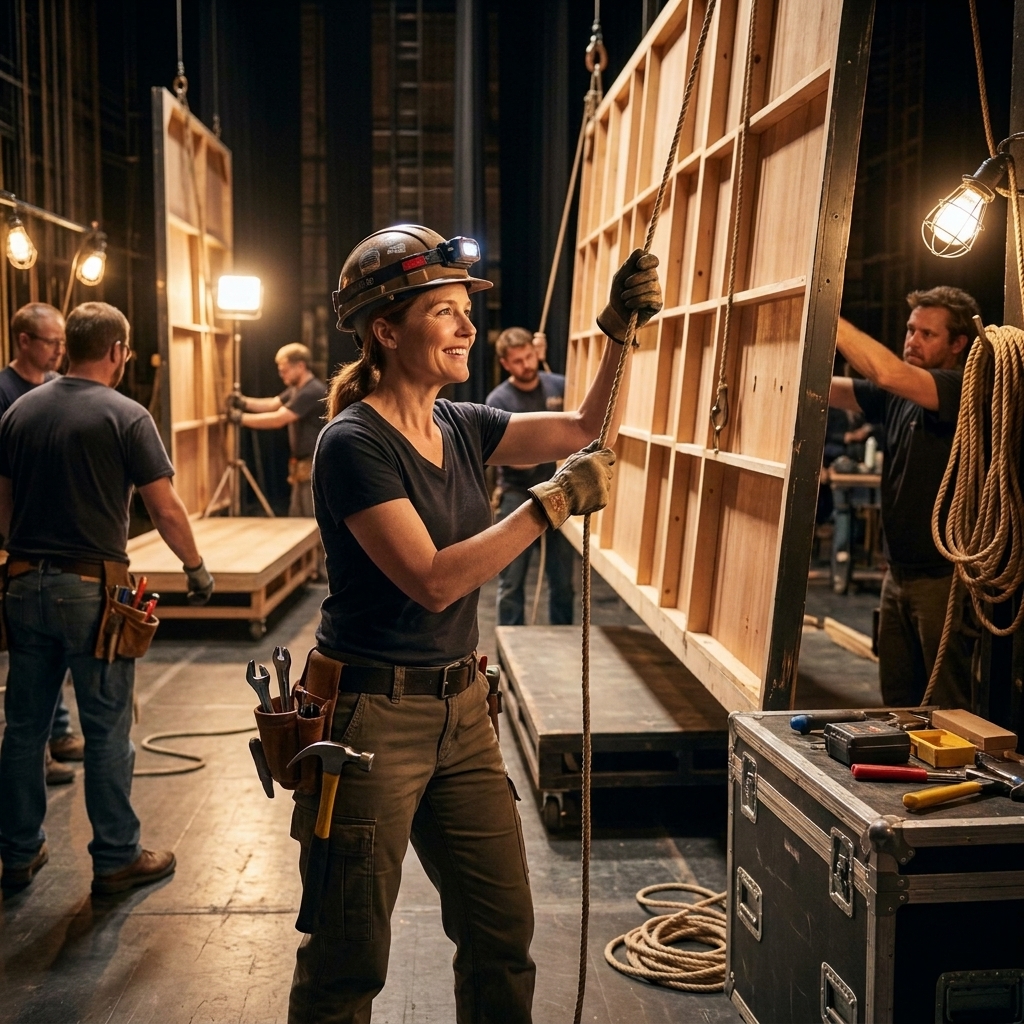
One of my earliest backstage memories is watching a set crew transform a stage with the confidence of magicians who want you to know the trick and still be delighted. Theatre design often celebrates theatricality: suggestive walls, symbolic architecture, bold color choices that read from 80 feet away.
Film asks for a different kind of faith. Even stylized movie musicals usually need a world that can withstand a close-up. The camera is not sitting in Row K. It is on the table with you. Which means the big question becomes: do we expand the stage world into realism, or do we build a cinematic version of theatrical metaphor?
Les Misérables: texture as politics
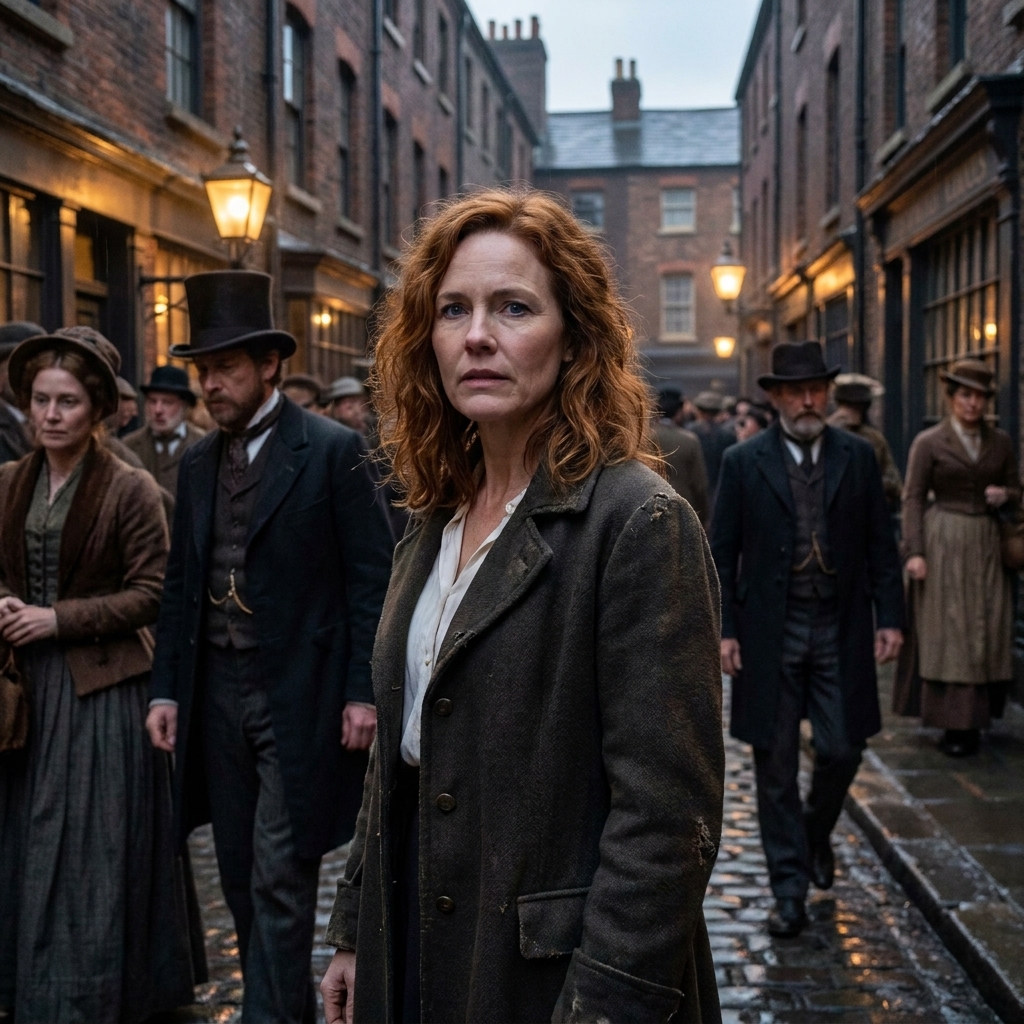
In the theatre, Paris can be conjured with a turntable, a barricade, and a lighting cue that makes your imagination do the rest. The 2012 film chooses texture as its argument. You get the churn of a factory room, the damp press of narrow streets, the grime that clings to cuffs, the hard shine of metal in the docks and barricade work. It is not abstract suffering. It is tactile.
This realism does two things. First, it grounds the epic scale in physical strain. Second, it makes the story’s moral questions feel less like grand opera and more like a neighbor’s crisis unfolding on your block.
West Side Story (2021): design as choreography
Spielberg’s adaptation treats New York not just as setting but as dance partner. The production design and locations create kinetic lanes for movement: alleys that funnel bodies, stairwells that turn into percussion instruments, storefronts that frame ensembles like living murals.
Where a stage production may rely on abstracted blocks and platforms to create a playground for choreography, the film uses real architecture to raise the stakes. Concrete is harder than a Marley floor (the sprung vinyl dance surface many stages use). A fire escape is not a metaphor. It is a height you can fall from.
What bigger sets can cost
Here is the trade-off theatre people quietly understand: bigger worlds can make emotions feel smaller. In a theatre, a single spotlight can turn an empty stage into a confession booth. In film, if you are not careful, the beauty of the environment competes with the clarity of the feeling.
The most successful adaptations compensate by designing for the camera’s intimacy. They use lived-in detail, yes, but they also build visual focus. Doors frame faces. Windows create silhouettes. Corridors guide your eye to the decision that matters.
Vocals: belt vs. lens
If you have ever sat close enough to see a performer’s breath catch on a difficult note, you know how much of musical theatre is athletic. Stage vocals are engineered for projection, clarity, and stamina. They are also designed to ride an orchestra that is physically in the room.
Film changes the entire equation. Microphones can capture a whisper. The camera can make a small sound feel seismic. But that sensitivity comes with its own demands: consistency, emotional truth at close range, and an ability to sing without the protective mask of stage technique dominating the moment.
Les Misérables (2012): live capture, then the mix
One of the most discussed choices in the 2012 Les Misérables film was capturing many of the vocals live on set, with performers listening to a guide track via earpieces and the results shaped further in post-production. Artistically, the goal is obvious: prioritize performance over polish. A character can sob, inhale, and fracture a phrase in a way that feels like real-time emotional decision-making.
When it works, it is devastating. The camera becomes your seatmate, and the voice becomes interior monologue. When it does not, the audience can feel how exposed a human voice is without the stage’s acoustic support and without the smoothing hand of a fully studio-built performance. Live capture magnifies everything: bravery, vulnerability, and every wobble that distance might forgive.
West Side Story (2021): modern vocal storytelling
By contrast, the 2021 West Side Story emphasizes vocal clarity that serves character and narrative. The singing feels shaped for a cinematic mix, where orchestration, ambience, and voice are woven rather than stacked. The result is often less big moment and more inside the moment, which suits a film that is constantly asking you to read faces.
The smartest vocal choices in movie musicals are rarely about volume. They are about intention. A sustained note onstage can be a banner you wave for the back row. On film, that same note can read as insistence, desperation, or defiance depending on how the camera holds it.
The casting question
Every stage-to-screen musical, whether it says so or not, answers a casting question: are we hiring stage voices, film actors who sing, or performers who can truly do both? There is no universally correct answer. There is only the answer that matches the movie’s chosen language.
- If the film leans operatic, powerhouse vocals can feel like destiny.
- If the film leans naturalistic, a quieter, speech-adjacent vocal approach can feel more honest.
- If the film leans stylized, the best performers can switch modes, singing for the mix while still moving like theatre lives in their bones.
What makes adaptations work
When a movie musical hits, it is usually because it embraces what each medium does best instead of forcing one to impersonate the other. Theatre is communion and shared risk. Film is intimacy, control of perspective, and the ability to sculpt time.
The adaptations that become true cinematic hits tend to do a few craft-forward things consistently.
They choose a point of view
A stage musical can be generous, letting your attention roam. A film has to decide what you are looking at and why. The best adaptations establish a visual grammar early and stick to it, whether that means restless handheld urgency or classical, storybook framing. In practical terms, that might look like committing to close-ups during confessions, then pulling wide only when the community swallows the individual.
They treat dance as story
Choreography on film can become too edited, too chopped up to appreciate as movement. Or it can become too museum-like, photographed from a distance that keeps it nice. The sweet spot is when the camera participates without stealing credit, capturing full bodies when it matters and cutting closer only when it deepens the narrative.
They protect the emotional map
You can cut songs, reorder scenes, even change locations, and still keep the heart intact if you preserve the emotional architecture: who wants what, when the want becomes need, and where the story breaks open. Think of it as a map of pressure points. Change the streets if you like, but do not move the earthquakes.
They rewrite the book, not just the runtime
Pacing is not only about shortening. Film adaptations often reshape dialogue and scene structure to suit realism, to clarify motivation, or to take advantage of what the camera can reveal without words. Sometimes a stage monologue becomes a look across a room. Sometimes a joke that lands with stage timing needs a different setup when it is living inside a cut.
They respect the soundtrack as storytelling
Sound design and mixing are not just technical polish in a movie musical. They are part of the narrative. Where theatre gives you one shared acoustic reality, film can change the rules mid-number: pull the orchestra back like memory, bring footsteps forward like threat, or let a voice sit dry and close so it feels like a thought you are overhearing.
For a clean example of how flexible the form can be, consider Chicago (2002), which turns stage vaudeville into cinematic subjectivity. It does not pretend the characters are literally breaking into song in a courtroom. It makes the numbers the way they live in Roxie’s head, and the camera follows that logic without apology.
Will you love the movie?
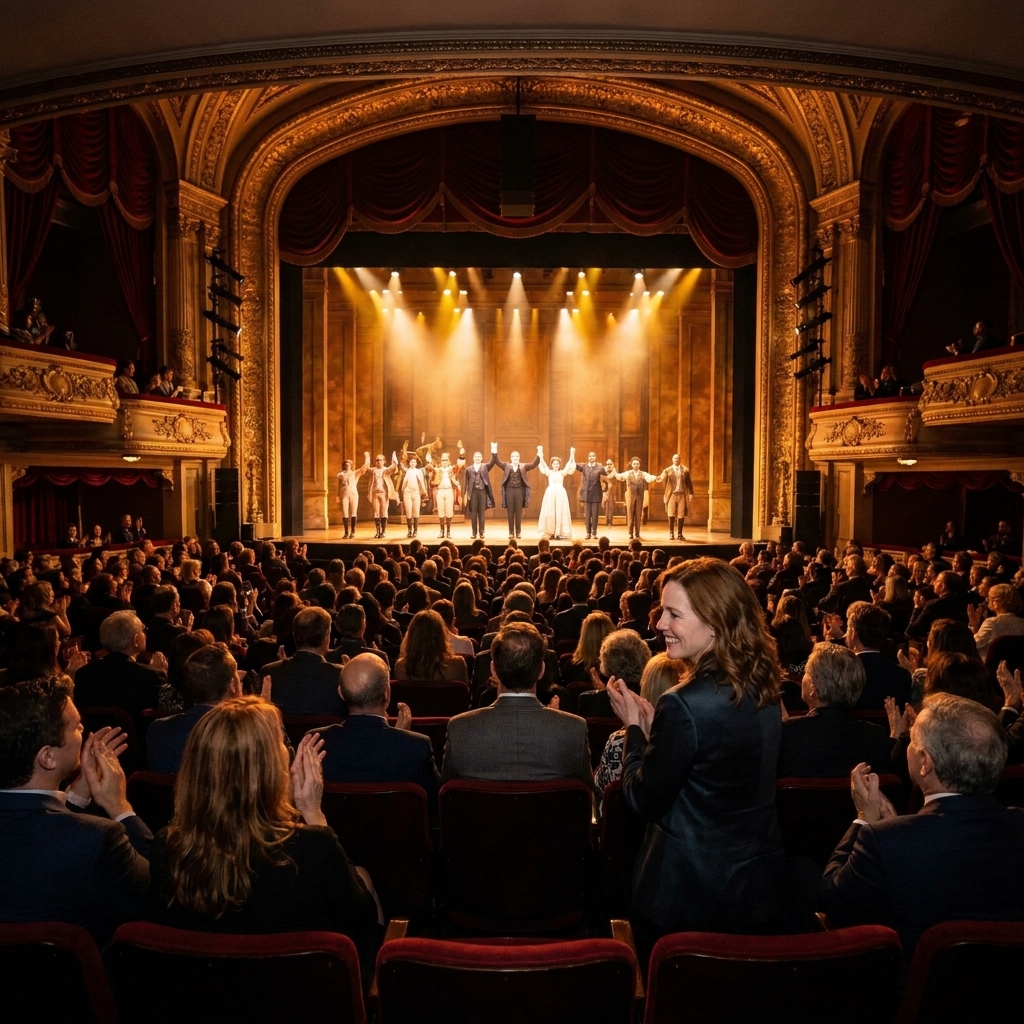
Possibly, but not always for the reasons you expect. Loving the stage version often means you carry a private, perfect production in your head, complete with the exact tempo of the overture and the way the spotlight hit the lead on the line that made you cry.
A film adaptation asks you to trade that memory for a new kind of closeness. Instead of the charge of liveness, you get the privilege of proximity: the tremor in a hand, the decision to look away, the tiny laugh that never made it to the balcony.
My advice, as someone who reads the whole playbill and stays for the credits: go in ready to be surprised. Judge the film by its own fluency. And if a particular choice makes you miss the stage, that is not failure. That is just proof the original did its job and left a mark.
Quick takeaways
- Pacing: Theatre builds in applause and transformation time. Film replaces that with editing rhythm, intercutting, and close-ups that accelerate emotion.
- Set design: Theatre often uses metaphor and bold readability. Film often expands into texture and location realism, then has to work to keep emotional focus.
- Vocals: Stage singing prioritizes projection and stamina. Film singing prioritizes intention, microphone intimacy, and performance detail that holds up in a close shot.