I learned early, watching my relatives build worlds backstage in Chicago, that a “great audience” is not a silent, perfectly still audience. It is an audience that can actually be there. Sensory-friendly performances, sometimes called relaxed performances, are one of the most practical, humane ways theaters and presenters make that possible.
If you have ever skipped a show because you worried about sudden loud sounds, strobe lighting, crowded lobbies, or the pressure to sit perfectly still and quiet, this is the kind of performance designed to meet you halfway, without watering down the art.
The short definition
A sensory-friendly performance is a scheduled performance of a play, musical, concert, dance piece, film, or live event that makes intentional adjustments to reduce sensory overload and relax certain audience expectations. Common changes include lower sound levels, gentler lighting cues, and more flexible audience behavior, such as being allowed to move, make noise, or step out if needed.
These performances are most often created with autistic audience members and people with sensory processing differences in mind, but they can be helpful for many others, including people with anxiety, PTSD, migraines, or young children experiencing live performance for the first time.
What changes
Every venue does this a little differently, so check the event listing and the venue’s accessibility page for specifics. If anything is unclear, a quick call to the box office can save you an uncomfortable surprise. In general, sensory-friendly performances tend to adjust the experience in three main areas: sound, lighting, and audience norms.
Sound
- Lower overall volume, especially for sudden spikes like gunshots, thunder, slams, or amplified transitions.
- Reduced “surprise” audio, which can mean softening certain effects, trimming them, or giving clear warnings.
- More predictable sound design where possible, with fewer abrupt cues aimed purely to startle.
Lighting
- Reduced strobe and flashing effects, or strobe removed entirely for that performance.
- Some level of house light in the audience, which might mean partially on throughout, or slightly up for key moments, depending on the venue.
- Smoother transitions and fewer sudden blackouts when feasible.
Behavior and environment
- Freedom to move, stand, or shift seats, depending on the venue’s policy.
- Vocalizations are accepted, including happy sounds, self-regulation, or spontaneous reactions, as long as everyone is safe.
- Stepping out is expected, and re-entry is often allowed. Some venues limit re-entry to certain moments or ask an usher to help you return between scenes.
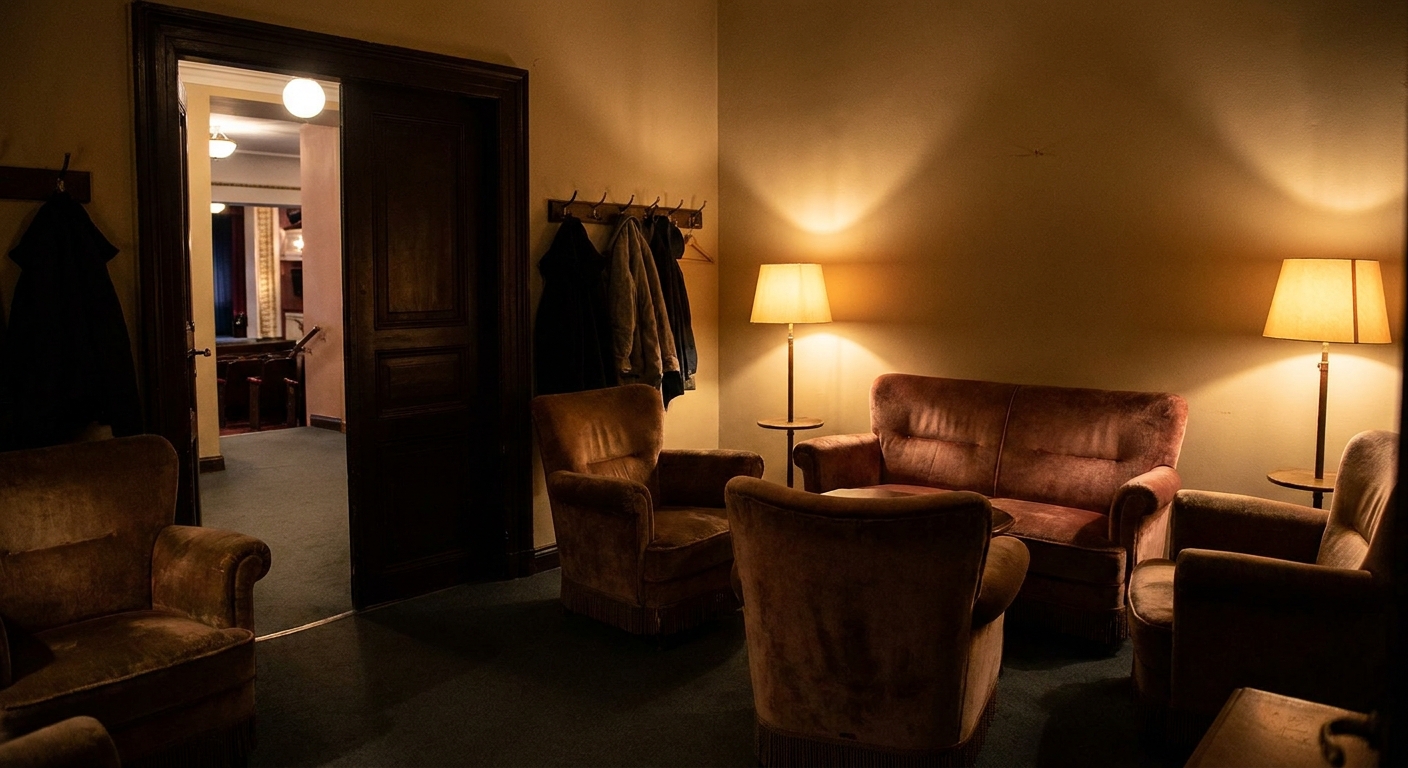
- Chill-out spaces or quiet rooms may be available for breaks.
- Front-of-house staff may be briefed for the relaxed environment, but training and practices vary. When in doubt, ask what supports are in place.
Who they are for
These performances are often described as being for autistic people, but in practice they serve a wider community. Sensory-friendly and relaxed performances can be a strong fit for:
- Autistic audience members and autistic families.
- People with sensory processing differences, including heightened sensitivity to sound, light, texture, or crowding.
- People with anxiety, panic disorder, or agoraphobia who benefit from a lower-pressure audience environment.
- People with PTSD who may be triggered by sudden loud cues or blackouts.
- People prone to migraines or sensory-triggered headaches.
- Parents and caregivers bringing children who are still learning “theater etiquette.”
- Anyone who loves performance but wants fewer barriers at the door.
One important note: sensory-friendly performances are not about making the audience “less engaged.” They are about making engagement possible in different bodies and nervous systems.
How they differ
A standard performance often assumes a few things: darkness in the house, big sound and light moments hitting at full force, and an audience that stays seated, quiet, and still. Many people love that tradition. Sensory-friendly performances loosen it.
- Standard: Sudden loud effects and dramatic lighting shifts are common tools for impact. Sensory-friendly: Those tools are often softened, reduced, removed, or flagged in advance.
- Standard: Leaving your seat can feel disruptive or even forbidden once the show starts. Sensory-friendly: Breaks and movement are welcomed, and re-entry is commonly allowed, sometimes with timing rules.
- Standard: Silence is treated as the highest form of respect. Sensory-friendly: Respect also includes letting people self-regulate and react in ways that are not silent.
Sensory-friendly does not mean “anything goes.” Venues still aim for a safe, welcoming environment. The difference is that the expectations are clearer, kinder, and more flexible.
Sensory vs physical access
This is where people understandably get crossed wires. Sensory access and physical and communication access can overlap, but they are not interchangeable.
Physical and communication access focuses on…
- Wheelchair seating and companion seats
- Step-free entrances, elevators, and ramps
- Accessible restrooms
- Assistive listening devices
- Sightline accommodations
Sensory-friendly planning focuses on…
- Sound level and sound effects intensity
- Flashing lights and house lighting
- Permission to move, make noise, or take breaks
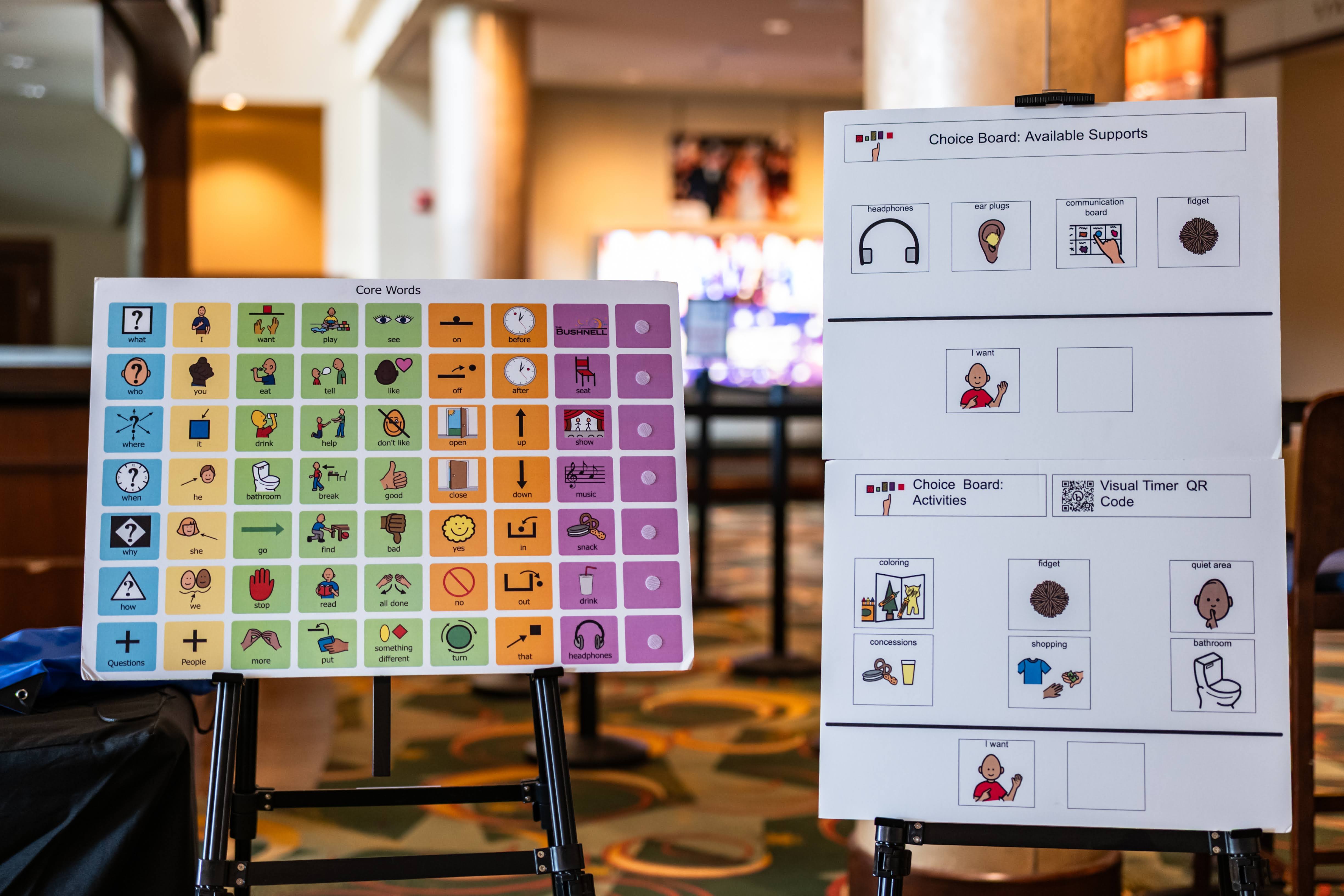
- Predictability tools like social stories or “what to expect” guides
- Reducing crowd stressors in lobbies and entry lines when possible
A venue can be physically accessible and still be sensory-hostile. A venue can offer a sensory-friendly performance and still have physical barriers. The best presenters actively work on both.
What to expect
If you have never been to a sensory-friendly performance, the easiest way to picture it is this: the art is still the art, but the room is more forgiving.
Before the show
- You may see signage that explicitly welcomes movement and sound.
- Some venues offer a visual guide to the space, a “what to expect” page, or a short description of intense moments.
- Staff may be briefed to help without escalating or embarrassing anyone, but practices vary by venue.
During the show
- The house may not go fully dark, or it may only go fully dark in certain scenes.
- Sound cues may feel less sharp or less booming.
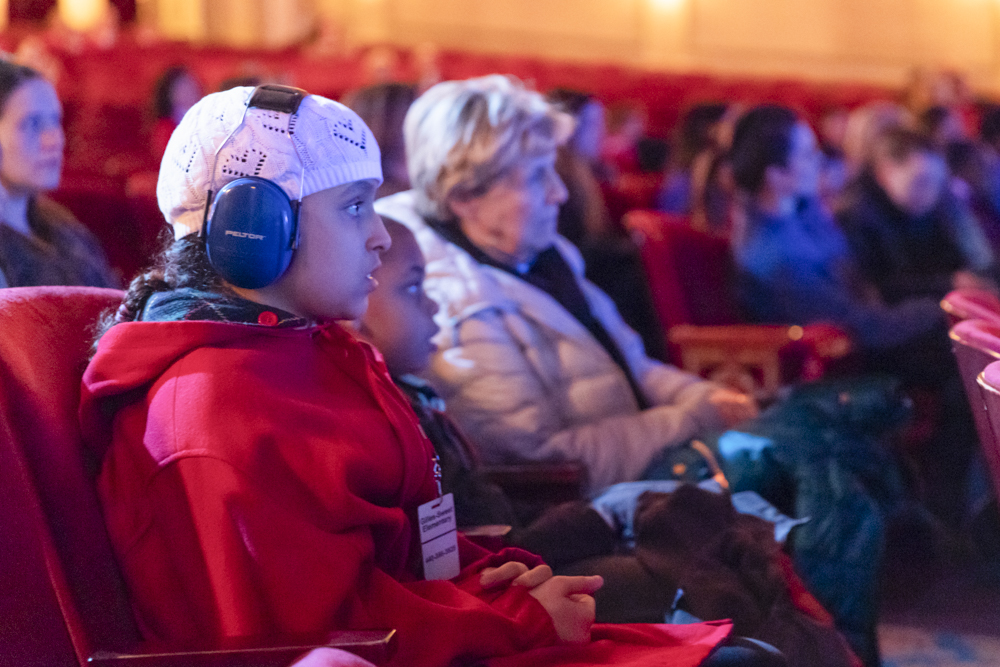
- You may notice people standing near aisles, using fidgets, wearing headphones, or stepping out and back in.
- Some venues set aside designated movement areas or flexible seating zones, especially for family programs.
After the show
Some venues keep the exit flow calmer, or allow a little extra time for patrons who prefer not to join a dense crowd immediately. If there is a talkback, it may be structured with clearer expectations and gentler pacing.
How to find them
Terms vary, so you may see different language in calendars and ticketing pages. When you are scanning listings, look for:
- Sensory-friendly performance
- Relaxed performance
- Autism-friendly performance (sometimes used, though it may not capture everyone served)
- Access performance (sometimes a catch-all label, but it can also mean captions, ASL, or audio description only, so confirm what is included)
If a listing is vague, call the box office and ask very specific questions. You are not being difficult. You are gathering basic information the way someone else might ask about sightlines or legroom.
Questions to ask
Not every sensory-friendly performance includes the same supports. These questions tend to get you real, usable answers:
- Will there be strobe or rapid flashing lights in this performance?
- Will the house lights stay partially on throughout, or only in certain moments?
- Are there any sudden loud sounds (bangs, alarms, gunshots, thunder)? Can you share approximate timing?
- Will there be haze, fog, smoke effects, or strong scents (including incense, aerosols, or scent machines)?
- Is re-entry allowed if we need a break? If yes, is it anytime, or only at certain moments?
- Is there a quiet space or designated area for decompression?
- Is seating assigned or flexible for this performance? Are there aisle-seat options or a low-traffic section?
- Is there a designated movement area or a spot where standing is least disruptive?
- Do you allow noise-reducing headphones, fidgets, snacks, or comfort items?
- What are the late seating rules? If we arrive after curtain, when can we be seated?
Tips for a smoother night
Sensory-friendly performances are already built to reduce friction, but a little planning can turn “possible” into “genuinely enjoyable.”
- Pick an aisle when you can, so stepping out feels simple, not like a parade past knees.
- Time your arrival based on what stresses you most. Some people prefer early entry before the lobby fills; others aim to miss the busiest window. Just check late seating rules so you do not get stuck waiting.
- Bring what helps: ear defenders, sunglasses, a fidget, a comfort item, a small snack, or a favorite sweater, within venue policy.
- Preview the story if surprises are hard. Knowing plot beats can free you up to focus on the craft.
- Use the break before you “need” it. A two-minute reset can prevent a full overload spiral.
FAQ
Are sensory-friendly performances only for kids?
No. Plenty of adults prefer them, and not just parents. Sensory needs do not expire at 18, and neither does the desire to see great theater, dance, comedy, or concerts.
Will performers change the show?
Usually the script, choreography, and staging stay the same. The most common changes are technical (sound and lighting levels) and front-of-house practices (flexible movement, re-entry policies, quiet spaces). In some cases, a director may adjust a particularly intense moment for that performance.
Is it okay if someone makes noise or needs to move?
Yes. That is the point of the relaxed environment. Venues still aim for safety and consideration, but the baseline expectation is that different bodies will experience the performance out loud and in motion.
Do sensory-friendly performances include captions or ASL?
Sometimes, but not automatically. Captions, ASL interpretation, and audio description are separate access services. If you need them, look for those labels specifically or ask the box office.
If I do not have sensory sensitivities, should I avoid these performances?
Not necessarily. If you are comfortable with a more flexible audience environment, you may find it refreshingly human. If you strongly prefer a quiet, traditional setting, choose a standard performance instead so everyone has the experience they are looking for.
The bigger picture
I am always moved by how small adjustments can open a door that used to feel bolted shut. Sensory-friendly performances are not a “special” version of art. They are a reminder that the point of performance is communion. A room that welcomes more kinds of listeners, movers, and feelers is not lowering the bar. It is widening the circle.