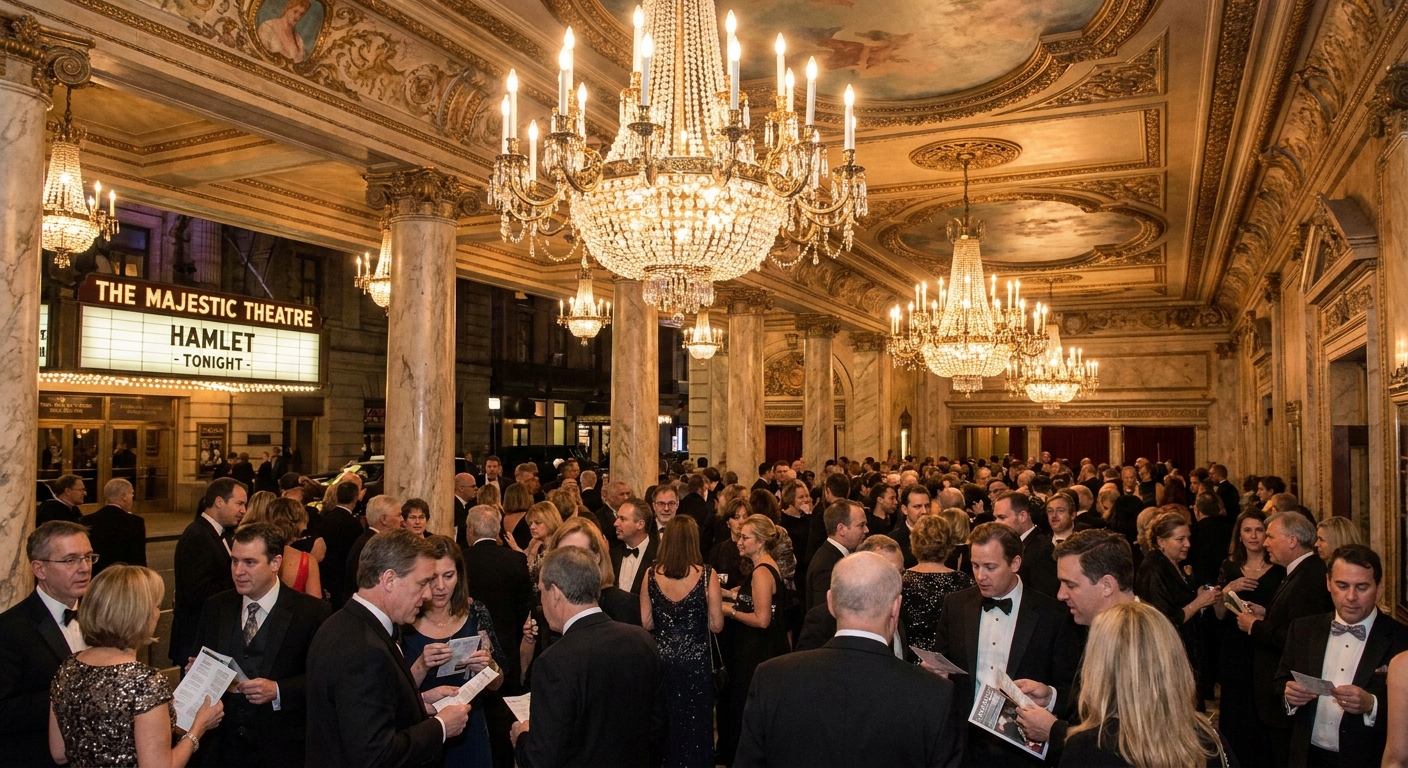
There are two kinds of theatergoers: the ones who flip through the program because it is there, and the ones who treat it like a backstage pass. If you have ever wondered why the person next to you seems to know everything before the first line is spoken, the answer is usually simple. They read the program like it is part of the show.
A theater program is a map of the night. It tells you who is making the work, how the production is built, and what traditions and rules are shaping what you are about to see. Once you know where to look, even the sponsor pages start to feel like clues about a theater’s ecosystem.
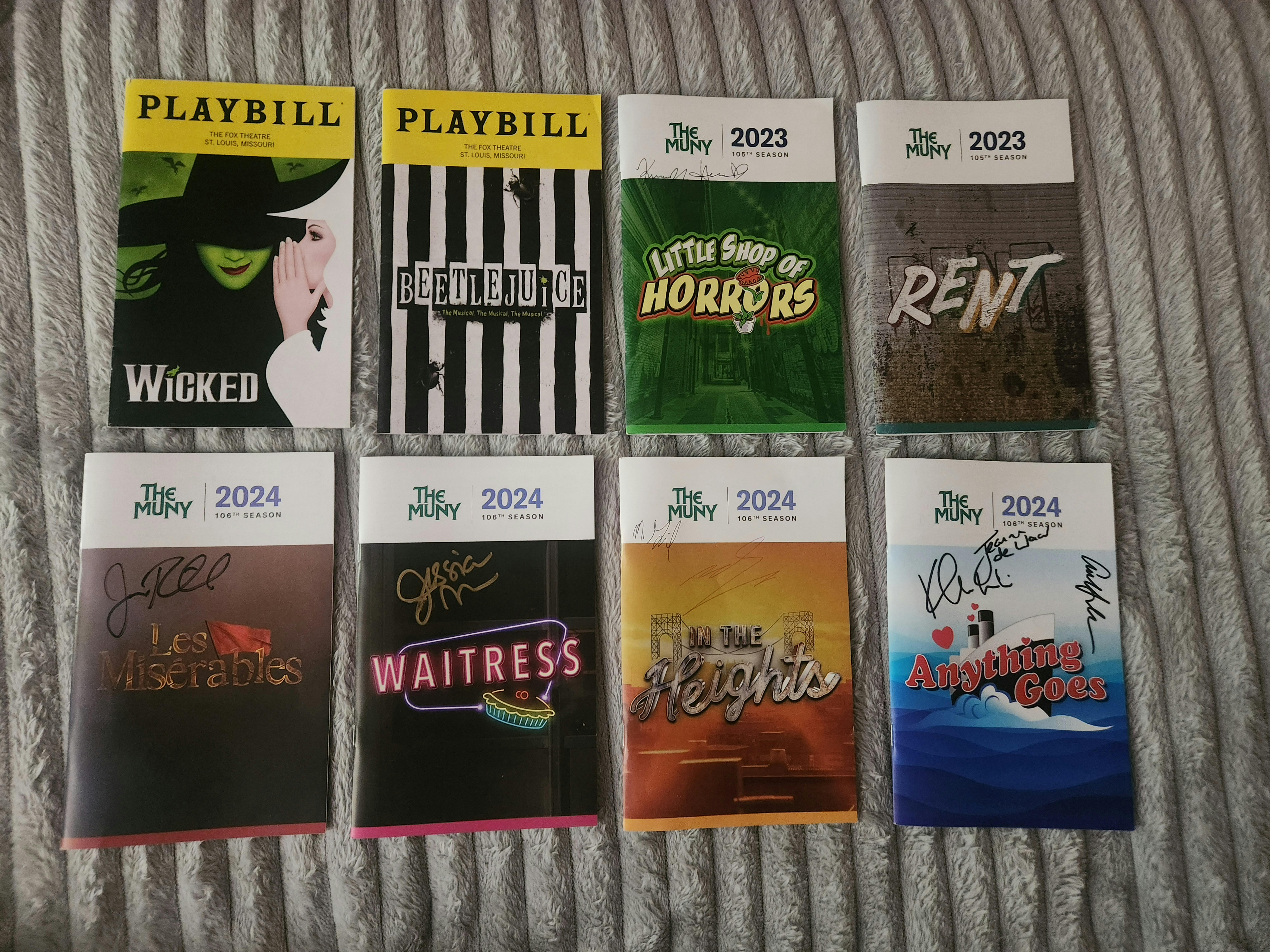
What a program is
In most venues, “the program” means the printed booklet you receive at the door or pick up in the lobby. On Broadway, people often call it a Playbill. Playbill is a branded program magazine used by many Broadway theaters, and by some tours and other venues as well. (Some productions also use other program providers.)
One more point that clears up a common confusion: in many Broadway houses, the Playbill is free, and a separate, glossy souvenir program is sold at the merchandise stand.
Whether it is a magazine, a stapled booklet, a single folded sheet, or a QR code linking to a digital program, the core purpose stays the same: credit the artists and contextualize the production for the audience.
Cover and title page
The front pages usually tell you the basics: the show title, venue, producing organization, and performance date. That date matters. Casting and credits can change over time, especially on long-running shows and national tours.
Many programs also list approximate runtime and whether there is an intermission. If it is not in the program, it is often posted in the lobby or on the theater’s website.
Production type
- World premiere: often used to mean the first major, fully staged production of the piece (after readings, workshops, or earlier development).
- New York premiere or regional premiere: first time in that city or region.
- Revival: a new production of a previously produced show, often with a new creative approach.
- Limited engagement: a show with a planned short run.
These labels are not just marketing. They signal how much shared history the piece has, and what kind of conversation it is entering.
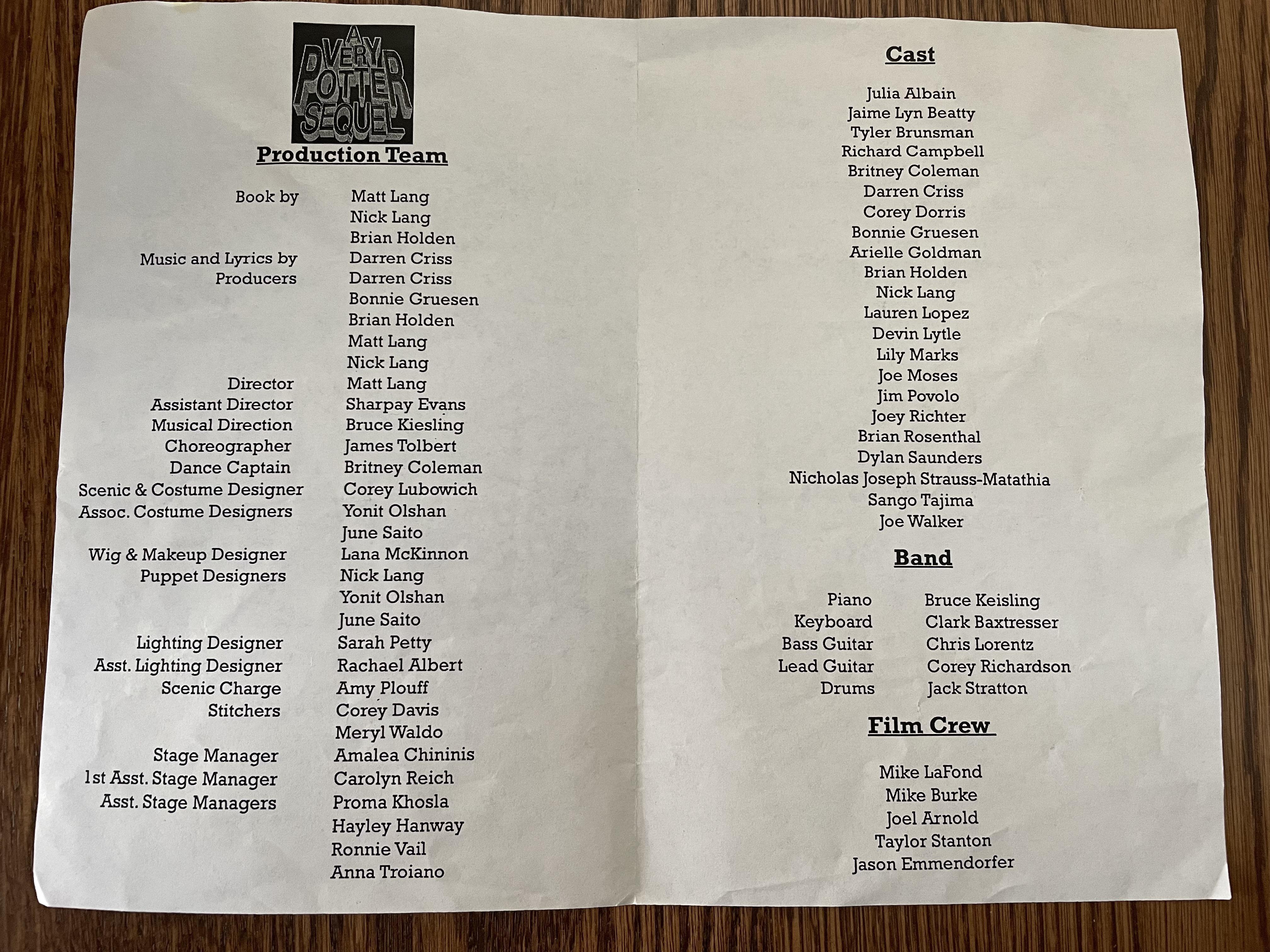
The cast list
The cast page is the most visited part of the program for a reason: it is your quickest guide to who you are watching and how the company is structured.
How cast lists are arranged
- By order of appearance: common in plays and some musicals. Useful if you like learning characters as they arrive.
- Alphabetical: common in ensembles, concerts, and some festivals.
- Billing order: lead performers listed first, followed by supporting and ensemble.
What to notice besides the big roles
- Ensemble: the group that builds the world of the show, often covering multiple roles or responsibilities. In musicals, they are frequently doing the heaviest athletic work.
- Swings: performers who cover multiple ensemble tracks (a “track” is a specific set of roles, choreography, and stage business). Swings may also cover principal roles. If a swing is on, you are watching a feat of memory and calm.
- Standby: typically assigned to cover a specific principal role. Standbys show up most often when a role is physically punishing, vocally demanding, or a production has a higher risk of absences (including certain kinds of celebrity casting).
- Understudy: a performer in the cast who is prepared to go on for another role when needed.
- Alternate: a performer scheduled to play certain performances on a regular basis, common in some demanding roles.
If you see “at this performance” or a slip inserted into the program, that is not a disruption. It is the art form doing what it has always done: adapting in real time.
Cast changes
Programs handle cast changes in a few common ways. Knowing the language helps you follow without confusion.
Where to look
- Small printed insert: tucked inside the program, sometimes loose, sometimes stapled.
- Sticker or stamp: placed on a cast page or near the front.
- Lobby board: posted near the entrance, concessions, or another high-traffic spot.
- House announcement: made over the PA system before the show begins.
Common phrasing
- “At this performance, the role of X will be played by Y.” This is the clearest language and the most common.
- “The role of X is usually played by Z.” This acknowledges the regular performer while confirming the change.
- “The role of X will be played by an understudy.” Less common, but it happens when changes are late or multiple.
The respectful move is simple: read the insert, keep it for intermission if you want to talk about the performance accurately later, and remember that the performer going on is stepping into a tightly choreographed system, in real time, in front of you.
The creative team
If the cast list tells you who is onstage, the creative credits tell you why the show feels the way it feels. This is the section I wish more people read closely, because it reveals the collaborators shaping what you are about to experience.
Key credits you will almost always see
- Playwright or Book writer: writes the script. In musicals, the “book” is the dialogue and structure.
- Composer and Lyricist: writes the music and the words of the songs. Sometimes one person does both.
- Director: leads the overall staging and storytelling choices.
- Choreographer: creates the movement language, from full dance numbers to the way a crowd shifts in a scene.
- Music supervisor and Music director: oversee the musical performance. In some productions, the music director conducts.
Design, in plain English
- Scenic design: the physical world, from a minimalist platform to a full turntable set.
- Costume design: clothes, silhouettes, character cues, and sometimes quick-change engineering.
- Lighting design: visibility, mood, focus, time of day, and emotional rhythm.
- Sound design: amplification, ambience, effects, and how the space feels in your body.
- Projection design or Video design: screens, mapped images, camera feeds, and visual environments.
- Hair and wig design and Makeup design: character, period, and stage-readability under intense light.
One pro trick: if you love the way a show looks, write down the designers’ names. Following designers across productions is one of the quickest ways to build your own theater taste, and it leads you to great work you might otherwise miss.
Production staff
Programs also credit the team that makes the show repeatable eight times a week, or night after night on tour. This is where you see the quiet architecture of the performance.
Terms you will likely see
- Stage manager: calls the show, coordinates departments, and keeps the performance consistent and safe.
- Assistant stage managers: manage backstage traffic, props, and scene shifts, among a hundred other tasks.
- Production manager: oversees logistics, scheduling, budgets, and cross-department coordination.
- Company manager: handles the human side of operations, including payroll and travel on tours.
- Technical director: responsible for building and maintaining the physical production.
- Wardrobe supervisor: maintains costumes and quick changes and manages repairs.
- Props supervisor: coordinates everything from breakaway bottles to hand props that must land in the right palm at the right second.
If you have ever marveled at how a set changes in the dark with uncanny precision, you are admiring this section in action.

Musicals
Musical theater programs often include a song list, and it can be surprisingly informative.
Song list
- Placement matters: song order tells you the show’s structure and pacing.
- Reprises: short returns of earlier songs, often signaling emotional or narrative payoff.
- “Scene change” or “Entr’acte”: music that bridges action, especially around intermission. (An entr’acte is often the intermission opener.)
Orchestra and music credits
- Orchestrations: who decided which instruments play what. This is the difference between intimate chamber color and full symphonic punch.
- Arrangements: adaptations of existing music or reworking songs for a new production.
- Dance music: music written specifically for choreography, sometimes separate from the main score.
- Copyist: prepares readable sheet music parts for musicians, a detail you only notice when it is missing.
On tours, orchestras are sometimes smaller than on Broadway, and some productions use a mix of live music and pre-recorded elements. Programs do not always spell that out, but the music credits can offer hints about how the sound is being built.
Notes and bios
This is the section that can turn a good night into a richer one, as long as you do not read it like a test.
What you might find
- Director’s note: a window into the interpretation or mission of the production.
- Dramaturg’s note: historical, cultural, or textual context. Dramaturgy is not about telling you what to think. It is about giving you tools to watch with more clarity.
- Cast bios: background and previous credits. On Broadway, bios can be short and punchy. In regional theater, they often include training, local ties, and longer career paths.
- Who’s who pages, character lists, or brief scene summaries: not every program includes them, and some productions avoid them to reduce spoilers.
- Content advisories: warnings about strobe lights, haze, loud effects, or sensitive themes. Take these seriously, and plan accordingly.
If you want to avoid spoilers, save the longer essays for intermission or the train ride home. Programs are perfect for a post-show debrief with yourself.
Access info
Many programs include accessibility and service information, and it is worth scanning early, especially if you or someone in your party needs accommodations.
- Captioning, ASL-interpreted performances, audio description, and assistive listening devices: sometimes listed in the program, sometimes posted in the lobby or on the ticketing site.
- Late seating and phone policy: usually near the front, and usually enforced.
Unions and acknowledgments
Near the back, you will often find logos and short statements from professional unions and guilds. They can look like boilerplate, but they reflect the labor structures that protect artists and crews.
Common ones in U.S. theater
- Actors’ Equity Association (Equity): represents stage actors and stage managers.
- United Scenic Artists (USA 829): represents many theater designers (including scenic, costume, lighting, and sound in many jurisdictions) as well as scenic artists.
- International Alliance of Theatrical Stage Employees (IATSE): represents many technical and stagecraft roles.
- American Federation of Musicians (AFM): represents musicians.
You may also see licensing acknowledgments for the script and score, which confirms the production is presented with permission from the rights holders.
Sponsors and ads
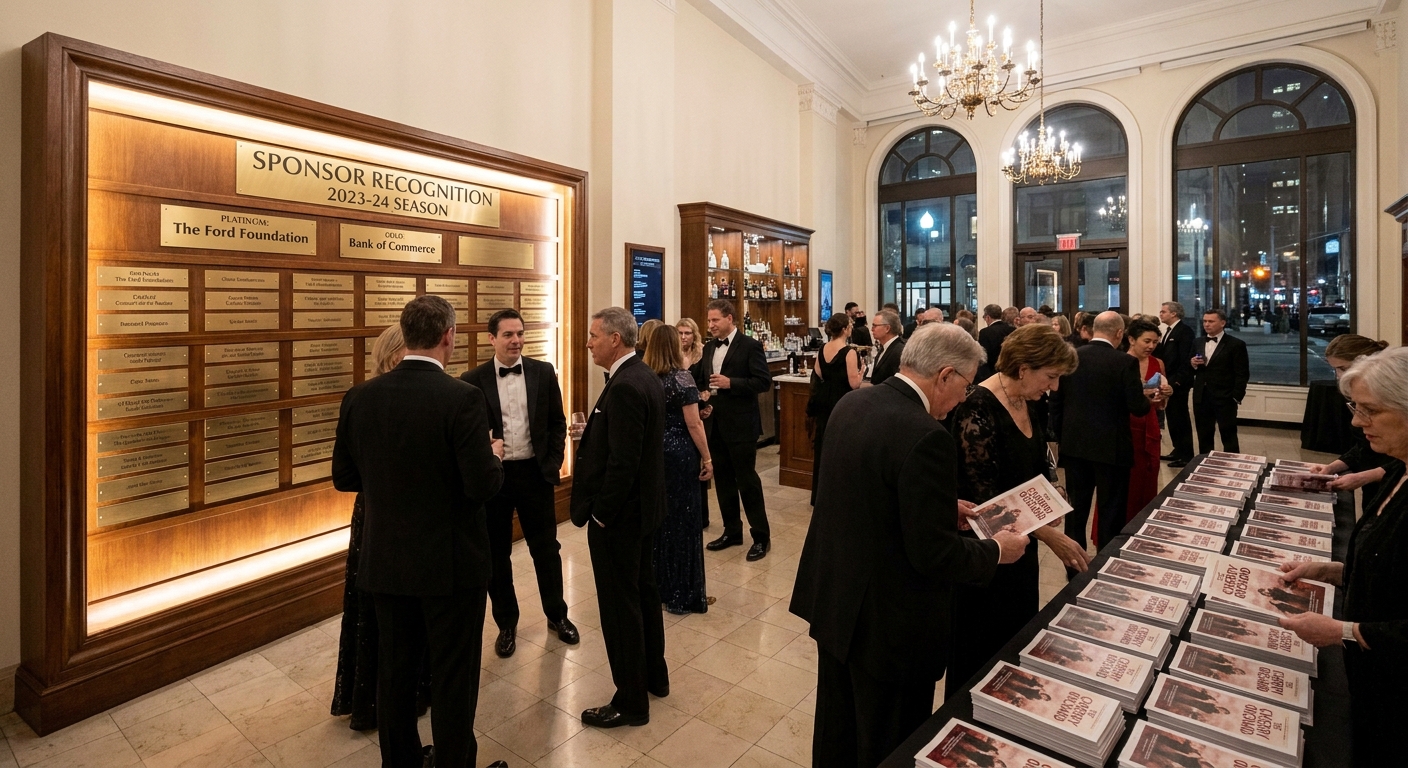
Yes, the ad pages are there to help pay for printing and production costs. On Broadway, Playbill’s advertising model is a big reason those programs are often free. In many nonprofit theaters, donor support is part of the business model. But these pages are also a snapshot of community.
How to read them generously
- Season sponsors and production sponsors: indicate who underwrote part of the run.
- Individual donors: often listed by giving tier. In regional theaters, these lists can be a quiet roll call of long-term patrons.
- Local business ads: a useful guide to where a theater’s audience eats, shops, and gathers.
If you love the arts and wonder how to support beyond buying tickets, this section shows you the pathways.
Quick glossary
Theater programs have their own shorthand. Here is a fast translation guide you can keep in your pocket.
People and roles
- Principal: a leading role.
- Featured: a performer with a notable part that is not quite a lead.
- Ensemble: the group supporting the story, often playing multiple roles.
- Track: a defined set of roles, choreography, and backstage timing within a show.
- Swing: covers multiple ensemble tracks.
- Understudy: prepared to step into another role.
- Standby: assigned to cover a specific role, often a lead.
- Alternate: regularly scheduled to perform certain performances.
- Dramaturg: research and story support, helping the production communicate clearly and responsibly.
Credits and production language
- Original Broadway production: the first Broadway staging, often referenced for licensing or legacy.
- Based on: source material such as a novel, film, or earlier play.
- Additional lyrics or additional music: contributions beyond the primary writing team.
- Associate director or associate choreographer: helps maintain and restage the production, especially on long runs and tours.
- Production stage manager: lead stage manager for the run.
- General manager: handles business operations at the production level.
Accessibility and safety terms
- Haze or fog: atmospheric effects that can affect breathing sensitivities.
- Strobe: flashing lights that can trigger seizures for some audience members.
- Late seating: policy describing when and how latecomers may be seated.
Program etiquette
Reading the program is part of the ritual, but it should never compete with the performance.
- Before the show: skim cast and creatives, check for inserts, and look for runtime or accessibility notes, then put it away before the lights go down.
- During the show: avoid flipping pages. The sound carries, and the movement can be distracting.
- Intermission: perfect time for essays, song lists, and bios.
- After curtain call: the best time to revisit credits, especially if you want to remember a designer or look up an actor later.
And if you are the type who keeps programs, jot a quick note on the back when you get home: date, cast highlights, and how you felt. Years from now, that will be worth more than the paper itself.
FAQ
Is a Playbill the same as a theater program?
In everyday conversation, people use “Playbill” to mean “program,” especially in New York. Technically, Playbill is a branded program magazine commonly used in many Broadway houses and beyond. Other theaters produce their own programs, and some Broadway productions use different program formats.
Why are some roles listed with multiple actors?
You might be seeing an alternate schedule, child actor rotations, multiple casts (common in some long-running or youth-heavy shows), or understudy assignments listed alongside regular casting.
What does “members of the company appear through arrangement with” mean?
That phrasing usually indicates union and contractual authorization language, confirming that performers and stage managers are appearing under the terms of a specific agreement (often with Actors’ Equity Association), though the exact boilerplate can vary by production.
Why do some programs have very few bios?
Space, printing costs, and venue tradition all play a role. Some productions also keep bios minimal to avoid spoilers or to keep focus on the ensemble rather than individual celebrity.