I grew up backstage in Chicago, where the smell of fresh paint and hot lamps was basically a family perfume. The phrase I heard most often right before rehearsal turned serious was not “places” or “quiet, please.” It was “When are we going off-book?”
If you are new to rehearsals, “off-book” can sound mysterious, like a secret club with a strict no-paper policy. In practice, it is one of the most important milestones in the rehearsal process, and it changes the way a room works almost immediately.
Off-book, defined
Off-book means a performer is expected to perform without the script in hand. The goal is to have lines, cues, entrances, exits, and the flow of the scene memorized well enough that the actor can fully engage with blocking, timing, listening, and emotional work.
It does not always mean the actor will never glance at the script again. It means the rehearsal room is shifting into a phase where the script is no longer a safety net in your hands.
On-book vs. off-book
On-book is the earlier phase, when you are still working with the script in hand (or at least actively relying on it). You can be making strong choices on-book, but your attention is split. Off-book is when the room asks you to stop splitting your focus.
What changes once you are off-book
- Blocking locks in faster. Directors can set and refine movement without actors being glued to pages.
- Rhythm and pacing sharpen. Scenes stop sounding “read” and start sounding lived.
- Listening improves. When you are not scanning ahead, you can actually respond.
- Notes get more specific. Instead of “learn this section,” notes become “pick up the cue sooner” or “take the beat before the turn.”
Table read vs. off-book
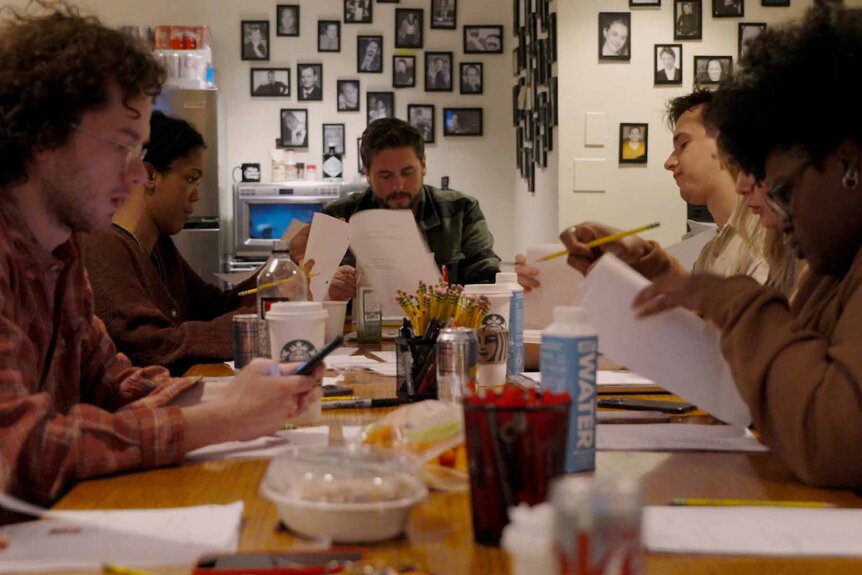
A table read is typically one of the earliest gatherings for a project. Everyone sits, everyone holds the script, and the goal is to hear the story out loud as a group. It is exploratory, communal, and often full of discovery.
Off-book comes later. It is the point where the room expects you to stop reading and start playing, whether that is on a stage, in a rehearsal studio, or during pre-production for a shoot.
Off-book timing in theater
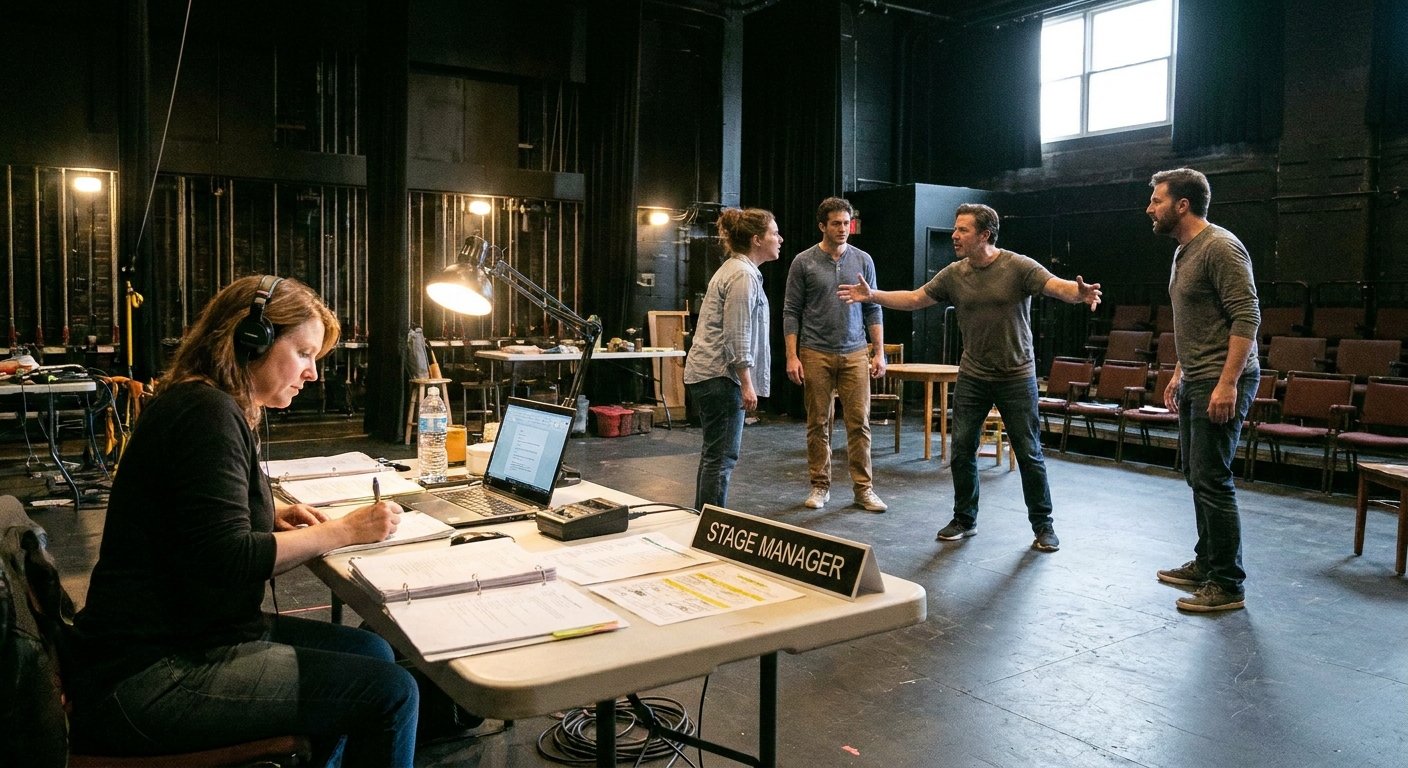
In theater, “off-book” is usually a clearly announced deadline. It is generally set by the director, and often communicated and tracked by the stage manager.
Common timing (not a rule)
- Plays: Often around the midpoint of rehearsals, or roughly 1 to 2 weeks before tech, once most blocking is in place and the team needs the room to start running like performance.
- Musicals: Often staggered by scenes, songs, and dance breaks. Lyrics may be expected earlier than dialogue, and choreography can push you off-book fast simply because you need your hands free.
- Short runs and festivals: Off-book can be very early, sometimes within a week, simply because there is no time.
Directors often say “off-book” when they really mean: memorized enough that we can rehearse like performance. That still leaves room for the occasional lifeline, especially for dense text, new pages, or complicated cue sequences.
If someone is not off-book on time
Every room has a different tolerance level, but the pattern is consistent: it slows rehearsal, it affects scene partners, and it turns run-throughs into line drills. Most directors would rather see an actor who is imperfect but genuinely in the scene than an actor clinging to pages and never looking up.
Off-book in film and TV
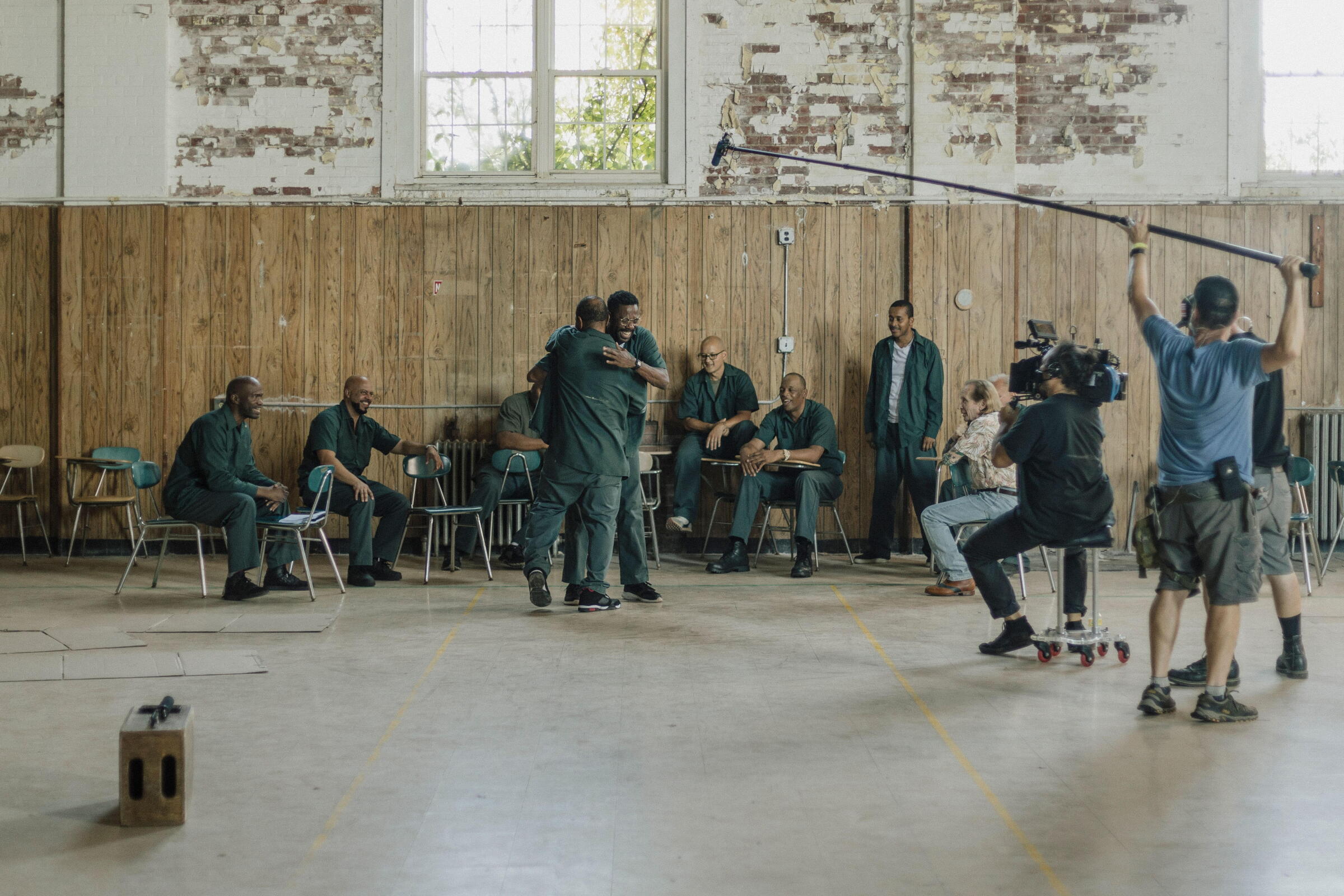
Film and TV work differently because rehearsal time is often limited, schedules change, and rewrites can arrive late. Still, actors are usually expected to be functionally off-book by the time cameras roll, even if there is some flexibility during blocking or on-the-day rehearsal.
What “off-book” looks like on set
- Before shooting: Many actors aim to be memorized well before the day, because set time is expensive and scenes are shot out of order.
- During shooting days: Actors may refresh lines between takes, especially if there are last-minute script changes.
- With rewrites: Off-book can become a moving target. You memorize, then you re-memorize.
- Occasional assists: Depending on the production, you might see hidden sides, an off-camera prompt, or an earpiece. It is not the norm everywhere, but it does happen.
In other words, film and TV can demand the off-book skill set even when the process is not formally labeled “off-book day.” The expectation is still: when the moment comes, you can deliver the scene with your full attention on your partner, your marks, and the camera.
Why actors still carry papers
This is the part that surprises people: going off-book does not mean all paper disappears. It means the script is not in your hands while you perform. Many performers still keep materials nearby for reference, especially early in the off-book period.
What might still be nearby
- A marked script. Often kept at the side of the room, on a music stand, or at the stage manager’s table. It is there for quick checks, not mid-scene reading.
- Sides. In film and TV settings, actors may carry scene pages for the day, particularly if there were revisions.
- Notes or a rehearsal notebook. Directors give adjustments, and performers track reminders like pickups, pacing, and physical business.
- A prop list. Especially in early staging, when rehearsal props stand in for the real items.
- A binder for music or choreography notes. Common for musicals and dance-heavy work, even once dialogue is mostly memorized.
The key distinction is behavioral: off-book means you are not dependent on reading in order to do the scene. You may still verify a line after a run, but you are not clutching the pages like a flotation device.
Off-book is not “perfect”
Some of the best rehearsal rooms I have watched treat off-book as a doorway, not a final exam. You can be off-book and still be searching. You can be off-book and still be human about it.
Most directors would prefer an actor who:
- has learned the material enough to stay connected
- can recover gracefully from a dropped word
- keeps moving through the scene without panic
Because that is, frankly, the job. Live performance and on-camera work both reward resilience, not just recall.
How to get off-book faster
Every actor has their own method, but a few tactics show up again and again in rooms that move quickly.
Practical approaches
- Chunk it. Memorize in small units (beats, thought shifts, or cue-to-cue) instead of trying to swallow the whole scene in one go.
- Memorize your cue lines. Knowing what comes right before you speak is often more useful than knowing your lines in isolation.
- Write it out. For some brains, physically writing tough sections burns it in faster than rereading.
- Record and run. Record your scene partner’s lines (or use an app), then run the scene while walking and doing simple tasks so it sticks under movement.
- Add blocking early. Once you know the shape of the scene, attach lines to actions (sit, cross, pick up the cup). Your body becomes a cheat sheet.
- Target the trouble spots. Circle the transitions you always drop, then drill those like flashcards instead of repeating the parts you already know.
One honest truth: the last 10 percent is the hardest. Off-book usually arrives through repetition, not inspiration.
Off-book etiquette
- Bring your script anyway. Even if you are off-book, your script is still a tool for notes and clarification.
- Do not feed lines unless invited. In many rooms, letting your partner work is the norm. If the director wants line help, they will ask.
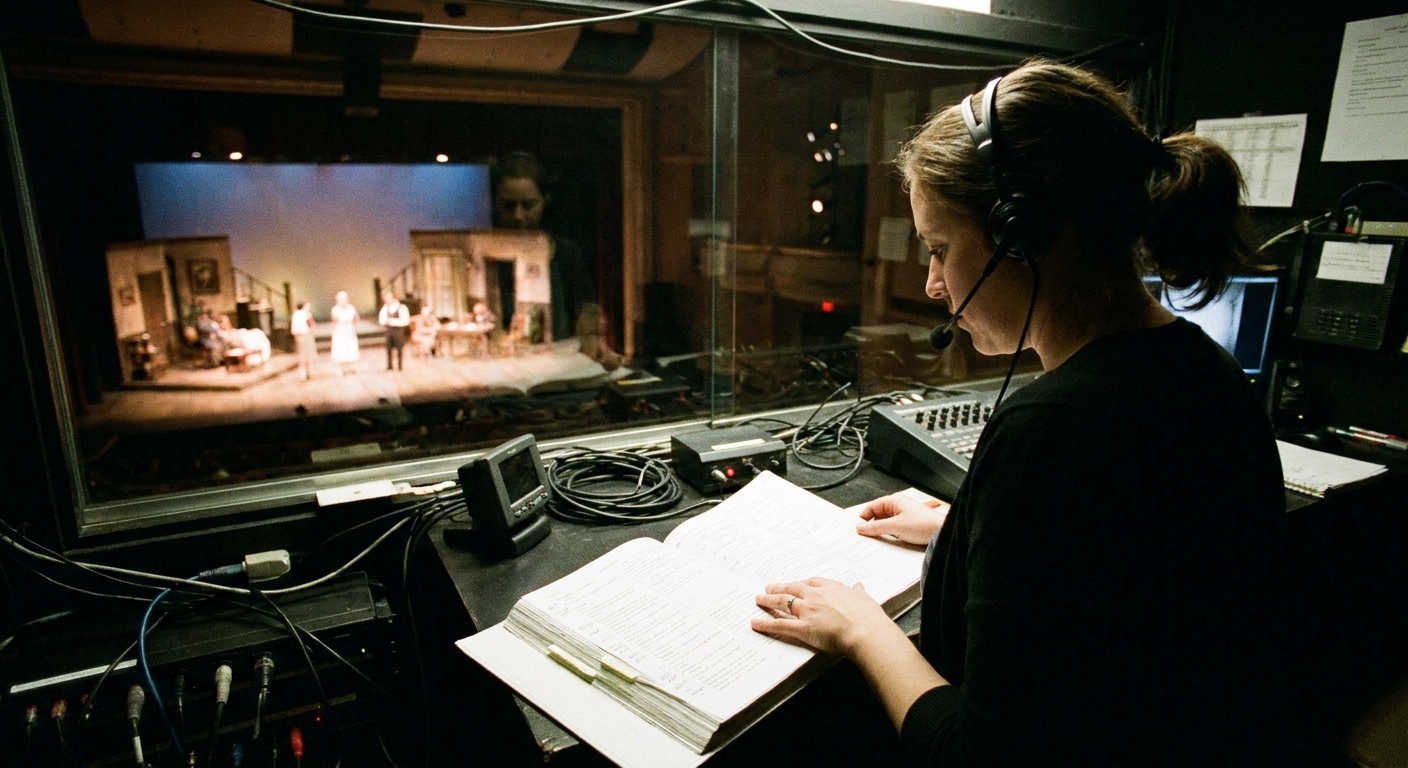
- Call “line” clearly if that is the practice. A mini-scenario: you blank, you call “line,” you stay in place, and the stage manager (or a reader) gives you the last few words you need to pick up. Then you keep going.
- Mark changes immediately. If a director adjusts wording, write it down so you do not memorize the wrong version.
- Keep your focus usable. Eyes up, hands free, know your pickups. Off-book rehearsal rewards presence, not page-turning.
FAQ
Is off-book the same as memorized?
Essentially, yes. Off-book means you are working from memory rather than reading. In practice, it also implies you can run the scene while staying engaged with blocking, timing, and scene partners.
Can you be off-book and still use a script nearby?
Absolutely. Many actors keep a script nearby for checking a line or reviewing notes between runs. The expectation is that you are not holding it while performing.
What if the script changes after you go off-book?
Then you adapt. This is common in film and TV and can happen in theater during previews. Going off-book is about building the muscle of performing without pages, even when the text evolves.
Why do directors care so much about going off-book?
Because it unlocks the rest of the work. Once lines are internal, the room can focus on storytelling choices: pace, intention, relationship dynamics, physical life, and the small adjustments that turn “reciting” into “living.”