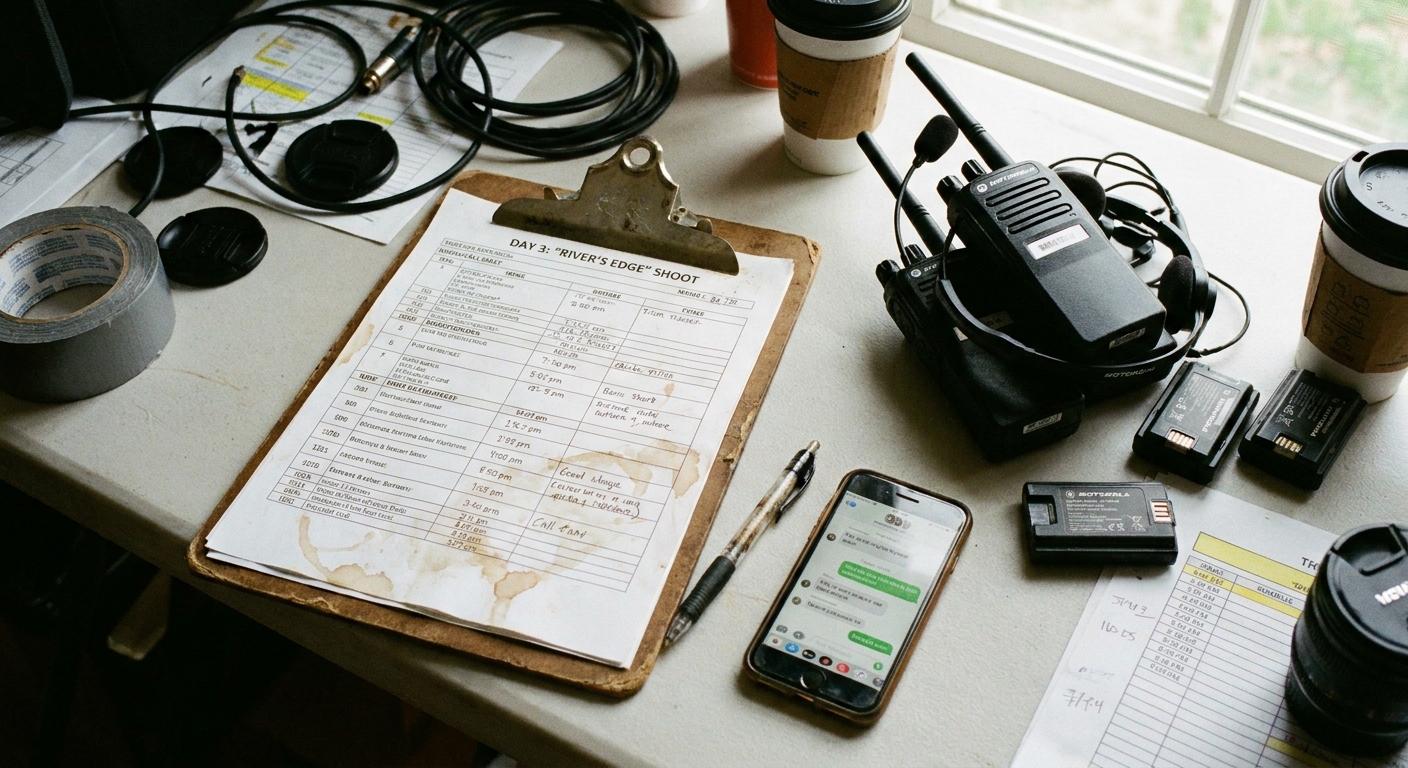
I learned the revision-color system the same way a lot of us do: not from a textbook, but from a stack of pages that suddenly looked like a pastry box. A director I was observing flipped to a scene, frowned, then swapped in a single blue sheet with the calm certainty of someone who has done this a thousand times. No fuss, no speeches, just: this is the current truth.
In film and television, those colors are a practical language. They help everyone from actors to assistant directors to camera and sound know what changed, when it changed, and which page should be in your hands right now.

What revision colors mean
A script revision color is a widely used way to label updated pages in a screenplay after a draft has been distributed. Instead of reprinting an entire script every time there is a tweak, production often issues replacement pages. Those replacement pages are printed on a new color so you can quickly spot what is newer than what you already have.
The key idea is simple:
- Each new revision round is assigned a color.
- The revised page replaces the old page in your script binder or packet.
- For any given page number, the newest-issued version wins.
This system is especially crucial once a show is shooting and changes can ripple through scheduling, props, wardrobe, stunts, VFX, and performance.
Common revision color order
There is a commonly used sequence for revision pages in U.S. film and TV. It is not truly universal or enforced by a single authority, and shows sometimes stop after a few colors or add their own quirks. Still, the order below is what you will hear referenced most often on working sets:
- White (original distributed draft pages)
- Blue
- Pink
- Yellow
- Green
- Goldenrod (a mustardy yellow)
- Buff (a light tan)
- Salmon (a peachy pink)
- Cherry (a brighter red-pink)
- Tan
- Gray
If you ever hear someone say, “We are on pinks,” they mean the latest revision set was issued on pink paper. If you are holding blue pages for a scene that has since been revised on pink, your blue page is out of date.
One important note: some productions restart the color cycle for a new episode, a new shooting block, or a newly issued draft. Others keep marching forward. Either way, the logic stays consistent: newer beats older for the same page number, and the cover memo and revision date tell you what “newer” means on that show.
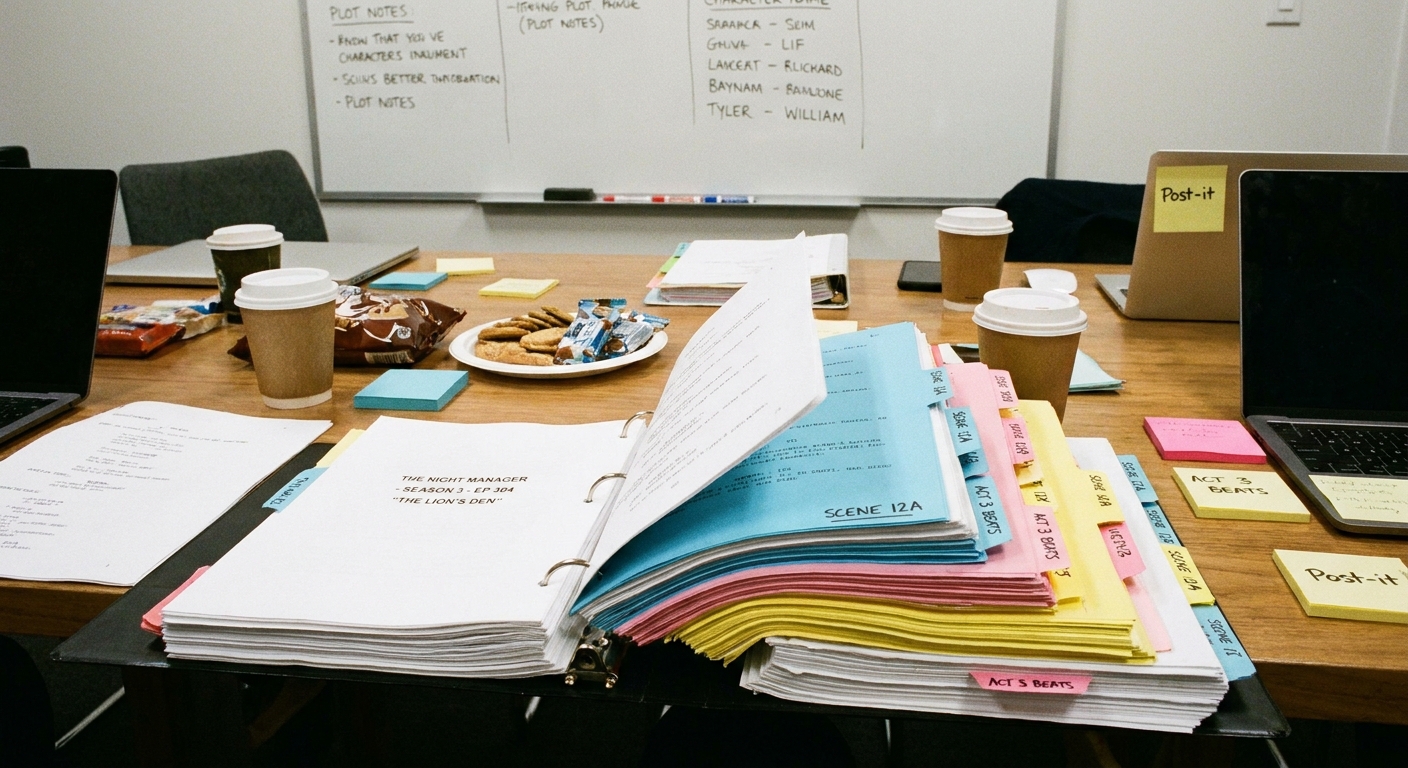
How replacement pages work
Revisions are usually delivered as a packet that includes:
- Replacement pages on the new revision color
- A revision memo or cover sheet describing what changed
- Sometimes a larger reprint if changes are extensive
You then update your script:
- Open your binder or digital file to the page number listed.
- Remove the older page (white, blue, and so on).
- Insert the new page in the same spot.
When it is done correctly, your binder becomes a living document. Some page numbers will still be white, while others might be blue, pink, or yellow, depending on what has been revised.
Lettered pages (12A, 12B)
This is the part that trips up newcomers. When changes add or remove enough material that the page count would shift, productions often avoid renumbering the whole script by issuing lettered pages, like 12A, 12B, or 27C. That lets everyone keep their references intact while still inserting new material where it belongs.
You might also see omitted pages called out in the memo, meaning a page number exists for continuity but the page itself is removed or intentionally blanked to preserve the numbering chain.
Why not renumber everything
Because renumbering is chaos on a working set. Page numbers connect to breakdowns, shot lists, call sheets, production reports, lined scripts, and actor notes. Lettered pages and replacement pages let the machine keep moving without resetting the whole system.
Asterisks and side marks
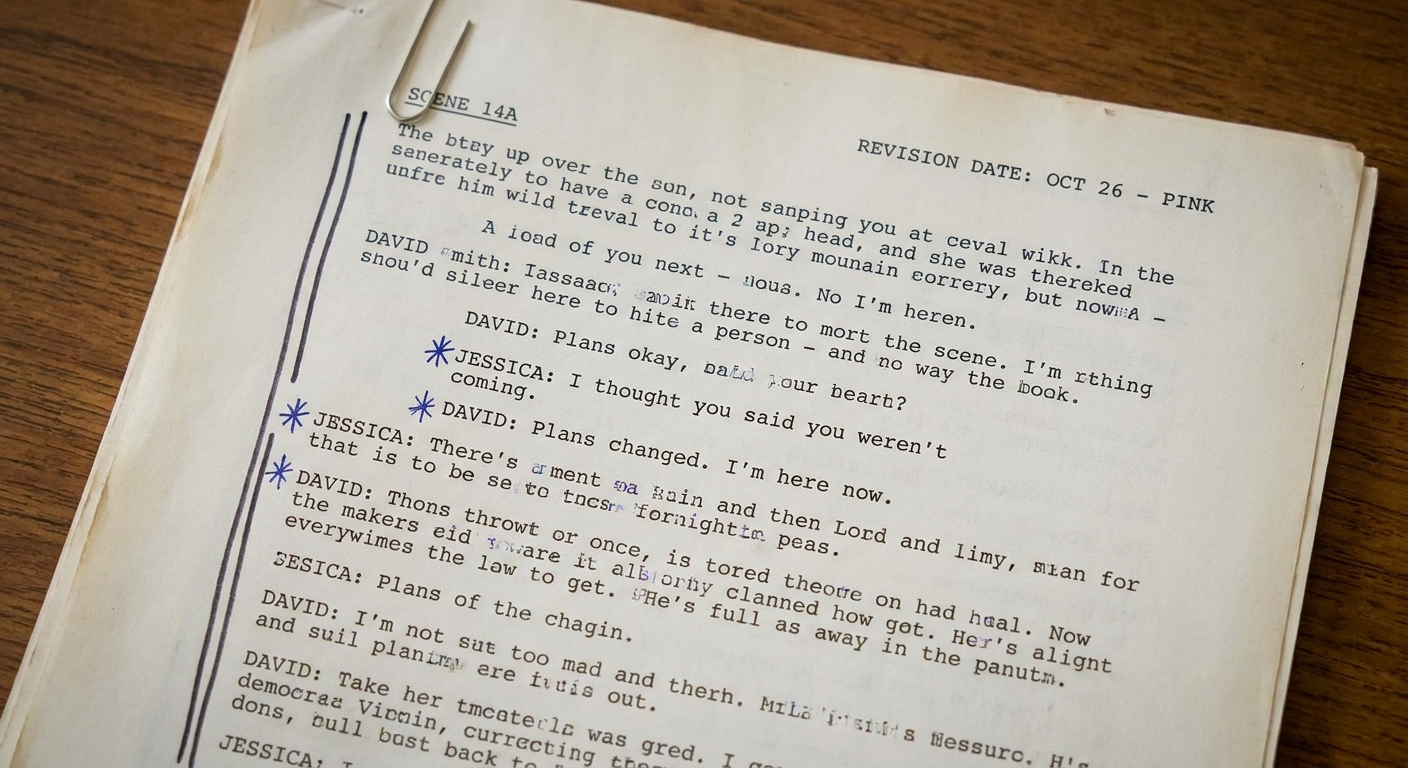
Color tells you when a page was issued. The little marks tell you where the changes are.
- Vertical bars (revision bars) often appear in the margins next to changed passages. On many shows, these are the primary way revisions are flagged.
- Asterisks may appear next to revised lines to flag new or changed dialogue or action. Some productions use them heavily, others barely use them at all.
- Lined-through text can show material that was cut while preserving context, especially in certain revision styles.
For actors, these marks are your best friend. For crew, they help you quickly identify whether a change affects your department or if it is just a minor wording adjustment.
How people stay current
On a fast-moving production, the big question is not “what color is this,” but “are we current.” Here is how people keep it straight:
Revision date and set label
Many revision pages include a revision date in the header or footer, and many packets are labeled by set, like “BLUE REVISIONS.” It is common, but not universal, for the date to live directly on the page itself. Sometimes it is clearer in the cover memo, the filename, or the distribution email. If you are ever unsure, check the memo and match it to what is in your binder.
The page plus the memo is the authority
Color alone is not magic, especially if a production restarts colors per episode or block. The most reliable combo is the page number plus the revision set label and date on the cover memo. When a page number exists in multiple versions, the latest-issued one is the one you play, shoot, and crew for.
Distribution habits
Assistant directors and production coordinators typically drive distribution. If revisions are issued, you will often hear some variation of “Revisions are out” or “New pages are in.” On union shows and well-run indies alike, the goal is that no department is quietly working from an old set.
Where you will hear colors
Even if you never touch the paper packet, revision colors show up in everyday production communication. Common places include:
- Call sheets, where a revisions field or note may list the current revision color or date
- Daily production reports, which may reference new pages issued
- Email or production portal posts distributing the revision packet
- On-set shorthand, like “We are on yellow pages for Scene 32”
If you are background, day-playing, visiting set, or just curious, recognizing the color language helps you decode what stage the production is in. A script that is still mostly white often signals stability. A script that looks like rainbow confetti can mean an active rewrite period, a complicated sequence being reblocked, or a show reacting to locations, schedule, or performance discoveries.
Quick binder update checklist
- Read the cover memo first so you know what set you are on.
- Swap pages by page number, including any lettered pages like 12A.
- Keep pages in order and watch for “omit” notes.
- Scan for revision bars so you do not miss a small change that affects you.
- Date-check if something looks off, especially when colors have restarted.
FAQ
Do revision colors change the content
The colors do not change meaning on their own. They are simply a tracking system. What matters is the text on the page and the revision marks that indicate what changed.
Is the color order the same everywhere
No. The sequence listed above is widely used, but not every production uses every color, and some may add or skip colors. The practical rule remains: follow the most recent revision set and its date, and update your binder exactly as instructed.
Why are some pages still white after multiple revisions
Because those specific pages have not changed. Only revised pages get reissued on the new color.
What happens if there are major rewrites
Sometimes a production will issue a full new draft, which may reset pages back to white, or it may issue a large revision packet that replaces many pages at once. Either way, the distribution note will tell you what you are receiving and how to update.
The point of all this
I have a soft spot for the unglamorous systems that keep the arts alive in real time. Revision colors are one of them. They are not about hierarchy or drama. They are about clarity. When the work is collaborative and the clock is loud, a simple blue or pink page can save a take, a setup, a costume change, or an actor’s confidence.
So the next time you see a rainbow script, read it like a backstage map: it is proof the story is still being made, and everyone is trying to make it together without losing the thread.