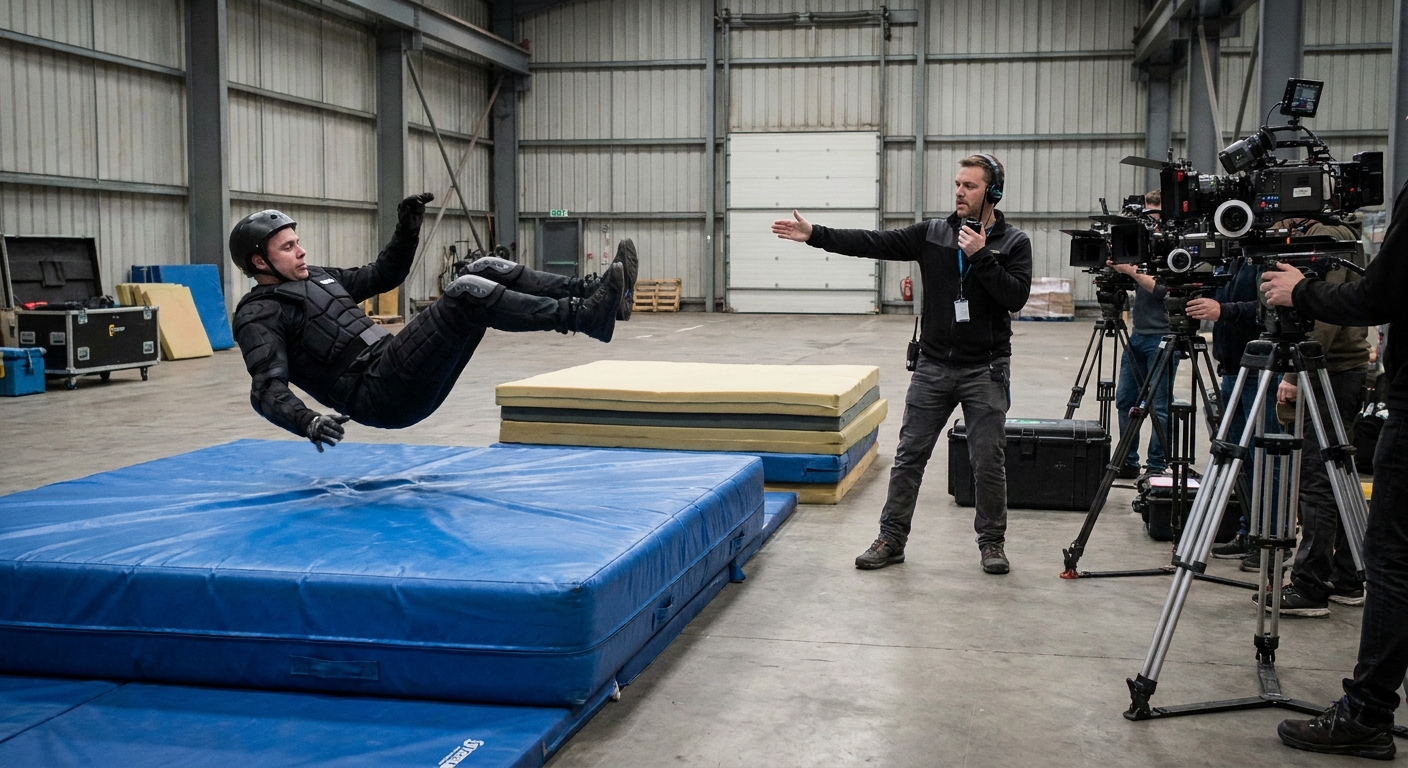
I grew up backstage in Chicago, where “dangerous” usually meant a wobbling flat or a poorly secured ladder in the wings. Film and TV sets are a different beast. When a car squeals into frame, a body hits the pavement, or someone tumbles down a staircase, that moment is not improvised bravado. It is engineered. The person engineering it is the stunt coordinator.
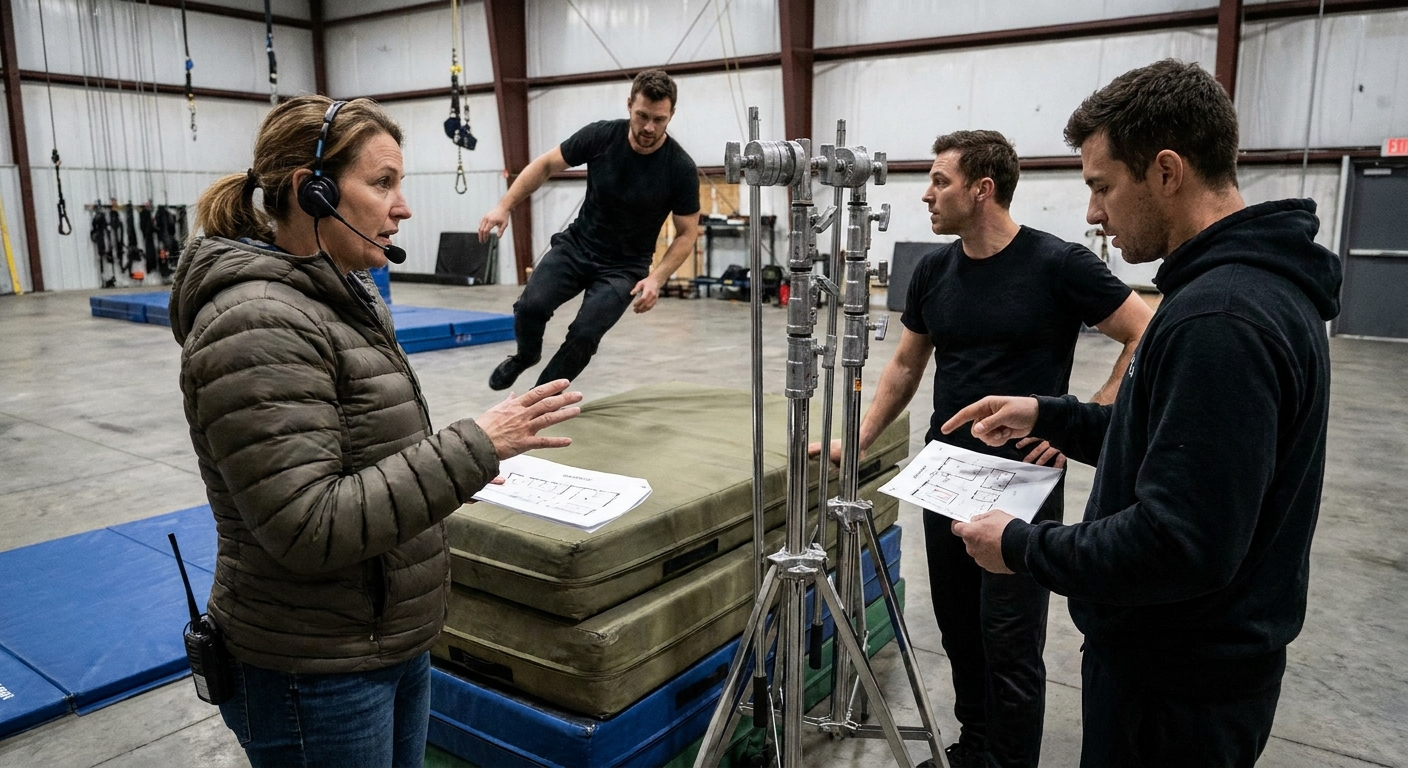
What a stunt coordinator does
A stunt coordinator is the department head responsible for designing, staffing, and supervising stunt work for a production. If the stunt is the on-screen “gag” (industry slang for a planned stunt beat), the coordinator is the person who builds the plan that makes it repeatable, filmable, and as safe as possible.
Core responsibilities
- Designing the stunt: breaking down the script and storyboards, then translating “He falls” or “They fight” into specific beats, timing, camera needs, and safety requirements.
- Risk assessment and safety planning: identifying hazards and building layers of protection like mats, pads, harnesses, fall-arrest systems, fire safety protocols, and rehearsals.
- Staffing: hiring stunt performers and stunt doubles with the right skill sets, and often arranging additional specialists for driving, wires, water, high falls, or fight choreography.
- Prepping and planning: collaborating in pre-production on tech scouts, previs or diagrams, permits for vehicle work when needed, and the logistics that make a stunt possible on a real location.
- Rehearsals and coordination: working with cast, stunts, camera, grips, SFX, costumes, and props so everyone understands spacing, timing, and limitations.
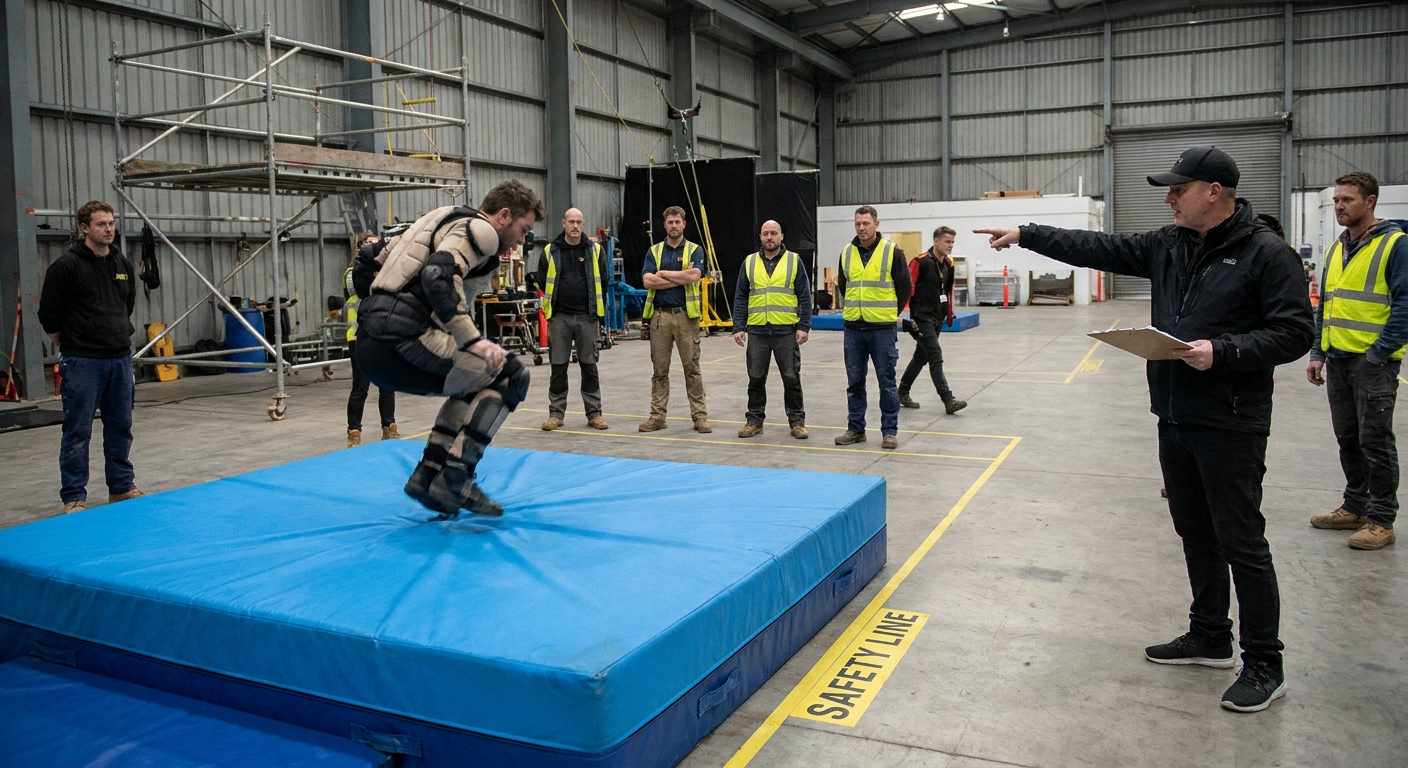
- On-set supervision: overseeing rehearsals, monitoring conditions like weather or surfaces, and adjusting when something is off. Depending on how the set is run, the coordinator may call internal stunt cues while the AD team calls the roll and the overall action.
- Communication and documentation: sharing the plan clearly, often with stunt breakdowns, diagrams, safety bulletins, and face-to-face briefings so the whole crew is working from the same map.
- Communicating with production: discussing time, budget, and feasibility. A coordinator is constantly balancing ambition with reality.
In short, the stunt coordinator is both a creative architect and a safety-minded manager. Their job is to make the audience feel danger while minimizing actual danger.
Stunt coordinator vs. stunt performer
This is the most common mix-up: the stunt coordinator is not necessarily the person doing the stunt on camera.
- Stunt coordinator: designs and supervises the stunt sequence and runs the stunt department.
- Stunt performer: executes the action, whether that is a fall, fight, crash, precision drive, or burn, based on the coordinator’s plan.
Sometimes coordinators also perform, especially on smaller shows, but the roles are different. The coordinator’s primary responsibility is oversight and safety, not simply performing something impressive. I learned pretty quickly that the flashiest moment is usually sitting on top of the most boring thing on earth: a plan everyone can repeat.
Special-ability extra vs. stunt
A special-ability extra is a background actor booked because they can do a specific, non-stunt skill on camera, like ice skating, ballroom dancing, juggling, playing an instrument, or riding a bike confidently.
That is not the same as stunt work. Stunts involve heightened risk and are typically handled by trained stunt professionals under stunt supervision, often following union rules and production safety protocols that vary by show and jurisdiction.
Quick rule of thumb
- Special-ability extra: you are doing a real-world skill, safely, as background business.
- Stunt performer: you are doing action that could plausibly injure someone without professional technique, protective equipment, and stunt-specific planning.
Even when a special skill sits near the edge of risk, think skating fast through a crowded scene, riding close to picture vehicles, dancing in heels on wet pavement, that is exactly where productions may decide it needs to be treated as stunt-related and managed accordingly.
Who a stunt coordinator works with
Like most department heads, a stunt coordinator works collaboratively, not in a vacuum. The exact reporting lines vary by country, union agreements, and production size, but on a typical film or TV set the coordinator is in constant communication with the creative and the people running the floor.
- Director: the coordinator shapes stunts to match the story, tone, and shot design the director wants.
- Producers and production management: stunts affect schedule and budget, so the coordinator aligns the plan with the day’s realities.
- 1st assistant director (1st AD): the 1st AD runs set flow and safety practice. Stunt work is typically tightly coordinated with the AD team so lockups, resets, and crew positioning happen correctly.
- Safety oversight: some shows also have designated safety staff, studio safety, or insurer requirements that factor into how stunts are reviewed and approved.
The best sets are the ones where the plan and the limits are discussed early, not litigated while everyone is staring at the clock.
What background should not do
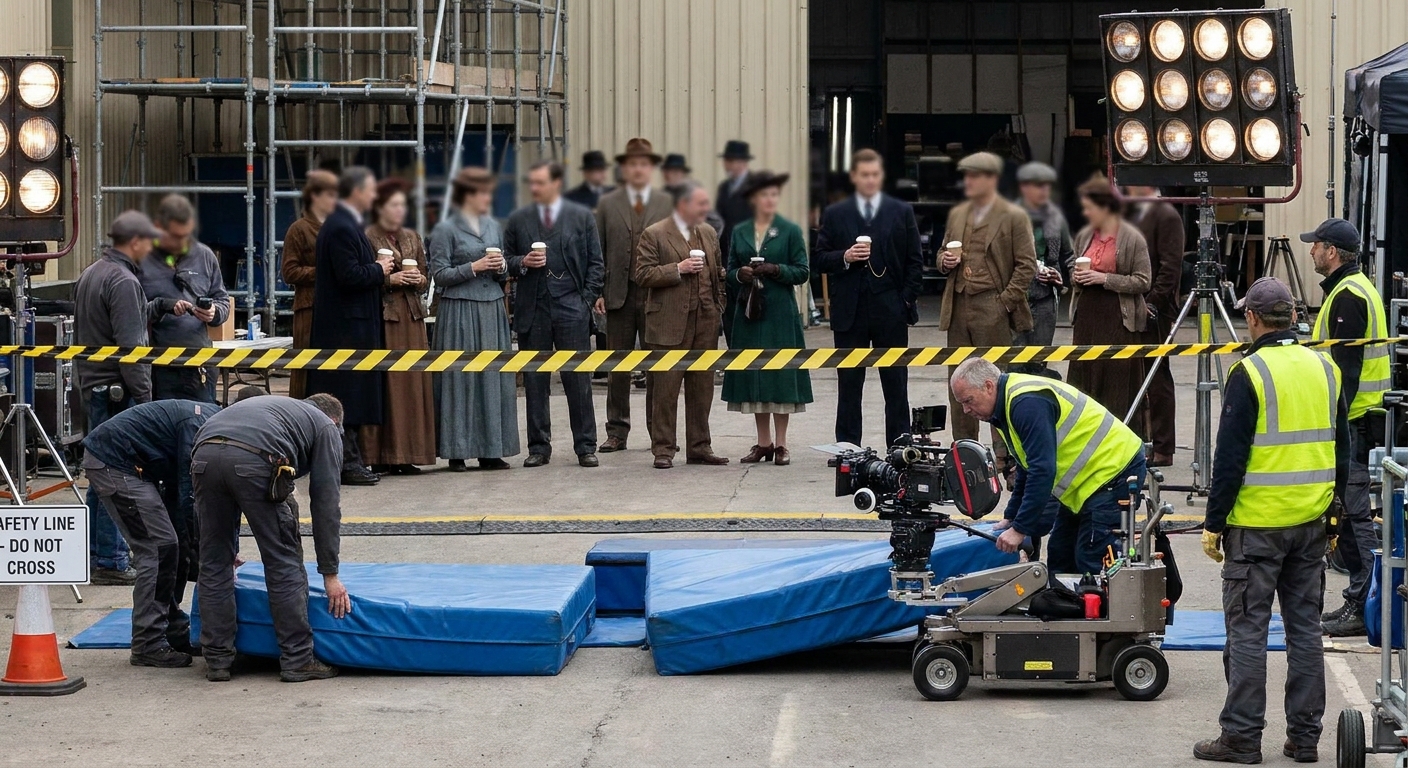
If you are booked as background on a day with action, your most valuable skill is not improvisation. It is consistency. Stunts are built on repeatable timing and predictable spacing.
Do not do these things
- Do not “help” or jump in, even if it looks like someone dropped a prop or missed a mark. Wait for direction from the AD team.
- Do not cross a safety line or step into a marked zone. If there is tape, cones, or crew holding a boundary, treat it like a wall.
- Do not freelance reactions by running toward the action, swarming, or changing your background business. Keep the same pace and marks take to take.
- Do not touch stunt gear like pads, mats, rigging, harnesses, fire gel, breakaway props, or wire setups.
- Do not distract stunt performers during rehearsals or right before a take. This is when focus matters most.
- Do not ask to “try it once” if a move looks fun. If it is a stunt, it is not a casual add-on.
- Do not post set details in real time. Aside from confidentiality, it can create crowd issues and unwanted attention around a working set.
If you are ever unsure where you are allowed to stand, ask the AD team, not the stunt team mid-setup. The best thing you can do is be easy to place and easy to reset.
How stunts are planned
From the outside, it can look like “waiting around” until the action happens. From the inside, it is a careful chain of checks.
- Blocking: mapping where performers, actors, and camera will be.
- Rehearsal: walking the beat slowly, then building speed with control.
- Safety meeting: clarifying the plan, the boundaries, and the stop call if something goes wrong. Different shows use different words, but the idea is the same: if someone calls a stop, everything freezes.
- Camera rehearsal: confirming lenses, angles, and what needs to be protected from frame.
- Execution: the take, usually with fewer people close to set than on a dialogue scene.
- Reset: restoring breakaway items, checking surfaces, and verifying everyone is ready to repeat it.
If you are background, the most important part to listen for is the safety briefing and any special instructions about eye lines, timing, and where not to stand.
FAQ
Is a stunt coordinator the same as a fight choreographer?
Sometimes the same person can cover both, but not always. Fight choreography is one slice of stunt work. A stunt coordinator oversees the broader stunt department and the safety planning for the full range of action, including falls, vehicles, wires, water, and more.
Can an extra be upgraded to do a stunt?
It is possible for productions to adjust a plan, but it is not something you should expect or lobby for on the day. If a beat becomes stunt work, it typically needs a stunt professional, appropriate approvals, and proper setup time.
If something feels unsafe, who should I tell?
Tell the assistant director team immediately, or whoever is designated for safety on your call sheet. If you are near stunt activity, you can also raise it to the stunt coordinator or a stunt department member when they are not actively cueing a rehearsal or take. The key is speaking up early, before the cameras roll.