The first time I heard someone say “meet me at video village,” I pictured a lounge. I grew up around stage crews in Chicago, where “the booth” meant a literal projection booth and “backstage” meant you could hear the orchestra warming up through the walls. A film set is its own ecosystem, though, and the language is half practical, half mythology. Video village is very much the practical kind.
In plain terms: video village is the monitor area on a film or TV set where key creatives watch the live camera feed during a take. It is where decisions get made in real time, quietly, while the work happens a few feet away.
What it means
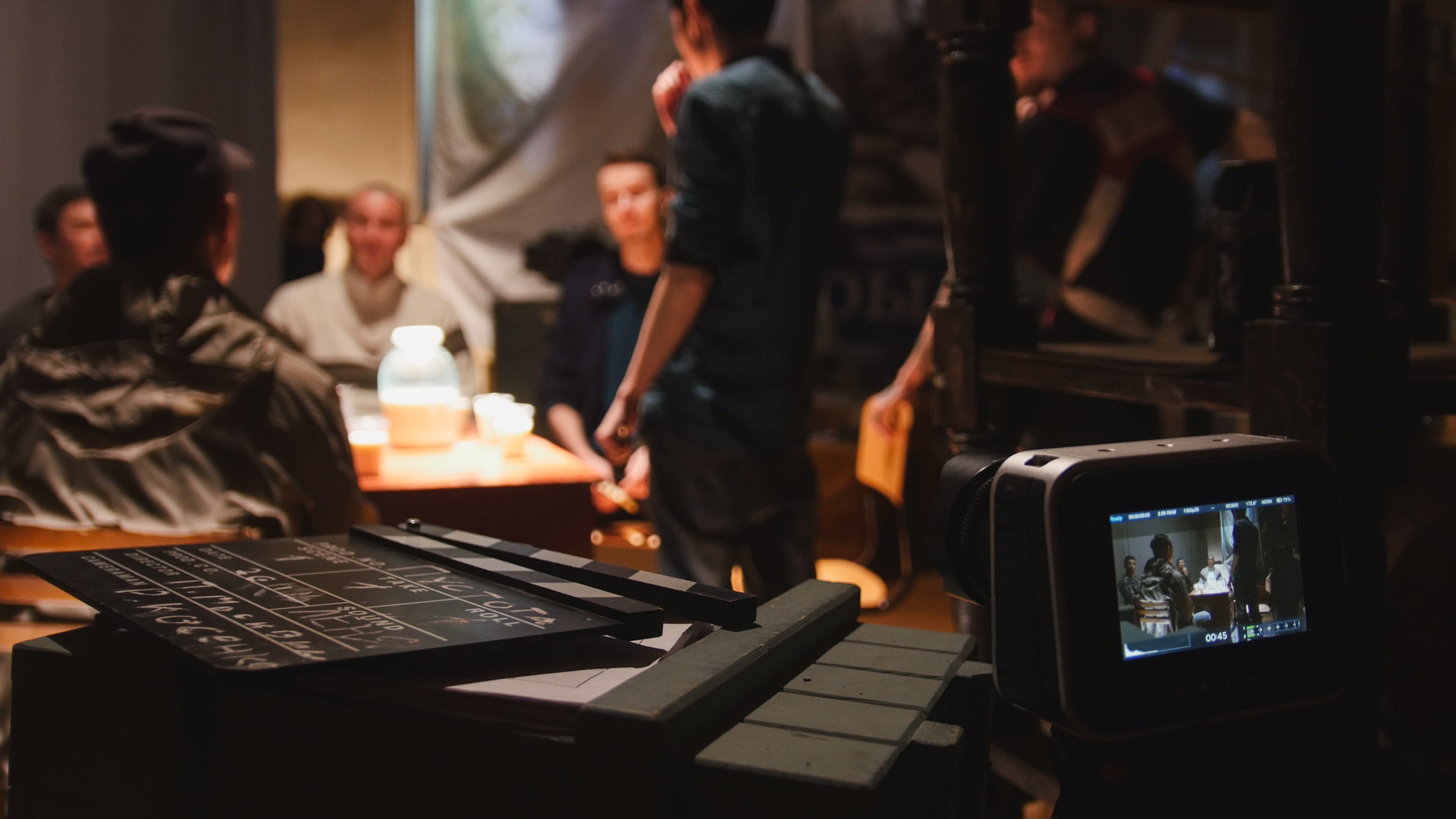
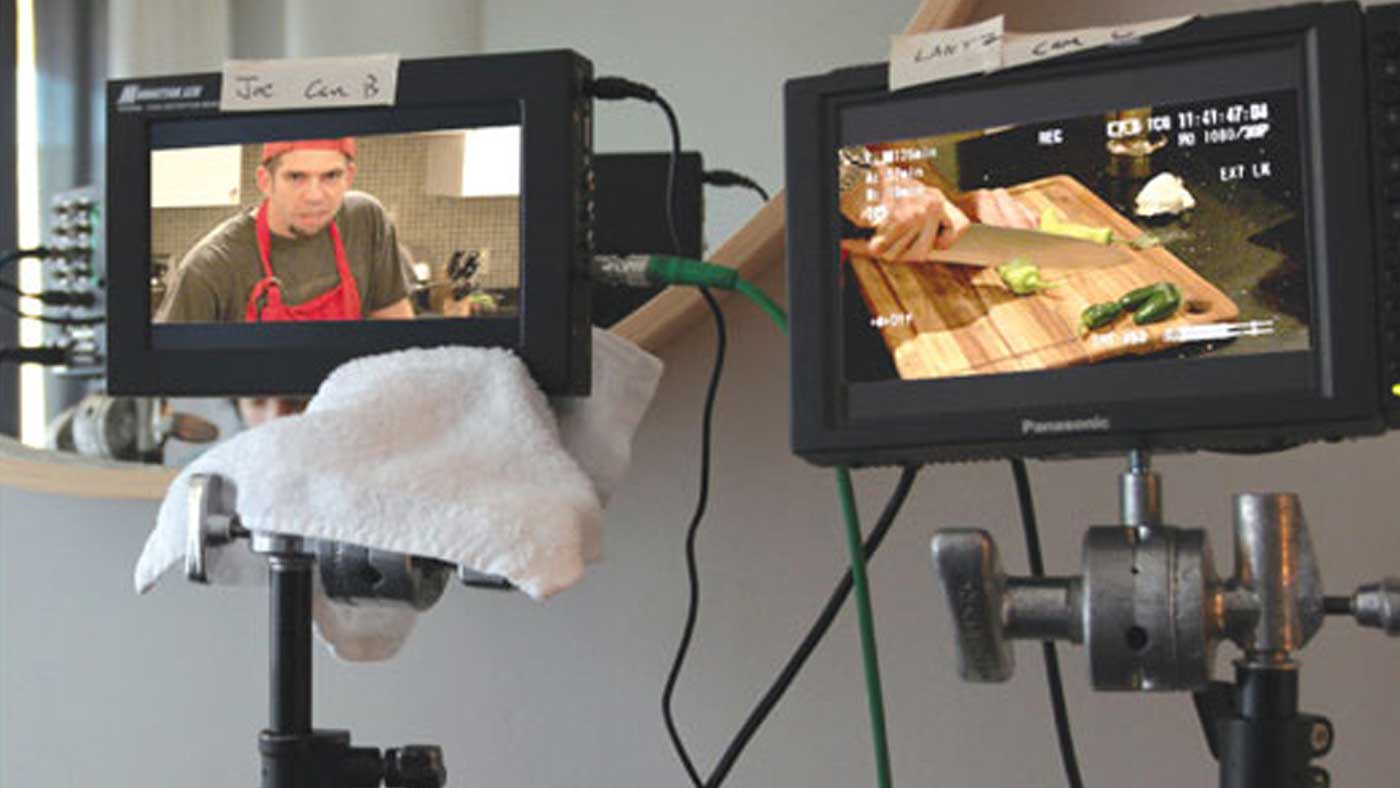
Video village is a cluster of monitors (and usually chairs) positioned near the set, oriented so that decision-makers can see what the camera sees. On many productions, it is partially enclosed with pop-up tents, flags, or blackout cloth to cut glare and keep the image readable.
It is sometimes called “the monitors,” and it can include:
- Client monitor(s) for producers or studio representatives
- Director’s monitor, often placed in the most protected spot
- Video assist or DIT gear that routes the signal, manages wireless video, and sometimes handles on-set playback
- Playback tools, when the workflow and schedule allow for reviewing takes
- Comms or headsets, which may be used depending on how that set is run
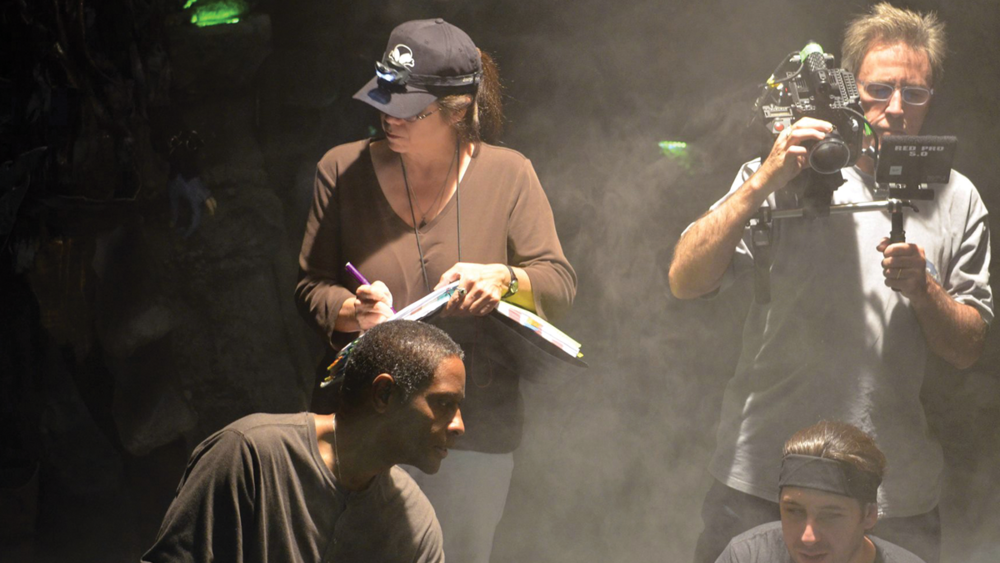
- Script supervisor support nearby, often with their own monitor feed for continuity notes
Think of it as the set’s viewing booth, except it is portable, constantly shifting, and shared by people who need to interpret the shot from different angles: creative, logistical, and financial.
What happens there
The set can look like choreography: actors hitting marks, camera team tracking, boom swinging overhead, grips quietly shaping light. Video village is where the moving parts become a single image, and where someone has to decide, quickly, whether that image is telling the story.
Common video village activities include:
- Watching framing and performance to confirm the intention lands
- Checking continuity (hand positions, props, eyelines, wardrobe issues)
- Spotting technical issues like soft focus, an unwanted reflection, or a mic shadow
- Making fast creative choices about pacing, timing, and coverage
- Passing along notes so adjustments happen efficiently between takes
It is not unusual for video village to be very quiet during the take, then turn into a soft buzz of quick notes right after cut.
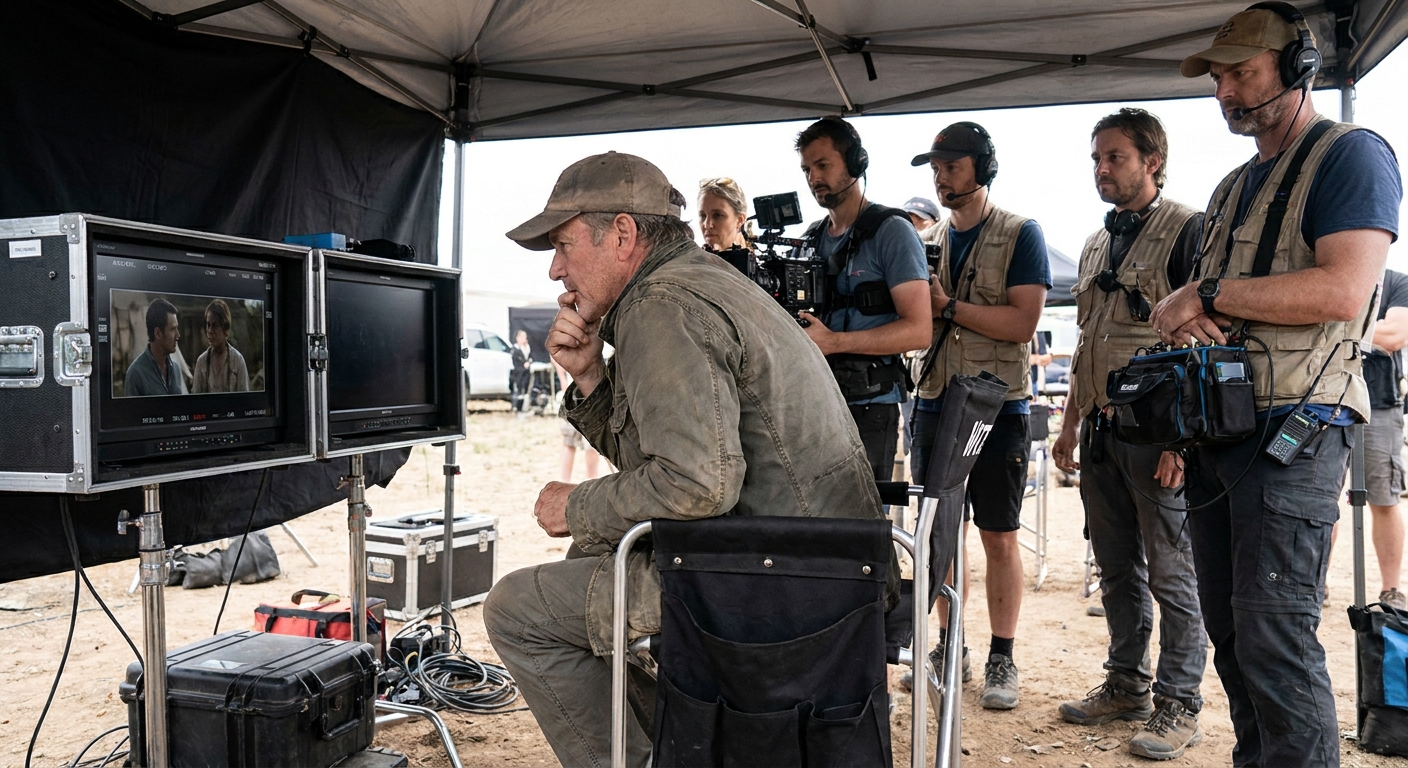
Who can be there
Access depends on the production, the location, and the director’s preferences, but the general rule is simple: video village is for people who need to see the frame to do their job.
You will most often find a mix of the following:
- Director
- Producers (including line producer or executive producer, depending on the day)
- Script supervisor
- Director of photography (or the DP may watch at or near camera instead)
- 1st assistant director (often in and out, since they run the floor)
- Video assist or DIT, since they are keeping the picture flowing where it needs to go
- Key stakeholders such as a showrunner or studio representative, and sometimes a department head when their work is being evaluated
On some sets, there is a clear split between director’s village and a separate producer or client monitor. On others, it is one shared space with unspoken seating politics that you learn by observing for ten seconds.
Why background is kept out
If you are booked as background and you have ever wondered why you are not invited anywhere near the monitors, it is not a personal snub. It is workflow and risk management.
1) It is a decision zone
Background performers are essential, but they are not typically part of the decision loop. Video village exists to make rapid calls about story, coverage, and performance. More people means more movement and slower decisions.
2) Confidentiality matters
Monitors can reveal story points, surprises, cameo appearances, stunts, or sensitive material. Productions limit access to reduce leaks, misunderstandings, and casual photos. Even when phones are not allowed on set, reducing unnecessary foot traffic helps.
3) Space and safety are real
Video village is often placed close to the action but out of frame. That means it may be near cables, carts, stands, or moving crew. Keeping it restricted reduces crowding and keeps pathways clear for departments that need to move quickly.
4) It can break focus
People naturally react to what they see on a screen. On a quiet set, a laugh, gasp, or even a whispered comment can break concentration. Background performers are usually directed to stay in assigned areas so the AD team can manage timing and resets.
Video village vs holding
These two areas get confused because both involve waiting, but they serve totally different purposes.
Background holding
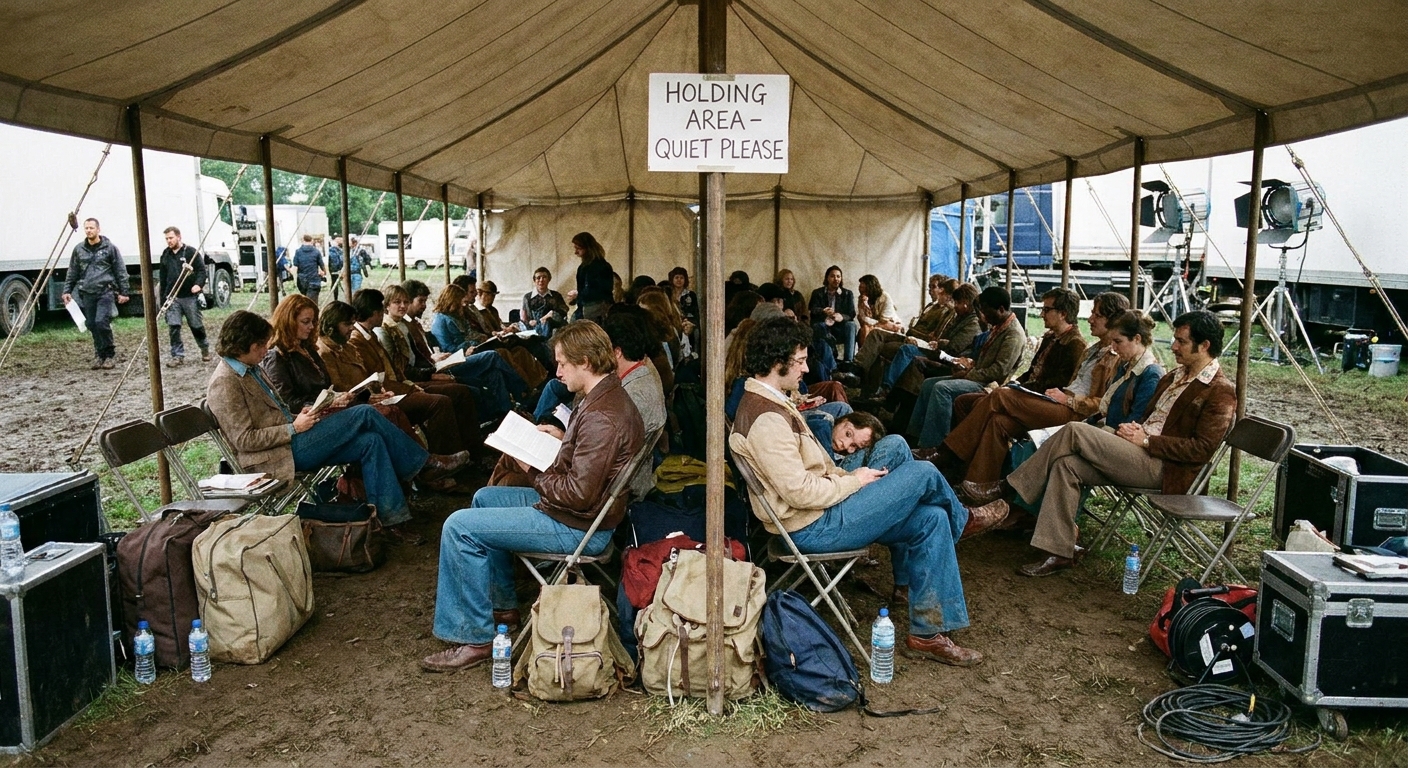
Holding is where background actors wait when they are not being used in the shot. It is managed by the AD team and background PAs, and it is designed for organization and comfort: check-in, wardrobe touches, staging instructions, and “stand by” calls.
Holding might be:
- a room inside a location
- a tent area near set
- a nearby building when filming on a street
Its goal is to keep background ready, accounted for, and out of the way until the moment they are needed.
Video village
Video village is not a waiting room. It is the production’s eyes. If you do not need to actively watch the frame for your job, you generally should not be there.
Video village vs base camp
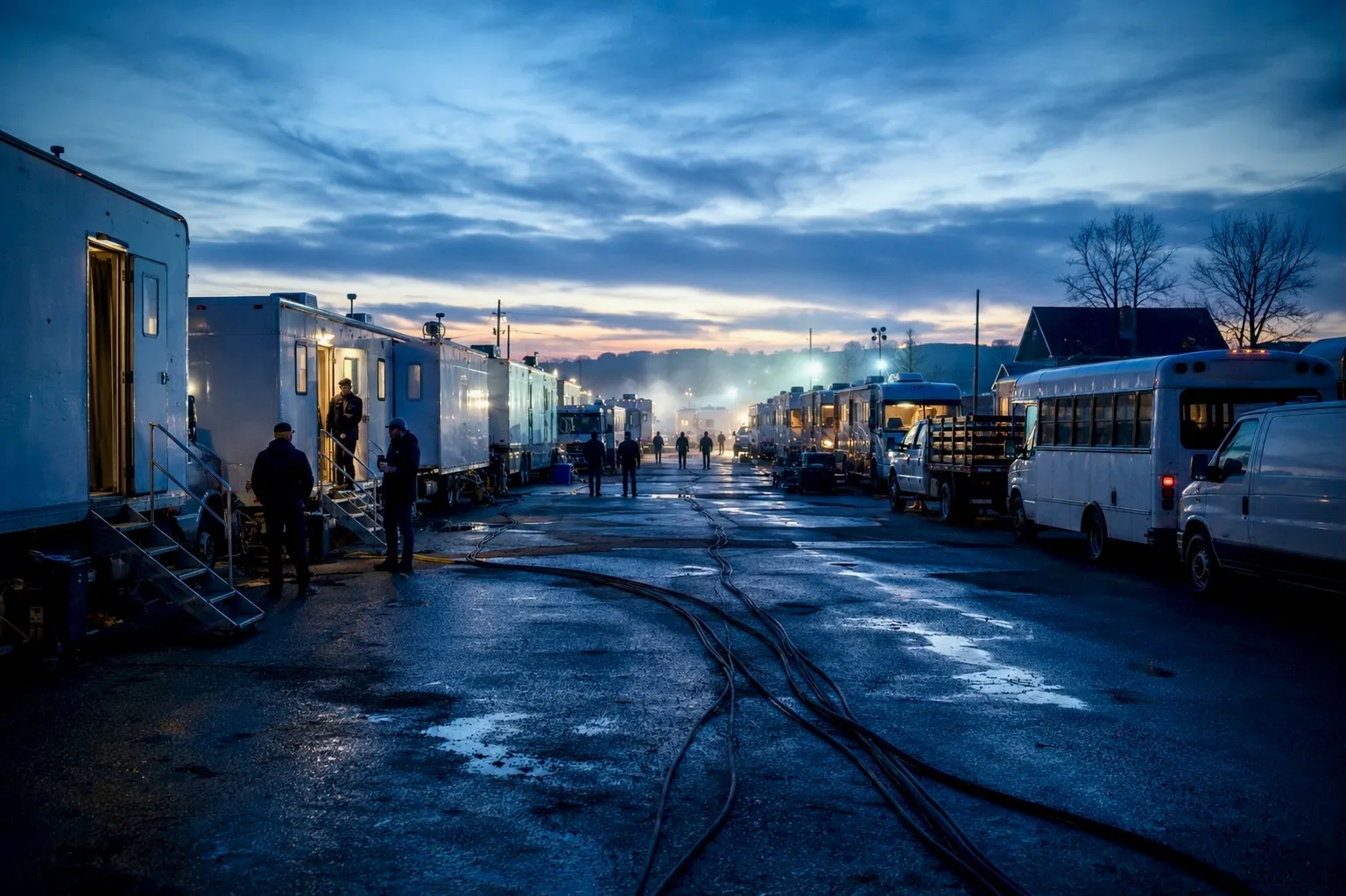
If video village is close enough to feel the electricity of the set, base camp is the calmer, more logistical headquarters parked farther away.
Base camp
Base camp is typically where you will find:
- hair and makeup trailers
- wardrobe trailers
- production offices or support trucks
- craft service and catering
- bathrooms and other crew amenities
On location shoots, base camp may be several blocks away (or more) from the actual filming site, depending on parking and permits. You are not watching takes at base camp. You are prepping people and managing the day.
Video village
Video village is typically placed near the active set so the monitors can receive the feed and the director can give notes between takes. That said, it is also a quiet zone, and it has to live where it will not spill sound into the scene, block sightlines, or fall outside reliable wireless video range. Sometimes that means it is farther away than people expect.
What it looks like
Video village can range from minimal to deluxe:
- Indie set: one monitor on a stand, a couple of chairs, maybe a sun hood
- TV drama: multiple calibrated monitors, a tent, comms, chairs with names taped on
- Big studio feature: separate monitor areas, privacy floppies, additional screens for VFX or playback workflows
It moves because the camera moves. Each new setup can shift sightlines, background traffic, and what needs to stay out of frame. A village that was perfect for the wide shot can become a problem when the next angle looks directly at it.
On some productions, “video village” can also mean a second viewing area in another room or at another part of the location, fed by the same video signal, so stakeholders can watch without crowding the set.
Etiquette
If you are crew, talent, or a visitor with permission to be nearby, treat video village like a library with cables.
- Do not hover. If you need to be there, take your spot and stay still.
- Keep your voice low, especially once “rolling” is called.
- Do not watch the monitor unless invited. It sounds counterintuitive, but it is a respect thing and a focus thing.
- Never take photos unless you have explicit permission from production.
- Follow AD instructions. If someone asks you to clear out, do it immediately and without debate.
Quick FAQs
Is video village the same as playback?
Not exactly. Video village refers to the monitor viewing area. “Playback” usually refers to reviewing recorded takes, and whether that happens at video village depends on the day’s workflow, the director’s preferences, and the time available. On many shoots, playback is managed by video assist or DIT, and some sets use it sparingly.
Can actors go to video village?
Sometimes. Many actors do not watch playback unless the director asks, but some directors collaborate that way. It varies by relationship, performance style, and schedule.
Why do some people watch at the camera instead?
The DP, operator, and camera assistants often need to be near the camera for technical reasons. The director may choose video village for comfort and consistency, especially if they are giving notes while watching the frame.
If I am background, who should I ask if I have a question?
Start with the background PA or the AD team managing you. They are the bridge between background and the rest of the set. Video village is not the place to troubleshoot your call time or wardrobe questions.