I have sat behind enough video village tents (the cluster of monitors and chairs where producers and department heads watch playback) and lingered by enough “Hold” signs to know this truth: if a set is running like a well-timed piece of choreography, there is almost always a 2nd assistant director somewhere nearby making it happen quietly, decisively, and fast. They are not the person calling “Action,” but they are one of the main reasons the moment of “Action” arrives on time.
On most film and TV sets, the 2nd AD is a core piece of logistics and communication. Exactly how much of the “floor” they personally run depends on the size of the show, the region, and the AD team structure, but their job is consistent: keep people, information, and timing aligned with what the director and 1st AD need to shoot the scene.
What is a 2nd assistant director?
A 2nd assistant director, usually credited as 2nd AD, is part of the assistant director department. Their job is to support the 1st AD by coordinating the human traffic of a set, especially around call times, cast movement, background actors, and set communications.
Think of the 1st AD as the person driving the day’s schedule and set safety in real time. The 2nd AD is often the person making sure the pieces are actually in the right place at the right moment so the plan can be executed.
One important note: duties can shift depending on union rules and local practice. A DGA show in the U.S. may divide tasks a little differently than a UK or Canadian production, and larger crews add more specialized hands. The shape changes. The purpose stays the same.
Who does the 2nd AD work under?
Typically, the 2nd AD works under the 1st AD. The director is, of course, the creative lead. But on a shooting day, the assistant director team is the operational spine that keeps the set moving.
- Director: shapes performances and camera storytelling
- 1st AD: runs the set, manages the schedule minute-to-minute, enforces safety and set protocol
- 2nd AD: supports the 1st AD, handles call sheet flow and set communications, coordinates cast and background timing and movement
On larger shows, you may also see additional AD roles (like an additional 2nd AD or a 2nd 2nd) and a strong PA team taking on specific pieces of the workload. The reporting structure usually stays the same: the 2nd AD is executing under the 1st AD’s plan.
2nd AD vs 2nd 2nd
If you have ever wondered why there are so many “seconds,” you are not alone.
- 2nd AD: commonly owns the call sheet process (building, updating, distributing), tracks cast moves, and runs a big chunk of communication between departments and the 1st AD.
- 2nd 2nd (or additional 2nd): often becomes the on-the-ground wrangler for talent movement and background logistics, running people from holding to set and back again, and managing the practical flow that keeps the day smooth.
That split is not universal, but it is a common way of keeping a large day from collapsing under its own moving parts.
What the 2nd AD runs on a shooting day
The phrase you will hear around set is that the AD team “runs the floor.” The 2nd AD’s slice of that is often less about calling shots and more about keeping people and timing from tangling into chaos. Depending on crew size, some of the physical wrangling is handled by a 2nd 2nd, a key PA, or a background team. The 2nd AD is still the hub that keeps it coordinated.
Call sheets and timing
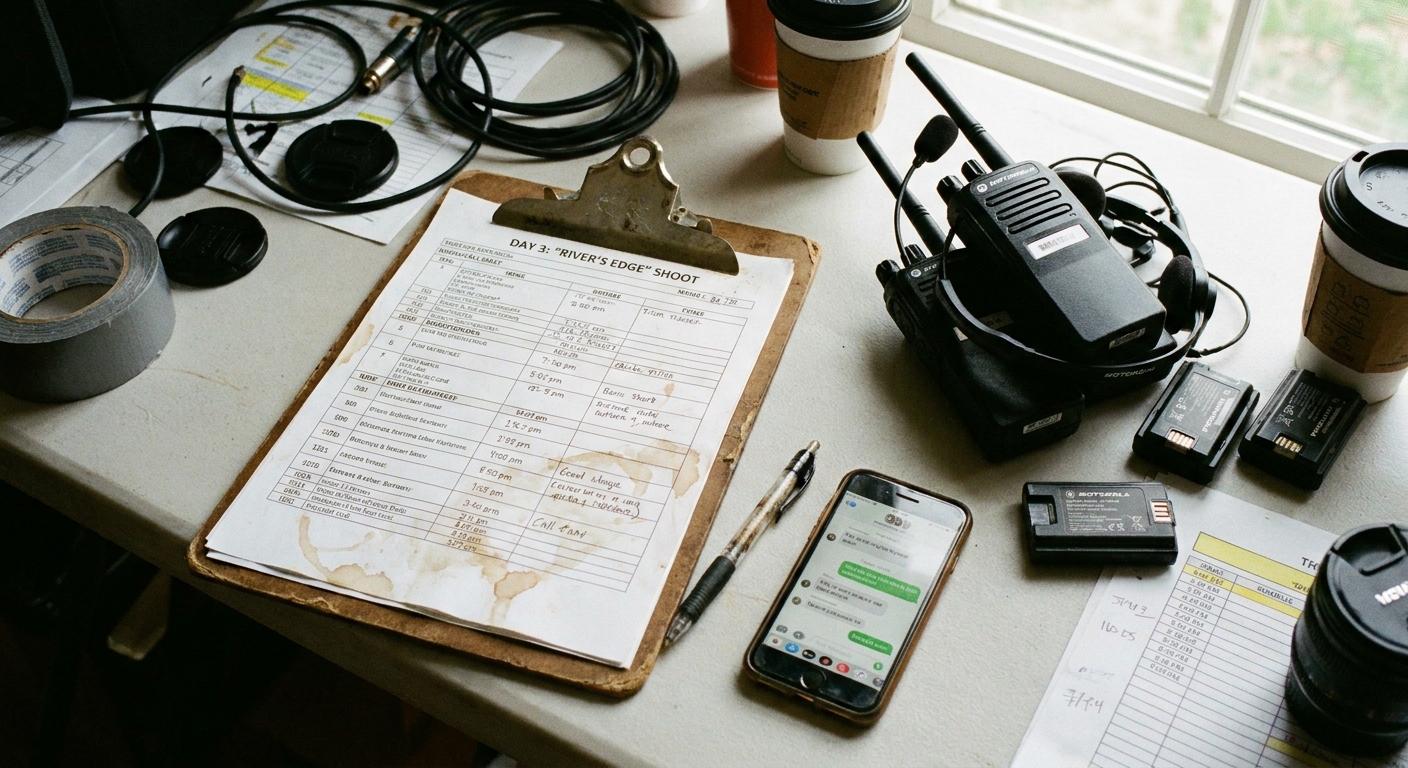
The call sheet is the day’s roadmap, and on many productions the 2nd AD is the person who builds it and gets it out, under the supervision of the 1st AD and production management.
On the day, the 2nd AD helps turn that roadmap into reality by:
- Tracking cast call times and making sure people know when and where they are needed
- Coordinating with the production office and department teams so arrivals do not bottleneck
- Managing when principals or day players are brought to set from their trailers or holding
- Helping the 1st AD maintain schedule by smoothing transitions between setups
On a smooth day, you barely notice this work. On a complicated day, it is the difference between making the day and going into expensive overtime.
Background flow and resets
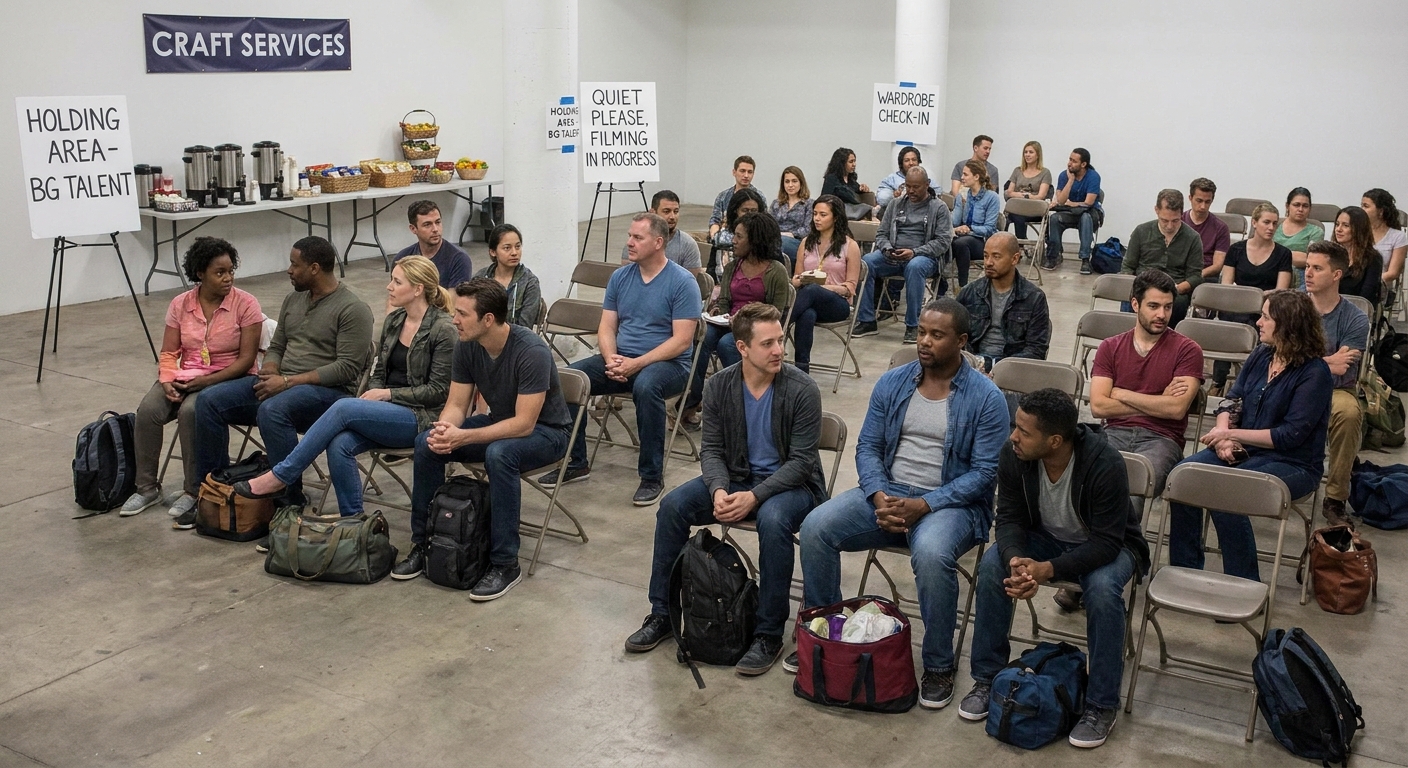
Background actors are not just “people in the back.” They are blocking, continuity, and atmosphere. The pipeline from check-in to wardrobe to holding to set can be run a few different ways.
On some sets, the 2nd AD is directly in the middle of it. On bigger shows, that end-to-end movement is often executed by a background AD, 2nd 2nd, key PA, and background PAs or a background coordinator team, with the 2nd AD supervising the timing and making sure the 1st AD has clean, accurate information.
Either way, the 2nd AD is frequently the person the 1st AD relies on to ask: “Are we ready with background?” and get a truthful answer.
Communication that people can act on
A 2nd AD is, at heart, a professional translator. They take information from the 1st AD and production and communicate it in a way that other departments can use quickly, such as:
- When talent is needed on set
- When background needs to be released, fed, or brought back
- When the set is going for picture and noise must drop
- When a lockup begins and ends
They do not just pass messages. They anticipate friction points and try to prevent them from becoming delays.
Papers and tools the 2nd AD touches
Some of the most important 2nd AD work is not loud. It is paperwork, distribution, and clean communication habits that keep the set from guessing.
- Call sheet creation and distribution: compiling schedule, locations, contacts, call times, weather, parking, special notes, and pushing updates when the day shifts
- Sides and revisions: making sure the right pages get to the right people at the right time
- Talent notifications: coordinating “to set” moves and making sure departments are aligned (hair and makeup, wardrobe, transport)
- Walkie discipline: keeping channels usable by being clear, brief, and specific
- Information relay: passing accurate status to the 1st AD and production, especially when timing changes ripple across departments
This is the kind of work nobody applauds, but everyone feels when it is missing.
Rolls on set
When people say “We are rolling,” they usually mean the camera is recording. You will hear variations like “Rolling!” “Camera rolling!” and then sound and slate fall into place.
While the 2nd AD is not typically the person calling the camera roll sequence, their work supports it. Rolls require the set to be ready in a very particular way:
- Background is in position and understands the action
- Hallways are clear and unnecessary movement is stopped
- Doors, elevators, and foot traffic are controlled
- Noise sources are minimized
If a production has frequent resets with lots of background, the 2nd AD is often part of the cadence that keeps the set from unraveling between takes.
Lockups
A lockup is a temporary hold on movement in or around set, often used on location shoots to prevent unwanted foot traffic, cars, or noise from ruining a take. Lockups also happen on stages when a hallway outside the stage door needs to go quiet because sound is rolling.
The 1st AD usually has overall authority on when the set is going for picture, but lockups are executed by a team and the exact “who calls it” can vary by jurisdiction. Locations, security, and traffic control officers may be involved, especially on streets where the production is working under permits.
The 2nd AD may:
- Coordinate with PAs posted at corners, doors, stairwells, and sidewalks
- Help time when background is released to move and when they need to freeze
- Ensure departments know when they must hold noisy work
- Help manage communication so lockups are clean, short, and safe
Lockups are one of those set realities that can feel annoying if you are the person being held at the crosswalk. They are also one of the simplest ways a production protects the integrity of a take.
How extras get direction
This is where the job becomes visible to anyone watching from the edges. Background actors typically receive direction through the assistant director pipeline, not by wandering up to the director for notes.
Who gives background instructions?
On many sets, background actors are directed by a combination of:
- 2nd AD: often gives broad staging, timing, and behavioral notes for background flow
- Background AD, 2nd 2nd, or key PA: may handle detailed background adjustments and repeated resets
- 1st AD: may step in when background movement impacts the main action, camera, or safety
Directors absolutely care about the world behind the principals. It is just less common for them to individually coach background on a routine day, because their attention is pulled toward the shot, the performance, and the story beats that are driving the scene. There are exceptions, especially with featured background or foreground business that plays like a small performance.
What direction sounds like
Background direction tends to be clear, repeatable, and continuity-friendly. It often includes:
- Where to start and where to land (your marks, even if you are not standing on tape)
- Timing cues (when to cross, when to sit, when to react)
- Behavior and intensity (busy lunchtime energy versus quiet after-hours)
- Rules for eyelines (where not to look, especially toward camera)
- Reset notes (do the same action again with matching rhythm)
It is choreography, but with the added challenge that it needs to look like life.
Casting and check-in
It helps to separate two phases that audiences often mash together: getting hired versus being run on the day.
- Casting office: typically handles booking background actors and availability before the shoot.
- Background coordinator (or team): often manages the administrative flow like check-in, vouchers, meal penalties tracking, and making sure people are accounted for.
- AD team (2nd AD, 2nd 2nd, background AD): focuses on set operations and movement. Once you are there, their priority is how to use background safely and efficiently to serve the shot.
Different productions divide these duties differently, but the core idea remains: the 2nd AD is about making the day workable, not staffing the job.
A 2nd AD day
Every set is different, but a typical rhythm often includes:
- Early day: confirm arrivals, track where key cast are in the pipeline (hair and makeup, wardrobe), coordinate background readiness
- Pre-first shot: communicate timing, ensure set is quieting down, help get principals and background in place
- During takes: manage movement around set, support lockups, prep the next beat of cast or background while the current setup shoots
- Between setups: reset background, redirect holding, update departments on timing shifts
- Late day: manage wrap flow so people are released appropriately and the next day is not sabotaged by messy logistics
It is a job built on situational awareness. The best 2nd ADs I have watched work are calm, specific, and a little bit uncanny about where the next delay will come from.
FAQ
Is the 2nd AD the person who says “Background action”?
Sometimes, but not always. Depending on the production, “background action” may be called by the 1st AD, a background AD, a 2nd 2nd, or another AD team member. The 2nd AD is commonly involved in making sure background is set and ready to execute that cue.
Do extras take direction from the director?
Usually, extras take direction through the AD team, often via the 2nd AD or a background AD. The director may give a broad note that filters down, and some directors will address background directly in specific situations, especially with featured business.
What is the difference between the 1st AD and the 2nd AD?
The 1st AD runs the set’s shooting process, safety, and schedule minute-to-minute. The 2nd AD supports that by managing call sheet flow, communications, cast movement, and the behind-the-scenes timing that makes the shooting plan workable.
Why are lockups taken so seriously?
Because a single footstep, car horn, or door slam can ruin a take. Lockups protect sound and picture, and they keep movement around set safe and coordinated while the camera is rolling.