My first crowd call felt like arriving at a concert where nobody knew the band yet. Same buzz, same lines, same semi-organized herding, except instead of a ticket you had a booking confirmation and a person with a clipboard deciding whether your jacket reads “real fan” or “modern dad at a barbecue.” If you have only done small background days, a crowd call is familiar in purpose but totally different in scale, pace, and logistics.
Here’s what a crowd call for extras is, why productions use it, and how the day typically runs from check-in through release.
What a crowd call means
A crowd call is a type of background casting where a production books a large number of extras at once, sometimes dozens and sometimes hundreds, to create the look of a real crowd. You will see crowd calls for:
- Stadium and arena scenes (sports crowds, concert audiences)
- Street festivals, parades, protests, and rallies
- School assemblies and graduation ceremonies
- Nightclub or party scenes that need wall-to-wall bodies
- Transit hubs like airports and train stations
Instead of focusing on a handful of specific “types,” the goal is scale and texture: age range, varied silhouettes, believable reactions, and a consistent wardrobe world.
How it differs from small set days
The numbers change everything
On a small set day, you might have 10 to 40 background actors and you will feel visible. On a crowd call, you might be one of 150 to 600 people, sometimes more or less depending on the project. That affects how you are checked in, where you wait, how much direction you get, and how long it takes to move the group.
Continuity becomes a bigger puzzle
Wardrobe continuity is always important, but in a crowd it becomes math. The production may need:
- Clusters that match, like “home team fans” in similar colors
- No logos, no competing brands, no distracting text
- Era-appropriate clothing for period projects
- A controlled mix of tones so the crowd reads as a single world on camera
You might be sorted into subgroups based on what you brought, your size range, or how well you fit a specific section of the crowd.
Holding is longer and more structured
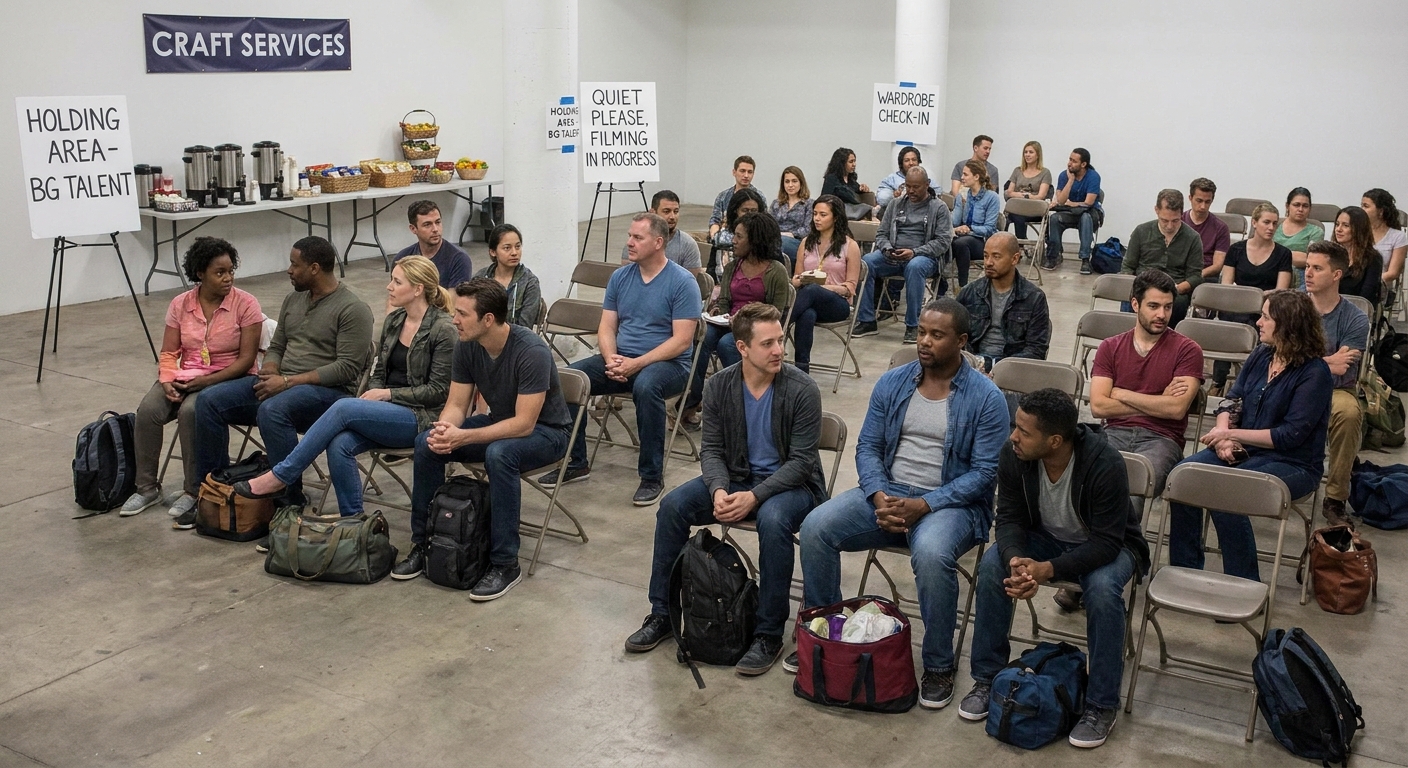
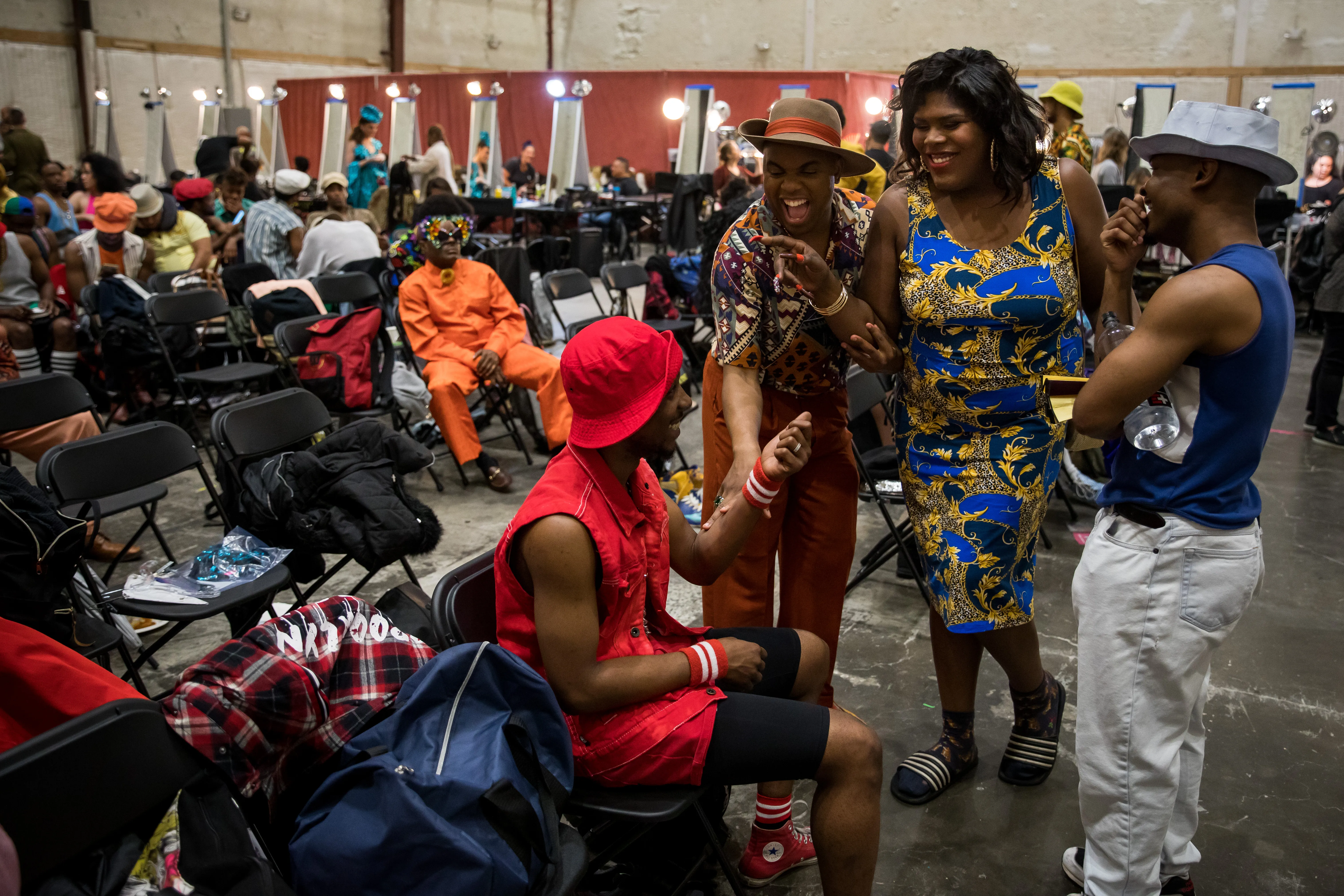
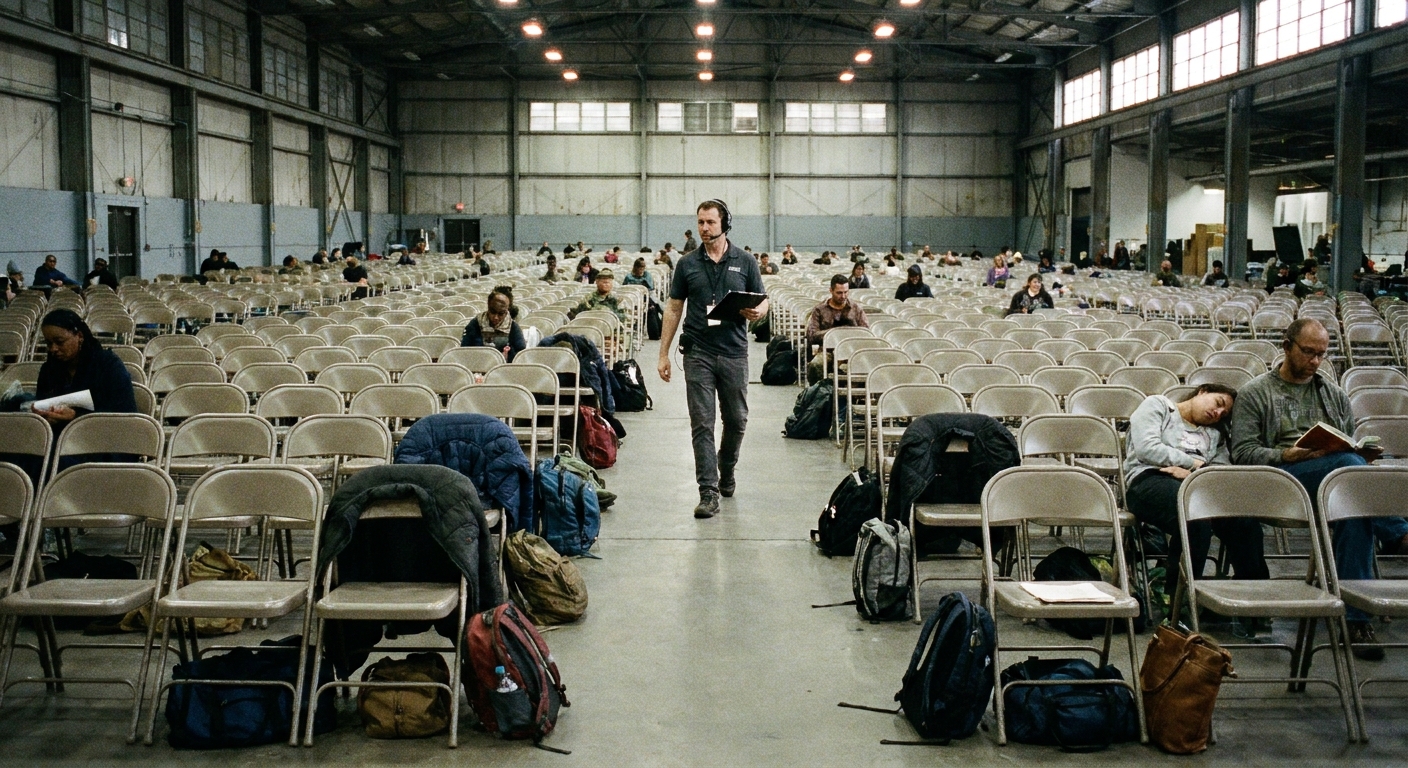
Because moving 300 people takes time, crowd calls typically include longer waits and more time in holding. Holding might be a gym, convention hall, warehouse, ballroom, or tented area near the location.
Direction is broader
On smaller days, an AD might fine-tune your walk or place you precisely. On a crowd call, direction often sounds like:
- “You are cheering. Big energy, but no screaming.”
- “Phones away. Watch the field. React on the cue.”
- “Reset to one. Same action again.”
You are still expected to hit marks and follow cues, but the notes are designed for groups rather than individuals.
Pay can be the same, but the day feels different
Rates depend on your region and the production agreement, but crowd calls can sometimes involve:
- Shorter on-camera time even if you are booked all day
- Earlier call times to process check-in and staging
- Greater chance of weather exposure for outdoor crowd scenes
- Different bump opportunities, like being moved into a featured section, though nothing is guaranteed
The big adjustment is emotional, not just financial: you can do everything right and still spend most of the day waiting because that is what the scale requires.
What to expect step by step
1) Booking and instructions
Crowd-call booking often comes with more detailed wardrobe guidance than a standard background day. You may be asked to bring multiple options, such as “3 looks” or “5 tops,” in a defined palette. Common instructions include:
- No visible logos, brand names, sports team marks (unless requested)
- Often avoid bright whites or tight patterns (camera moiré is real), depending on the scene and lighting
- No neon, no reflective materials, no light-up accessories
- Bring weather layers that still match the scene
If the scene is a specific crowd, like fans at a game, you might be asked for team colors or neutral tones to help with clearance and avoid unwanted brand visibility.
2) Paperwork and ID
Bring your ID and whatever paperwork the casting notice asks for. On many U.S. jobs, that means the same documents you would need for standard employment verification (often tied to an I-9). If you are a first-timer with a casting office, you may also be doing start paperwork, rehire forms, or direct deposit info. If minors are allowed on the call, there are usually separate rules and time restrictions, and the production will spell those out in advance.
3) Arrival and check-in
Arrive early. For crowd calls, “on time” can still mean you are behind a long line. Check-in usually involves:
- Confirming identity and paperwork
- Being assigned a number, wristband, voucher, or barcode
- Getting directed to holding, wardrobe, or staging
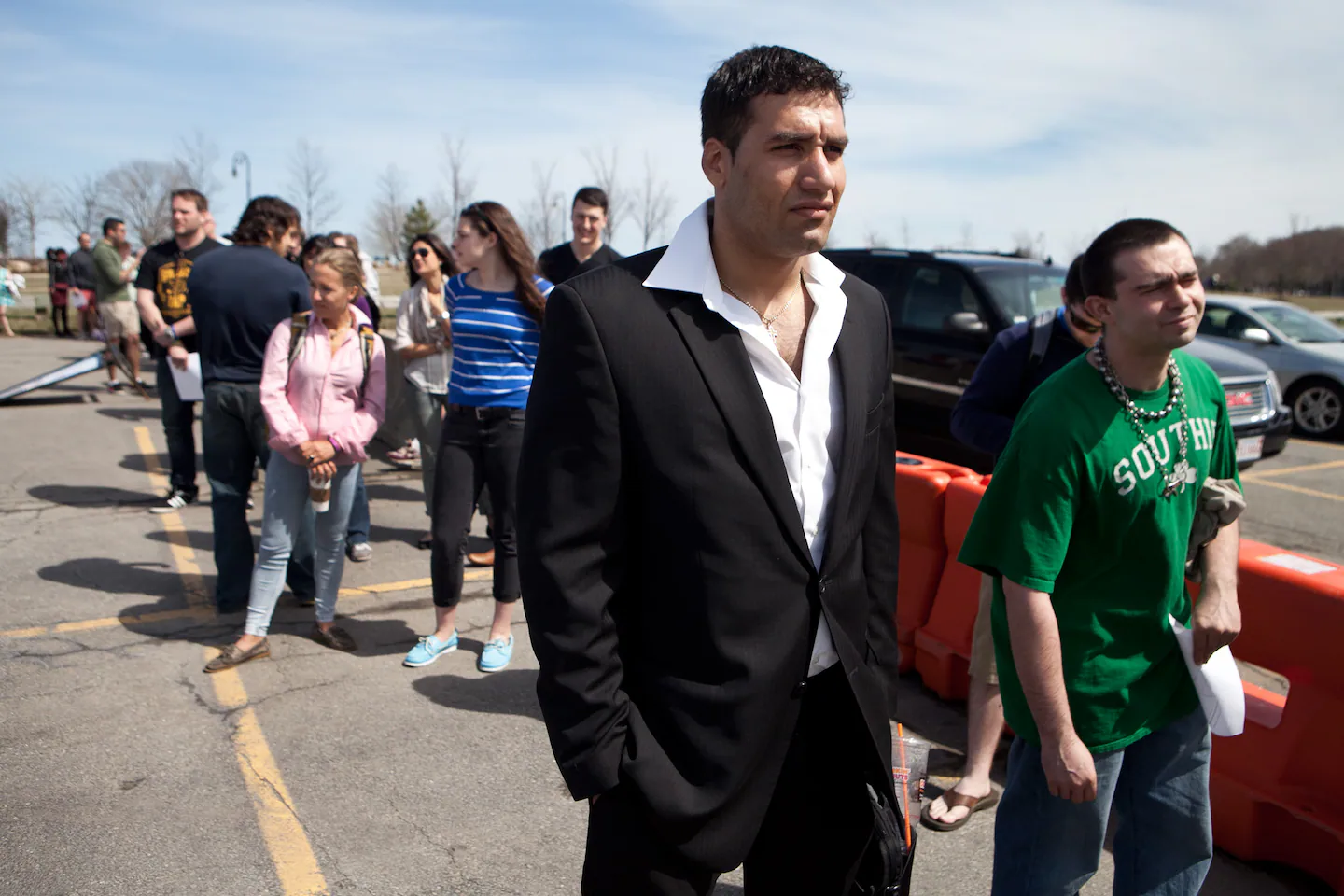
Because productions are processing so many people, check-in tends to be fast and minimal. It is not personal. It is logistics.
4) Wardrobe approval
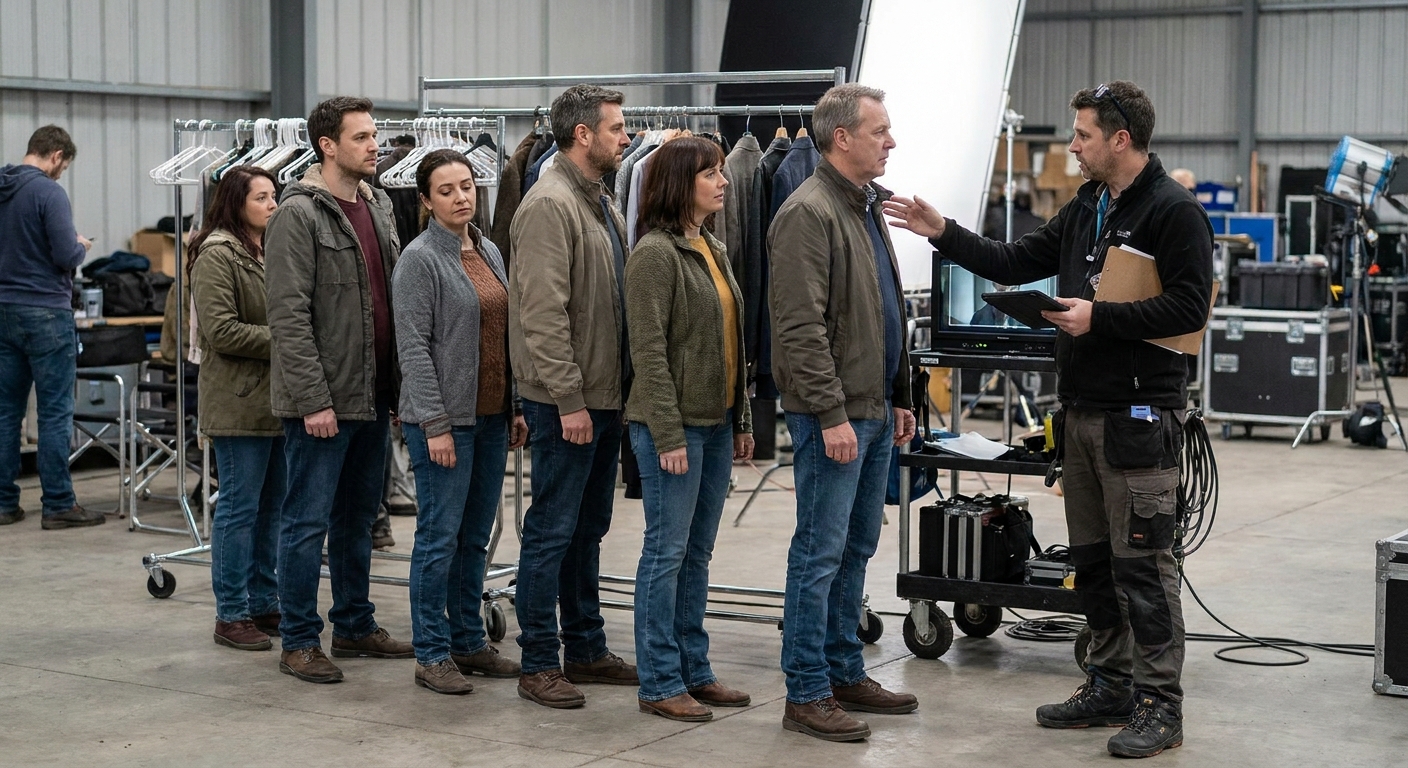
Wardrobe on a crowd call can be anything from “show us what you brought” to a full-on assembly line. What that can look like:
- Quick visual approval: A PA or costumer checks your outfit and sends you on.
- Sorting: You are grouped by color palette, vibe, or era.
- Changes: You are told to swap tops, remove a jacket, switch shoes, or turn an item inside out to hide branding.
- Handouts: Sometimes productions provide hats, scarves, team merch, lanyards, or rain layers for consistency.
If your wardrobe is not usable for the scene, you may be asked to change into something else you brought. In rarer cases, you can be released before filming if the project cannot use your look and there is no alternate placement.
One small thing that helps: keep your options in a garment bag or a clearly labeled tote, so swapping looks is quick and you are not dumping your whole life onto the holding room floor.
5) Holding, meals, and waiting
Once approved, you will spend time in holding until your group is called. Expect:
- Announcements over a loudspeaker or shouted group instructions
- Frequent reminders to keep wardrobe camera-ready
- Periodic group moves to staging areas
- Phone policies that can change as you get closer to set
Crowd calls can involve long stretches of downtime. Bring what you need to stay professional: water, a quiet snack if allowed, something to read, and a charger. Also bring patience for the human reality of crowded spaces.
6) Staging and placement
When it is time to film, you will likely be staged in waves. An AD team may:
- Place you by section, row, or zone (especially in stadium scenes)
- Assign you a “home base” spot for resets
- Move you for camera angles, lighting changes, or to fill gaps
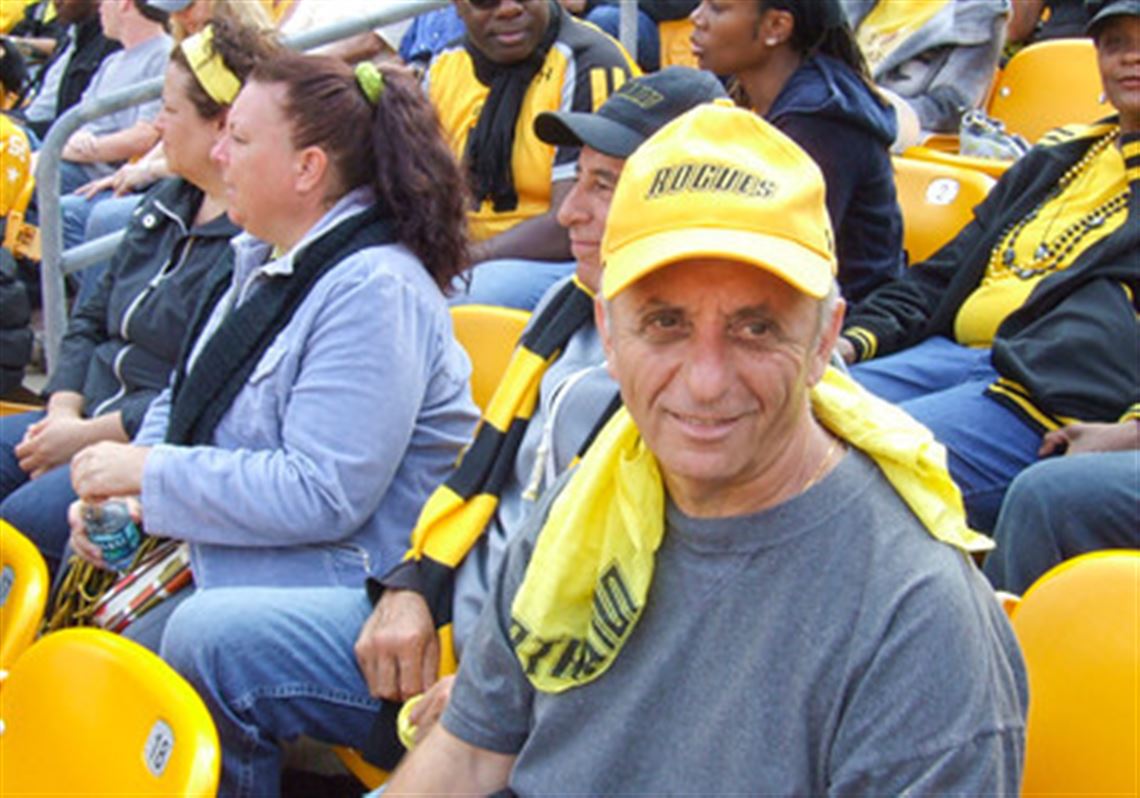
A useful mindset: you are part of a living set piece. Your job is to be consistent, responsive, and easy to reset.
7) Filming cues and reactions
In crowd work, your performance is often about controlled energy. You might be asked to:
- Cheer without sound or with limited sound
- React to a cue, like a goal, a fight, or a surprise entrance
- Create motion without stealing focus from principals
- Repeat the same beat many times for coverage
One of the strangest skills you learn quickly is repeating spontaneity. Your surprise has to match take after take, like choreography that still looks improvised.
8) Safety and set behavior basics
This is the unglamorous part that keeps you employed. Hydrate, wear comfortable shoes you can stand in, and plan for sun, cold, or rain without breaking wardrobe rules. Stay inside the boundaries you are given, and do not wander into areas that are clearly crew-only.
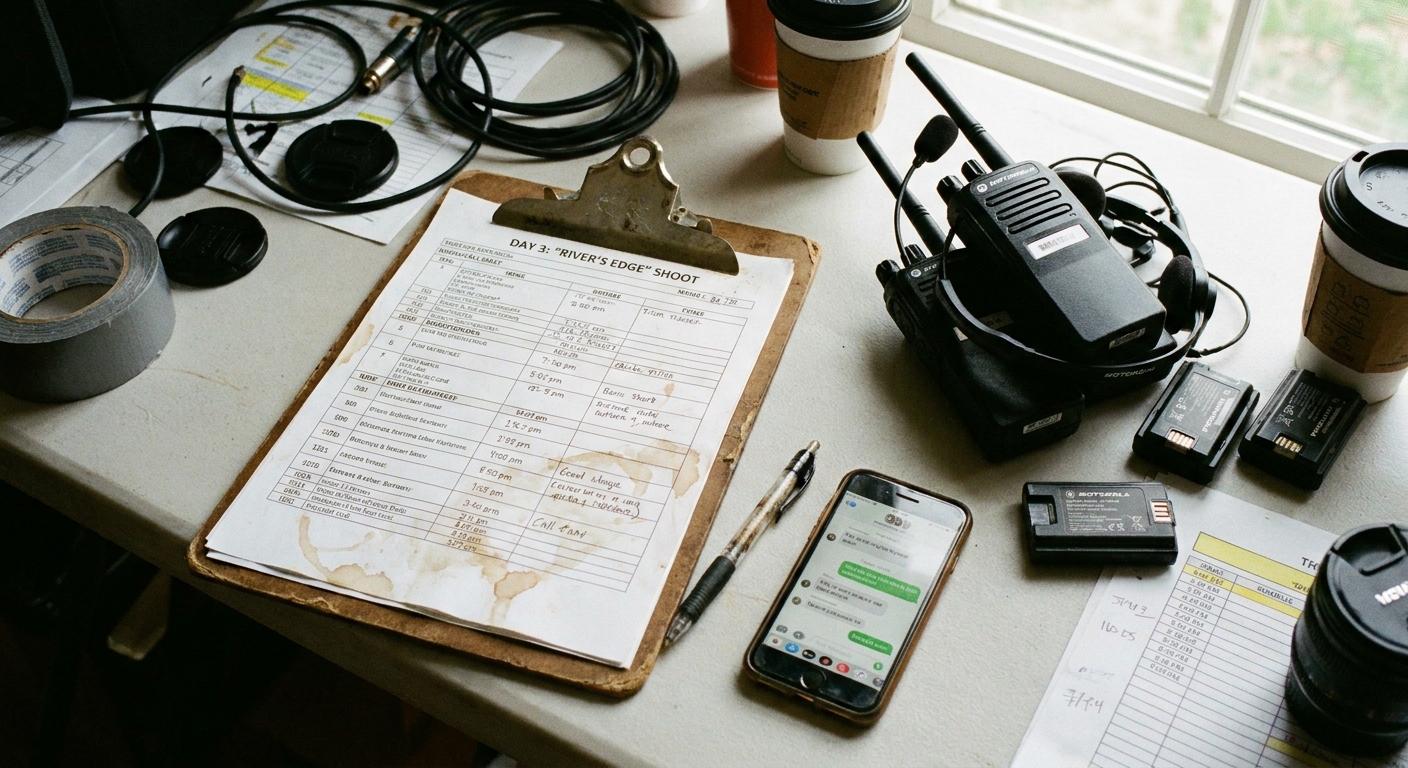
Also, treat call sheets like private documents. Do not post them, and do not take set photos unless the production explicitly says it is allowed.
9) Release and wrap
Release on a crowd call can be gradual. Some groups are wrapped earlier than others depending on camera needs. You may be:
- Released in batches by wristband color, section, or number
- Held for potential pickups, then released later
- Asked to return to holding before final dismissal
Do not leave without checking out properly. On some jobs, sign-out or voucher turn-in is required for payroll or timekeeping.
Wardrobe matching in plain English
“Bring options” is not casting being vague. It is the production protecting continuity and camera control. In a crowd scene, wardrobe matching is used to:
- Avoid visual noise that pulls attention from the story
- Build believable clusters, like friend groups and families
- Control color so the crowd reads well on camera and under lighting
- Hide modern giveaways for period or stylized worlds
Practical tips that help you get approved faster:
- Bring layers in the same palette so you can adjust to weather without changing the vibe.
- Avoid tiny stripes, micro-checks, and high-contrast patterns.
- Keep shoes camera-neutral unless the call asks for something specific.
- Pack options neatly so you can change quickly without turning holding into chaos.
Why the waits can be long
If you are used to small sets, the waiting on a crowd call can feel personal. It is not. Crowd calls are a logistics marathon. Waiting happens because:
- Transportation and security checks take longer with large groups
- Wardrobe approvals bottleneck when everyone arrives at once
- Resetting a crowd for multiple camera angles is slow by design
- Weather holds and lighting changes affect big exterior setups
The best way to stand out in a crowd call is not by demanding attention. It is by being dependable: listening, staying ready, and staying pleasant when the day stretches.
Pay and working conditions
Pay structures vary by production, but crowd calls can feel different financially for a few reasons:
- Overtime likelihood: Large scenes can run long, especially if resets are complex.
- Meal timing: Feeding a crowd takes coordination, so meal breaks may be tightly scheduled.
- Weather and comfort: Outdoor crowd scenes can mean heat, cold, rain cover, or long periods in the sun.
- Less camera time per person: You might work hard for shots where you are not individually visible, which is normal for crowd work.
When you accept a crowd call, you are agreeing to be part of a big system that prioritizes the shot over individual spotlight moments. There is craft in that, too.
Union vs non-union
Depending on your region and the contract, a crowd call might be union (for example, SAG-AFTRA covered) or non-union. The day-to-day experience can look similar, but rules around rates, overtime, meal penalties, and paperwork can differ. Your booking confirmation or casting notice should tell you what you are walking into.
Do crowd calls lead to upgrades?
Sometimes, yes, but it is not something to count on. Crowd calls can create opportunities because the production has so many moving parts. You might be repositioned closer to camera or asked to perform a specific action if you:
- Fit a needed look and your wardrobe is camera-perfect
- Follow direction quickly and consistently
- Stay professional when things get repetitive
Still, a crowd call’s main purpose is scale. If you get bumped, treat it like a bonus, not a promise of a career pivot.
Quick checklist
- Arrive early with your confirmation and ID ready.
- Bring multiple wardrobe options in the requested palette.
- Pack for waiting: charger, water, quiet entertainment.
- Plan for weather: sun protection, layers, comfortable shoes.
- Stay camera-ready and avoid last-minute wardrobe swaps without permission.
- Listen for instructions and do not freelance your performance.
- Keep set info private and follow phone rules.
- Check out properly so your timekeeping is complete.
FAQ
Is a crowd call the same as being an extra?
Yes. A crowd call is a format of extra work where the production hires a large group at once for crowd scenes.
Will I actually be seen on camera?
Possibly, but not guaranteed. Crowd calls are designed so the scene reads as real at scale. You may be visible, partially visible, or purely part of the texture.
Do I need to bring my own wardrobe?
Most crowd calls ask you to bring your own clothing options unless the scene requires uniforms or specific provided items. Always follow the instructions you receive.
What is holding on a crowd call?
Holding is the designated area where background actors wait until they are needed on set. On crowd calls, holding is often large and highly structured because of the number of people.
What should I do if I cannot match the wardrobe request?
Be honest in advance if possible, and bring the closest options you own. On the day, wardrobe may be able to adjust your look or place you elsewhere, but they may also release people whose looks cannot fit the scene.