I grew up backstage in Chicago, which means I have a reflex: before I even look at the stage, I look at what everyone is wearing and why. On a film or TV set, wardrobe is storytelling too, just quieter. As a background performer, your job is to blend into the world the production is building, and your clothes are part of the picture.
Here is how to read those call sheet clothing notes and show up looking like you belong in the scene, not like you wandered in from a different show.
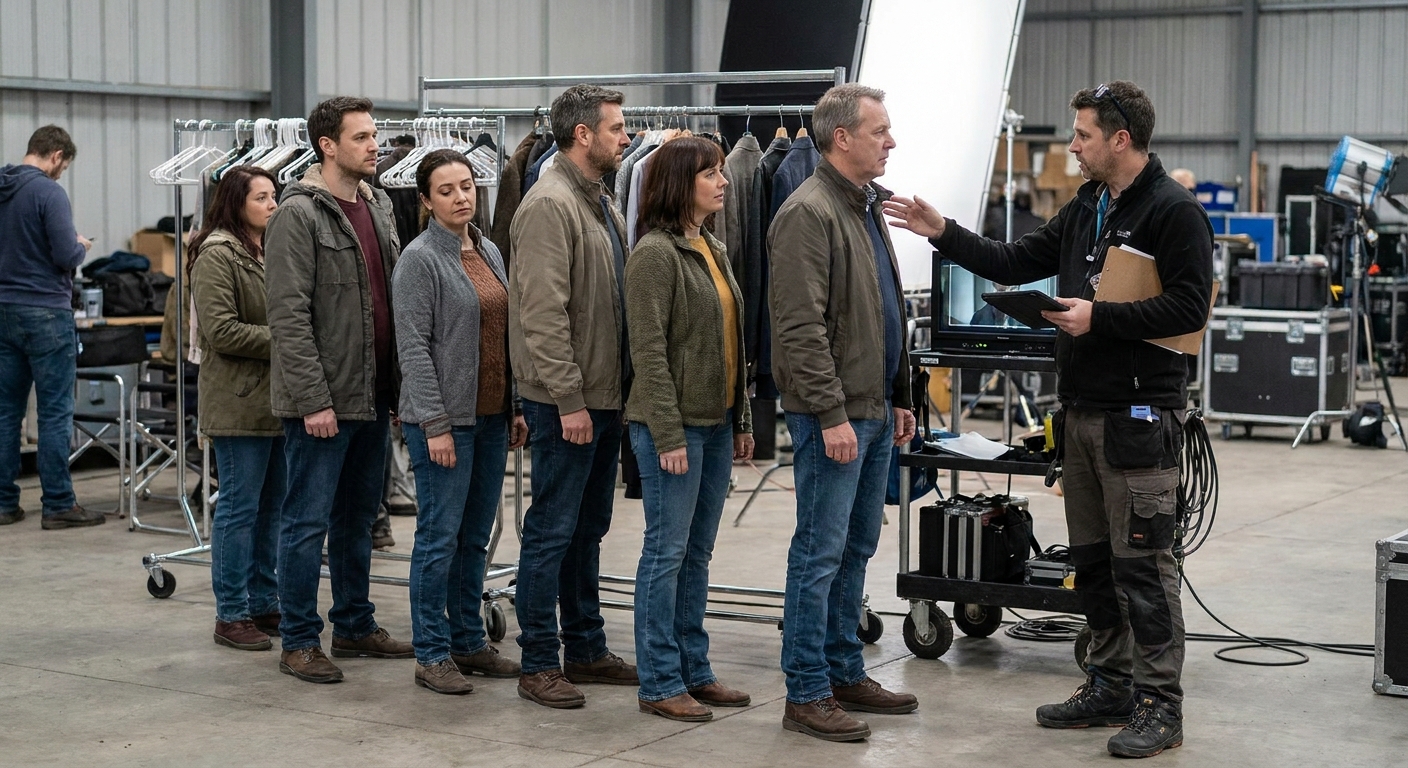
Start with the call sheet note
Wardrobe instructions for extras usually come as a short line in your booking email or call sheet, like:
- “Business casual, upscale office, bring options.”
- “Summer tourist, bright colors ok, no logos.”
- “Blue collar workwear, long sleeves, sturdy shoes.”
- “No black, no white, no red, avoid tight patterns.”
Treat that note like a tiny design brief. The goal is not to look like your best self. The goal is to look like the character type the scene needs, in a way that cuts smoothly with everyone around you.
And one more thing: the call sheet wins. Wardrobe expectations vary by production, network, and even the episode. If the note conflicts with general advice you have heard (including mine), follow the note.
What to bring (your wardrobe kit)
1) Multiple options in the requested style
Bring at least two, preferably three, full outfit options that match the note. That means tops, bottoms, and any layers that complete the look. Productions love choices because blocking, lighting, and what other background shows up in can change the plan fast.
- If the note says “upscale.” Bring cleaner lines and better fabrics: blouses, button-downs, tailored pants, knee-length skirts, simple dresses, a blazer.
- If the note says “casual.” Bring solid tees, henleys, denim jackets, sweaters, jeans without wild distressing, casual dresses.
- If the note says “period.” Only bring what you already own that truly fits the era. Do not force it. Costume will usually guide this heavily.
2) Logo-free, brand-free, character-free
This is the big one. Avoid visible logos, sports team marks, slogans, band tees, cartoon characters, and obvious designer branding. “Character-free” also means no novelty prints or recognizable franchises, like superhero tees or big graphic icons. Even small logos can cause clearance issues and get you sent back to your car, or put in a cover-up layer that does not match the note.
If you are unsure, assume it counts as a logo.
3) Colors and patterns that behave on camera
Many sets avoid certain colors for very practical reasons. If your call sheet specifies “no” colors, follow it exactly. If it does not, these are safe default guidelines:
- Avoid optic white. It can blow out under lights and look distracting. Off-white or cream is often safer than bright, crisp white.
- Avoid solid black as your default. It can lose detail and read flat on camera, depending on lighting and the scene.
- Be cautious with bright red. It often pulls focus and can create exposure or continuity headaches.
- Skip tight stripes, tiny checks, and dense micro-patterns. These can moiré or shimmer on camera.
- Choose mid-tones and textured solids. Navy, olive, gray, muted rust, soft blues, creams, and earth tones often work well unless told otherwise.
4) Layers, always layers
Layers are continuity-friendly and director-friendly. A jacket can come on or off to vary the crowd. A sweater can quickly make you look like a different person if you are used in multiple setups.
- Light jacket, cardigan, flannel, blazer (depending on the world)
- Neutral scarf, only if the note supports it
- Simple belt if your pants need it, nothing with a giant buckle
5) An extra fit option (if you already own it)
This sounds odd until you have lived it: a fit that looks fine in a mirror can look sloppy under a camera’s eye, especially if you are seated or moving. If you already have the option in your closet, bring one item slightly more fitted and one slightly more relaxed, particularly for jackets and button-downs.
Also consider backup options for weather. If your exterior day turns cold, you will be grateful you brought a warmer layer that still fits the scene.
6) Shoes that match the role and survive the day
Background work is a lot of standing, a lot of waiting, and sometimes a lot of walking. Your shoes have to do three jobs: match the story, stay quiet on hard floors, and keep you functional.
- Bring at least two pairs. One primary, one backup.
- Avoid loud soles. Squeaky shoes can get flagged, especially on interior dialogue scenes.
- No brand marks if possible. Some productions are strict about visible logos on sneakers.
- Comfort matters. If the note says “dress shoes,” bring the most comfortable pair you can that still reads appropriate. Consider gel inserts.
- Think safety. Some locations require closed-toe shoes. Avoid heels on uneven ground unless specifically requested.
7) Undergarments that support the look
This is not glamorous, but it is the difference between “camera-ready” and “why is my strap in the shot.” Bring undergarments that work with multiple tops and avoid visible lines or straps when possible.
- Skin-tone options that work under lighter fabrics
- Strapless or convertible bra if your options require it
- Plain socks in black, white, and neutral, depending on your shoe choices
8) Weather gear that can stay off camera
You can be prepared without changing the on-camera look. Pack practical items that live in your bag between takes:
- Umbrella and a compact rain jacket
- Sunscreen and sunglasses
- Hand warmers in cold weather
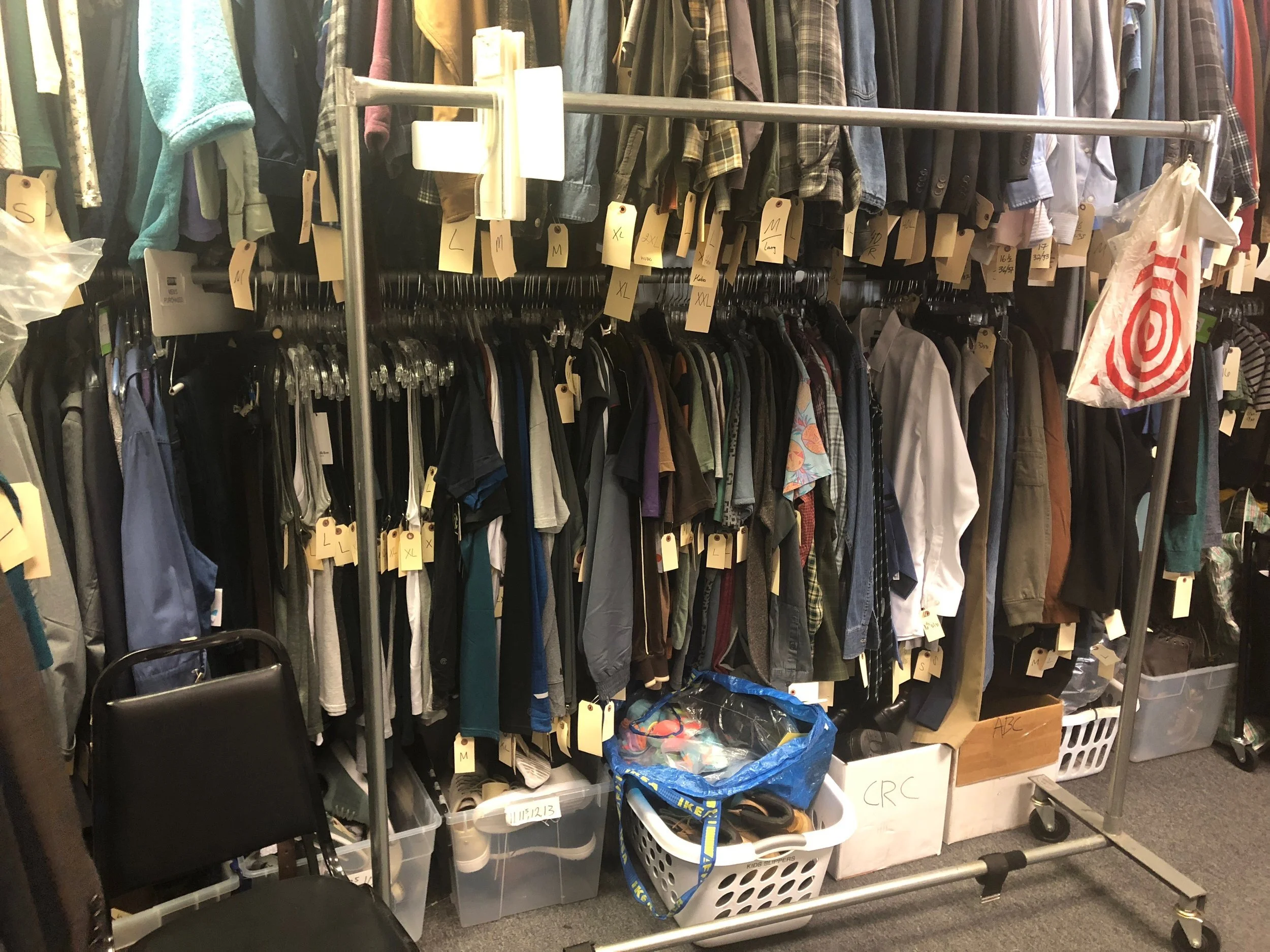
What to avoid wearing to set
If you want the simplest route to a smooth check-in with wardrobe, avoid these common landmines unless specifically requested:
- Neon colors that pull focus
- Busy patterns that strobe or moiré
- Optic white tops and all-black outfits as default choices
- Large jewelry that clinks, flashes, or reads too “styled”
- Smartwatches unless you can remove them quickly (they can date a scene)
- Political messaging or anything that reads like a statement shirt
- Anything with visible branding, including hats
- New shoes you have not broken in
Also, avoid arriving in your only option. If you show up wearing your best look and it gets rejected, you have just created a problem that did not need to exist.
What wardrobe provides (and what they do not)
Every production is different, but in general, background performers should assume they are bringing their own base wardrobe unless told otherwise. Here is what is commonly handled by the costume department once you are on set.
Typically provided on set
- Wardrobe approval and continuity tracking. They will note what you wore, how it was styled, and whether it needs to match across days.
- Adjustments and quick fixes. Safety pins, fashion tape, lint rollers, a quick steam, sometimes minor hemming or repairs.
- Cover-ups. If a logo slips through, they may add a jacket, scarf, or otherwise disguise it if it works for camera and continuity.
- Specific background pieces. For certain worlds like medical, law enforcement, or a branded workplace, they may issue scrubs, uniforms, or specialty items.
- Period costume pieces. If the show is set in another era, costume often supplies the bulk of the look, especially for featured background.
Often not provided
- Everyday basics. Plain jeans, neutral tops, standard coats, casual shoes.
- The right underwear for your outfit. Bring what you need to make your options wearable.
- Perfect sizing for everyone. Even when they do provide costume, the closer you can be to “easy fit,” the smoother your day goes.
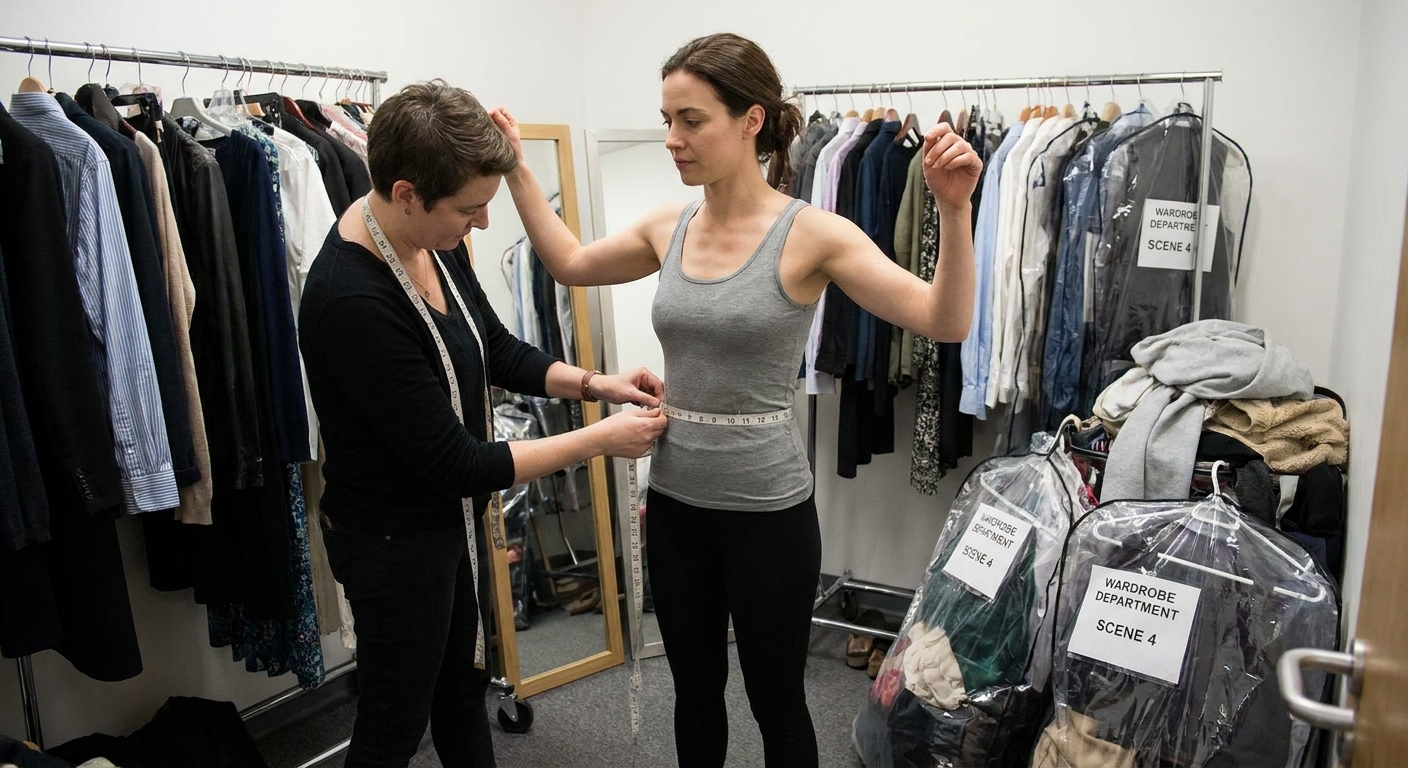
If you are being fitted ahead of time, treat that appointment like gold. Show up on time, communicate any fit issues clearly, and remember: costume is trying to make a whole world look coherent, not trying to critique your body.
Continuity note: once your look is approved, avoid making big changes right before you return for another day. A fresh haircut, shaved beard, new nail color, or sudden tan can turn into a problem fast.
What to pack besides clothes
The call sheet might only mention wardrobe, but background performers learn quickly that a little self-sufficiency goes a long way. Pack items that support comfort, continuity, and professionalism.
Continuity helpers
- Small comb or brush
- Hair ties and bobby pins in a neutral color
- Basic makeup touch-up if you wear it: powder, concealer, lip balm
- Deodorant and breath mints
- Nail kit for a hangnail emergency
- Lint roller, even though wardrobe often has them
Comfort and survival items
- Water bottle
- Phone charger and a small power bank
- Quiet snacks that will not stain your costume: protein bar, nuts, crackers
- Band-Aids and blister pads
- Any necessary meds you might need during a long day
- A book or something quiet for holding, if allowed
Set-friendly organization
- Garment bag or large tote to keep options clean
- Hangers if you can spare them
- A zip pouch for jewelry and small items
- Permanent marker to label your belongings if asked
Depending on the production, you may also need a photo ID at check-in. If you are booked for multiple days, it can help to take a quick mirror photo of your approved look for continuity, but only if the production allows it.
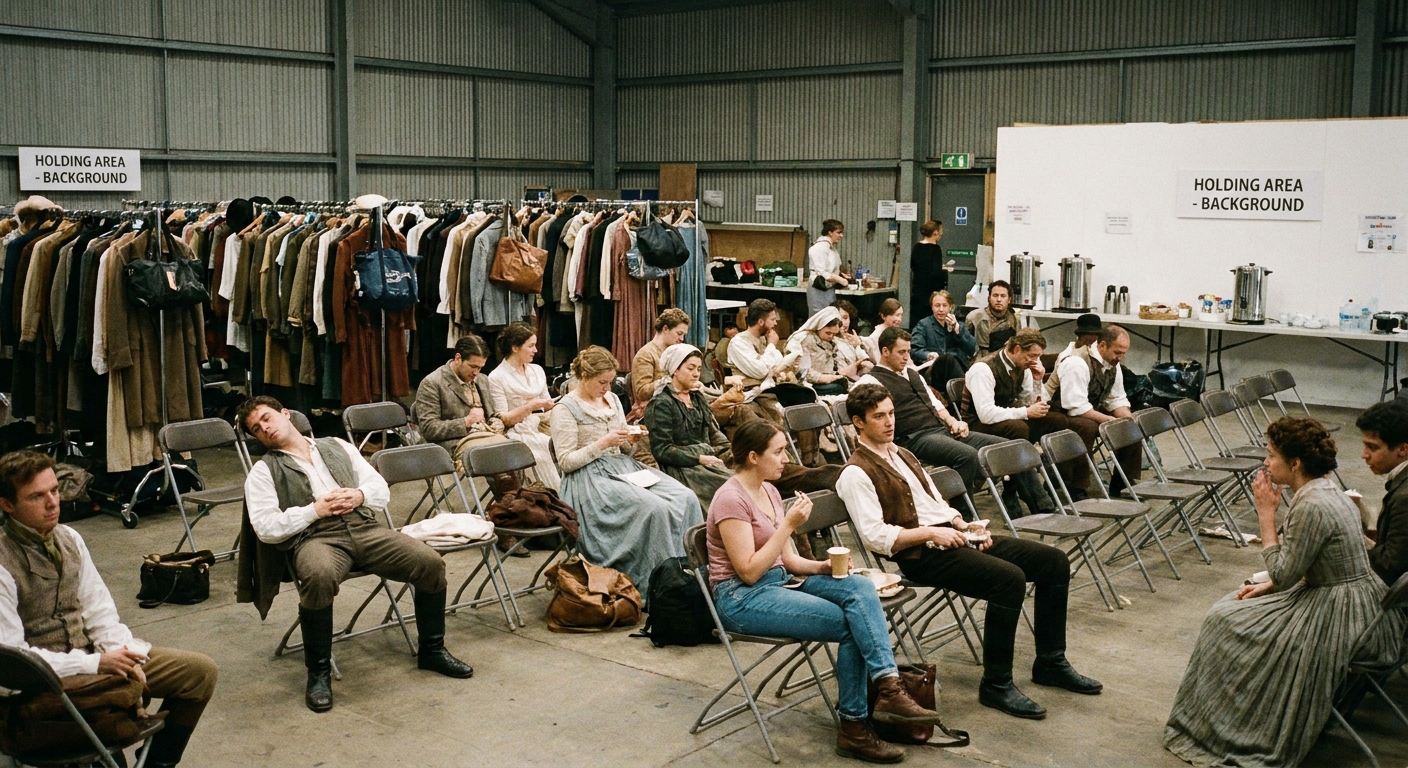
One of the most underrated background performer skills is keeping your costume camera-ready during the hours you are not on camera.
Quick checklist
- Read the wardrobe note again, slowly
- Pack 2 to 3 complete outfit options that match the note
- Confirm everything is logo-free and message-free
- Add layers that fit the world of the scene
- Bring two shoe options that you can stand in
- Pack neutral undergarments and socks
- Bring basic grooming items and a lint roller
- Grab charger, water, quiet snacks, blister protection
- Hang or fold outfits so they arrive unwrinkled
Common notes, decoded
“No logos”
Nothing branded, including hats and bags you might carry on camera. If you are meant to hold a purse, tote, or backpack in the scene, bring a plain option.
“No black, no white”
Choose mid-tones. Think charcoal instead of black, cream or light gray instead of bright white.
“Avoid red”
Red reads loudly and can create continuity headaches. Go with muted warm tones if you want color: rust, burgundy, dusty pink, or brown, if permitted.
“Bring layers”
Bring at least one removable outer layer that still matches the scene. Bonus if it changes your silhouette slightly.
“Athleisure”
Keep it clean and neutral. Avoid giant brand marks and overly trendy pieces that will date the show quickly.
If wardrobe rejects your options
It happens, even to people who did everything right. Stay calm. The costume team is not judging you, they are protecting the frame. Ask one useful question: “What direction do you need me to go, color-wise or style-wise?” If you have more options in your bag or car, offer them. If not, they may be able to adjust what you have, or pull something from stock.
Your reputation is built on being easy to work with and quick to adapt. A polite, practical attitude travels fast on set.