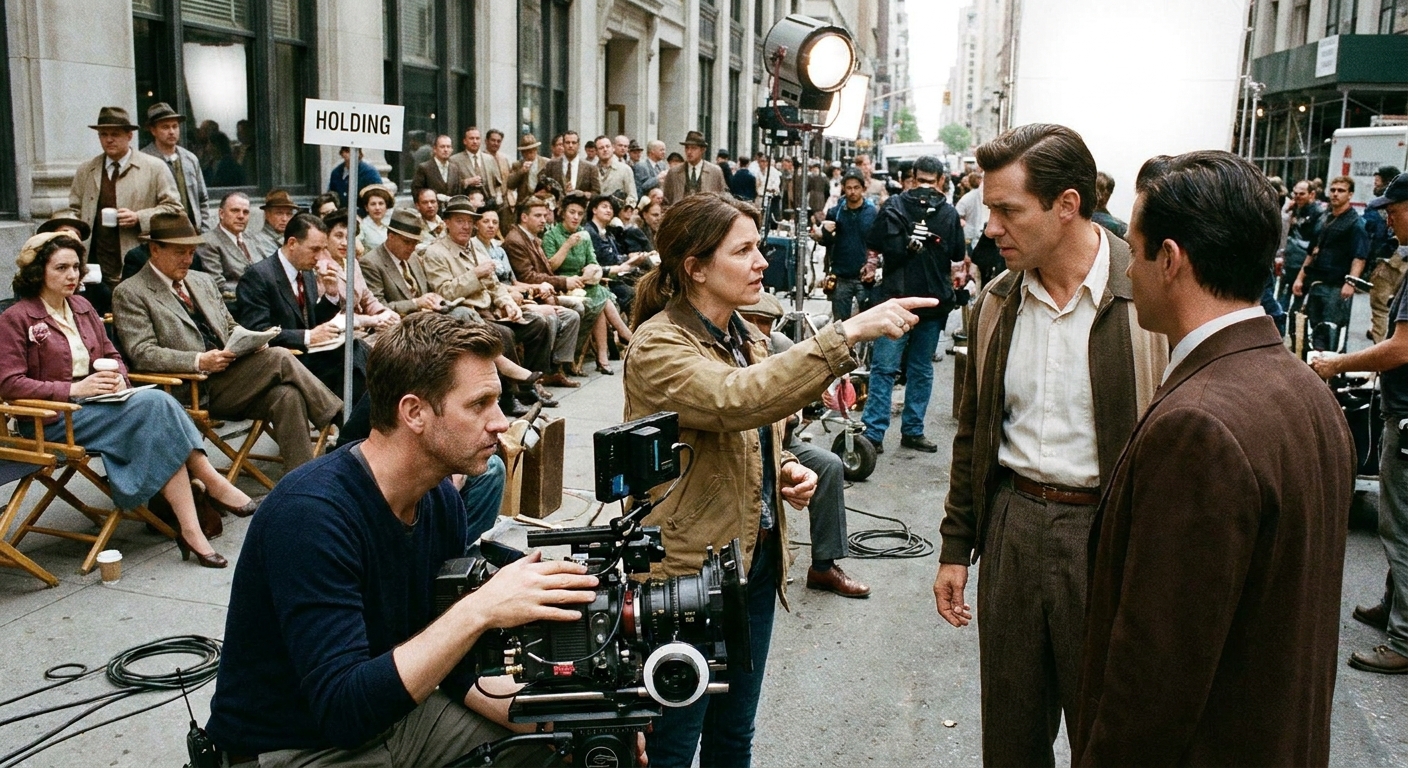
I grew up backstage in Chicago, where the difference between “in the show” and “around the show” was crystal clear: who got a cue, who got a costume, who got a note, who got a name. Film and TV have their own version of that distinction, and one of the most misunderstood titles sits right in the middle of it.
A day player is usually a principal performer hired on a daily basis to play a small but specific role on a film or television production. Very often that means a speaking part that shoots in one day, but in real production life, “day player” can also describe the contract/pay structure for a principal performer who is brought back for additional days as needed.
Day player, defined
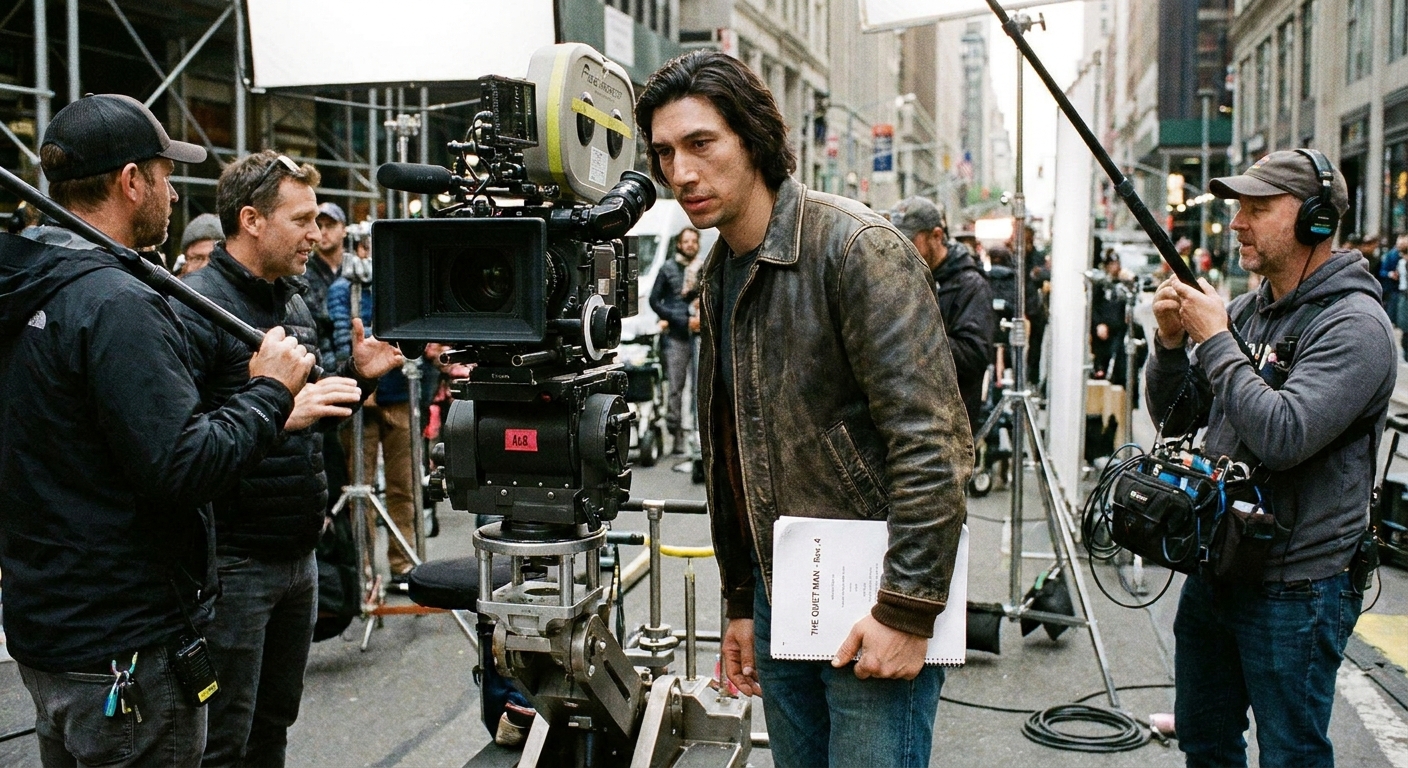
In practical terms, a day player is a principal performer booked day to day. They are hired because the scene requires dialogue, a specific skill, a specific look, or simply a character the audience needs to remember, even briefly: the nurse who gives crucial information, the bartender who clocks the hero’s shaky hands, the neighbor who delivers a laugh line, the security guard who says, “You can’t go in there.”
The key elements are:
- Principal work: In union language (for example SAG-AFTRA), “principal” generally means a contracted on-camera performer whose work is treated differently than background. Day players commonly fall into that principal lane, although paperwork and labels can vary between union and non-union productions.
- Usually speaking work: Most day player hires are brought in with planned dialogue. Occasionally, a production may still treat a small, identifiable on-camera moment as a day player type hire even if the final cut ends up without audible lines.
- Booked by the day: The engagement is typically scheduled for one shoot day. If the role expands, the production can extend you or bring you back on additional days under a day-to-day arrangement.
- A distinct character function: The role is identifiable in the story, even if it is small.
How a day player is booked
Day player casting usually moves faster than bigger roles, but it is still casting. The production has a character breakdown, a rate range, and target dates. Casting may request auditions, self-tapes, or make an offer based on prior work, reels, or an agent submission.
Common routes to a day player booking
- Through an agent: Many day player roles are filled via theatrical agents submitting clients to casting.
- Through a casting platform: Some projects request self-tapes for small speaking parts and book quickly once they see the right fit.
- Direct offer: If casting knows your work, you may be offered the role outright, especially for very small parts.
Unlike background casting, a day player booking is usually tied to script pages and a specific character name (even if that name is something functional like “Paramedic” or “Court Clerk”).
Pay and union basics
“Day player” is often used as shorthand for daily principal pay, especially on union productions. That typically means you are paid on a day rate rather than a weekly guarantee, and common production rules like overtime and meal penalties may apply depending on the agreement and the production’s status.
Terminology and categories can shift across jurisdictions and unions (and on non-union shoots). The clean takeaway is this: if the production is treating you as a principal hire, your deal, paperwork, and protections are usually different than background, even if you are only on set for a single scene.
What paperwork looks like
A day player typically completes paperwork associated with a principal acting hire, which is more involved than general background. Exact requirements vary by production and jurisdiction, but the day player track is usually built around the idea that you are a contracted performer whose work is being captured as story, not atmosphere.
You can expect some version of
- A deal memo or performer agreement: Terms of the engagement, including rate and work date(s).
- Start paperwork: Employment eligibility and payroll forms, often handled digitally before the shoot day.
- Union documentation if applicable: If the production is signatory, there may be additional forms or reporting tied to the role classification.
- Script and sides: Often provided with confidentiality expectations. Sometimes you receive only the pages relevant to your scene.
Another tell: day players are usually processed through the production office in a way that recognizes them as a principal performer. Even if the job is “just a day,” the production needs clean documentation because principal work triggers different obligations than background work.
How the call differs from background
On set, the day player experience often feels like you are threading a needle: you are there briefly, but the camera is truly watching. That changes the rhythm of your day.
1) You are called for a scene
Background performers are generally booked to populate an environment. A day player is booked to execute a specific beat. Your day is built around a scene number, a setup, and a performance objective.
2) You go through closer scrutiny
Background can involve fittings and holding, but day players often have more targeted wardrobe choices and closer camera attention, including mic placement if you are wired. You might also have more direct interaction with the costume department about continuity details that matter in close-up.
3) You block with the team
Blocking for background can be choreographed, but a day player is typically part of the scene’s blocking with the director, the assistant director team, and sometimes the leads. You will likely run lines, adjust eyelines, and repeat the moment until it lands.
4) You are expected to repeat cleanly
Everyone’s professionalism matters, but a principal performer is expected to arrive fully prepared: ready to take direction, able to hit marks, and able to deliver consistent work across takes and coverage.

Day player vs. background
If you are trying to categorize the job quickly, ask one question: “Am I hired as a principal performer?”
- Day player: Usually hired as a principal performer on a day-to-day basis, often with planned dialogue or a clearly featured story function.
- Background: Hired to fill space and action, typically without scripted dialogue and without a principal contract.
If you are unsure, the paperwork usually tells the truth. Background paperwork looks like background. Principal paperwork looks like principal.
Day player vs. an upgrade
This is where people get tangled, because the on-set experience can look similar. But the path in is different.
A day player is planned as principal
When you are booked as a day player, the production already knows it needs a principal performer for that moment, and it is hiring you to do that job. The role is designed that way before you arrive.
An upgrade starts as background
A same-day upgrade is when someone who was already hired as background is asked to do principal work during filming, often by speaking. That can happen for a dozen practical reasons: a line gets reassigned, a moment is rewritten, or the director realizes the scene needs a verbal button.
In that situation, the performer’s day changes midstream. There may be additional approvals, paperwork adjustments, and rate changes because the job is no longer purely background.
So yes, an upgraded extra might end up delivering a line on camera. But that does not mean their original booking was a day player booking. The day player hire is planned as principal from the outset.
What to bring to set
A one-day principal job asks you to sprint, not jog. Here is what helps you do it well.
- Your sides and full context: Know the scene’s purpose, not just the words. If you can access surrounding pages, read them.
- Continuity awareness: Note props, handoffs, and business. Tiny actions become big when repeated across coverage.
- Flexible choices: Offer a clear take, then be ready to adjust quickly when the director reshapes the moment.
- Set-ready basics: Arrive early, stay quiet near set, silence your phone, and follow AD directions precisely.
And the unglamorous secret: the day player who makes the crew’s day easier tends to be remembered. Not because they demanded attention, but because they did the job with calm, repeatable craft.
Do day players get credit?
Sometimes, but it is not guaranteed. Credits are ultimately determined by production decisions, contracts, and final cut. Many principal speaking roles are credited, but scenes get trimmed, lines get removed, and occasionally a moment becomes purely visual.
If you are hired as a day player, assume professionalism either way: do the work as if it will be on screen, and be prepared for the reality that editing may change what the audience sees and how you are listed.
FAQ
Is a day player the same as a co-star?
Sometimes the terms overlap in casual conversation, but they are not identical. “Day player” describes the pay and hire structure (day to day) and usually implies principal status. “Co-star” is a role size/category often used in TV for smaller speaking roles. A co-star might shoot one day or multiple days. A day player might be co-star sized, or even smaller, but still principal.
Can a day player work more than one day?
Yes. Many day player hires are one day, but a performer can also be hired day to day across multiple shoot days, sometimes nonconsecutive, depending on scheduling and story needs. If the role grows, the production may extend the deal.
Do day players go to holding with background?
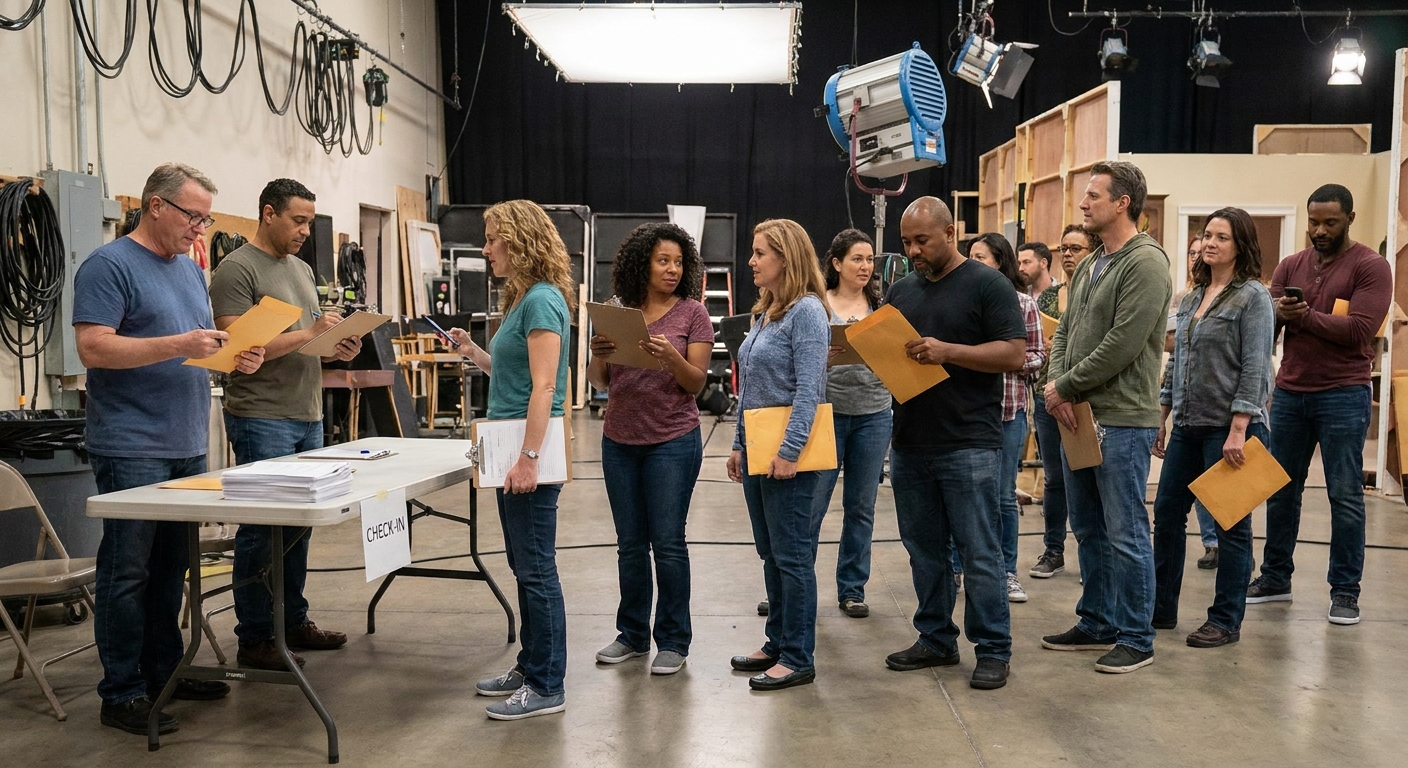
It depends on the set, but often day players have a different flow than general background, sometimes including separate check-in, a different waiting area, or more direct movement between wardrobe, hair and makeup, and set.
What is a “one-liner” role?
People use “one-liner” informally to describe a role with a single line of dialogue. Many one-liners are day player hires because they are small principal roles designed to shoot in a day.