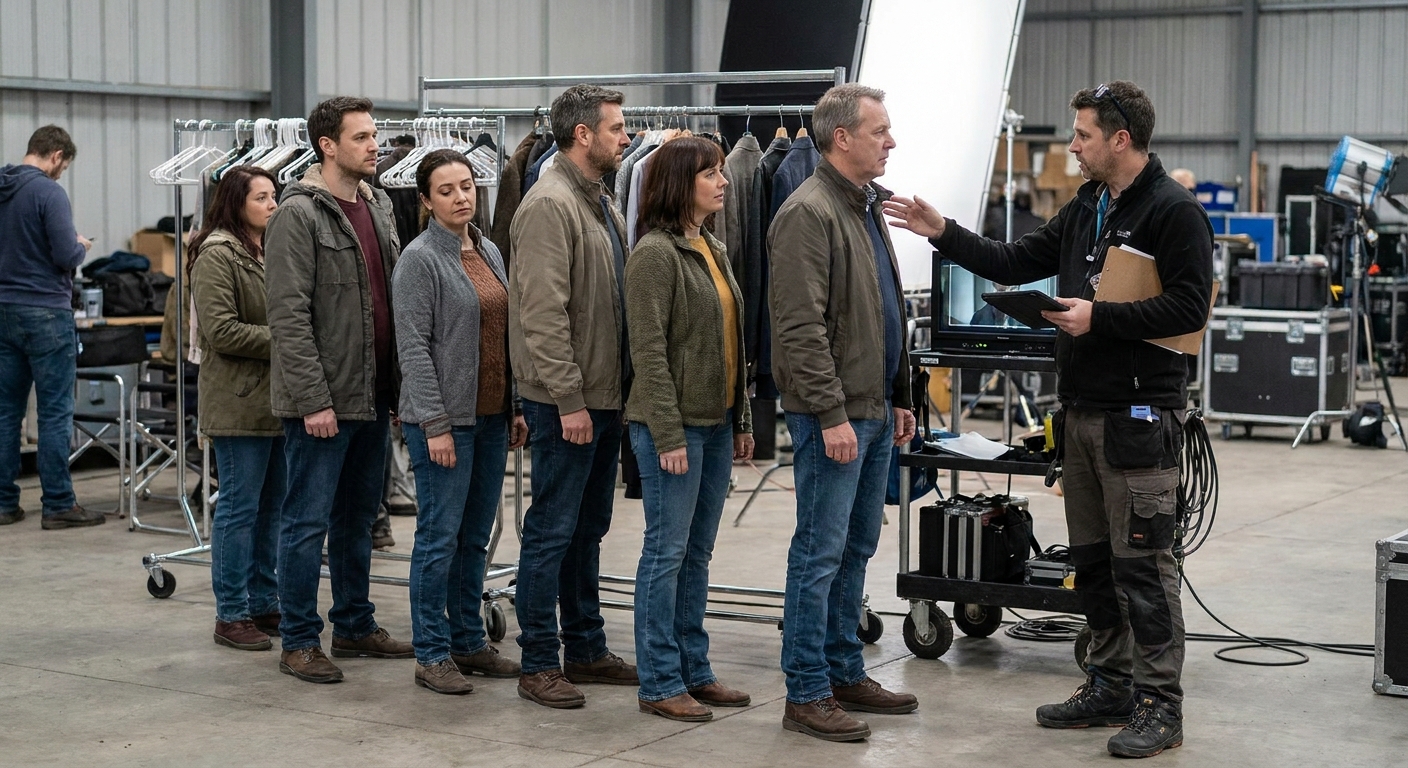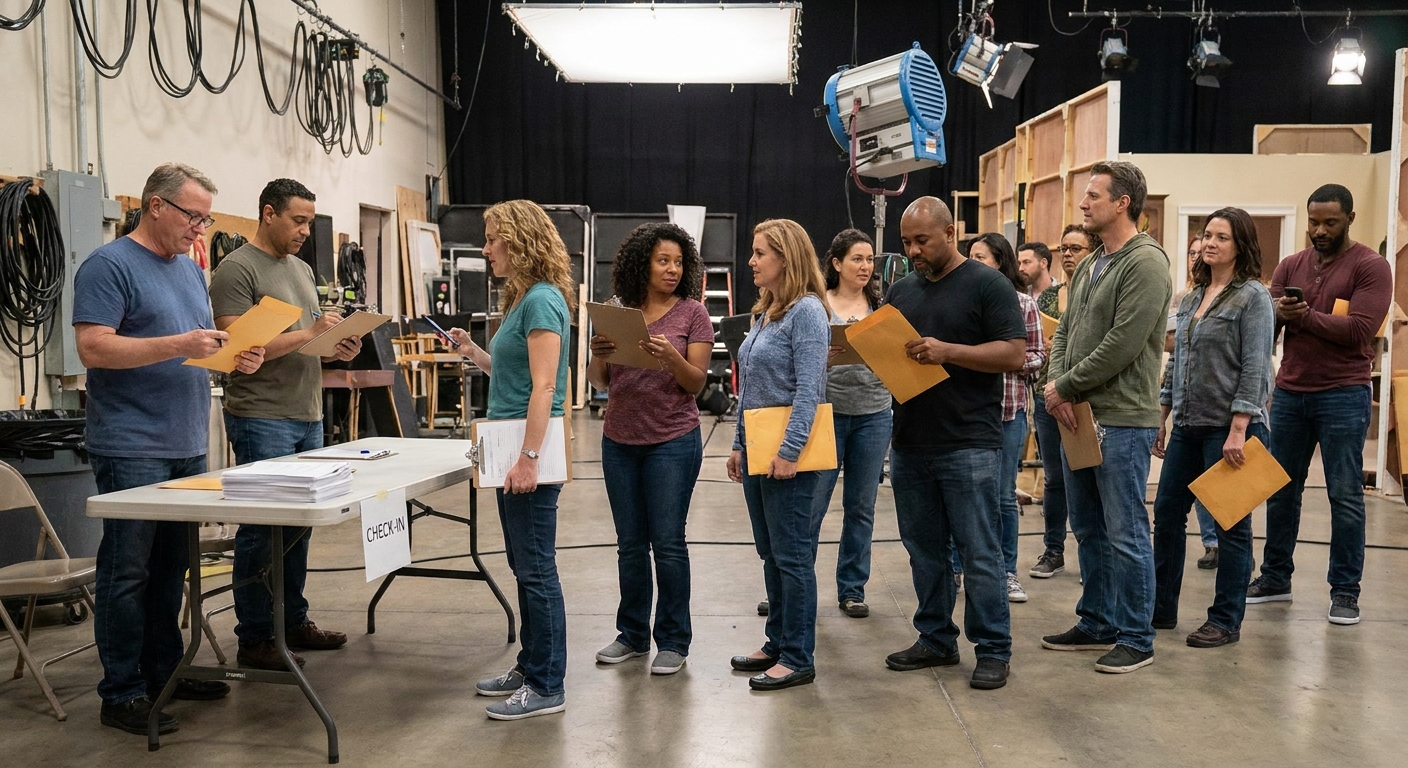
The first time I got called in for a background wardrobe fitting, I assumed it would be like a shoot-day check in: show up, get told what to wear, get sent home. Instead, it felt closer to a quiet, highly focused backstage ritual. Wardrobe was building a visual world, one person at a time, and I was a tiny moving piece they needed to fit perfectly.
If you have a fitting on your schedule, here is what happens. Here is who you will meet, what you will do, and how to set yourself up to be the easiest “yes” in the room.
What a background wardrobe fitting is
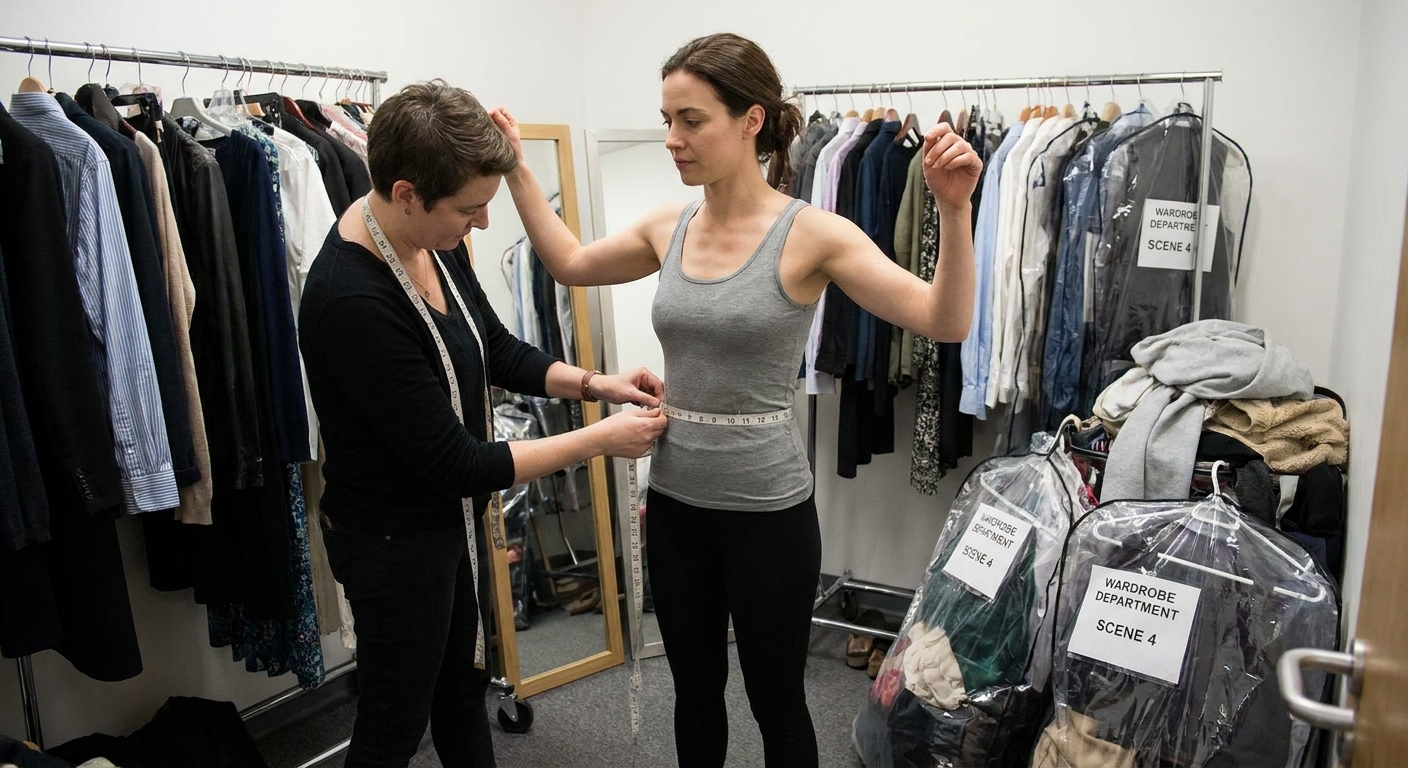
A background wardrobe fitting is a separate appointment that happens before filming where the costume department:
- takes your measurements
- checks how you move and how clothing sits on camera
- assigns you a look (or several options)
- photographs you in those options for continuity
- tags and preps pieces so your shoot day runs faster
This is not a general “bring your own clothes” conversation. It is not even a casual chat. It is the costume team actively designing and controlling the look of the frame, even when you are not the featured performer.
Who runs the fitting
Most fittings are run by the costume department, which can include:
- Costume designer (sometimes present, often not for background unless the look is specific)
- Costume supervisor (manages logistics, budgets, schedules)
- Key costumer or set costumer (the person you will most likely work with directly)
- Costume assistants (pulling sizes, labeling, taking photos, tracking paperwork)
- Tailor or alterations team (especially if items need quick adjustments)
You might also interact with someone from casting or production, but the fitting itself is wardrobe’s domain. Think of it as stepping into their workshop.
How it usually goes
1) Check in and paperwork
You will sign in, confirm your name and booking details, and sometimes verify basics like shoe size or visible tattoos. You may be asked to confirm your availability for the shoot date again, because costume planning depends on knowing who is actually going to be in the scene.
2) Measurements
Expect quick, professional measurements. Common ones include:
- height
- chest or bust
- waist
- hips
- inseam
- neck
- shoe size
This is not a judgment moment. It is data. Good teams are calm, matter-of-fact, and fast.
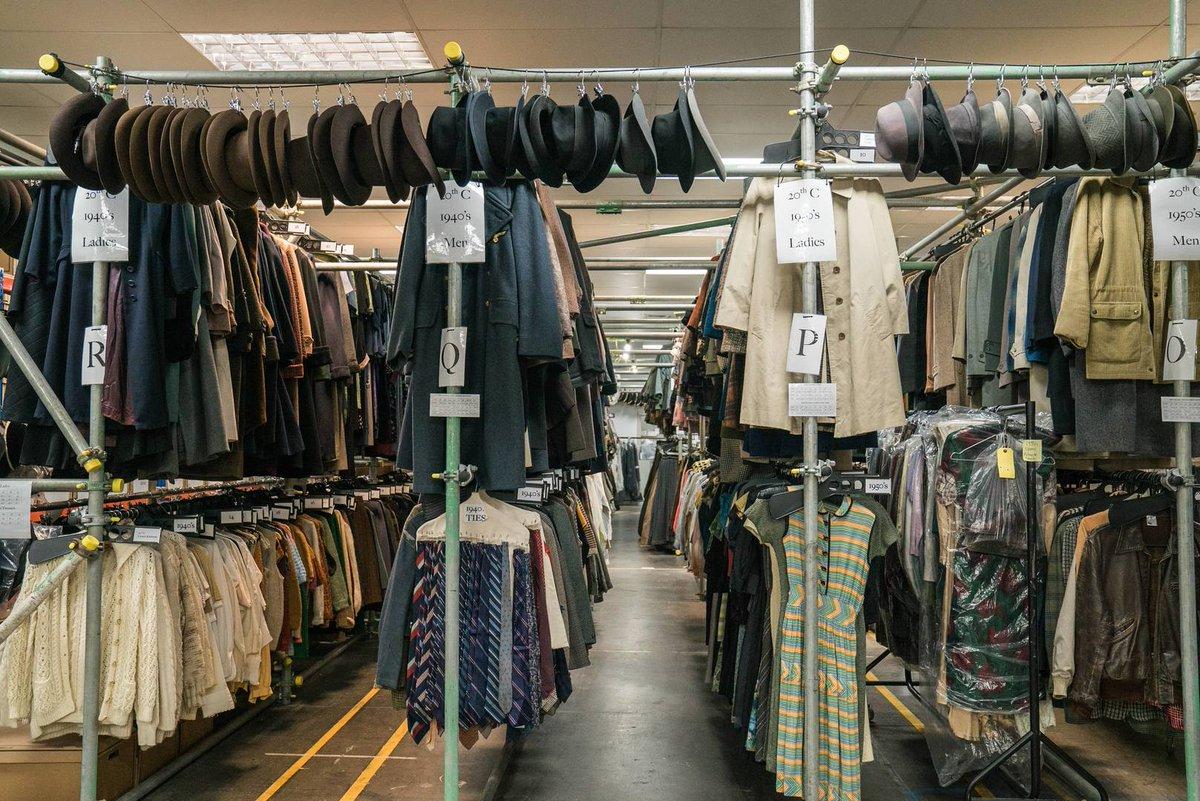
3) Trying on pieces
They may already have a plan for your “type” in the scene: office worker, diner patron, festival attendee, commuter, hospital visitor, and so on. You will try on one look or several combinations while they check:
- fit (too tight reads tight on camera, too loose can look sloppy unless it is intentional)
- movement (can you sit, reach, walk, and do the action without tugging or gaping)
- color and texture (some patterns can create moiré or flicker on camera; certain fabrics reflect light)
- silhouette (background often needs clear shapes that support the scene’s era and tone)
If the project is period, uniformed, or highly stylized, fittings can feel more like a transformation, including specialty shoes, outerwear, hats, or accessories.
4) Photos for continuity
Once you are in the selected look, the team typically takes reference photos. These are internal continuity tools so that on shoot day, everyone knows exactly what you wore and how it was styled. Photos may include:
- front, back, and side views
- close-ups of accessories (belts, jewelry, bags)
- shoes
- outerwear layered on and off
You may be holding a card with your name or number in some setups, but often it is simply quick snapshots on a phone or tablet for department records.
5) Notes, tags, and where the outfit goes
After the look is approved, items are usually tagged with your name, a BG number, or a barcode, then bagged or set aside. In many cases, your wardrobe stays with the shop until the shoot day and gets issued to you at basecamp or on set. Sometimes it is sent ahead to set costumers if you are working multiple days or a separate unit.
If something needs tailoring, it gets flagged for alterations and you might be asked back for a brief re-check. Many productions handle minor fixes without a second visit.
Privacy and comfort
Fittings are professional, but they can still feel personal. You will usually change in a fitting room or behind a curtain, and you can ask for a little more privacy if you need it. If it would make you more comfortable, it is also okay to request a same-gender fitter where available, or to ask what the changing setup will be like before you arrive. A good costume team would rather adjust the process than have you stressed and rushed.
How long it takes
Most background wardrobe fittings are quick. A typical range is:
- 15 to 30 minutes for a straightforward contemporary look
- 30 to 60 minutes if there are multiple options, uniforms, or specific continuity needs
- longer if the production is period-heavy, requires specialty pieces, or you are being fit for multiple shoot days
Plan to arrive early and keep your schedule flexible. Costume departments run on rolling priorities, and fittings can stack up.
What to wear
Your goal is to make the fitting easy, fast, and accurate. Wear simple, close-fitting basics that you can change out of quickly and that allow correct measurements.
Best choices
- leggings or fitted jeans
- a tank top or fitted T-shirt
- easy slip-on shoes if you are changing footwear
- neutral underwear that will not show through lighter fabrics
Avoid if you can
- bulky sweaters or layers that slow down measuring
- heavy perfume or strong body spray (you are trying on shared wardrobe)
- oily body lotion right before (it can transfer to garments)
- visible logos on underlayers
- complicated hair styling that makes hats or collars hard to assess
- jewelry you would be annoyed to remove repeatedly
Bring if it applies
- a strapless or nude bra if you anticipate formalwear
- your everyday glasses if you wear them in life and might wear them on camera
- any medical or mobility items you will need on set so costume can accommodate
Wardrobe is not asking you to show up glamorous. They are asking you to show up workable.
Details they need to know
Because film and TV run on continuity, it helps to be upfront about anything that could change your look between fitting and shoot day:
- new haircut or color appointment
- fresh tan or spray tan
- planned nail changes
- facial hair changes
- new visible tattoos or cover-ups
If you want to make a change, tell the costume team as early as possible. Surprises are what create last-minute chaos.
What you might be asked to do
Beyond standing still for measurements and photos, you might be asked to:
- sit down and stand up (to check waistbands and skirts)
- walk a few steps (to see hems, shoes, and overall silhouette)
- raise your arms (to check jacket pull and shirt lift)
- try a coat on over everything (outerwear can be the first thing the camera reads)
If something pinches, rides up, or feels unsafe to move in, say so. You are not being “difficult.” You are helping them prevent problems on a long day.
Fitting vs call sheet note
This is where many newer background performers get tripped up.
The fitting
A fitting is a pre-shoot appointment where the costume team is choosing, testing, photographing, and prepping an actual outfit or set of options for you.
The call sheet wardrobe note
A call sheet wardrobe note is a shoot-day instruction. It might say something like “bring business casual options,” “no logos,” or “arrive in base layer.” Those notes are about what to show up in or what to have available, not a promise that wardrobe has a full costume waiting for you.
Sometimes you will do both. For example, they may fit you for a hero coat or uniform piece, then still ask you to bring your own neutral pants as a backup. Always read the call sheet carefully, even if you were already fit.
Etiquette they love
- Be on time. Fittings are scheduled like dominoes.
- Stay honest about sizing. If you fluctuate, say so. They are planning for camera, not for your ego.
- Go light on makeup. Those photos are for clothes, not headshots.
- Ask before taking your own photos. Many costume shops do not allow personal pics.
- Keep your belongings compact. Wardrobe rooms can be tight.
Do you get paid?
Sometimes. Fitting pay varies widely by production, region, and agreement. On union productions, fitting pay is typically governed by the applicable contract. On non-union jobs, it is production-specific. If you are unsure, ask your background casting contact for the project’s policy before you go. Keep the question practical and brief, the way the costume department keeps everything else.
Quick FAQ
Should I wear a bra or shapewear?
Wear whatever you comfortably wear day to day. If you think you may be put in formalwear or light-colored fabrics, a neutral bra option can help them assess fit without guesswork.
What if nothing fits me?
Say so, kindly and clearly. They can pull different sizes, swap brands, or note alterations. The whole point of the fitting is to find this out before the cameras roll.
Will I keep the same outfit on shoot day?
Usually, yes, if you were fit into a specific look. But directors and designers can adjust choices based on how the scene evolves, lighting changes, or other actors’ colors. Flexibility is part of the job.
Do I need to bring anything?
If casting or wardrobe asked you to bring items, bring them. Otherwise, show up with the right underlayers, your glasses if you wear them, and a cooperative attitude. That is the holy trinity.