
I grew up in Chicago backstage, where you learn early that “being in the scene” can mean wildly different jobs. On a film or TV set, the cleanest dividing line is not glamour, fame, or even screen time. It is the contract. A principal actor is hired to perform a contracted role with story responsibility, often with dialogue but sometimes with minimal or no lines (think: a named character who reacts, leads action, or is clearly identifiable). An extra is hired to provide non-speaking background action that supports the world of the scene.
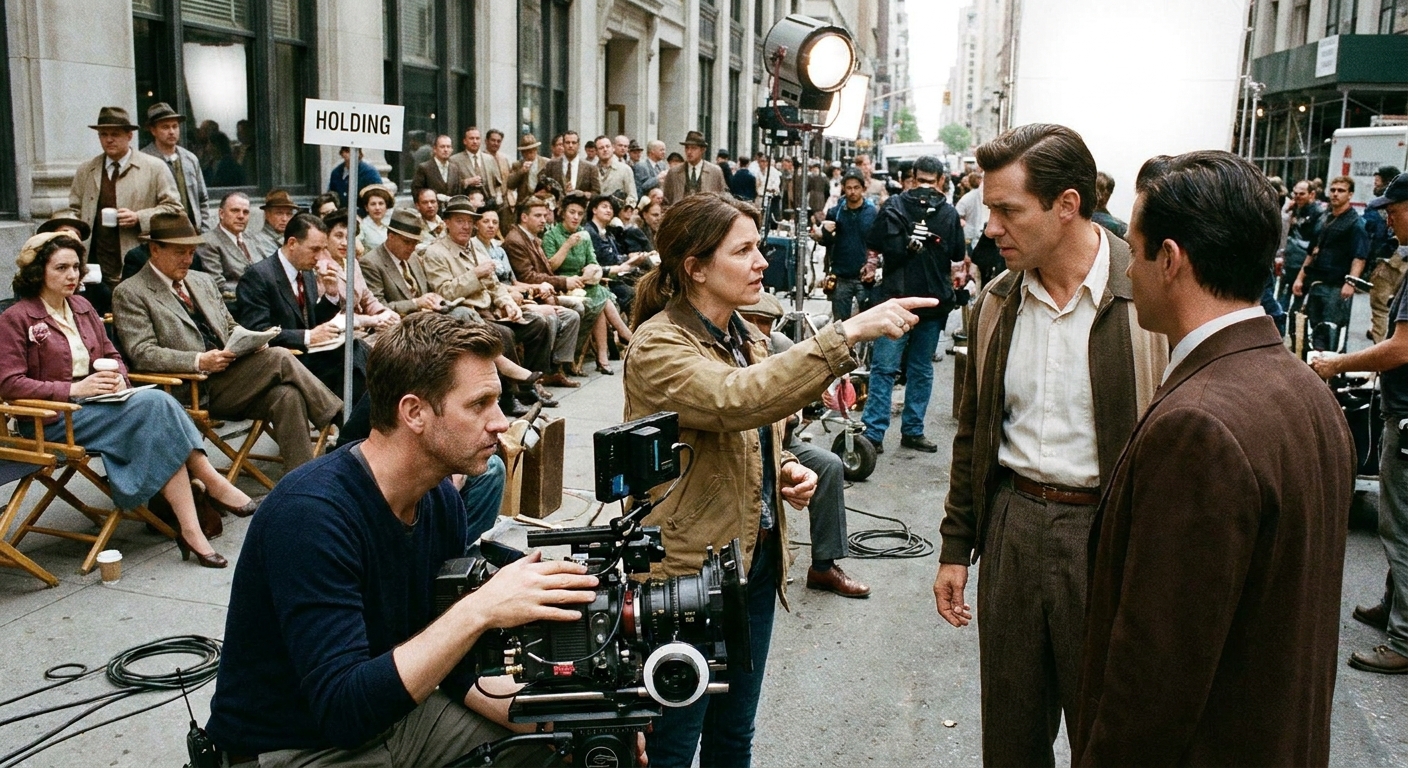
Below is the contract-level difference, the stuff that quietly shapes your day: paperwork, sides, fittings, pay categories, and who is actually giving you notes.
The core difference: role vs background
Principal actor: A performer hired to portray a specific character with a defined function in the story. The role is contracted as an acting part, typically involving spoken lines or clear, identifiable story beats that editorial depends on.
Extra (background performer): A performer hired to populate the environment. The job is to create believable, non-speaking life around the main action: commuters on a platform, diners at a restaurant, fans in a stadium. You are not hired to deliver dialogue, and the story does not hinge on you as an individual character.
Even when an extra is clearly visible, the work is still considered background if it is non-speaking crowd behavior rather than a contracted acting role.
Common nuances
- Non-speaking principals exist: A role can be principal without dialogue if the character is specific, featured, or story-critical.
- Featured background is still background: You might be placed closer to camera or given specific business, but you are still hired as background if you are non-speaking and not under a principal contract.
- Stand-ins and doubles are different jobs: Stand-ins, photo doubles, and stunt performers may be separate classifications from general background, with different expectations and paperwork.
- Union status changes the details: SAG-AFTRA versus non-union can affect pay rules, overtime, upgrades, and what is allowed or required.
Paperwork and job classification
How production labels you
- Principals are engaged as actors for a role and processed accordingly, including role-specific deal terms and, often, more detailed onboarding.
- Extras are engaged as background performers, typically through a casting company or background casting office, and the paperwork reflects that background status.
In plain terms: a principal’s hiring is tied to a character; an extra’s hiring is tied to a need in the scene’s population.
What you receive before set
- Principals commonly receive role materials tied to the script, scheduling, and character requirements.
- Extras usually receive a call time, wardrobe guidance, location details, and behavioral instructions (for example: “business attire, no logos, bring neutral coats”), rather than character-specific story material.
Sides and prep
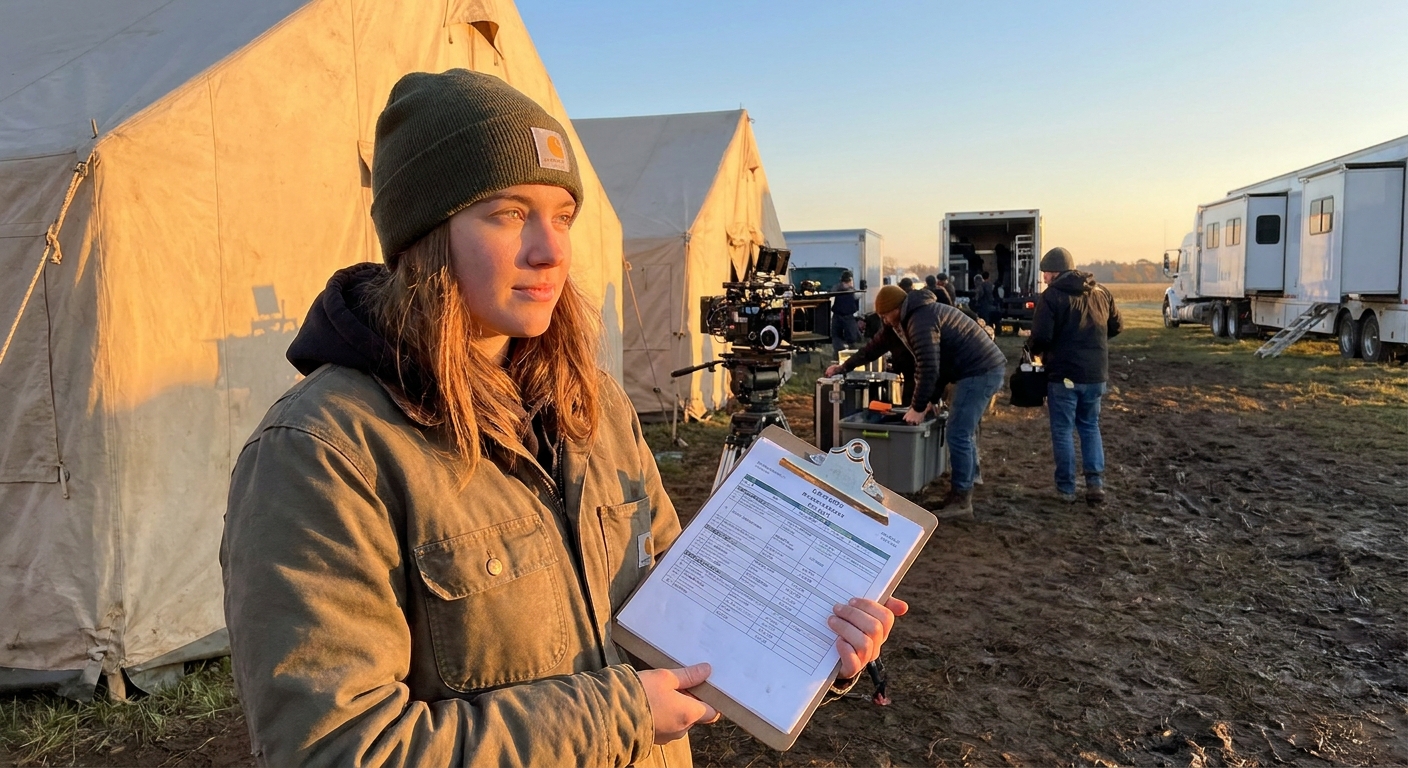
Sides are the pages of the script you need for the day. Who gets them and how they are used is a major practical difference.
- Principals: Typically receive sides that include their dialogue and relevant scene context. They are expected to arrive prepared to perform the scripted beats, take direction, and repeat actions consistently for coverage.
- Extras: Often do not receive full script sides as part of the job. Depending on the show, you may get limited context, “BG sides,” or a sanitized page, but the expectation is the same: follow the background action plan (where to walk, when to cross, what to mime) and maintain continuity without pulling focus.
This is one reason a principal’s day can feel like rehearsing and refining, while background work can feel like precision crowd choreography.
Costume and fittings
Wardrobe is another contract tell, because the goal is different.
Principal fittings
Principals often have scheduled fittings that support character storytelling and continuity. Wardrobe may be built or pulled specifically for that character, and it can include multiples for continuity, stunt versions, or weather variations depending on the production.
Extra wardrobe
Extras may be asked to bring options that fit a general look, or they may be costumed to match the scene’s world (period, workplace, event). Even when background wardrobe is carefully controlled, it is typically designed to read as a crowd, not to express one character’s arc.

Credit and billing
Principals are commonly listed in cast credits in some form and are treated as part of the acting ensemble that the project publicly identifies. Billing order and even whether someone is credited can be contract-specific, so it can vary across day players, co-stars, guest stars, and non-union work.
Extras are not typically individually billed. Background performers may be essential to the texture of a scene, but the job is not structured around individual credit the way a contracted acting role is. Occasionally, productions include group thanks or general background acknowledgments, but it is not the norm.
If you are trying to understand how the industry is labeling your work, credit is a useful clue, but the contract is still the final word.
Pay and categories
I always tell new set friends this: pay is not just “how visible you are.” It is compensation tied to job classification, responsibility, and often union status.
- Principals: Paid as actors engaged for a role, with compensation reflecting acting duties, performance demands, and the production’s dependence on their work to build the scene.
- Extras: Paid as background performers, commonly on a day-rate structure, with additional pay sometimes tied to time, conditions, and specific requirements (such as special wardrobe, wet work, smoke, or other conditions depending on the production and union rules).
To keep it real-world: you may also hear categories like featured background, stand-in, photo double, and stunt. Those can carry different rates and expectations. SAG-AFTRA versus non-union also changes overtime rules, bumps, and upgrade mechanics.
The key idea is that principals are paid to carry story and deliver a contracted performance; extras are paid to create a believable environment through non-speaking action.
Who gives you notes
On set, direction comes from different places depending on your job, but there is also overlap because the assistant directors run the floor.
Principal direction
Principals are directed primarily by the director, often in coordination with department heads (like the director of photography for marks and camera awareness, and script supervision for continuity). Notes tend to be performance-based: intention, pacing, emotional temperature, and repeatability.
At the same time, the AD team will still give principals plenty of practical direction, especially around timing, holding, resets, and on-the-day logistics.
Extra direction
Extras are most commonly guided by the assistant director team and/or the background PA or wrangler. Notes tend to be traffic-based and continuity-based: where to stand, when to move, what business to mime, how to keep eyelines away from camera, and how to reset exactly.

This difference is not about importance. It is about workflow. The director’s time is focused on the performances editorial is building around, while the AD team protects the schedule by running the movement of the world.
What the day feels like
Here is the simplest way I can describe it from years of watching both sides work: a principal day often starts with quiet prep, quick blocking, then repeating the same beats for different lenses until it is right. A background day often starts with wardrobe checks and holding, then you become part of a moving pattern that has to match take after take like a human metronome.
Set expectations
Because the contracts define the work, the “do well” checklist is different too.
If you are a principal
- Know your material and arrive ready to adjust quickly.
- Hit marks, repeat actions cleanly for multiple takes and angles.
- Take performance direction without getting locked into one version.
If you are an extra
- Be invisible in the best way: natural, consistent, never distracting.
- Follow the AD or wrangler’s instructions precisely and fast.
- Protect continuity: same path, same timing, same business on resets.
The most beloved extras are the ones who make the scene feel alive while keeping the camera’s attention exactly where it belongs.
Quick comparison
- Speaking role: Principal, often yes (but not always). Extra, no.
- Contracted as: Principal, a character role. Extra, background performer.
- Sides: Principal, commonly provided. Extra, often not provided beyond limited context.
- Fittings: Principal, character-specific fittings are common. Extra, look is scene-based and often broader.
- Credit: Principal, commonly credited but contract-specific. Extra, generally not individually credited.
- Direction on set: Principal, director-led for performance with AD support for logistics. Extra, primarily AD and wrangler-led.
FAQ
Can an extra ever be treated like a principal?
In terms of attention, yes. A production may place background performers carefully, especially in a tight location or a complicated moving shot. But contract-wise, background is still background unless the production formally engages you for a principal role.
What if background is asked to speak?
This is the one place where I want you to be careful. Background performers should not ad-lib or offer lines. If production wants a spoken moment, it typically triggers a formal change in classification, paperwork, and pay rules (especially under union agreements). The correct move is simple: do what you are directed to do, but do not invent dialogue, and let production handle any upgrade properly.
Why does the category matter?
Because it determines your responsibilities and the production’s obligations to you: what you are expected to deliver, how you are directed, how you are credited, and how you are paid.
If I want to move from extra work to principal acting, what should I focus on?
Train like an actor, build audition-ready materials, and pursue roles through the channels that cast principals. Background work can teach you set etiquette and continuity discipline, which are real skills. But principal casting is driven by auditions and role-specific contracts.