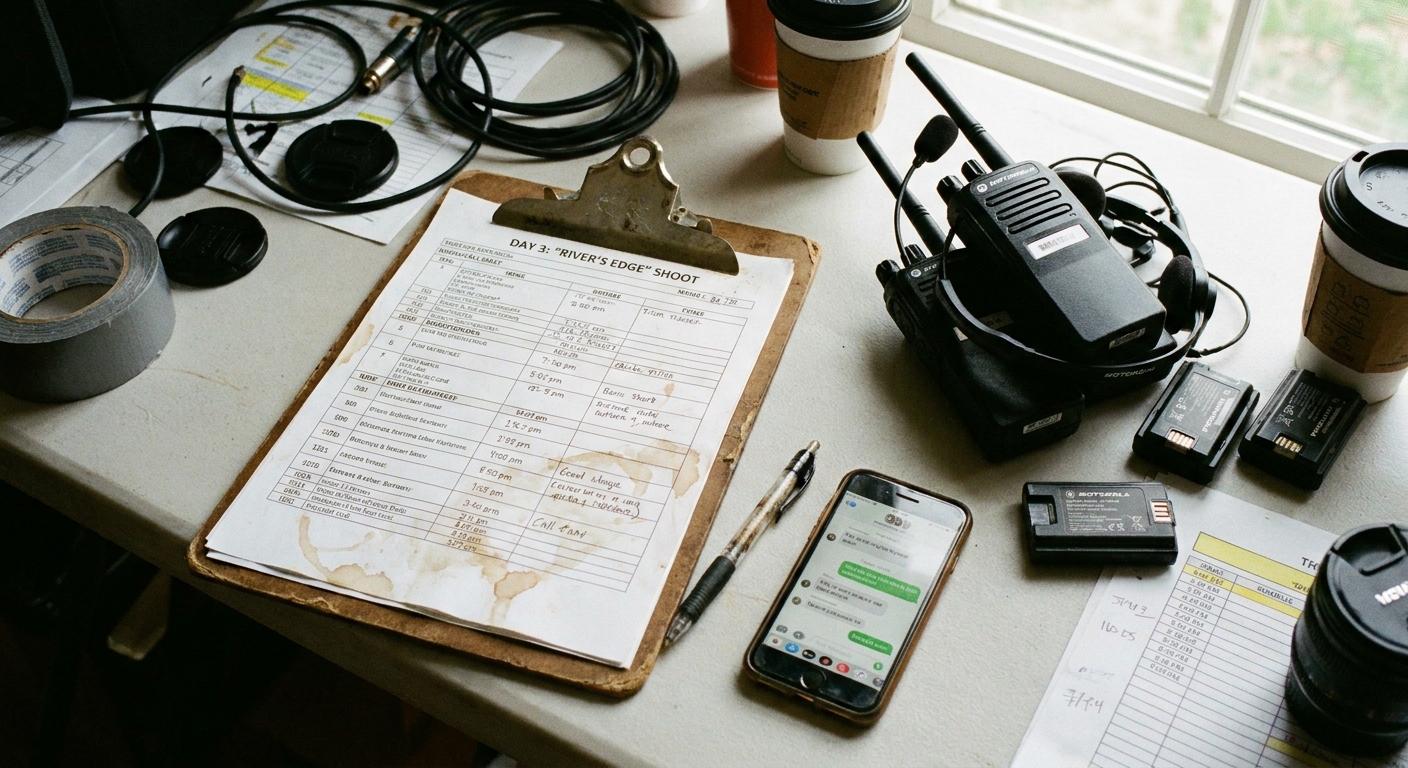
I learned to read casting breakdowns the way I learned to read playbills: early, cover to cover, and with a highlighter mentality. Backstage in Chicago, you could tell who had done their homework by who showed up prepared, dressed right, and ready to be put to work. Extras casting is the same. A breakdown is not a day-of call sheet and it is not a job description for a casting director. It is a shopping list. If you understand what the production is “buying,” you can submit smart, save everyone time, and book more often.

First: What a breakdown is (and what it is not)
An extras casting breakdown is the notice that tells background actors who a production needs, what those people should look like, what they will be doing, and how to submit.
- It is not the call sheet. A call sheet comes after you are booked and gives your exact call time, set address, and on-set instructions.
- It is not your voucher. That is payroll paperwork you typically sign on the day.
- It is not a promise you will work if you submit. It is an invitation to be considered.
Read it like a contract offer in miniature: brief, specific, and full of quiet “no’s.” Example: “must be local” usually means no housing, no travel pay, and they expect you to get yourself there at whatever hour they call you.
The core parts of an extras breakdown
Project and production info
You might see a project title, a code name, the production company, and the casting office. Sometimes the title is vague on purpose. That is normal. If the breakdown asks you to keep details confidential, take it seriously. Productions protect storylines, locations, and sometimes celebrity schedules.
Project type and usage
Some breakdowns spell out whether you are working on a film, episodic TV, commercial, or new media. That little line can change your expectations fast.
- Commercials can have different usage rules and conflicts than TV or film, especially in non-union spaces. Read the fine print and ask questions if anything is unclear.
- New media is a broad bucket. Sometimes it is a straightforward streaming project. Sometimes it is a lower budget contract with different terms. The breakdown language is your first clue.
- TV and film breakdowns tend to focus on world-building details (wardrobe vibe, period notes, environment), but pay and work rules still depend on the specific production and contract.
Role type
Look for language like:
- BG or Background: general crowd, atmosphere, non-speaking.
- Featured BG: still non-speaking, but the camera may favor you, or you may have specific business like interacting with props or crossing close to the lead.
- Stand-in: matching height, build, and sometimes complexion or hair for lighting and camera setup. Stand-ins can work long hours.
- Photo Double: a specific visual match used for stills, inserts, or moments where the camera sells the idea you are the principal from behind or at a distance. It is different from being a stand-in, even though the two can overlap on some shows.
- Body Double: more specific physical match, sometimes involving partial nudity, intimacy, or costume-specific requirements. These breakdowns should state boundaries clearly.
The label matters because it changes what “qualified” looks like and how selective casting will be.
Age range: the most misunderstood line
When a breakdown says “Ages 18 to 35” or “Looks 30s to 40s”, it is describing the on-camera appearance the story needs, not your exact birthday. Casting is trying to maintain a believable world. A college party skews differently than a retirement gala.
- “Must be 18+” is typically a hard requirement for legal and labor reasons, even if you look younger.
- “Over 25 to play 18” sometimes appears when productions want adult performers for a teen setting.
- “Real age” is occasionally specified, especially for child actors or regulated work. For minors, guardians, permits, and school rules may apply.
If your look fits the stated range, submit. If you are a stretch, submit only when the breakdown feels flexible. See the section on hard requirements versus suggestions.
Union status: SAG-AFTRA, non-union, and what the breakdown is really telling you
Union language can feel like a bouncer at the door. In practice, it is the production telling you what contract they are working under and who they are prioritizing or planning to hire. The exact rules and options can vary by production and market.
- SAG-AFTRA project: Background performers may be hired under union rules. The breakdown may specify union only, non-union, or a mix.
- “SAG-AFTRA only”: Usually a hard requirement. If you are not a member, do not submit unless the notice explicitly allows non-union consideration.
- “Non-union”: The production is hiring non-union background for that call.
- “Union and non-union may submit”: Casting is open to both, and final hiring depends on the day’s needs, the contract, and local practice.
If you are unsure, read the exact wording. Casting offices choose that language carefully for a reason.
Wardrobe notes: requirements, requests, and the fine print
Wardrobe is where many submissions quietly disqualify themselves. The breakdown is telling you what you must already own or what you might be asked to bring to fit the world.
Common wardrobe phrases
- “Must have”: treat this as a hard requirement. Example: “Must have a black suit” for a funeral scene.
- “Prefer” or “Ideally”: a strong suggestion. Example: “Prefer neutral sneakers.”
- “Bring options”: you may be asked to arrive with multiple looks for choices. This does not mean you will wear all of them.
- “No logos”: nearly universal unless wardrobe is specifically cleared or approved. Visible brands can be a legal clearance problem.
- “Period” (70s, 90s, etc.): your hair, accessories, and clothing silhouettes matter. If you only own modern pieces, do not force it.
- “Fitted wardrobe”: you may need to provide sizes accurately and possibly attend a fitting before the shoot date.

One more wardrobe clue: if the breakdown lists specific colors or says “avoid red and white”, that is usually camera and lighting logic. Don’t fight it. They are protecting continuity and exposure.
Special skills and “must be comfortable with” lines
Extras breakdowns often include a skill line because the production needs action that reads as real on camera, even if no one hears you speak.
Skills that usually mean “we will actually use this”
- Sports: basketball, skating, yoga, dance, martial arts.
- Professional behavior: real EMTs, bartenders, nurses, musicians. Sometimes authenticity matters more than a “look.”
- Vehicles: “must have a car” (and they may ask year, make, model, color). “Must be able to ride a bike.”
- Set conditions: “comfortable with smoke,” “comfortable with water,” “comfortable around animals.”
- Physical requirements: “able to run,” “able to stand for long periods,” “able to lift.”
If a breakdown says “must be comfortable” with something, read it as a consent and safety checkpoint. Do not overpromise. Sets are long. Conditions can be repetitive. Your “yes” needs to hold up for hours.
Dates, locations, and availability language
Breakdowns for background work often include a shoot date and a general area, even if the exact address is withheld until booking.
- “Work date”: the day you would be on set. Sometimes multiple dates are listed.
- “Must be available”: hard requirement. If you are not free, skip the submission. Background casting often remembers no-shows.
- “Must be local”: generally means no travel or housing provided. It can also mean you need to be able to get to set early with reliable transportation.
- “Chicago local” or “LA local”: same idea, just spelled out. They are hiring you as someone who can work like a local hire, not someone who needs travel arranged.
- “Open availability” or “no restrictions”: they want you free of hard stop times. If you have to leave by 6 p.m., say so now, not after you are booked.
- “Hold date”: you are being asked to keep a date open. This is not a booking. Only treat it as firm when casting confirms you are booked.
Also note the time language. If you see “full day” or “12+ hours possible”, believe it. Background work is frequently hurry up and wait, then hurry up again.
Pay rate, bumps, and reimbursements
Not every breakdown lists pay, but many do. When it is listed, read for the base plus any additions.
- Base rate: the standard daily pay for that category of background work on that production.
- Bumps: additional pay for specific conditions, often noted as “bump” or “adjustment.” Examples include a wardrobe bump (providing your own special wardrobe), a vehicle bump (using your car on camera), or a special ability bump.
- Overtime: may be implied rather than spelled out, depending on the production and contract.
- Travel: if a breakdown says “no travel pay,” do not expect mileage or transportation reimbursement.
- Meals: many sets provide meals on longer days, but timing and penalties depend on the contract and the production’s rules.
If pay is not listed, it is still fair to ask politely once you are being seriously considered, especially if the role requires you to bring something valuable like a picture car, specialized gear, or formalwear.
Submission instructions: where people lose the booking before it starts
The submission section is the simplest part of the breakdown and the easiest to mess up. Casting assistants are sorting hundreds or thousands of emails and form entries. They need clean information.
What they commonly ask for
- Current photos: usually clear, well-lit headshot style plus full-body. If they say “no filters,” they mean it.
- Stats: height, weight (sometimes optional), clothing sizes, shoe size.
- Contact info: phone and email that you actually check.
- Location: where you are based, sometimes your distance to set.
- Availability confirmation: explicitly saying “Available” for the listed date(s).
- Special notes: tattoos, visible piercings, hair length, facial hair, or willingness to shave or change hair. Only agree to changes you will truly make.
- Quick selfie or slate: sometimes they will ask for a short intro video, a timestamped selfie, or a current snapshot with today’s date. It is not an audition, it is a freshness check.
Subject line rules matter
If they give you a subject line format, follow it exactly. It is not busywork. It is how your email gets sorted into the correct folder and found again.
Submission deadline: the ticking clock you should not argue with
Breakdowns may say:
- “Submit by” a date and time.
- “ASAP”: which usually means they are casting in real time and filling slots as strong submissions arrive.
- “Rolling”: they may keep considering until the role is filled, but early is still smarter.
My practical rule: if you want the job, submit the day you see the breakdown. The more specific the role, the faster it tends to fill.
Hard requirements vs suggestions
Extras breakdowns are full of soft language. Here is how I translate it.
- Hard requirements: “must,” “only,” “no exceptions,” “required,” “must be available,” “must be local,” “must have,” “SAG-AFTRA only.”
- Strong preferences: “looking for,” “seeking,” “ideal,” “prefer,” “would love,” “a plus.”
- Helpful color: descriptive tone-setting like “upscale crowd,” “blue collar feel,” “art gallery patrons,” “tourists.” This guides your wardrobe and vibe more than it dictates an exact outfit.
If you match every hard requirement and most preferences, submit. If you miss a hard requirement, do not. If you miss only a preference but you are an otherwise perfect fit, submit and let casting decide.
A quick annotated example
Here is the kind of breakdown you might see, and what it means when you translate it into human:
Seeking: BG Restaurant Patrons. Ages 25 to 60, upscale look. Must have business casual or cocktail attire. No logos. SAG-AFTRA and Non-Union welcome. Work date Tuesday. Downtown area. Submit ASAP with current photos, sizes, and subject line “PATRON.”
- Role: you are filling a restaurant environment, likely seated and chatting silently.
- Age: play 25 to 60, broad range, casting wants variety.
- Wardrobe: you need to own appropriate attire and bring it. “Must have” is the key phrase.
- Union: both can submit, so your union status is not a gate here.
- Date and location: Tuesday, downtown area. You need reliable travel and availability.
- Deadline: ASAP means they are probably sorting submissions immediately.
- Submission format: obey the subject line. It is how you get found.
Red flags and reality checks
Most extras breakdowns are straightforward. A few deserve extra caution.
- Vague pay with heavy demands: if they want you to bring a lot (special wardrobe, vehicle, gear) but avoid stating compensation, ask questions before committing.
- Pressure to share sensitive info early: you typically do not need to send private documents in an initial submission. Follow the casting office’s official process.
- Unclear boundaries: anything involving intimacy, nudity, or simulated sex should be explicit about what is required and what protections are in place. If it is not clear, do not submit until you get clarity.
- Too-good-to-be-true language: legitimate background work does not need hype. It needs specifics.
If you are submitting through a reputable casting office or established platform, you will usually see consistent professional formatting and expectations.
Before you hit send
- Do I meet every “must” requirement?
- Am I actually available for the work date and any listed rain date?
- Do I have open availability for the day, or do I need to disclose a hard out?
- Did I include exactly what they requested, no more and no less?
- Are my photos current and honest to how I look right now?
- Did I follow the subject line and file naming instructions?
- Did I answer special questions (car info, sizes, comfort with smoke, etc.)?

FAQ
Should I submit if I do not match the look perfectly?
If you match the hard requirements and your look is in the spirit of what they described, yes. Background casting often needs variety. If you are far outside the stated age range or missing a must-have wardrobe item, skip it and save your energy for the right listing.
What does “featured background” mean in practice?
It usually means you will be closer to camera, more visible, or doing specific business that supports the scene. It can involve more direction and more takes, but it is still non-speaking unless the breakdown explicitly says otherwise.
What if I have tattoos or dyed hair and the breakdown says “natural”?
“Natural” is often a preference for continuity. If it says “must have natural hair,” treat it as a hard requirement. If it says “prefer natural,” you can submit, but mention what you currently look like and whether you can adjust temporarily.
Is the breakdown the same as the call time?
No. A breakdown may list a general window or say “full day,” but your actual call time is typically given only after booking.