I grew up in Chicago backstage, where the adults had call times and coffee, and the kids had clipboards and boundaries. On film and TV sets, that second part is not a vibe. It’s the law. If you’re wondering whether children can work as extras, the answer is generally yes, but it’s a tightly regulated kind of yes, with paperwork, limited hours, and an entire on-set support system designed to protect minors.
This guide explains the basics at a high level. Rules vary by state and country, plus union and production policies, so always confirm the requirements for the specific production and filming location.
What extra work means
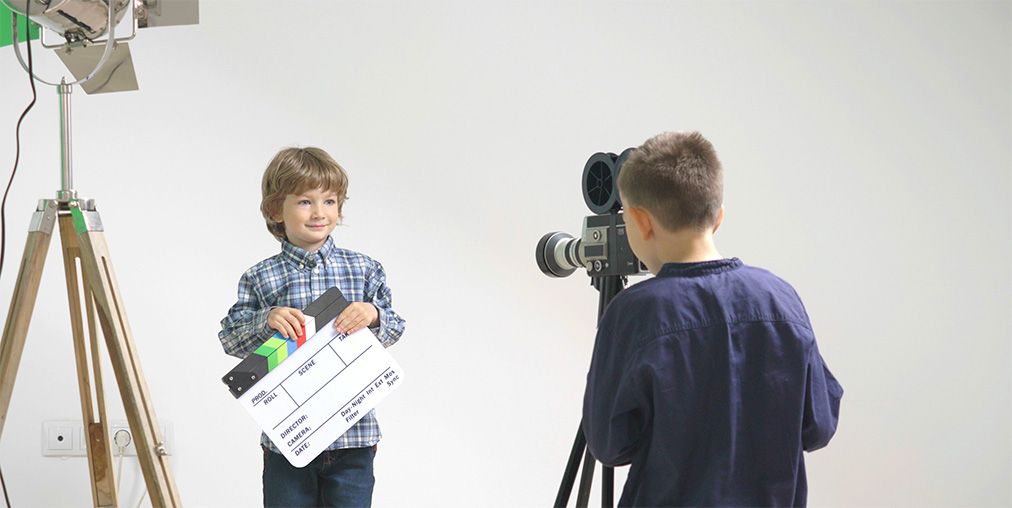
An extra, also called background, is a performer who helps create the world of a scene: students in a hallway, families at a park, commuters on a train platform. Background work usually does not involve speaking lines to camera. If the child is asked to speak, is individually directed in a featured way, or is upgraded for any reason, the job category, paperwork, and pay can change.
For minors, the big difference is not the acting. It’s everything around it: permits, time limits, supervision, and school.
The nonnegotiables
1) A work permit is often required
In many jurisdictions, minors need an entertainment work permit or child performer license (sometimes issued through a labor department, state agency, or school system). Productions typically will not let a child work without a valid permit when one is required, because they can be fined and or issued a stop-work order.
Some places also require additional documentation tied to the child’s schooling status or medical clearance. The production’s casting or payroll team will tell you what they accept and what must be current.
2) An approved adult has to be responsible
Many sets require a parent or legal guardian to accompany the minor, sign paperwork, and remain reachable. In some locations and under some conditions, an authorized guardian, child wrangler, or welfare worker may be allowed to supervise instead of a parent. Other productions require a parent even when local rules do not.
Translation: do not assume. Ask what is required for this job, for this child, in this jurisdiction.
3) Hours are limited and tracked
Minors cannot work the same kind of open-ended day an adult extra might. Limits typically cover:
- Time on set (total time the minor is required to be at the workplace)
- Working time (time performing, rehearsing, or being filmed)
- Breaks (meals and rest periods)
- Time of day rules (especially for younger children, and often tighter on school nights)
The limits vary by age. A 10-year-old and a 16-year-old can have very different legal days, even on the same production. Productions usually assign someone to track minor hours carefully. If the day runs long, the child may need to be wrapped when they hit the limit, even if the scene is still going. That is normal and it is part of compliance.
School rules
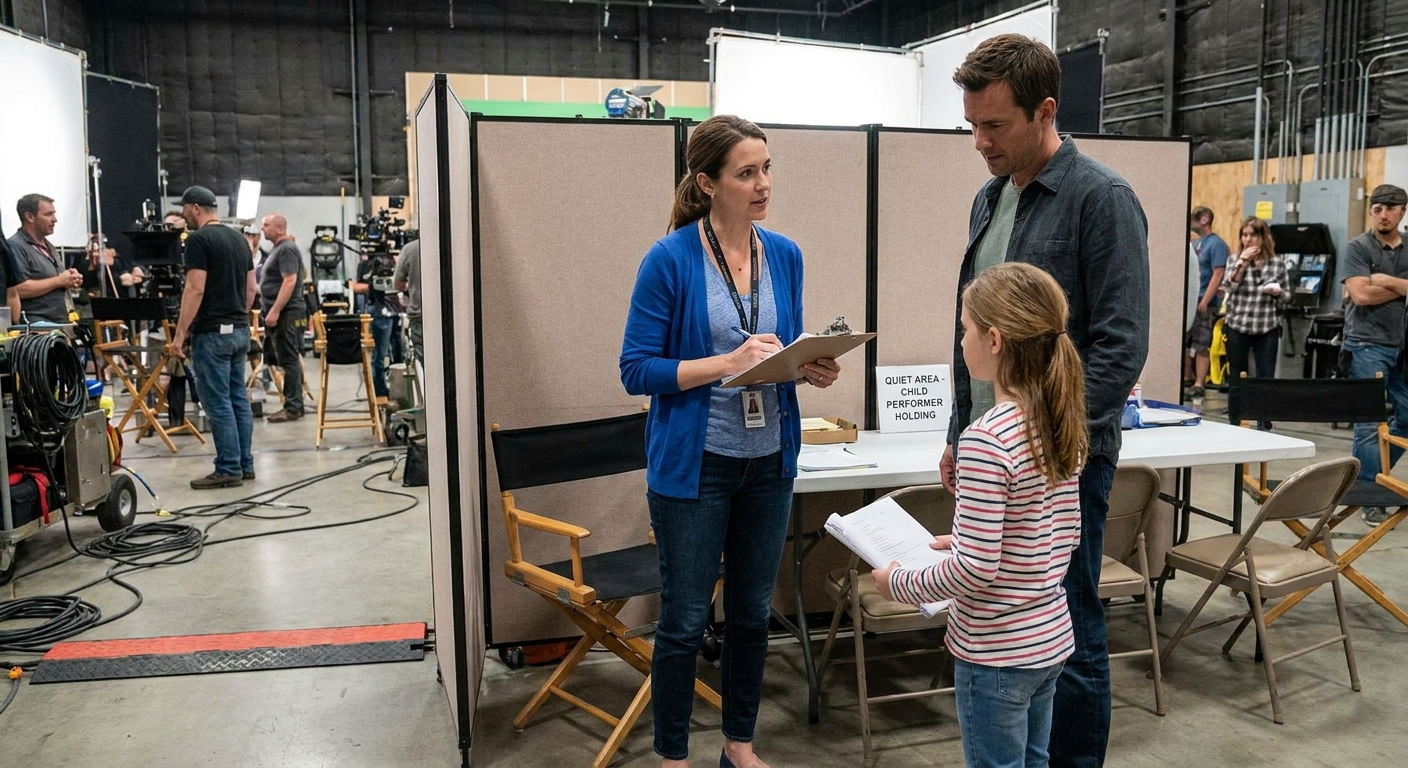
If a child is school-aged and the work overlaps with school time, productions may be required to provide on-set schooling or meet specific education rules. The exact trigger depends on the child’s age, how long the child is at work, how many days they work, and local law.
You will often hear terms like:
- Studio teacher (a common title in California)
- Set teacher (used in other regions)
- Child welfare worker or similar compliance roles
Titles vary, but the job is the same: protect the child and keep the production within the rules.
Also worth noting: if a child is employed as a performer, even as background, education and welfare requirements generally still apply. There can be exceptions depending on jurisdiction, format, and how the child is classified (for example, certain documentary or reality contexts, unpaid atmosphere, or very short calls). If the production says a rule does not apply, ask them to explain which rule and why.
Union and contracts
Whether a production is union or non-union can change the paperwork, rates, and who enforces what. For example, SAG-AFTRA signatory productions follow union agreements on top of local child labor laws, and that can affect reporting, conditions, and how upgrades are handled. Non-union productions still have to follow child labor laws, but the oversight structure may look different.
If you do not know what the production is, ask casting directly. It is a normal question.
Earnings and trust accounts
In some jurisdictions, child performer earnings are protected through a blocked trust account, often referred to as a Coogan account in California. Not every place requires this, and the thresholds can vary, but it is smart to ask payroll whether a trust account is required for your child on this job and what they need from you.
If a production cannot answer basic questions about minor pay handling, that is not a cute little administrative glitch. It is a flag.
What to bring to check-in
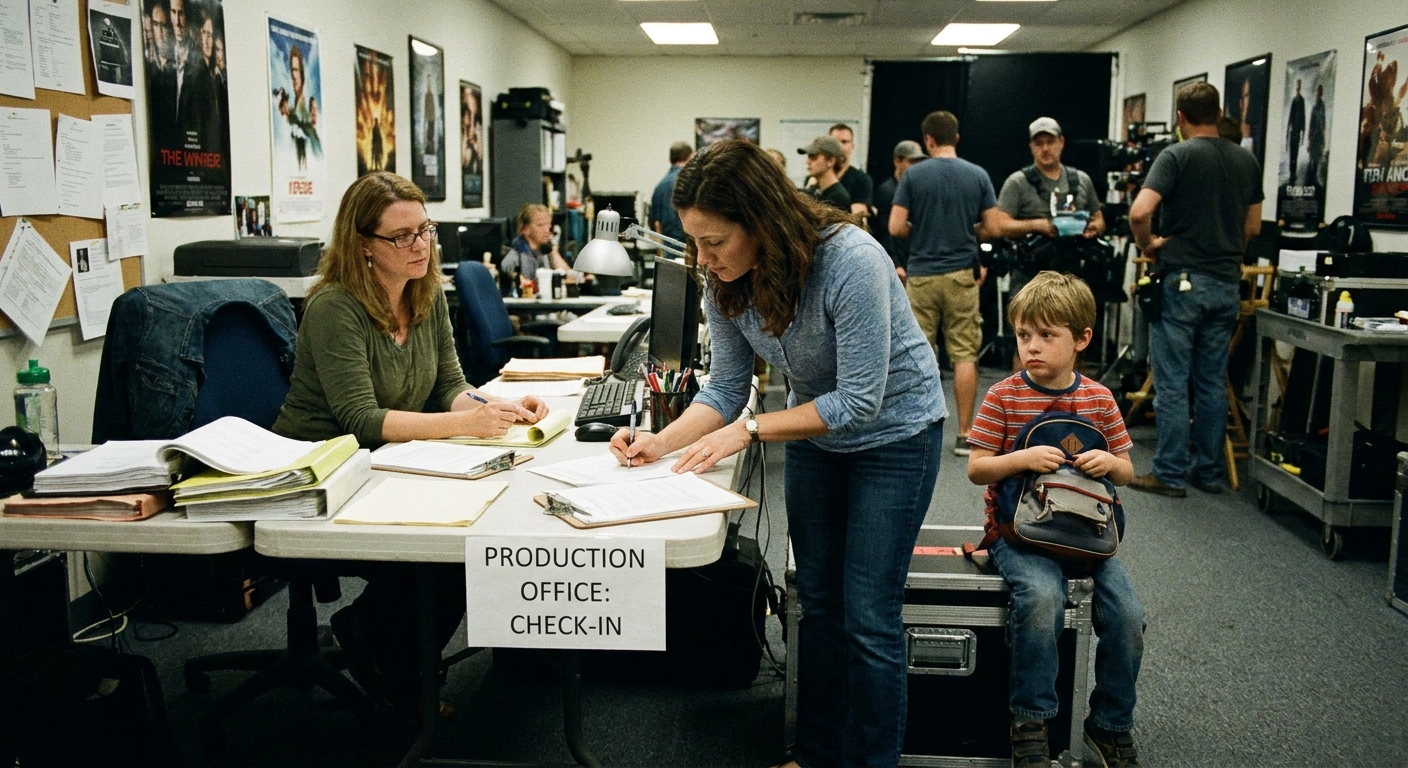
Every production has its own check-in process, but when a minor is working background, the family is commonly asked to present or provide some combination of the following. Bring originals when possible, plus digital copies.
- Government-issued photo ID for the parent or guardian (driver’s license, passport, or equivalent)
- Proof of the child’s identity and age (often a birth certificate, passport, or state ID, depending on local rules)
- Minor’s work permit or entertainment permit, if required
- School-related paperwork if requested (for example, school enrollment verification or permission to work)
- Tax forms required by payroll in your country
- Payment details (for example, direct deposit info if requested)
- Emergency contact and medical information, sometimes collected on a production form
- Custody or guardianship documentation if the accompanying adult is not the parent or legal guardian on record
- Trust account details if required in your jurisdiction
Expect the paperwork to take longer for minors than for adults. Build extra time into the day and keep everything in a single folder, because check-in can feel like airport security with better lighting.
What the day looks like
Even on a calm set, background work involves waiting, following directions, and repeating actions. For kids, the day is usually structured to keep them comfortable and compliant with labor rules.
- Holding: A designated area where minors wait with their responsible adult, sometimes with quieter expectations than adult holding.
- Wardrobe and hair: Minors may have additional modesty and privacy protections.
- Blocking and rehearsal: The assistant directors and background team keep instructions simple and repeatable.
- Breaks: These are not optional. Children need rest and meal breaks on schedule.
- Wrap: When a minor hits the legal limit, they wrap. The production adjusts, not the child.
Safety and consent
One more practical reality: a set can look safe until it suddenly is not. Before you say yes, ask what your child will actually be around.
- Stunts or stunt-adjacent action (running crowds, falls, fights)
- Water (pools, oceans, rain towers)
- Weapons, including prop guns
- Smoke, haze, fire effects, loud noise
- Extreme temperatures, long exterior holds
- Night work and late wrap expectations
You can ask for clarification. You can decline. A professional production would rather adjust than gamble with a kid.
Pay and protections
Background pay rates and terms vary, but the larger point for families is that minor employment triggers legal obligations for the production. Those obligations exist to prevent unsafe hours, missed schooling, and inadequate supervision. If a production seems casual about permits, hours, schooling, or who is supervising minors, treat that as a red flag, not a shortcut.
Quick FAQs
Can my child work as an extra without a permit?
If the jurisdiction or production requires a permit, no. Productions generally cannot employ a minor without the required paperwork. Ask casting what is required for that specific location and age.
Do I have to stay on set with my child?
Often, yes, either by law, by policy, or both. In some places a production-approved guardian or child wrangler may be able to supervise instead of a parent, but you should confirm the exact rule for your job.
Will my child miss school?
Possibly, but rules often limit when minors can work and may require on-set schooling when filming overlaps with school hours. The production should tell you the education plan for that day, including who the teacher or welfare representative is.
How is child background usually booked?
Often through casting databases and background casting calls, sometimes with short notice. Be sure you understand whether you are being booked for a specific call time or for an availability window, and whether the child’s legal hours are being planned correctly.
What should I ask casting before we accept?
- What are the legal hour limits for my child’s age on this job?
- Is a work permit required for this location?
- Who is the on-set teacher or welfare point person for minors?
- Will there be a child wrangler or designated minor supervisor for background?
- What time is check-in, and what documents do you want us to bring?
- Is the production union or non-union?
- Are there any safety elements in the scene (water, weapons, stunts, night work, extreme weather)?
- Will a trust account be required for earnings in this jurisdiction?
- Where will the responsible adult be allowed to wait during filming?
The bottom line
Children can work as extras in film and TV, but it is never a casual add-on to an adult background booking. Expect permits, strict hour limits, an approved adult supervision requirement, and schooling rules that can shape the entire day. When it’s done right, the set stays safe, the kid stays supported, and the magic you see on screen is built without cutting corners behind the camera.