I grew up backstage in Chicago, where the first rule of show business was simple: if the illusion holds, the audience believes. Film and TV take that principle and turn it into an art form, especially when a camera angle, a schedule crunch, or a sensitive scene calls for someone who can convincingly double for a principal actor.
Two of the most commonly confused jobs in that world are photo doubles and body doubles. They are not the same thing, and on a professional set the distinction matters, from what you are asked to do to what you get fitted for and how you get booked.
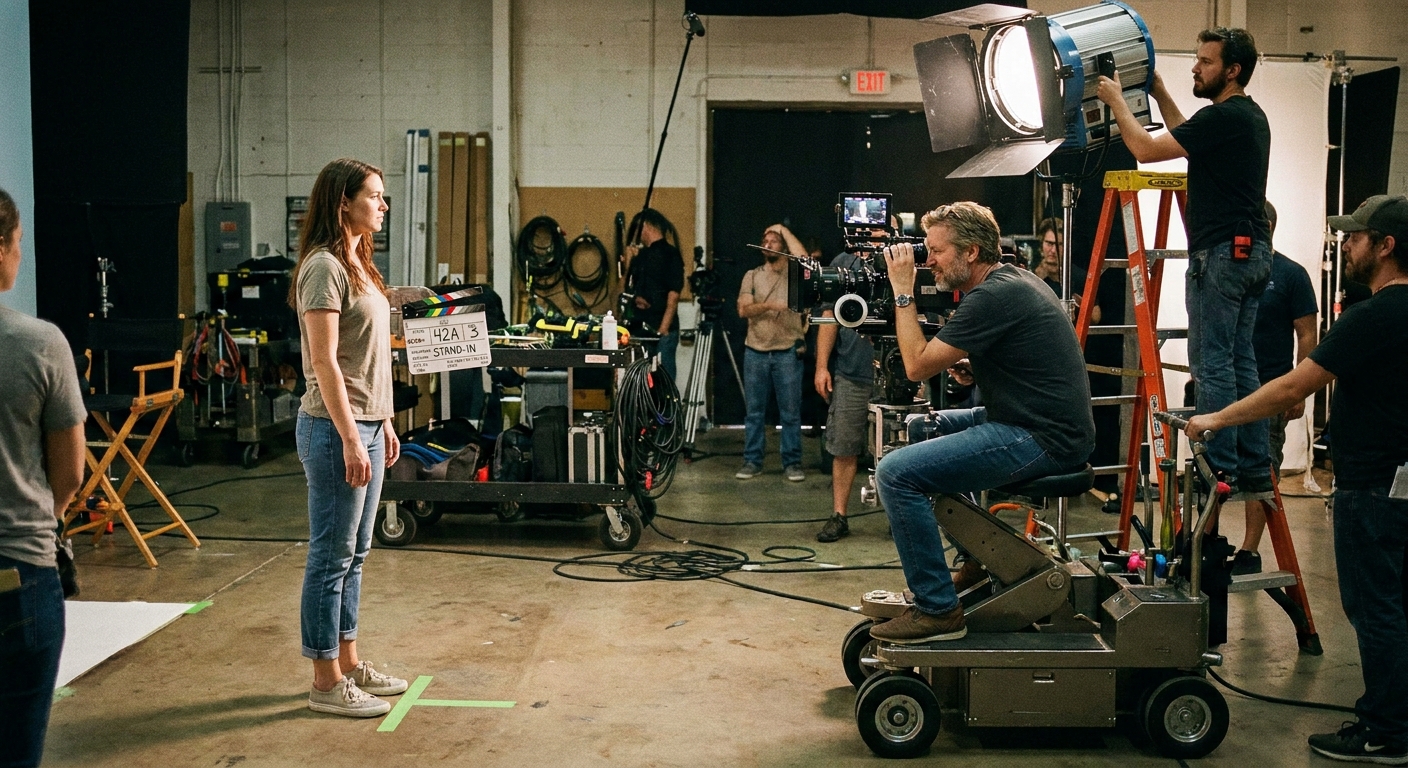
One quick clarity point, because industry folks will clock it immediately: a Stand-In is also a separate job. Stand-Ins are primarily used for lighting, camera blocking, and focus marks, then they step out before the take. A double is hired to be filmed as the character, even if it is only a shoulder, a silhouette, or a perfectly matched set of hands.
The short version
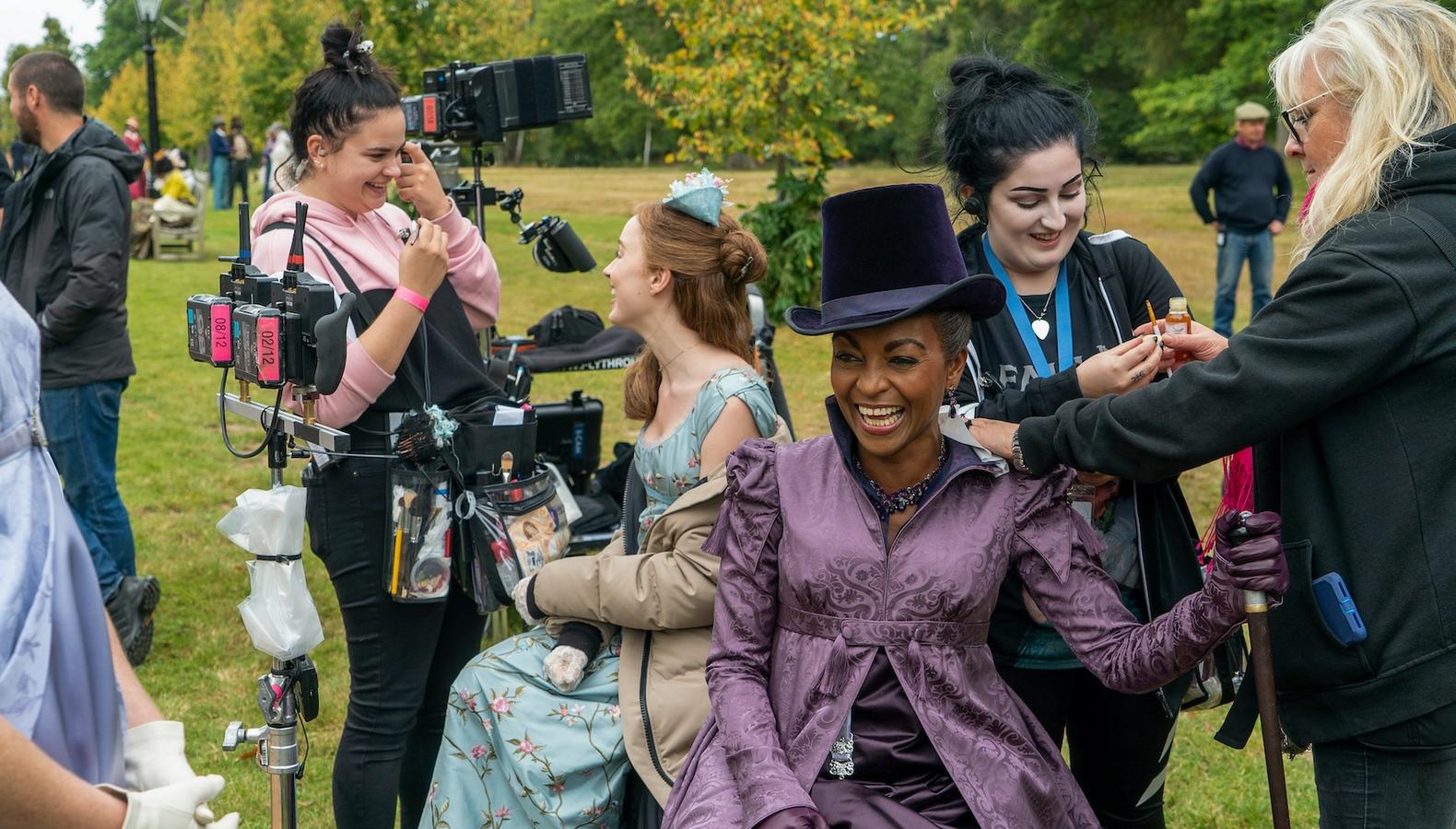
A photo double is primarily used to match an actor for specific camera angles where the audience is not meant to see the performer’s face clearly, like over-the-shoulder coverage, inserts from behind, or driving coverage.
A body double is used when the production needs the actor’s body, silhouette, or specific physical details on camera instead of the actor, often for wardrobe-driven coverage, partial nudity, intimate scenes, or shots where the actor is not present at all.
Both jobs are about preserving continuity and protecting time, comfort, and sometimes privacy. The difference is what the camera is actually asking you to replace.
What a photo double does
A photo double is hired to be the believable “back of” the actor, or the actor in a moment where facial recognition is not required. Think of the kinds of shots editors use to build rhythm in a scene without always living on a close-up.
Common photo double shots
- Over-the-shoulder coverage, where you are the shoulder and back-of-head foreground while the scene partner delivers lines to camera.
- From-behind walking coverage, like entering a room, moving down a hallway, or approaching another character.
- Driving coverage, where you are at the wheel for angles that do not show the actor’s face clearly. This can include process trailer work or controlled setups, depending on production.
- Simple inserts, like hands opening a door, picking up a glass, turning a steering wheel, or using a phone, when the goal is speed and continuity.
- Wide coverage where the actor is not meant to be identifiable, especially if the principal is needed elsewhere.
On many sets, a photo double’s work is technically “quiet,” meaning you may not speak on camera and you may not be asked to “perform” in the traditional sense. Your job is to hit marks, move naturally, and match the actor’s physical vocabulary enough that the cut feels seamless.
What a body double does
A body double is hired when the production needs to show the actor’s body but not necessarily the actor’s face. Sometimes the actor is unavailable. Sometimes the actor is present but the shot is designed to protect them, speed up the day, or handle material the actor is not doing.
Common body double scenarios
- Wardrobe-specific coverage such as lingerie, swimwear, or costumes that are revealing or difficult to reset quickly.
- Partial nudity or implied nudity where the shot focuses on torso, legs, back, or silhouette without identifying the face.
- Intimate scenes, especially when a production wants a body double for certain angles while the principal handles face coverage and emotional beats.
- Physical business that is repetitive, like bending, climbing in and out of a tight set piece, or long stretches of background movement that still reads as the character.
- Some stunts or stunt-adjacent coverage, depending on the show’s setup. True stunt work is usually handled by a stunt double, but productions sometimes use a body double for non-impact coverage that supports the stunt sequence.
The big tell is this: if the camera is meant to read the character’s physicality, skin tone, body proportions, or identifiable body features, you are drifting into body double territory.
What each job must match
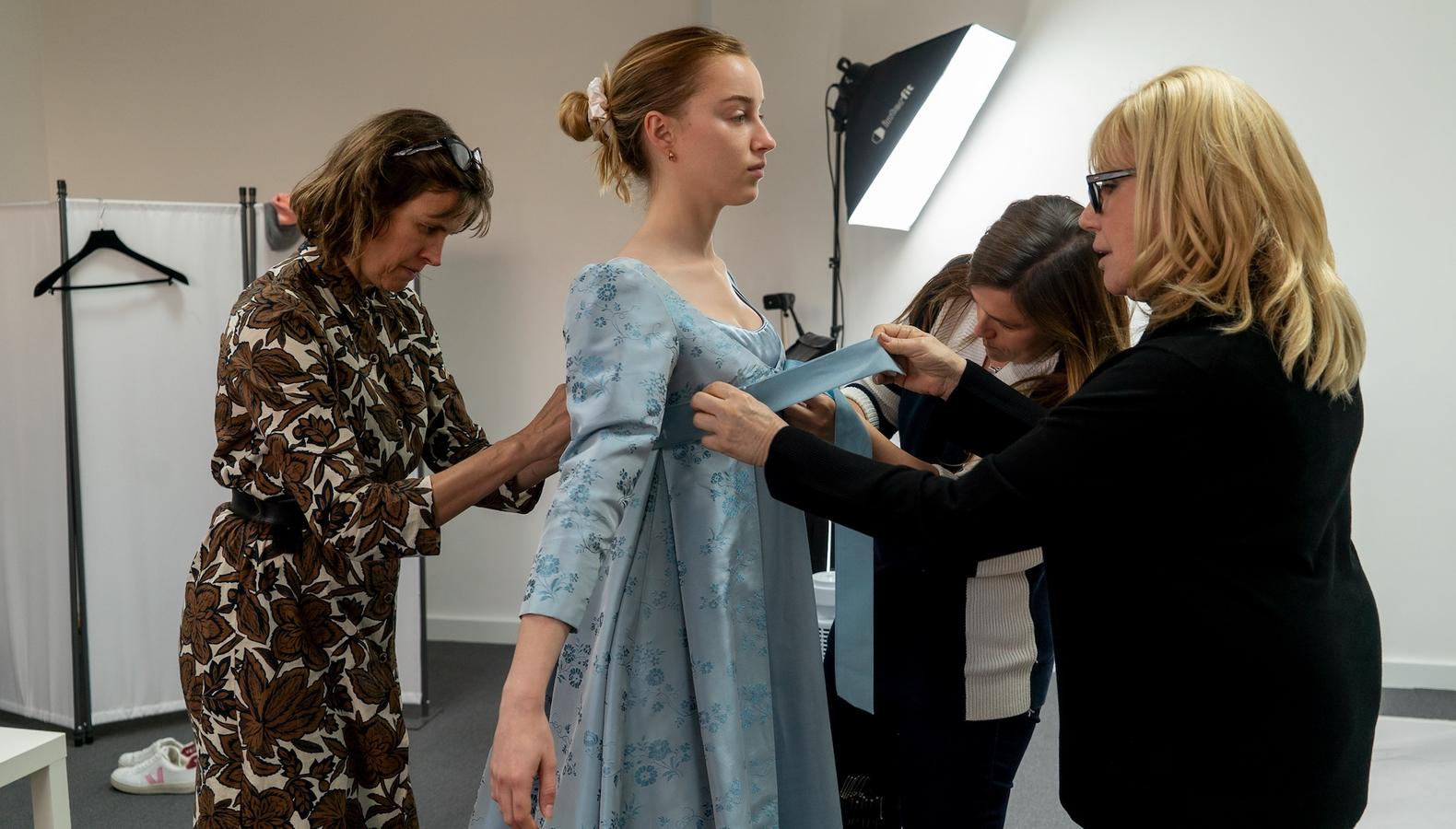
If you have ever watched a cut where the hairline changes mid-scene or a sleeve length jumps between angles, you already understand why productions can be extremely specific about doubles. Matching is not vanity. It is continuity.
Photo double matching priorities
- Hair: color, length, part, texture, hairline. Wigs are common, but they have to sit correctly for that actor.
- Back-of-head and profile shape: especially ears, jawline silhouette, and neck.
- Height and proportions: the relationship to scene partners matters in over-the-shoulder framing.
- Posture and movement: how the actor holds their shoulders, how they turn, how quickly they move.
- Wardrobe fit: the clothing must hang the same way, particularly jackets, collars, and sleeves.
Body double matching priorities
- Body shape and measurements: chest, waist, hips, legs, shoulders. Costume departments often want very close measurement matches.
- Skin tone and texture: under set lighting, small differences can read big. Body makeup may be used, but it is not magic.
- Identifying features: tattoos, scars, freckles, moles, tan lines. Sometimes these must match. Sometimes they must be covered.
- Hands, feet, and nails: if the shot is specific, these details become starring roles.
- Comfort with the material: especially for intimate or revealing scenes, boundaries and consent are part of the job requirements.
Both roles may require you to sign additional paperwork, especially if the work involves sensitive wardrobe, intimacy coordination, or special confidentiality around story points and on-set conditions.
How days are scheduled
Scheduling doubles is a quiet chess game. Productions are trying to protect the principal actor’s time and energy while still capturing everything the editor will need. The result is that double work often lands in very specific pockets of the day.
Photo double scheduling patterns
- Pickups and inserts: photo doubles are frequently booked for short bursts, sometimes after the principal has wrapped a scene or moved on to another unit.
- Second unit days: driving coverage and transitional shots often happen on second unit, where the principal may not be present.
- End-of-day coverage: when a production has the emotional close-ups but still needs angles that sell the geography of the scene.
Body double scheduling patterns
- Wardrobe and makeup lead time: body doubles may be called earlier for fittings, skin matching, body makeup, and continuity checks.
- Closed set windows: intimate or revealing coverage often happens with a reduced crew, specific timing, and careful coordination.
- Coverage split with the principal: a common structure is body double for certain angles, principal for face and dialogue, then back to body double for resets.
Both jobs can involve waiting, because your call time is built around camera readiness and the principal’s schedule. The most professional thing you can bring is patience paired with readiness. When they need you, they need you immediately.
What it looks like on set
Here is a practical way to imagine it.
- If the camera is living behind the actor while the co-star delivers a monologue, a photo double may be there so the principal can be in hair and makeup for the next setup.
- If the shot is a torso-in-frame moment with wardrobe or intimacy considerations, a body double may be used while the principal steps in for face shots and emotional beats.
In both cases, you are supporting the same goal: keep the story flowing and keep the illusion intact.
Common misconceptions
“A body double is the same as a stunt double.”
Not necessarily. A stunt double is hired and coordinated through the stunt department for falls, fights, high-risk driving, wire work, and other controlled hazards. A body double may do non-hazardous coverage that supports or surrounds stunt action, but the terms are not interchangeable.
“A photo double is basically an extra.”
No. A photo double is cast because they closely match a specific principal actor and are used to sell continuity. That is different from background casting, which is about populating the world of the scene. A double is tied to one character’s on-screen identity.
“They can just fix it in post.”
Visual effects can help, but productions still rely on doubles because it is often faster, cleaner, and more believable to get the right physical match in camera than to manufacture it later.
FAQ
Do photo doubles and body doubles talk on camera?
Usually no, especially for photo doubles. Dialogue is typically handled by the principal. If a double is seen speaking, it is often designed so the face is not identifiable, or it is intended to be replaced with the principal in another setup.
Do doubles need to attend rehearsals?
Sometimes. You may be asked to watch blocking, learn specific marks, or mirror the principal’s movement. More commonly, you are brought in when camera is ready for your angles, but it varies by production.
Is the work always anonymous?
Most of the time, yes. The goal is for the audience not to notice. Credits and visibility vary by project, union agreements, and how the production handles performer listings.
What should you expect in a booking request?
Expect very specific questions: height, measurements, current hair, willingness to cut or match hair, visible tattoos, and availability for fittings. For body doubles, productions may also ask about comfort levels related to wardrobe and closed set conditions.
The bottom line
Photo doubles are about angles and illusion, especially from behind or in inserts like driving and over-the-shoulder coverage. Body doubles are about replacing the principal’s body on camera for coverage the principal is not in, sometimes including sensitive wardrobe or certain physical setups.
Both jobs require precision, discretion, and an actor’s respect for craft, even when your face never takes a bow. And if that sounds oddly poetic for a day that might involve turning a doorknob twelve times in identical lighting, well, welcome to the magic.