Costumes are the closest thing television has to a time machine. They tell you who holds power, who is trying to look like they hold power, and who has stopped trying entirely. In a period drama, wardrobe can announce the year before anyone mentions it. In a contemporary drama, wardrobe has to do the sneakier work of making a character feel specific without feeling “styled.”
Both are craft-heavy, budget-sensitive, and deeply collaborative. They just ask different questions. A historical epic starts with: What did people actually wear? A modern drama starts with: What would this person wear, today, in this neighborhood, with this job, on this kind of morning?
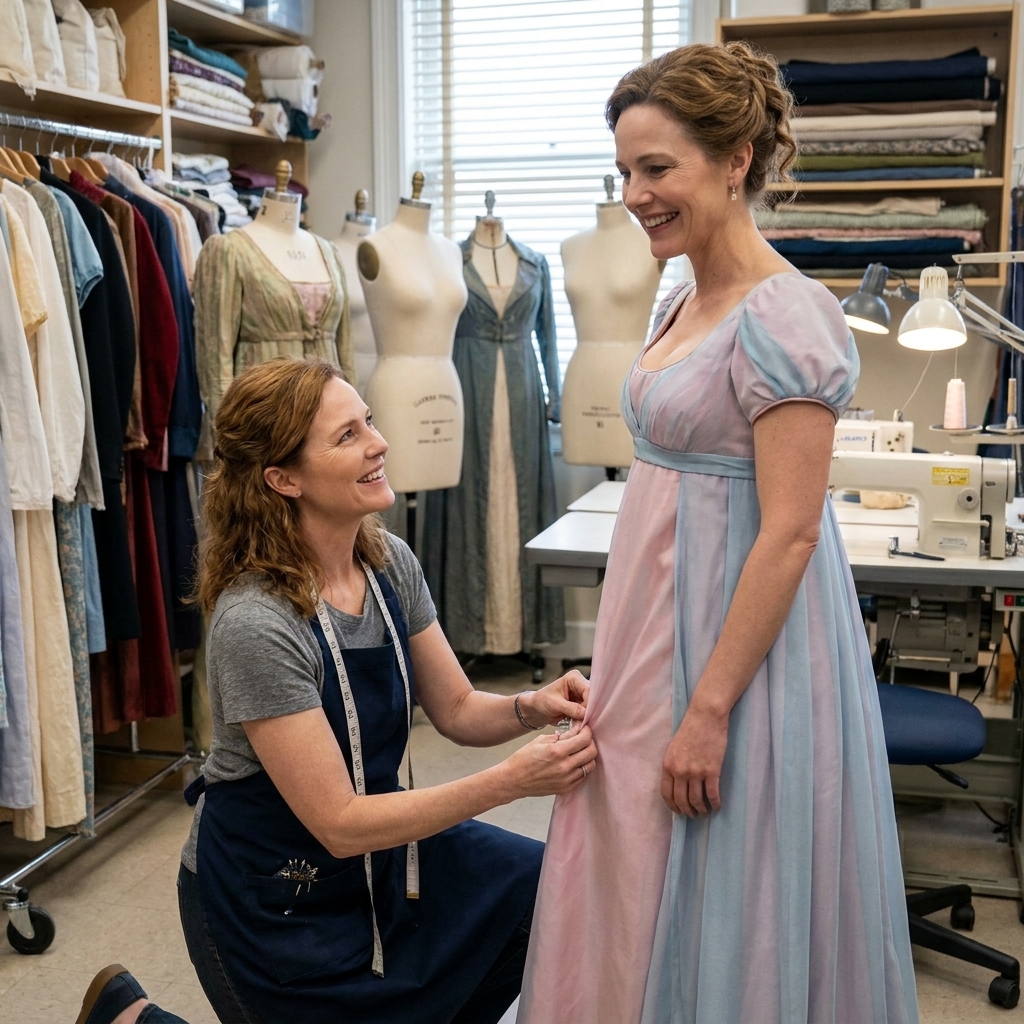
The core difference: accuracy vs. authenticity
People love to argue about “accuracy” in period wardrobe, but the more useful word is authenticity. Accuracy is a checklist. Authenticity is an emotional contract with the viewer.
- Period dramas often aim for a convincing silhouette, correct underpinnings, and era-appropriate materials, then bend rules for story clarity or modern tastes. If the audience can read the character instantly, the costume is doing its job.
- Contemporary dramas are rarely “accurate” in a fact-checkable way, but they live or die by believability. One too-new leather jacket, one logo that feels like product placement, and the spell breaks.
In other words: period wardrobe wears its homework on its sleeve. Contemporary wardrobe hides the homework in the closet.
Research: libraries vs. sidewalks
Period research is archaeology with a mood board
For historical shows, research is structural. Designers build a visual bible from paintings, extant garments, museum collections, fashion plates, diaries, and photographs when available. They map out what different classes could afford, what fabrics were accessible, what laws or customs shaped dress, and how silhouettes change over a decade, or sometimes over a single season.
And then comes the fun part: translating that into something legible on a modern screen. Camera lenses, lighting, and color grading can flatten texture, so period designers often make bolder choices than a museum display would.
Contemporary research is social observation with receipts
Modern TV research looks less like an archive and more like a field notebook. Designers study location, climate, subculture, job requirements, and how people actually wear clothes when no one is looking. A character’s wardrobe might include:
- Local brands that signal regional taste
- Small repeats that imply a real closet
- Wear patterns shaped by commute, childcare, or shift work
- Fits that match the actor’s physicality and the character’s self-image
It is not unusual for a contemporary costume team to spend as much time observing street style and gathering reference from public sources, lookbooks, and archives as they do in stores. The point is the same: build a world that feels familiar without feeling generic.
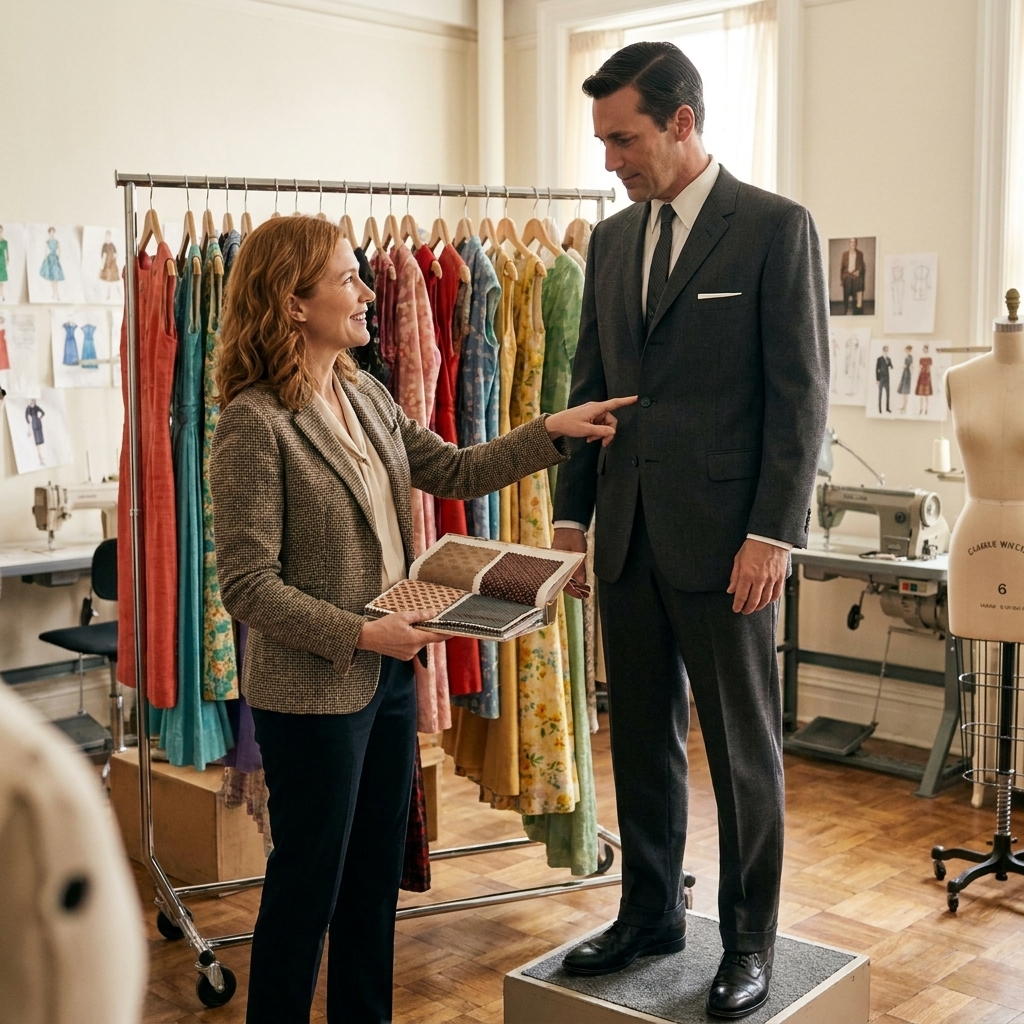
Sourcing: fabric and decade
Period sourcing: scarcity, specificity, duplication
Historical wardrobe tends to be built, not bought. Even when vintage pieces exist, they may be too fragile for long shooting days, stunt work, or repeated cleaning. That means sourcing becomes a three-part puzzle:
- Period textiles that match weaves, patterns, trims, and dyes
- Multiples for continuity, damage, weather, and sweat
- Durability that survives production without losing the period feel
Buttons, lace, corsetry materials, hats, gloves, and shoes can become entire sub-departments. One “simple” gown can quietly require artisans in millinery, embroidery, tailoring, and leatherwork.
Contemporary sourcing: abundance, clearance, availability
Modern shows have the opposite problem: too many choices, and not all of them are usable. Contemporary sourcing has its own obstacles:
- Logos and trademarks that must be cleared, covered, or avoided
- Sellouts when an item disappears mid-season
- Backups for action, rain, heat, and mess
- Continuity across episodes filmed out of order
Also, contemporary costume design is constantly negotiating with real-world trend cycles. If a show is set “now,” the designer is deciding how “now” they mean. Ultra-current can date a series quickly. Too timeless can feel oddly blank.
Construction and tailoring
Period dramas build the body
In many historical eras, the silhouette is engineered. Corsets, stays, panniers, bustles, padding, and structured undergarments create the shape that the outer garment assumes. That means fittings are more intensive and performance-based: can the actor breathe, sit, run, dance, fight, and emote within the architecture?
Period tailoring also has a different relationship to “flattering.” Sometimes the most historically truthful line is not the most modernly “slimming.” The designer’s job is to make that line readable and character-specific rather than simply aspirational.
Contemporary dramas tailor for psychology
Modern wardrobe construction is usually subtler. Tailoring might be used to suggest:
- Ambition in a suit that fits just a touch too sharply for the office
- Discomfort in a waistband that pinches or a shirt that pulls
- Control in a uniform-like rotation of near-identical outfits
- Deflection in layers, oversized silhouettes, or strategic blandness
In contemporary TV, the best tailoring often looks like no tailoring at all. It reads as life.
Aging and distressing
Period distressing: history is messy
If period costumes look too crisp, the world starts to resemble a museum display, not a place where people eat, work, travel, sweat, and survive. Aging and breakdown teams add wear in story-specific ways: frayed cuffs from labor, sun-fading on shoulders, mud patterns that match a specific road, or repairs that reveal a character’s thrift.
Even aristocratic wardrobes need reality. Silks crease. Gloves stain. Hemlines pick up dust. “Perfect” is usually the enemy of believable.
Contemporary distressing: the hard part is subtlety
Much of modern clothing is sold with washes and wear already worked in, but the trick is making it character-aged. Designers track how a person treats their belongings. Do they fold jeans or leave them on a chair? Do they buy new sneakers every year or run them into the ground? Do they remove tags, or are they the type to leave the sticker on a hat?
Those choices are tiny, but they are the kind of tiny that viewers feel instantly.
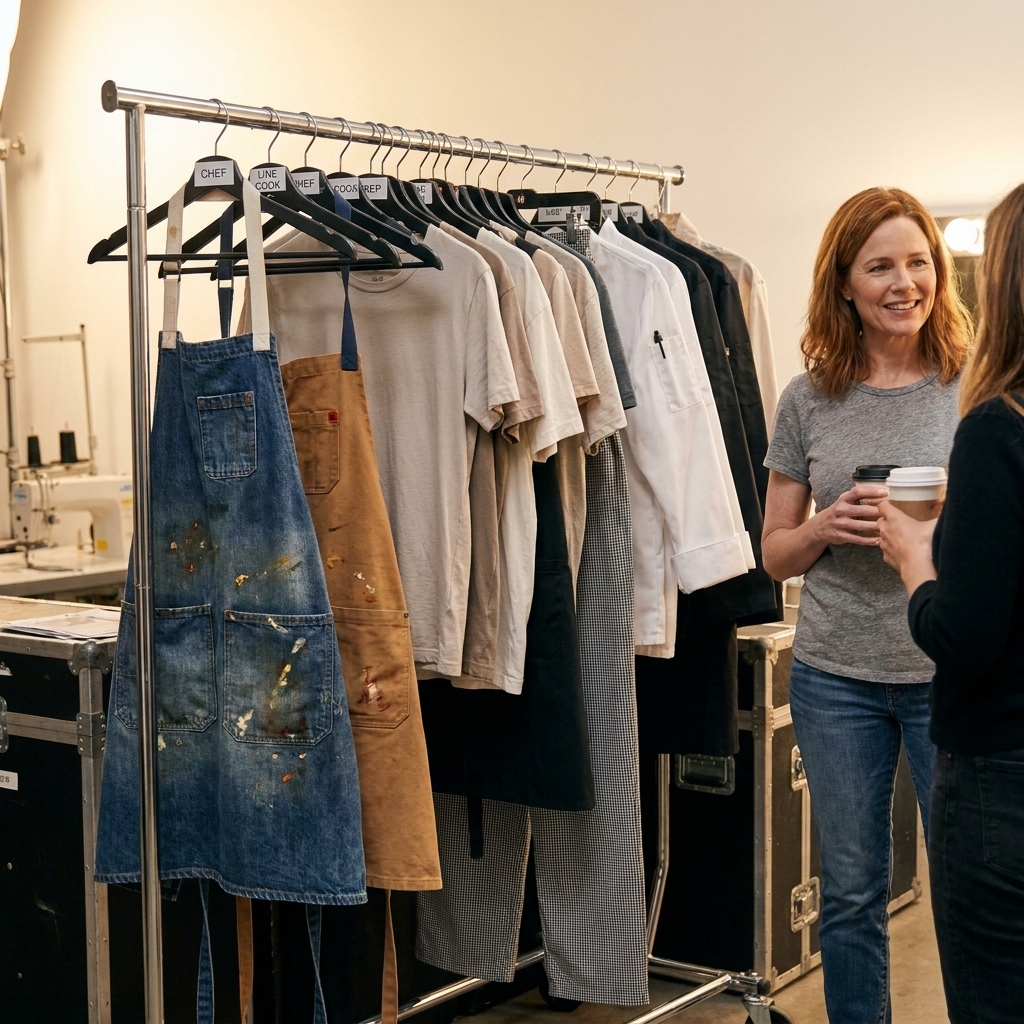
Color palettes and storytelling
Costume design is never just clothes. It is how clothes behave under lighting, lenses, and color grading.
Period palette: controlled worlds
Historical shows often embrace intentional palette systems. Certain families, factions, or social classes may live in distinct color lanes. Sometimes it is historically motivated. In some eras and regions, dyes were costly, and clothing could be shaped by sumptuary rules or social restrictions. Sometimes it is purely cinematic, a way to guide the eye through a crowded ballroom or a battlefield of uniforms.
Textures do heavy lifting in period work. Brocade, wool, linen, and lace create depth that reads as “time” even before a viewer identifies the decade.
Contemporary palette: realism with a point of view
Modern dramas typically aim for a palette that feels incidental, but it is rarely accidental. Costume departments often coordinate with production design so characters pop against their environments without looking “coordinated.” A detective’s charcoal coat, a nurse’s soft scrub tones, a teen’s saturated hoodie. These are choices that support tone and legibility, especially in low-light cinematography.
Continuity and multiples
Continuity is costume design’s quiet superpower. Television is shot out of order, scenes are repeated, weather changes, and actors move through stunts. Whether a show is set in 1815 or 2026, wardrobe teams track:
- Which version of an outfit appears in which scene
- How dirty, wet, torn, or bloodied it is at each beat
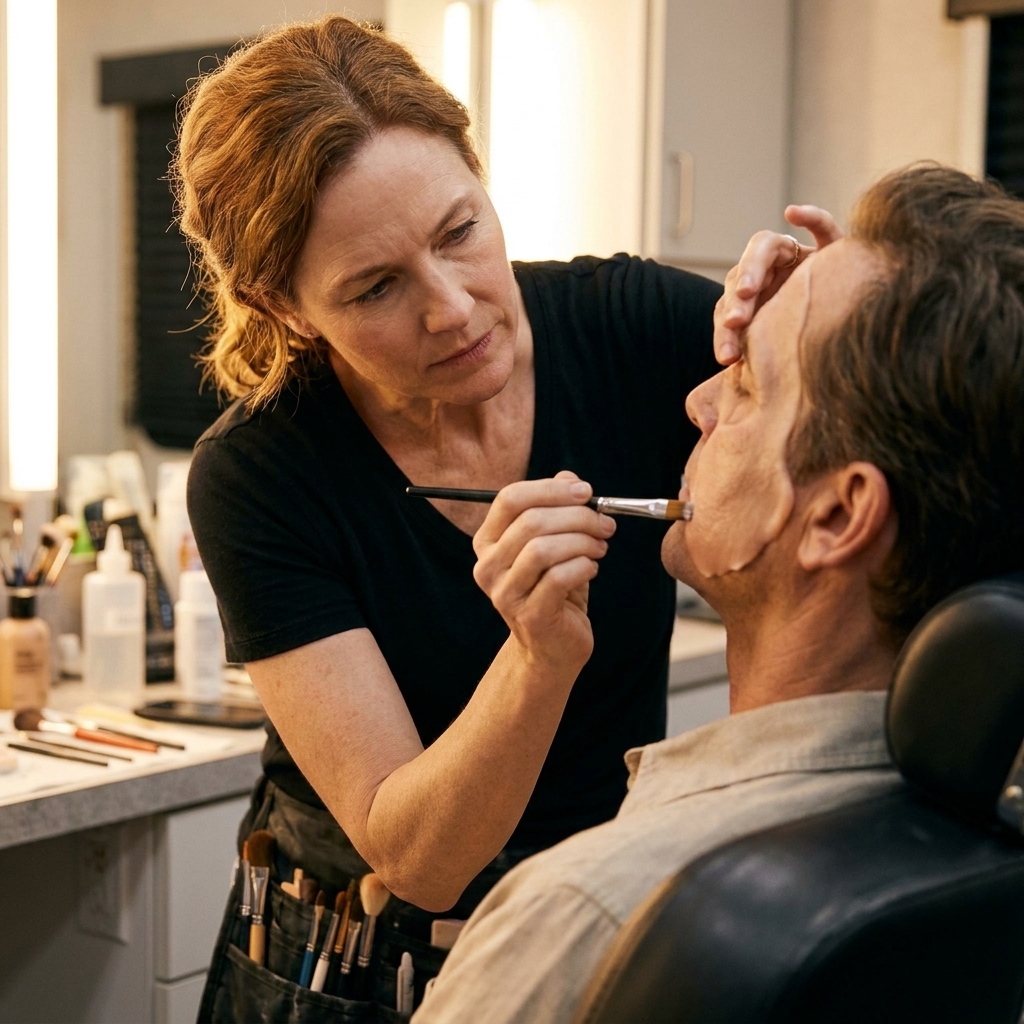
- How hair and makeup interact with necklines, hats, and collars
- How fabric behaves in motion across takes
Both period and contemporary productions often require multiples. The reasons simply shift. Period may need custom-built duplicates to protect fragile-looking finishes or to manage intricate aging beats. Contemporary may need extras for water work, blood gags, heavy stunt sequences, or because a “simple” retail item becomes impossible to replace once it sells out.
Teams and workflow
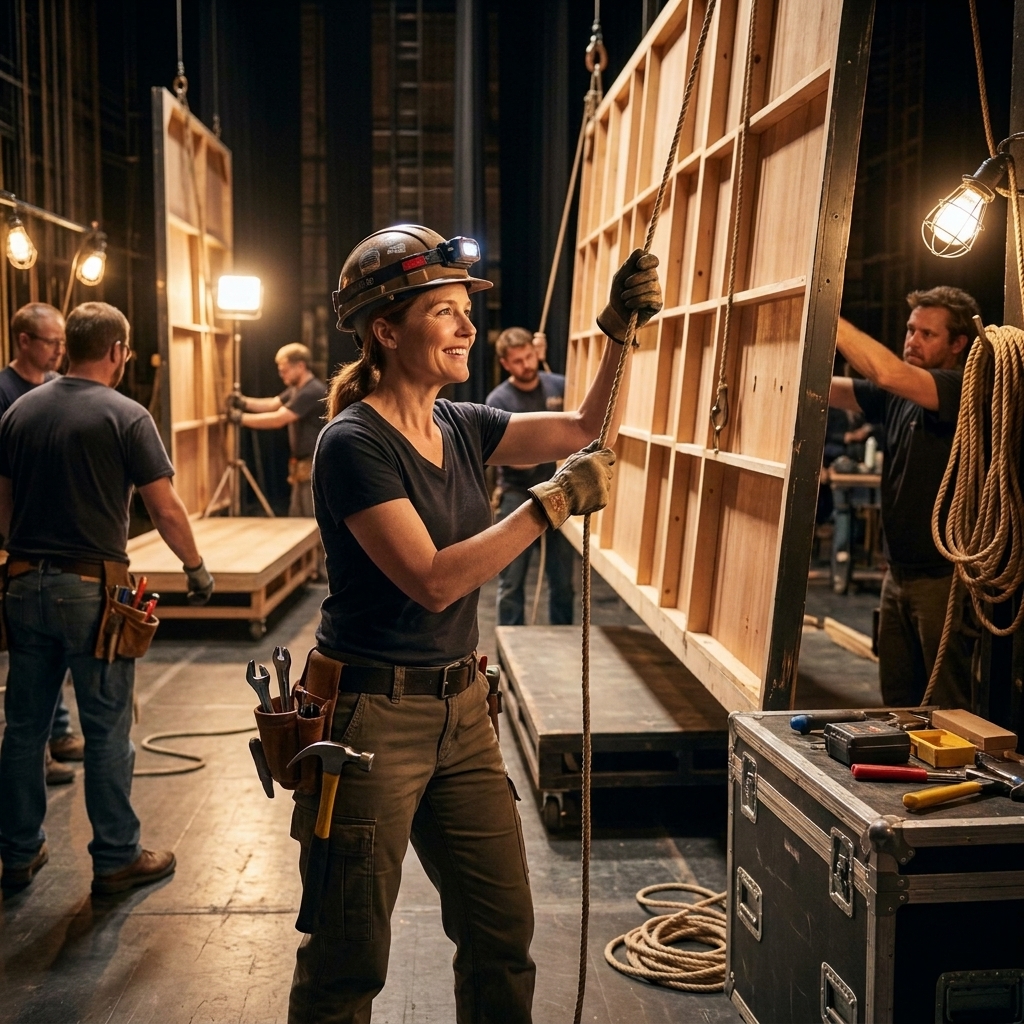
Costume design is not a single person making brilliant choices in a vacuum. It is a department with specialized roles that can vary by production and region. You might have a costume designer setting the overall concept, a costume supervisor running logistics and budgeting, breakdown and aging specialists building the lived-in look, makers and tailors constructing and altering, and set costumers managing what is worn on the day and keeping continuity intact.
That structure matters because the work changes with scale. A quiet contemporary series may live and die on shopping, tracking, and repeats. A period show may lean harder on cutters, stitchers, dyers, and craftspeople. In both cases, the final look is a team sport.
Creative freedoms and myths
Myth: Period design is more creative
Period work is visibly transformative, so it gets credit for spectacle. But contemporary costume design has to be creative without showing off. It is a different kind of bravery to put a lead character in the same old jacket for three episodes because that is what the character would do, not because it photographs “well.”
Myth: Contemporary design is just shopping
Shopping is part of it, but so is tailoring, dyeing, distressing, clearance, continuity, and long-range planning. Also, shopping with a character in mind is not the same as shopping for yourself. The goal is not taste. The goal is truth.
Myth: Accuracy is the only measure
Costumes serve story. A historically inspired choice can be the right choice if it clarifies character, supports tone, and respects the world the show has built. The best designers are fluent in the rules so they can break them with purpose.
How to watch like a designer
If you want to level up your viewing without turning it into homework, try these gentle tells:
- Look for repeats. In contemporary shows, repeats suggest a real wardrobe. In period shows, repeats often signal status, mourning, or a travel constraint.
- Watch collars and cuffs. They reveal class, job, and wear. They also reveal how closely the costume team is working with hair and makeup.
- Notice footwear. Shoes are expensive, restrictive, and character-defining. If a show gets shoes right, it is usually getting everything else right too.
- Track silhouette shifts. A period character might gain structure as they gain power. A contemporary character might loosen their fit as they unravel.
Quick FAQ
Why do period costumes sometimes look “too clean”?
Because they are newly built and must survive months of shooting. Cleanliness can also be a deliberate aesthetic choice. When it feels off, it is usually a mismatch between the show’s visual tone and the level of distressing.
Why do contemporary characters rarely wear obvious brand logos?
Clearance and control. Logos can create legal headaches, accidental product placement, or distracting specificity. Many shows prefer unbranded pieces so the character stays front and center.
Which is harder: period or contemporary?
Hard in different directions. Period is construction-heavy and research-intensive. Contemporary is subtle, continuity-driven, and constantly wrestling with real-world availability and cultural signals. Both demand taste, discipline, and empathy.
Whether a costume is hand-finished with a thousand invisible stitches or pulled from a rack and quietly tailored into character, the best wardrobe design does the same thing: it makes a fictional person feel knowable. And once you start noticing that kind of craft, it is hard to go back to watching clothes as just clothes.