I grew up in Chicago around musicians and set builders, which meant I learned early that the arts run on equal parts inspiration and logistics. Film sets are no different. One of the biggest, most morale-saving logistics? The meal break, the moment when a day of sprinting between setups pauses long enough for everyone to sit down, eat real food, and remember they have a body.
If you are new to set life, especially if you are background, the meal break can feel oddly formal. There are rules, timing, and an entire department whose job is to feed a small village efficiently. Here is what a meal break on a film set typically means, how it is called, and what you can expect when the lunch bell finally rings.
Meal break, defined
A meal break on a film or TV set is a scheduled pause in the work day when production typically pauses principal shooting so cast and crew can eat a catered meal. It is usually a sit-down meal (or at least a plate-and-seat meal) as opposed to grazing snacks.
On most sets, “meal” specifically means the main catered service, commonly lunch, though long days can include additional meals. The key idea is that it is an official break, not just a chance to grab a granola bar between takes.
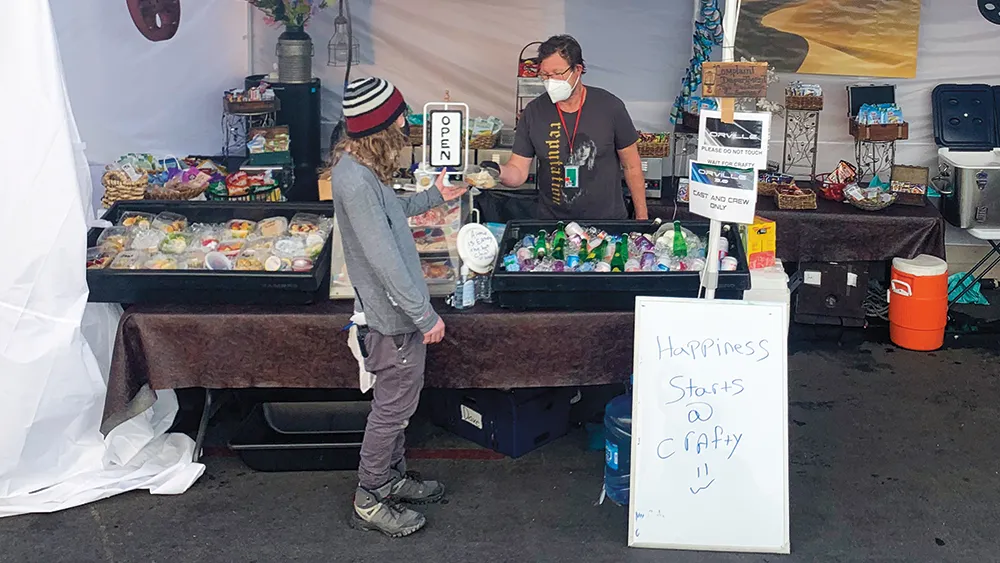
People often confuse this with craft services, which is the all-day snack and beverage station. Crafty keeps you functional between setups. Catering feeds you like a human being with a call time.
Who calls the meal break?
The phrase you will typically hear is some variation of “Lunch!” or “That’s lunch!” It is usually called by the assistant director team, often the 1st AD or a 2nd AD, depending on the set’s rhythm and who is running the floor at that moment.
Even though it can sound casual, it is a formal cue. When meal is called, departments shift from production mode to reset mode. Some people eat immediately, some wrap or secure equipment first, and some rotate so critical coverage (like location security or safety watch) is maintained.

If you are background, the AD team (or background PAs) will usually give you specific instructions like where to line up, when you are cleared to go, and where you need to be when you return.
How long is a meal break?
Meal breaks vary by production, union rules, and the realities of the day, but the common expectation is about 30 minutes of meal time. On many sets, you will hear “half hour lunch.”
Two nuances matter in real life:
- When the clock starts. There is not one universal method across every contract, region, or show. On many catered, larger-scale productions, lunch timing is tracked so people actually get a full 30 minutes with food, often by noting when the last person is served (you may hear this called “last man” or “last crew”). On other shows, the clock may effectively start at the lunch call or release time, especially on walk-away lunches. If you are unsure, ask your AD or background PA how your set is running it.
- What you might hear on set. People talk loosely about being “released” for lunch, and some productions use a longer walk-away meal where timing can be handled differently. But if you are on a standard catered 30-minute lunch, the practical goal is still the same: eat, reset, and get back on the floor.
Some productions schedule a longer meal (or effectively allow one) depending on location constraints, company moves, or special circumstances. But if you plan your day around a luxurious lunch hour, set life will correct you quickly.
How lunch timing works
When people say “the lunch clock,” they can be talking about two different things. It helps to separate them:
- Creative work pauses. Principal photography typically pauses for meal. That said, the day does not freeze. Some departments use lunch to prep the next setup, do quiet resets, or keep essential coverage going. On bigger shoots, you may also have staggered breaks, second unit activity, or quick pickups happening elsewhere.
- Timekeeping is tracked. Lunch timing is monitored and logged because many productions have rules about when a meal must be provided and how long the period is. When those rules are missed, it can trigger meal penalties. The exact standards vary by agreement and jurisdiction, which is why crews track it carefully and why production offices love spreadsheets.
If you are working under a union agreement, there are specific standards behind this. If you are not, production will still usually follow a structured approach because it keeps the set humane and the schedule predictable.
Where does background eat?
Background actors (also called extras) are usually directed to a specific eating area. Depending on the scale of the production and the location, that might be:
- a dedicated background holding area with tables and chairs
- a tented lunch area near base camp
- a portioned section of the catering space
- an indoor room if the location allows it
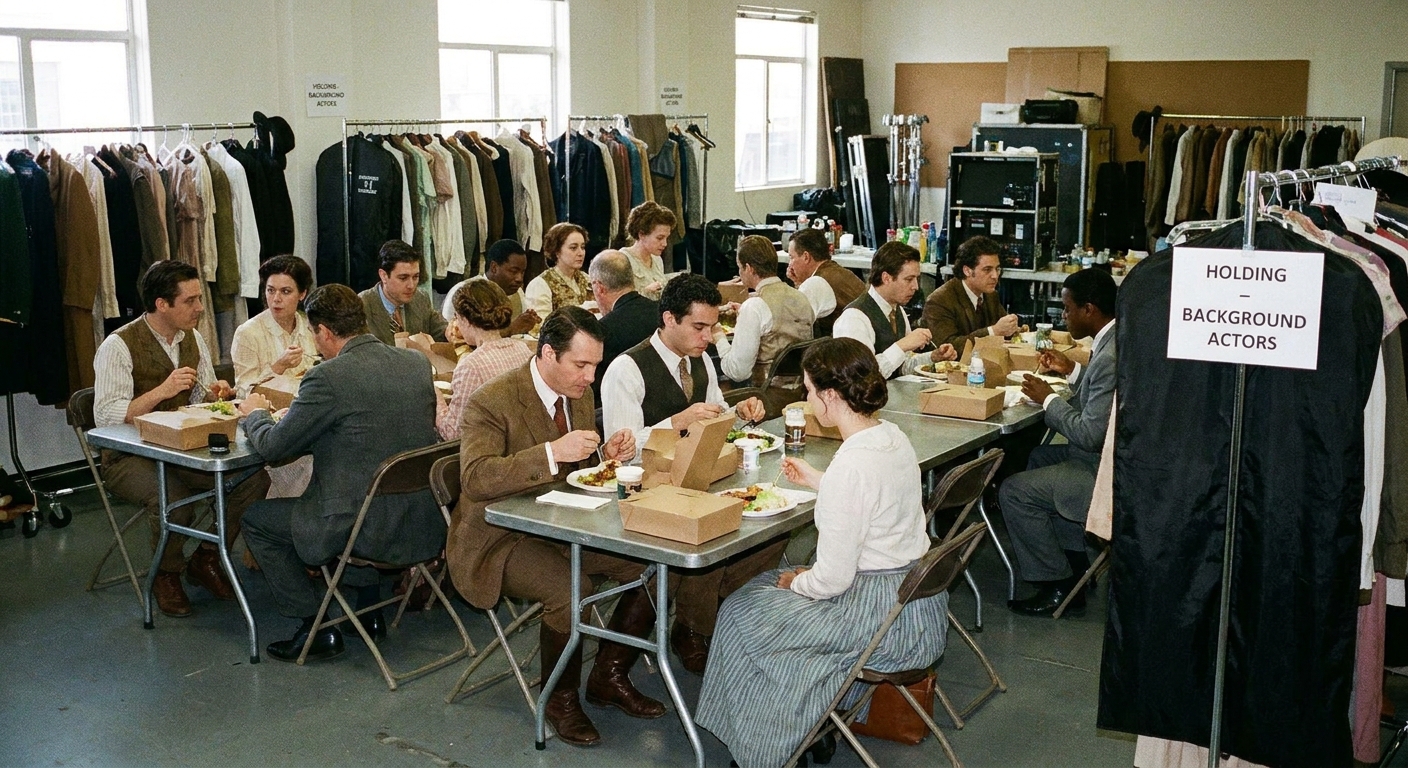
One quick definition if you are brand new: holding is the place where background waits when they are not on camera. It is essentially your home base for the day, and yes, it often looks like folding chairs, tables, and a lot of people trying not to wrinkle wardrobe.
On many sets, background is released in a controlled way to prevent bottlenecks. Your background PA may send groups by voucher number, by scene, or simply by who is up next after lunch. It is not personal. It is traffic control.
One practical tip: do not wander during meal unless you have been told you can. Background needs to be findable quickly, especially if the post-lunch setup changes and production needs to re-block, re-wardrobe, or re-stage you.
How catering works
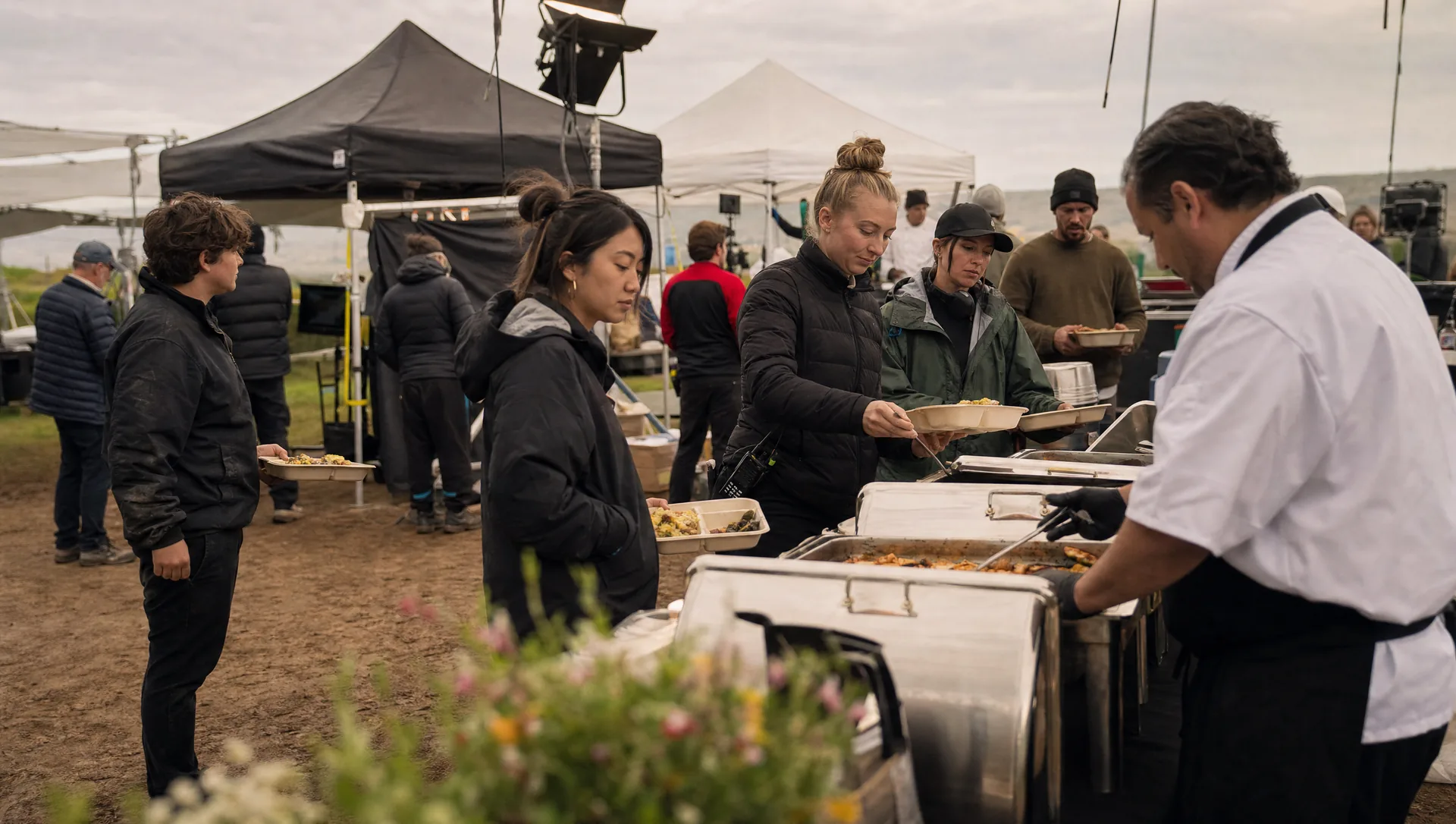
While every set has its quirks, a catered meal break often follows a familiar choreography:
- Listen for the release. Often, crew goes first and background is released in waves, though every show handles the order a little differently. Sometimes talent and crew have separate lines.
- Line forms. You queue up with your department or holding group.
- Quick reset before you touch food. Wash or sanitize your hands, ditch dirty gloves, and keep walkies and gear out of the serving lane.
- Grab a plate. Catering staff serve, or you move through stations.
- Dietary options are usually available. Vegetarian and other accommodations are common on professional sets, though availability varies. If you have restrictions, flag it early to the right person so no one is improvising at the steam table.
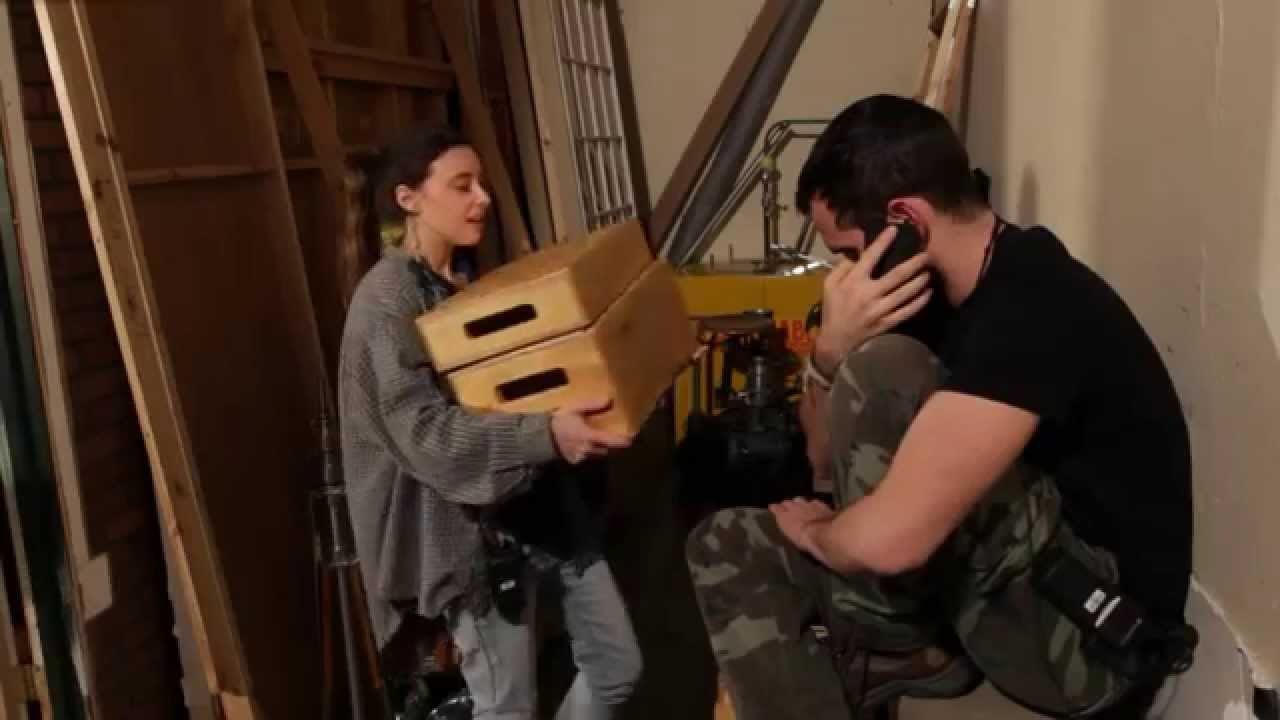
- You sit. This is the “sit-down” part, even if you are perched on an apple box because the location is tight.
- Trash out. Everyone clears their space quickly because turnaround is real.
If you are background in wardrobe, be mindful of spills and sauces. I have seen entire continuity plans get derailed by one enthusiastic bite of curry. Choose wisely, eat carefully, and keep napkins close.
Meal break vs. craft services
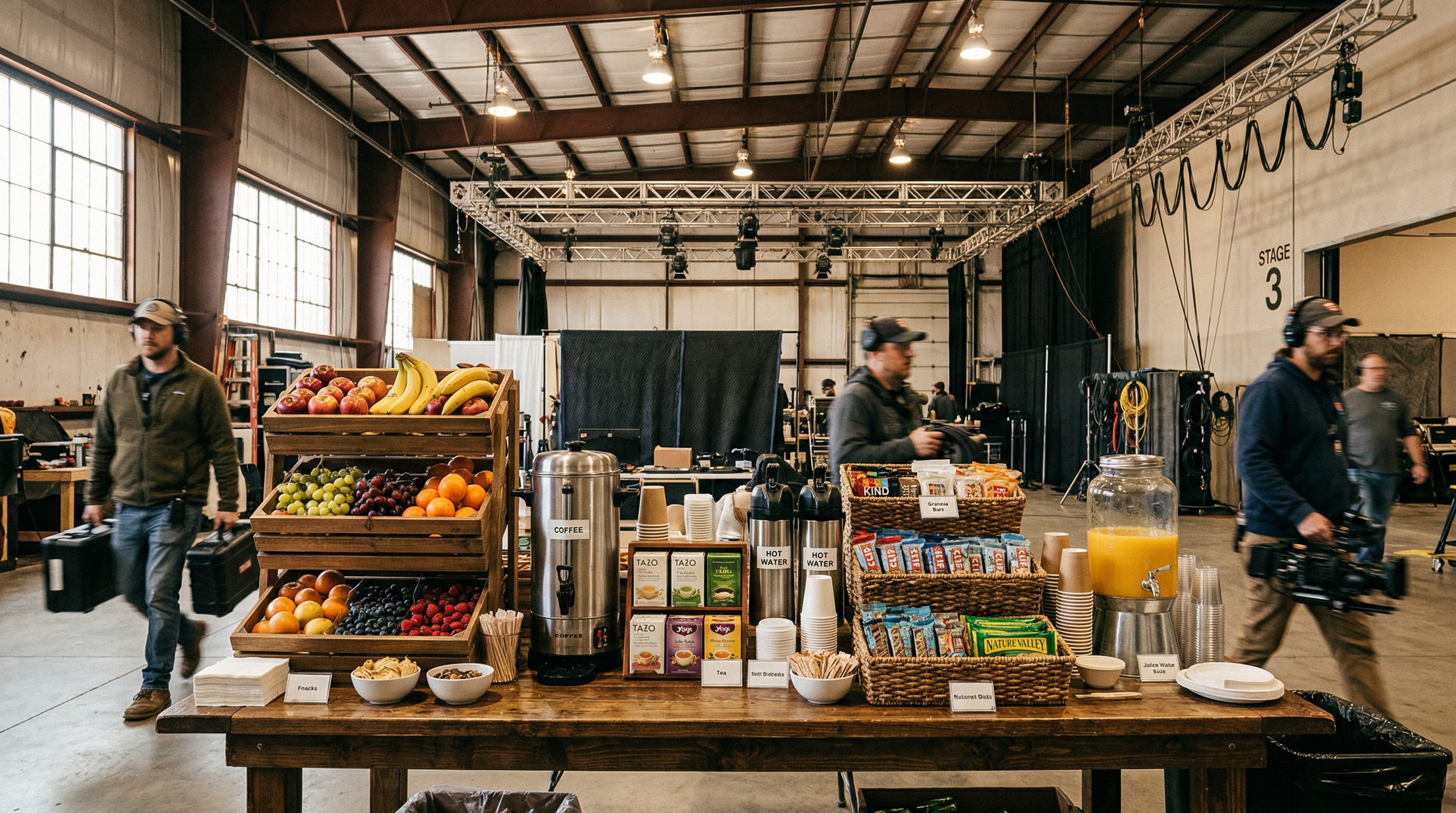
If you have heard people rave about “crafty,” they are not talking about lunch. Craft services is the snack and drink station that runs throughout the day, usually featuring coffee, water, electrolyte drinks, fruit, granola bars, and whatever else keeps people upright between setups.
The simplest way to remember it:
- Craft services: ongoing snacks and beverages
- Meal break: an official pause for a catered meal
They serve different purposes, and they are staffed and budgeted differently. If you want the full breakdown, craft services is a separate topic.
What are French hours?
Sometimes you will hear crews talk about French hours. That refers to a schedule approach where the day runs without a traditional sit-down meal break, often as a specific production or contractual arrangement. Food is served in a way that lets people eat while work continues in rotation.
In other words: French hours is not a fancy name for lunch. It is a different structure for the entire day that changes how and when people eat. Depending on the show’s rules, there may still be short paid breaks, but the classic “that’s lunch” moment often is not part of the day.
Lunch etiquette
- Listen for instructions. Background eats when background is released, not when the first whiff of garlic hits the air.
- Do not jump the line. If you are not released yet, do not drift over and hope no one notices. Someone notices.
- Move efficiently. Take what you need, sit, eat, clean up, return.
- Respect holding. You may have wardrobe checks or re-staging right after lunch.
- Do not take extras unless invited. Some sets allow seconds when everyone has been fed. Wait for the signal.
- Hydrate. The meal is a good moment to refill water and reset before the afternoon push.
FAQ
Does filming always stop for lunch?
Most of the time, principal shooting pauses for the official meal break. Some departments may keep prepping quietly so the next setup is ready when the break ends, and larger productions may stagger breaks or keep separate units moving.
Can background leave during meal?
Usually, no, or only with permission. Background needs to be reachable, and you may have a quick turnaround after lunch for wardrobe, staging, or a new setup.
Is a meal break paid?
It depends on the production and agreement, but the meal period is tracked carefully. If you are unsure how your day is being logged, ask your background PA or check your paperwork process at wrap.
What if I have dietary restrictions?
Tell the appropriate contact as early as possible. For background, that is often handled through the background coordinator or the on-set background PA. Larger sets frequently have multiple options, but communication helps.