The first time I heard “We’re on French hours,” I pictured something charming and cinematic, like a New Wave director waving us toward a cafe between takes. Reality was less croissant, more hustle: the day kept moving, the cameras kept rolling, and food happened in the margins. If you’re background on set, that one phrase can change everything about how you pace yourself.
French hours are a continuous workday schedule where the traditional sit-down meal break is replaced by ongoing food service. You still eat, you just do it in a different rhythm, often while staying closer to set and ready to work.
French hours, defined
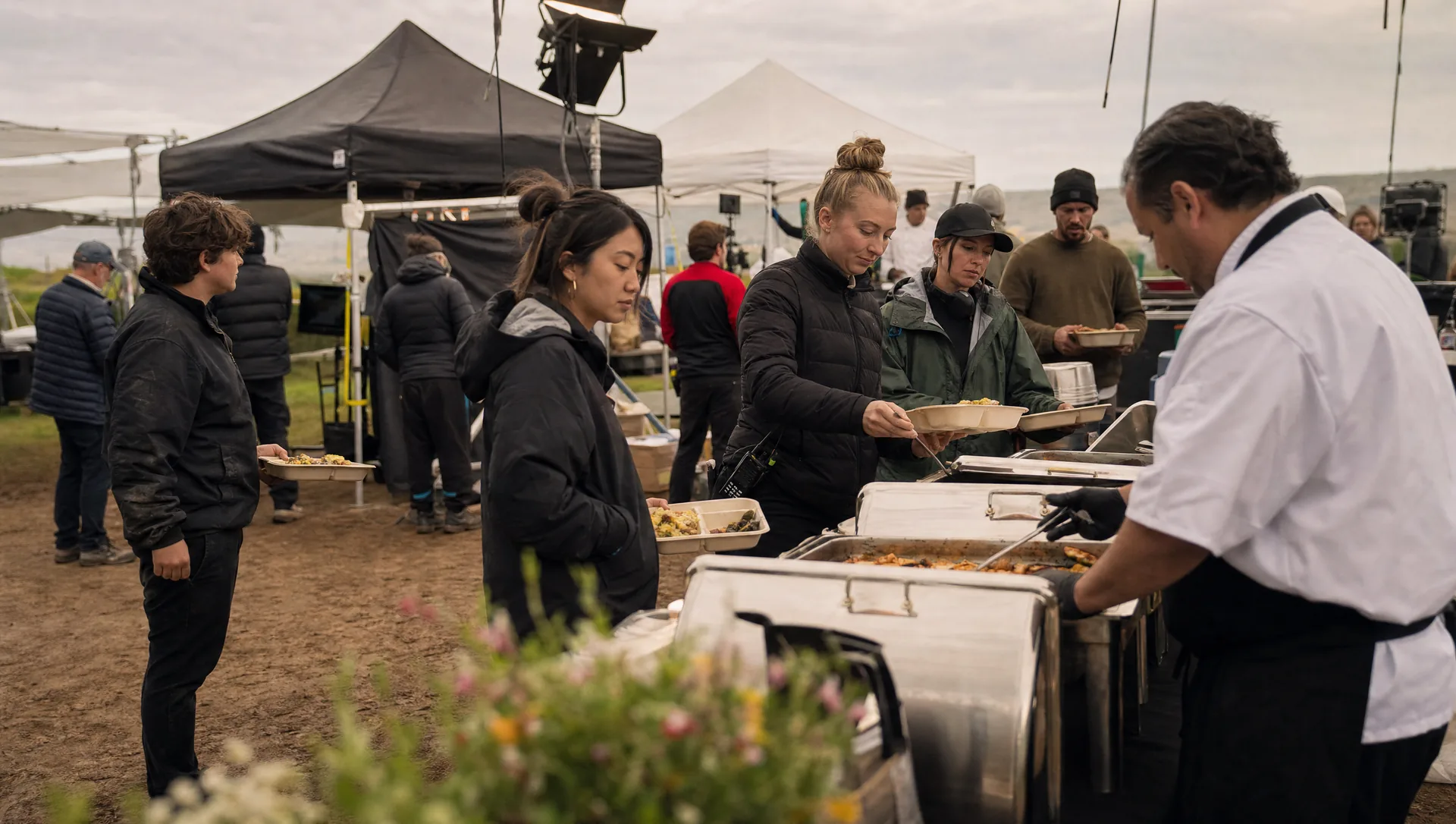
French hours means the production keeps the day moving without a formal meal break that stops work for everyone at once. Instead of calling “Lunch!” and sending cast and crew to a sit-down meal for a set amount of time, the production provides food continuously, usually via:
- Rolling catering (hot food set out in shifts)
- Expanded craft service (more substantial options than snacks)
- “Grab-and-go” meals (boxed meals, sandwiches, salads)
The key idea is that the workday is treated as continuous. People eat when they can, in staggered waves, without shutting down filming.
One important caveat: French hours is a scheduling approach, not a free pass around labor rules. Depending on where you’re working and whether the production is union, required meal periods, rest breaks, and meal penalties can still apply. If you are unsure what applies to you, defer to your voucher paperwork and the production’s stated policy for that show.
How the clock is counted
On a standard day with a formal meal break, there is usually a clear stop in the middle of the day when lunch is called. With French hours, the day is still tracked from your call time forward, but there is no single, universal moment when the entire set pauses for lunch.
What that means in practice
- Your call time still matters. It anchors the day’s schedule and expectations.
- Work continues through the “meal window.” Instead of one lunch break, departments rotate through food when they are able.
- Background may be fed in waves. You might be sent to eat between setups, during a lighting change, or while another group is being filmed.
If you are used to hearing “lunch around the six-hour mark” on many sets, French hours can feel slippery. You will likely get fed, but it may not arrive as a clean block of time that belongs entirely to you.
What background actors should expect
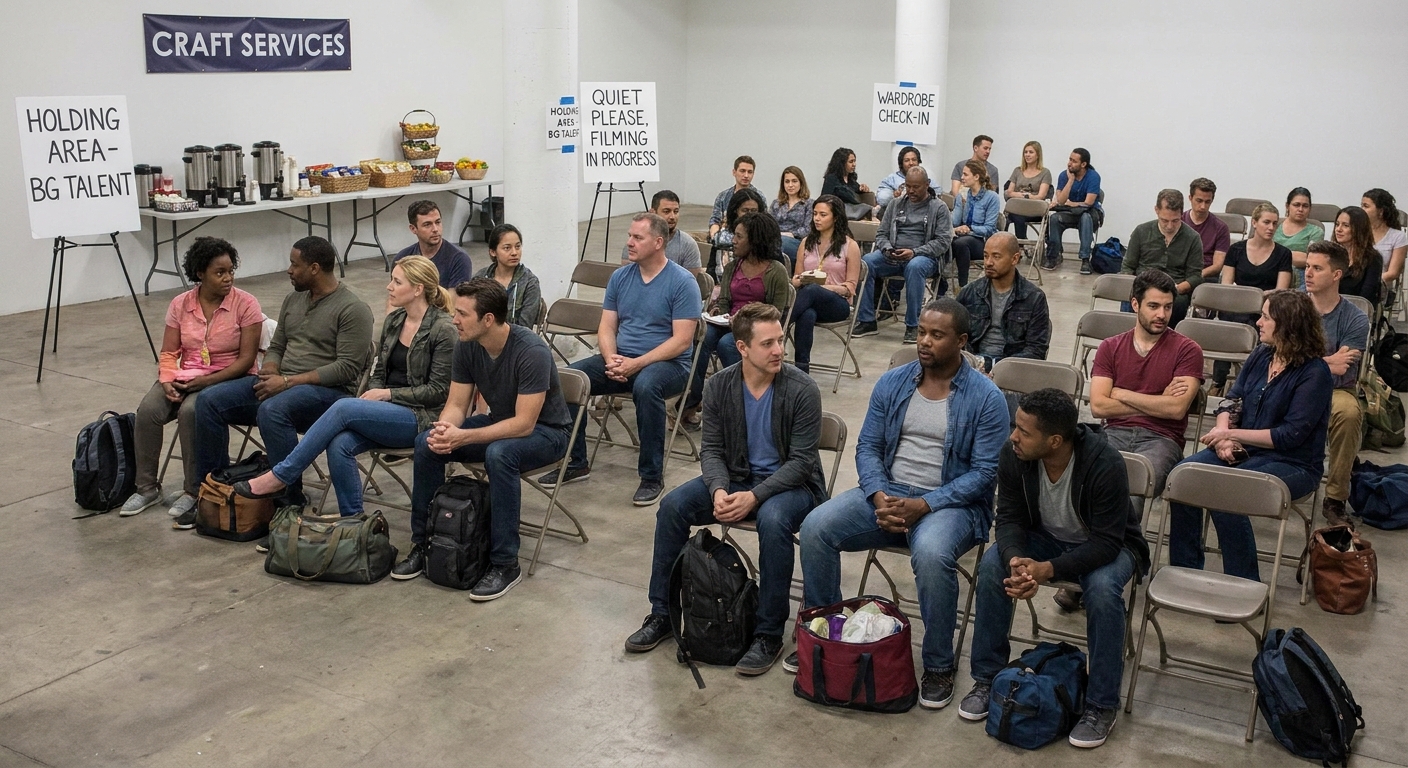
Background actors live in the space between “hurry up” and “wait,” and French hours intensify that. The biggest adjustment is that your meal is often treated as something you do while remaining on standby.
1) Breaks can be shorter and more scattered
Instead of one longer meal break, you may get:
- A quick release to a food table and back
- Small pockets of downtime that are not formally announced as breaks
- A chance to eat while holding, as long as wardrobe and continuity allow
If you are in a look that cannot risk spills, you may be told to wait until wardrobe clears you, or you may be offered a safer option that will not stain.
2) You still need to stay ready
Even if you are eating, you can be called back quickly. For background, that usually means:
- Keep your radio on you (if you have one) and stay alert for instructions
- Stay within the area you were told to remain in
- Do not wander off to your car unless you have explicit permission
French hours are often about keeping momentum, and sometimes about saving time and costs or managing a tricky location. For you, it translates to staying nearby and staying camera-ready.
3) Crafty often becomes more important
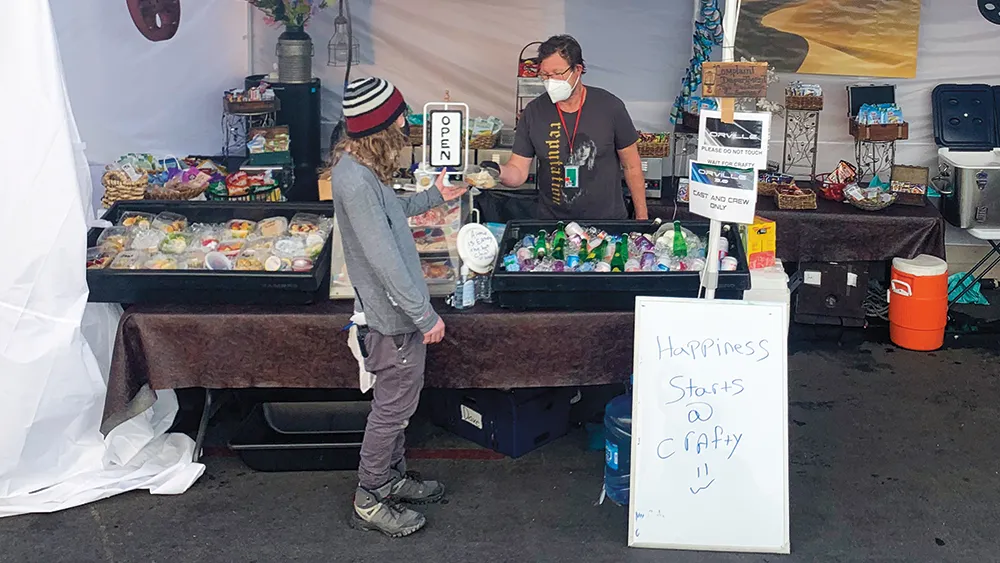
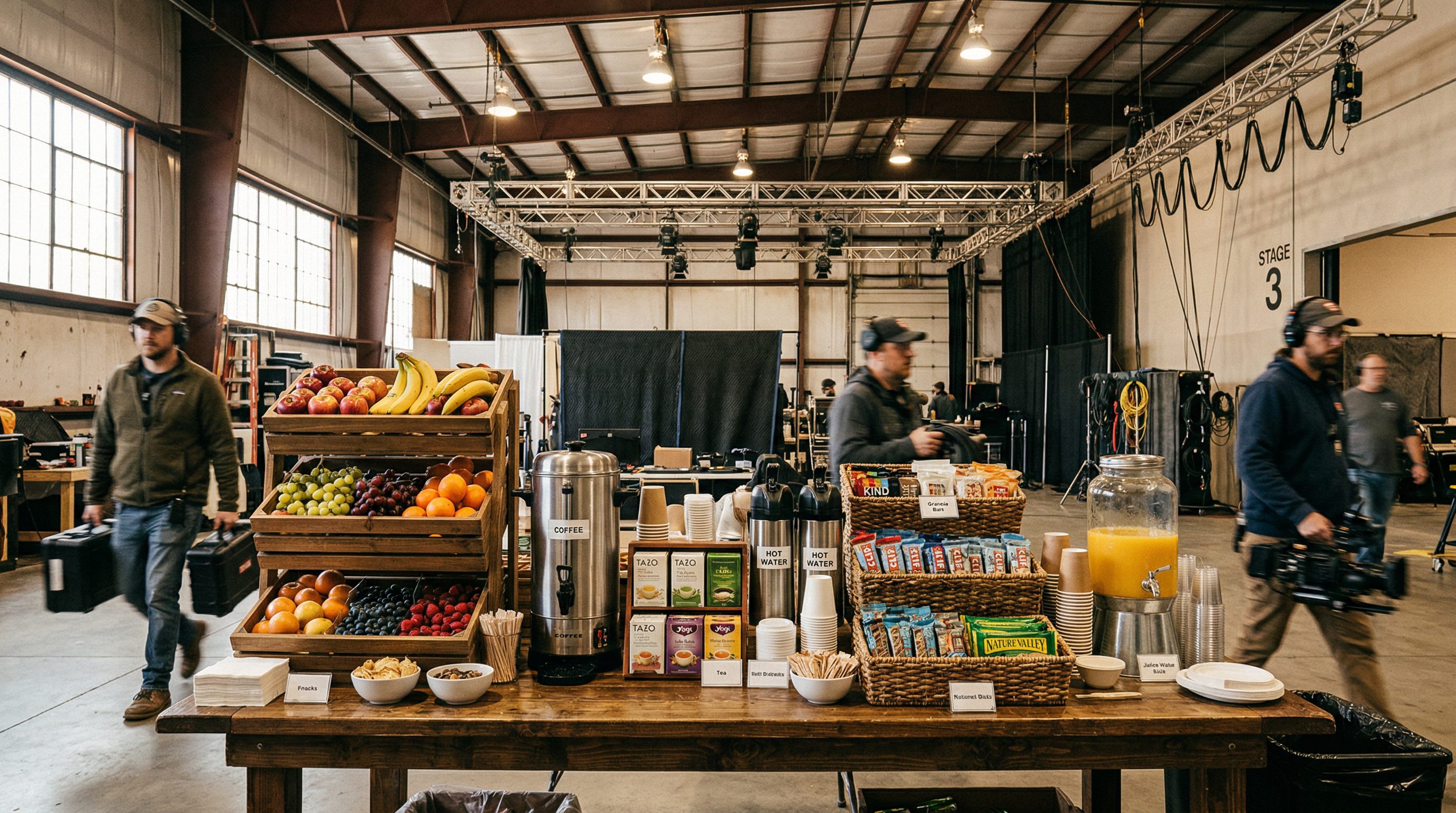
On French hours, craft service can feel like the spine of the day. Beyond snacks, you may see more substantial items appear earlier and more consistently: soups, protein options, fruit, yogurt, sandwiches, and coffee that actually keeps coming.
Still, crafty is not always the same as a meal. The offerings vary wildly by production, location, and budget. The smart move as background is to treat crafty as support, not your only plan for staying steady.
How eating works on set
French hours only work if food is accessible. Usually, the assistant directors and production team coordinate a rolling flow so departments can rotate without shutting down filming.
Common setups
- Rolling hot line: a catering line opens for a window, then refreshes later.
- Boxed meals: meals are distributed quickly, sometimes labeled by dietary preference.
- Set-adjacent food station: a table close enough that people can eat and return fast.
Continuity and wardrobe rules still apply
If you are in picture and especially if you are “wet,” “bloody,” in period wardrobe, or wearing anything rented or delicate, you may be restricted to certain foods or required to wear protection (like a robe or cover). Sometimes you will be told to wait until a reset is done so you do not risk continuity issues.
You might hear other terms
Some productions will call it French hours. Others will call it a “walking lunch” or an “on-the-clock meal.” The common thread is the same: food is provided while the day keeps moving, and you are expected to stay close and available.
When you can expect to eat
There is no single universal timing, but background is typically fed when it will not disrupt shooting. That often looks like:
- Between setups when lighting is being adjusted
- After a big take when the director moves on
- In rotation by group number, costume type, or holding area
If you are unsure, ask politely and specifically: “Should background stay in holding, or are we rotating through food?” That question gets you a clear instruction without sounding like you are challenging the schedule.
If food is delayed or missing
Most days, it sorts itself out. But if you realize hours have passed and background has not been rotated through, do not stew quietly until you are shaky. Ask the right person, calmly:
- Background PA or holding PA (usually your best first stop)
- 2nd AD or AD team if you cannot find the background PA
Keep it simple: “Hi, checking in. Has background been cleared to eat yet, or are we waiting for rotation?” If you have a medical or dietary issue that makes delays risky, say so privately and directly.
End of day
French hours change the meal structure, but they do not magically make the day shorter. The end of day can still arrive suddenly, especially if the production is pushing to complete a scene.
What to expect at wrap
- A quick return of wardrobe and props. If you were given anything, you will be asked to check it back in.
- Vouchers and release lines as usual. Background paperwork procedures remain the same.
- Possible wrap food. Some sets put out extra food at the end, but do not count on it.
If you are hungry late in the day, it is not rude to quietly grab something when allowed. It is far better than bonking during the last setups, when everyone is tired and time is tight.
French hours etiquette
French hours can feel like a sprint disguised as a marathon. These habits help you stay professional and comfortable:
- Eat when you get the chance. Do not assume a better break is coming later.
- Keep it clean. Choose foods you can manage in costume, and use whatever protective items wardrobe offers.
- Stay nearby. If you leave the holding area, get explicit permission.
- Hydrate steadily. Continuous schedules can trick you into forgetting water.
- Be kind in line. Food stations are where stress shows up first. A little patience keeps the set functioning.
Quick FAQ
Are French hours the same as skipping lunch?
No. The point is not to starve the set. It is to avoid stopping production for a formal sit-down meal by providing continuous access to food.
Does French hours mean meal penalties do not exist?
Not necessarily. Rules vary by location and contract, and some shows still track meal periods and penalties even on a continuous schedule. If you have questions about what applies to you, check your deal memo or voucher notes, and ask the production office or the AD team for the show’s policy.
Will I still get a real meal as background?
Most of the time, yes, but it may be delivered as boxed meals or a rolling line rather than a single announced lunch break. Timing can depend on the day’s setups and your costume or continuity needs.
Is craft service the same thing as French hours?
Not exactly. Craft service is the ongoing snacks and drinks operation. French hours is the schedule structure where the day keeps moving and meals are handled in a rolling way.
Should I bring my own food?
Many background actors bring a small, set-friendly backup snack, especially for long days or dietary needs. Just avoid anything messy, strongly scented, or forbidden in wardrobe areas, and follow set rules about where you can eat.