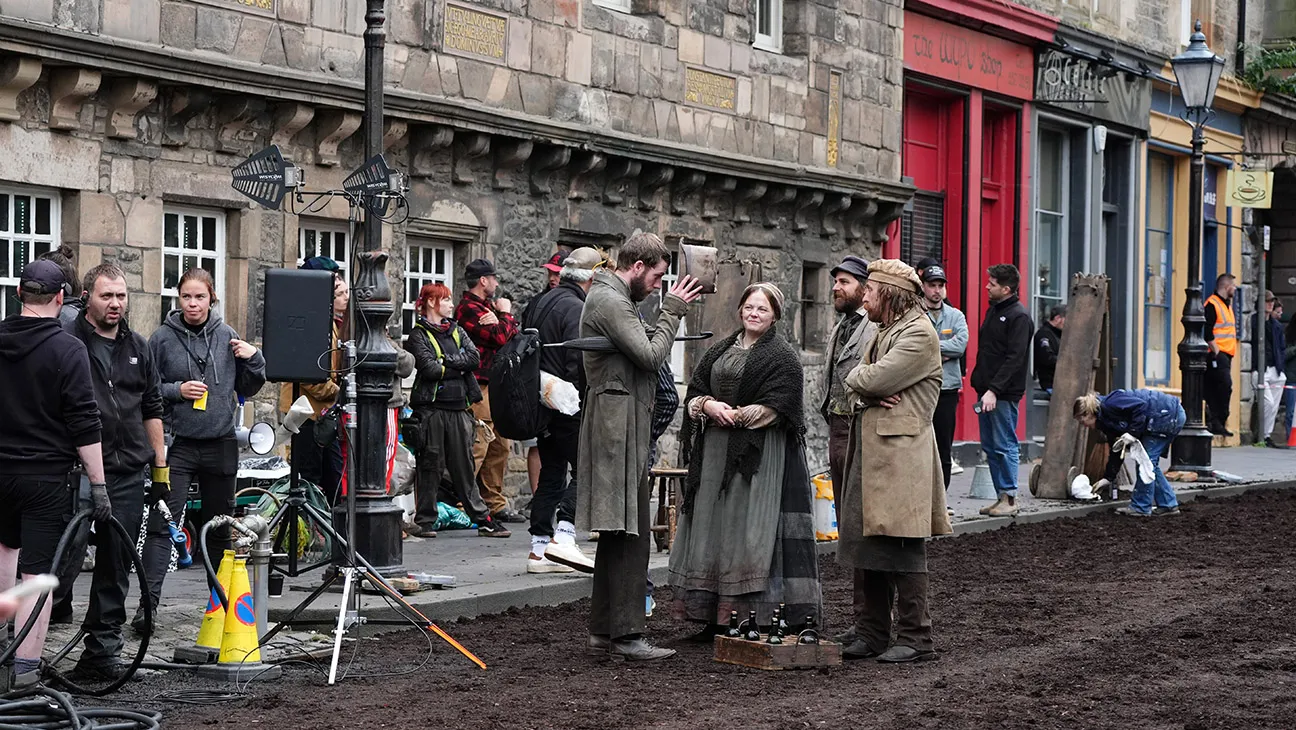
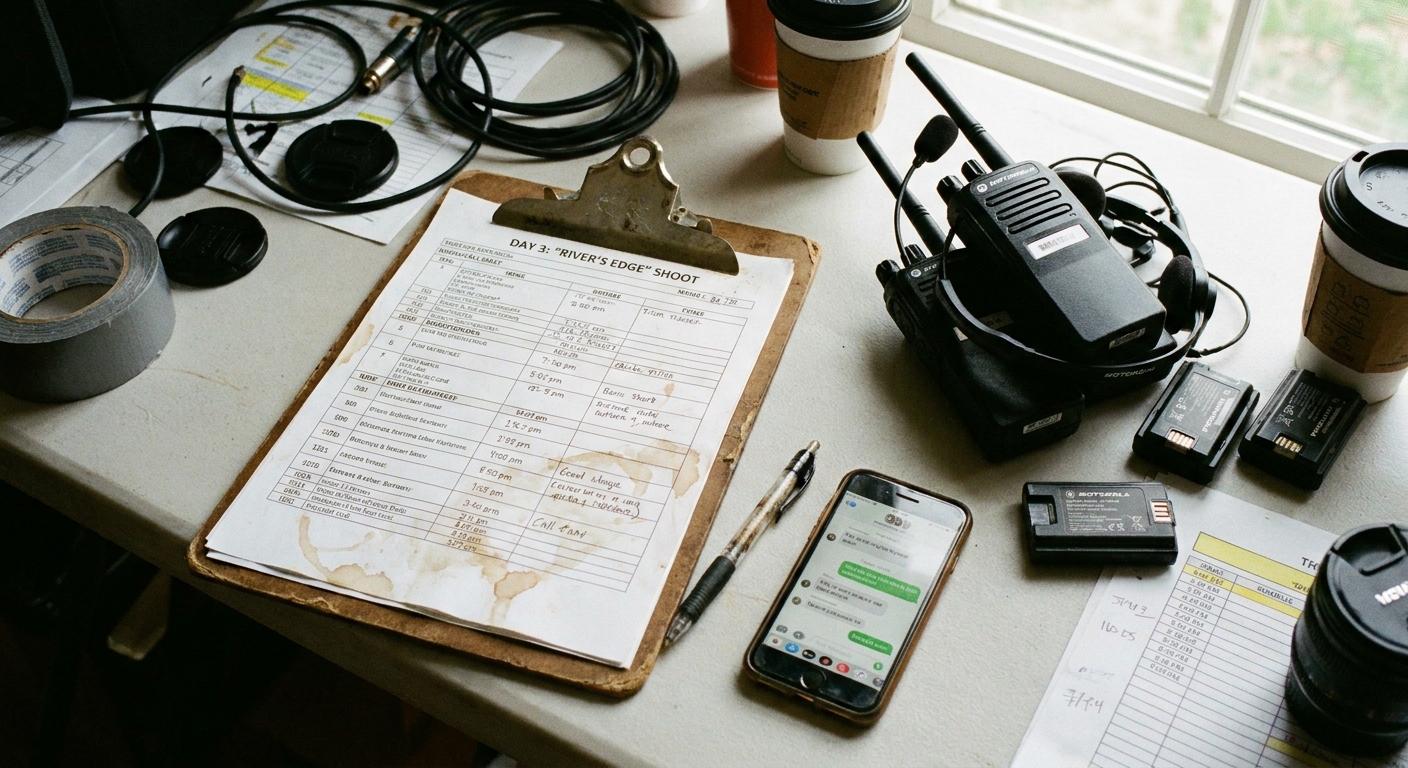
My childhood had two recurring views: the glow of a projection booth window and the hush right before a curtain rose. Both taught me the same lesson, long before I knew the term eyeline: the audience can feel when the spell breaks. On a film set, few things snap that spell faster than a background actor accidentally clocking the lens.
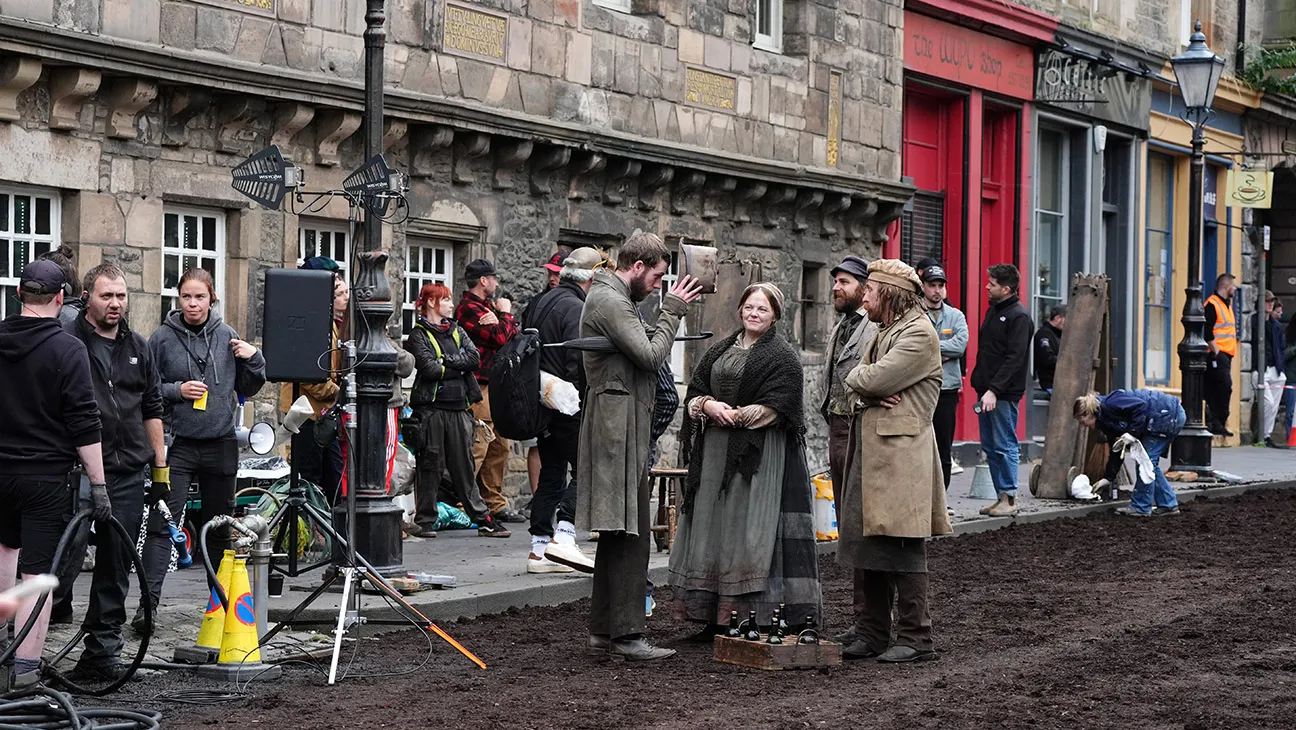
So, should background actors look at the camera? Almost always, no. But like any good rule in storytelling, the exceptions are deliberate and specific.
The usual rule: do not look into lens
In most narrative film and TV work, the camera is meant to feel like an invisible observer. If a background performer makes eye contact with the lens, it reads as:
- Lens awareness, which reminds viewers they are watching a scene being filmed.
- An unplanned moment of emphasis, because human brains treat direct eye contact as a cue that something matters.
- A continuity issue, since that look can pop in one angle and disappear in another.
This is why a common on-set note is some version of: Play the world, not the camera.
Where should your eyes go?
If you are in the background, your job is to create believable life without stealing focus. Your eyeline is part of that. In practice, that means choosing a point that makes sense for what you are doing.
Safe eyelines that play naturally
- Look where you are going if you are walking, crossing, shopping, commuting, exiting.
- Look at your partner if you are paired with another background actor and told to play an action together (laughing quietly, reacting, sharing a phone, etc.).
- Look at an object you are handling (menu, coffee, bag, newspaper, laptop) so your attention appears motivated.
- Look just off the principals if you are meant to be in their orbit, like a bartender listening while working, a server passing behind, or a gallery patron glancing at art.
A tiny micro-example that solves a lot: if you are playing a cafe patron, keep your eyes on your laptop, your friend, the counter, or your coffee. Not the beautiful rig two feet away.
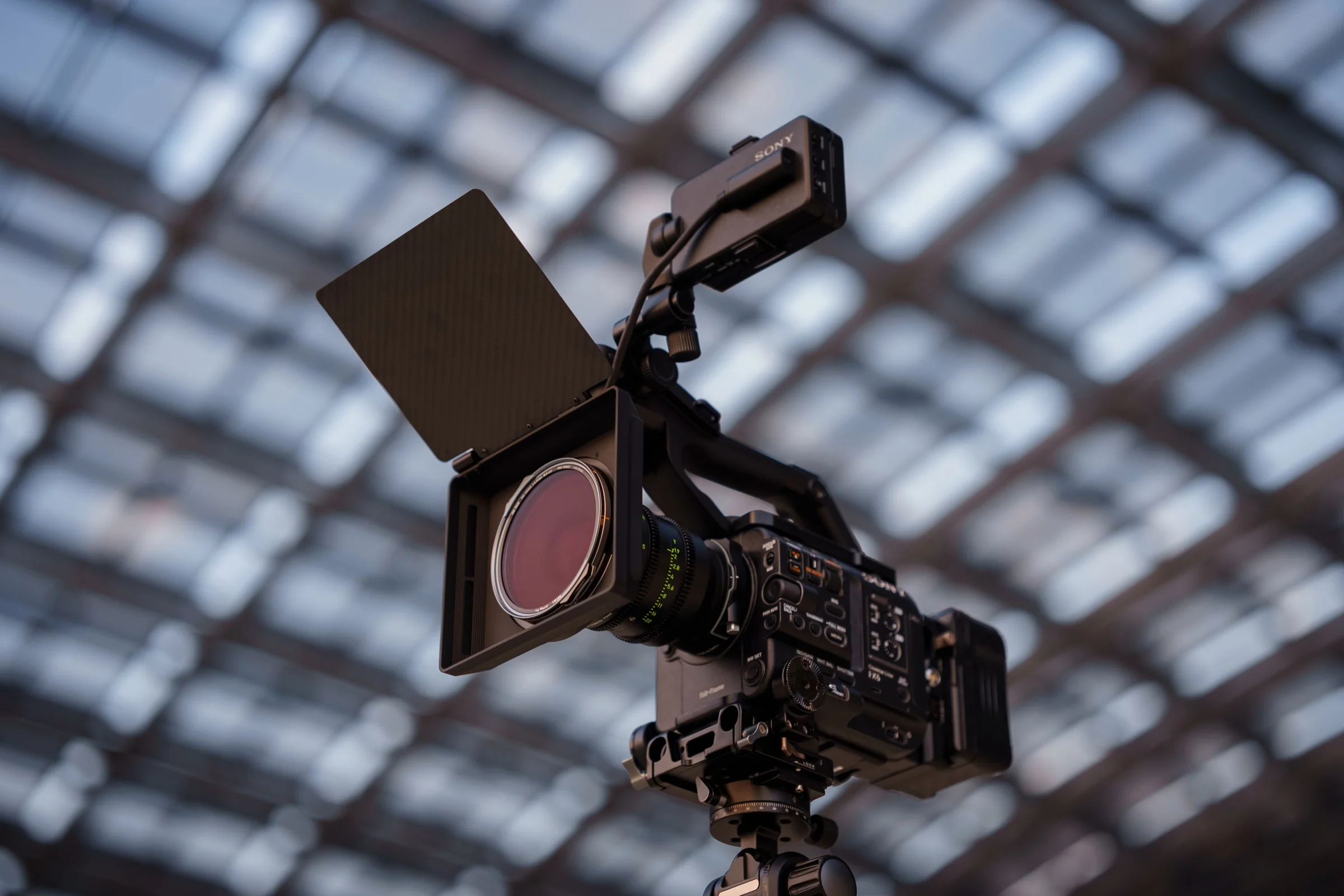
If you are ever tempted to peek at the lens because it is physically fascinating, congratulations, you are human. Resist anyway.
When looking toward camera is correct
There are moments when a background actor looking toward the lens is not only allowed, it is the point. The difference is intent: the director and camera team are designing a shot where lens awareness supports the story.
Common planned exceptions
- Documentary or mockumentary style: The camera is treated as present in the world, so people may glance at it, react to it, or even play to it.
- "Caught on camera" setups: Security camera, body cam, dash cam, phone video, livestream. In these, looking into the lens can be naturalistic.
- Direct address: A character speaks to camera. Background may also acknowledge the lens if the scene is intentionally breaking the fourth wall.
- Crowd reaction shots: Sometimes the camera is positioned where the crowd would logically look, like toward a stage, a podium, or an event. If the camera is standing in for that focal point, your eyeline might land near it.
- Staged press moments: Looking toward a bank of cameras can be appropriate, especially if you are playing press, fans, or bystanders reacting to a public figure.
In all of these cases, you should expect the direction to be explicit. You might hear: "Play into lens," "You can acknowledge camera," "Eyeline here," or the assistant director might point to a specific mark near the matte box.
Background vs. principal eyelines
Background eyelines are usually about behavior. Principal eyelines are often about coverage and story clarity.
Even when a scene is a simple conversation, principal actors may be asked to cheat their eyelines, meaning they look slightly off from their scene partner so the camera can see more of the face. That kind of adjustment can look odd if a background actor copies it without being asked.
In other words: principals are frequently aiming their eyes for the frame. Background actors are usually aiming their eyes for the world.
If nobody tells you, do this
If you have not been specifically told to look toward camera, assume you should not. Keep your eyeline motivated by your action and your environment.
If you want a simple on-the-day fallback, use this three-step check:
- 1) Find your task. Walking? Waiting? Ordering? Reading? Your eyes should support that activity.
- 2) Pick a believable focus point. A sign, a doorway, your phone, the person you are with, the product you are choosing.
- 3) Avoid the lens and the monitors. The lens is the audience. The monitor is the director and DP's reference for what the audience will actually see. Neither should be your scene partner unless you are told so.

Two continuity habits that will quietly save you: do not track the camera move, and keep your eyeline consistent across repeats. Pick your mark, then commit to it take after take.
If you are uncertain because the camera is placed exactly where your character would naturally look, ask a quick, professional question when appropriate: "Where would you like my eyeline?" Then take the answer and stick to it.
Quick FAQ
Is it ever okay to glance at camera by accident?
It happens, but do not treat it as harmless. A tiny glance can be noticeable enough to spoil a take, especially in closer framing. Other times the take may still be usable. The safest habit is training yourself to keep your focus on playable targets in the scene.
What if the camera moves right past my face?
Hold your action and keep your eyeline consistent. Let the camera pass through your world like it is not there, unless you have been directed to react to it.
What if I am supposed to watch the action, like a crowd watching an argument?
Look at the action, not the camera. If the camera is positioned near the action, choose an eyeline just off the lens so it reads like you are watching the moment, not the equipment.
What if I messed up and made eye contact mid-take?
Do not break. Do not wince, laugh, or apologize to the lens. Simply return your eyes to your task and keep going. After "cut," if you think it was obvious, a quick heads-up to the AD is enough. They will decide whether to go again.