I grew up in Chicago in the not-so-glamorous places where shows are actually made: backstage hallways, paint-splattered scene shops, and projection booths where you learn quickly that every entrance, cross, and turn has to land somewhere. Long before I had the vocabulary for it, I was watching blocking. It is the invisible choreography of everyday storytelling, the physical map that makes a story readable, emotional, and safe for everyone involved.
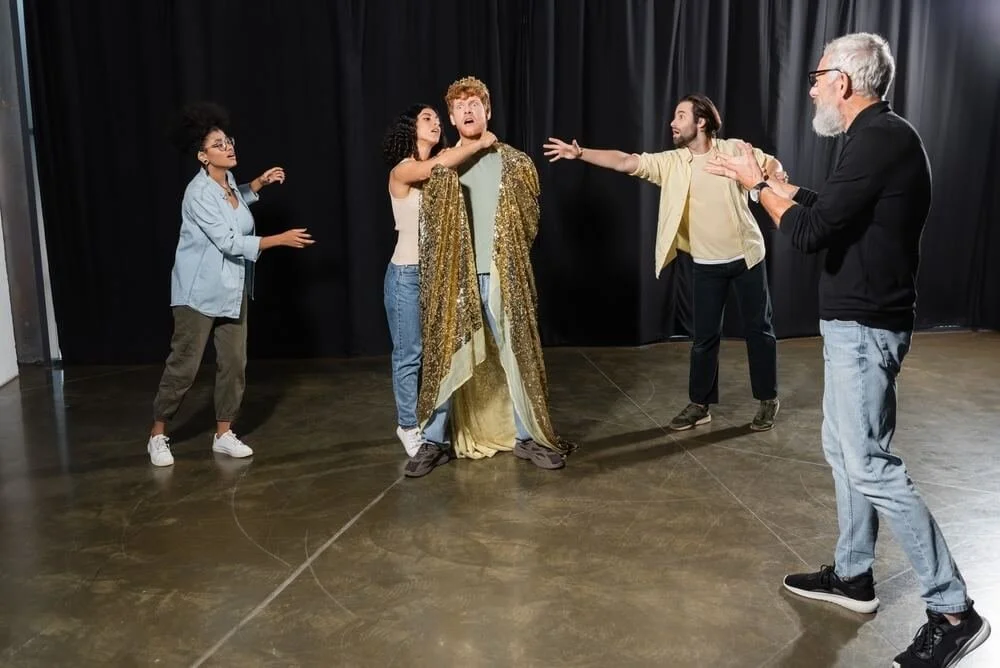
Blocking, defined
Blocking is the planned movement and positioning of performers in a scene. It answers practical, story-critical questions like:
- Where do you stand when you deliver a line?
- When do you cross the room, sit, or exit?
- Who is facing whom, and who is intentionally not?
- What physical action supports the emotional beat?
In theater, blocking is often discussed in terms of stage directions: downstage (closest to the audience), upstage (farthest), stage left and stage right (from the performer’s perspective). In film and TV, blocking includes the same core idea but must also account for the camera’s perspective, lenses, focus, and how a scene is covered shot by shot.
Who sets the blocking?
Blocking is rarely created by one person alone, but there is usually a clear leader depending on the medium.
In theater
The director typically sets the blocking, working in collaboration with:
- Actors, whose instincts can reveal more truthful movement than anything preplanned
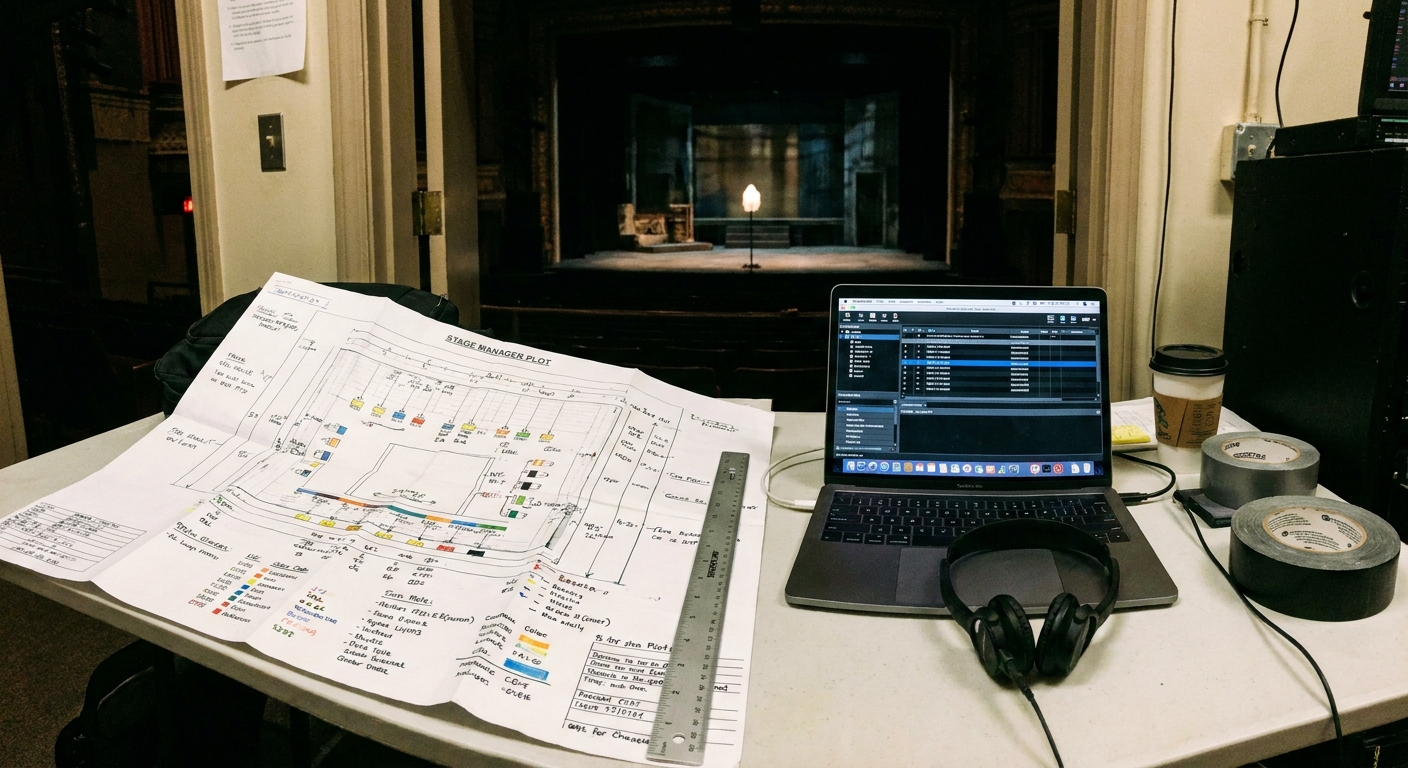
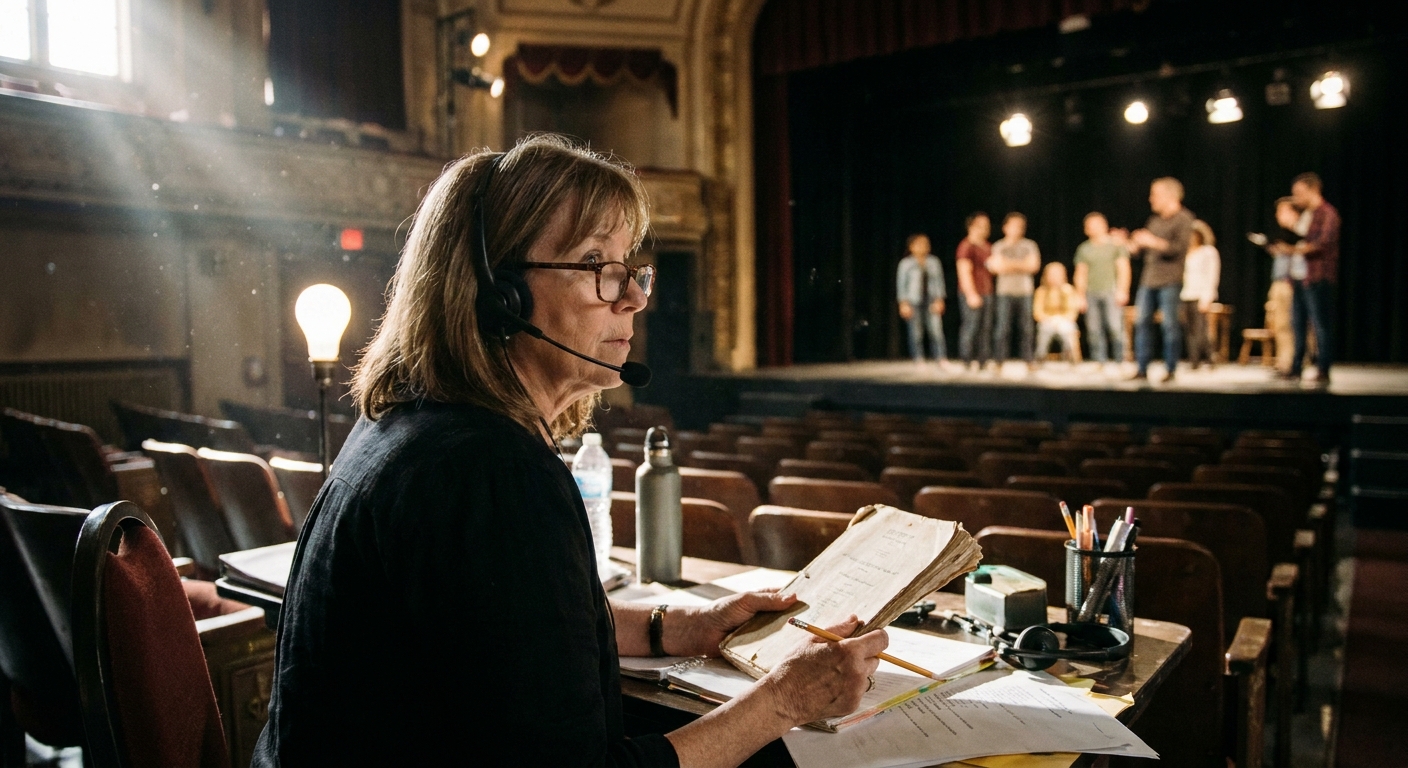
- Stage management, who record blocking carefully so it can be repeated consistently
- Choreographers or movement directors, when movement needs specialized shaping
- Designers (scenic, lighting, sound), because a beautiful picture means nothing if an actor is stuck in the dark or masked by a wall
Some directors arrive with a ground plan and strong visual ideas. Others prefer to “block on your feet,” letting the scene reveal its geography during rehearsal.
In film and TV
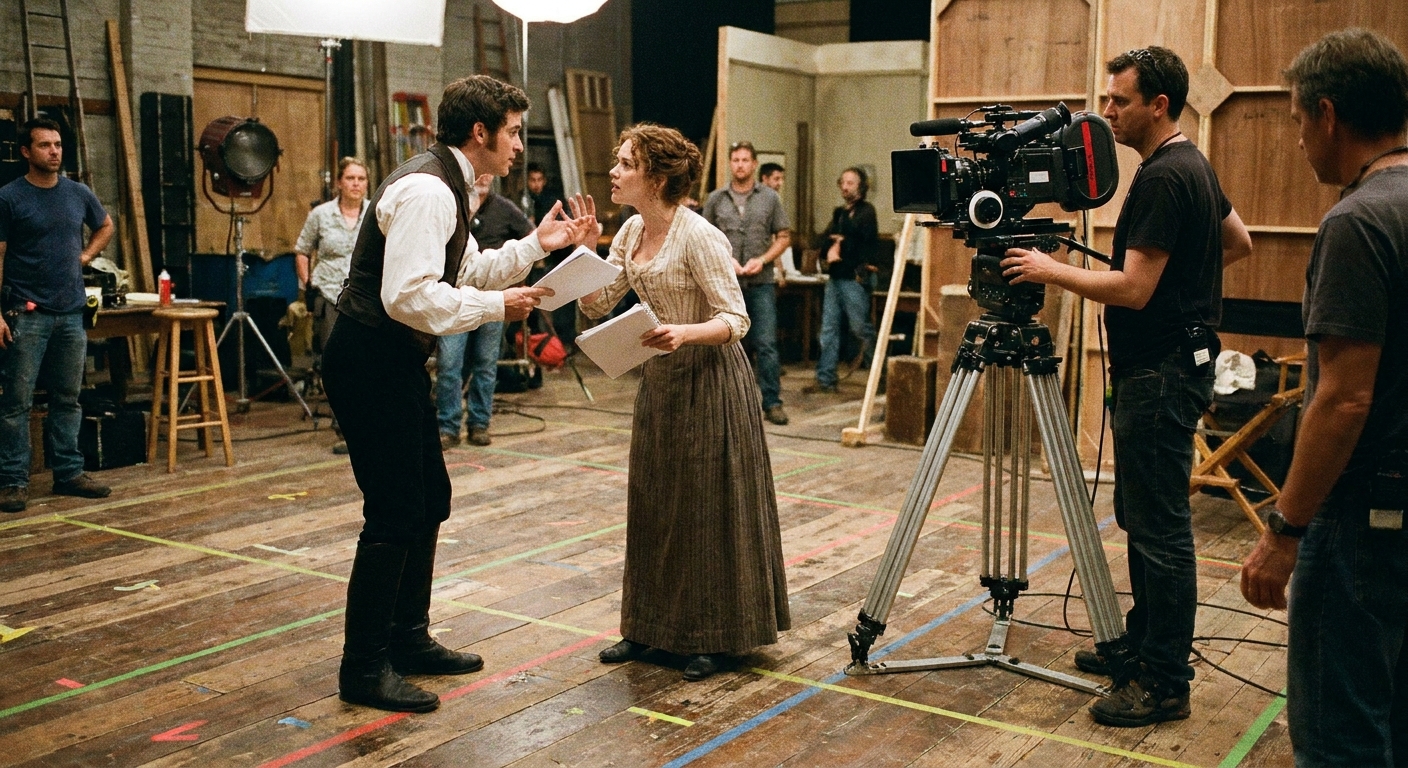
The director still leads performance blocking, but it becomes tightly intertwined with camera planning. The people who most directly influence how blocking plays on set include:
- Director of photography (cinematographer), who helps translate movement into frames, focus, and lighting
- 1st assistant director, who keeps blocking rehearsals safe, on schedule, and executable, especially when time or locations force tough compromises
- Camera operator and focus puller, who need marks to keep actors sharp
- Script supervisor, who tracks continuity so movement matches between takes and setups
On a film set, you will often hear about marks, meaning exact positions on the floor where an actor must hit for focus and framing.
Why blocking matters
Blocking can sound like logistics, but it is one of the most powerful storytelling tools a director has.
- It shapes meaning. Standing close reads as intimacy. Keeping distance reads as fear, power, or avoidance.
- It guides attention. Good blocking makes the audience look where the story needs them to look without feeling pushed.
- It controls pacing. A scene that never shifts physically can feel static, even with great dialogue.
- It supports design. Lighting, set pieces, and sound cues often depend on actors being in the right place at the right time.
- It keeps people safe. This is not glamorous, but it is sacred. Traffic patterns, fight calls, quick changes, trap doors, cables, and stunt choreography all require precise movement.
One of my favorite truths about blocking is that it can be both planned and alive. The goal is not to turn actors into chess pieces. The goal is to build a repeatable physical language that still leaves room for honest moment-to-moment acting.
A quick example
Here is a simple kitchen argument, because kitchens are where characters tell the truth when they do not mean to.
- Version A: Two people argue face-to-face, center, barely moving. It reads as direct conflict, nowhere to hide.
- Version B: One person keeps turning away to rinse a glass or wipe the counter. The other follows, trying to get eye contact. Same dialogue, but now the scene becomes about avoidance, control, and who gets to end the conversation.
- Version C: One person moves downstage (closer to us) on the hard line, leaving the other upstage. Without changing a word, the power dynamic shifts. The audience’s attention goes where the emotional heat is.
In film, that same choice also dictates coverage. If the “avoider” lives at the sink, the director and DP may commit to a profile, a longer lens down the counter, or a motivated move that follows the pursuit. Blocking is not separate from the camera. It is what the camera is chasing.
What happens in a blocking rehearsal?
A blocking rehearsal is when a scene moves from “we understand it” to “we can stage it.” In theater, blocking often happens early in the process, after initial reads and table work. In film, blocking is often explored during rehearsals and then refined again during the on-set walkthrough before cameras roll.
Typical beats
- Start with objectives. The director clarifies what the scene is doing emotionally and narratively.
- Find the geography. Where are entrances, exits, furniture, practical props, sightlines?
- Put it on its feet. Actors walk the scene, often slowly, while choices are tested.
- Set key pictures. Directors often establish anchor moments: a reveal, a confrontation, a handoff, a kiss, a final image.
- Adjust for clarity and safety. Stage combat spacing, furniture distances, stairs, platforms, and any tricky transitions get stress-tested.
- Record it. In theater, the stage manager captures everything. In film, departments note marks and camera needs.
Blocking vs. table read
People sometimes mash these together because both involve the cast and the script. But they serve different goals and happen at different moments.
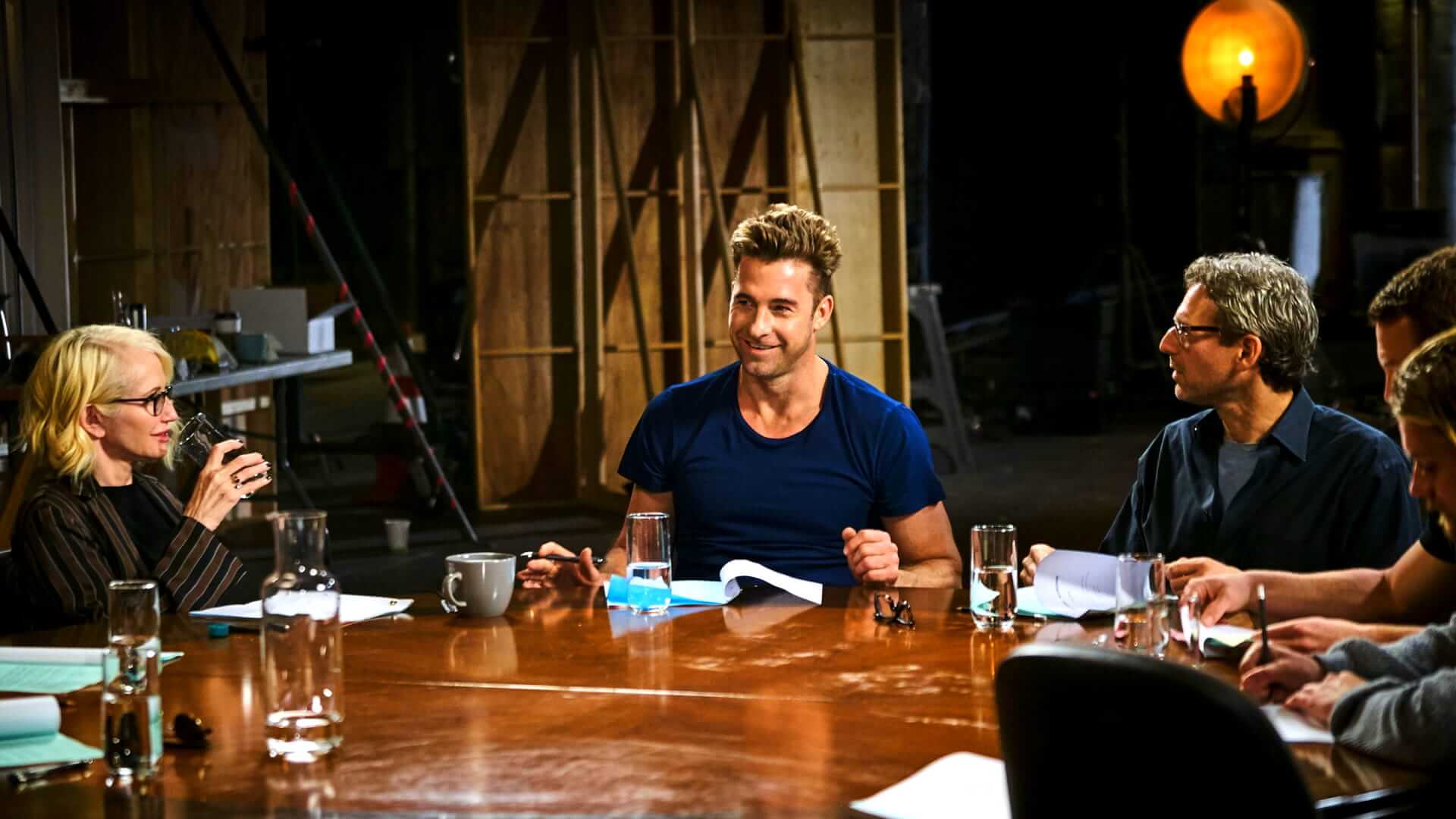
Table read
- Primary focus: Story, dialogue, character voices, rhythm
- Physicality: Minimal or none, often everyone stays seated
- What you are listening for: Does the script make sense out loud? Where are the pacing problems? Where do jokes land, or not land?
- Useful outcome: Shared understanding of the text, tone, and relationships
Blocking rehearsal
- Primary focus: Staging the scene in space and time
- Physicality: Constant, even if tentative at first
- What you are watching for: Can the audience follow the story visually? Are actors visible and connected? Do movements motivate the emotional turns?
- Useful outcome: A repeatable map of the scene that can be rehearsed, refined, and eventually performed or filmed
If a table read answers “What are we saying and why?”, blocking answers “Where are we, what are we doing, and how does the space tell the truth?”
Common blocking terms
- Cross: Move from one area of the stage or set to another.
- Cheat out: Turn slightly toward the audience or camera so your face and body are readable.
- Open up: Similar to cheating out, often a note to avoid turning your back.
- Spike mark: A taped mark on the floor indicating where an actor or object should land, common in film and TV.
- Business: Small physical actions with props or environment, like pouring a drink, folding laundry, or packing a bag.
- Stage picture: The visual composition of bodies in space at a given moment.
- Reset: Return to the top of the scene or back to starting positions.
From rehearsal to performance
Blocking is not carved in stone on day one. It is more like a sketch that gets inked.
- Early rehearsals: Broad strokes, discovery, “Does this work?” energy.
- Mid process: Refinements for timing, sightlines, and motivation. The clunky stuff gets sanded down.
- Tech: Blocking meets lighting cues, sound cues, projections, scene shifts, and costumes. Notes get more precise because stakes are higher.
- Previews and runs: Micro-adjustments. Sometimes an entrance changes because laughs are longer than expected. Sometimes a moment gets simplified to protect an actor’s voice or stamina.
In film, blocking also evolves because the plan changes with locations, weather, time, coverage needs, and the eternal surprise of a prop that does not behave.
FAQ
Is blocking the same as choreography?
Not exactly. Blocking is staging movement to tell the story, often naturalistic and motivated by character. Choreography is structured movement design, especially in dance, musical numbers, or combat. They overlap all the time, but choreography tends to be more formally counted and repeatable, while blocking can be looser until it locks.
Can actors change blocking?
Actors suggest and discover blocking constantly, especially in early rehearsals. Once blocking is set, changing it usually requires approval because it affects partners, light, sound, safety, and in film, camera and focus.
What about fights and stunts?
In stage combat and stunts, blocking is not a casual suggestion. It is choreography with safety rules. Adjustments should go through the fight director or stunt coordinator, and changes should be rehearsed at the right speed, with the right spacing, before anyone “tries it for real.”
What is camera blocking?
Camera blocking is the plan for how performers move and how the camera will cover that movement. It is the dance between performance and lens: where actors land, where the camera is, and how the scene is staged for coverage.
Do directors always plan blocking in advance?
Some do, especially for complex scenes, comedy farce timing, or safety-heavy moments. Others prefer to discover it in the room with actors. Most directors land somewhere in the middle: prepared, but flexible.