There is a moment every lighting person recognizes: you walk into a space and your body instantly starts doing math. Where are the pipes? Where is the grid? Where is the sun going to be at 4 p.m.? Where can I hide a unit so the audience never thinks about it?
The difference between stage lighting and cinematic lighting is not just the gear, though the gear can look like it comes from two different planets. It is the whole philosophy of how light behaves in front of an audience versus in front of a lens. Theatre lighting has to read clearly from dozens of angles at once and stay consistent through an entire performance. Film and TV lighting can often afford to chase perfection one frame at a time, building a world for a single camera viewpoint, then resetting and doing it again. (And yes, sometimes you are moving just as fast as theatre, only with more stands.)
Let’s break it down the way designers actually talk about it backstage and on set: equipment, rigging, process, and what each medium is really asking light to do.
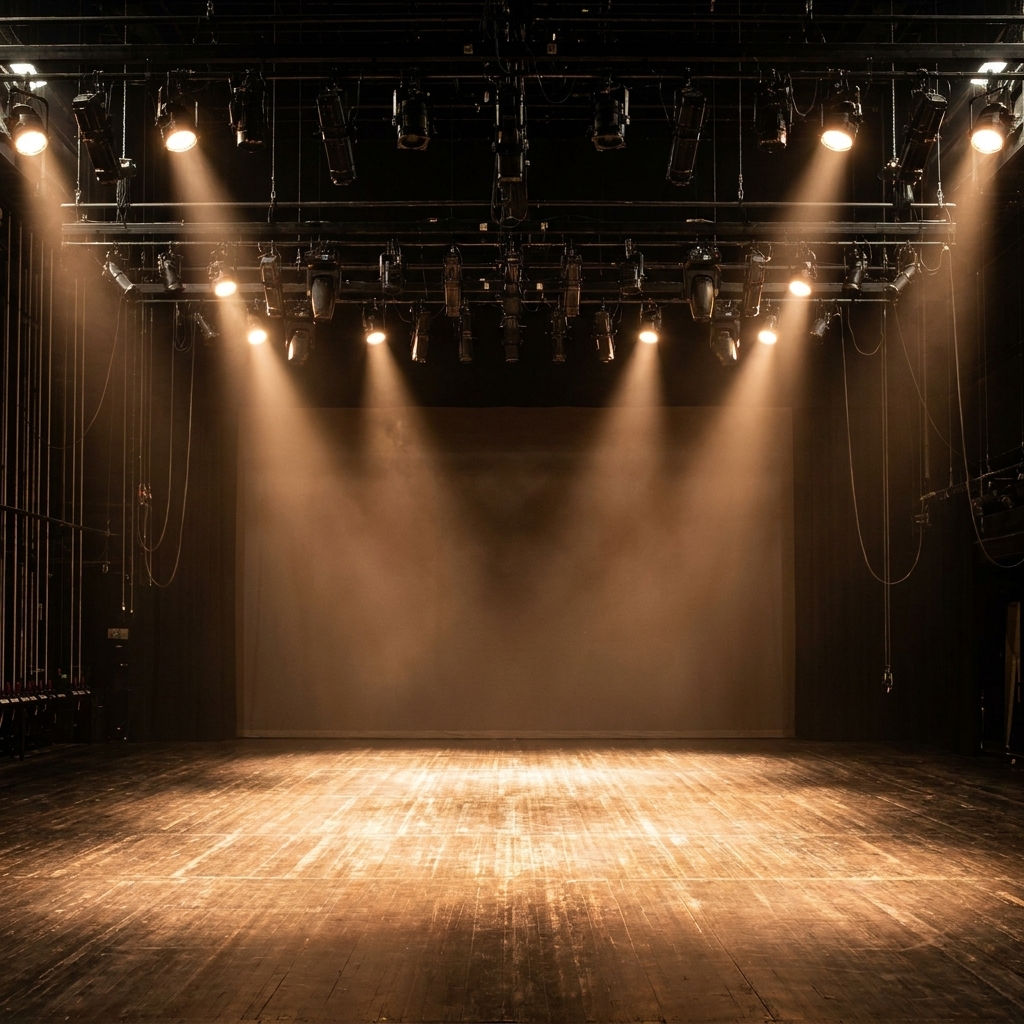
The Big Idea: Audience vs Camera
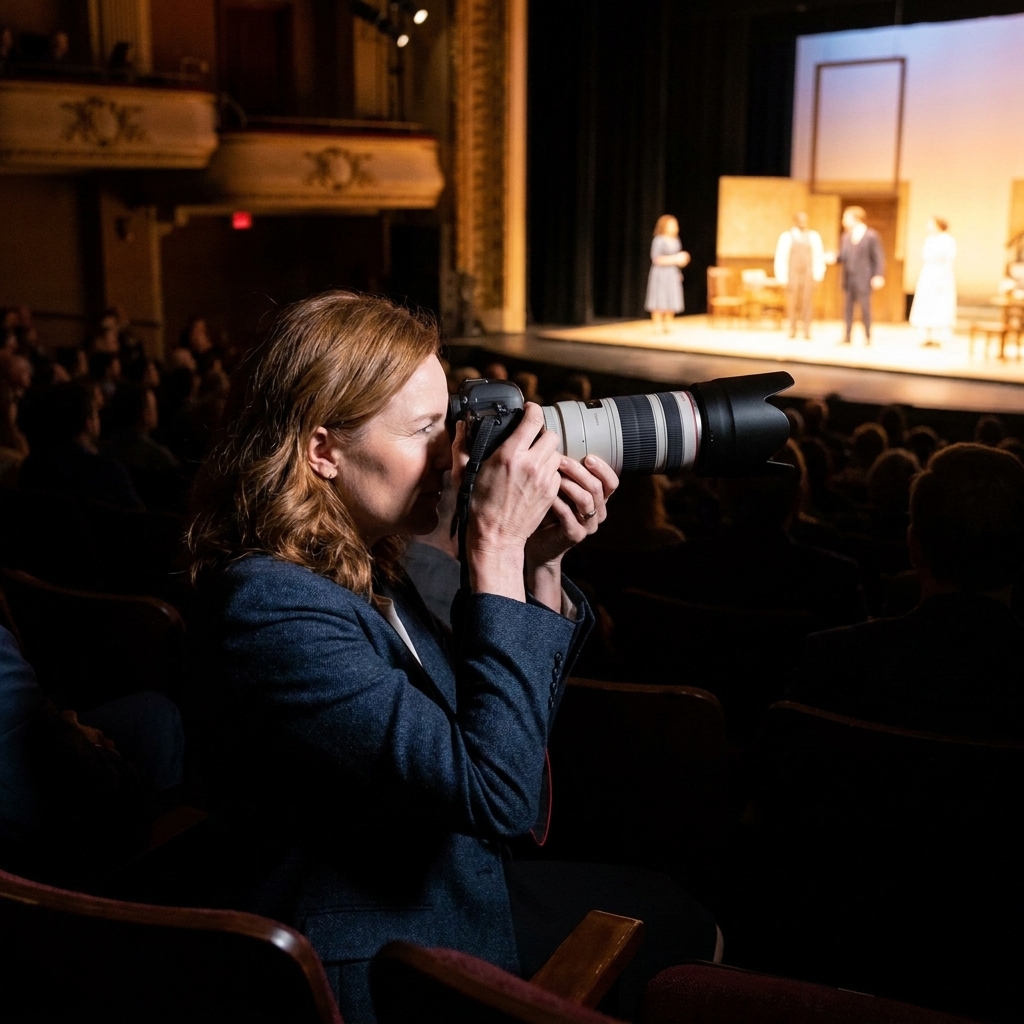
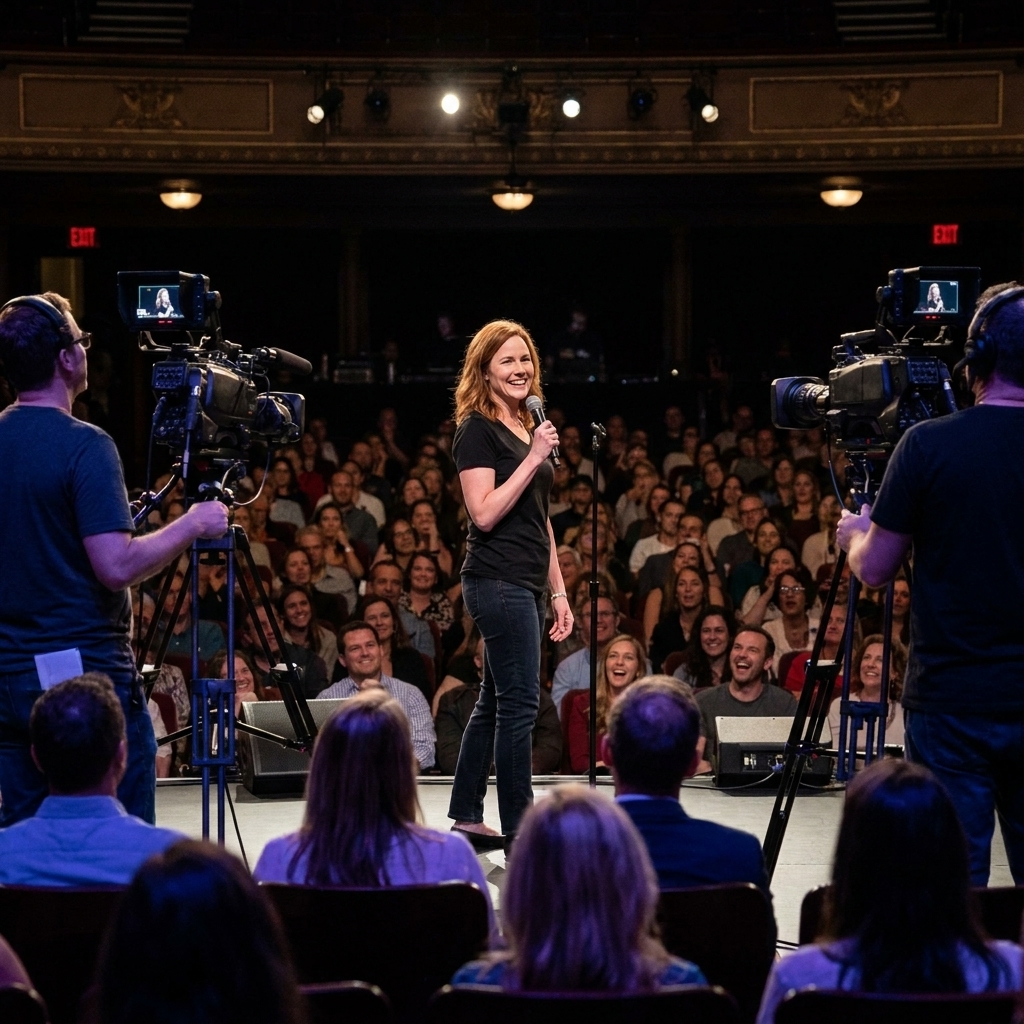
In live theatre, lighting is performing in real time. It must guide attention, model faces, reveal scenery, and shape mood for a room full of humans who can look wherever they want. You cannot cut to a close-up to fix the storytelling. The light has to do that job on its own.
In film and TV, lighting is collaborating with the camera’s perspective. The frame is the audience. You can light a face exquisitely for a medium shot, let the background fall away, and nobody complains that the far stage right corner is dim because it is not in the shot. Cinematic lighting is often more surgical and more sculpted, deeply tied to lens choice, camera movement, and color science.
Stage lighting is designed for a space. Cinematic lighting is designed for a rectangle.
Concrete example: on stage you might build a warm front system that covers the whole proscenium so any actor can walk into it and still read. On a film set, a 180-degree dialogue scene might be lit with a single motivated key through a “window” plus negative fill, then tweaked again when the camera turns around so the “window” direction still feels true.
Equipment
Stage: Repeatability and coverage
Theatre rigs favor fixtures that are rugged, hang safely for long runs, and can deliver consistent looks eight times a week. Even when a show uses high-end automated lights, the goal is still reliability and repeatable focus.
- Ellipsoidals (profile spots): The precision workhorse. Shutters for clean cuts, gobos for texture, and sharp focus for scenery, windows, and those iconic “a single character steps into truth” moments.
- Fresnels: Soft-edged, controllable beam for gentle area light and blends. Classics for a reason.
- PARs and LED PARs: Punchy washes, saturated color, and fast coverage.
- Cyc lights (cyclorama) and LED battens: Designed specifically for cycloramas, backdrops, and skycloths, with even spread as the priority.
- Moving lights: Spots, washes, and beams for specials, effects, and quick changes. Theatrical moving lights are usually programmed as part of a tightly timed cue structure.
- Followspots: Still the most human piece of tech in the building, and still unmatched for live tracking energy.
Film and TV: Control, speed, and camera response
On set, fixture choice is often about quality of light, output, power options, and how easily the unit can be shaped for the lens. Modern productions lean heavily on LEDs, not because tungsten is “dead,” but because speed, dimming, and color control keep a day moving.
- LED panels and soft sources: Flexible, fast, and friendly to tight locations. Often paired with grids, eggcrates, or softboxes for spill control.
- LED mats and ribbons: Hideable sources for cars, practical boosts, and sneaky edge light.
- Hard sources: HMIs (still beloved for “sun” and big daylight punch) plus large, high-output daylight LEDs that now fill the same role on many sets.
- Tube lights: Popular for wrapping faces and building motivated practical looks, especially in handheld or tight blocking.
- Modifiers as a second language: Flags, nets, solids, cutters, diffusion, bounce, and negative fill are not accessories. They are the real instrument.
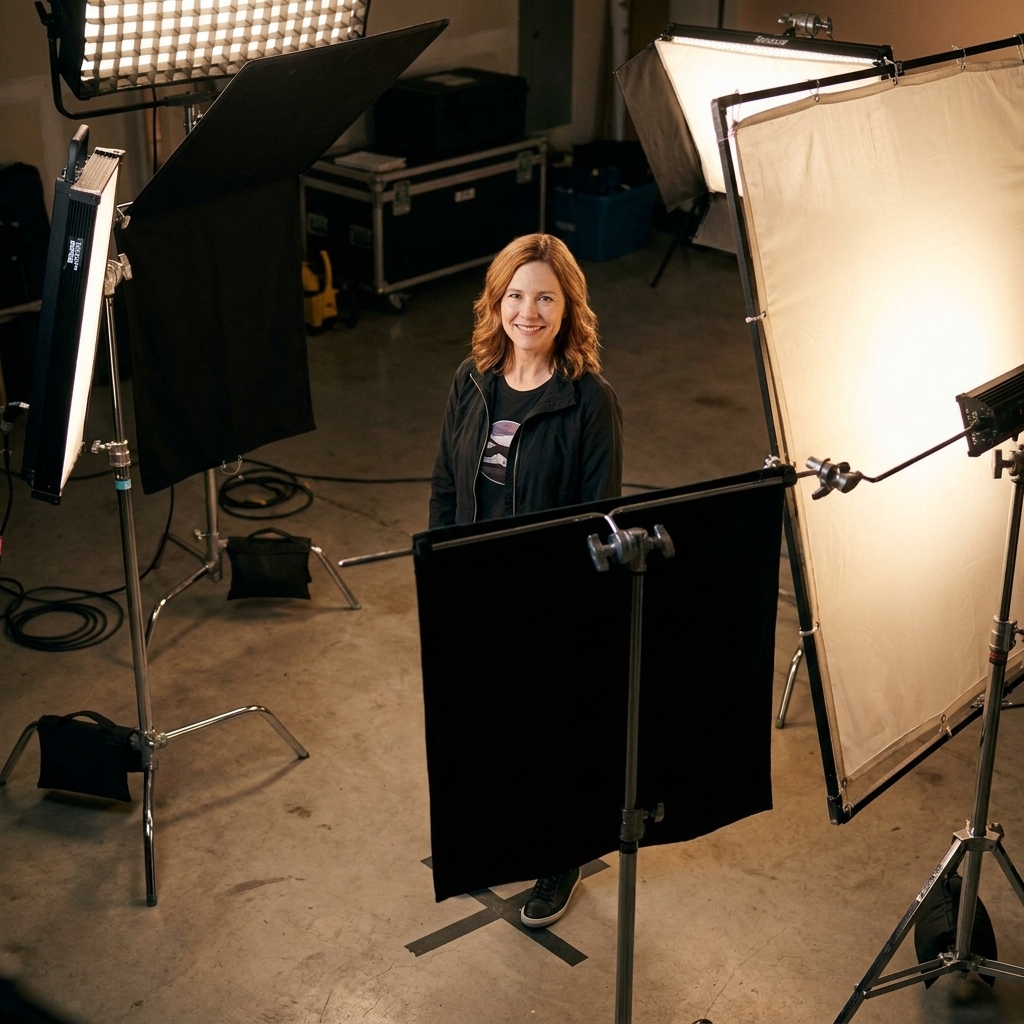
Rigging and infrastructure
Theatre rigging: Overhead and engineered
Theatre is a world of electrics, battens, pipes, truss, grids, and meticulously drafted light plots. The hang is planned, the circuiting is organized, and the whole system is designed to be safe and repeatable. Load ratings, hardware standards, and overhead practices are not optional. They are the foundation.
- Positioning: Front of house, booms, high sides, backlight, shin busters, balcony rails, box booms. The rig is about coverage and angles for a wide playing area.
- Power and data: Dimmers and relay modules, DMX and networking, and increasingly distributed nodes for LED and movers.
- Focus: “Hang and focus” is its own ritual. The goal is to create clean systems and repeatable specials that still look good from multiple seats.
Film and TV rigging: Modular and temporary
Film lighting lives in the land of stands, clamps, speed rail, and whatever safely gets the unit where it needs to be without landing in frame. If theatre is architecture, film lighting is choreography.
- Stands and grip gear: C-stands, combo stands, menace arms, beefy frames, and rigging that can be built up or broken down fast.
- Hiding the source: Units are often placed just outside the lens, then shaped with flags and toppers so the light feels “natural” without revealing its trick.
- Rigging for movement: Dollies, Steadicam, handheld, and crane shots change everything. The lighting plan must allow the camera to roam.
- Power realities: House power, lunchbox distro, generators, battery-powered fixtures, and the constant question: how do we run this without tripping a breaker mid-take?
Process
Theatre workflow: Tech, cues, consistency
In theatre, the light is timed to performance. Once previews settle and the show is running, it becomes a living machine with an operator calling cues the same way, every night, with tiny adjustments for human reality.
- Paperwork and plotting: Light plots, channel hookups, magic sheets, focus charts, cue sheets.
- Tech rehearsals: The designer builds a vocabulary of looks, then refines transitions to match pacing, music, and emotional beats. Tech can be stop-and-go, because that is where you earn the smoothness later.
- Notes culture: During tech, notes and holds can be frequent. During performance runs and previews, you generally give notes after a run so the show can keep breathing.
Film and TV workflow: Block, light, shoot
On camera, the lighting plan is constantly being revised based on blocking, lensing, locations, and schedule. You may light the same room five different ways in one day for different angles and times of day in the story.
- Prelight: Building a base look before talent arrives, then refining once the camera sees it.
- Lighting to the shot: Key, fill, backlight, and eye light are adjusted for the frame, not the whole room.
- Continuity: Not “repeatable every night,” but “match the last setup,” sometimes weeks later, sometimes on a different stage.
- Time pressure: Lighting choices often balance artistry with the brutal math of daylight, company moves, and the clock.
Artistic goals
Theatre: Clarity and punctuation
Stage lighting has to make a story readable from the back row and the front row at the same time. It creates composition on a wide canvas, controls focus across a large playing space, and supports live energy.
- Visibility with intention: You need faces, bodies, and scenic storytelling to read clearly, even when the mood is dark.
- Big-picture sculpting: Light often works in systems: warm front, cool back, high sides for dance, textured gobos for environment.
- Transformation in real time: Crossfades, blackouts, snap cues, and magical reveals are part of the performance rhythm.
Film and TV: Realism and texture
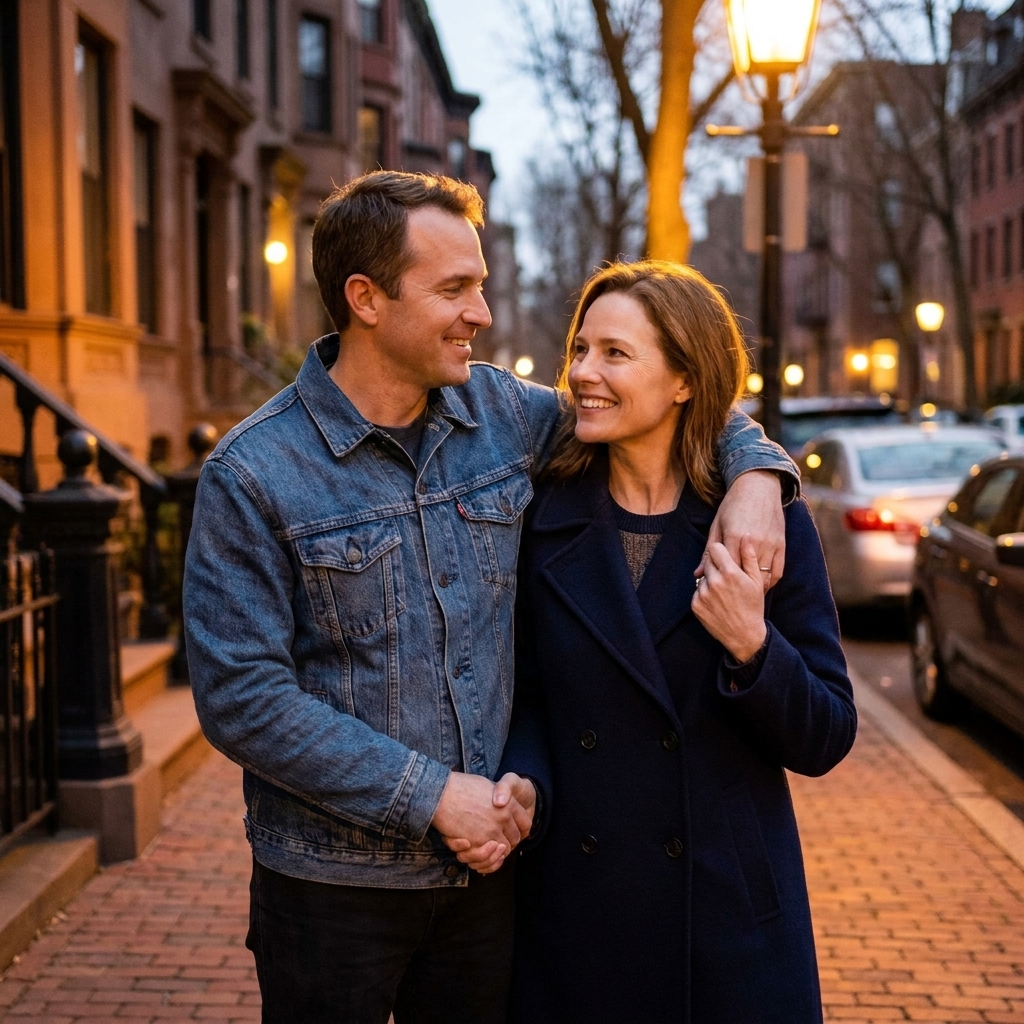
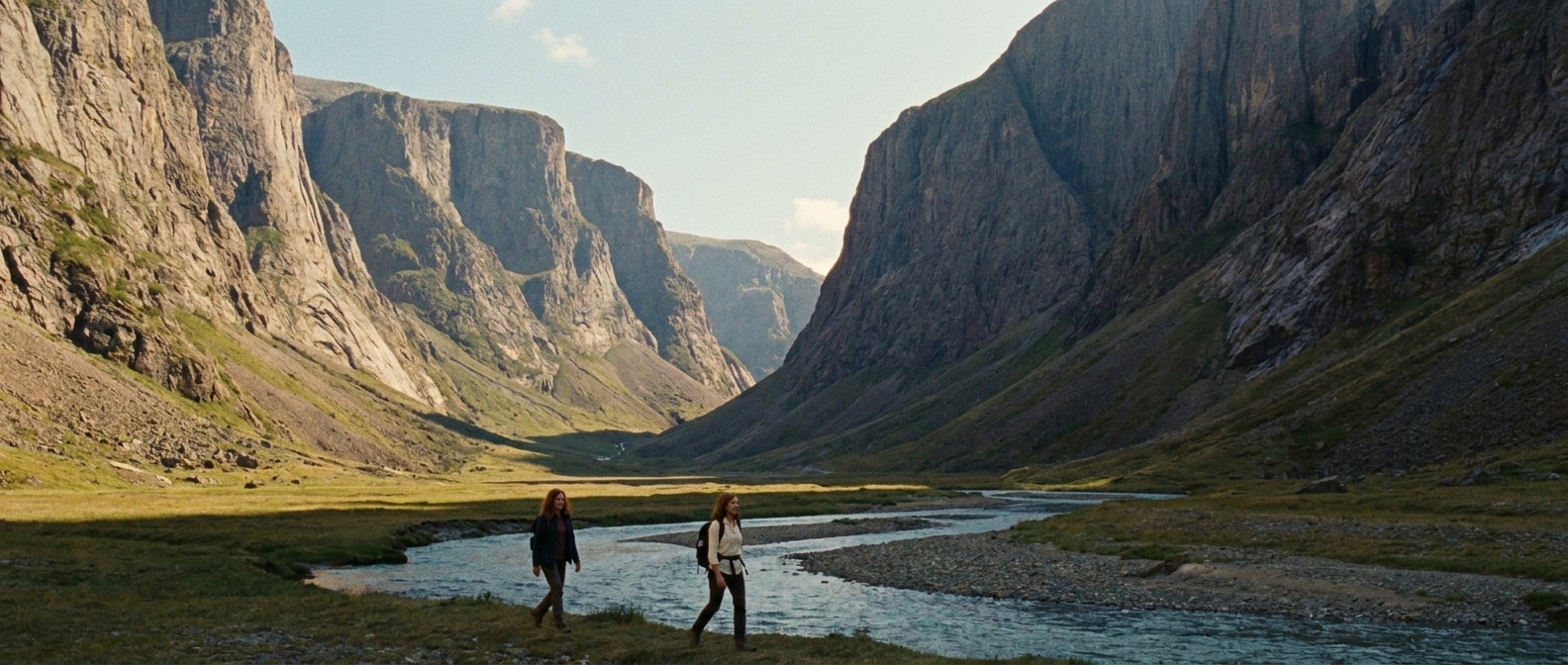
Cinematic lighting is frequently about motivation, the idea that the light comes from a believable source: a window, a neon sign, a lamp on a nightstand. Even heightened styles often keep one foot in “this could exist.”
- Skin and eyes: The camera lives on faces. Tiny shifts in angle or softness can change an entire performance.
- Depth and separation: You build layers: foreground, subject, background, with contrast and color separation.
- Texture: Bounce, negative fill, haze, and practicals create dimensionality that reads beautifully on lens.
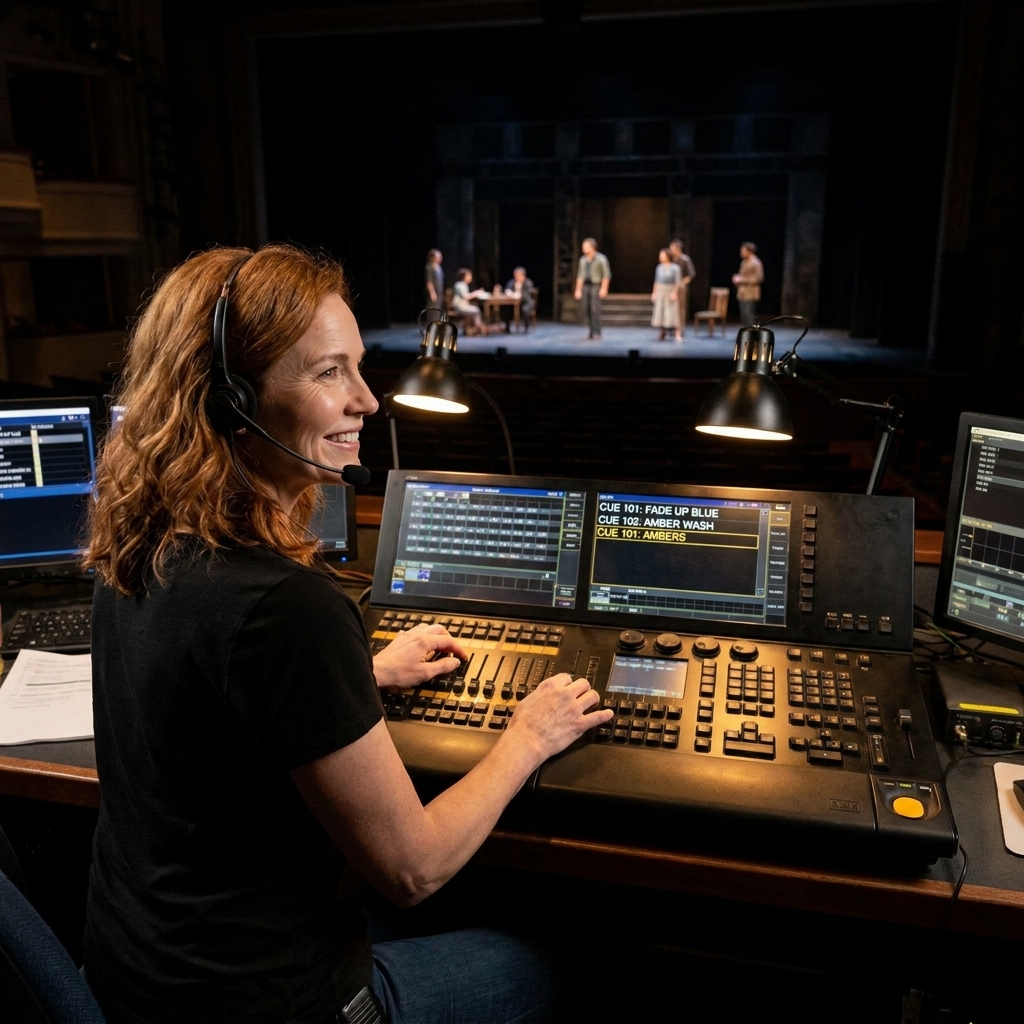
Control and programming
Theatre control: Cue stacks
Theatre consoles are designed for performance playback. You build a cue stack, time fades, and integrate with sound, automation, projections, and stage management calls. Precision and repeatability are the love language.
- Cue-based structure: Each moment is a stored state or transition.
- Moving light programming: Palettes, presets, and tracking make complex rigs playable.
- Show integration: Timecode and show control systems help synchronize departments.
Film and TV control: Tuning on the fly
On set, control is often distributed. A gaffer might adjust levels wirelessly, tweak color temperature shot-to-shot, and rely on dimmers to finesse practicals without swapping bulbs mid-scene.
- Wireless DMX and app control: Increasingly common, especially when units are taped under furniture or rigged overhead.
- Color tuning: Matching mixed sources, dialing in sodium streetlight, or shifting mood subtly as the camera pushes in.
- Less cueing, more tuning: Lighting is continually refined to match blocking and camera.
Color
Theatre color: Expressive and legible
Theatre designers often think in gel terms, even when using LEDs. Color is used to separate time and place, to paint emotional temperature, and to keep a stage picture readable. Saturation can be a feature, not a flaw.
- Bold storytelling choices: A lavender backlight can signal memory. A sickly green can turn a comedy set into a pressure cooker.
- Consistency across seats: Color must play from many viewing angles and distances.
Film and TV color: Camera and post
On camera, color is a three-part conversation between lighting, camera settings, and grading. A warm practical might be kept warm for motivation, while the overall scene leans cool for tone, then refined in the color suite.
- White balance and camera response: The same source can render differently depending on sensor, settings, and filtration.
- Mixed color temperatures: Often intentional, like cool window light with warm interior practicals.
- Post pipeline awareness: Lighting is designed with the final grade in mind, not just what looks good to the naked eye on set.
Exposure and perception
This is the sneaky divider people feel before they can name it. Human vision adapts constantly, reading detail in highlights and shadows in a way cameras do not automatically match. A camera’s exposure triangle (ISO, shutter angle or speed, aperture) and its dynamic range decide what detail survives in bright windows, dark corners, and shiny foreheads.
Theatre cannot “ride ISO” mid-monologue or change shutter to save a cue. The audience’s eyes are the sensor, and they are sitting inside the scene. Film and TV can underlight a room, expose for the face, and let the background go moody, then shape the final contrast even further in the grade.
People and roles
Some of the workflow difference is simply: who is steering the ship.
- Theatre: the Lighting Designer owns the concept and the cueing, supported by the Master Electrician, electricians, programmers, and an operator, all synced with stage management.
- Film and TV: the Director of Photography sets the photographic language, with the gaffer executing the lighting plan and the key grip shaping and rigging the world so the light behaves. It is a relay race, run at sprint speed.
Common pitfalls
Coming from theatre into film
- Lighting the whole room: The camera only needs what it sees. Start with the frame and build outward.
- Forgetting negative fill: On stage, you fight shadows for clarity. On camera, you often sculpt with darkness.
- Ignoring reflections: Film sets are full of shiny surprises: windows, phones, frames, floors, eyeballs.
Coming from film into theatre
- Underestimating coverage: A gorgeous close-up look does not help the actor upstage left who still needs a readable face.
- Too much naturalism: Realistic motivation is wonderful, but theatre sometimes requires heightened clarity to land the story.
- Not planning for repeatability: Theatre needs stable systems and cues that survive eight shows a week without constant re-finessing.
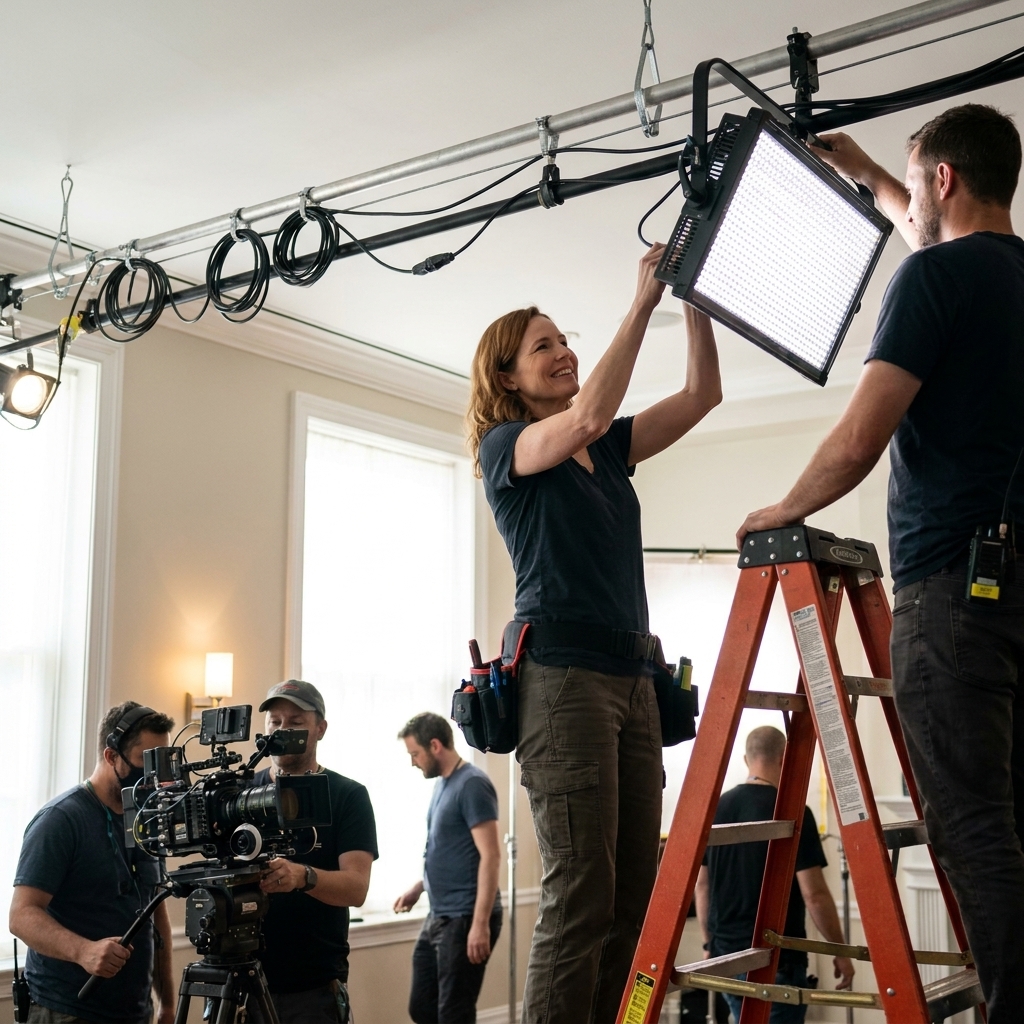
What they steal from each other
Some of the most exciting lighting I have seen lately happens when designers borrow across the aisle, respectfully, like artists swapping records.
- Theatre borrowing from film: More motivated practicals on stage, more attention to where light “lives” in the set, and bolder use of shadow as narrative.
- Film and TV borrowing from theatre: More willingness to embrace stylization, stronger color storytelling, and lighting that supports a performance arc rather than just a shot list.
- Both borrowing from dance: Side light, sculpting bodies, and treating movement as the reason the rig exists.
Quick FAQ
Why does theatre lighting look brighter than film lighting?
Because it often is. Theatre must overcome distance and ambient audience perception, and it has to read in real time without camera exposure and grading. Film and TV can underlight, expose for a face, and grade for a moody result that would look murky to a live audience.
Do theatre designers use the same fixtures as film crews?
Sometimes, especially with modern LEDs and moving lights. But theatre rigs are typically optimized for hanging positions and cue playback, while film and TV packages are built around portability and shaping tools like flags, frames, and diffusion.
Is one harder than the other?
They are hard in different ways. Theatre asks for large-scale composition and repeatable precision. Film and TV asks for frame-by-frame nuance, speed, and constant adaptation to camera needs. The real challenge is switching your brain to the right kind of problem-solving.
Final curtain, final take
Stage lighting is the art of guiding a roomful of attention. Cinematic lighting is the art of guiding a lens. Both are storytelling, both are engineering, and both are a quiet kind of emotional labor done in the dark so someone else can shine in the light.
And if you are the type who reads the entire playbill before the curtain rises or stays through all the credits, you already know this truth: the best lighting does not show off. It makes you feel like the world onstage or onscreen could not possibly look any other way.