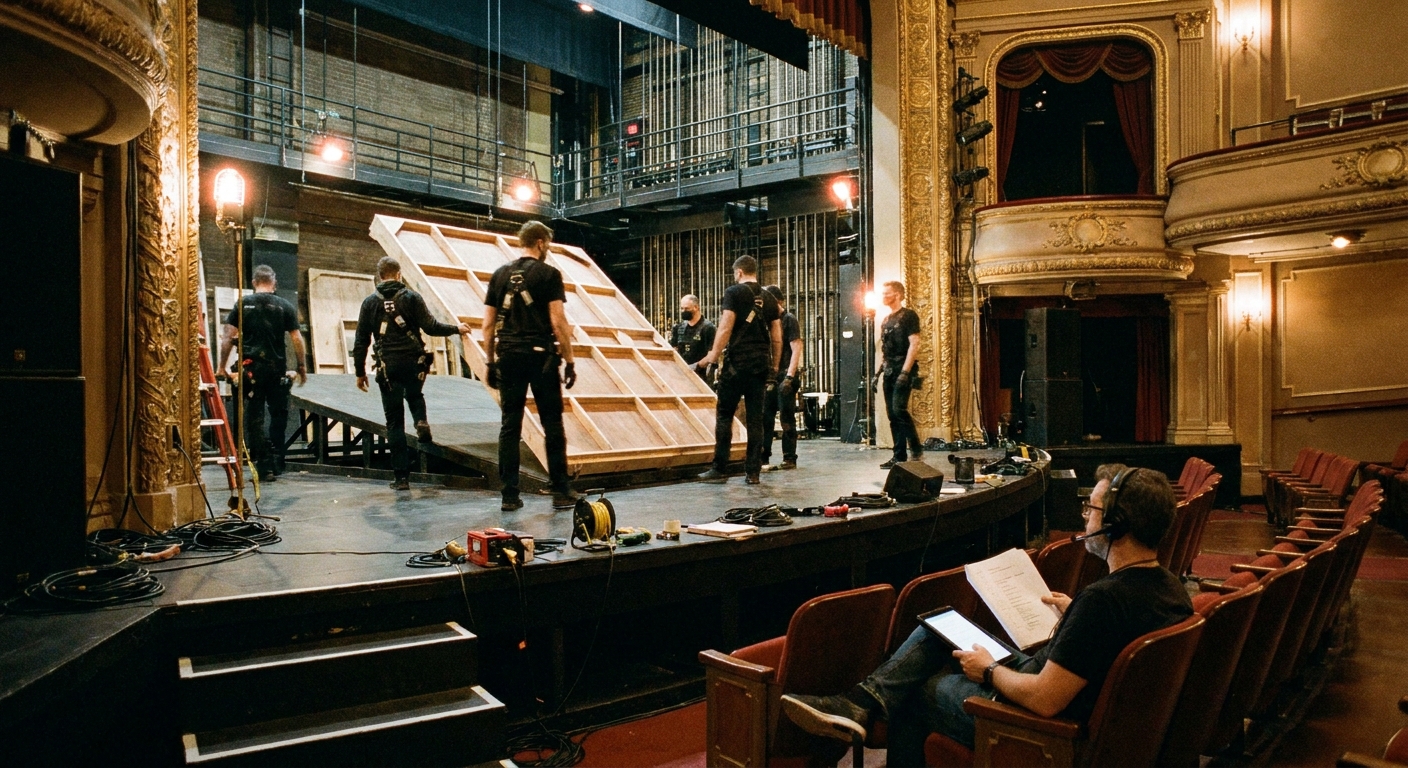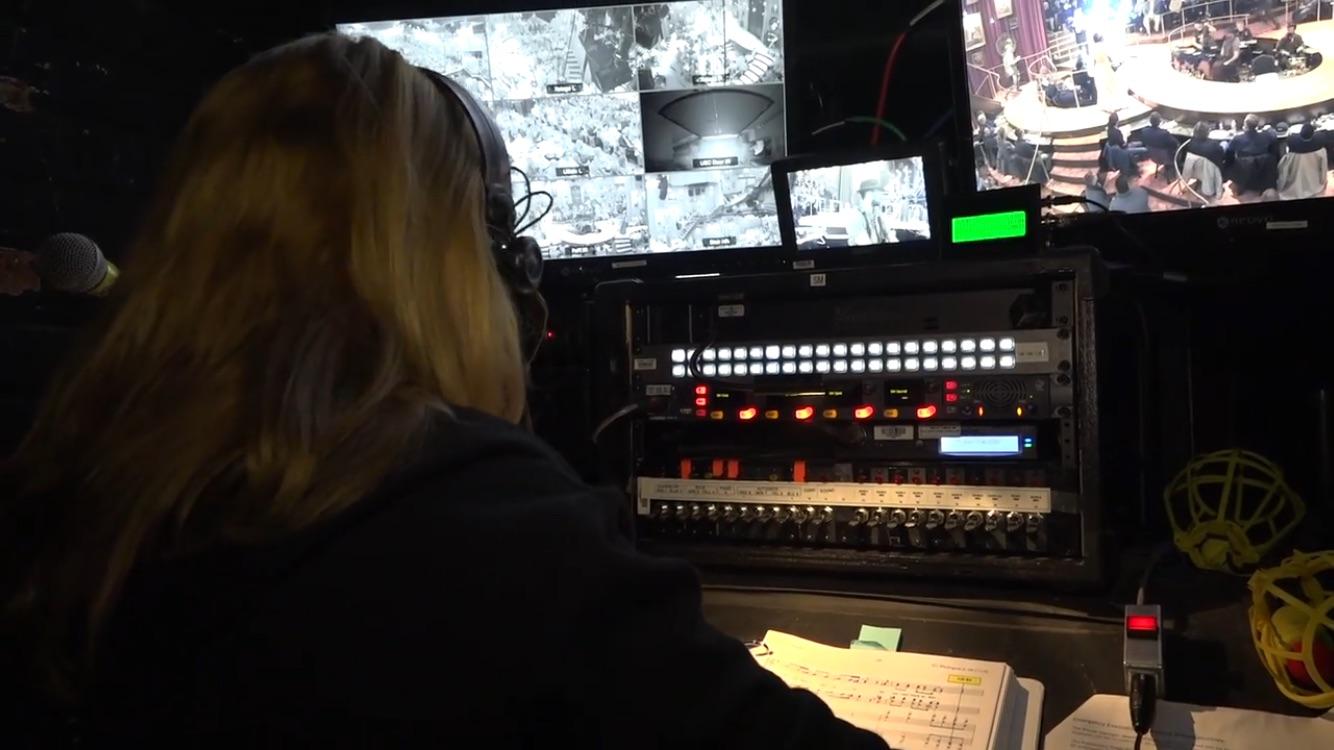
I grew up in Chicago in the sort of family where “backstage” was a normal childhood habitat. While other kids were trading baseball cards, I was learning the sacred geography of a theater: the wings, the booth, the spike marks, the tiny glow of work lights behind a set wall. And no matter what the production was, there was always one calm, watchful person who seemed to hold the whole machine together without ever stepping into the spotlight.
That person was the stage manager.
The short version
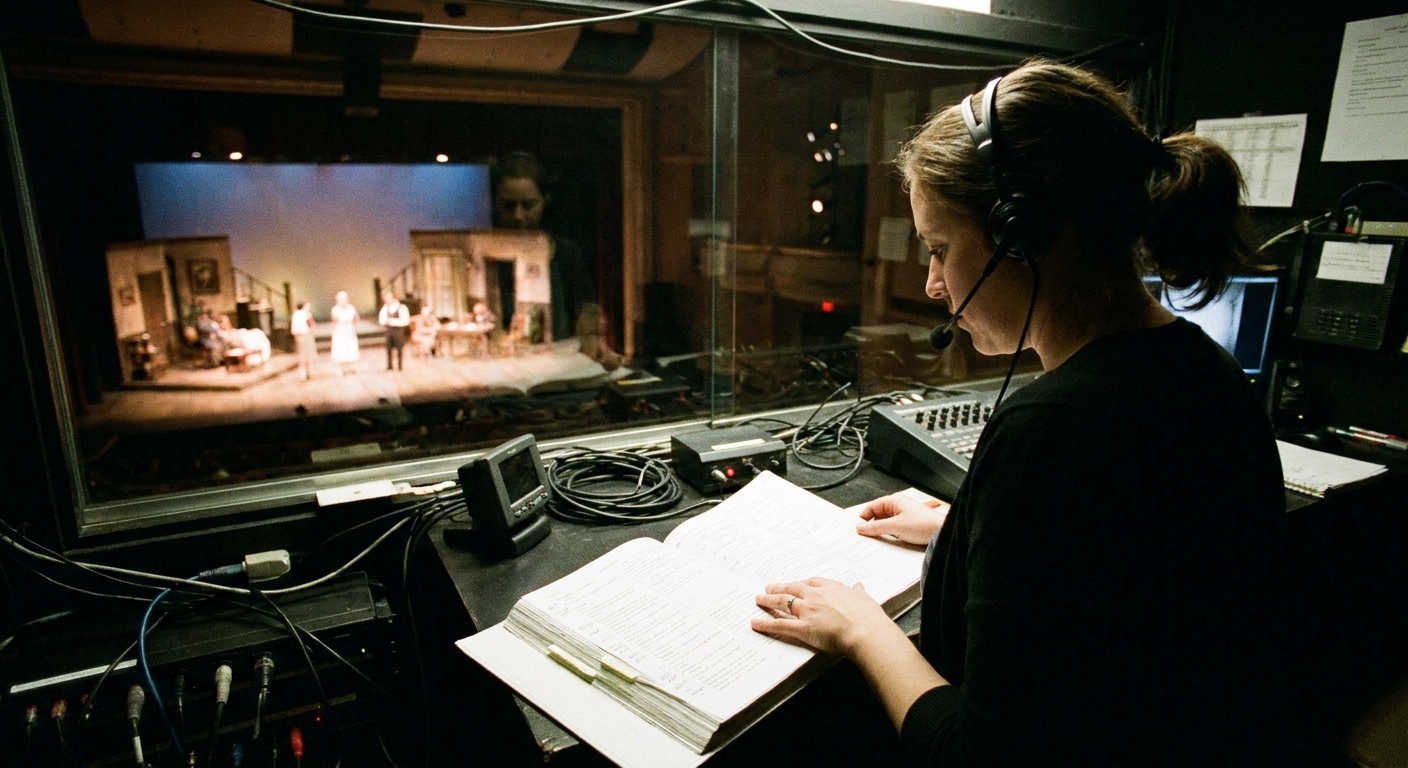
A stage manager (SM) is the person who runs the room. In rehearsals, they organize the day, track what changes, communicate notes, and keep everyone safe and on schedule. In performances, they coordinate the live run of the show, calling cues for lighting, sound, projections, automation, and sometimes rigging or fly systems, depending on the venue and the production.
If the director is the show’s creative compass, the stage manager is the show’s operating system.
A quick reality check: stage management looks a little different in Broadway, regional, community theater, tours, opera, and dance, and it can shift between union and non-union work. The core idea stays the same: someone has to keep the room functional and the performance repeatable.
In rehearsals
In most theater processes, the stage manager is in the room for the bulk of rehearsal and performance, though the exact start and end points can vary by company and contract. Their job is equal parts people skills, paperwork, timekeeping, and quiet leadership.
They run the rehearsal room
The director leads the creative work, but the stage manager runs the logistics that make creative work possible. That includes:
- Starting and stopping rehearsal (and keeping track of breaks, meal penalties, and union rules when applicable)
- Keeping the day moving so the cast and creative team can focus
- Tracking what’s been rehearsed and what still needs time
- Protecting the room’s focus by funneling questions to the right department at the right time
They keep the prompt book
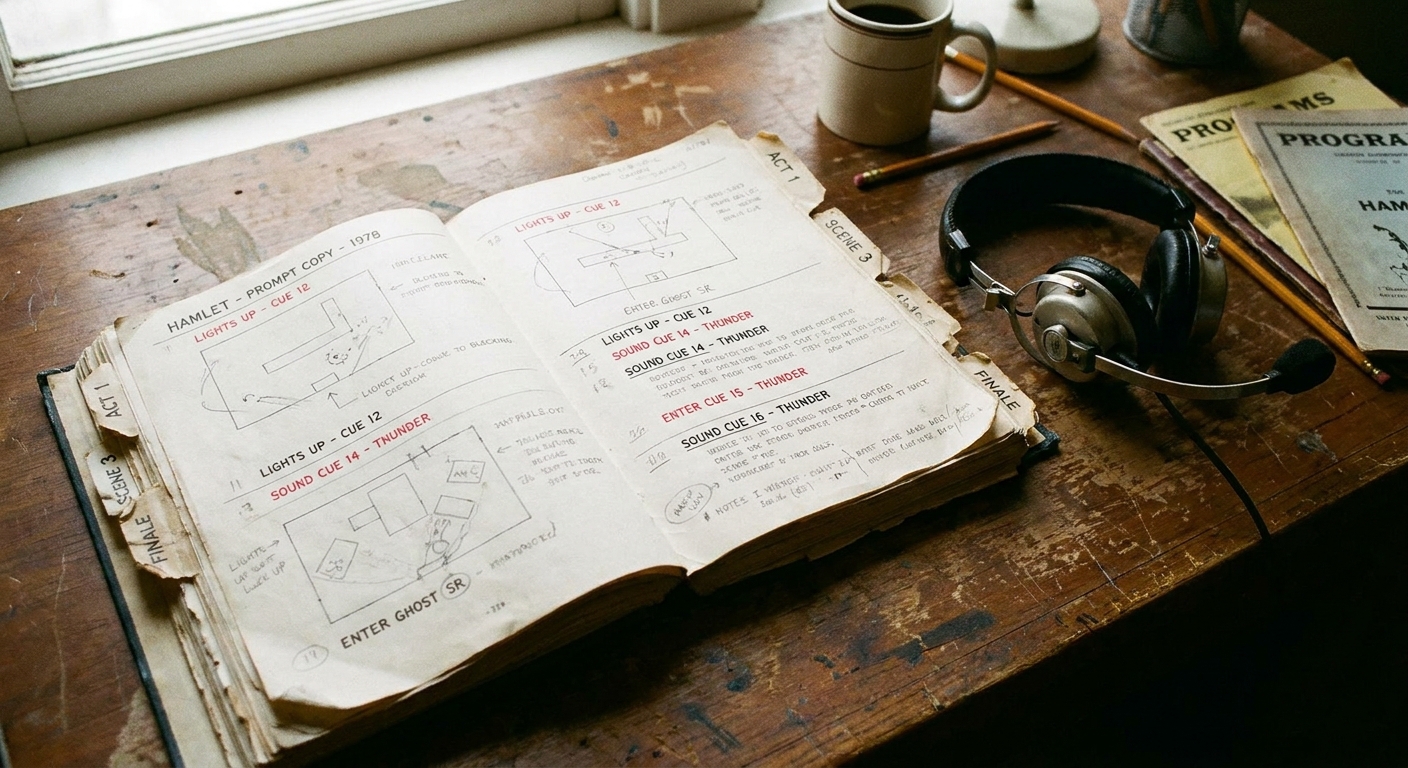
The prompt book is the stage manager’s master document, usually a script full of the show’s operational brain: blocking notes, scene shift information, cue placements, running notes, contact lists, and more. Think of it as the show’s annotated map and flight plan in one binder.
In rehearsal, the SM builds that book carefully, updating it as the director adjusts staging and as designers add technical needs.
They track blocking and business
Blocking is not just “Actor A crosses left.” It is often tied to:
- light cues and special positions
- sound cues and mic coverage
- set pieces that need clearance
- props and costume quick changes
- fight choreography and intimacy choreography requirements
The stage manager documents these details so the show can be repeated the same way, safely, night after night, even when understudies step in.
They coordinate communication
One of the least glamorous and most essential SM skills is translating between departments. An actor might say, “My entrance feels cramped.” A stage manager might translate that into, “We need a spike mark adjustment and a clearance check with scenery and props.”
They build and share the schedule
Call times, fittings, coachings, spacing rehearsals, photo calls, understudy rehearsals, fight calls, brush-ups. Theater is a calendar sport. The SM team (often the stage manager plus one or more assistant stage managers) helps build the schedule and makes sure everyone gets the most current information.
They write rehearsal reports
After rehearsal, stage managers typically send a report to the producing team and department heads. A rehearsal report can include:
- what scenes were worked
- notes for scenery, props, costumes, lighting, sound, and video
- safety issues and backstage traffic concerns
- upcoming schedule reminders
It is not gossip. It is the paper trail that helps a production solve problems before they become show-stoppers.

Before tech and during tech
There is a stretch of the process where stage management becomes especially visible to the team: the handoff from rehearsal to the theater.
Pre-production and planning
Often, the SM is part of early coordination, even before actors are on their feet, through production meetings, contact sheet building, rehearsal hall setup, and the steady accumulation of information that will become the prompt book. On some shows this is formal, on others it is scrappy, but the goal is the same: fewer surprises later.
Tech week workflow
Tech is where the SM’s documentation and timing sense pay off. Many productions do some version of:
- Paper tech: walking through cues and transitions on paper with designers and the technical team
- Cue-to-cue: skipping large sections of performance to focus on the moments that trigger light, sound, video, and scene shift cues
- Spacing: adjusting staging to a new stage and new backstage pathways
If you have ever watched a room work for hours to perfect a ten-second transition, you have watched stage management at work.
During performances
Once the show opens, the director’s day-to-day presence often reduces, but that varies, especially with new work, tours, or productions still actively adjusting. Either way, the stage manager becomes the primary keeper of the show as it runs in front of an audience.
They call the show
Calling a show means cueing the technical elements in real time. The stage manager watches the performance and gives “standby” and “go” calls to operators.
Depending on the production and local practice, they might call:
- Lighting cues (including blackouts, specials, fades, strobes)
- Sound cues (music, effects, mic cues, pre-show announcements)
- Projections or video cues
- Automation cues (turntables, lifts, tracked scenery)
- Fly cues (rigging and flown scenery, where applicable)
If you have never heard it, cue calling can sound like choreography in its own language. Something like: “Standby lights 23 and sound 14… lights 23, go… sound 14, go.”
They keep the performance safe
Live theater has moving scenery, quick changes, haze, weapons in stage combat, sometimes heights, water, pyrotechnics, or complex automation. The stage manager coordinates safety routines and ensures procedures are followed. They are also ready to hold the show if something becomes unsafe.
They manage backstage flow
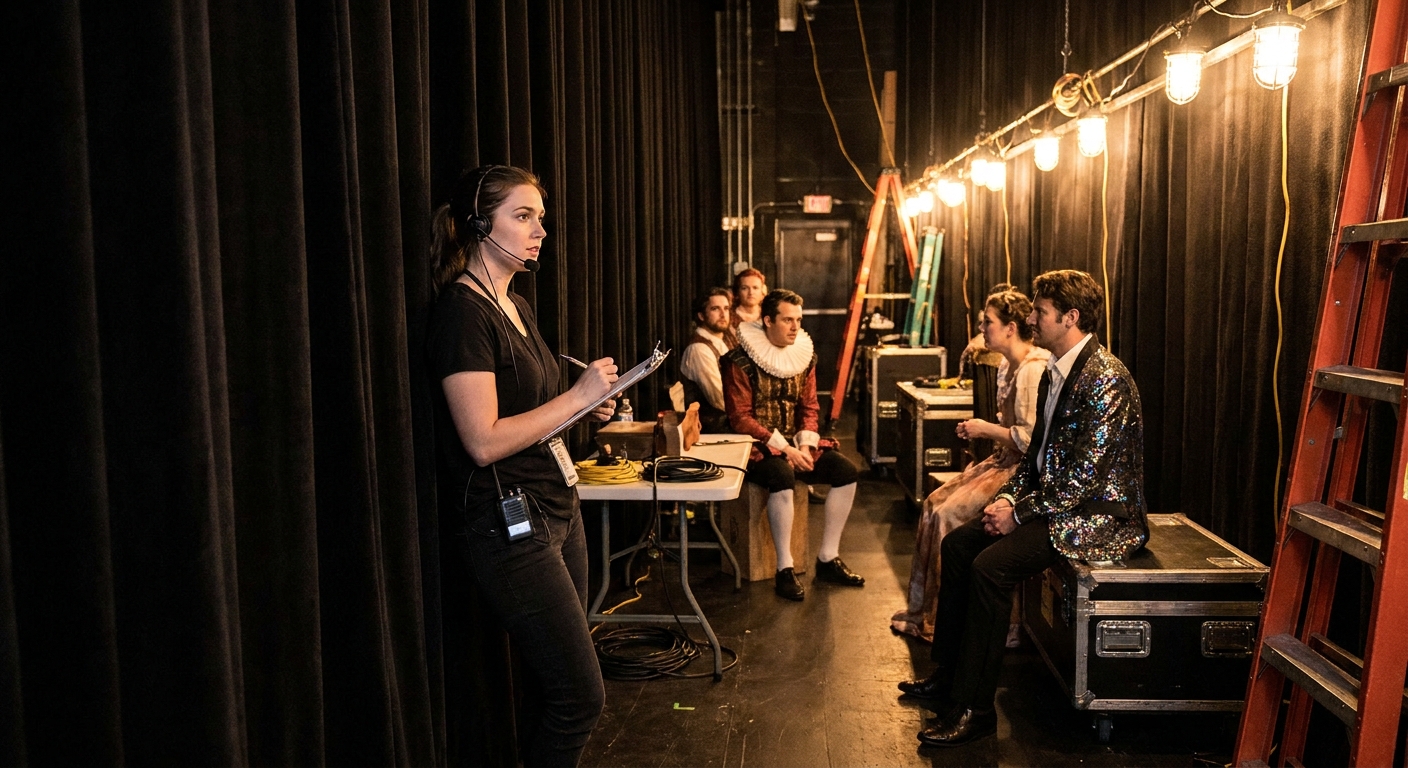
Backstage, an SM team is monitoring entrances, exits, prop handoffs, costume quick changes, and traffic patterns. On bigger shows, assistant stage managers may be stationed in different wings or backstage zones to make sure the engine turns over smoothly.
They document what happened
After each performance, stage managers often write a performance report noting anything that affected the show: a late start, a technical issue, an actor injury, a mic problem, an audience interruption, a set snag. This helps departments troubleshoot and protects everyone by keeping accurate records.
Director and stage manager
This is where theater differs from what many audiences assume. The director is the creative authority, but they are not typically running the day-to-day traffic once the train is moving.
- The director develops the concept, shapes performances, creates the staging, and collaborates with designers to build the world of the play or musical.
- The stage manager operationalizes that world: tracking the choices, communicating changes, coordinating departments, and running the live event.
A healthy production has mutual trust between the two. The director sets the destination. The stage manager keeps the route drivable.
Stage manager vs. film and TV
If you are coming from screen production, it is tempting to look for a one-to-one match. There is overlap, but the goals and rhythms are different because theater is repeated live and film is captured in pieces.
Compared to a 2nd AD
On a film set, the 2nd AD is commonly responsible for call sheets, scheduling logistics, and keeping departments aligned, usually under the 1st AD’s command structure, though responsibilities vary by production and region. In that sense, a stage manager can feel familiar: both roles are masters of communication and time.
The big difference is that the stage manager also coordinates the finished product in real time. Theater does not stop for another take. When the audience is seated, the stage manager is effectively the show’s live control center.
Compared to a script supervisor
A script supervisor focuses on continuity, coverage, and matching performance details across takes so the edit works. Stage managers also track details, but for a different purpose: repeatability, safety, cue timing, and backstage logistics.
In other words, the script supervisor protects the edit. The stage manager protects the live repetition.
Why it matters
Film and TV are built around capturing options. Theater is built around repeating a single, specific event with precision and freshness. The stage manager is the person who makes that paradox possible.
What audiences notice
If you have ever thought, “Wow, that blackout hit at the exact punchline,” or “How did that couch appear and disappear so fast?” you have felt the stage manager’s work.
Here are a few audience-facing moments that are usually SM-driven behind the scenes:
- Clean starts: the house announcement, the half-hour call, and the curtain timing
- Seamless transitions: scene changes that land exactly on music or dialogue
- Professional calm: even when something goes wrong, the story keeps going
My favorite stage management trick is that you often only notice them when they are not there. When everything runs beautifully, the stage manager disappears into the success of the whole.
Skills that matter
Stage management is both a craft and a temperament. The best SMs I have met share a few traits that do not always show up in job descriptions.
- Clarity: they communicate with precision and without panic
- Consistency: their paperwork and procedures hold up under pressure
- Emotional intelligence: they can read a room and support people without absorbing every stressor
- Authority without ego: they lead because someone must, not because they want credit
- Time sense: they can feel pacing, not just track it
- Safety mindset: they take risk seriously, especially in live environments
If you want to become one
Theater loves a doer, and stage management is a role you can start learning quickly, even if you are early in your journey.
Ways to start
- Volunteer or assistant stage manage for a school production, community theater, or a small fringe show
- Practice calling cues by watching a recording of a performance and writing your own standbys and gos
- Get comfortable with paperwork: schedules, contact sheets, reports, and clean note-taking
- Learn backstage etiquette: how to move quietly, how to use a flashlight responsibly, how to communicate on headsets
- Study safety basics: stage combat rules, quick change best practices, and general backstage safety
Questions to ask
- Who is on the stage management team and what are the handoff points?
- How are notes given and tracked?
- What is the policy for holding the show?
- What are the communication channels for emergencies?
- Where is the prompt book kept and who updates it?
FAQ
Is the stage manager the same as the producer?
No. Producers handle financing, hiring, budgets, and the business side of the production. Stage managers handle the day-to-day operation of rehearsals and the live running of the show.
Does every show have more than one stage manager?
Not always. Many small plays have one stage manager. Larger shows often have a stage manager plus assistant stage managers, and sometimes production assistants, because backstage coverage and cue calling can be too much for one person to do safely.
Where is the stage manager during the show?
Often in the booth or at a calling desk with a clear view of the stage. Sometimes they call from backstage depending on the venue, sightlines, and the show’s needs.
What is a standby and a go?
“Standby” tells an operator a cue is coming soon. “Go” is the exact moment to execute it. This shared language keeps timing crisp and predictable, especially when several departments need to move together.
Who is in charge during a performance?
In most theaters, the stage manager is the operational lead for what happens onstage and backstage during the run. At the same time, front-of-house staff manage the audience and the house, and producers or venue management may have authority over certain policies and emergency decisions. The SM is the point person who coordinates the response in the moment.
The invisible artistry
Stage management is not just organization. It is a kind of live storytelling support system, built from listening, anticipating, documenting, and timing. When it is done well, you never feel the machinery. You only feel the show.
And if you are the kind of theatergoer who reads the playbill before the curtain rises, do yourself a favor next time: find the stage manager’s name. They are one of the reasons the magic arrives on cue.