I still remember the first time I stood close enough to a film set to hear the snap of a clapperboard for real. It is a tiny sound with an outsized sense of ceremony. One beat, one clean crack, and suddenly everyone knows: this moment is officially “the take.”
A clapperboard, often called a slate, is the board you see at the start (or end) of a shot that identifies the scene and take (and sometimes roll or card), and provides a clear sync point for matching picture and sound in post-production.
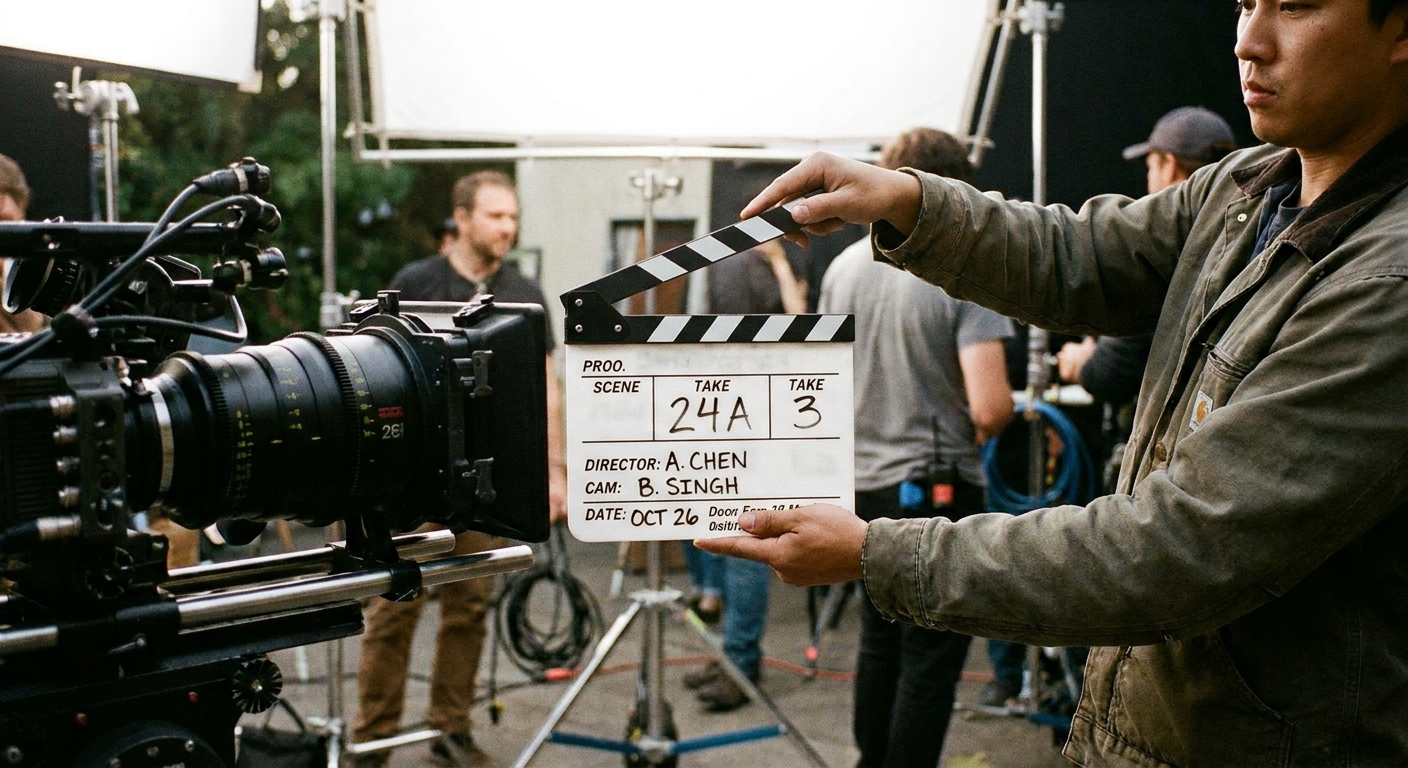
What a clapperboard does
At its simplest, the slate answers the question every editor, assistant editor, and sound team member will ask later: What are we looking at and listening to?
- Identifies the take: It displays key information like production title, scene number, take number, camera roll or card, date, and names (often the director of photography and director).
- Creates a sync moment: The audible clap and the visible closing sticks give post a precise point to line up audio with the video frame.
- Keeps the day organized: A slate is a tiny, mobile data hub. When a production shoots out of order or across multiple cameras, slates help keep footage intelligible.
What’s written on the slate?
Exact layouts vary by production, but you will usually see versions of these fields:
- Production title (sometimes abbreviated)
- Scene (the script scene number, sometimes with a letter for inserts or pickups)
- Take (counting attempts at that setup)
- Roll or Card (camera roll, magazine, or media card identifier, depending on the workflow)
- Date
- Director and DP (common on many slates)
- Camera (A-cam/B-cam, etc., especially on multi-camera shoots)
- FPS or special notes (for slow motion, off-speed, etc., on some sets)
On union features and high-volume TV, the information is often more standardized, though formats still vary by production. On smaller indie sets, it can be more minimal. Either way, the goal is the same: make the footage make sense weeks later when your brain no longer remembers what happened on a windy Tuesday at hour twelve.
Who uses the clapperboard?
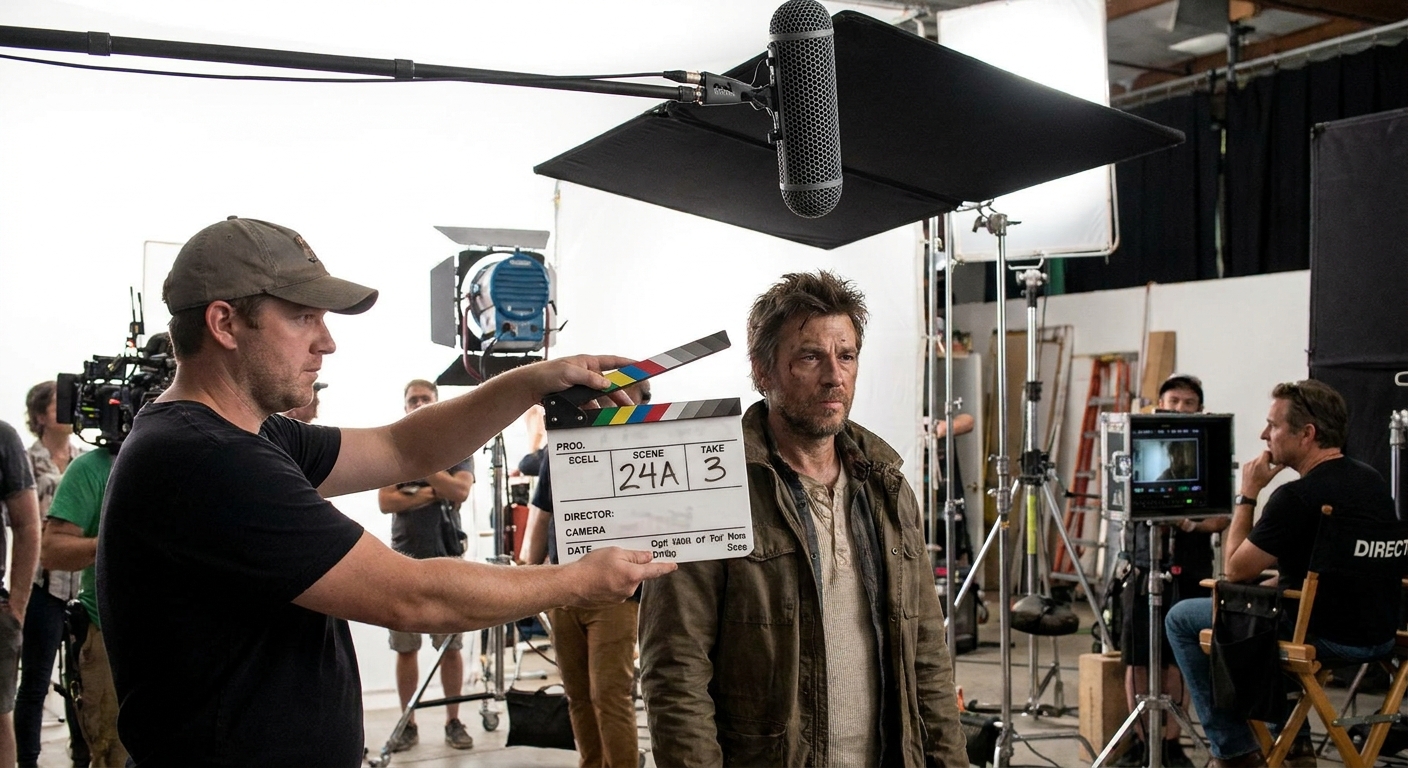
On many narrative sets, the slate is handled by the 2nd assistant camera (2nd AC), a role that in older terminology is often called the clapper loader. On smaller crews, documentaries, or certain TV workflows, the responsibility can shift, but the job is the same: label and mark the take clearly.
Job titles can vary by budget and region, but the person slating is usually responsible for:
- Preparing and presenting the slate for each take
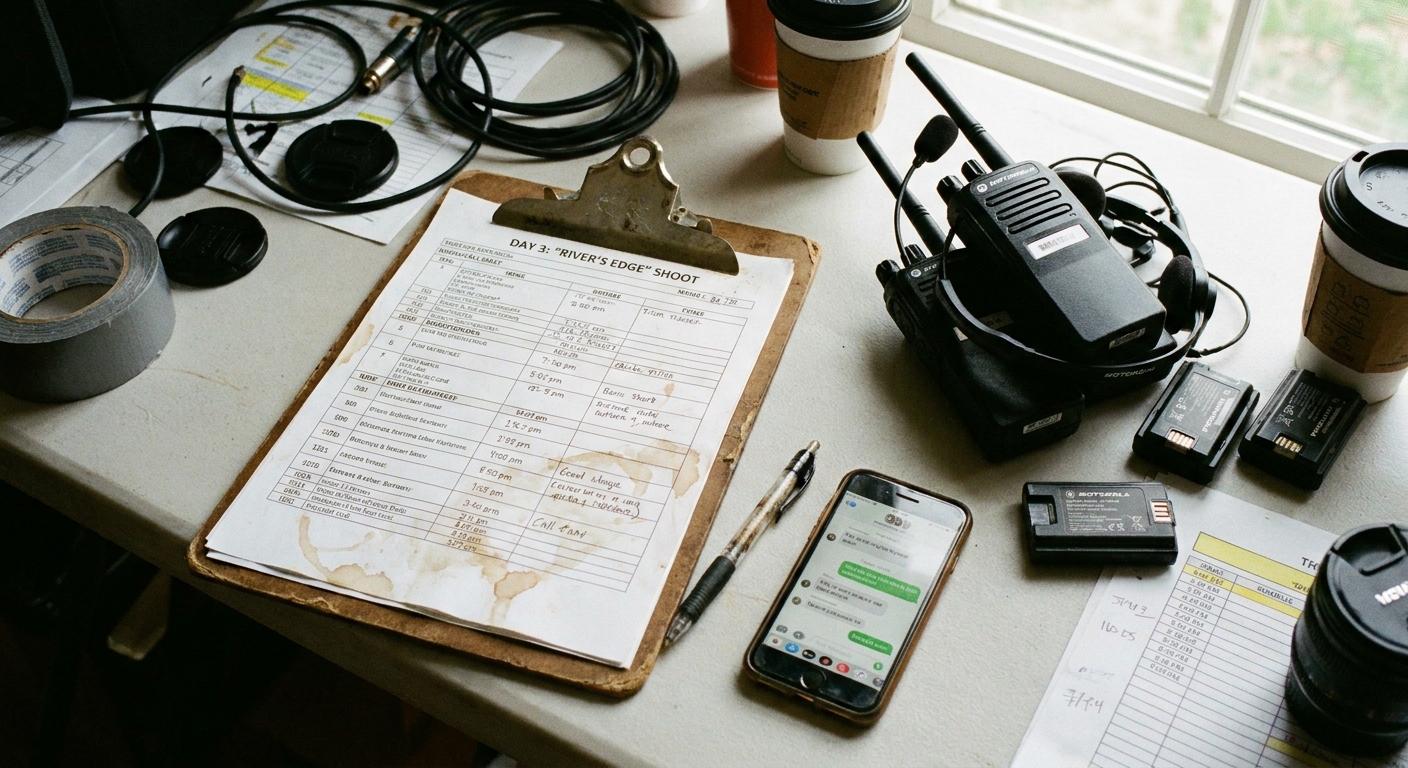
- Ensuring the slate information matches the camera reports and production paperwork
- Physically “marking” the take by clapping the sticks at the right time
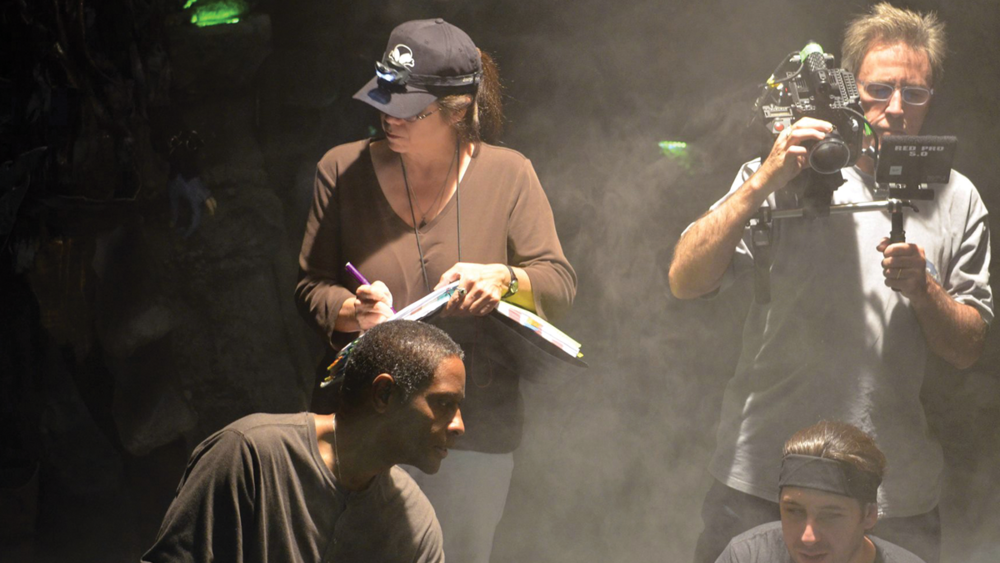
The script supervisor is not usually the person holding the slate, but they are deeply invested in it being correct. The script supervisor’s continuity and notes, paired with the slate’s IDs, become the roadmap that post-production follows.
What the clap is for
That snap is not just tradition. It is a practical tool.
When the sticks close, they create:
- A sharp sound spike in the audio recording
- A clear visual moment in the camera image when the sticks meet
In post, picture and sound teams can line those two moments up to synchronize the audio with the exact frame where the clap happens. Even with timecode systems and modern workflows, that visual-and-audible sync reference is still valuable, especially when something goes wrong with metadata, timecode drift, or mismatched files.
On a set where audio is recorded separately from the camera (very common), the clap is like a handshake between departments. Camera says: “Here is the moment.” Sound says: “I heard it.” Post says: “Now we can line it up.”
How slating works
There is a rhythm to it, and it is designed to minimize confusion:
- The slate is shown clearly to camera so the information is readable.
- The sticks are open while the slate is held steady.
- Sound and camera are rolling (on many sets you will hear “speed” called before the mark).
- Clap, once, cleanly.
- The slate exits frame and the performance continues.
Timing matters. You want the clap after the camera is rolling and sound is rolling, and before the action begins, so the sync point is easy to find and does not interrupt performance. Practical bonus: a slate that is steady, close enough, and in focus saves time later.
Tail slates
Sometimes you cannot slate at the beginning of the shot. Maybe the camera is starting on an impossibly tight close-up. Maybe the actor needs to begin moving immediately. Maybe it is a stunt, a long take, or an improvised moment where stepping in with a board would ruin the energy.
That is when you use a tail slate, also called an end slate.
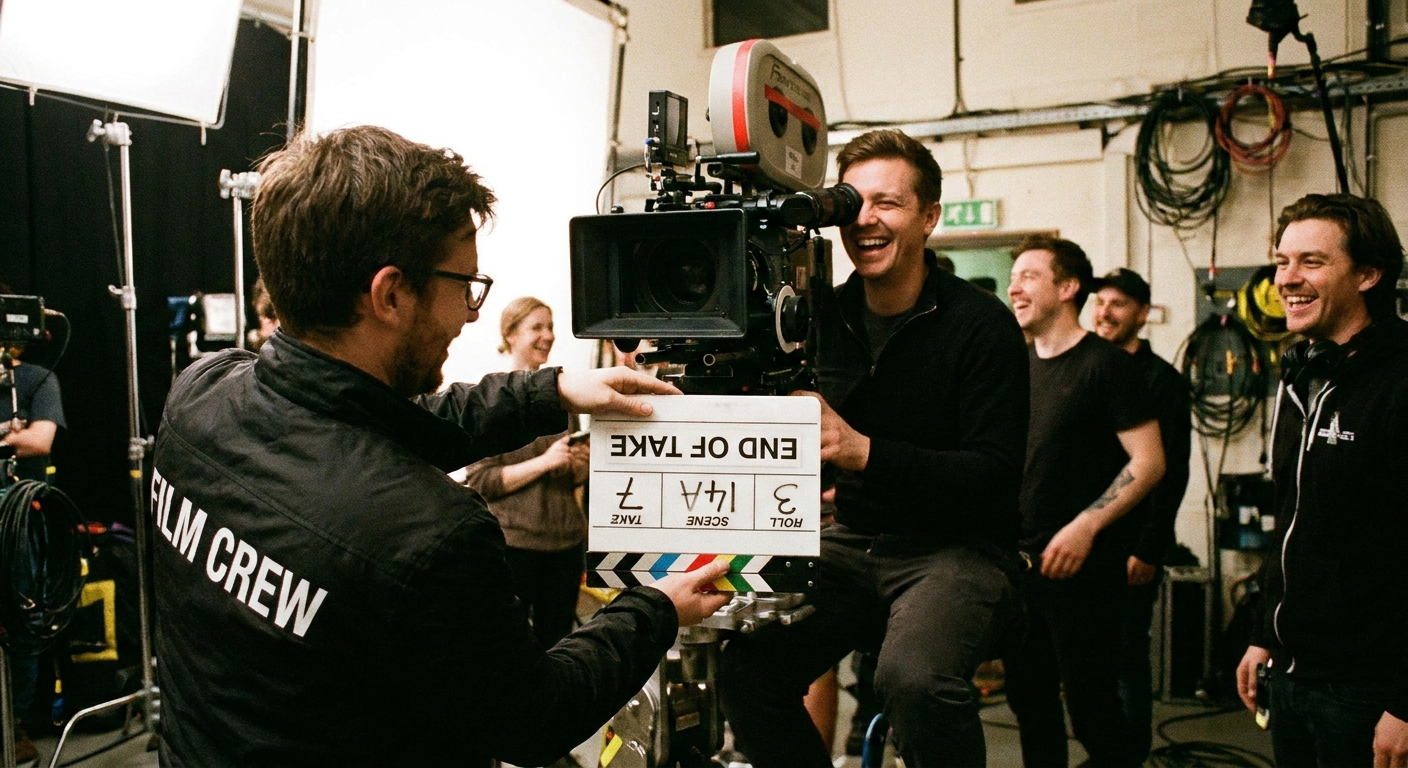
- The slate is clapped at the end of the take instead of the beginning.
- To make it obvious in the footage, the slate is often held upside down when clapping, though conventions can vary by crew.
That upside-down slate is a little gift to the editing room. It says: “You are going to find this slate at the end, not the front, and yes, that was intentional.”
Smart slates and timecode
If you have seen a slate with a bright digital display, you have likely seen a smart slate (often called an electronic slate). These slates can display timecode, which is a running clock used to keep camera and sound aligned.
Smart slates are helpful because they add another layer of organization:
- Visible timecode: The camera records the timecode display, giving post a quick, human-readable reference.
- Integration with sound: On many productions, the slate’s timecode can be jam-synced to match the sound recorder and cameras.
- Faster troubleshooting: If a file is mislabeled or a take is missing metadata, timecode can help identify what belongs together.
In an ideal workflow, timecode is also captured directly as metadata or timecode tracks in the recordings, and the slate display is a backup and cross-check. Even then, many crews still clap the sticks because the physical mark remains the most immediate sync point when you are scanning waveforms and frames at speed.
Slates when there is no sound
You might see “MOS” on a slate, shorthand for a take shot without synced production sound. Crews mark MOS in different ways depending on the show and the tools, but the intent is consistent: make it obvious to post that there is no matching dialogue track to hunt for.
Even on MOS shots, productions often still slate because the scene and take labeling keeps the footage organized, especially when the day gets busy and shots are captured out of script order.
Multi-camera notes
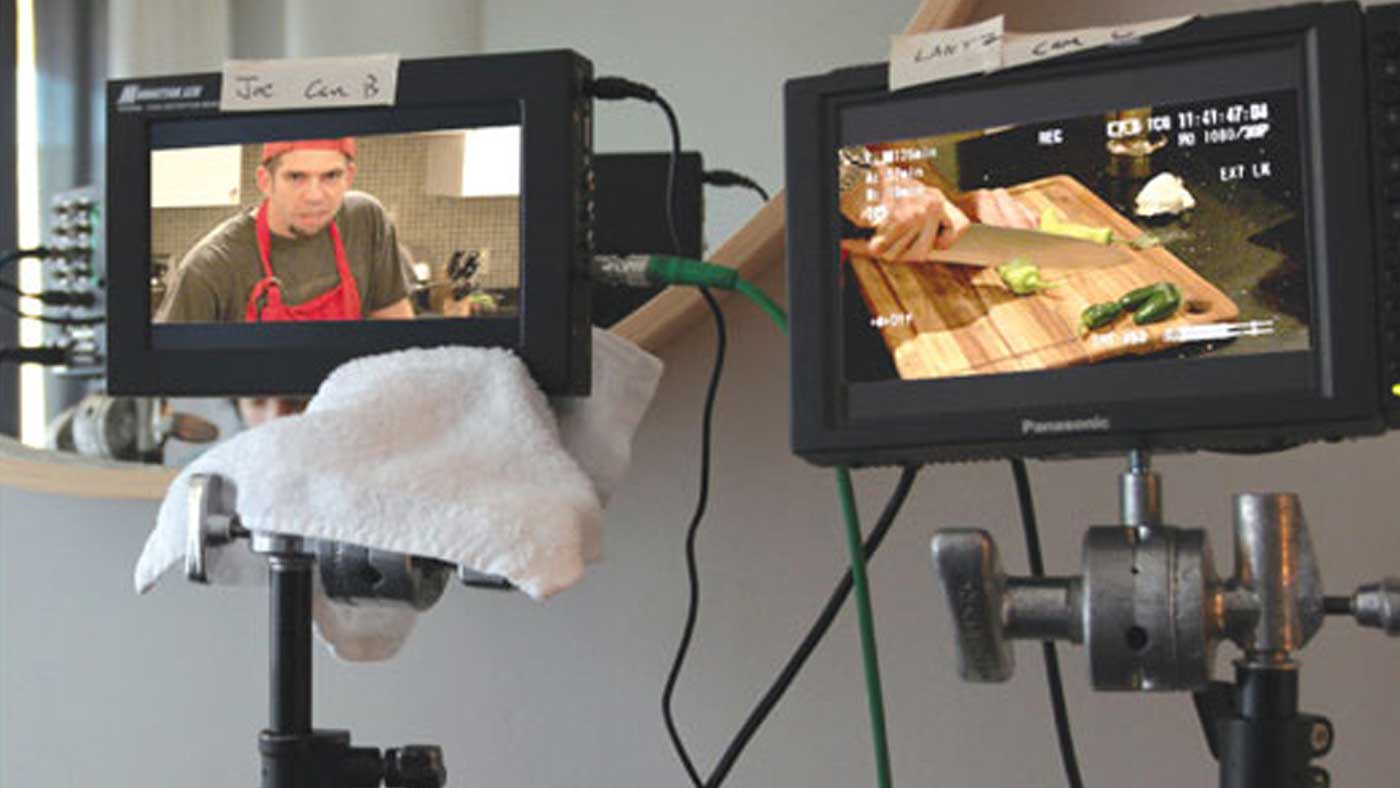
On multi-camera shoots, slates usually indicate which camera is rolling (A, B, C, and so on). Some productions use one slate that is presented to each camera, while others prioritize the main camera, depending on blocking, distance, and what is realistic in the moment. The important thing is that post can tell which angle is which, and can sync them reliably.
Clapperboard vs audition slating
One quick point of potential confusion: in commercial auditions and self-tapes, “slate” often means the actor looks into the camera and says their name, height, or representation. That is a totally different use of the word.
In film production language, a slate is the clapperboard used to label takes and sync sound and picture.
Common questions
Do you always need a clapperboard?
Not always, but you need some reliable way to identify footage and sync sound. On tiny shoots, people sometimes use a simple handwritten slate, a whiteboard, or even a hand clap in frame. The principle stays the same: label the take and create a sync point.
Why not just sync everything automatically?
Many workflows do rely heavily on timecode and software syncing, and it can be remarkably fast. But sets are messy in the real world. Batteries die. Settings get bumped. Files drift. The slate is a low-tech backup that remains readable no matter what system you are using.
What happens if the slate information is wrong?
It happens more often than you would think. When it does, the editor and assistant editor may need to cross-reference audio filenames, camera reports, script supervisor notes, or waveforms to confirm what a take actually is. A correct slate saves real hours in post.
Why is it called a clapperboard?
Because of the hinged “clapper” sticks on top that make the clap. “Slate” comes from the older practice of using slate boards to write shot information, long before dry-erase markers and LED timecode displays.
The quiet magic of that snap
The clapperboard is one of those unglamorous tools that makes filmmaking possible. It is organizational, yes, but it is also oddly poetic. Before the emotion, the spectacle, the dance of light and performance, there is a simple gesture that says: we are capturing a story, and we are doing it carefully.
And if you ever find yourself on set and hear that crack echo off the soundstage walls, savor it. That is the sound of collaboration locking into place.