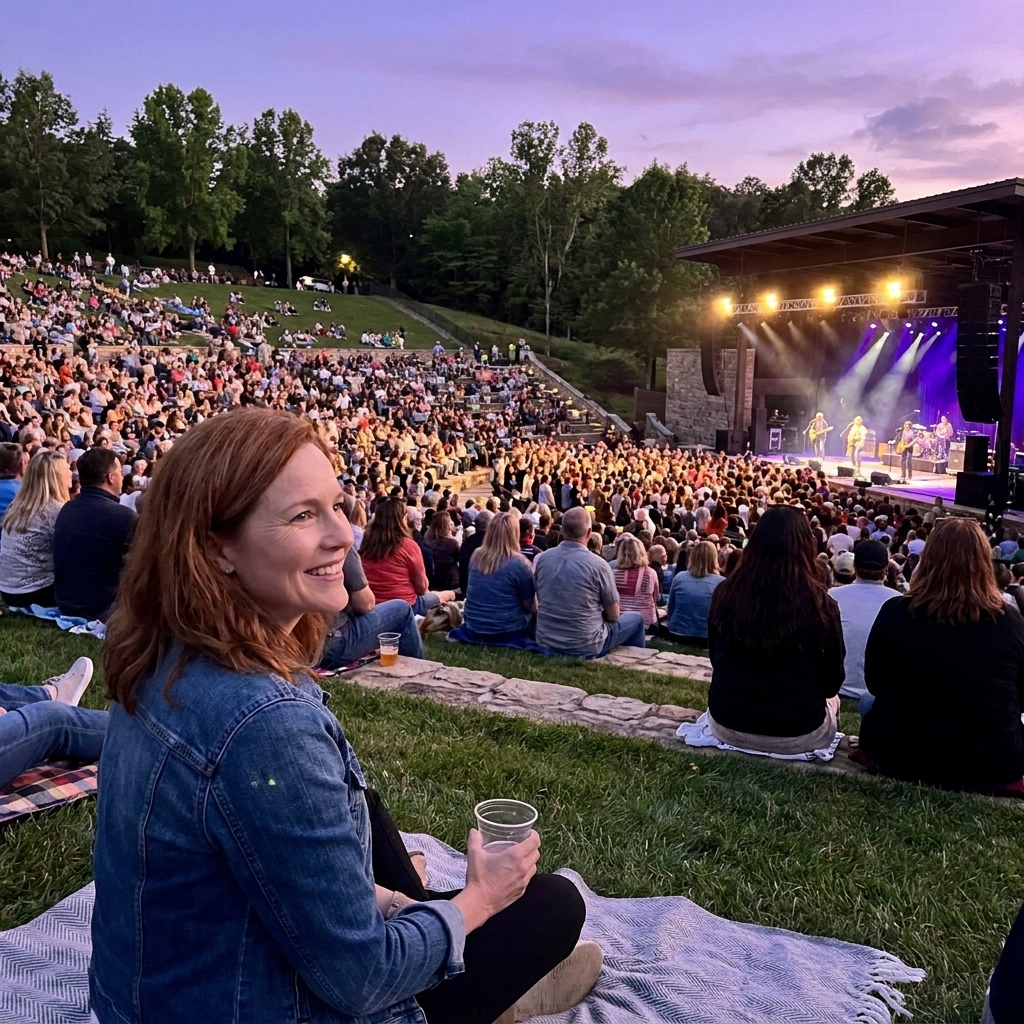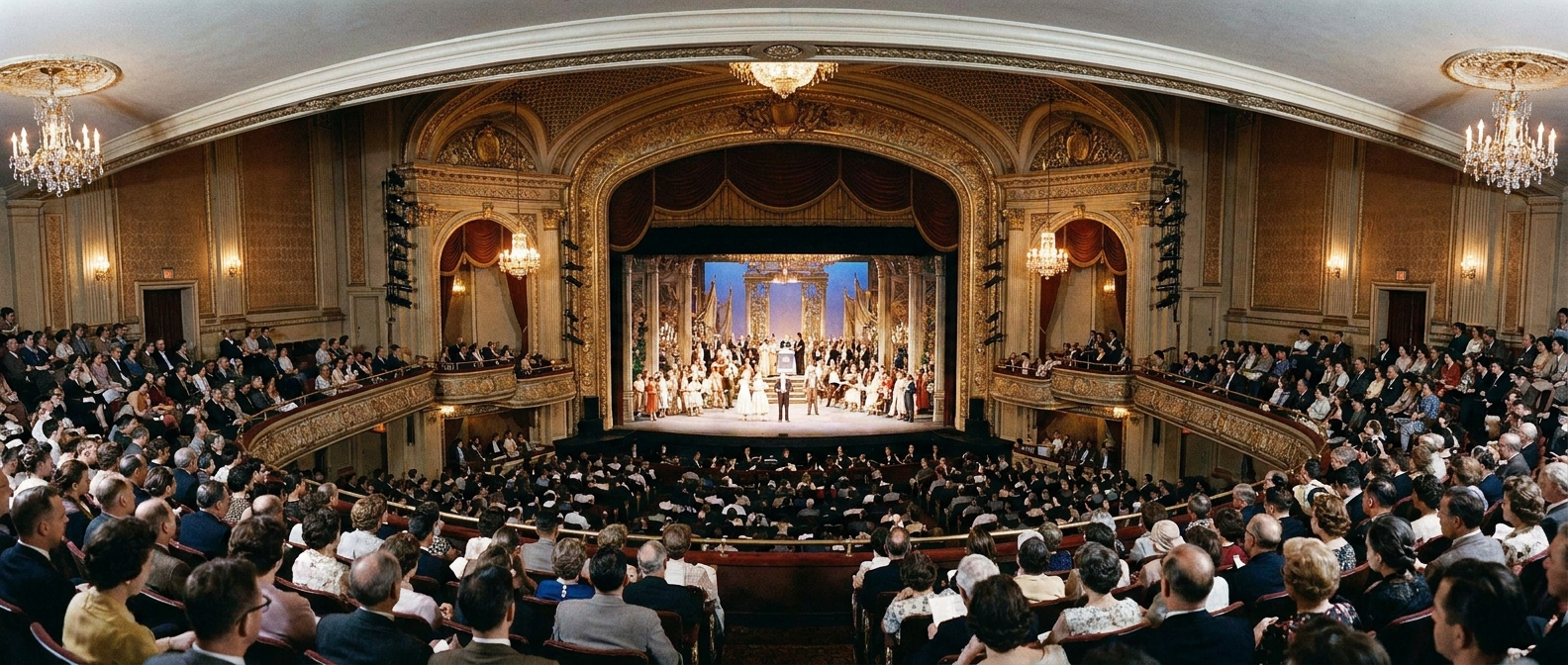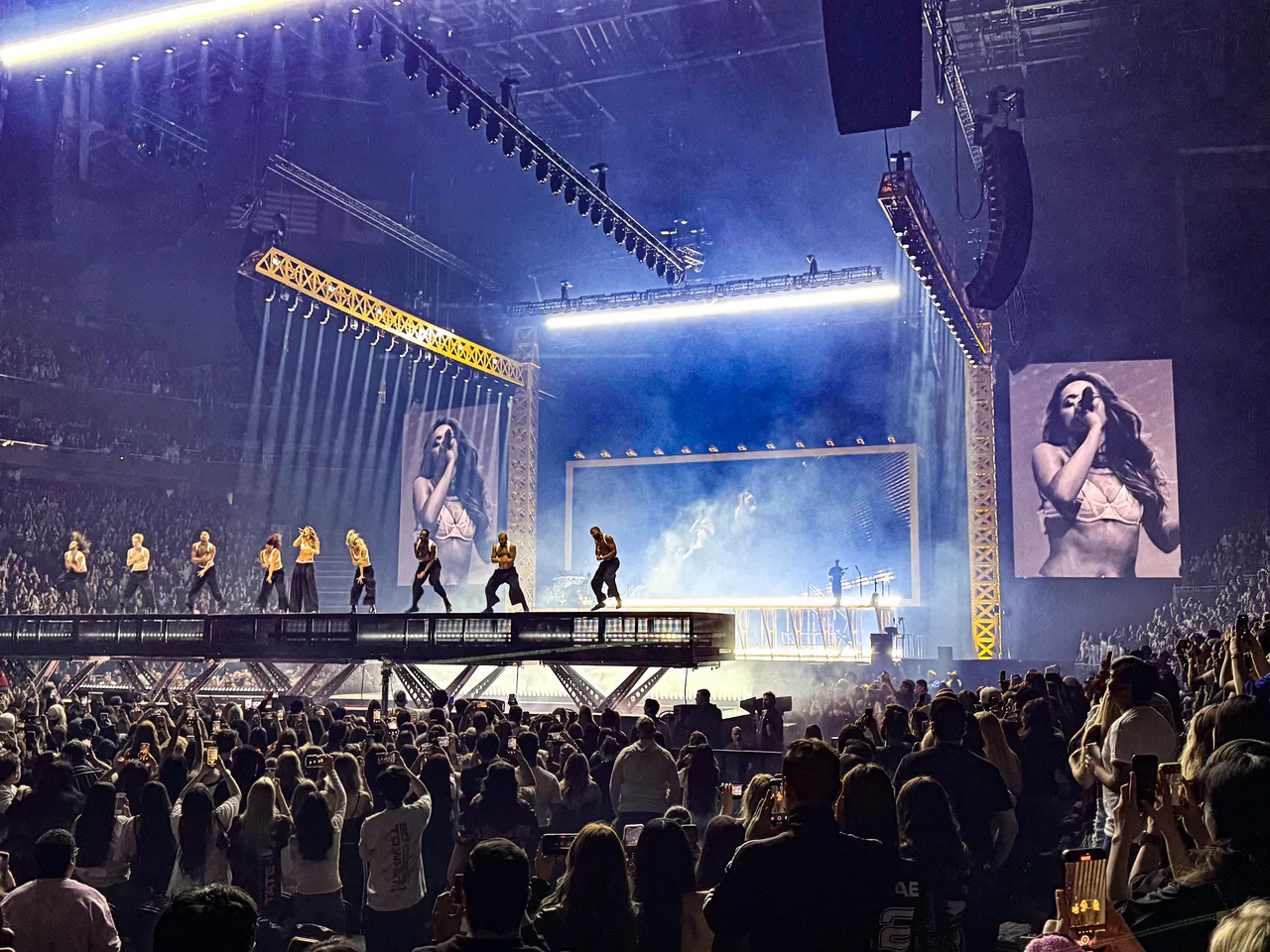
I grew up in Chicago, where “going to a show” meant two equally serious questions: Who’s headlining, and what’s the wind doing off the lake? Years later, whether I’m wedged into a sweaty club or up in the rafters of an arena, I still dress for the same truth: concerts are participatory theater. You are standing, dancing, sweating, waiting in lines, and occasionally sprinting for the last train. Looking great matters, but feeling like yourself while you move matters more.
Below is what I actually use when I’m getting ready: venue-by-venue outfit logic, weather-proofing, shoe sanity, and the small items that keep you comfortable without getting stopped at security.
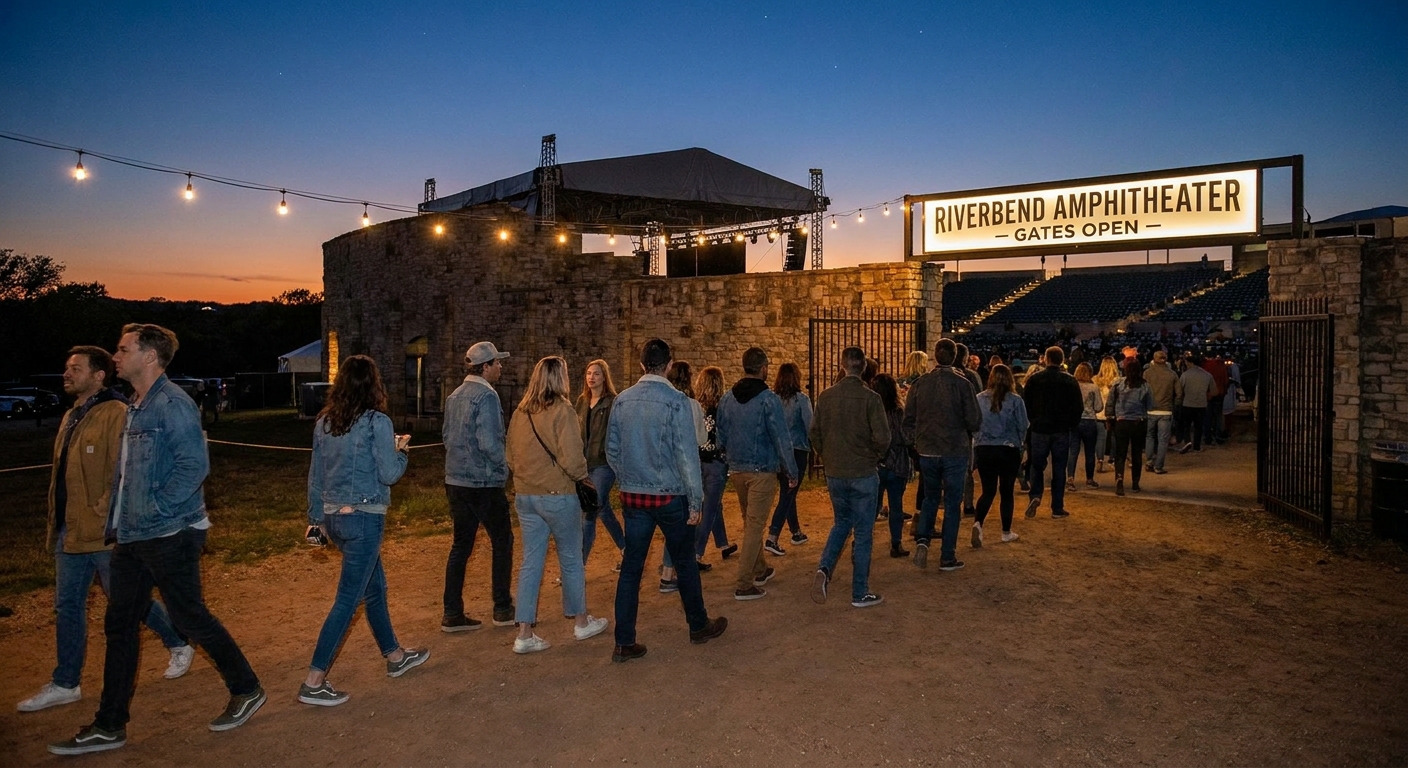
The three rules that never fail
- Dress for your feet first. If your shoes hurt, the setlist will feel longer.
- Plan for temperature swings. Venues run cold (air conditioning) or hot (bodies). Outdoors does both in one night.
- Carry less than you think. The best concert bag is the one you forget you have.
What to wear by venue type
Arena shows
Arenas are their own ecosystem: long walks from parking or transit, stairs, security lines, and a climate that can flip from chilly concourse to warm seating bowl fast. You want streamlined comfort with one smart layer.
- Go-to outfit: Jeans or comfortable trousers, a breathable top, and a light jacket or overshirt you can take on and off easily.
- Fabric tip: Choose breathable knits or cotton blends. Anything non-breathable will feel like a regret under stage lights.
- Best accessory: A small crossbody bag that stays in front of you on crowded escalators.
Small clubs
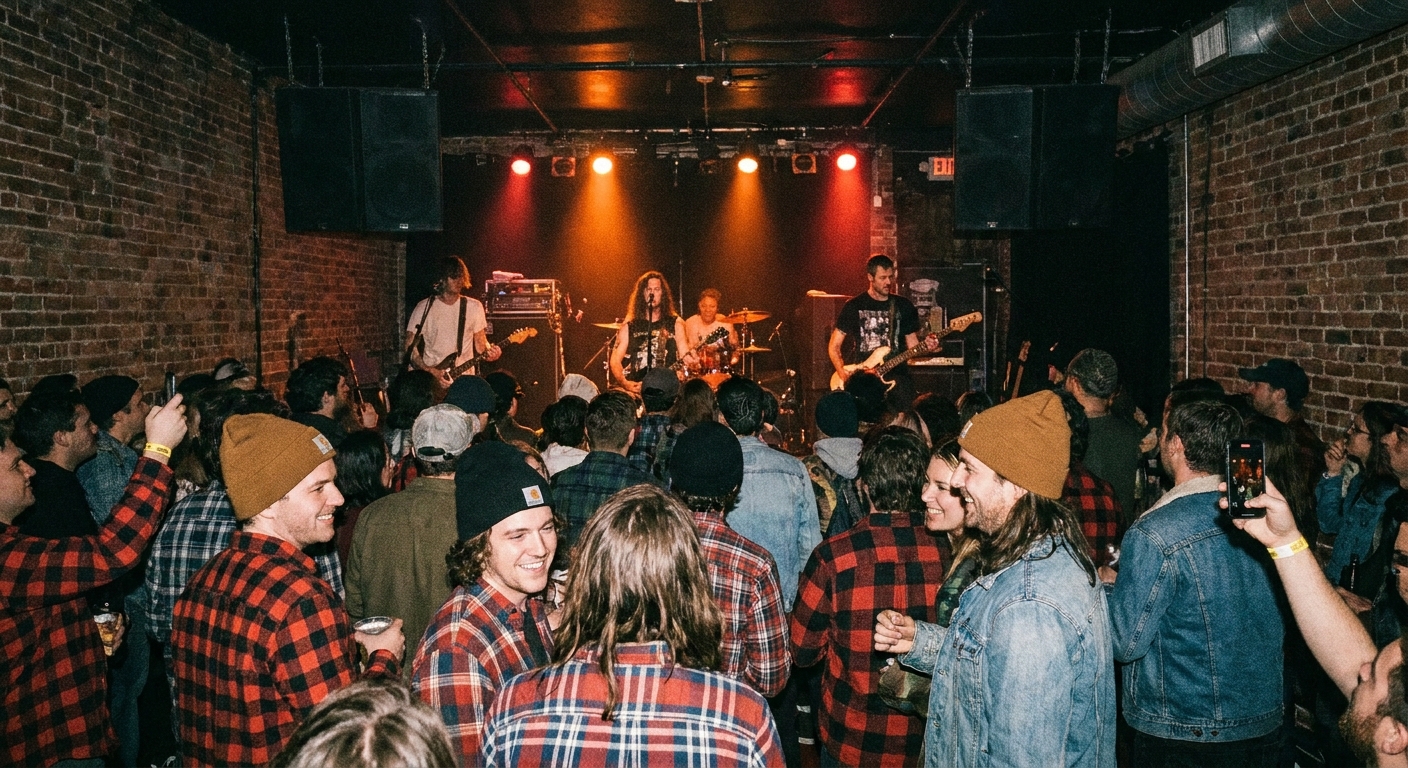
Clubs are intimate and glorious, and also famously humid. You might be shoulder to shoulder for two hours. Prioritize airflow and freedom of movement, then add one layer for outside.
- Go-to outfit: A simple tee or tank with a durable bottom (jeans, cargos, midi skirt with shorts underneath if you like skirts), plus a jacket you can tie around your waist.
- Hair and makeup reality check: If you’re near the stage, you will sweat. Choose a look that survives joy.
- Jewelry: Keep it minimal. Long necklaces and dangly earrings can snag in a packed crowd.
Outdoor amphitheaters
Outdoor venues are the great tricksters. You arrive in sun, you leave in wind, and your seat might be on grass or a bench. Layers are the whole game.
- Go-to outfit: Breathable base layer, mid layer you can add when the sun drops, and a light shell if rain is even a rumor.
- If you’re on the lawn: Consider pants or longer shorts that can handle sitting on grass, and bring a layer you do not mind using as a blanket.
- Bug and sun factor: Sunglasses, a hat, and a tiny sunscreen stick can be more useful than any fashion “statement” piece.
Music festivals
Festivals are marathons. You are walking more than you think, standing for long stretches, weaving through crowds, and doing the math on bathroom lines. Build an outfit that can take dust, heat, sudden rain, and long distances.
- Go-to outfit: Breathable top, shorts or lightweight pants with pockets, and a layer that packs small.
- Footwear: Closed-toe shoes are your friend in crowds and on uneven ground.
- Bag: A small backpack or belt bag that keeps your hands free. Keep it as light as possible.
Shoes: your biggest decision
I love a dramatic shoe in theory. In practice, concerts are long and unforgiving. If you are debating between “cute” and “I can stand in this for three hours,” pick the second option and you will look happier in every photo.
- Best all-around: Broken-in sneakers or supportive boots with traction.
- For rainy nights: Water-resistant boots or sneakers with a solid sole. Avoid anything suede unless you enjoy mourning.
- If you insist on heels: Choose a sturdy block heel, avoid thin straps, and be honest about whether you will be on your feet the whole time.
- Socks matter: Wear socks that prevent blisters and do not slide. Bring a bandage in case your future self needs mercy.
Layers that work
The goal is a layer you can add and remove without fussing, and that you can carry without suffering.
- Light jacket or overshirt: Ideal for arenas and shoulder seasons.
- Hoodie or crewneck: Great for outdoor shows when the temperature drops fast.
- Packable rain shell: The best “maybe” item for amphitheaters and festivals.
- Skip bulky coats when possible: If you will be holding it all night, it becomes the least fun prop imaginable.
Weather playbook
Hot weather
- Choose breathable fabrics and lighter colors.
- Opt for minimal layers and bring a small, foldable layer only if night temps drop.
- Comfort-first shoes, because heat makes feet swell.
- Consider a hat and sunglasses for outdoor lines and daytime sets.
Cold weather
- Use a base layer plus a warm mid layer, then a coat that you can manage inside the venue.
- Gloves and a beanie help outdoors, but consider whether you can stash them once inside.
- Wear socks that keep warmth without making shoes tight.
Rain
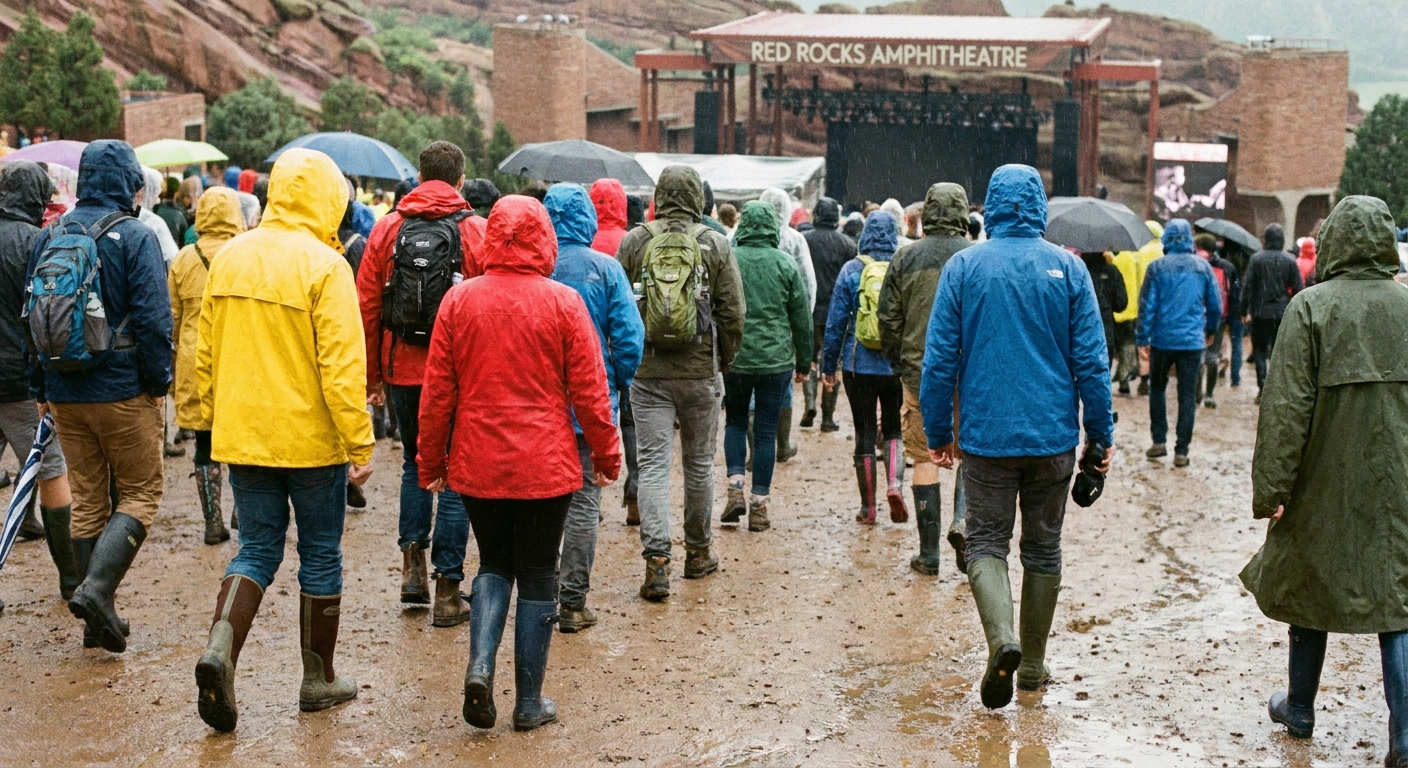
- Bring a rain shell with a hood. Some venues discourage umbrellas because they can block views and become a crowd hazard, so check your venue’s policy.
- Choose water-resistant footwear with traction.
- Avoid long hems that will drag or soak up puddles.
Bags: small and secure
Every venue has its own rules, but the trend is consistent: smaller is smoother. If you can, check the venue policy before you leave the house. If you cannot, err on the side of tiny.
- Best pick: A small crossbody or belt bag that stays close to your body.
- Smart features: Zippers, an adjustable strap, and a shape that sits flat so it does not swing in crowds.
- What to avoid: Oversized totes, hard purses, or anything stuffed to the point it cannot close.
If you are carrying valuables, think like you are in a moving crowd (because you are). Keep your phone in a zip pocket or bag pocket that closes, not in a loose back pocket that can walk away without you.
Items often restricted
Rules vary widely by venue, promoter, and even the specific event, so take 60 seconds to check the venue’s prohibited-items list if you can. When you cannot, these are common items that slow people down at security or get turned away at the door.
- Large bags and backpacks beyond policy limits
- Professional cameras and detachable lenses, plus selfie sticks
- Outside food and drinks
- Aerosols (including some spray sunscreens and certain cosmetics)
- Chains and spiked accessories that can be flagged as safety risks
- Umbrellas at some outdoor shows
- Markers and large signs depending on the event
When in doubt, keep it simple: essentials only, nothing sharp, and nothing you would hate to toss or trek back to the car.
Comfort and accessibility
If you use a mobility aid, prefer a seated section, or are managing chronic pain, comfort is not a nice-to-have. It is the plan. The same goes for sensory sensitivity: arenas can be bright, loud, and overstimulating even before the opener walks on.
- Choose the most stable shoe you own. Traction and support beat “new” every time.
- Dress to avoid fussing. Layers that are easy to adjust while seated, and nothing that tangles or pinches when you are navigating tight rows.
- Pack what helps you regulate. Earplugs, sunglasses for outdoor glare, and a light layer that feels calming (not scratchy, not tight).
Outfit formulas
If you want a reliable starting point, these combinations work across most concerts and still leave room for your own style.
- The classic: Jeans + tee + jacket + sneakers
- The elevated casual: Dark jeans or trousers + fitted top + leather or denim jacket + boots
- The outdoor night: Breathable base + hoodie + light shell + sturdy sneakers
- The festival core: Pocket-friendly bottoms + breathable top + hat + closed-toe shoes
Quick checklist
- Comfortable shoes you have worn before
- One layer you can remove and carry easily
- Small bag with zipper
- ID, payment method, and transit plan
- Earplugs, especially for clubs, floor, and louder shows
- Weather protection if needed (rain shell, sunscreen)
The best concert outfits do not compete with the music. They support the night you want to have: hands in the air, mind on the stage, and body comfortable enough to stay for the encore.
FAQ
Can you wear sneakers to a concert?
Yes, and it is often the best choice. Pick a broken-in pair with support and traction, especially for arenas, festivals, or any venue where you will be walking a lot.
What should you wear to a concert if you have floor tickets?
Assume you will stand the whole time and may get bumped. Wear closed-toe shoes, avoid dangling jewelry, and choose a bag that stays secure against your body. If you are sensitive to loud sound, bring earplugs. Your ears will still hear the music. You will just hear it tomorrow, too.
What do you wear to an outdoor concert at night?
Layer up. Start with a breathable base and bring a warmer mid layer like a hoodie or light jacket. If rain is possible, add a packable shell with a hood.
Is it better to bring a jacket or a sweater?
For indoors, a light jacket or overshirt is easiest to take on and off. For outdoor shows, a sweater or hoodie can be warmer, but make sure you can carry it comfortably if the temperature changes.