I learned the phrase “hot set” the same way a lot of people do: by hearing it snapped across a room with the urgency of “heads up” and the precision of “do not touch.” In film and TV, it is less about attitude and more about respect. Respect for continuity, for the crew’s work, and for the invisible choreography that keeps a story feeling seamless.
What a hot set means
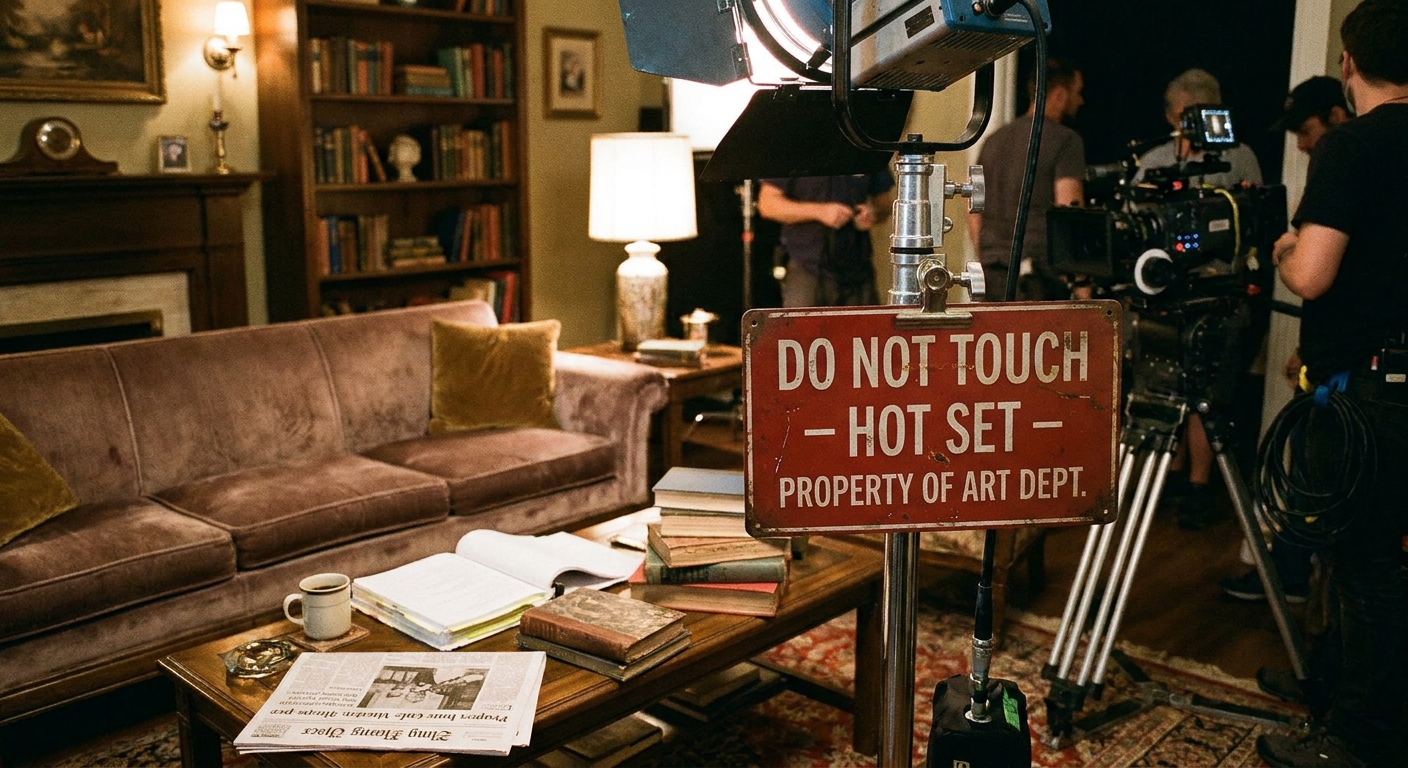
A hot set is a set that has been fully dressed for a scene and must remain untouched between setups so the production can maintain continuity. That means everything stays exactly where it is. Props, furniture angles, papers on a desk, a half-full coffee cup, a jacket tossed over a chair, even a slightly opened drawer.
“Hot” does not mean physically hot. It means active and sensitive. The scene might be coming back later the same day, the next day, or weeks from now, and the set has to match what the audience already saw.
Why crews mark a set as hot
Continuity is the big reason, but it shows up in several practical ways:
- Multiple camera angles: A scene is rarely shot start to finish in one go. It is broken into pieces and captured from different angles, sometimes out of order. The set needs to match every time the camera turns around.
- Pickups and inserts: Productions often grab close-ups later, like a hand setting down a glass or a note sliding across a table. If the table dressing has drifted, the insert will not cut smoothly with the wide shot.
- Scheduling realities: Locations can be expensive, actors have limited availability, and weather changes. A hot set protects the option to return and complete the scene without rebuilding the world from scratch.
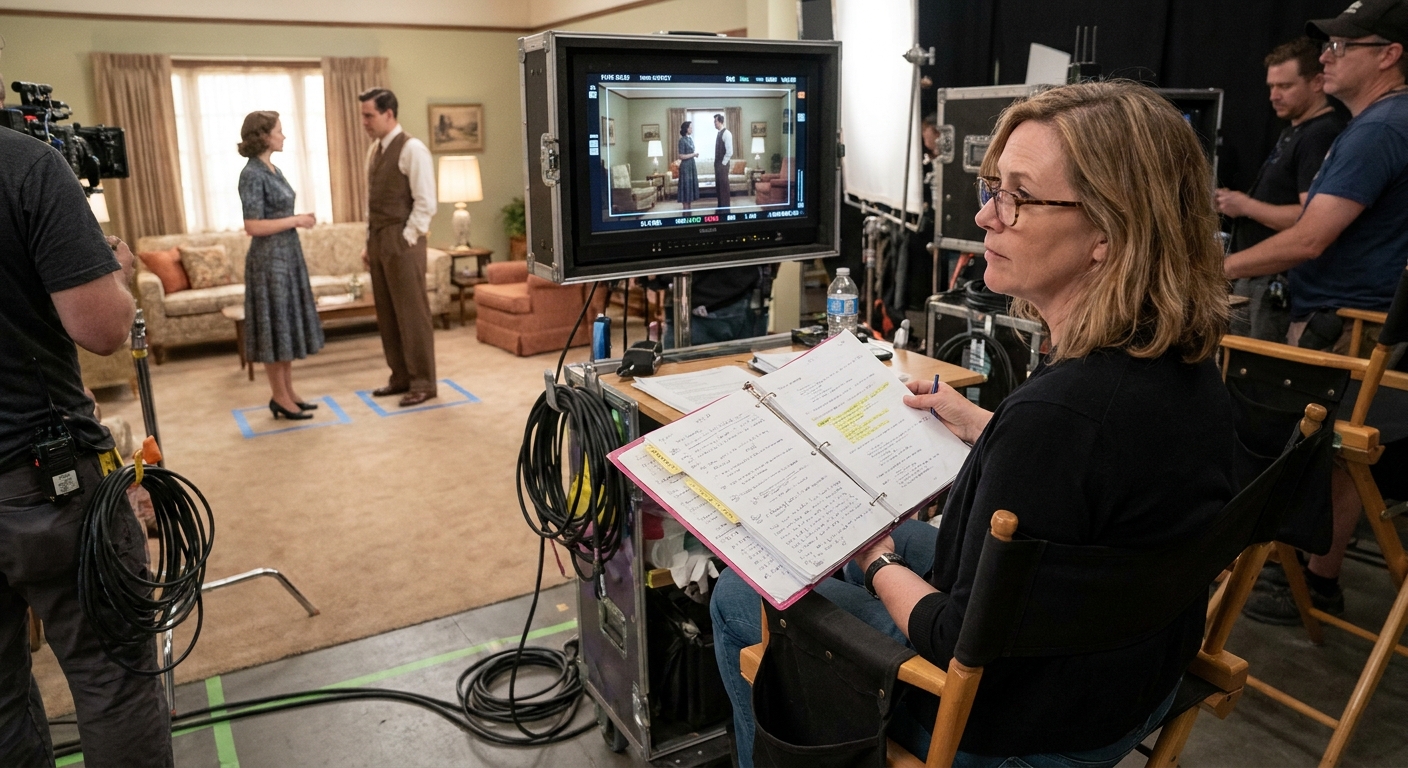
- Department coordination: Set decoration, props, art department, and script supervision all track details. Marking it “hot” is the shorthand that tells everyone the room is in a locked state.
It is also a safety and workflow thing. If well-meaning people reset furniture for comfort or tidy up because it looks “messy,” the crew then loses time reconstructing a mess that was designed on purpose.
What you should not touch on a hot set
If you are a background actor, stand-in, visitor, or even crew from another department passing through, the simplest rule is this: assume everything is intentional.
Leave these alone
- Props: Anything on a table, in someone’s hand, in a bag, or placed for the scene. This includes food and drink props.
- Set dressing: Books, picture frames, lamps, throw pillows, curtains, office supplies, cables dressed to look tidy, signage, wall art, and “random” clutter.
- Furniture position: Chairs pushed in or left askew, a couch angle, a rug corner, bar stools spacing. These choices can be continuity markers.
- Practical lights and switches: That lamp might need to be on for the shot, or off for the shot, and the bulb color might be matched to camera settings.
- Windows and blinds: Slight changes in blind slats can be painfully obvious on camera.
- Doors and drawers: If it is open one inch in a wide shot and closed in the close-up, the audience will feel the hiccup even if they cannot name it.
What you can do instead
- Ask before you move: If you need to sit, lean, or place something down, ask the nearest AD, props person, or set dresser.
- Wait in designated holding: Productions set up holding areas for a reason. Hot sets are not lounges, even if they look cozy.
- Use what you are handed: If wardrobe, props, or the AD team gives you something, treat that as your entire universe.
One more unglamorous truth: the set can be pristine and still be covered in fingerprints the camera will catch. “Don’t touch” protects the image as much as it protects placement.
How you will know a set is hot
Sometimes it is posted clearly. Sometimes it is communicated verbally. Common tells include:
- Signs: “HOT SET,” “DO NOT TOUCH,” or similar notices near an entrance or on a stand.
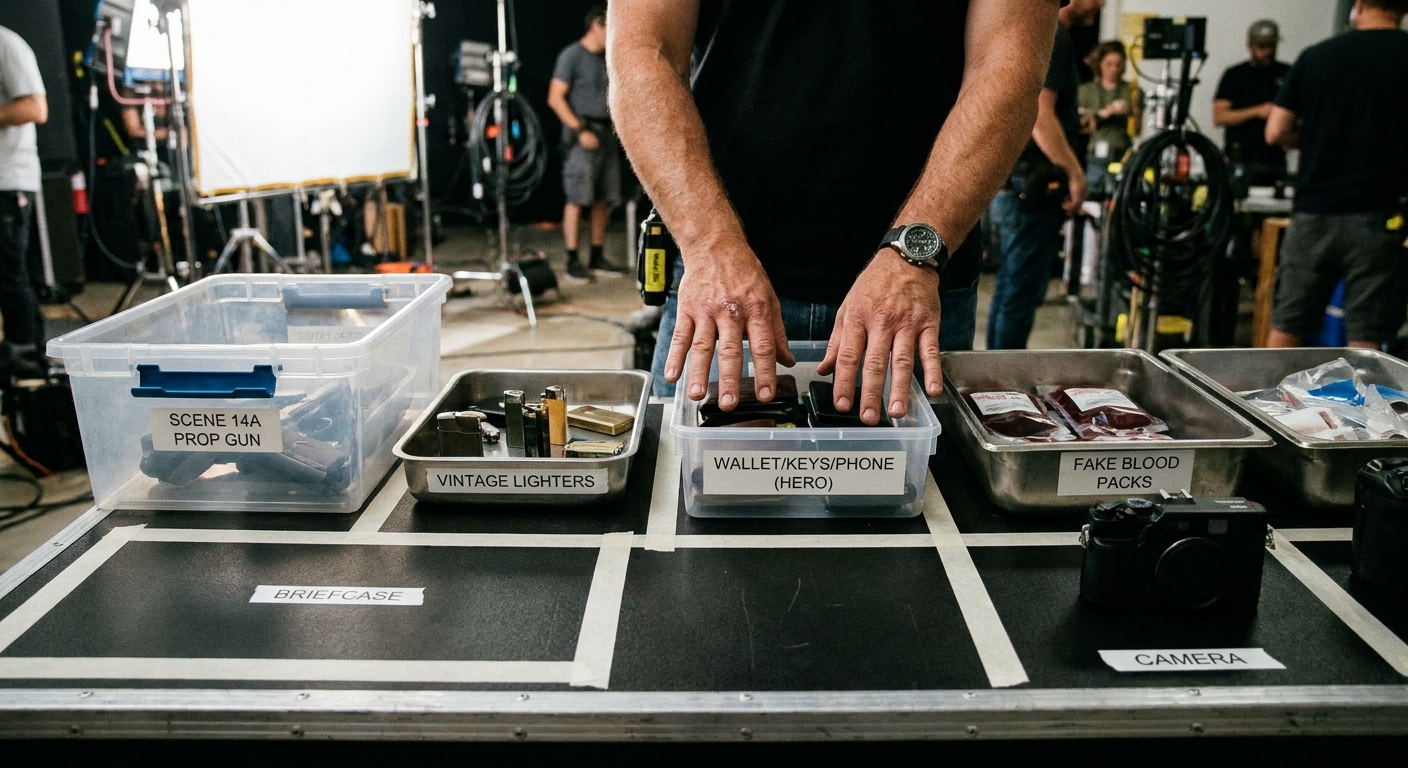
- Tape marks and meticulous placement: You might see tiny tape marks indicating where objects live.
- Active resets: If you see set dressers or props carefully returning items to exact positions, treat the area as hot.
- Restricted access: A PA or AD may block an entrance or ask people to clear the room between takes.
If you are unsure, the correct default is to behave as if it is hot.
Hot set vs. closed set
These terms get confused because both can limit your movement, but they protect different things.
Hot set
- What it protects: The physical continuity of the scene.
- Main rule: Do not touch or alter set dressing or props.
- Who it applies to: Everyone who enters the space.
Closed set
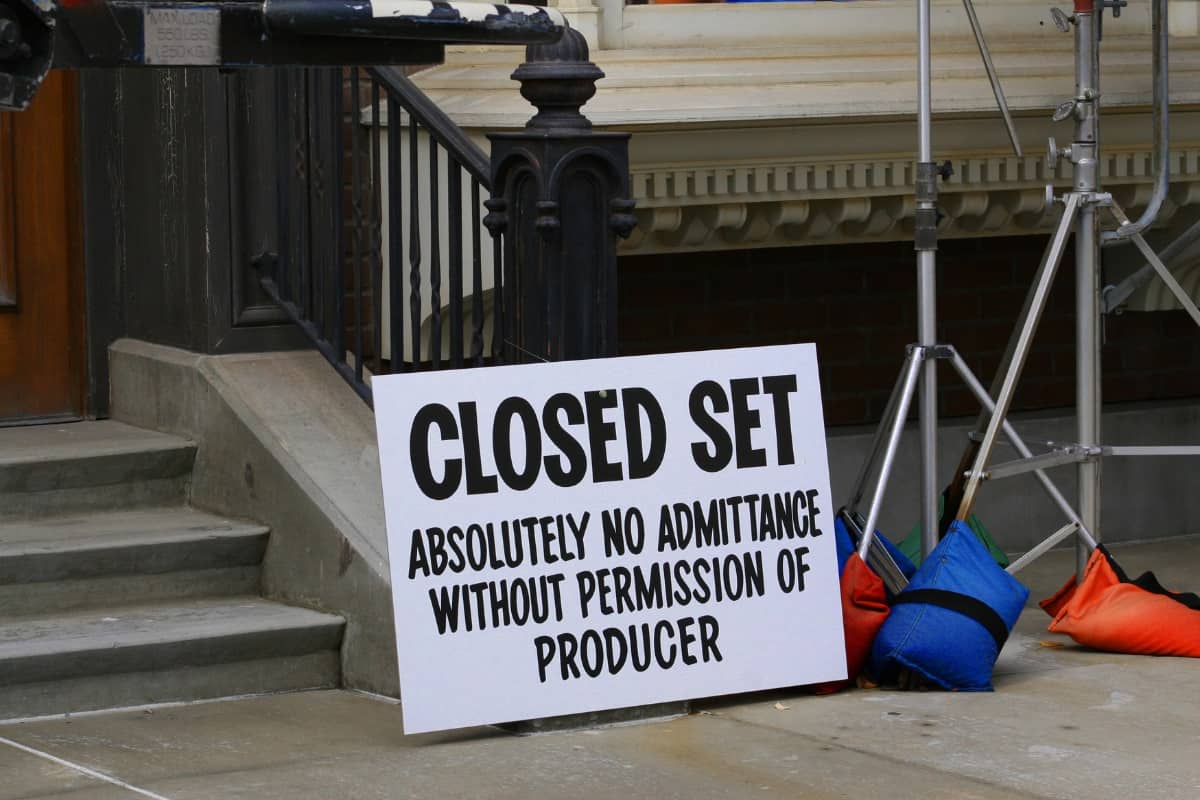
- What it protects: Privacy and focus during sensitive filming, often involving nudity, intimacy, minors, or emotionally intense scenes.
- Main rule: Only essential personnel may be present.
- Who it applies to: Anyone not required for the shot, even crew members who would normally be nearby.
A set can be hot without being closed, and it can be closed without being hot. Sometimes it is both, especially when a sensitive scene also has tight continuity demands.
If you touch something
It happens. Someone bumps a chair back, nudges a glass, or absentmindedly picks up a letter that looked like trash. The best response is quick, calm honesty.
- Stop and do not “fix” it yourself: Guessing the original placement can make it worse.
- Tell the nearest AD, props, or set dresser immediately: A fast correction can save a reset, a relight, or an unusable take.
- Be specific: “I moved the blue mug on the left side of the desk” is helpful. “I messed something up” is not.
No one enjoys continuity whiplash. People do appreciate when you help them protect the shot.
Background etiquette
- Do not sit on furniture unless directed.
- Do not eat, drink, or snack from set dressing food.
- Keep bags, water bottles, and phones out of frame and off set surfaces unless told otherwise.
- Listen for “lock it up” and “rolling.” Once the cameras roll, freeze your curiosity along with your movement.
- If you are given a prop, treat it like it has a mark on it even if you cannot see one.
The irony of a hot set is that the best compliment you can receive is that no one ever noticed you were there at all. You kept the world intact, and the story got to shine.
Hot set FAQ
Is a hot set only for interiors?
No. Exteriors can be hot too, especially if there is specific set dressing like trash placement, signage, wet-down patterns, tire tracks, or breakaway props that must match between angles.
Can I take a photo on a hot set?
Assume no unless production explicitly allows it. Even when a set is not hot, many productions have strict no-photo policies. If it is hot, you also risk disturbing dressing just by moving around.
Why does it matter if something moves a little?
The camera is unforgiving, and editing is precise. A “little” move can jump in the cut and pull the audience out of the moment, which is the opposite of what everyone is working to create.