Tech week is the part of making theater that feels the most like landing a plane in real time. You have a show that works in a rehearsal room, and now you have to teach it how to live in its actual home, complete with lighting angles, sound levels, set pieces that move, costumes that snag, and scene changes that take real minutes and real people.
If you have ever heard actors speak about tech week with a mix of affection and mild trauma, it is because this is when the invisible work becomes visible. Not to the public yet. To the company.
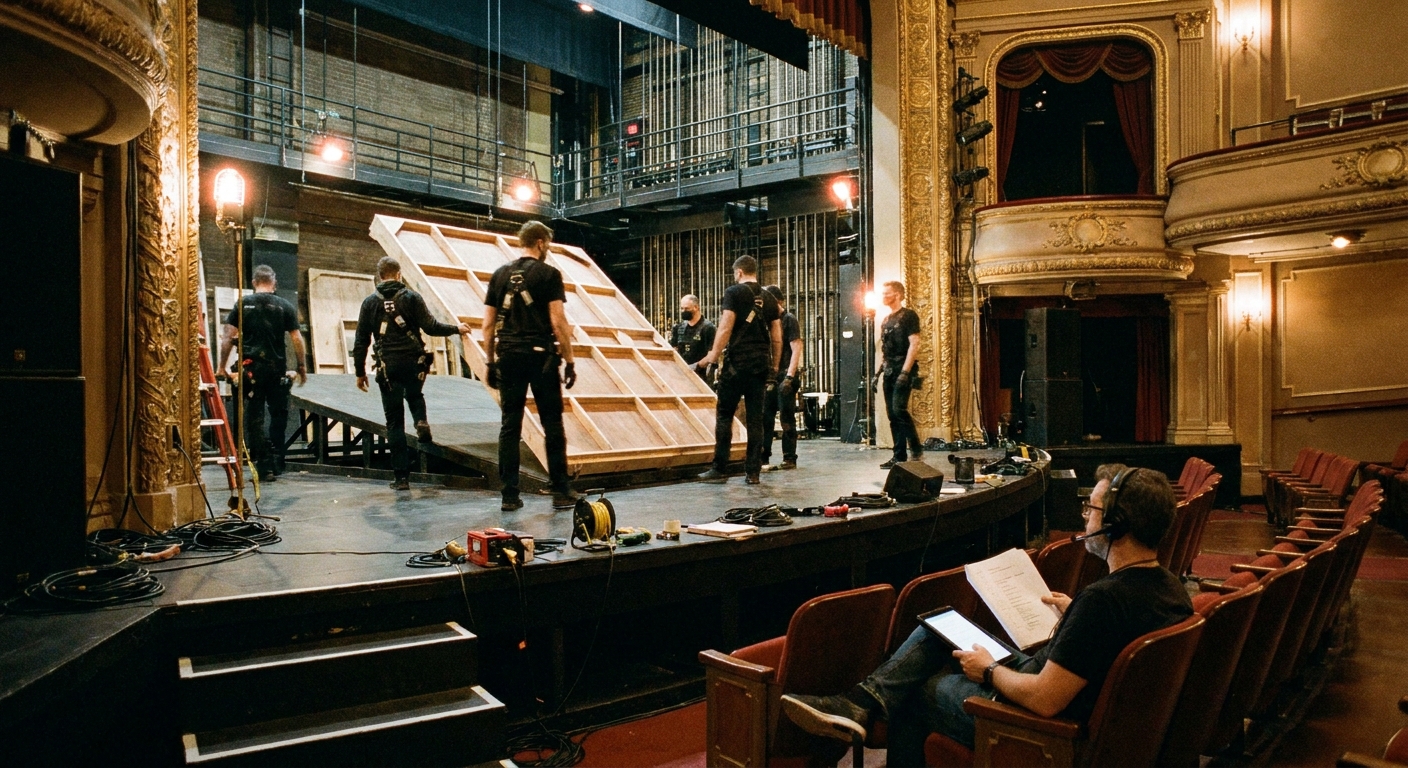
Tech week, explained
Tech week is the concentrated period of rehearsals in the theater where the production integrates all technical elements with the performers. That usually means:
- Lighting
- Sound
- Set pieces and automation, if any
- Props, including handoffs and preset checks
- Costumes, quick changes, and mic placement
- Scene changes and shift choreography
- Projections and video, if used
- Building cues and calling the show during runs
In other words, tech week is when the show stops being only acting and staging and becomes the full event the audience will eventually see.
The point is problem-solving
It is tempting to think tech week is a countdown to opening night where everyone should be polishing, smiling, and keeping things “camera ready.” In reality, tech week is built for problem-solving.
The priority is not applause. The priority is answers to questions like:
- Can the actor hit their spike mark when the stage is darker than it was in rehearsal?
- Does that door slam drown out a crucial line?
- How long does the couch move actually take with real stagehands and real traffic backstage?
- Can the quick change happen without ripping a zipper or yanking a microphone cable?
Tech week is allowed to be messy. It has to be. That is how the show gets safe, repeatable, and ready for an audience.
What happens during tech
Every production has its own rhythm, but most tech weeks include variations on the same core rehearsals. Here is what those usually look like in plain English.
Paper tech
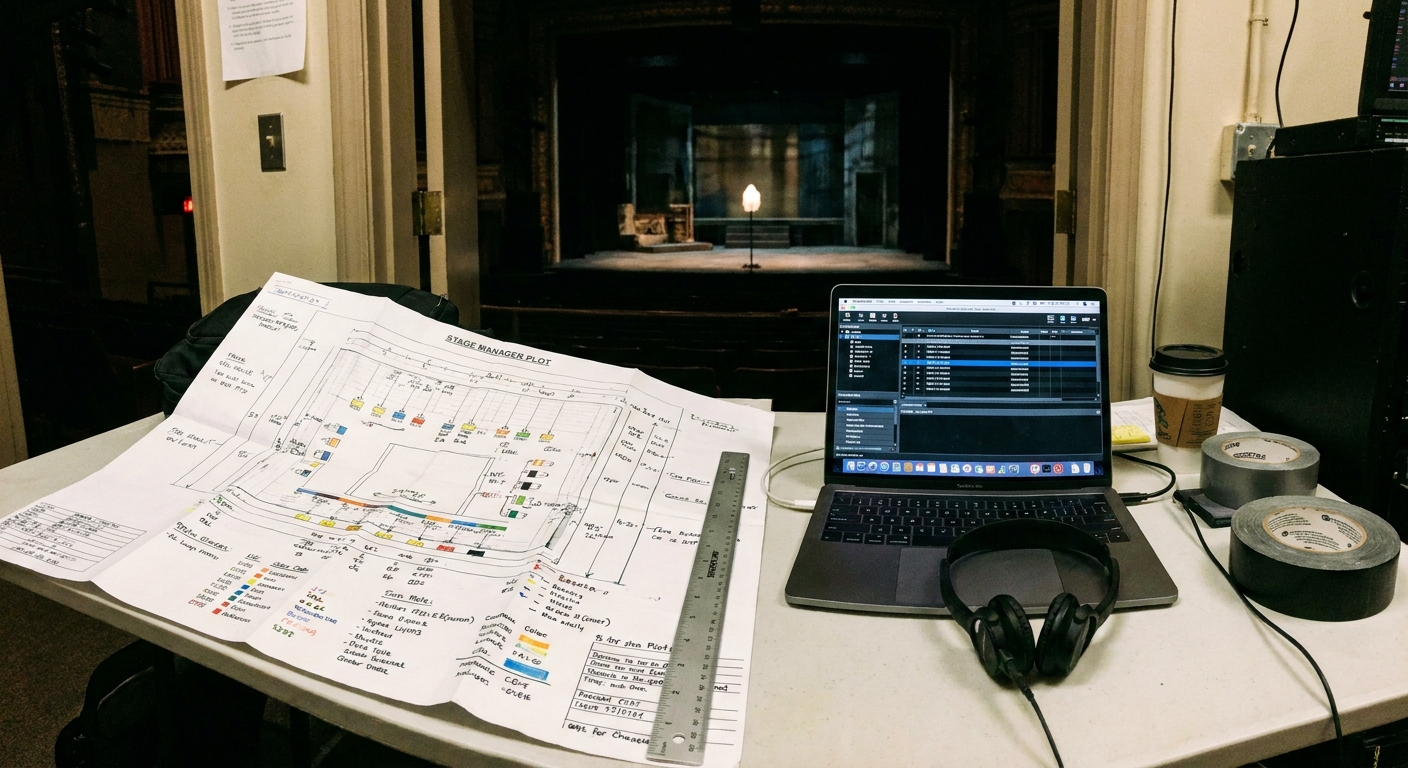
Some shows do a paper tech first, which is a meeting where the director, stage manager, designers, and key crew members talk through the show using the script and cue lists.
The goal is to agree on:
- Where cues happen
- What triggers them, such as a line or a musical beat
- How long transitions need to be
- Any moments that require special safety planning
Paper tech can save hours later because it reduces guesswork before you ever turn on a single light.
Dry tech
Dry tech is when the technical team works through cues without actors, or with minimal performer involvement. Think of it as rehearsing the machinery and the timing.
Often, this looks like designers and the stage manager working from the house, booth, or a table in the theater while operators build and test sequences.
This can include:
- Programming lighting looks and transitions
- Setting sound levels and timing effects
- Rehearsing scene shifts with stagehands
- Testing projections and video cues
It is called “dry” because you are not running the full show with all its human variables yet.
Wet tech
Wet tech usually means you are adding performers into the process after dry tech. It is “wet” because the human element is back: timing, breath, entrances, costumes, microphones, nerves, and all.
Wet tech can still be stop-and-start, especially when the show is learning big shifts or complicated moments.
Cue-to-cue
Once performers are involved, a production often uses cue-to-cue rehearsals, which is a method, not a separate species of rehearsal. In cue-to-cue, you jump from one technical moment to the next.
That means you might:
- Play a bit of a scene
- Stop at a lighting change
- Reset
- Run the moment again until the cue is clean
- Skip ahead to the next complicated transition
This is not about emotional arc. It is about making sure everyone knows what happens when the stage goes blue, the thunder rolls, and the staircase flies in.
If you want a concrete example, it can be as specific as: “LX 24 on ‘And that’s the truth.’” The line is the trigger. The light shift is the cue. The repeat is how it becomes reliable.
Full runs and dress
After cues are built, the show begins to run more like a performance, often leading into dress rehearsals where costumes, hair, makeup, and full technical elements are in play.
Even here, the goal is still notes and refinement. A dress rehearsal is a rehearsal, not a public promise.
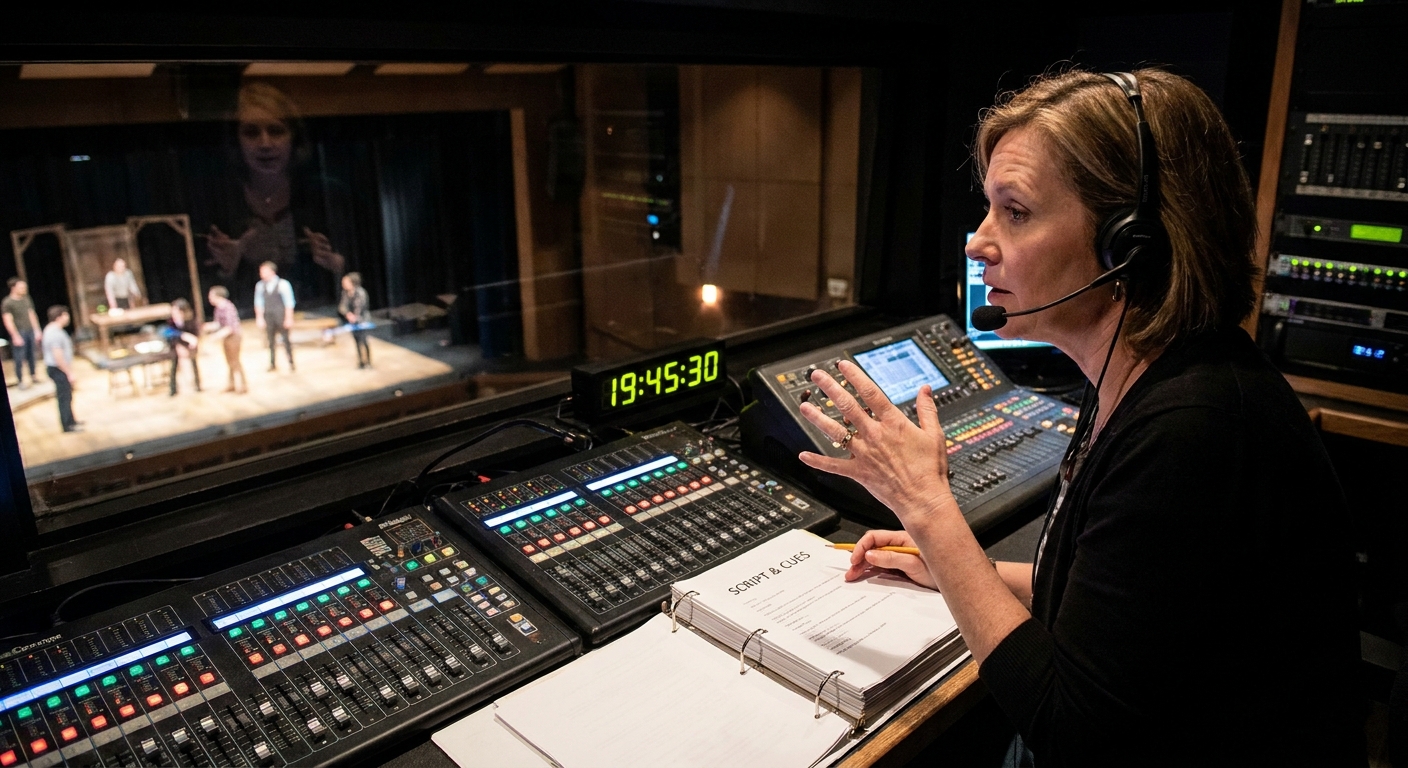
What is a cue?
A cue is a precisely planned action that happens at a specific moment in the show. Most people think of lighting cues first, but cues can be anything coordinated and repeatable, including:
- A sound effect, like a phone ring or a door buzzer
- A music sting or underscoring shift
- A scenic move, like a wall pivoting into place
- A projection change
- A spotlight picking up a performer
During tech, cues get named, numbered, timed, and practiced until the whole team can execute them consistently.
Why it takes so long
In a rehearsal room, a director can say, “Let us do the transition faster,” and everyone simply walks the furniture offstage. In a theater, “faster” might involve:
- Clearing actors safely through backstage traffic
- Making sure a moving platform does not clip a leg or a cable
- Rebalancing sound so a mic does not feed back when someone turns upstage
- Refocusing lights because a set piece casts a new shadow
Every adjustment affects something else. Tech week is when the dominoes reveal themselves.
Safety is part of the job
One quiet truth of tech week is that it is also a safety rehearsal. This is when companies confirm what is safe and repeatable, not just what looks cool.
- Moving scenery, trap doors, and automation get rehearsed at real speed
- Fog or haze gets tested for visibility and comfort
- Fight calls and dance spacing get re-checked under actual lighting
- Glow tape, spike marks, and backstage traffic patterns become non-negotiable
- Hearing protection and safe sound levels get taken seriously, especially in loud musicals
If a tech note is safety-related, it jumps the line. Always.
What is a 10-out-of-12?
A 10-out-of-12 is a specific kind of tech rehearsal day. The phrase means the company is scheduled for 10 hours of work within a 12-hour span, with breaks built in.
So you might be “in the building” for 12 hours total, but you are not actively rehearsing for all 12. There are meal breaks, rest breaks, and time for notes, resets, and technical adjustments.
In many professional productions, 10-out-of-12 days are common during tech because the work is detail-heavy and slow by nature. You are stopping, starting, backing up, and repeating moments until they are solid.
They can also be physically taxing. Even when an actor is not onstage, they may be:
- Waiting for their cue while wearing a mic pack
- Practicing quick changes
- Doing fight or dance spacing under new lighting
- Adjusting to footwear, wigs, masks, or restrictive costume pieces
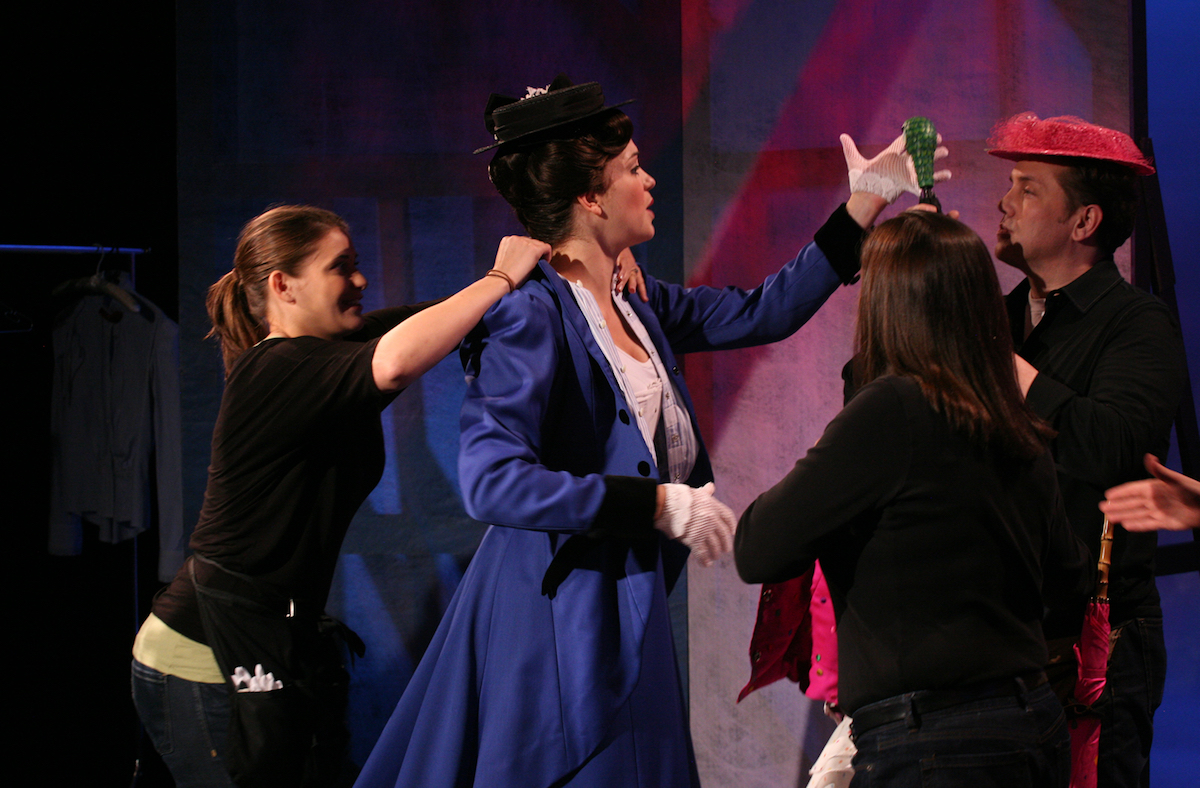
Who does what
One of my favorite things about tech week is that it reveals how truly ensemble-based theater is. Even in a star vehicle, the success of the night is a group effort, and tech is when the group learns to breathe together.
Stage manager
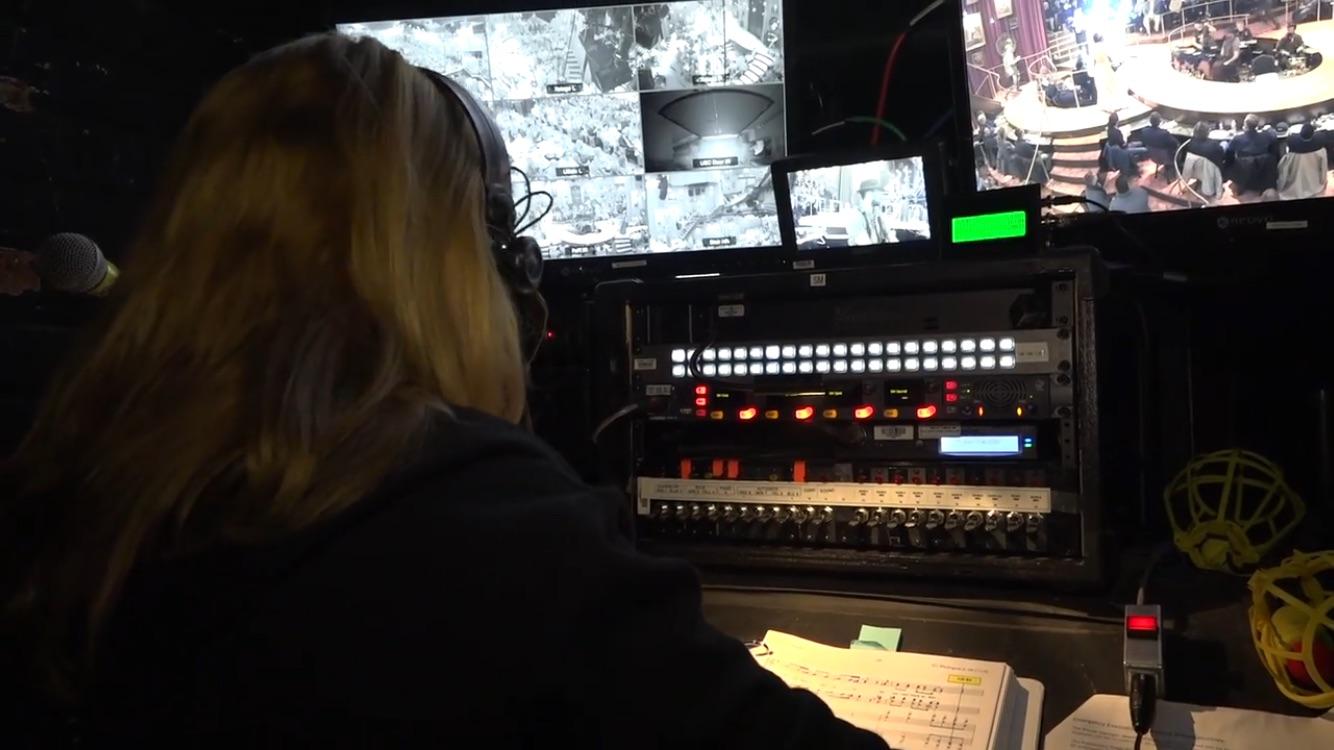
The stage manager is the traffic controller. During tech, they track changes, update the prompt book, and, in most productions, call the cues during performances (sometimes with assistants calling specific sequences, depending on the setup).
Designers
Lighting, sound, scenic, projection, and costume designers are there to shape and refine their work in the real space. Tech is where choices become concrete: levels, timing, focus, color, and how everything supports story.
Crew and operators
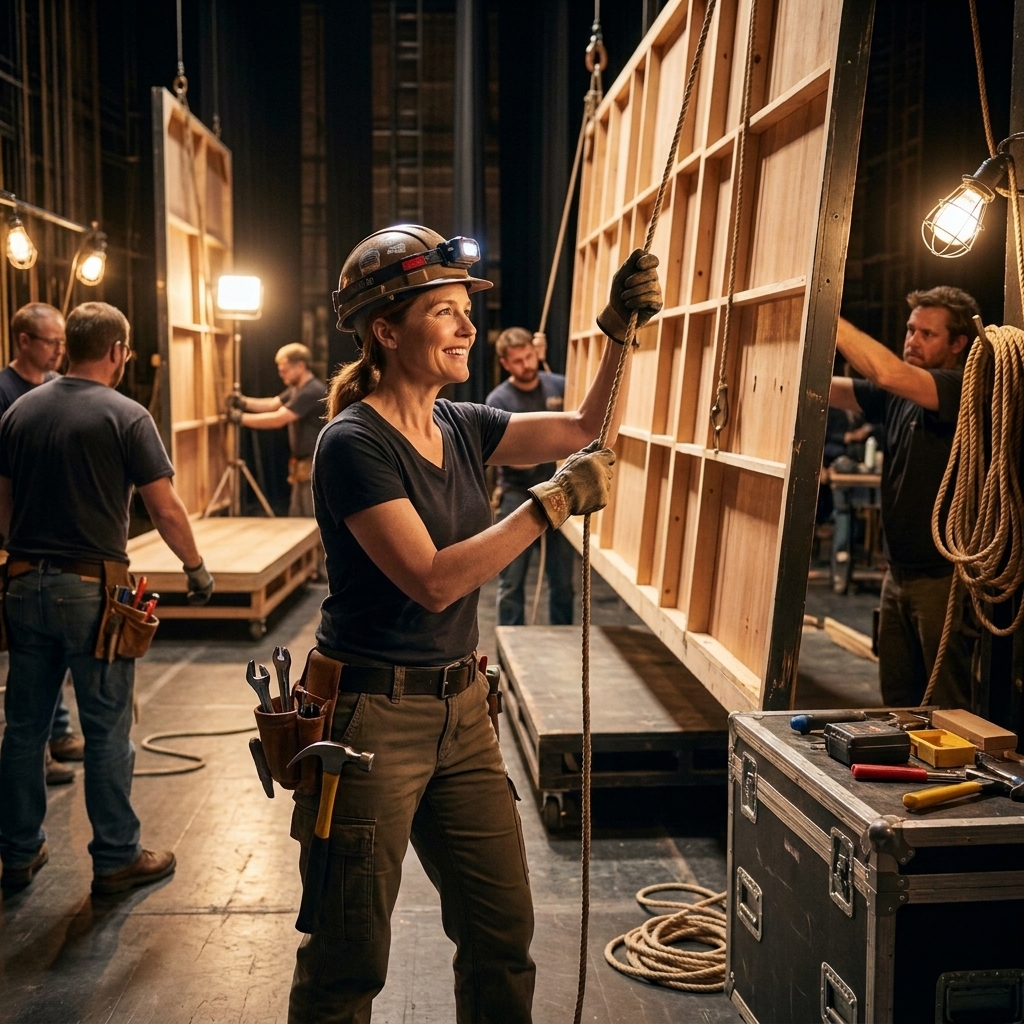
Deck crew, fly crew, wardrobe, audio engineers, board operators, spotlight operators, and more are all learning the show’s rhythm. In many productions, crew members are also choreographing their own moves because a scene shift can be as complex as a dance number.
Actors and musicians
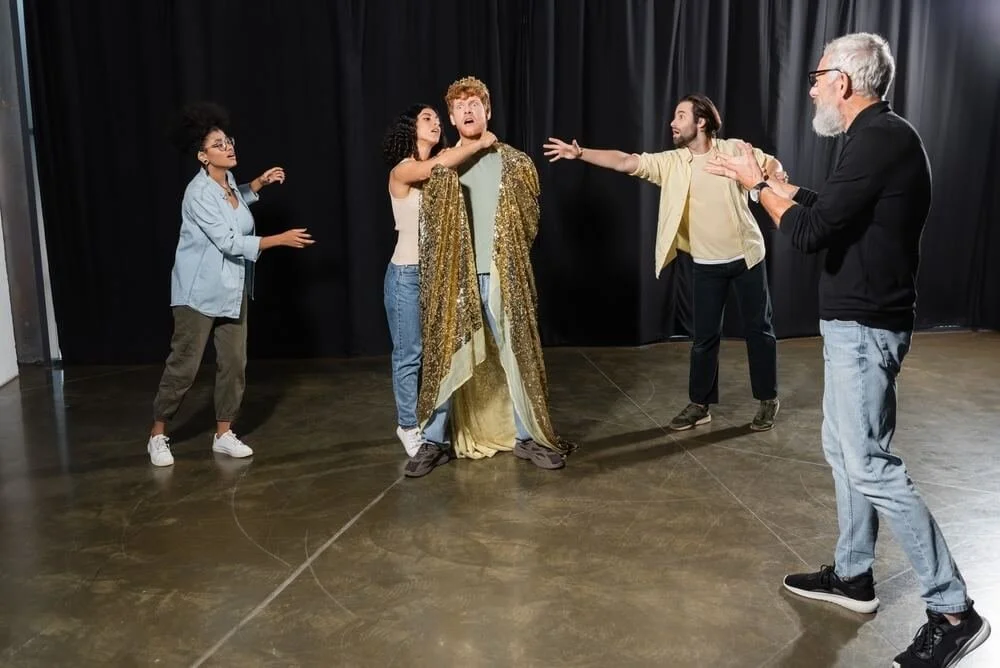
Performers are integrating new variables: where the light actually hits, how sound changes affect timing, how costumes alter movement, and how to keep storytelling alive while the show pauses and resets.
What fills the long days
If you are wondering what, exactly, makes a tech day feel like it contains three separate lifetimes, it is often a mix of:
- Spacing rehearsal on the actual stage
- Mic check and sound check, especially for musicals
- Fight call, dance call, or both
- Preset checks and prop tracking
- Notes sessions, then applying the notes
None of it is glamorous. All of it is what makes the show run like it has always lived there.
Common tech language
- Hold: Stop. Something needs to be addressed, often for safety or a technical fix.
- Reset: Go back to a starting point to try it again.
- Standby: A warning that a cue is coming soon.
- Go: Execute the cue now.
- Spike: A taped mark on the stage showing where something or someone should land.
- Preset: Props and set pieces placed before the run begins, like setting the table before the dinner party starts.
Tech week vs previews
Not exactly.
Tech week is often closed to the public and focused on building and tightening the technical and backstage structure of the show. Some theaters do invite a limited audience for a final dress, a donor event, or an early preview that still has a lot of “hold please” energy. Smaller companies sometimes blend tech and previews out of sheer necessity.
Previews are public performances that happen before the official opening. In previews, the audience is present, but the production can still change. Lines can be cut, scenes can be reblocked, and cues can be re-timed based on what the show reveals in front of a live crowd.
Different theaters use these terms differently, but the core distinction remains: tech is for integration and stability, previews are for learning the show in front of people.
How to support someone in tech
If you have a friend, partner, or roommate going through tech, the best gift you can give is reduced friction.
- Keep plans flexible. Call times shift. Holds happen. Notes run long.
- Feed them simply. Tech week appetite is real, and decision fatigue is too.
- Do not demand a review. They are still building the thing.
- Let them sleep. Tech is a marathon disguised as a series of sprints.
And if they say, “We stopped and started the same 45 seconds for two hours,” believe them. That is tech.
Tech week in one sentence
Tech week is the intense, necessary stretch where a theater company teaches a production how to run with lights, sound, scenery, costumes, and scene changes, so that when an audience finally walks in, the show can feel effortless.
FAQ
How long is tech week in theater?
It varies by production and venue, but many shows schedule several days to a week or more for technical rehearsals, often followed by dress rehearsals. Bigger shows and more complex designs can require additional time.
Do actors run the whole show during tech?
Sometimes, but not always at first. Early tech often uses cue-to-cue work, which skips around the script to concentrate on moments with lighting, sound, projections, or complicated transitions.
Why does tech week feel slower than regular rehearsal?
Because you are building repeatable precision. Every cue has to be timed, tested, and safe. The work involves many departments, so any change needs communication and confirmation across the whole team.
Is a 10-out-of-12 mandatory?
No. It is a scheduling option commonly used during tech in many professional settings because it creates a long workday with built-in breaks. Whether it happens depends on the theater, production needs, and the rules of the specific contract or agreement in place.