
I learned the word “turnaround” the same way a lot of us do: not from a class or a handbook, but from the look on a production coordinator’s face when someone asked, very politely, “So… when are we back tomorrow?” On film sets, language gets built out of necessity. Turnaround is one of those phrases that sounds casual until you realize it is a hard line between doing your job well and showing up dangerously exhausted.

If you are working background, turnaround is especially worth understanding because you might not be in the room when departments negotiate it. You just feel it in your body when the day ends late and the next call creeps early.
What turnaround means
Turnaround is the rest period between the time you are dismissed (released for the day) and the time you are required back at work for your next call.
In plain terms: it is your overnight reset. It is when you are supposed to travel home, eat, shower, decompress, sleep, and then come back ready to work safely.
Two key words matter here:
- Dismissal: the time production releases you. Not when the last setup finishes, not when you personally walk off set, but when you are officially told you are done.
- Next call: the time you are required to report. For background, this is usually the time on your call sheet, text, email, or voucher instructions.
Turnaround rules vary by union agreement, contract, region, and production standards. You will hear different minimums depending on the job. Typical rest windows are often in the 8 to 12 hour range, but the only number that matters is the one that applies to your booking.
One more reality check: background is often non-union, and even on union shows, the specific protections and penalties may not apply to every classification the same way. So treat “turnaround” as both a safety principle and a contract term. Sometimes you get both. Sometimes you only get the principle, and you still have to protect yourself.
What broken turnaround means
A broken turnaround (sometimes called short turnaround) happens when the time between dismissal and the next call is shorter than the required minimum under that production’s agreement or policy.
What does that mean for “the next day” in human terms?
- You might be asked to come back earlier than the standard rest window would normally allow.
- The production may need to adjust something, such as your call time or who is called first, to stay compliant.
- On some shows, broken turnaround triggers contractual penalties, often handled as a premium, a short-rest payment, or a “forced call” type situation. Whether you see any of that depends on the agreement and your classification, so clarify rather than assume.
There is also a practical reality: even when paperwork gets technical, a broken turnaround always feels simple. It is the moment you do the math and realize you will not have enough time to be a functioning person.

Why background should care
Turnaround is not a luxury perk. It is a safety concept that protects the entire set ecosystem, including background actors who often:
- Drive themselves to and from set, sometimes long distances
- Do not have the same access to quiet holding areas as principal talent
- Are asked to repeat physically demanding action, walking loops, or environmental work (rain towers, smoke, heat, cold)
- May not have predictable out times when scenes run late
If you are exhausted, your work shows up in tiny ways. Slower resets. Missed marks. Less focus when instructions change quickly. The better you understand turnaround, the better you can plan your life around the job and advocate for yourself calmly when something looks off.
Also, if you are a local hire with a long commute, tight turnaround hits harder. If production puts you up in a hotel, the “life math” changes, but you still want enough real rest to be safe and sharp.
How turnaround is counted
This is where people get tripped up, because real life and contractual language are not the same thing.
- On many productions, turnaround is counted from the official release time recorded on your voucher or timecard (or the time the AD department officially releases your group), not from when you get to your car.
- Commute time and personal reset time usually are not included in contractual turnaround calculations, even though they absolutely affect your ability to function.
- Background dismissal can get fuzzy if you are still doing required steps like costume return, paperwork, or being held for “check out.” If you are still under production’s control, you are not really off.
That is why I push for one simple habit: get a clear, recorded release time whenever you can.
Spot a too-short gap
Let’s keep this useful for background without turning your call sheet into a rate chart.
You do not need to memorize every rulebook to catch a potential short turnaround. You just need to identify three times and do one piece of arithmetic.
Step 1: Find your dismissal time
This might show up as:
- “Wrap” time communicated by ADs or BG PA
- A dismissal time written on your voucher
- A text message or email confirming you are released
If no one gives you a clear dismissal time, ask before you leave holding: “Just confirming, what time are we being dismissed?” That is not pushy. That’s professional.
Step 2: Find your next call time
For background, your next call details are often on:
- Your next day call text or email
- The call time written on the new voucher or paperwork you receive
- A message from casting or the background team telling you when and where to report
Step 3: Do the real-life math
Calculate the hours between official dismissal and call. Then do the part the schedule usually does not do for you: subtract commute and basic human recovery time. Your actual sleep window can be much smaller than the on-paper turnaround.
Quick example: Dismissed at 11:30 p.m., called at 6:00 a.m. That is 6.5 hours on paper. If you have a 45 minute drive home and a 45 minute drive back, you are down to about 5 hours before you have eaten, showered, and gotten your brain to power down. That is not a night of sleep. That is a scramble.
A background-friendly gut check: If you wrapped late and the next call is “early morning,” assume the gap is tight and look closely. Even if the on-paper gap is technically compliant, your real rest may be thin once you add travel and reset time.
Paperwork clues
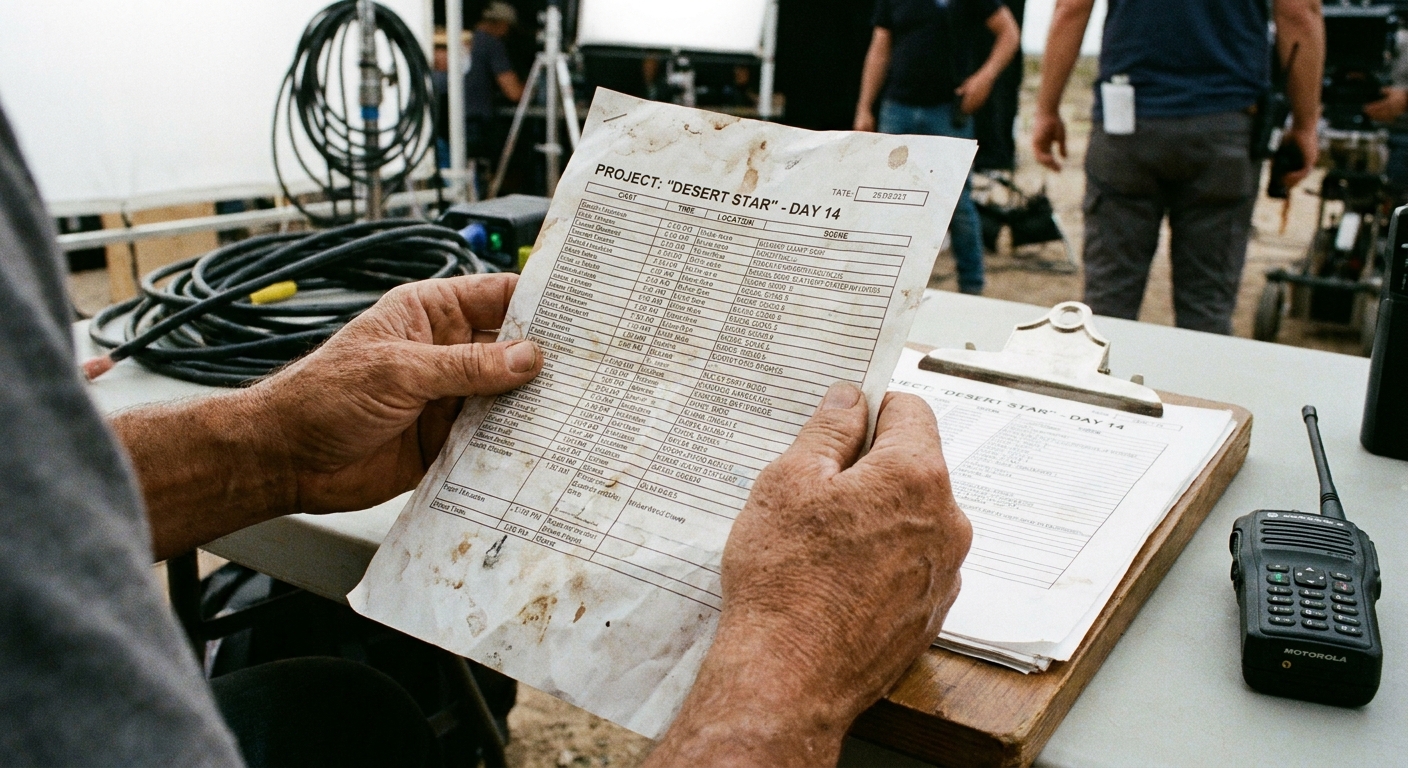
Background actors are often moving fast: wardrobe, hair, holding, set, reset, voucher, repeat. Here are subtle signs your turnaround might be shorter than you expect:
- A late voucher sign-out paired with an early report time. If your voucher time is near midnight and your call is around dawn, do the math immediately.
- “Tentative” call times that keep creeping earlier. If you are told “stand by for updated call,” treat your night as flexible and do not commit to anything that eats sleep.
- Multiple unit language. If you hear “splinter,” “second unit,” or “company move,” the schedule can shift quickly and squeeze rest.
- Location changes. A new location far from the prior day can turn an okay turnaround into a brutal one because the commute expands.
If it looks broken
There is a way to handle this that protects your reputation and your well-being.
Confirm, do not accuse
Start with a simple question to the person communicating your call:
- “I want to confirm my release time was 11:30 p.m. and my call tomorrow is 6:00 a.m. Is that correct?”
- “Can you confirm whether my call time accounts for the required turnaround on this show?”
This keeps the tone factual. You are not threatening anyone. You are asking for clarity.
Know who to ask
Different issues live with different people, and routing it right saves time:
- BG PA or background coordinator: best first stop for call times, holding logistics, and “is this message correct?” fixes.
- Casting (your BG casting contact): helpful if you are booked for multiple days and the call time shift impacts whether you can safely make it.
- 2nd AD or AD team (when appropriate): if you are on set and the timing problem is coming from schedule changes, the AD department is usually the one managing official releases and call timing.
- Payroll or timecards: if the question is “what time was I officially released on paper?” or you need a correction to a recorded time.
Ask about options
If the gap is truly too short, production may have choices that do not involve you playing hero:
- Adjusting your call time later
- Rebooking different background for the early portion
- Staggering call times so not everyone gets squeezed
Sometimes the fix is as simple as a typo in a mass text.
Be honest about safety
If you are too tired to drive safely, say so plainly. Sets run on logistics, and “I do not feel safe driving after a two-hour sleep window” is a legitimate statement. You are not being dramatic. You are preventing an accident.
One caution, because I have seen people worry about it: nobody wants to be labeled “difficult.” The best protection is the approach you see above, factual, calm, and safety-based, with receipts (screenshots of call texts, a photo of your voucher time, and so on).
Turnaround vs. overtime
These get mixed up because they both involve time, money, and tired people.
- Overtime is about how long you work beyond a standard workday.
- Turnaround is about how much rest you get between workdays.
You can have a day with overtime that still allows a healthy turnaround if the next call is later. You can also have a day without extreme hours that still breaks turnaround if tomorrow’s call jumps too early.
FAQ
Is turnaround counted from when I leave set or when I am dismissed?
Turnaround is generally based on your official release or dismissal time. For background, that is often the time recorded on your voucher or timecard, not the time you physically get home. Commute time typically does not count toward contractual turnaround, which is why your personal rest window can be much tighter than it looks on paper.
What if my call time changes overnight?
It happens. If the updated call compresses your rest window, respond quickly and calmly to confirm the new time and flag the tight gap. Keep screenshots of texts or emails so you can reference what was communicated.
Does turnaround apply to background actors?
The concept applies to everyone. The exact rule, and whether there are penalties or protections tied to it, depends on the production, region, and agreement governing the job. If you are unsure, ask your background contact how the show handles short rest periods for your classification.
Can I say no to a too-early call?
You can decline work, but how you do it matters. If the issue is safety or an unworkable rest window, communicate that directly and promptly. Professional, factual communication is your best friend.
The takeaway
Turnaround time is the rest gap between dismissal and your next call. A broken turnaround means that gap is shorter than what the production is supposed to provide, and it can turn tomorrow into a foggy, unsafe slog fast.
As a background actor, you do not need to turn your paperwork into a legal document. Track your release time, confirm your next call, do the hours-between math, and then do the real-life math too. If the gap looks too short, speak up early and keep it factual. Your body is part of your craft. Protect it like you would any piece of essential gear.