I grew up in Chicago backstage, where you learn early that every detail reads under lights. A shoelace, a hat brim, a smudge of eyeliner, a pair of glasses catching glare. Film and TV sets run on the same principle, only with higher resolution and a script supervisor (continuity) whose notes will catch what changed between takes.
So can tattoos or glasses keep you from working as an extra? Rarely in a “you’re not allowed” sense. But they absolutely affect what kinds of background roles you get called in for, and what the show might ask you to cover, remove, trim, or maintain once you are booked. And yes, once in a while there are hard no’s, usually because of time, continuity, or clearance.
The real answer: story world
Background casting is less about “perfect” and more about believable. Your tattoos, glasses, facial hair, piercings, and hair color are part of your casting type. Sometimes they are a problem to solve. Sometimes they are exactly what the scene needs.
Here are the three questions the team is quietly asking when they look at your profile photo:
- Time period: Are we in 2026 or a different decade?
- Character world: Is this a corporate office, a high-end gala, a military base, a fantasy tavern, or a gritty nightclub?
- Continuity and camera proximity: Are you deep background, featured background, stand-in/photo double territory, or near a principal actor where every detail will be visible?
Quick definitions for newer readers: “Background/extra” is general crowd work. “Featured background” is still non-speaking, but more specific and more likely to be seen clearly. “Stand-in” and “photo double” are precision jobs where matching and continuity matter a lot.
The closer you are to camera, the more likely those “little” features become a conversation.
Tattoos: rarely a dealbreaker
When tattoos can limit a booking
Visible tattoos can reduce your options for specific calls, especially when the show wants a neutral look, a controlled palette, or a different era. Common examples:
- Period work: anything set in earlier decades where modern ink would break the illusion. (The “cutoff” depends on the story, the region, the subculture, and the director’s taste.)
- Uniformed worlds: military, police, private security, or any setting where the background needs to read standardized.
- Family or kid-focused scenes: sometimes wardrobe aims for an intentionally “clean slate” background.
- Match-to-picture continuity: if you are playing the same patron across multiple days and the tattoo keeps appearing and disappearing with sleeves, weather, or costume changes.
When tattoos can help you book
Just as often, tattoos are a plus because they communicate a vibe without dialogue. Shows regularly need:
- Concert and festival crowds
- Nightlife and club scenes
- Street realism in contemporary dramas
- Gym, boxing, skate, or music worlds
- Specific subcultures where authenticity matters
If your tattoos are distinctive and visible, make sure your casting photos show them clearly in at least one image, and also include at least one more neutral option if you can.
What “cover it” means on set
If the show needs tattoos hidden, you will usually be told one of three things:
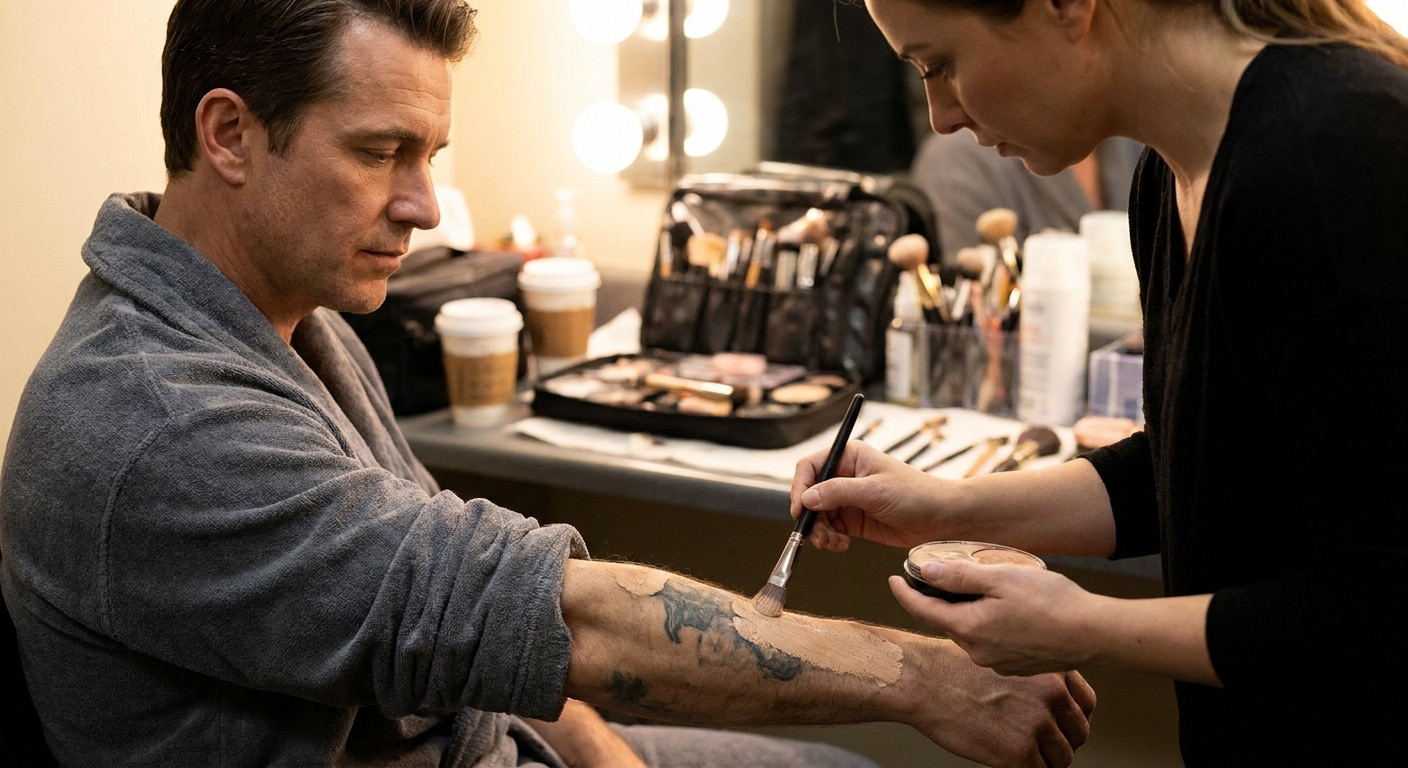
- Wardrobe cover: long sleeves, higher necklines, tights, gloves, or costume pieces designed to block ink.
- Makeup cover: body makeup applied by the makeup department, sometimes sealed for durability.
- Bring options: you may be asked to arrive with multiple tops so wardrobe can choose what hides what.
One practical note from watching crews move at lightning speed: tattoo cover takes time. If you have extensive ink and you are booked as “featured background,” arrive early, be patient, and do not apply lotions or oils right before makeup unless you were instructed to, especially on the area that needs to be covered.
Glasses and contacts
Do you have to take them off?
Not always. Plenty of sets are perfectly happy with glasses in background. But glasses can create two on-set complications:
- Lens glare and reflections from key lights, monitors, or windows. This gets more sensitive the closer you are to camera.
- Continuity if glasses come on and off between takes or days.
If you wear prescription glasses, it helps to have a plan before you get booked: can you comfortably wear contacts for long hours, or do you have a backup pair of frames with non-reflective lenses?
When the team prefers contacts or different lenses
You are more likely to be asked to switch out of glasses if you are:
- In a scene with heavy lighting and your lenses keep catching reflections.
- Placed near the principal action where the camera will notice anything flashing.
- Playing a defined repeat role (server across multiple setups, receptionist, nurse in a corridor) where continuity gets tight.
Important: do not show up with colored contacts, special-effect lenses, or brand-new contacts you have never worn before. Background days are long, and irritation is nobody’s friend.
A safety note (this matters)
Do not work without the vision correction you need to be safe. Sets have cables, stairs, low light, moving vehicles, and crowded scenes. If you cannot safely do the job without glasses, say so. Casting and wardrobe can usually work around glare. Nobody can work around an injury.
When glasses help you get hired
Glasses can be a casting shortcut for “real life.” Think:
- Office, classroom, library, lab
- Tech workplace scenes
- Medical or administrative environments depending on styling
In other words, glasses can help you read as specific and believable, which is often exactly what background needs.
Facial hair: continuity trap
Facial hair is one of the biggest “small” issues in background casting because it changes quickly and is hard to match across days.
When you might be asked to shave or keep it
- If you are booked for multiple days: the show may ask you to keep your beard at the same length. Sometimes they will specify “clean shaven throughout.”
- If the project has a uniform look: certain workplaces or period styles may require a specific grooming standard.
- If you are upgraded to featured background: they may need you to match a look established in earlier scenes.
If you are actively changing facial hair
Be honest in your paperwork and with casting. If you are two weeks into a mustache journey, say so. It is better to be released from a fitting than to break continuity after the show has built your look into the scene.
A good rule of thumb: if you accept a multi-day booking, treat your face like part of wardrobe. Do not change it without permission. Some productions will even have you confirm in writing that you will not alter hair or facial hair during a run.
Piercings, hair color, other features
These traits live in the same category as tattoos and facial hair: not a ban, but a factor.
Piercings
Visible facial piercings are often fine in contemporary settings, but you may be asked for clear retainers or removal for:
- Period work
- Uniformed roles
- High-end formal scenes where the background palette is intentionally classic
Hair color and cuts
Bold hair colors can be an asset in the right world and a conflict in others. If you have neon hair and the call is for “suburban PTA meeting,” you can still be hired, but you might be steered to a different zone of the background or asked to wear a hat, wig, or styling that tones it down.
Braces, distinctive teeth, cosmetic work
These typically matter only when you are close enough to camera for it to read, or when the show is matching you to a specific established look. If you just got braces, update photos. If you are getting them off next month, note that too.
Protect yourself: accurate and flexible
Update photos and notes
Background casting moves fast. Your photos and measurements are your handshake. Make sure you have:
- At least one clear, current headshot-style photo
- At least one full-body photo that reflects your present look
- Notes on visible tattoos (location, approximate size, and whether any are on hands, neck, or face)
- Notes on piercings and whether you can use retainers
- For glasses: whether you can wear contacts, whether your lenses are anti-reflective, and whether you have a spare pair
- Recent grooming status if it is a major change (new beard, shaved head, dramatic haircut)
Bring options, do not surprise wardrobe
Flexibility is great. Surprise is not. If you are going to show up with a new face piercing, a fresh hand tattoo, or a radically different hair color from your submitted photos, update casting before you arrive.
Keep receipts (the useful kind)
If someone from casting, wardrobe, or the AD team approves a change, save the email or text. For multi-day runs, I also like taking a quick dated selfie at wrap so I can match facial hair, hair part, and general look the next day.
Do not make permanent changes for a day rate
This is my gentle, seen-it-too-many-times reminder: do not get a tattoo removed, bleach your hair, or shave a beard you love because you think it will make you “more bookable.” Background work is a volume business. Your job is not to become generic. Your job is to be reliably castable with the look you have, and transparent about what can change.
Why they ask you to cover things
If you are asked to alter something, it is usually for one of these reasons:
- Story continuity: matching across multiple shoot days or matching earlier episodes and scenes.
- Legal and clearance concerns: tattoos that include recognizable logos, trademarked characters, or readable text can raise flags. This varies a lot by network, streamer, and risk tolerance.
- Camera and lighting: reflections on glasses, shiny jewelry, or anything catching light unexpectedly.
- Period accuracy: modern details that break the illusion.
If a tattoo includes a brand, a famous character, or a slogan, do not try to guess whether it is “allowed.” Flag it. Wardrobe and production will decide the safest fix, which might be coverage, makeup, or in some cases a different placement. Blur or VFX happens sometimes, but it is usually not the plan for everyday background.
Make your look work
The secret is that background casting is not a beauty contest. It is a puzzle. They need faces and bodies that feel like a real world, and they need them to be manageable for wardrobe, makeup, and continuity.
If you have visible tattoos, glasses, a beard, or any distinctive feature, you can absolutely work. You may simply work more in some types of projects than others. The goal is to present your current look accurately, communicate what is flexible, and show up ready to help the day run smoothly.
Think of your tattoos, frames, and grooming choices as part of your costume kit. Not something to apologize for, and not something to hide from casting.
Quick FAQ
Will tattoos keep me from being an extra?
In most markets, no. They can reduce your eligibility for some period or uniformed calls, and sometimes a specific show will pass if they cannot spare the cover time. But tattoos can also help you book contemporary roles.
Should I hide tattoos in my casting photos?
No. Show your real look. If you can photograph both options, one photo with visible tattoos and one in long sleeves gives casting flexibility without misrepresenting you.
Can I work as an extra if I wear glasses and cannot wear contacts?
Yes. You may be placed farther from camera for glare reasons, or casting may favor roles where glasses make sense. Be clear that you cannot do contacts so the team can plan, and do not compromise your safety by going without vision correction.
Can I change my beard between shoot days?
Not without permission. If you are booked for multiple days, keep your facial hair consistent unless the show tells you otherwise.
Do piercings disqualify you?
Almost never. You may be asked to remove them or use clear retainers for certain settings, especially period work or uniformed roles.