I have watched plenty of days on set where the most dangerous thing in the room was boredom. And then, in a blink, a “simple” background moment becomes a slip on a wet sidewalk, a bumped head under a low lighting stand, or a shoulder twinge from doing the same reset twenty times. Extras are hired to help build the world, not to take risks for it. If you get hurt on set, you deserve medical attention, clear documentation, and a process that protects you.
This guide walks you through what to do as a film or TV extra if you get injured: who to tell first, what paperwork to ask for, which medical notes to keep, and how workers’ compensation often applies when you are on payroll.
First: get safe and get help
Before you worry about forms or whether you are slowing down the day, take care of your body. Background work can make people feel replaceable. Your health is not.
If it is urgent
- Call 911 or ask someone to call if you have chest pain, trouble breathing, heavy bleeding, loss of consciousness, severe head/neck/back pain, confusion, or symptoms that feel scary or rapidly worsening.
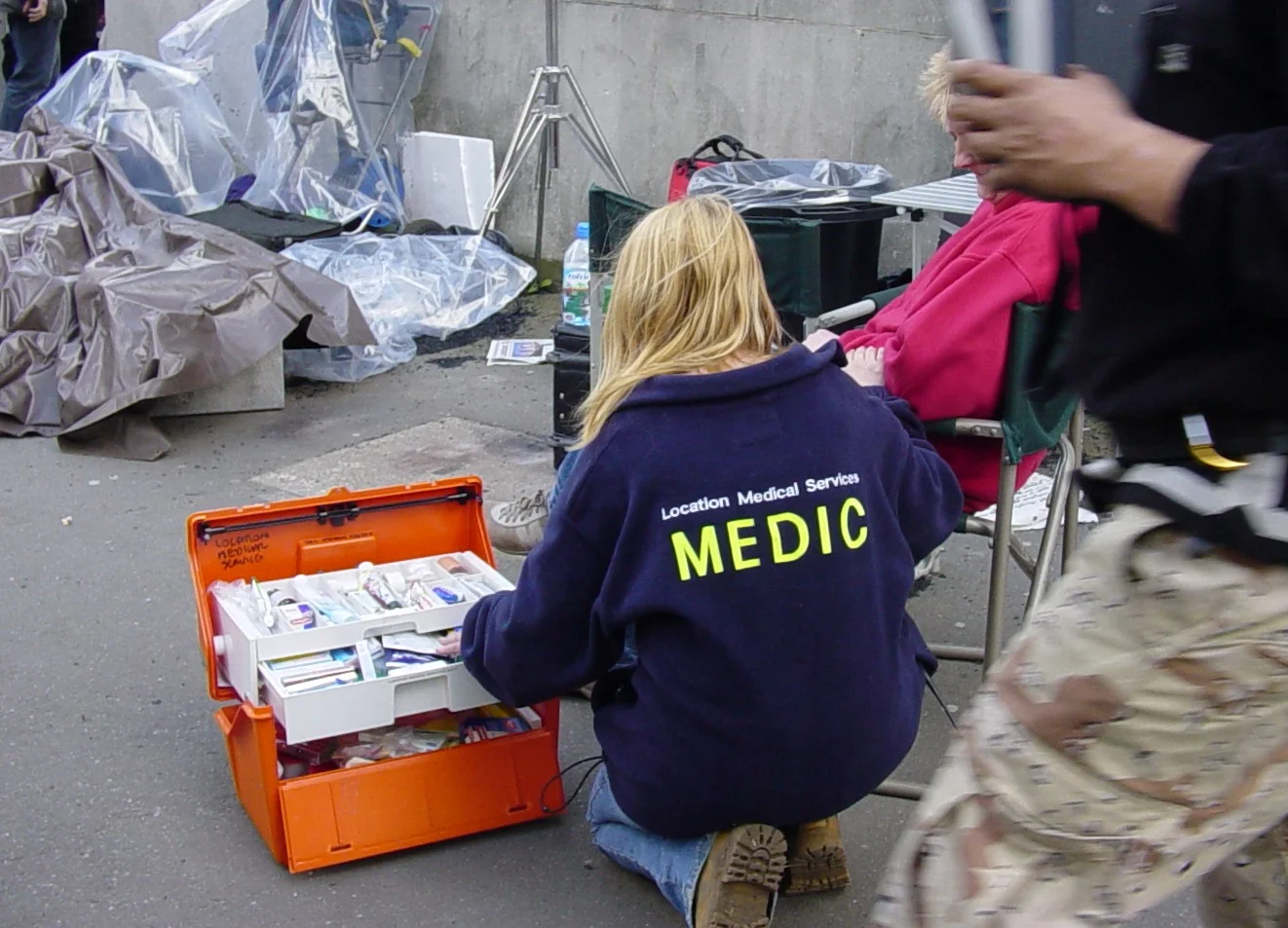
- Tell a crew member to get the set medic if one is present. Many productions have a medic, EMT, or paramedic on standby, especially on larger shoots or stunt-heavy days.
- Do not “walk it off” if you hit your head, twist a knee, or feel numbness or tingling. Adrenaline and embarrassment are powerful liars.
If it is not urgent but you are hurt
Step out of the flow and tell the background PA or AD you need to step aside due to an injury. Even something that feels minor can flare later.
Who to tell first
Reporting early matters for both safety and workers’ comp. If you only tell a friend in holding and go home, you are making everything harder later.
- Tell your immediate on-the-ground lead: usually the assistant director (AD) team or the background PA managing you.
- Ask for the set medic (if present) and request an evaluation, even if it feels “small.”
- Make sure production is notified. Depending on the set, that might be the 2nd AD, production coordinator, or a production manager.
- Tell your background casting contact (the casting office or the extra service) once you are stable. They may not handle medical care, but they should know you were injured on a booked day and that production has been informed.
If you are unsure who to talk to, say this plainly: “I was injured during the workday and I need to report it and get medical attention. Who is the person handling incident reports?”
File an incident report
Most productions have a procedure for workplace injuries. The names vary, but you are generally looking for an incident report, injury report, or accident report.
Also, reporting timelines can be strict in some places. The earlier you report, the cleaner your record will be.
What to include
- Date and time of the injury.
- Exact location (soundstage number, address, street corner, specific set area).
- What you were doing as directed (for example: “crossing picture as background pedestrian,” “exiting a bus on cue,” “standing on wet pavement during rain bars”).
- What happened, described simply and accurately.
- Names and contact info of witnesses (other BG, PA, crew).
- Any immediate care provided (ice pack, bandage, medic evaluation, ambulance).
- Any equipment or hazard involved (cable ramp, uneven curb, prop furniture, wet floor).
Be honest and specific. You are not writing a dramatic monologue. You are creating a clear record.
Get copies or photos
Ask for a copy of the completed report. If they cannot provide one on the spot, take a clear photo of each page you sign, or write down the report number and the name and title of the person who took it.
Document it like a pro
This is the unglamorous part, but it is where so many workers’ comp claims either get smoother or get stuck. Keep your own records in addition to production’s paperwork.
What to capture that day
- Photos of the area where you were hurt (wet patch, uneven surface, cable run, stairwell), if it is safe and permitted. If you are told you cannot photograph, write a detailed description immediately.
- Photos of visible injuries (bruises, cuts, swelling) in good light.
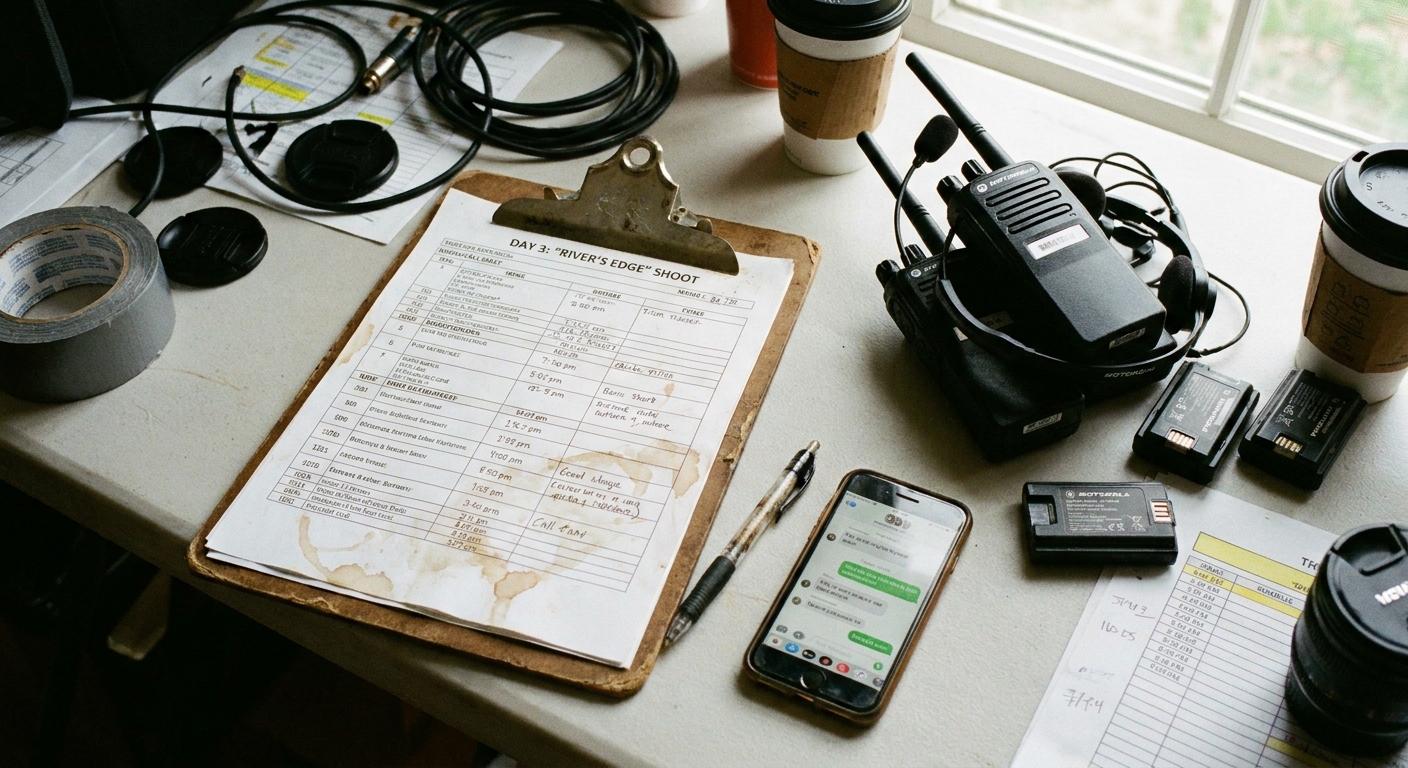
- Your call sheet or voucher details: production title, date, call time, location address. If you have a call sheet or a digital voucher, take a quick photo or screenshot.
- Names: the BG PA who supervised you, the AD you reported to, the medic’s name, and anyone who witnessed the injury.
- Timeline notes on your phone: when it happened, when you reported it, what care you received.
If your injury worsens later that night, add a new note with the time symptoms changed. Consistent timelines help doctors and claims adjusters.
Medical care
Getting checked out is not being “difficult.” It is being responsible, especially when injuries can evolve after you leave set.
If you see the set medic
Ask for the medic’s name and credentials, and ask that your visit is entered into the medical log with the date and a brief description of what happened. Some medics cannot provide written notes directly to performers for privacy and liability reasons, so if you cannot get paperwork in hand, ask production who can provide confirmation that the visit was logged.
If you go to urgent care or the ER
- Tell them it is a workplace injury on a film/TV set.
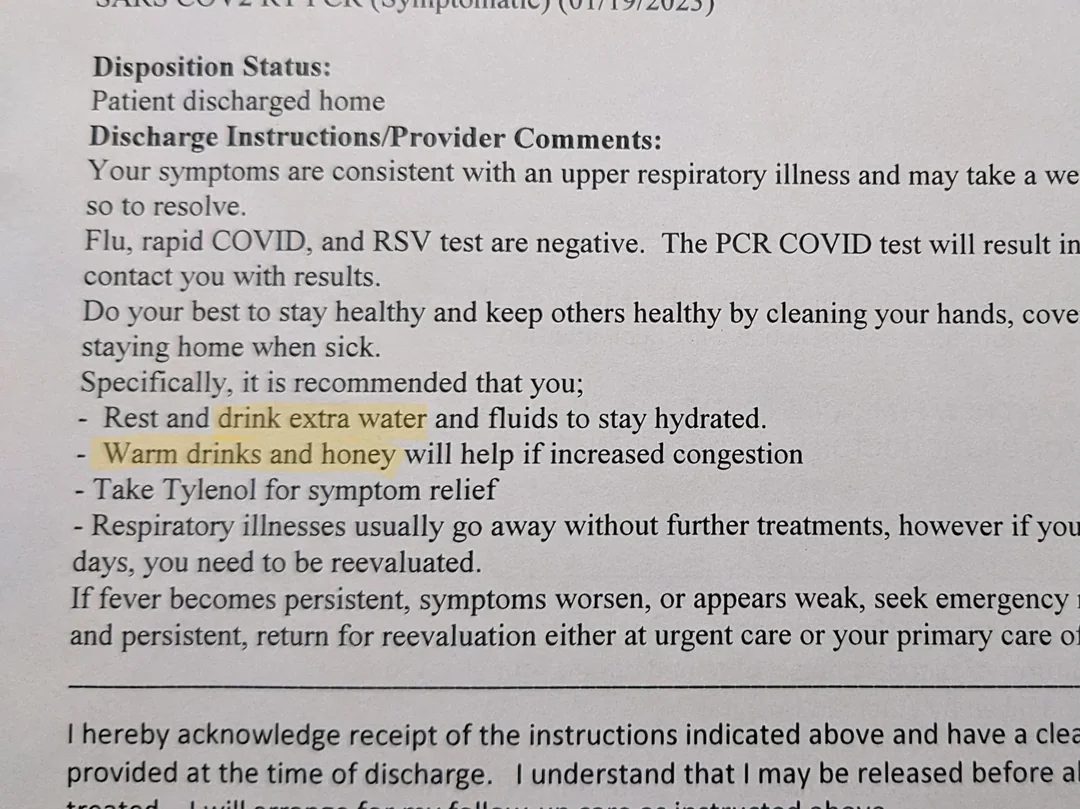
- Keep all discharge papers and aftercare instructions.
- Request a work status note that lists restrictions (no lifting, limited standing, no running, etc.) and dates.
- Keep receipts for prescriptions, braces, crutches, co-pays, and transportation if applicable and if covered or approved under the claim.
Medical notes to save
- Doctor or provider notes
- Imaging reports (X-ray, MRI) if done
- Physical therapy referrals
- Restrictions and return-to-work notes
- Any follow-up appointment summaries
Make a folder in your phone and email yourself the key PDFs and photos. If you ever need to forward documents, you will be grateful you did.
Workers’ comp basics
In many cases, if you are hired as a payroll background actor for the day, you are treated like an employee for that job, and workers’ compensation is often the system that covers on-the-job injuries. Eligibility and process can depend on your location, your work classification, and the production’s coverage, so treat this as general information, not legal advice.
Signs you were on payroll
- You filled out onboarding paperwork (often including tax forms) through a payroll company.
- You were told you would be paid via check or direct deposit from payroll, not cash.
- You were given timecards or had your time tracked formally.
What workers’ comp can cover
Coverage differs, but workers’ comp commonly includes:
- Medical treatment related to the injury
- Temporary disability payments if you cannot work for a period of time and meet eligibility requirements
- Follow-up care such as physical therapy when approved
Workers’ comp also tends to come with rules about where you can get treatment and how referrals work. In some places, the employer directs initial care through an authorized clinic or network unless it is an emergency. That is why reporting quickly and getting the correct claim information matters.
What to ask production for
- The workers’ comp insurance carrier name
- The claim number (if already opened) or instructions for opening one
- A contact person at production or payroll who handles claims
- Any required medical provider network information (if applicable in your area)
If you are told “just send us your bill,” push politely for the workers’ comp process. A bill reimbursement conversation is not the same as an opened claim.
If you were paid cash or on a 1099
Do not assume you are out of options, but understand it can get messier. Ask in writing who the responsible employer is for injury reporting and what coverage applies, and keep documenting the same way. If you are unsure, the payroll company, production office, or a local workers’ comp agency can often clarify next steps.
Union and location notes
This article reads U.S.-leaning because film sets in the U.S. often use 911 and workers’ comp. If you are in another country, the concept is similar, but the system and terminology change.
- SAG-AFTRA versus non-union: paperwork and reporting channels can differ, but the basics do not change. Report immediately, get care, and document. If you are working under a union contract, you may have additional reporting resources available through the production and your union.
- State or province rules: some jurisdictions have strict deadlines for reporting and for filing forms, plus specific rules on authorized treating clinics.
Keep injury and pay separate
When you are injured, the priority is: report, document, treat, and preserve your paperwork.
Questions about background actor rates, overtime rules, and whether you are treated as W-2 or 1099 can matter, but they are separate issues from the immediate injury report. If you want to go deeper on those topics, use a separate pay and classification guide so you can stay calm and thorough when the day is already stressful.
If production is dismissive
Most AD teams want everyone safe and documented. Still, sets are busy and sometimes the response you get is rushed or minimizing. If that happens, stay firm and specific.
Use clear language
- “I need to file an incident report for a workplace injury.”
- “I am requesting medical evaluation.”
- “Please tell me who the workers’ comp contact is for this production.”
Escalate appropriately
If a PA brushes you off, ask for the 2nd AD or production office. If you still cannot get traction, contact the payroll company listed on your onboarding materials and your background casting office to notify them that an injury occurred and you attempted to report it.
Keep your tone professional. You are building a record, not a feud.
Be careful what you sign
In the scramble after an injury, you may be handed paperwork that is not just an incident report.
- Do not sign anything you do not understand. Ask what it is, take your time, and request a copy.
- Be cautious with waivers or releases. If someone pressures you to sign something that sounds like you are giving up rights or blaming yourself, slow it down. Ask for a copy and consider getting advice before signing.
What not to do
- Do not wait until wrap to mention it if you are hurt midday.
- Do not diagnose yourself on the spot and downplay head, back, or joint injuries.
- Do not leave set without telling anyone. If you need to leave for medical care, make sure the AD team and production know.
- Do not sign anything you do not understand. It is fine to ask for clarification and a copy.
- Do not rely on a verbal promise that “production will take care of you.” Get names, claim info, and paperwork.
Follow up within 24 hours
Even if everything felt handled on set, do a quick follow-up while details are fresh.
- Email or message the production contact you were given (or the production office) summarizing: date, time, where the injury happened, and that you filed an incident report.
- Ask in writing for workers’ comp carrier and claim information if you do not already have it.
- Save all replies in a single email folder.
If symptoms worsen, seek medical care and update the claim contact. “It got worse overnight” is common, especially with soft tissue injuries and concussions.
FAQ
What if I was hurt during a stunt or something risky?
If you were asked to do anything that felt like a stunt, a fall, running near hazards, interacting with vehicles, or anything outside normal background business, report the injury immediately and make sure your incident report accurately describes what you were directed to do. Do not let anyone reframe it later as “they chose to.”
What if I got hurt in holding, not on camera?
If it happened during your workday while you were where production directed you to be, report it the same way. Slipping on a holding room floor or tripping over a bag in a crowded hallway still matters.
Can I be fired for reporting an injury?
Retaliation rules depend on local law and the facts of the situation, and productions can always choose not to rehire someone for many reasons. Many jurisdictions do prohibit retaliation for reporting a workplace injury. Still, you should not stay silent about an injury out of fear. Your best protection is prompt reporting and clean documentation.
Should I use my own health insurance?
If you have urgent medical needs, get care. For payment and claims, workplace injuries are often routed through workers’ comp when you were on payroll. Ask production for the workers’ comp carrier details and claim process so you are not stuck guessing later.
The backstage truth
I grew up around stages where the magic looked effortless from the house, but the people backstage knew exactly which corners were sharp, which cables were loose, and why you never ignore a “little” fall. Film sets are no different. Background actors are part of the machine that makes the story sing, and workplace safety applies to you, too.
If you get hurt: tell the AD team, get medical attention, file the report, and keep your documents. The goal is not drama. The goal is care, clarity, and a paper trail that protects you long after the final take.