The first time I wandered onto a professional set as a young arts writer, I clocked the lights, the cables, the hush before “roll”… and then I clocked the table. A folding oasis of bananas, granola bars, coffee, and something neon in a cooler that looked like it could revive a Victorian ghost.
That table is usually craft services, lovingly shortened to “crafty.” And if you are new to film and TV work, especially as a background actor, understanding what crafty is (and what it is not) will make your day smoother, calmer, and honestly a lot less hungry.
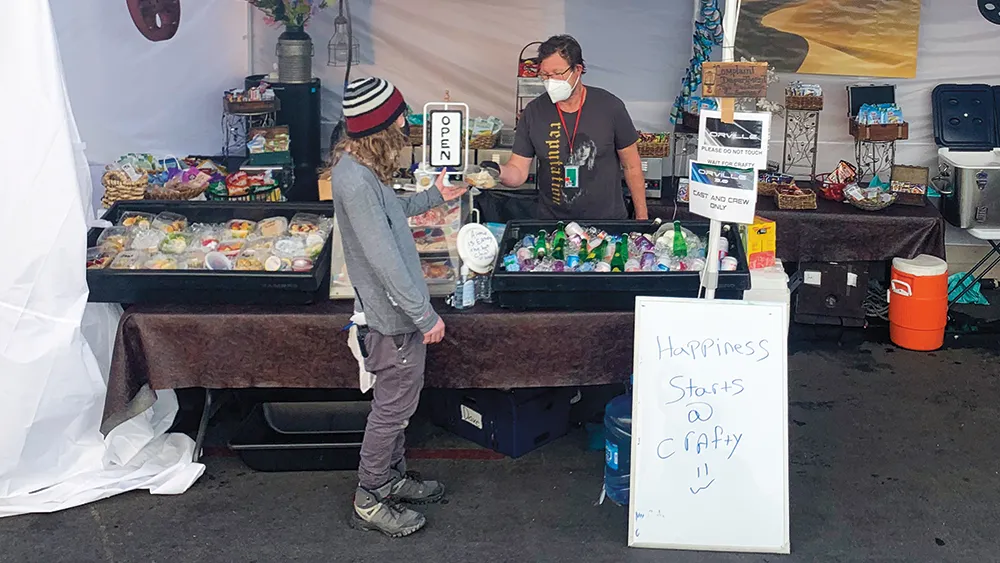
Craft services, defined
Craft services is the snack and beverage setup that supports the workday between meals. It is there to keep cast and crew steady through long stretches when the work cannot pause for a full break.
In practical terms, crafty is usually:
- Self-serve, with quick grab-and-go items
- Available most of the day, with exceptions during moves, resets, security restrictions, or when the location simply will not allow it
- Stocked for speed, meaning easy-to-eat foods that do not require a plate, utensils, or a long sit-down
You will often find crafty near basecamp (the cluster of trailers, tents, and support vehicles) or in holding. On some shows there is also a smaller setup closer to set, sometimes called a satellite crafty, so people are not trekking back and forth between takes.
Craft services vs catering
People mix these up constantly, and the difference matters.
Craft services is snacks and drinks
Crafty is about between-meal support. Think of it as the set’s pantry and hydration station.
Catering is meals on breaks
Catering provides full meals served at designated meal times. That is typically when you will see a hot line, buffet setup, or boxed meals with more substantial options and sides.
To put it simply: craft services helps you get through the scene. Catering helps you get through the day.
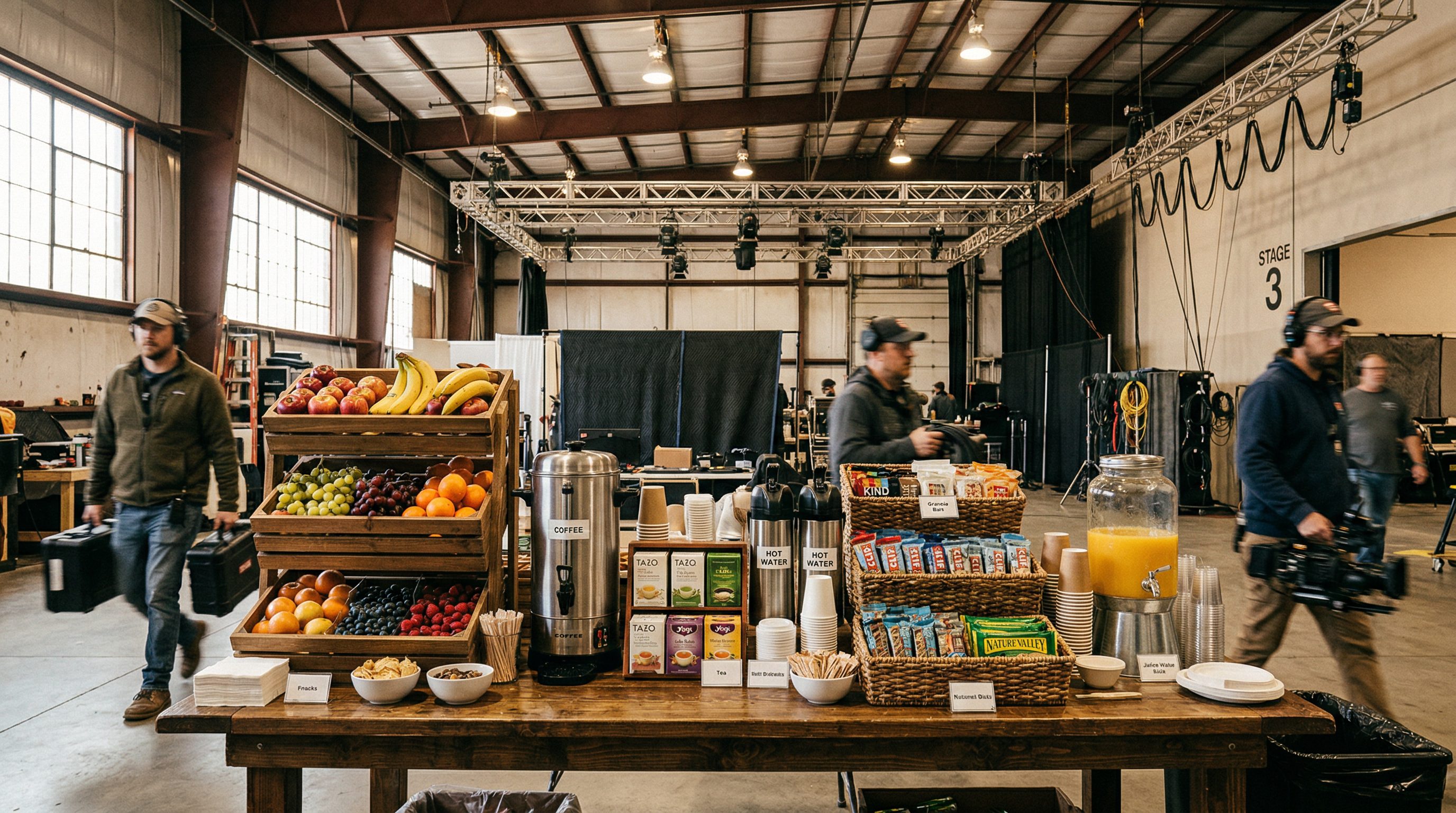
What you will see at crafty
Every production is different, but crafty tends to follow a familiar rhythm, balancing sugar, salt, and caffeine like it is conducting an orchestra.
Drinks
- Coffee and tea (often with multiple sweeteners and milk alternatives)
- Water (bottled, canned, or big dispensers)
- Sports drinks or electrolyte mixes
- Sodas or flavored sparkling water
- Hot chocolate in colder weather, iced coffee in hotter weather
Snacks
- Fresh fruit (bananas, apples, oranges)
- Granola bars, protein bars, trail mix
- Chips, pretzels, popcorn
- Cookies or small pastries
- Yogurt, string cheese, hard-boiled eggs (when there is refrigeration)
- Instant oatmeal, ramen cups, or soup packets on longer days
Quiet lifesavers
Some crafty setups also include items that save the day in small, unglamorous ways:
- Sunscreen or hand warmers, depending on weather
- Basic over-the-counter items sometimes available from crafty, depending on rules and liability. Do not assume they will be there.
- Napkins, hand sanitizer, wet wipes
- Toothpicks or mints
It is less “gourmet picnic” and more “strategic morale management.” And when you have been under hot lights for hours, a cold orange slice can feel like cinema’s greatest special effect.
What background can expect
If you are working background, your relationship to crafty and catering depends on the production’s layout, schedule, and how they manage holding.
Craft services and background
On many professional sets, background performers do have access to craft services, especially when holding is near basecamp. You might be directed to a specific crafty station for background, or you might share the main one with crew.
What you can generally expect:
- Snacks and non-alcoholic drinks you can grab quickly
- Rules about timing, like only going during certain windows so you are not missing a check-in or a call to set
- Practical limits, like taking what you need and not stocking up for later
Also, if a set is busy, cramped, or supply is limited, you may be asked to wait while crew cycles through first. It is not personal. It is just triage in a place where time is always on fire.
If you are unsure, ask the background PA or the person running holding. They would much rather answer a quick question than hunt for you when the assistant director needs you on set.
Meals for background
Background actors are often fed on professional productions, but how can vary by budget, region, and contract. Non-union and ultra-low-budget shoots can be especially inconsistent, which is why it is always smart to read your voucher or call sheet notes and ask at check-in if you are unclear.
- You may be served a catered meal during the main meal break.
- You may receive a boxed meal or be directed to a separate line or time window.
- In some situations, meal service for background is organized through holding so the set stays orderly.
The key thing to know: catering is scheduled. Crafty is the in-between support system.
Crafty etiquette
A craft services table is a small, sacred social contract. Follow the vibe, and you will be everyone’s favorite kind of professional: the kind who does not create extra work.
- Wash or sanitize your hands before grabbing food, especially from shared bins.
- Use the tongs or scoops provided. Do not reach into open containers, and do not “double dip.” If there are no utensils, choose packaged items.
- Keep it quick. Crafty is a pit stop, not a brunch reservation.
- Do not hover in front of the table. Grab, step aside, let others in.
- Ask before taking something special. If there is one lone sandwich or a clearly labeled item, it may be intended for a specific need.
- Stay wardrobe-safe. If you are in costume, be mindful of messy snacks, powders, and sauces.
- If you have allergies, stick to sealed, clearly labeled items and do not gamble on unlabeled bins.
And yes, you can usually take a water for later. Just do not treat crafty like you are packing for a hiking trip.
Why crafty matters
In production, we love to mythologize the “magic hour” on set. But the truth is, filmmaking is endurance art. Craft services is one of the quiet systems that protects that endurance.
It helps:
- Keep energy steady during long takes, resets, and lighting changes
- Prevent dehydration under hot lamps, in cold exteriors, or in dry studio air
- Support focus and mood, which sounds fluffy until you have seen what low blood sugar does to a 4 a.m. call time
It also signals something cultural about sets at their best: a recognition that people are not machines, even when the schedule wishes they were.
Quick FAQ
Is craft services free?
On a production, craft services is generally provided to support the workday. Access can vary by set rules and where you are positioned, especially for background, so follow what your background team tells you.
Do I need to bring my own food?
It is smart to bring a small backup snack and any specific dietary essentials, especially if you have allergies or restrictions. Many sets provide both crafty options and a meal, but not every job is generous, and moves or delays can make a long day longer.
What if I have dietary restrictions?
Let the background coordinator or holding PA know early, ideally at check-in. Some sets can accommodate, and some will direct you to labeled options. When in doubt, choose sealed, clearly labeled items.
Why is it called “craft services”?
It is long-standing industry terminology for the department that provides on-set refreshments separate from catered meals. Most people just say “crafty,” and the exact origin is more tradition than trivia most crews spend time debating during a company move.