
When people talk about “the creator” of a TV show, they are often picturing the person who dreamed up the premise. When industry folks talk about who’s running the show, they mean the showrunner.
I grew up in Chicago around rehearsal rooms and scene shops, where the boss was obvious. Someone had the clipboard, knew what needed to happen next, and kept the whole machine moving without killing the mood. Television has that person too, even if you never see them on camera. On most scripted series, that person is the showrunner.

Showrunner definition
A showrunner is the lead creative executive of a television series. In plain terms, they are the person who runs the show day to day, steering the writing and making the final creative calls that keep the series feeling like one coherent vision.
Most showrunners come up through writing. In U.S. scripted television, the showrunner is often also the head writer, and typically holds a senior title like executive producer. Some series have co-showrunners who split the load, especially on big, fast-moving productions.
Quick way to remember it: A director leads the creative execution of an episode. A showrunner leads the creative continuity of the series.
What a showrunner does
The job changes depending on budget, network, and how hands-on the studio is, but showrunners typically sit at the intersection of story and production reality. They are responsible for delivering a season that feels like one consistent show, even when dozens or hundreds of people touch it.
Leading the writers’ room
In the writers’ room, the showrunner sets the creative north star and keeps everyone writing toward it. That includes:
- Breaking season arcs and mapping character journeys
- Assigning episodes to staff writers
- Giving notes on outlines and drafts
- Tracking continuity across episodes
- Protecting the show’s voice, whether it is cozy, bleak, surreal, or laugh-out-loud
Even on shows with a strong room culture, the showrunner is usually the person who decides what makes it onto the page when opinions collide.
Keeping the show’s rules consistent
Every good series has internal rules. How fast do jokes land? How graphic can violence be? Is the camera style intimate or glossy? Are we grounded in realism, or do we bend reality for emotional truth?
The showrunner maintains those rules so the series does not feel like a different show every episode.
Making key production calls
A showrunner’s influence extends far beyond the script. Depending on the series, they may approve or heavily weigh in on:
- Casting, including leads, recurring roles, and key guest actors
- Directors hired for episodes
- Episode order and how story is distributed across the season
- Edits, including what gets trimmed for time and pacing
- Music choices when they shape narrative identity
- Design choices that affect the show’s look and feel, like sets, costumes, and locations
- Reshoots and story fixes when something is not working
Balancing ambition with time and budget
One of the least glamorous parts of showrunning is translating creative wants into a schedule that can actually be shot.
If an episode draft calls for a car chase, a rainstorm, a crowd scene, and a new location every page, the showrunner is often the person saying, “Okay, what is the emotional point of this sequence, and what is the smartest way to achieve it with the resources we have?”
Who a showrunner answers to
Even when a showrunner has enormous creative authority, they do not work in a vacuum. Most showrunners answer to a mix of:
- The network or streamer (the buyer and brand steward)
- The studio (the producing entity managing business and long-term strategy)
- Executive producers who may be attached for financing, talent, or creative reasons
- Sometimes a high-profile creator if the showrunner is hired to execute someone else’s concept
That means the showrunner is both a creative leader and a translator, turning notes, standards, and business constraints into something that still feels like art.
What a showrunner approves
Approval power varies, but showrunners are commonly the last creative stop on choices that affect story clarity and series identity. Often, they approve:
- Final scripts (or the version that goes to production)
- Story changes made during production
- Cuts of episodes, including pacing and structure
- Performance adjustments when something needs to better match the show’s tone
- Season-wide continuity, so character behavior tracks from episode to episode
Final cut and ultimate sign-off can still depend on the deal. On some shows, the network, streamer, or studio keeps meaningful approval rights, especially on episode cuts and major creative swings.
Think of the showrunner as the keeper of the series bible, even if that bible is partly living in their head.
Showrunner vs. director
Film teaches audiences to treat the director as the singular author. Television is built differently, especially in the U.S. model: a series is usually writer-driven. Directors may rotate episode to episode, while the showrunner remains constant.
Director (typical TV reality)
- Hired for one episode or a small batch
- Leads the episode’s creative execution within the established tone and visual language
- Works with actors and department heads to shoot the episode
- On set, the 1st assistant director typically runs the schedule and set operations while the director focuses on creative choices
- Often has limited involvement in post beyond their director’s cut, depending on the show
Showrunner (series reality)
- Responsible for the whole season and the long view of the series
- Sets story priorities and creative standards
- Supervises writing and major production decisions
- Ensures the finished episode fits the series, not just the day’s shoot
So if you watch two episodes directed by two different people and they still feel like the same show, that consistency is usually the showrunner’s handiwork.
Showrunner vs. creator
A show’s creator is the person credited with originating the concept and often writing the pilot. Sometimes the creator is also the showrunner. Sometimes they are not.
Especially with big IP, first-time creators, or complex productions, a studio may hire an experienced showrunner to run day-to-day operations while the creator stays involved creatively.
In credits, you might see multiple executive producers. The one who is actually showrunning is usually the person doing the weekly grind: scripts, cuts, production calls, and constant triage.
If you want a quick real-world anchor, many viewers recognize names like Shonda Rhimes as a showrunner credit, even though plenty of series are run by quieter, less-public-facing showrunners you only notice once you start reading the end cards.
Showrunner vs. cast billing
One of the most common mix-ups I hear is treating “showrunner” like a kind of billing or on-screen rank. It is not. Showrunner is a job. “Series regular,” “guest star,” and “co-star” are acting contract and billing categories, and details can vary based on union agreements and negotiation.
Series regular
A series regular is part of the main cast, contracted across the season (or a substantial portion of it). Their name is typically in the main titles or top billing, though placement can vary and some episodes may credit them differently.
Guest star
A guest star appears in an episode or short arc, often with a standout role central to that installment’s story. Guest star billing can also be used strategically to highlight a big-name actor’s appearance.
Co-star
A co-star is generally a smaller role in an episode, sometimes a character with limited scenes that support the main plot.
None of those labels tell you who is running the writers’ room or shaping the season. A showrunner might never appear on camera at all.
Is the showrunner on set?
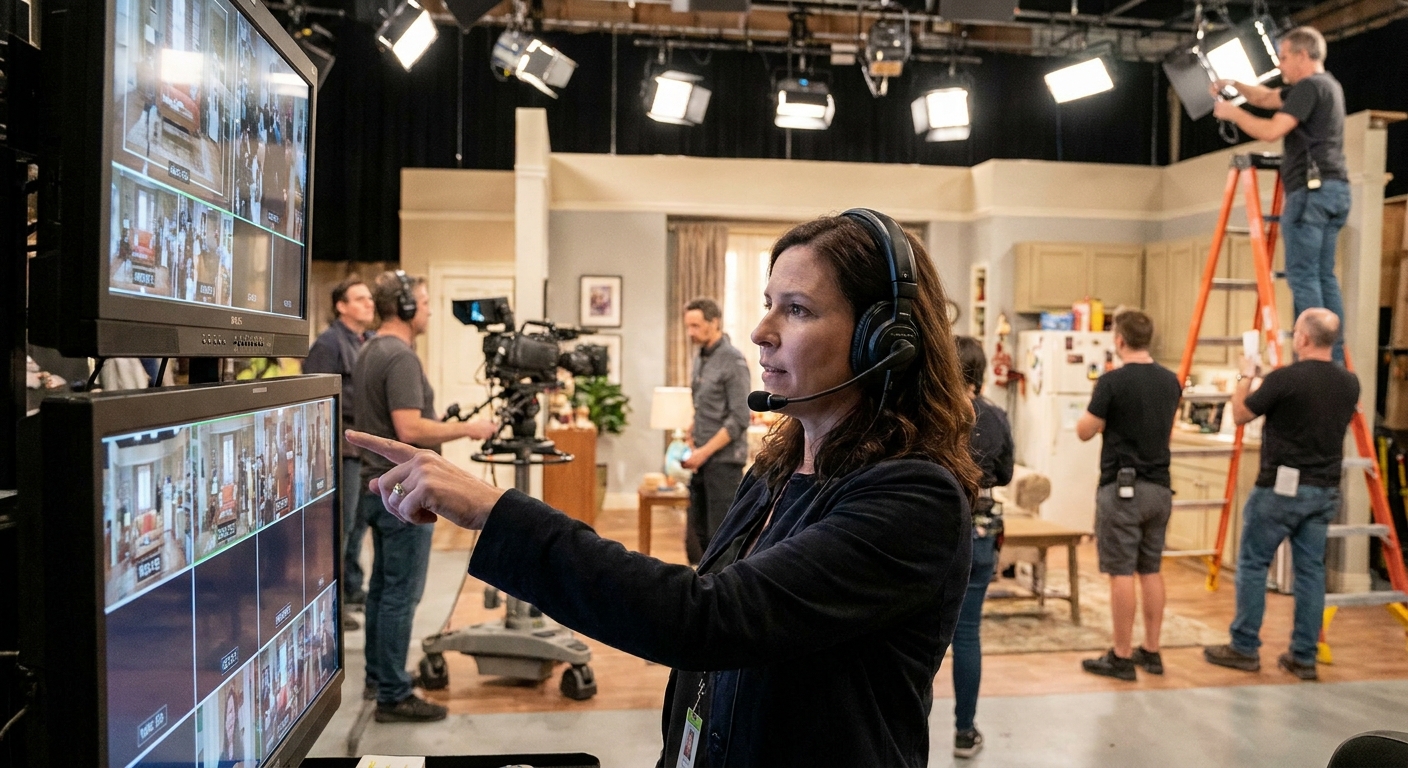
Not always. Some showrunners are on set constantly, others drop in for key days, and some stay mostly in the writers’ room or post. Many split time between:
- The writers’ room, where future episodes are being broken
- Set, where current episodes are being shot
- Post-production, where previous episodes are being edited and scored
It is a three-ring circus, which is why strong showrunning is as much about stamina and leadership as it is about taste.
How it differs by format
This article is mainly describing the U.S. scripted model, but the title can shift depending on the kind of show and where it is made.
- Animation: The showrunner is often still writer-led, but the day-to-day rhythm may lean heavily on storyboard, design, and long-range production planning.
- Unscripted and reality: You may hear “showrunner” used for an executive producer who oversees story producing, field production, and edit bays, even though there is no writers’ room in the traditional sense.
- Some non-U.S. systems: The balance of power can tilt more toward directors or producers, and “showrunner” may not be the standard term, even when someone is effectively doing the same job.
Why audiences should care
You do not need to memorize credits to enjoy a series, but knowing the showrunner can explain a lot:
- Consistency: why a show’s voice stays steady even with rotating directors
- Shifts: why a show changes tone when leadership changes
- Strengths: why certain series nail character arcs, pacing, or comedy rhythm
- Risk: why some shows swing big and some play it safer
If you have ever watched a season finale and thought, “This is exactly what the show promised from episode one,” odds are the showrunner kept that promise alive.
FAQ
Is the showrunner the boss of everyone?
Creatively, they are usually the top authority on story and tone. Practically, film and TV production has many bosses: line producers, department heads, studios, and networks all have power. The showrunner is the central creative leader who keeps the series aligned.
Do showrunners write every episode?
Not usually. They may write the pilot and major episodes, but on an ongoing series the staff writes many scripts. Even then, the showrunner typically rewrites or polishes to maintain voice and continuity.
Can a director be a showrunner?
Yes. It is less common in traditional network TV, but some writer-directors run series, especially in limited series or auteur-driven streaming shows. The key is not whether they direct, but whether they are leading the series’ writing and production decisions.
Are showrunners always credited as executive producers?
Often, yes. In U.S. television, the showrunner is commonly an executive producer because the job includes both creative leadership and high-level production responsibility.