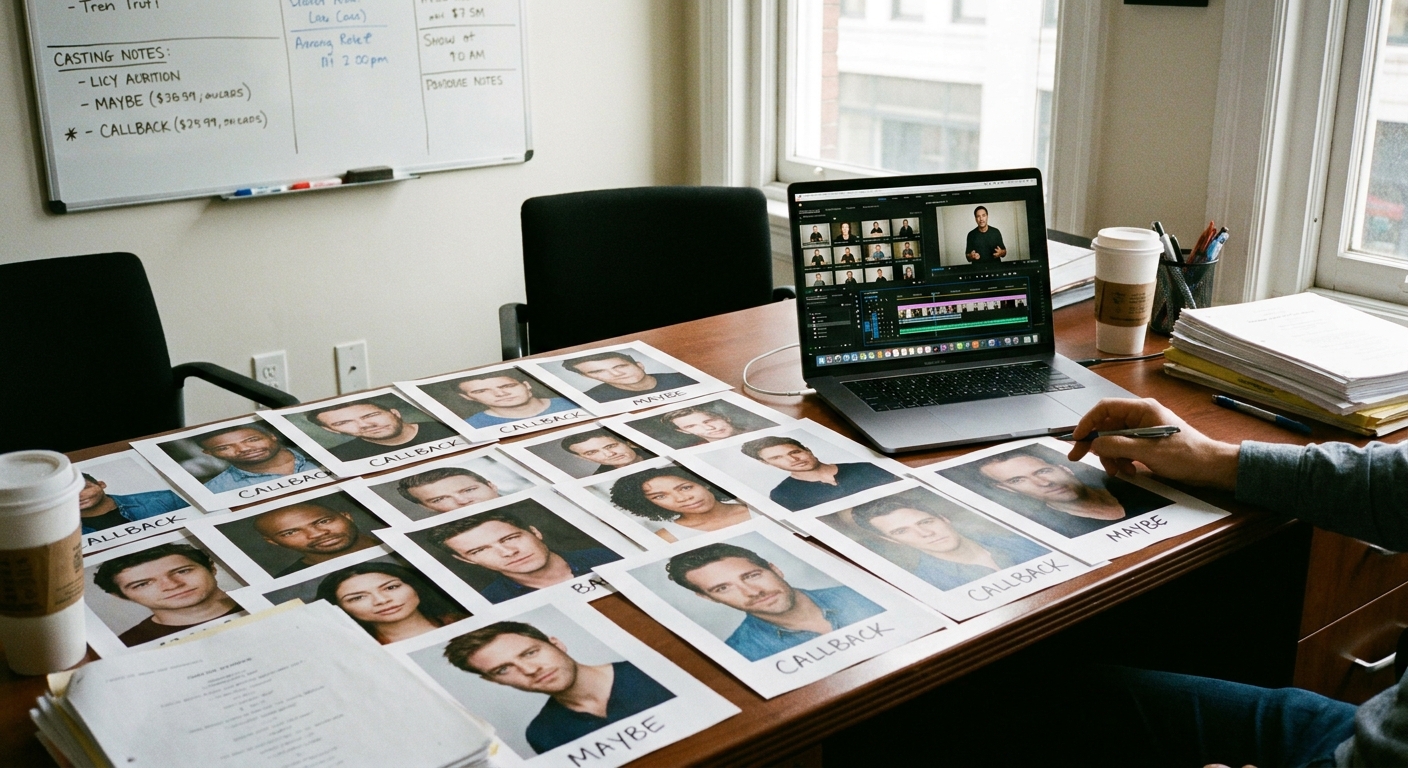
There is a particular kind of alchemy in casting: that moment when a character stops being words on a page and becomes a living person with a pulse, a voice, a way of holding a coffee cup. Casting directors are the professionals who engineer that transformation, with equal parts taste, logistics, psychology, and diplomacy.
If you are an actor, casting can feel like a foggy gate. If you are a viewer, it is easy to forget someone fought for the exact combination of faces that made the story click. Here is what casting directors actually do in film, TV, and theatre, how casting calls come together, and what performers should understand about the job.

The casting director’s job
At the simplest level, a casting director (CD) finds and helps choose the performers for a project. In practice, that job sits at the intersection of art and operations.
They translate the script into people
Casting begins with analysis. A CD breaks down the script scene by scene to identify every role, then builds a casting roadmap: who needs to be found, what qualities are essential, which traits are flexible, and which roles must balance one another as an ensemble.
- Character breakdowns: Concise descriptions of roles shared with agents, managers, and performers.
- Tone and world matching: A naturalistic indie drama and a heightened network comedy require different kinds of performers, even when the character descriptions look similar.
- Continuity of casting: Not just “Who is good,” but “Who is right together.” Chemistry is a casting choice.
They curate options, then advocate
Most casting directors do not unilaterally decide the cast. Instead, they create the strongest possible pool of candidates and then advocate for the choices that best serve the project.
That advocacy can include:
- Introducing a filmmaker to an actor outside their usual orbit.
- Designing the audition process so the right skills are visible (comedy timing, dialect work, movement, intimacy considerations).
- Providing context to decision-makers: why someone’s take is smart even if it is unexpected.
They run a workflow, not one audition
Casting is a production department with schedules, budgets, paperwork, and deadlines. A CD manages communications, materials, releases, NDAs when needed, and approvals, often while juggling multiple roles at once.
Depending on the project, a casting office may include associate casting directors and casting assistants, all helping track submissions, schedule sessions, coordinate callbacks, and keep records clear enough to support fast approvals.
How casting calls work
“Casting call” is the public-facing phrase, but most casting happens through a layered system of outreach and filtering. The details vary by budget, market, and medium, so think of the process below as a common shape rather than a single universal rule.
Step 1: Kickoff and breakdowns
The casting director meets with key creatives and producers to align on the project’s priorities. They clarify:
- Who has final approval for which roles.
- Scheduling realities (shoot dates, rehearsal periods, tour calendars, minors’ work rules).
- Budget and contract parameters (including union agreements).
- What must be local hire versus what can travel.
Then the CD distributes role breakdowns through industry channels and directly to representatives, and sometimes to communities or organizations when a wider search is needed.
Step 2: Submissions and sourcing
Actors come in through multiple pipelines:
- Agent and manager submissions: A very common route for principal roles on many union film and TV projects, and for higher-budget work generally.
- Direct submissions: Especially common for theatre, indie film, and new media, depending on the production’s policies and the market.
- General casting calls: Used when a wider net is needed, or when looking for a specific community, skill set, or type.
- Targeted outreach: Casting searches proactively, sometimes approaching specific actors or inviting performers they have tracked over time.
Step 3: Self-tapes and first rounds
Today, first rounds are often self-tape, especially in film and TV. Theatre also uses self-tapes heavily now, with live auditions and in-person calls still common in many cities and at later stages, but no longer a safe assumption as the default.
In early auditions, casting is looking for fundamentals:
- Can you live truthfully in the piece’s tone?
- Do you understand the scene’s objective, stakes, and rhythm?
- Is the instrument ready: voice, body, timing, camera awareness?
- Do you take direction and adjust quickly?
Step 4: Callbacks, chemistry reads, and tests
As the pool narrows, the process becomes more specific.
- Callbacks: More focused scenes, deeper direction, sometimes multiple pairings.
- Chemistry reads: Common for romantic pairings, family dynamics, and ensemble leads.
- Tests: In larger film and high-stakes TV, this can mean a screen test or a studio or network test. Sometimes it is filmed; sometimes it is a tightly controlled reading with key decision-makers. The goal is to evaluate the fit under higher-pressure conditions.
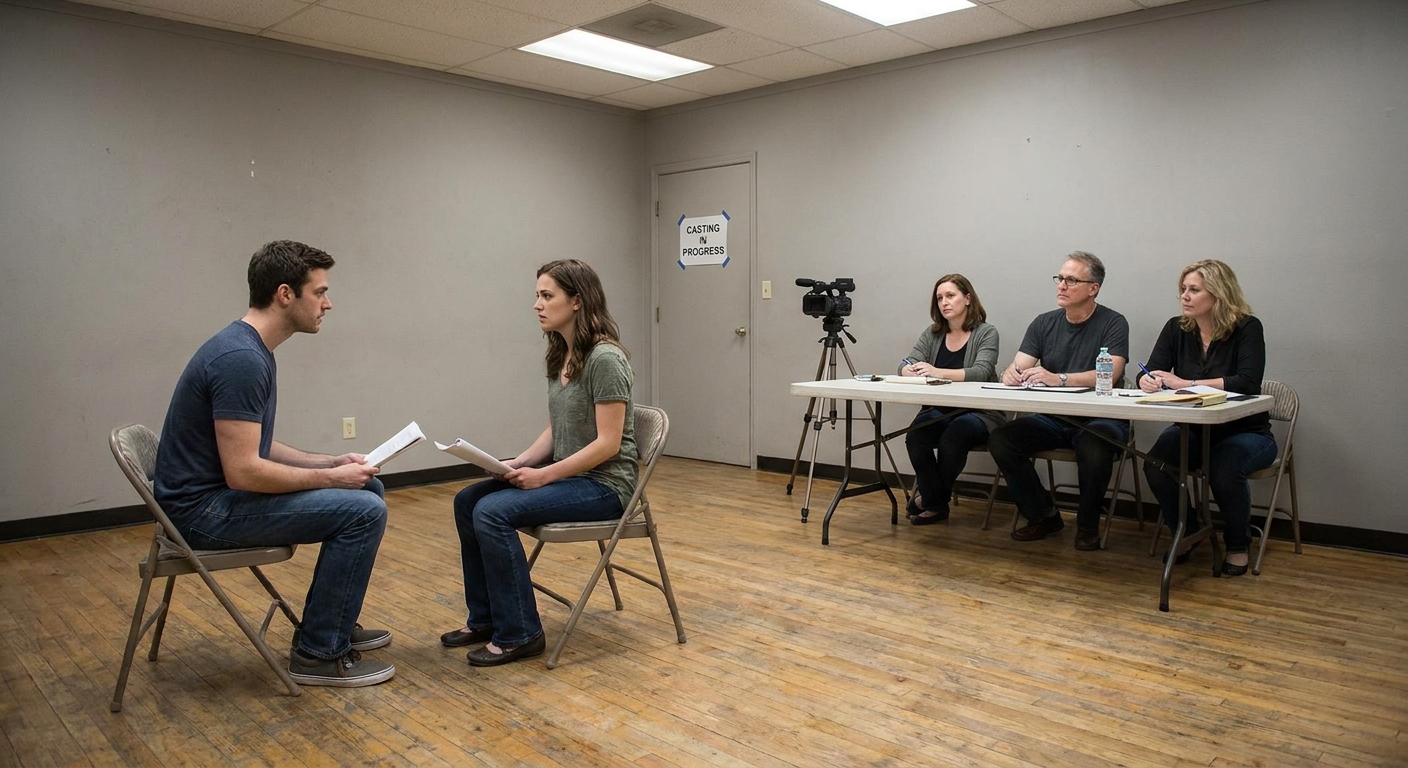
Who decides the cast?
The casting director is a key voice, but approvals are typically shared. Exactly who signs off depends on the medium, the financing, and the market.
Film
For independent film, final decisions might live with the director and producers. For studio projects, approvals can involve producers, the director, and studio executives. Name talent may add layers, including distribution considerations, financing requirements, and scheduling reality.
Television
TV is often showrunner-driven. The showrunner and episode directors collaborate with casting, while the studio and network may have approval for series regulars and major recurring roles. Because television moves fast, casting departments are built to sustain volume and speed.
Theatre
Theatre casting tends to be director-led, with the producing team and sometimes the writers involved. For long-running shows and tours, there may be resident casting structures and strict standards for replacing roles while maintaining the production’s integrity.
Film, TV, and theatre
All casting aims to serve story, but each medium has different constraints and rhythms.
Film casting
Film is a closed container. You cast, you shoot, you wrap. That makes film casting intensely focused on capturing the right performance for a fixed moment in time.
- Availability matters: A perfect actor who cannot make the shoot dates might not be an option.
- Camera truth matters: Subtlety reads, physicality, and how a face holds a close-up can shape choices.
- Testing and financing: In larger films, cast can affect financing, distribution, and marketing, which adds stakeholders and approvals.
Television casting
Television is a marathon that behaves like a sprint. Casting directors may be auditioning for multiple episodes at once while also planning for future arcs.
- Guest roles move quickly: Sometimes you are casting and booking within days.
- Series regulars must sustain: A great pilot audition is not enough. The actor must carry tone and growth over seasons.
- Continuity is part of the job: Recurring roles, co-stars, and day players all shape the show’s world.
Theatre casting
Theatre asks for repeatable excellence. Casting for the stage involves questions that do not exist in quite the same way on camera.
- Eight shows a week reality: Vocal health, endurance, and consistency matter enormously.
- Physical storytelling: Acting must read to the back row without losing nuance.
- Musicals add layers: Range, blend, dance ability, and style specificity (from legit to pop-rock) can be decisive.
- Replacements and covers: Casting often includes understudies, swings, and long-term replacement planning.

What casting looks for
Beyond talent, casting is pattern recognition. CDs are constantly evaluating fit within a larger puzzle.
Clarity of choice
Even in a short audition, strong actors make decisions. They do not play “general emotion.” They pursue something. Casting teams notice when the work has shape.
Ability to take direction
A callback is often less about repeating what worked and more about adjusting. If a CD gives a note, they are not trying to trap you. They are testing collaboration.
Professionalism, not perfection
Professionalism is practical: slate clearly, submit on time, label tapes correctly, show up prepared. It is also interpersonal: kindness, focus, and a workable attitude. In industries built on long hours and tight turnarounds, being reliable is a creative asset.
Distinctiveness
Casting directors see many strong auditions. What separates performers is often specificity: a point of view, a surprising rhythm, an honest vulnerability, a comedic brain that zigs where others zag.
What actors should know
If you only take one thing from this: casting directors are not your opponents. They are hired to find great actors and to make the case for them.
A “no” is not always a critique
Many auditions end in a pass for reasons unrelated to craft: height pairings, scheduling conflicts, chemistry combinations, network notes, union requirements, or a creative pivot in the script. You can give an excellent audition and still not be the solution to that particular puzzle.
Casting remembers good work
Casting offices track performers over time. A strong audition can lead to future invites. This is why consistency matters more than any single outcome.
Help casting help you
- Slate like a pro: Clear name, height if requested, location if relevant, and calm eye contact.
- Follow instructions: Sides, deadlines, file naming, framing, and length limits are part of the job.
- Choose readable choices: Especially on tape, clarity beats complexity that does not land on camera.
- Keep materials current: Headshots and reels should match how you look and what you book.
Boundaries are part of the process
Good casting prioritizes safe, respectful processes, especially for intimacy, stunts, minors, and sensitive subject matter. If something feels unclear, it is appropriate to ask for context through proper channels.
Union and market realities
Casting also operates inside practical rules: union contracts, required paperwork, and sometimes strict confidentiality. A process in a major U.S. market might run differently than a regional theatre search, a non-union indie, or a production working under different national agreements. The goal is the same, but the routes and restrictions can shift.
Casting terms
- Breakdown: The role description distributed to solicit submissions.
- Availability check: A request to confirm you can actually do the dates.
- Pin: A status signal that you are a strong contender and the team is waiting on approvals, availability, or final comparisons.
- First refusal: A priority right that can come up in scheduling conflicts, where one production may ask to be notified or given a chance to keep you before you accept another booking.
- Callback: A second (or third) audition round with a narrowed pool.
- Chemistry read: Auditioning with another actor to test dynamic.
- Test: A higher-stakes audition step, such as a screen test or a studio or network test, often used for leads or major roles.
- Offer out: The production is making a formal offer.
- Hold: You are asked to keep dates open while decisions are pending.
FAQ
Do casting directors pick the cast?
They are central to the selection process and often strongly influence outcomes, but final approvals typically involve directors, producers, showrunners, and sometimes studios, networks, or lead producers depending on the project.
What is the difference between a casting director and a talent agent?
A casting director works for the production to fill roles. A talent agent works for the actor to secure auditions, negotiate deals, and manage opportunities. They interact constantly, but they represent different sides of the hiring equation.
Why do productions ask for self-tapes?
Self-tapes expand the pool, speed up first rounds, and allow creatives to review performances across schedules and time zones. They also create a record that can be shared for approvals.
Is theatre casting stricter than film and TV?
It is not stricter, but it is different. Theatre often demands repeatable performance stamina, vocal endurance, and ensemble cohesion in a live environment. Film and TV demand camera specificity and, in TV especially, fast turnarounds.
Getting it right
When casting works, it feels inevitable, like no one else could possibly have played the role. That “inevitability” is built on a casting director’s blend of imagination and rigor: the schedules and the approvals, yes, but also the human intuition to recognize a spark and protect it long enough for everyone else to see it too.
For performers, the healthiest framing is also the most accurate: casting is not a single door that opens or closes. It is a long conversation between your work and the industry’s needs, and casting directors are often the people most invested in keeping that conversation going.