I grew up in Chicago around set builders and musicians, which meant I learned early that the most thrilling moments in a show are usually a team effort. Film and TV stunts are the perfect example. When an actor hits the pavement after a car-to-pedestrian “clip” gag, tumbles down a staircase, or takes a punch that looks a little too real, you are often watching a highly trained professional whose job is to make danger look like part of the story.
A stunt performer is hired specifically to execute dangerous or high-risk physical action for camera, under a plan designed to keep everyone as safe as possible. They are not just “brave.” They are technicians: performers who understand choreography, camera angles, timing, protective gear, rigs, vehicles, and the controlled physics of a fall.
What a stunt performer does
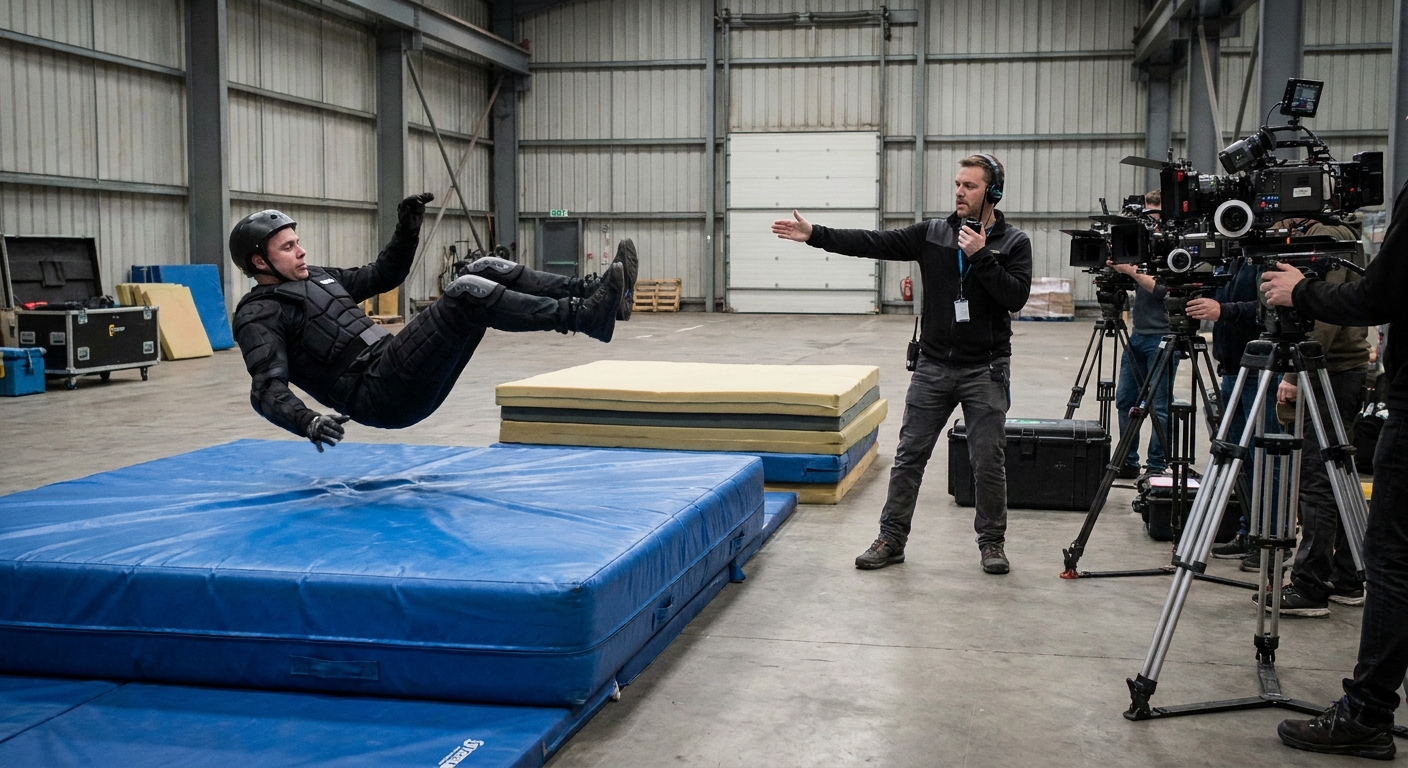
On a typical production, stunt performers are brought in for sequences that carry a meaningful risk of injury or require specialized physical control, such as:
- Falls and stair tumbles (from simple trips to high falls)
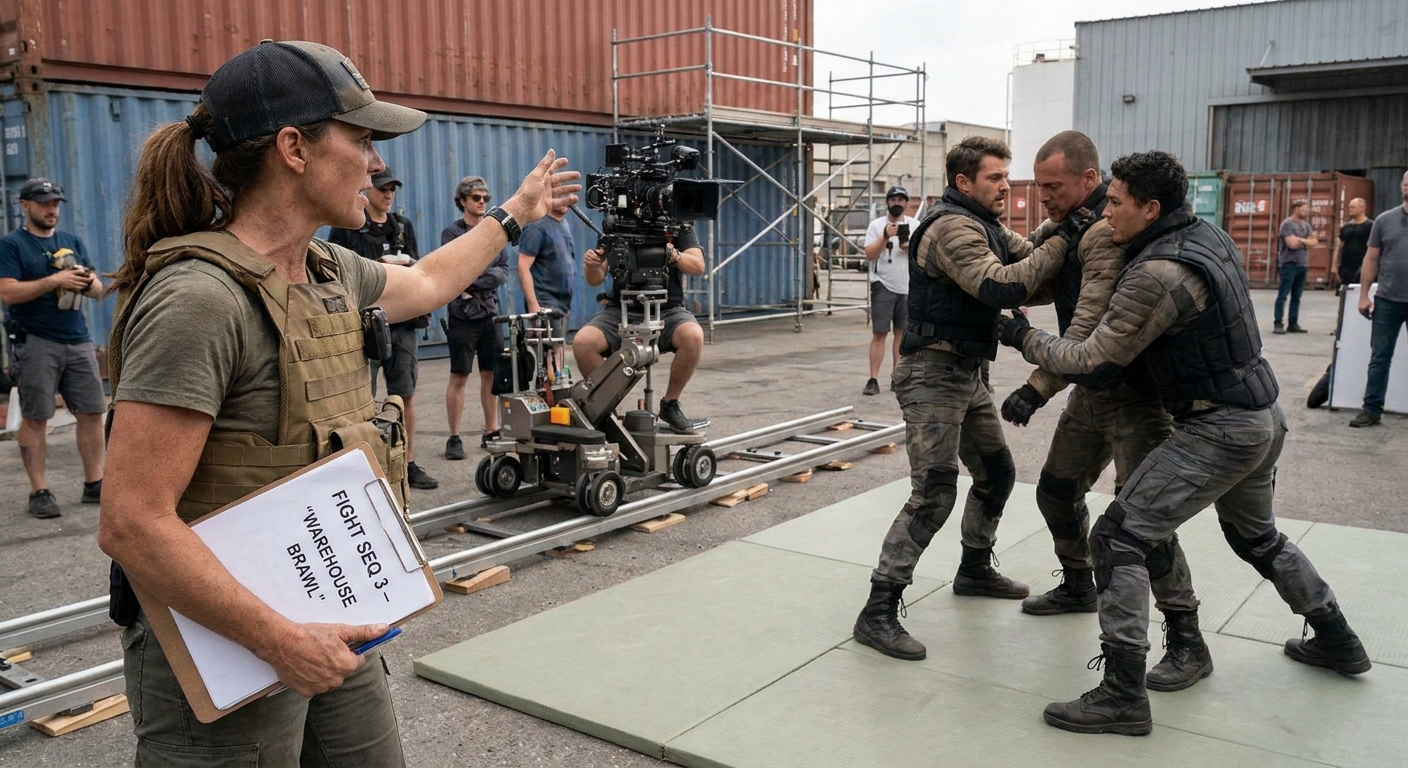
- Fights and combat (screen punches, grappling, sword work, gun disarms)
- Vehicle action (precision driving, motorcycle work, hits, rollovers)
- Wire work (yanks, lifts, flying gags, hard landings)
- Fire and water stunts (burns with protection, underwater action)
- “Impact” work (getting hit by objects, breakaway glass, furniture crashes)
Crucially, stunt performance is not simply “doing something athletic.” It is doing something athletic repeatably, on cue, and in a way that sells the character moment while honoring safety protocols.
Who hires and supervises stunt performers
Stunts are ideally planned well before cameras roll, and they should not be improvised without proper oversight. In the real world, details can shift on the day due to weather, location constraints, or time, but changes still run through the stunt team so risk is assessed and the plan stays controlled.
A stunt performer is typically engaged through the production’s stunt department, often led by roles such as:
- Stunt coordinator: designs and oversees the stunt plan, hires stunt performers, collaborates with the director, DP, and producers, and manages safety and logistics.
- Assistant or associate stunt coordinator (or stunt department assistants): supports hiring, rehearsals, paperwork, and execution on larger shows.
- Fight choreographer or fight coordinator (sometimes a separate credit): shapes hand-to-hand combat specifically, in coordination with stunts and the director.
- Riggers and specialty teams: handle wires, ratchets, airbags, harness systems, and other technical safety gear.
Hiring pathways can vary by market and scale. Sometimes the coordinator crews up directly, and sometimes production contracts a stunt team or stunt service company. The practical idea is the same: the stunt department builds the plan and staffs it with the right people.
Think of the stunt performer as the person executing the move, and the stunt coordinator as the person responsible for the overall design, staffing, and safe execution.
How stunt work is scheduled
Stunts are typically scheduled with more intention than standard background work because they require planning, equipment, and time. A production may:
- Flag stunt days in advance so departments can prep padding, breakaway props, rigs, special effects, wardrobe duplicates, and medical coverage as needed.
- Build rehearsal time into the schedule, sometimes on a stage or rehearsal space before stepping onto the main set.
- Coordinate with camera and effects so angles, lens choices, and timing sell the illusion without increasing risk.
- Split the work across multiple units. Action-heavy shows may use a second unit that focuses on stunts, chases, and inserts.
On the call sheet, a stunt performer might be listed with the stunt team, the action sequence, the character they are doubling (if applicable), and any special notes about gear or rehearsal. The exact formatting varies by production, but the intent is consistent: stunts get called out clearly because they change the day’s safety and logistics.
You will also often see extra safety structure around stunt work, like safety briefings, formal risk assessments, and medics on standby. The exact requirements depend on the jurisdiction, the union rules (if applicable), and the production’s own safety standards.
How stunt performers are credited
Credits vary by project, union agreements, and the production’s internal crediting practices, but stunt performers are commonly credited in the end crawl under sections such as:
- Stunts
- Stunt Performers
- Stunt Doubles (when they are doubling a specific principal)
- Stunt Coordinator (department head credit)
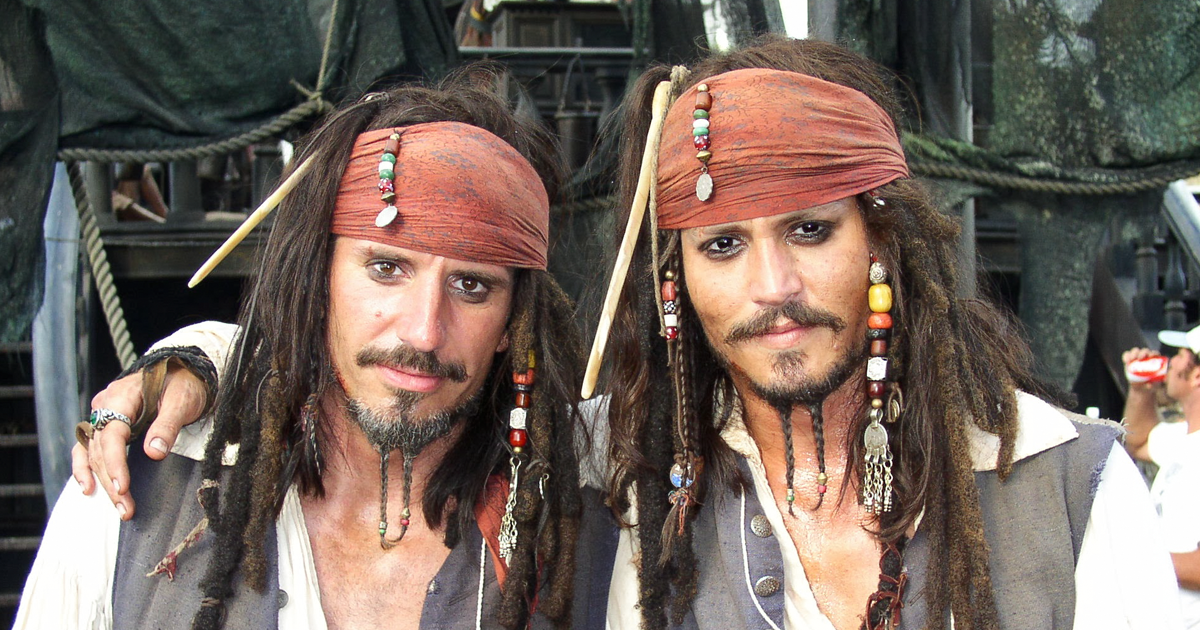
Here is the key point that often confuses viewers: “stunt performer” is a job category, and “stunt double” is a type of stunt performer assignment. A performer may be credited as a stunt performer on one episode and as a stunt double for a named character on another, depending on what they did.
If you are watching closely, you may also see more specialized credits on certain projects, such as rigging teams or fight choreography, especially on action-forward series.
Union and credit practices also differ across countries and markets. In the U.S., for example, many productions operate under SAG-AFTRA agreements, while other regions have different structures and terminology.
Stunt performer vs. special-ability extra
This is where people mix things up, especially if they have heard the term “special ability” in casting notices. Depending on the region, you might also see phrasing like “special-ability background” or “skilled background.”
A special-ability extra is background talent hired to do a skilled, camera-friendly task in the background that supports the atmosphere of the scene, such as:
- social dancing at a club
- playing an instrument in a band on screen
- skating through a plaza
- driving normally in traffic for picture vehicles
- performing a sport in the deep background
Those skills matter, and they can absolutely require training, but they are not inherently the same as a stunt. The dividing line is usually risk and intent:
- Special-ability background: skilled movement performed safely as part of scene texture.
- Stunt performance: choreographed dangerous action designed to look risky on camera, with stunt supervision and safety measures.
If the job requires hits, falls, ratchets, burns, high-speed precision, or violent contact, you are typically looking at a stunt hire, not standard special-ability background.
Stunt performer vs. body double
A body double is hired primarily to match a principal actor’s physical appearance for shots where the face is not seen clearly, or where the production wants to preserve the principal’s time or privacy. A body double might be used for:
- over-the-shoulder coverage
- stand-in-like camera blocking that requires a closer physical match
- hands, torso, legs, or other framed body parts
- specific wardrobe fit continuity
A body double may involve nudity or partial nudity depending on the project, but it is not automatically a stunt job. If the moment involves dangerous action, that is where a stunt double comes in: someone doubling the principal specifically for a stunt.
In plain language: a body double is about looking like the actor. A stunt performer is about performing the action safely and convincingly. Sometimes one person can be both if they match and have the stunt skills, but the credit and hiring reason are different.
Why stunt work is its own craft
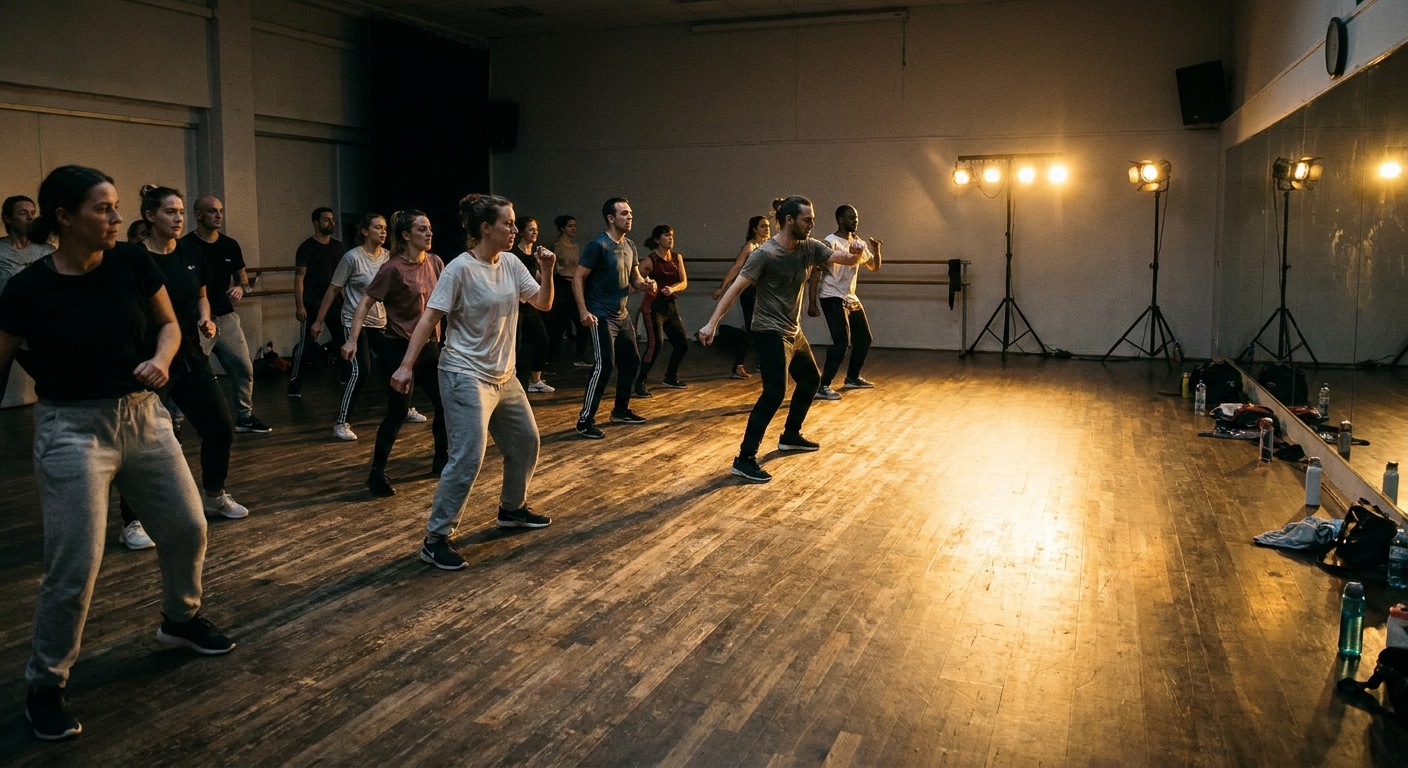
From the outside, stunts can look like a dare. From inside the process, they are closer to dance and stage combat, with a heavy dose of engineering. Stunt performers train to:
- Hit marks while selling emotion and character intention
- Repeat the action for multiple takes while managing fatigue
- Protect partners in fight choreography and falls
- Work with camera language so the impact reads on screen
- Communicate clearly with coordinators, directors, and performers
The best stunt work disappears into the story. You feel the adrenaline, but you never feel the math behind it.
Common misconceptions
“If it’s athletic, it’s a stunt.”
Not necessarily. Many athletic tasks are staged as safe background business. A stunt is defined more by risk level, choreography, and safety planning than by whether it looks cool.
“The star did it all.”
Sometimes actors do stunts, especially if they have training and the sequence is designed accordingly. But many productions choose a stunt performer for safety, insurance, scheduling, or simply to get a more precise action beat.
“Stunt performers are only doubles.”
No. Stunt performers can play on-camera roles as themselves within the action, especially in fights, crowd chaos, or when the story needs multiple trained bodies to complete the choreography.
Quick FAQ
Are stunt performers actors?
They are performers, and many have acting training, but the job they are hired for is executing stunt action. Some move between stunt work and acting roles, but stunt hiring is based on stunt skill and safety readiness.
Do stunt performers get separate credit from extras?
Typically, yes. Stunt performers are generally credited under the stunt department rather than general background listings, though exact crediting varies by production.
What is the difference between a stunt performer and a stunt double?
A stunt double is a stunt performer assigned to double a specific principal actor for a stunt. A stunt performer might also be hired to perform action as an on-camera character who is not doubling a lead.
Is a special-ability extra the same thing as a stunt performer?
No. Special-ability background is skilled atmosphere. Stunt work is dangerous action executed under stunt supervision and planning.
The bottom line
A stunt performer is the professional hired to do the dangerous physical action that makes film and TV feel thrilling, immediate, and real. Their work is planned, rehearsed, and supervised, then credited as part of the stunt department, because it is its own specialized craft. And while special-ability extras and doubles are vital to production too, stunt performers occupy a distinct lane: they are there to take the hit, take the fall, or take the wheel, so the story can soar and everyone can go home safe.