I am the person who reads the entire playbill before the first cue and stays for the very last bow. I am also the person who wants everyone in the room to be able to do the same without having to treat basic access like an impossible scavenger hunt. A great night at the theatre should feel like anticipation, not logistics. With a little planning, wheelchair users and their companions can set the stage for a seamless, genuinely fun evening.
Quick note: This guide is written with U.S. venues in mind (you will see “ADA” referenced). If you are elsewhere, the same questions still apply, but the laws, terms, and policies may differ by country and venue.
Start with the venue
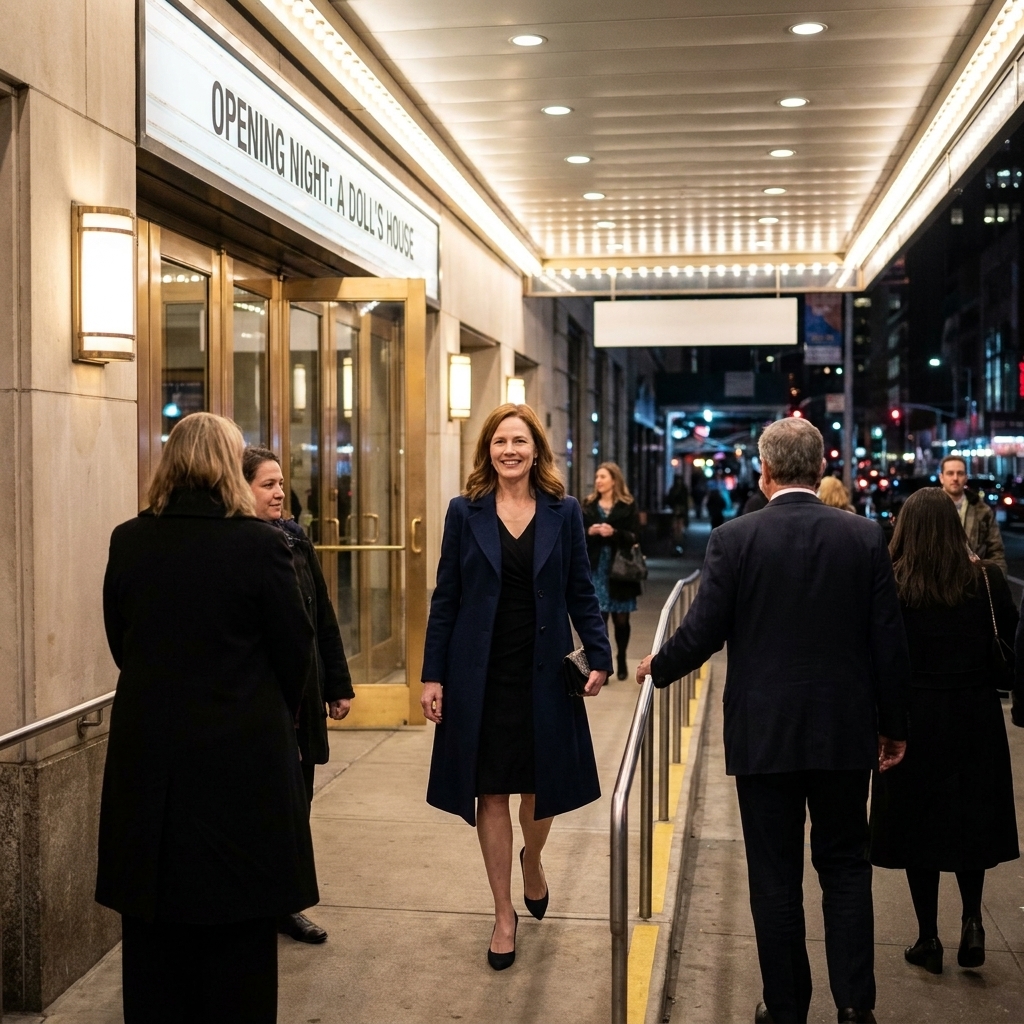
The quickest way to protect your energy is to research accessibility before you fall in love with a specific seating section or price point. Venue websites often have an “Accessibility” page, but the most useful details are usually in the fine print and the photos you can find from past patrons.
Also, access needs vary. A manual chair, power chair, scooter, walker, and an ambulatory wheelchair user can run into different pinch points. Use the checklist below as a menu and focus on what affects you.
What to look for on the venue site
- No-stairs route: Is there an accessible entrance, and is it the same entrance everyone uses? If not, where is it and how is it staffed?
- Elevators: If the theatre has multiple levels, confirm elevator access to your seating level, lobby, bars, and restrooms.
- Accessible restrooms: Note the floor they are on and whether there is more than one option.
- Seating locations: Are wheelchair spaces scattered throughout the orchestra, mezzanine, or balcony, or isolated to one area?
- Companion seating: Does a companion sit directly next to the wheelchair location or in a nearby row?
- Building constraints: Older theatres can have narrow doorways, steep ramps, or tight turns. Look for notes on doorway widths, ramp grade, and any pinch points between lobby and seating.
- Assistive listening and captions: Devices offered, how to request them, and whether they are first-come, first-served.
- Service animals: Whether they are welcome (they typically are in the U.S.), where they can settle during the show, and whether staff can suggest a nearby relief area.
Don’t trust “accessible” without details
“Accessible” can mean anything from “there is a ramp somewhere” to “the entire experience is designed with wheelchair users in mind.” If the site is vague, call. A two-minute phone conversation can save a two-hour headache.
Call the box office
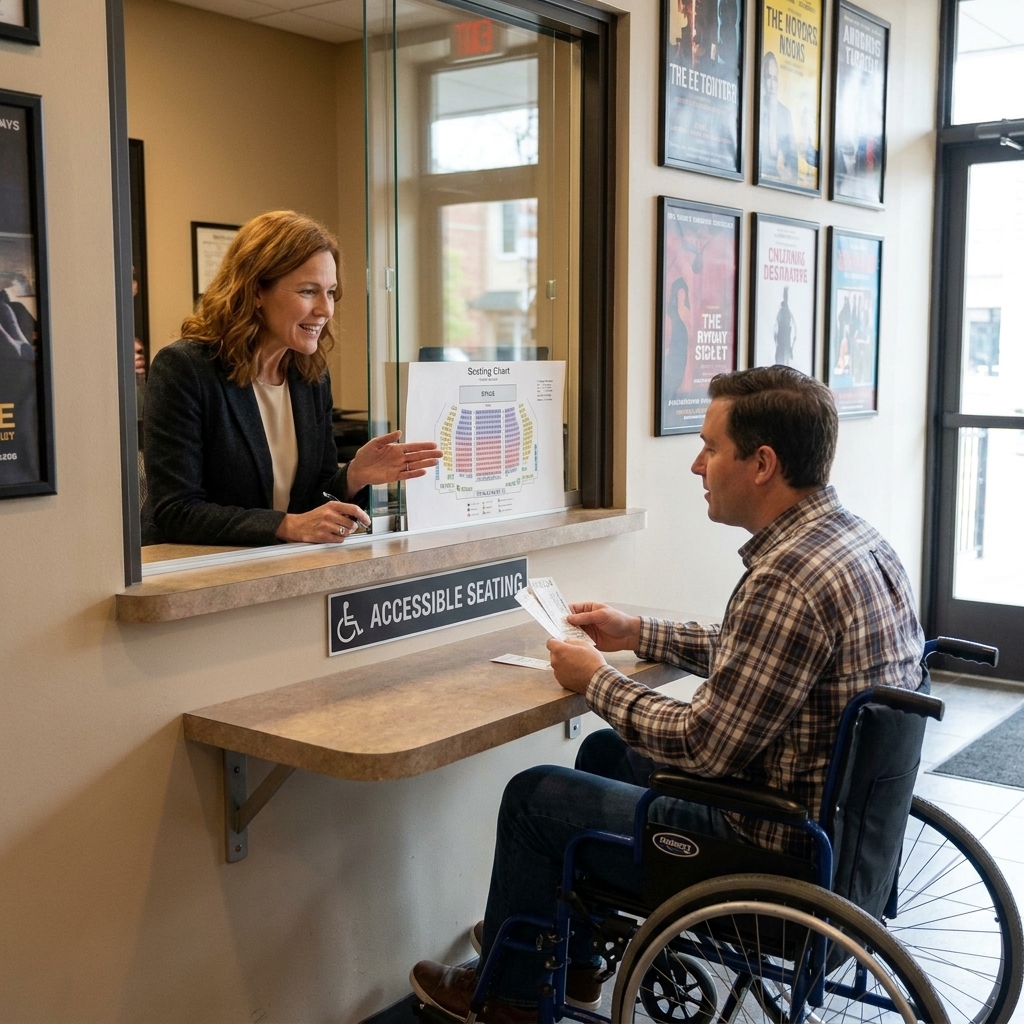
Online ticketing has improved, but it can still be clunky when it comes to accessible seating and companion arrangements. When in doubt, the box office is your best friend. The goal is clarity, not pleading.
Questions that get real answers
- “Which entrance is step-free, and will it be open at curtain time?”
- “Is the route from the accessible entrance to the wheelchair seating step-free the whole way?”
- “Are there any narrow doors, steep ramps, or tight turns we should know about?”
- “Where exactly is the wheelchair space on the seating map, and what is the sightline like if people stand for bows?”
- “Is the companion seat next to the wheelchair space, and is it a fixed seat or movable?”
- “If we have more than one companion, what are the options for seats nearby?”
- “How early should we arrive for the easiest entry and elevator access?”
- “Are there accessible restrooms on the same level as our seats?”
- “What is the procedure if an elevator goes out?”
- “What is the emergency plan for patrons who cannot use stairs?”
A note on ADA seating and ticket policies
In the U.S., wheelchair spaces are not “extra perks.” They are part of how the venue serves its full audience under ADA requirements. Policies vary by venue, but many theatres have specific inventory for wheelchair users and companions. If a website shows everything sold out, calling may reveal returns, venue-managed inventory, or a better option than the remaining scattered singles. It is not guaranteed, but it is often worth the ask.
Map the night
Once tickets are handled, think like a stage manager. Your objective is not perfection. It is fewer surprises.
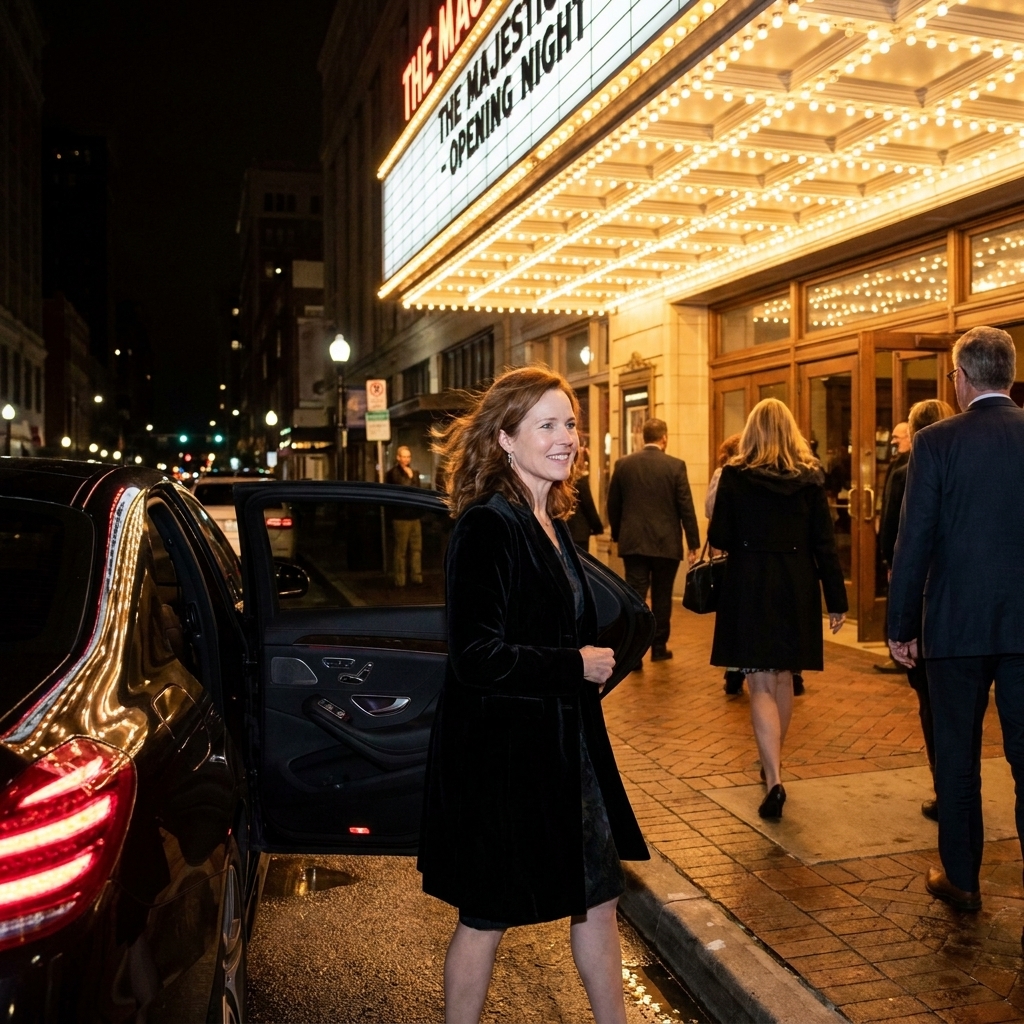
Transportation and arrival
- Accessible parking: Ask where accessible parking is located and whether it fills quickly. Some venues validate, some do not.
- Drop-off zones: If using rideshare or a friend driving, confirm the closest step-free drop-off point and whether there is a curb cut.
- Weather plan: Rain or snow can turn a “technically step-free” route into a mess. Ask if there is a covered accessible entrance.
Timing that reduces stress
Arrive early enough to avoid the lobby crush. If you use elevators, earlier is kinder. It gives you time to find the accessible restroom, locate your seating, and actually enjoy that pre-show buzz instead of racing it.
Seating and sightlines
We all have different definitions of the perfect seat. Some want to see every micro-expression. Some want the full picture, choreography included. Wheelchair-accessible seating should offer choices, not a single compromise.
What to confirm before you buy
- Sightline obstructions: Railings, balconies, speaker stacks, or the “standing ovation factor.” Ask directly.
- Proximity to aisles: Great for entry and exit, but sometimes noisier. Decide what works for you.
- Companion comfort: If the companion seat is a folding chair, ask about back support and spacing.
- Transfer options: If you plan to transfer to a fixed seat, ask whether the wheelchair can be stored nearby or must remain in the designated space.
If you have preferences, say so. “Wheelchair space, but as centered as possible” is useful. So is “I would rather be farther back than extreme side.” The box office cannot read minds, but they can often offer options.
Restrooms and intermission
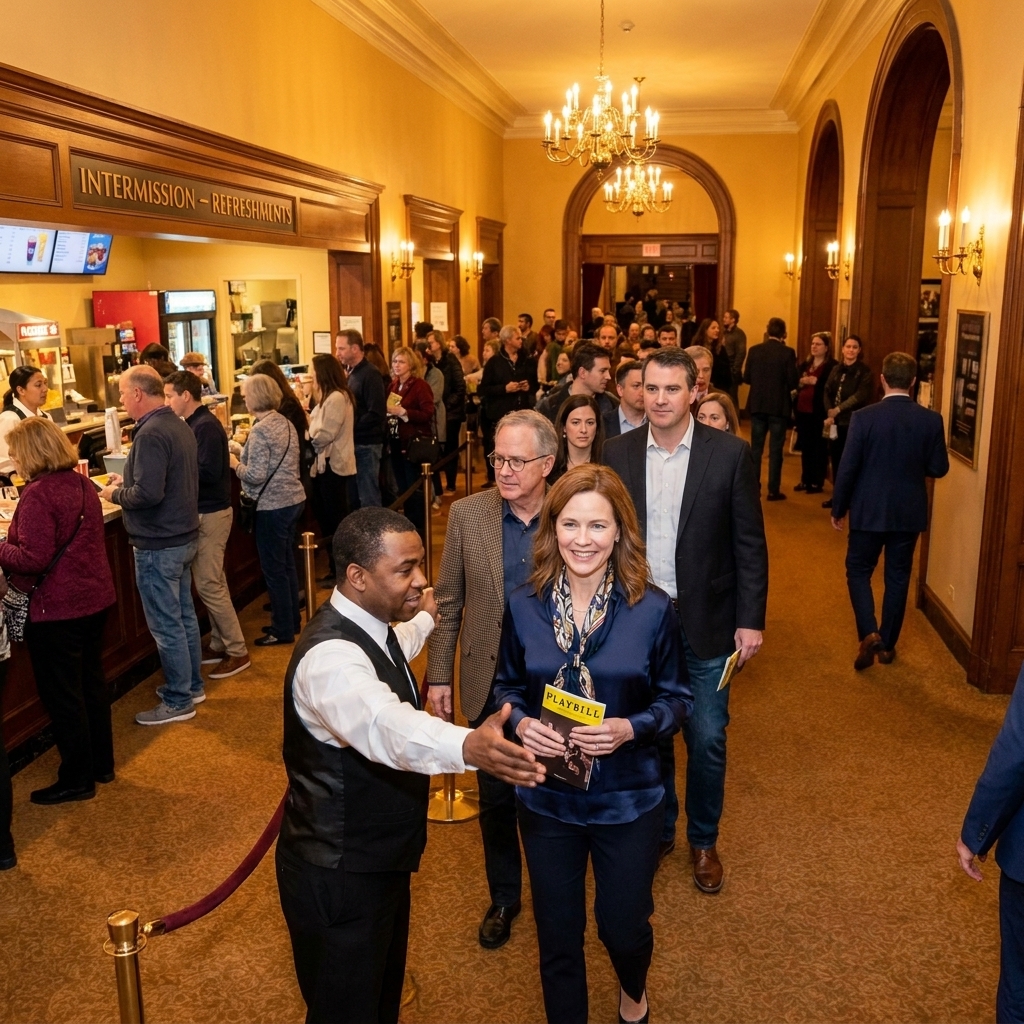
Intermission is where even seasoned theatre lovers can feel the squeeze. Lines form, doors bottleneck, and suddenly everyone wants a drink and the restroom right now. Planning here is not unromantic. It is liberating.
Make intermission work for you
- Locate accessible restrooms on arrival: Do not wait until the bell rings.
- Ask staff about the quickest route: Some theatres have a step-free path that is not obvious.
- Consider timing: If you can, go right as intermission starts or wait a few minutes for the first wave to pass.
- Snack strategy: If lines are tight, ask whether concessions can be pre-ordered or picked up at a designated counter.
Access services
Accessibility is not only about getting in the building. It is also about getting the full story.
Common options to ask about
- Assistive listening devices: Headsets or neck loops, often available with an ID deposit or a credit card hold.
- Open captioned performances: Captions displayed for the audience, typically on select dates.
- Closed-caption devices: A personal caption receiver for select performances or venues, often picked up at the box office or guest services.
- Audio description: A narration track for patrons who are blind or low vision, often paired with a touch tour.
- ASL-interpreted performances: Usually scheduled performances with seating recommendations for best viewing.
- Sensory-friendly adjustments: Modified lighting and sound levels and a more relaxed audience environment.
Even if you do not need these services, knowing they exist helps you recommend the show to friends and family. Access is community-minded by nature.
Advocacy, still joyful
Here is the truth: sometimes you will encounter a venue that is behind the times or a staff member who is undertrained. You deserve better. But you also deserve your night out.
If something feels off, try this
- Ask for the house manager: They are often the person empowered to solve problems quickly.
- Use clear, practical language: “We need the step-free entrance opened” beats a long explanation when time is tight.
- Document details after: Names, dates, what happened, and what would have fixed it. Send a calm follow-up email to the venue.
I have met so many front-of-house folks who genuinely want to help and just need the right information to do it. Your feedback can improve the next patron’s experience, too.
Checklist
Save this for the day-of, when you would rather think about the show than the infrastructure.
- Confirm tickets include wheelchair space and companion seat details.
- Verify the accessible entrance and the step-free route to your seats.
- Ask about doorway widths, ramp steepness, and any tight turns on the route.
- Plan parking or drop-off with a curb cut in mind.
- Arrive early enough to avoid elevator and lobby bottlenecks.
- Find accessible restrooms before the house opens.
- Pick up assistive listening, closed-caption device, or audio description equipment if needed.
- If bringing a service animal, confirm where they can settle and identify a nearby relief option.
- Know who to ask for if an access issue pops up (often the house manager).
- Ask about the emergency plan for patrons who cannot use stairs.
FAQ
Can I buy ADA seating online?
Often yes, but availability and companion seating options can be clearer by phone. If the site is confusing or shows no accessible seats, call the box office and ask what is available for your performance date.
Do theatres allow wheelchair users to enter early?
Many do, especially if it helps with safe, smooth seating. Ask the venue what time doors open and whether there is an early entry process for patrons using accessible seating.
What if the accessible entrance is around the corner?
It happens. Ask whether the entrance is staffed, well-lit, and clearly signed, and whether there is a step-free route from drop-off or parking. If the route feels unsafe or impractical, request guidance from the house manager.
How do I know if I will have a good view?
Ask the box office about sightlines and any potential obstructions, including whether standing ovations block the view. If the theatre has photos from the wheelchair location, request them or look for patron photos of the view.
One last curtain call
Theatre is a communal art form. The laugh, the hush, the collective inhale when a note lands or a reveal hits, it is all built on people sharing a room. Access is what makes that room whole. With a few well-placed questions and a plan that respects your time and energy, your night out can be what it should be: story first, stress last.