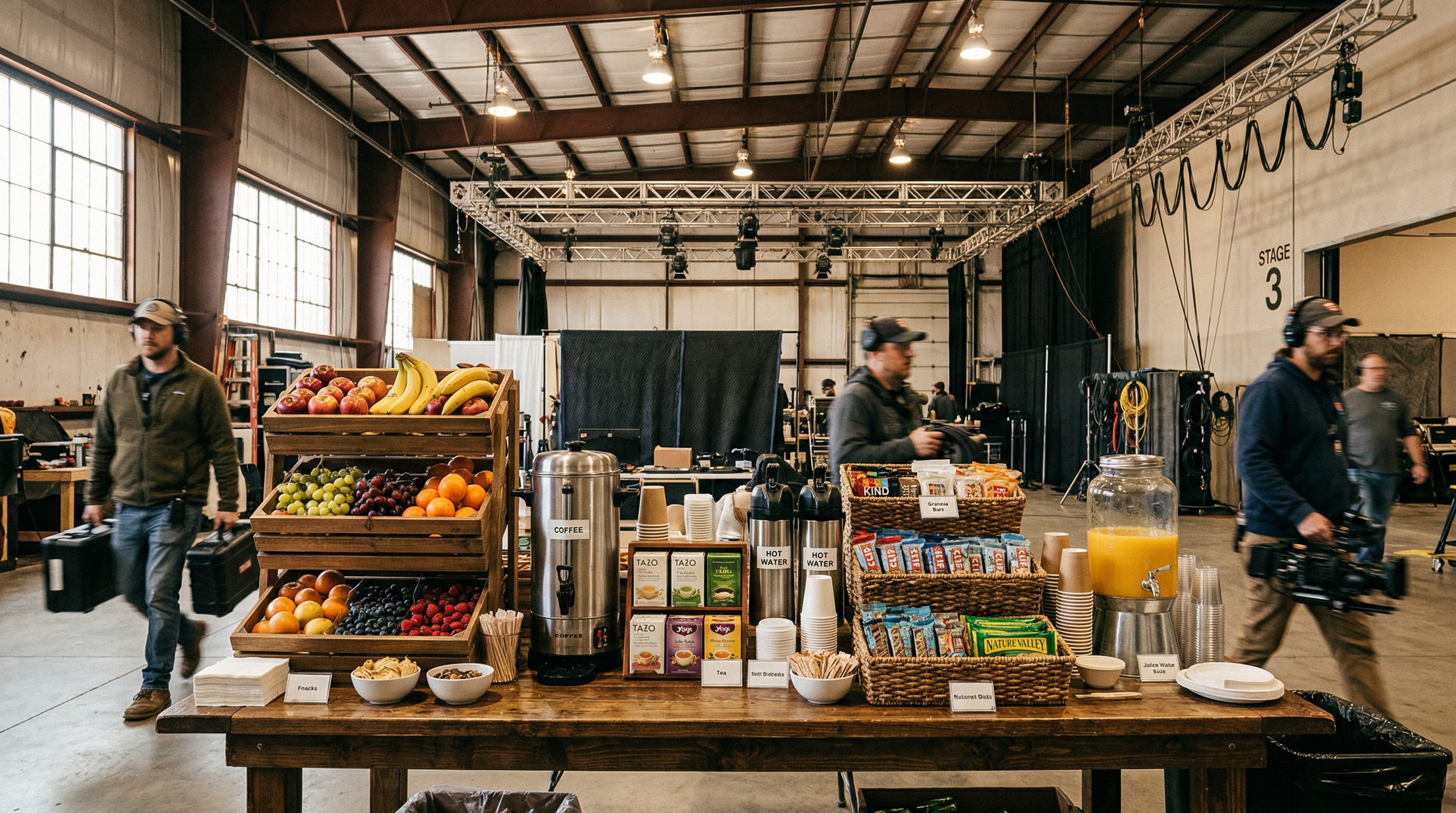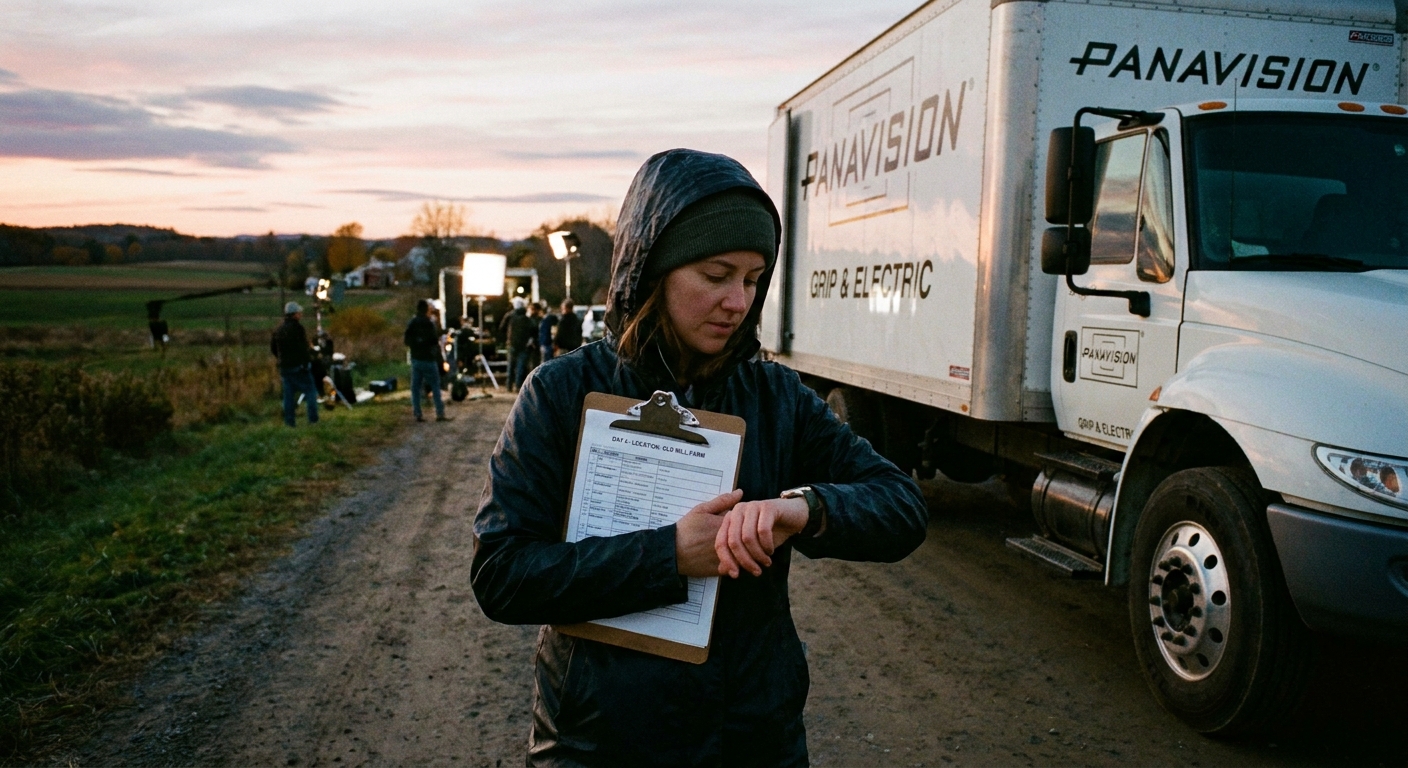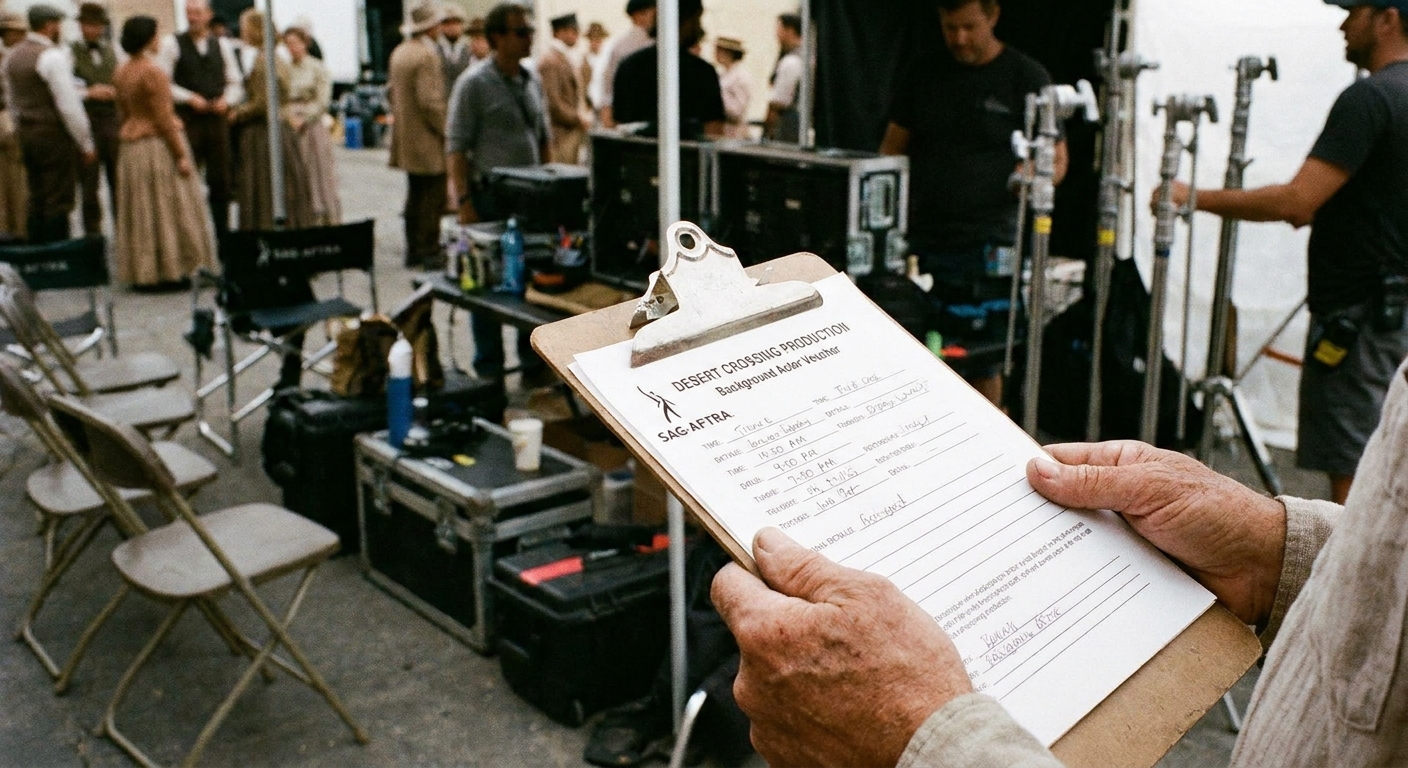
Lights down. Curtain up.
On a film set, most days are built like a long, continuous performance: you report, you work, you break for meals, you wrap, you go home. A split shift is the plot twist. It is two separate work periods scheduled on the same date, with a long break in the middle.
One important asterisk: the exact rules can be contract and region specific. Union and non-union shows may code the same situation differently for payroll. If you only remember one thing, make it this: ask production how they are coding it (split shift, dismissal and recall, long release, or something else).

Split shift, defined
A split shift generally means:
- You are called in for one block of work (often daytime).
- You are released for a long gap that is more than a normal meal break.
- You return later the same day for a second block of work (often nighttime).
A common example is a day exterior that finishes mid-afternoon, followed by a night return for a different scene or a reset once darkness hits. Another example: morning crowd work, a long midday release, then a late evening pickup.
Quick vocabulary that saves headaches: on many sets, “wrapped” means you are done for the day. “Released” can mean you are off the clock for now, but still expected to return later. Those words are not always used perfectly, which is why you confirm.
How a split shift feels for background actors
For background actors, a split shift can be confusing because it looks a little like wrap, but it is not always the end of your day. The biggest issue is simple: you need to know whether you are “released” or “wrapped”, and what that means for timekeeping and pay.
Unlike a quick meal break where you are still in the day’s flow, a split shift’s gap can be long enough that you might go home, nap in your car, change wardrobe, or return later with a totally different energy.
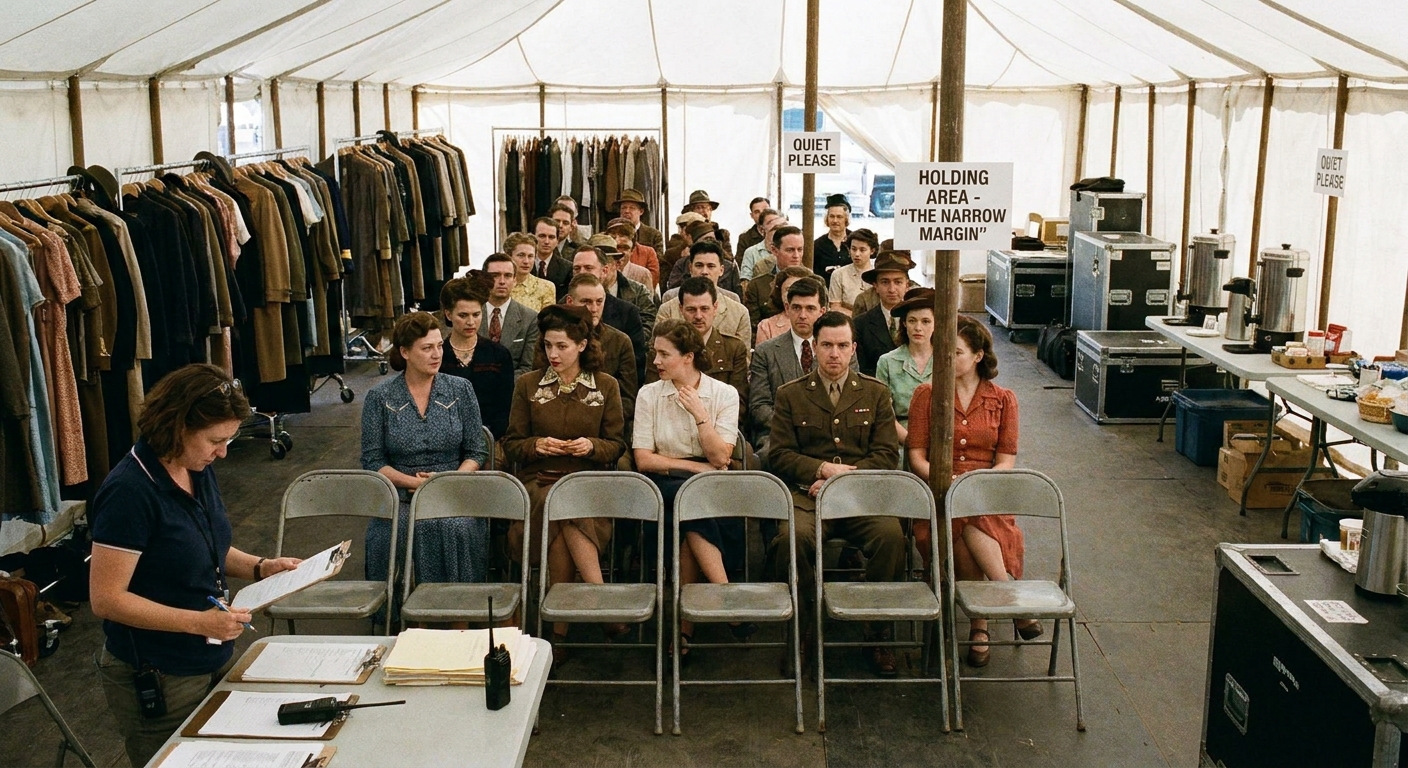
What to confirm before you agree
If you are booked for background and you hear “split shift,” “split day,” or “day call with night return,” get clarity on a few details up front. You do not need to argue. You just need specifics.
1) Are you signing out during the break?
Ask: “Do we sign out and sign back in?”
- Some productions keep it on one voucher.
- Others do a sign-out and sign-in (rules and payroll coding vary).
This matters because your recorded time affects overtime and how payroll interprets the day. Always follow what production instructs, but make sure you understand what you are being told.
2) How long is the break, and are you free to leave?
Ask: “How long is the break, and can we leave set?”
Not every split shift break is truly free time. Parking, transportation, proximity to basecamp, and wardrobe or hair continuity can all change what is realistic. If you are in heavy prosthetics or a period costume, your ability to leave may be limited even if the break is long.
3) Where do you report for the return?
Ask: “Is the return at the same basecamp, or a different location?”
It is not unusual for the night portion to move, especially if the day work is at one exterior and the night work is elsewhere. Confirm the return address, parking instructions, and whether transportation is provided.
4) What happens with wardrobe and props?
Ask: “Do we keep wardrobe on, or do we reset and return dressed?”
- If you are returning in the same look, confirm whether you take wardrobe with you or remain on site.
- If you are returning in a different look, confirm whether a second fitting or new pieces are needed.
5) How is pay handled across the split?
Ask politely and directly: “Is the break paid or unpaid, and how does overtime work for the return?”
Pay rules can vary by production, contract type, and region. The key for you as a background performer is to know what production is counting as paid time and what they are calling the schedule for payroll purposes. If you are unsure, request guidance from the AD team or the person managing vouchers and timecards.
Split shift vs. French hours and meal breaks
It helps to contrast a split shift with two other scheduling terms you may hear.
French hours
French hours often refers to a continuous workday where the crew eats while work continues, typically with food brought to set instead of a full sit-down meal break. How it is implemented, and what is allowed, can depend on the agreement and production.
A split shift is the opposite shape. It is not one long continuous push. It is two pushes with a big gap between.
Meal breaks
A meal break is typically a defined pause inside a continuous day, often with specific expectations about timing and duration depending on the production.
A split shift break is typically much longer than a meal and may involve signing out and later returning.
Practical checklist for background actors
Before you settle in for the first half, run this quick checklist so you are not guessing at 10 p.m. when your phone battery is fading.
- Call time 1: When do I report, and where?
- Expected release time: Roughly when does the first portion end?
- Return time: Exactly when is the night return?
- Location: Same basecamp or new address?
- Sign-out: Do I sign out during the break?
- Wardrobe: Keep it on, return dressed, or change on site?
- Meals: Will there be a meal before release, during the break, or after return?
- Pay treatment: Is the break paid, and how is overtime calculated for the day?
And for your own peace of mind, do a little light documentation: screenshot texts, save call sheet updates, and if you are allowed, take a quick photo of your voucher times before you hand it in.

Logistics that can make or break the day
A split shift is not just a schedule. It is also a fatigue and commuting puzzle.
- Commute math: If the break is three hours but it takes you an hour each way, that is not much of an intermission.
- Rest plans: Ask if there is holding, a place to wait, or a shuttle back to parking, especially if the return is late.
- Stay reachable: If you leave, confirm whether you must keep your phone on and how updates will be sent.
Common misunderstandings to avoid
“If I’m released, I’m wrapped.”
Not always. With split shifts, you can be released and still expected back later. If you are not sure, ask the question out loud before you leave.
“The break is basically a meal break.”
A long split gap can be handled very differently than a standard meal break. Confirm what production is calling it and what they expect you to do during it.
“I’ll remember the return details.”
If your return is late, write it down, screenshot it, or save the text. Split shifts are when tiny misunderstandings become missed calls.
“They said I’m free to go, but also told me not to sign out.”
That is a clarification moment. Ask: “Just confirming, are we off the clock, and how are we tracking time during the gap?” You are not being difficult. You are protecting yourself from a payroll mess.
FAQ
Is a split shift the same as turnaround?
No. Turnaround refers to the rest time between one day’s wrap and the next day’s call. A split shift is two work periods within the same date, with a long break between.
Can I leave during a split shift break?
Often yes, but not always. It depends on production needs, location, wardrobe, and timing. Always confirm whether you are free to go and whether you must be reachable.
Does a split shift mean I get paid for the whole gap?
Not automatically. How the gap is treated can vary by contract, region, and how production codes it. The safest move is to ask, follow instructions, and keep your own notes of in and out times.
What should I do if the instructions are unclear?
Ask the AD team or the background PA managing check-in. Keep it simple: “Just confirming, do we sign out, and what time and where is our return?” If anything changes last minute, request the update in text so you are not relying on memory.
The bottom line
A split shift is two calls in one date, usually with a long gap between, like a day exterior followed by a night return. For background actors, the main job is not guessing. Confirm the break rules, whether you sign out, where to report later, and how pay is being tracked, and remember that the exact treatment can depend on the contract and how payroll codes the day. Once you have that, you can treat the day like what it really is: two performances with an intermission long enough to actually feel like one.