Lights down. Curtain up.
A green-screen day for background actors is a shoot day where the “place” you are standing in will be created later in post-production. Instead of a practical set like a real café, courthouse, or stadium concourse, you might be facing a wall or cyc painted bright green or blue, with only a few physical pieces to interact with. Your job is still the same at its core: create believable life behind the main action. The difference is that you have to do it with fewer visual clues, tighter rules around wardrobe and props, and a lot more precision.
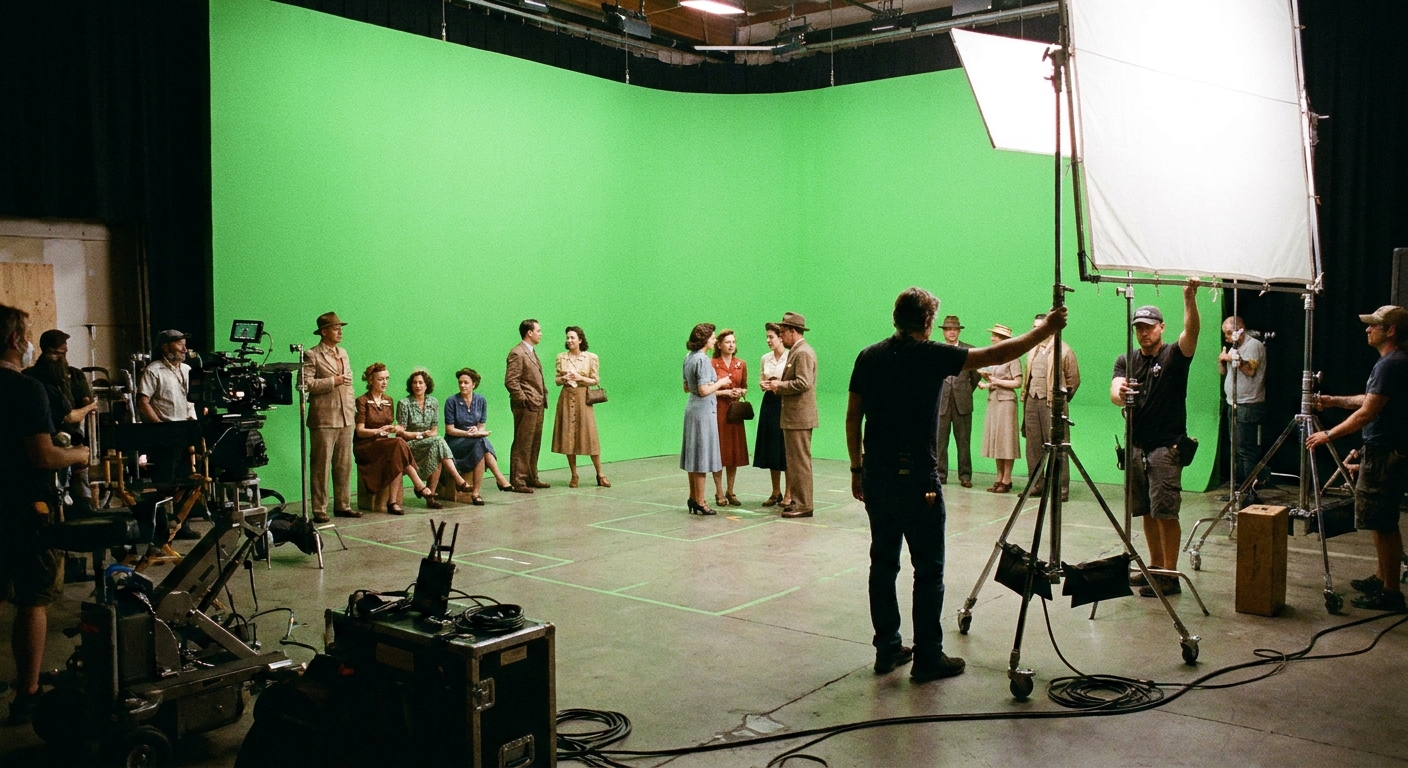
What the day looks like on set
Green-screen work usually happens on a soundstage, or in a stage space dressed with only what the camera absolutely needs. (If you hear someone say “the Volume,” that is typically an LED wall setup, not green screen, and it comes with different rules and issues.) For background actors, the rhythm can be stop-and-start and surprisingly technical.
- Check-in and holding: You’ll check in, do the usual paperwork, and then head to holding while the stage is lit and the camera setup is finalized. Some productions will also do a quick continuity photo or a wardrobe scan depending on the workflow.
- Wardrobe check: These days often include extra scrutiny from costume and the AD team, because certain colors and patterns can cause issues in the composite.
- Blocking on marks: You’ll be placed on precise floor marks so post-production can track movement and so multiple passes can line up.
- Multiple takes, multiple passes: You might repeat the same simple action again and again while the camera captures different crowd “tiles” or extra coverage.
If it feels a little like choreography, that’s because it is. A green-screen environment asks background performers to be consistent, repeatable, and easy to composite.
Imagined eyelines
On a practical set, your eyes naturally land on real doors, real exits, real skylines. On green-screen, the world is mostly imaginary, so eyelines become a piece of stagecraft.
What you’re usually told
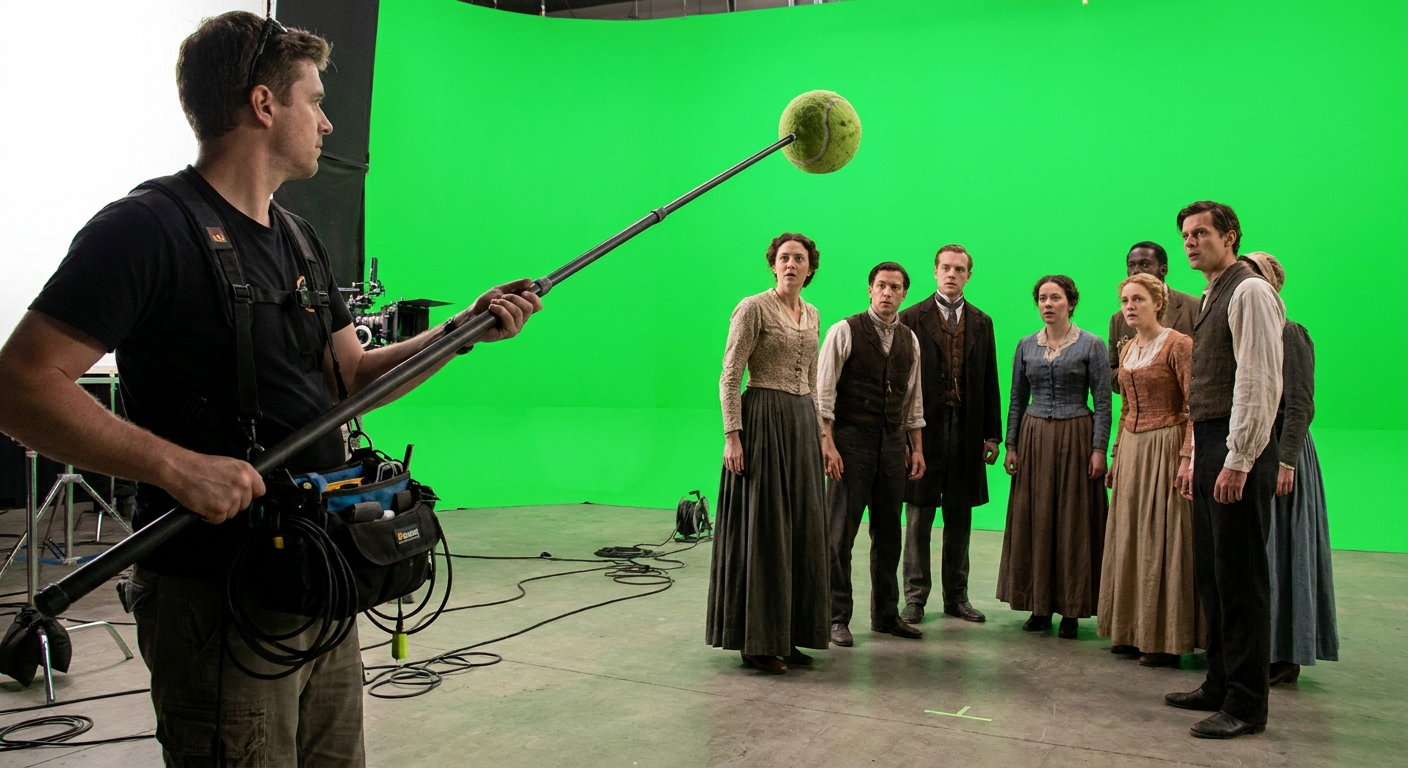
- Where the “thing” is: The assistant director or a stand-in may point to a specific spot on the green wall, a C-stand, a tennis ball on a pole, or a piece of tape that represents an object or character that will be added later.
- How high to look: If the added element will be towering, flying, or elevated, your eyeline may be above head height. If it’s a creature or gadget at knee level, you’ll be directed downward.
- When to react: Background reactions are often timed to a cue, a line of dialogue, or a sound effect called out by the AD team.
The goal is not “big acting.” It’s accurate, believable behavior that matches the scale and timing of a world you cannot see yet.
Wardrobe rules
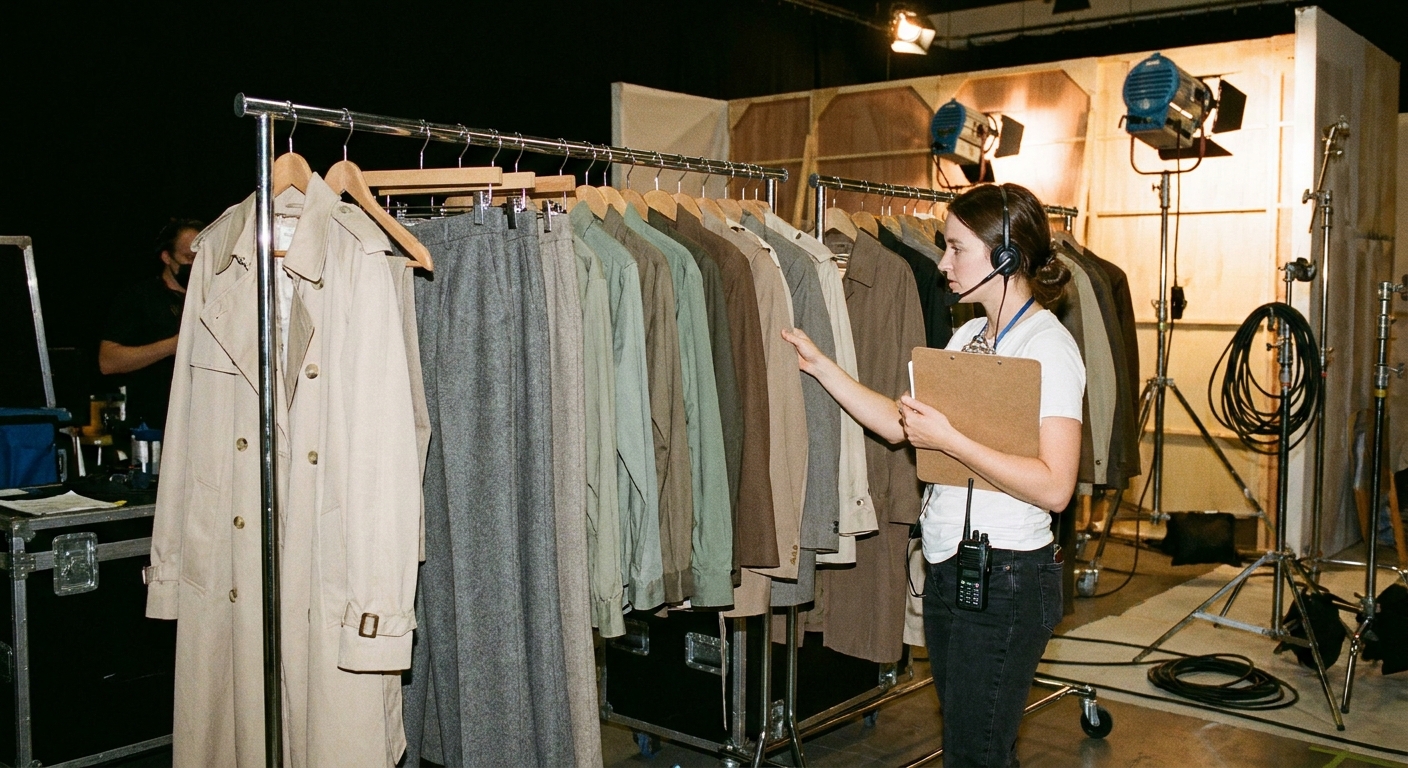
Green-screen days come with wardrobe do-not-bring lists that can feel oddly specific. They exist for a reason: the camera and post pipeline need clean edges around people so VFX can separate you from the background and drop you into the final environment.
Common wardrobe “no” items
- Green or blue that matches the screen: If your clothing is too close to the screen color, parts of you can disappear or become transparent in the key.
- Reflective fabrics and shiny accessories: Sequins, metallic jackets, mirrored sunglasses, and glossy jewelry can pick up green spill and look strange in the composite.
- Tight stripes, tiny checks, and heavy moiré patterns: Fine repeating patterns can shimmer on camera and make edges harder to track.
- Logos and brand marks: This is common on all shoot days, but it is especially important when multiple plates will be stitched together.
A quick note on spill: Green or blue can bounce onto skin, hair, and light-colored wardrobe. That is why makeup might powder a shine down, wardrobe might swap a bright white shirt for an off-white one, and you may be asked to avoid highly reflective materials even if they are not “green.”
Costume will guide you, and some productions will provide options, but it helps to arrive prepared with safe, neutral choices that fit the scene’s time period and tone.
Marks and blocking
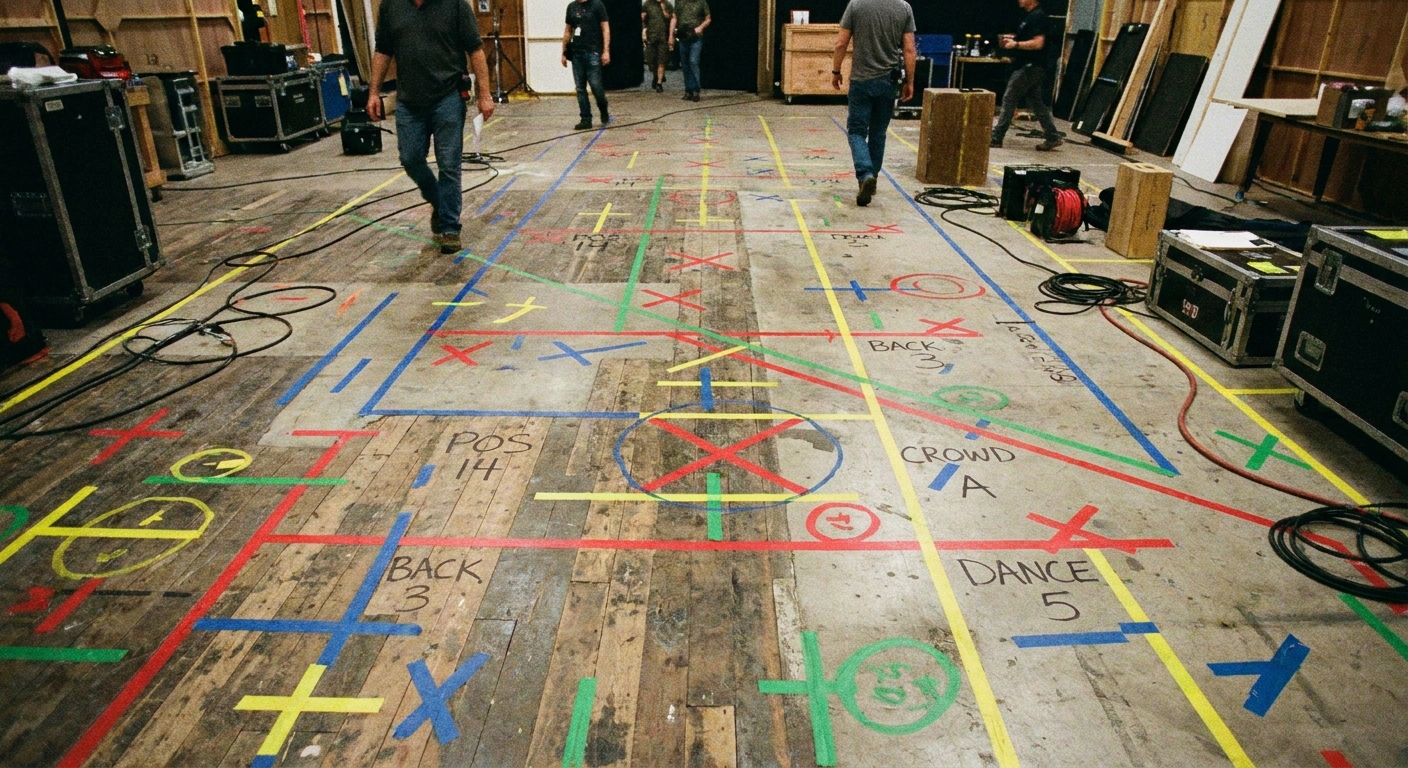
Green-screen background work is often mark-heavy. Those tape X’s are not suggestions. They are there so:
- Camera and VFX tracking stays consistent across takes.
- Lighting continuity holds when you repeat action in the same space.
- Crowd plates align when multiple groups are shot in sections and combined.
You may be given a start mark and an end mark, or a lane to move through. Sometimes you’ll be asked to keep your shoulders oriented a certain way so you do not drift into the no-go area where key light or tracking markers live.
Tracking markers
You’ll sometimes see little plus signs or dots on the screen. Those are tracking markers that help post-production map the scene. Background actors are generally asked not to lean on the wall, brush past markers, or cast big shadows on them unless specifically directed.
Footwear and shadows
Shoes matter more than you might think. Very glossy shoes can pick up green spill, and hard soles can create louder footfalls that slow resets. Also, the lighting team may flag or adjust you if your shadow is falling onto the screen in a way that makes the key harder. If you are asked to cheat a step forward or angle your body, it is usually about light and shadow, not your performance.
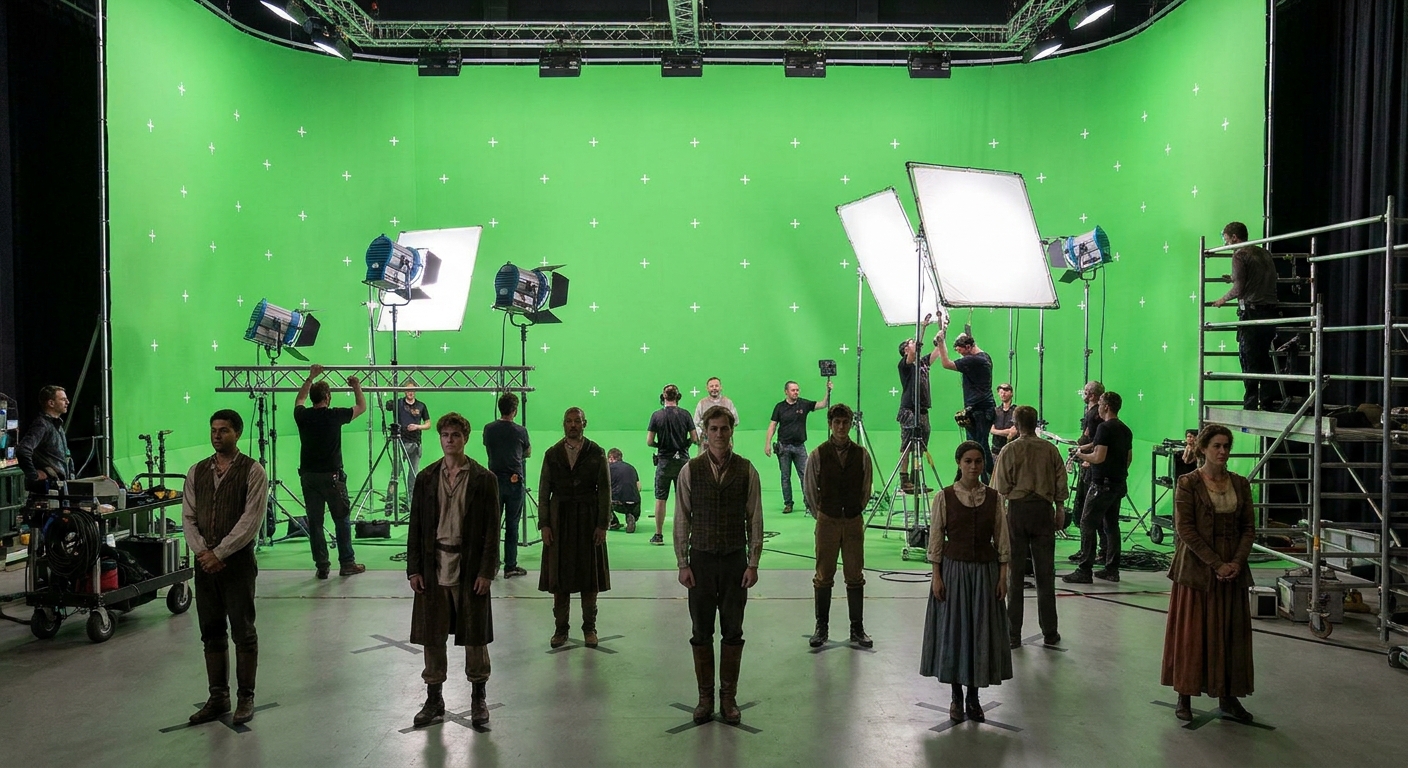
Multiple passes and crowd tiling
One of the most common reasons background actors are on a green-screen stage is to build scale. A small group can be filmed in multiple configurations, then duplicated and layered into a much bigger crowd later.
What tiling can look like
- Pass 1: Group A fills sections 1 and 2. You do a looped action for 10 to 30 seconds. Walking, chatting, clapping, reacting, depending on the scene.
- Pass 2: You’re moved to new marks, sometimes with a quick wardrobe tweak like adding a jacket, switching hats, changing hair position, or holding a different prop.
- Pass 3 and beyond: Repeat. The goal is variety without breaking continuity.
This is where consistency matters. If your action is meant to be a gentle loop, keep it loopable. If you whip around dramatically once, that same whip might repeat in the final crowd like a glitch.
Clean plates
At some point you may be asked to step out so the camera can record a clean plate, meaning the same frame without any performers. That clean version helps VFX and editorial remove stray elements and stitch passes together. When you hear “clear the set,” do it quickly and calmly. You’ll be brought back in.
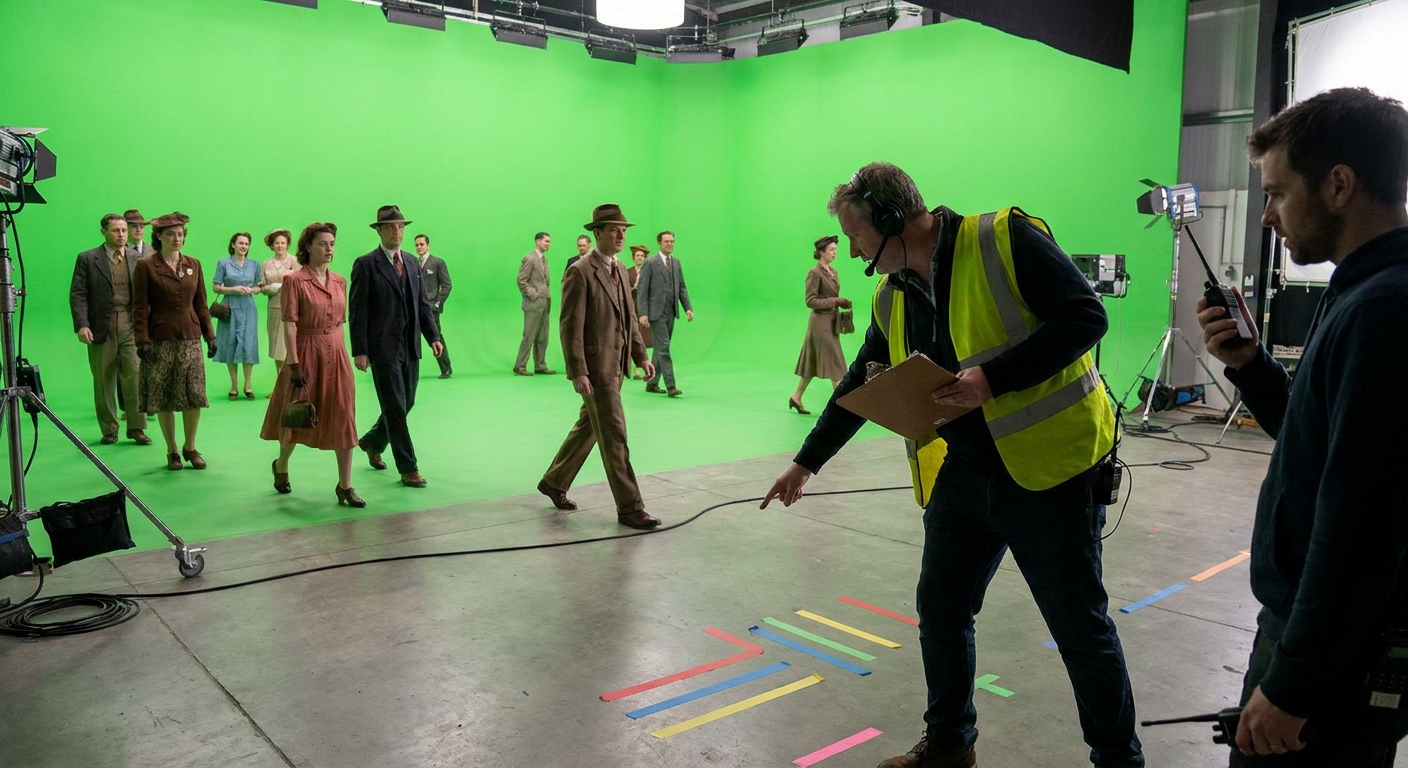
Props and air mime
Sometimes you’ll have a partial set piece, like a real railing, a practical doorframe, or a few steps. Other times, you’ll be asked to sell something that will be added later.
- Invisible barriers: A ledge might be a taped line, but you’ll be told to treat it like a drop.
- Digital-world behavior: You might cheer at an imaginary stage, board a digital tram, or watch a CG creature pass overhead. Your timing and direction will be choreographed.
- Careful hand business: Gestures may be kept tighter so you stay within the lit, keyable area and do not accidentally occlude tracking markers or intersect with practical pieces in a way that breaks the composite.
If you are ever unsure what you’re supposed to be seeing, ask during resets. A quick clarification saves confusion and keeps the scene coherent.
Practical tricks
Green-screen does not always mean sterile. Productions often add small practical elements to make movement read naturally:
- Fans: For hair and clothing motion, especially if the final scene will be outdoors or on a moving vehicle.
- Atmosphere: Light haze can help match the intended environment, but it is typically used only when the cinematography and VFX teams sign off, since it can complicate keying.
- Playback and cues: You may hear a countdown, a cue line, or temporary sound effects to help time reactions.
Even when the background is digital, the physics in the room still matter. If wind is supposed to be blasting across a rooftop, a small fan and unified performance choices can make the final composite feel real.
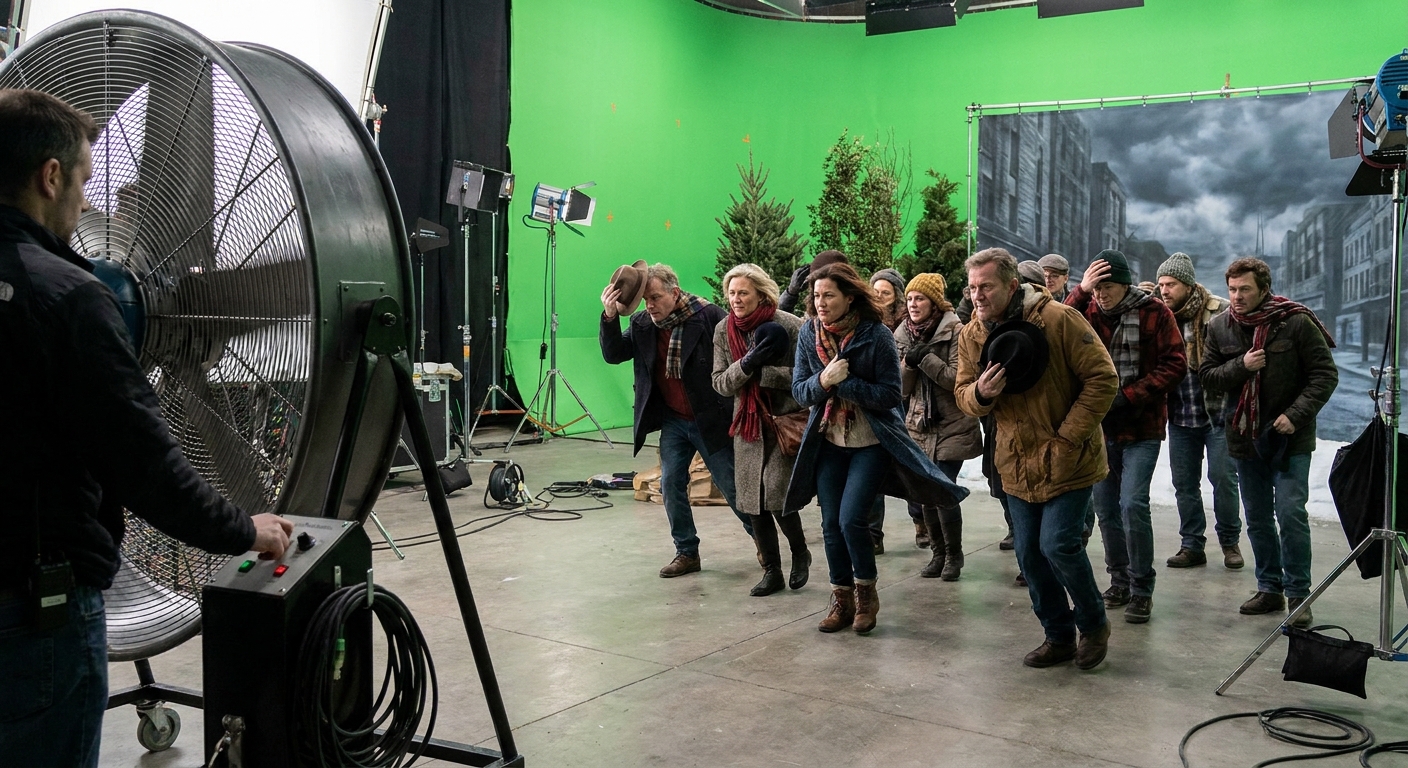
Set etiquette
- Hold your position: If you are set on a mark, do not wander between takes unless released.
- Keep movements repeatable: Loopable, consistent actions make post much easier.
- Listen for specific adjustments: On these days, tiny changes like “two steps left” or “chin up to the marker” are common and important.
- Stay flexible about resets: You might do the same beat many times for technical reasons that have nothing to do with performance.
FAQ
Is green screen always green?
No. Blue screen is also used. Which one a production chooses depends on factors like wardrobe colors, lighting, and the planned composite.
Why can’t I wear certain colors?
Colors close to the screen color can be keyed out, meaning parts of your clothing can partially vanish or create messy edges. Highly reflective materials can also pick up spill.
Why do we repeat the same action so many times?
To capture multiple clean versions of the same moment. Those passes can be layered to build a larger crowd, remove unwanted elements, or give VFX options when assembling the final shot.
Do green-screen days take longer than normal days?
They can. The performance might be simple, but the technical setup, lighting continuity, and multiple-pass approach can add time. Some green-screen work moves quickly once it’s dialed in, but patience helps.