Lights down. Curtain up.
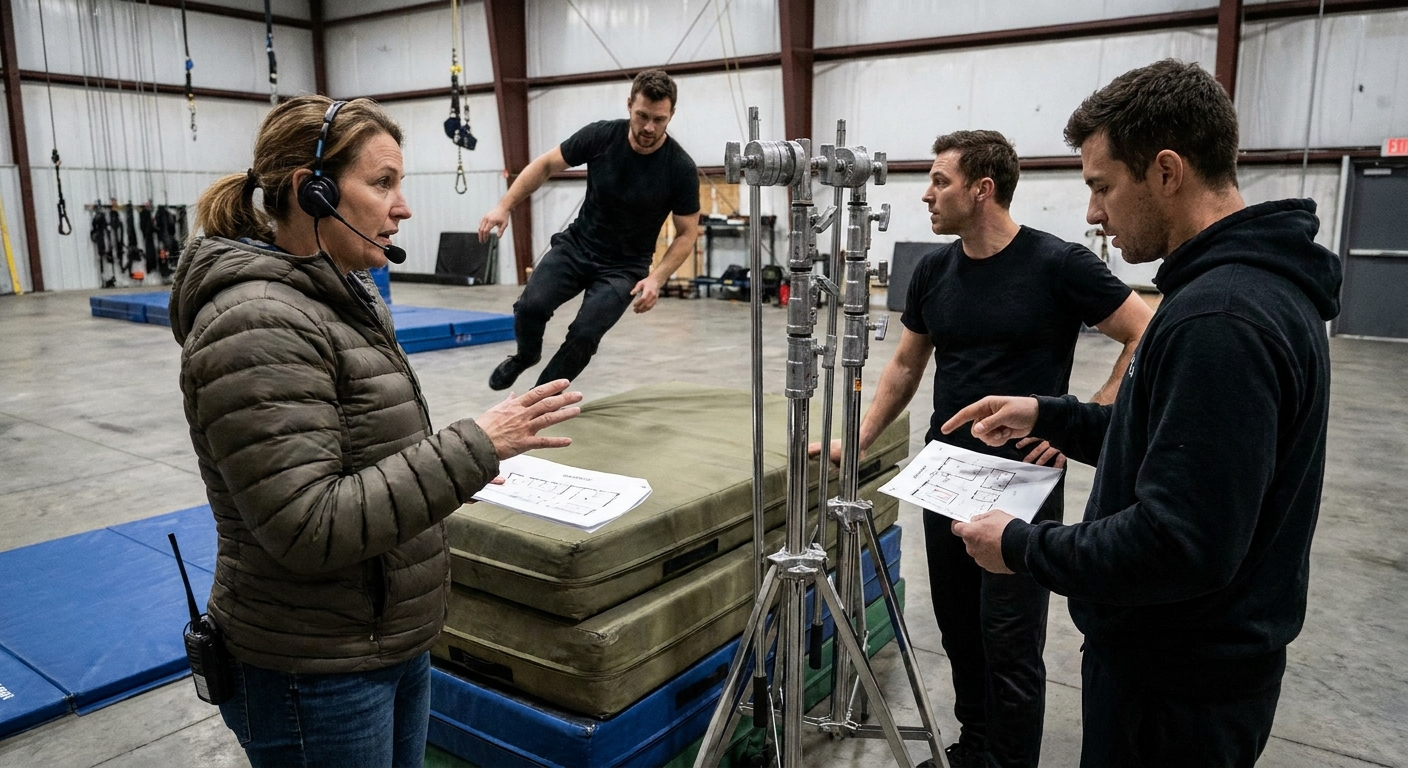
On a film set, one of the most important moments can happen before anyone rolls camera: the safety meeting. If you are working as background and the day includes a stunt, special effects, weapons, vehicles, smoke, fire, or any other hazard, you may hear someone call for a safety meeting or safety briefing. That is your cue to pause, listen, and speak up if anything is unclear.
What a safety meeting is
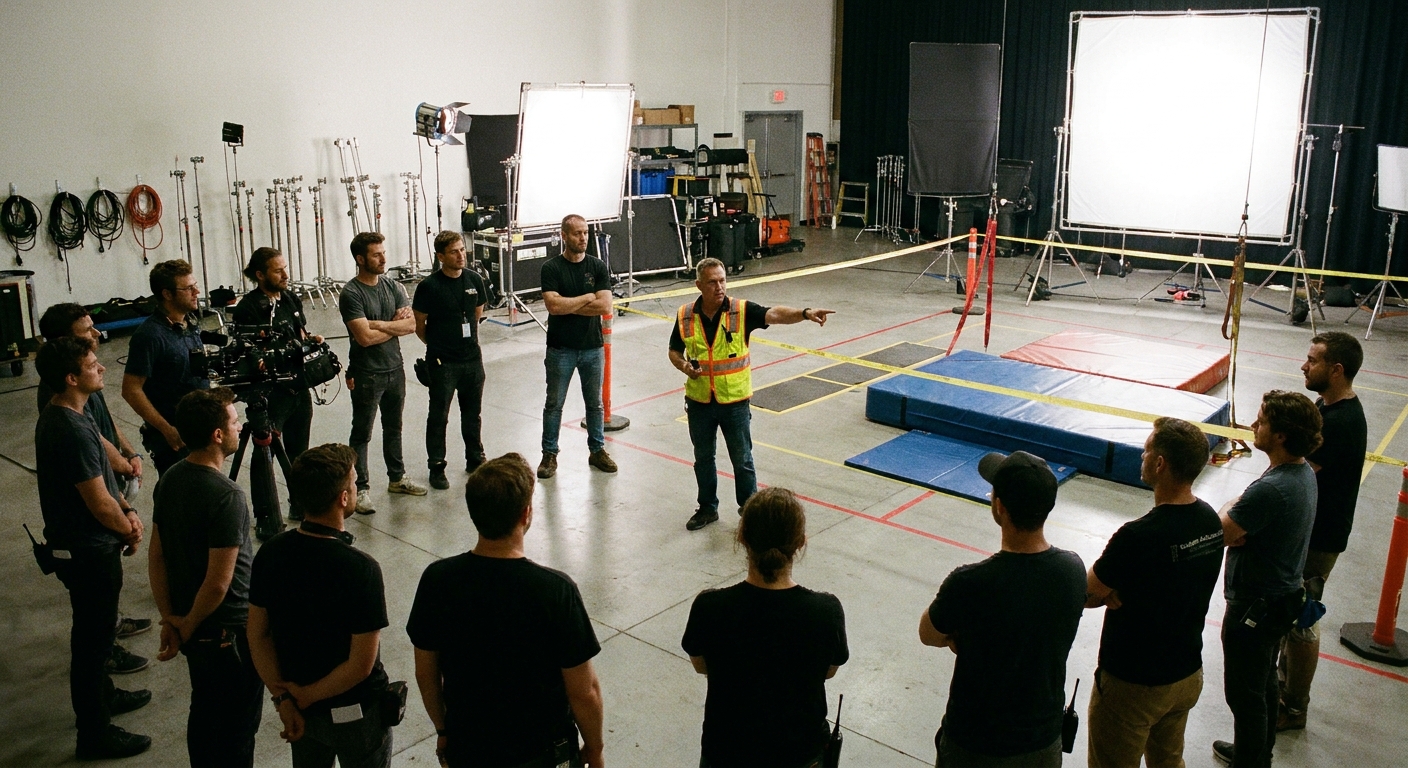
A safety meeting is a focused briefing typically held before a hazardous setup or sequence. It is where the team explains:
- What is about to happen (the action, effect, or stunt)
- Where it will happen (the exact playing area and boundaries)
- Who is involved (performers, operators, spotters)
- What could go wrong (specific risks, not vague warnings)
- How everyone stays safe (distances, protective gear, lockups, cues, and stop words)
Think of it as the on-set version of a pre-show announcement, except it is tailored to the precise risks of the moment and it may ask for clear confirmation from the people in the space.
When you will see one
Safety meetings are common before anything that changes the normal rhythm of set life, especially when:
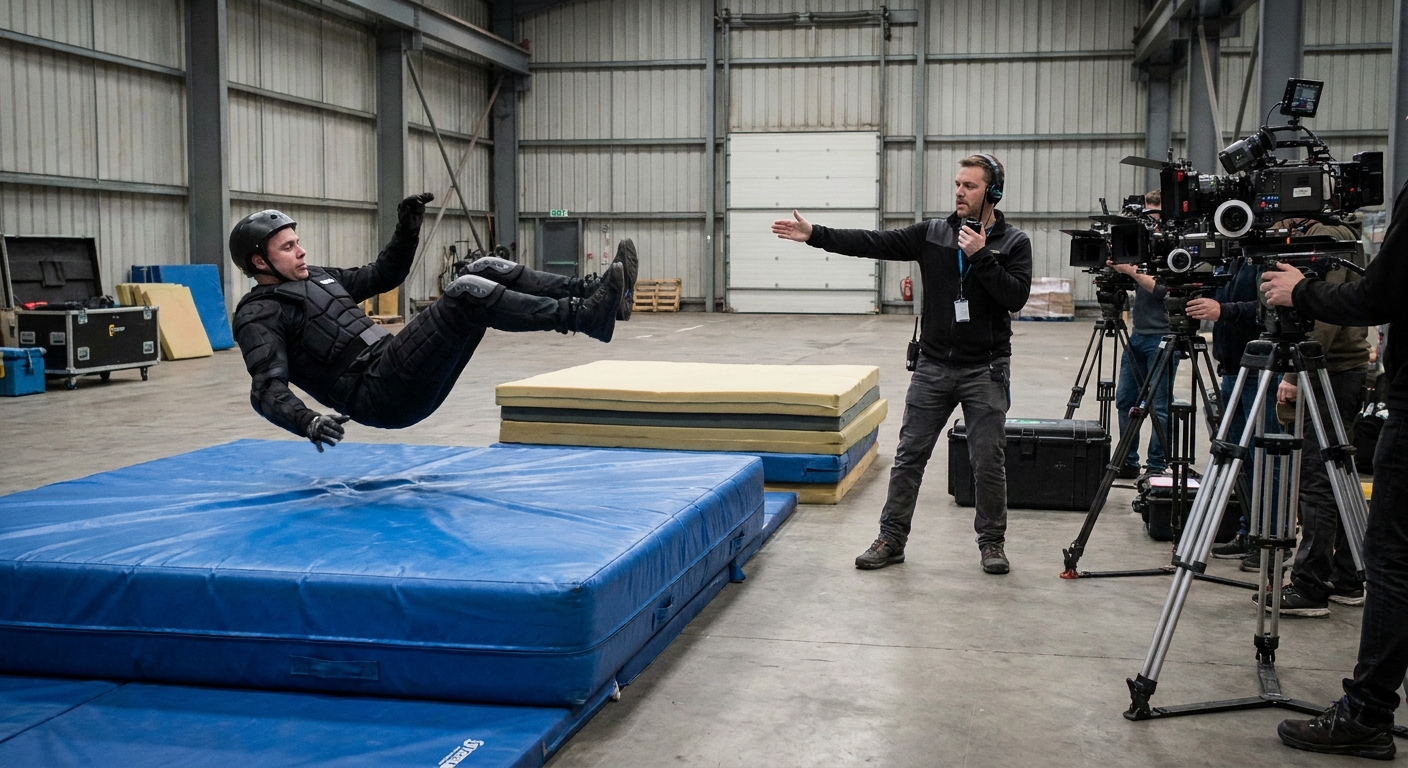
- There is a stunt, fall, fight, crash, or wire work
- There are special effects such as squibs, breakaway glass, sparks, smoke, atmospheric haze, rain towers, wind machines, or controlled flame
- Weapons are present, including prop guns, blanks, knives, or specialty props that can pinch, cut, or strike
- Vehicles are driving close to people or at unusual speeds
- There is a water setup, slippery surfaces, elevated platforms, or confined spaces
- The set involves pyrotechnics, loud sound effects, or intense lighting effects (strobe)
Sometimes the briefing is a full crew gather. Sometimes it is smaller, like a targeted briefing for background working nearest the action. If you are in the area, you are part of the audience.
Who leads the meeting
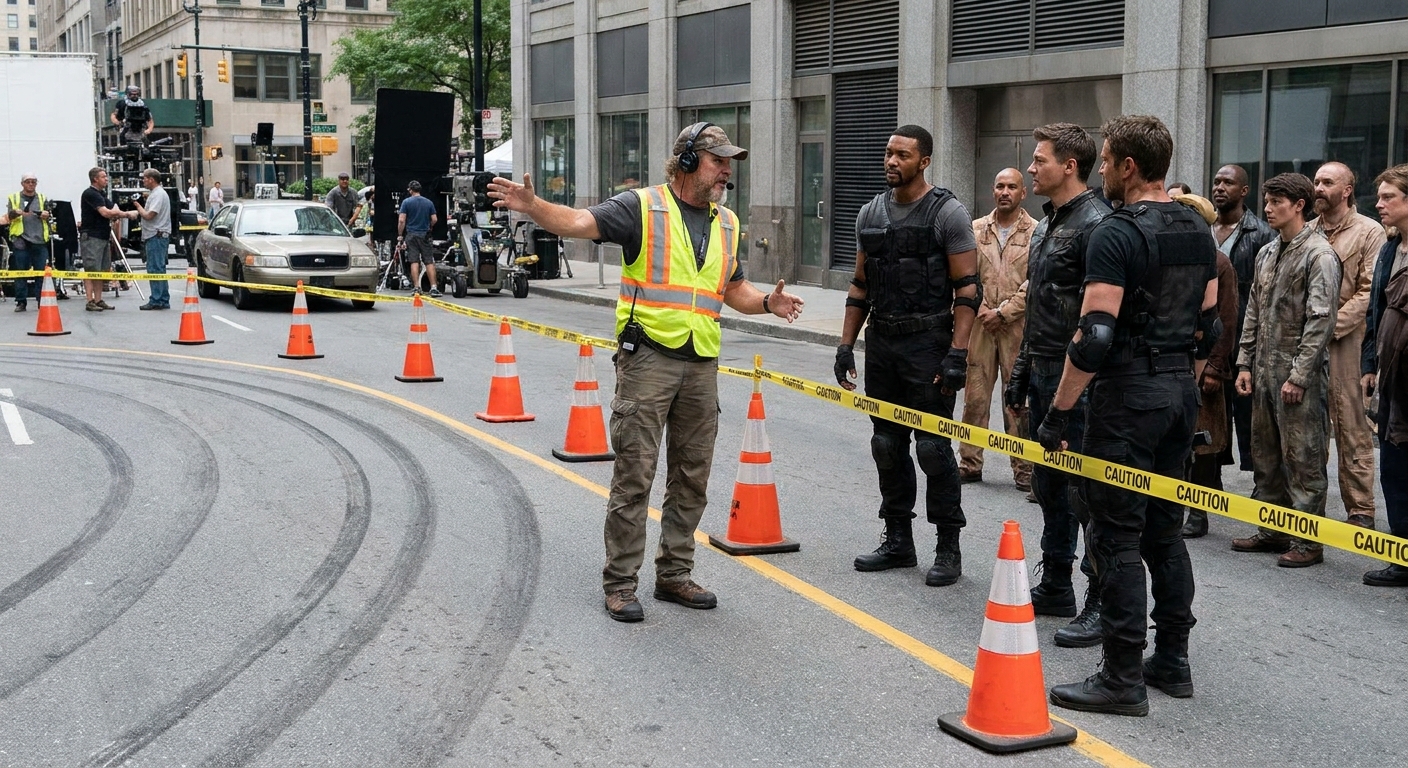
Who runs the safety meeting depends on the hazard, and more than one department may speak. Common leaders include:
- Assistant Director (AD) team: Often organizes the gather, controls set flow, and confirms who needs to hear what before moving forward.
- Stunt Coordinator or stunt lead: Explains choreography, safe distances, rehearsal plan, pads, spotting, and what to do if something feels off.
- SFX supervisor (practical effects): Covers mechanical or practical effects like squibs, breakaways, sparks, smoke, or rigs, including boundaries and timing.
- Armorer or weapons handler: Addresses weapon status, handling rules, who may touch what, and what “hot” versus “cold” means on that set. Only the designated weapons department should define weapon status in the moment.
- Key Grip or Gaffer: For rigging, overhead hazards, big units, or cable runs that need special awareness.
- Medic or set safety officer (when present): May point out where to stage, what to report, and what symptoms to take seriously (heat, smoke, loud sound exposure).
As background, you do not need to memorize the chain of command. You do need to know who is speaking, and who to approach right after if you did not catch something.
What is usually covered
Safety briefings vary, but the best ones are specific. Here is what you can expect to hear, and what you should listen for.
The action and the beats
Someone will describe the sequence in plain language: what moves where, what triggers what, and what the timing is. If there is a reset, multiple takes, or a rehearsal, they will say so.
Boundaries and safe zones
They will identify where you can stand, where you cannot, and what marks matter. On many sets, this is communicated with tape lines, cones, barricades, or crew posted as spotters.
Distances
You may hear minimum distances from:
- Vehicles
- Effects rigs
- Breakaway props
- Weapons fire or muzzle direction
- Fight choreography
If you are not sure whether you are inside or outside the safe distance, ask before the cameras roll.
Cues, calls, and stop words
Listen for set calls that signal a change in risk, such as when an effect is about to fire or a vehicle is about to move. The meeting may also explain what call stops the action, and who is empowered to say it. If you hear a stop call, stop moving and follow direction.
PPE and wardrobe adjustments
Sometimes safety is as simple as ear protection, eye protection, knee pads under wardrobe, closed-toe shoes, or removing dangling jewelry. If anything you are wearing feels risky for the action, flag it. This includes long scarves, unstable shoes, or props that obstruct your hands.
Environmental issues
Haze, smoke, dust, cold, heat, or strobe lighting can affect people differently. You may be asked to self-identify concerns, like asthma sensitivity, migraines triggered by strobe, or discomfort in tight spaces. It is not “making a fuss” to mention this. It is exactly what the briefing is for.
What background actors do
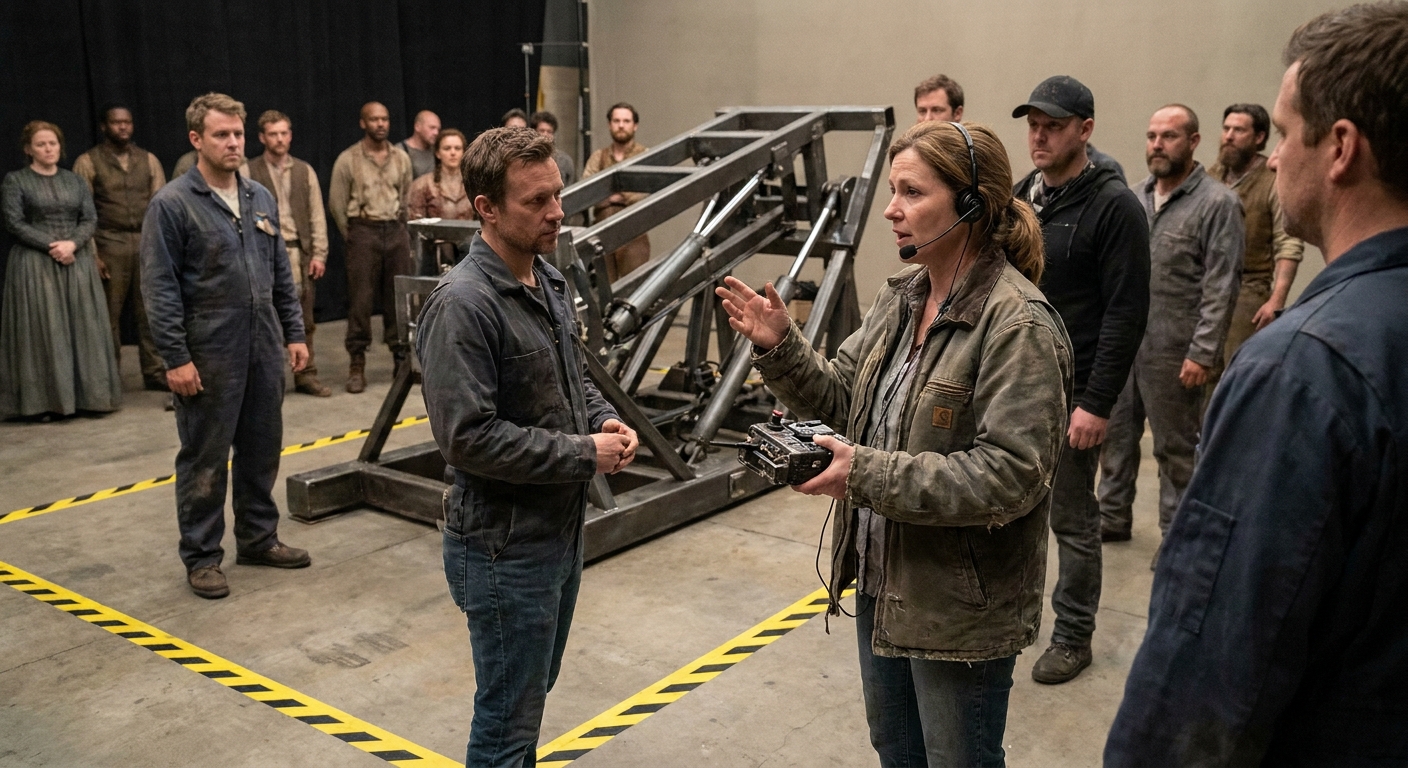
Background work is acting, but during a hazardous setup, your most important job is to be safely predictable. In a safety meeting, you are typically expected to:
- Be present and attentive: Phones down, side conversations paused, eyes on the speaker.
- Confirm you understand your placement: Know your mark, your path, and whether you can cross any boundary between takes.
- Ask questions immediately: If you did not hear the distance, cue, or pathway, ask before rehearsal or roll.
- Disclose relevant concerns: Sensitivities to smoke or haze, hearing issues, mobility limitations, pregnancy considerations, or anything that affects safety and consent.
- Follow the plan exactly: Do not improvise a reaction that moves you closer to a vehicle, effect, or fight.
- Hold position when told: Lockups and “picture’s up” moments are not suggestions. They keep people out of paths and keep timing consistent.
If someone asks for verbal confirmation, a simple, clear “Yes” or “Copy” is common. The point is to remove ambiguity.
If you missed it
Sometimes you get brought in late from holding, you were at the restroom, or you were parked around a corner when the gather happened. If you did not hear the safety briefing and you are being placed anywhere near the action, pause before you step in and say so.
Ask the AD team or the department running the hazard for a quick recap, even if it is just: where is the safe line, what is the cue, and what is the stop call. You are not slowing things down. You are preventing the kind of confusion that slows everything down.
Smart questions to ask
It can feel awkward to speak up in a crowd. Try short, concrete questions that get you a usable answer:
- “Can you show me the safe line again?”
- “Am I behind the vehicle path or beside it?”
- “When the effect goes off, do you want us facing camera or turned away?”
- “Is ear protection required or optional for this take?”
- “If we need to exit, which direction is clear?”
- “Are we holding position during resets, or can we relax between takes?”
On a well-run set, these questions are normal. They help everyone.
Common terms you might hear
Set language varies, but a few phrases show up often during safety briefings:
- “Lock it up”: Stop movement in an area. Do not wander through. Wait for the release.
- “Hot” and “cold”: Meaning changes by department, so always listen to the definition given in the meeting. If weapons are involved, only rely on what the armorer or designated weapons handler states in that moment.
- “Clear the set” or “Clear the area”: Only essential personnel remain in a specific zone.
- “Rehearsal”: A run-through, which can still involve real hazards depending on what is being rehearsed.
- “Reset”: Returning to one position. Safety boundaries still apply.
If a term is used without explanation and it matters to where you stand, ask for clarification.
After the briefing
Once the safety meeting ends, treat the boundary lines like they are real walls. Do not duck under tape between takes. Do not wander into a lane because it looks empty. Wait for the release from the AD team or the department running the hazard.
And unless props or the designated handler explicitly tells you to, do not pick up or handle weapons, breakaways, spent casings, or effect debris. Even “dead” items can be sharp, hot, or part of the reset.
What it is not
A safety meeting is not a substitute for training, proper staffing, permits, or professional supervision. It also is not a moment for pressure or bravado. If the briefing feels rushed, confusing, or inconsistent with what you are being asked to do, the safest move is to pause and ask for direction from the AD team or the department leading the hazard.
If you are close enough to be affected by the action, you are close enough to deserve a clear explanation.
If you are asked to confirm
Sometimes you will be asked to confirm you heard and understood a risk, especially if you are in the near zone of an effect or stunt. Take that seriously. Before you say yes, make sure you can answer these for yourself:
- Do I know exactly where I am standing and where I am not allowed?
- Do I know what to do when the cue happens?
- Do I know who to look to for a stop or an all clear?
- Do I have any personal concern that changes my ability to do this safely?
If any answer is no, it is completely fair to ask for the explanation again. The goal is a clean take and a safe wrap.
Quick recap
- A safety meeting is a short, specific briefing usually held before stunts, effects, weapons, vehicles, or other hazards.
- It is often led by the AD team and the department responsible for the hazard, like stunts, SFX (practical effects), or weapons handling.
- Background actors should listen for boundaries, distances, cues, and stop calls, then confirm they understand.
- Speak up early if you did not hear something, missed the meeting, or have a health or comfort concern related to the setup.
That is the behind-the-scenes magic I like most: not the risky part, but the careful part. The moment everyone agrees on how to tell the story safely.