Lights down. Curtain up.
If you have ever seen a theater listing that says staged reading, you might wonder whether you are getting a full production or something closer to a rehearsal. The short version: a staged reading is a script-in-hand presentation of a play or musical, performed by actors with minimal staging, often as part of a development process and sometimes in front of a public audience.
Staged reading, defined
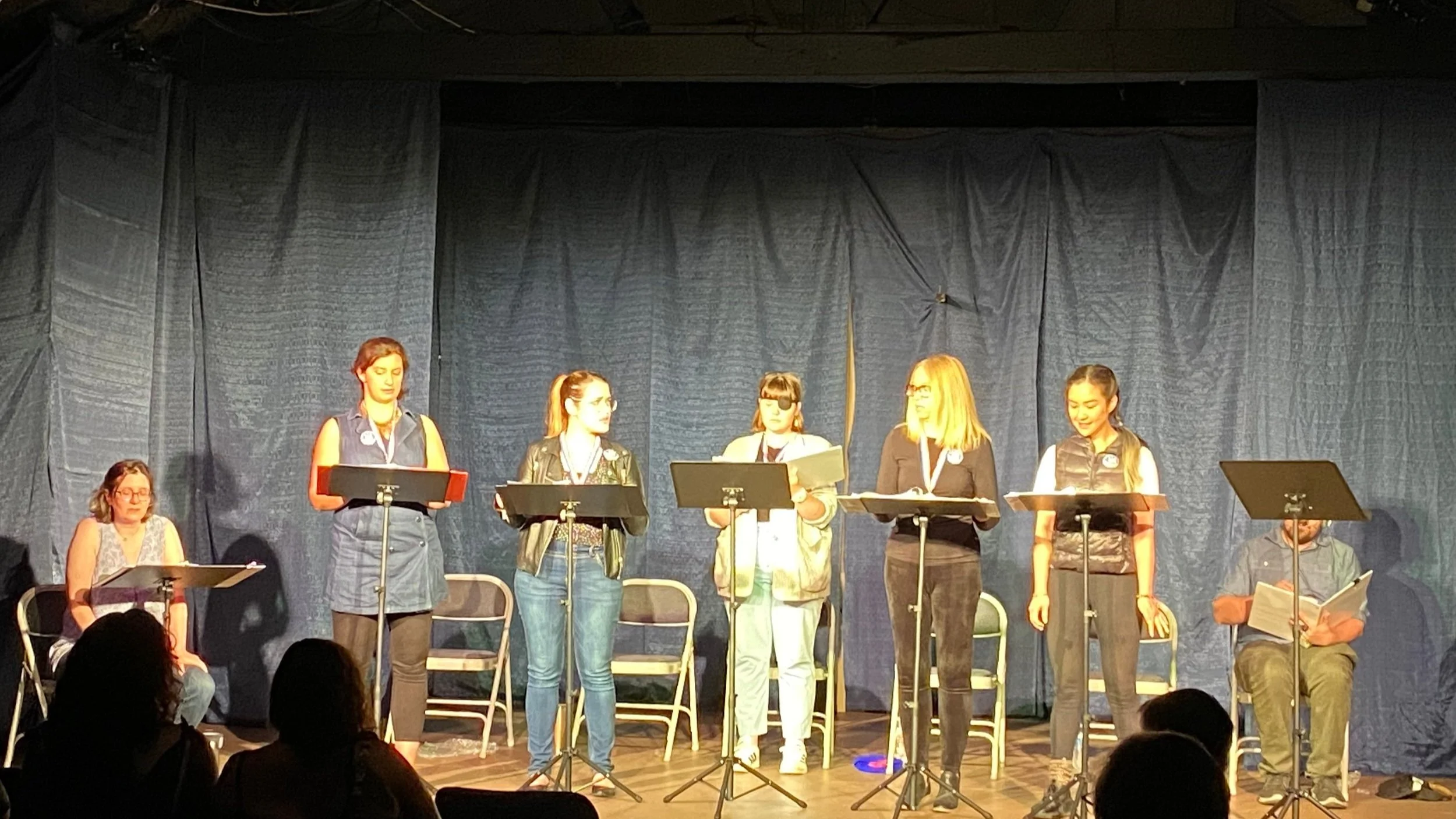
A staged reading is a performance where actors read a script aloud, usually on a stage or in a theater setting, with limited movement and limited production elements. The goal is to let the writing take center stage, while still giving the story a little theatrical life through voices, timing, and presence.
It is most commonly used for:
- New plays and works in progress
- New musicals, sometimes with a pianist or small band
- Revisions, when a creative team wants to hear changes out loud
- Festivals and new work series, where multiple readings are presented to audiences
Because it sits between rehearsal and full production, you will sometimes hear readings described with slightly different labels, like “staged reading,” “script-in-hand performance,” or “read-through with staging.” They all point to the same idea: performed text with minimal production.
What happens in the room
A staged reading can be intimate or event-like depending on the venue, but the basic flow is familiar: actors with scripts in hand, the story moving forward scene by scene, and just enough staging to help the audience track who is where and what is happening.
What you will usually see
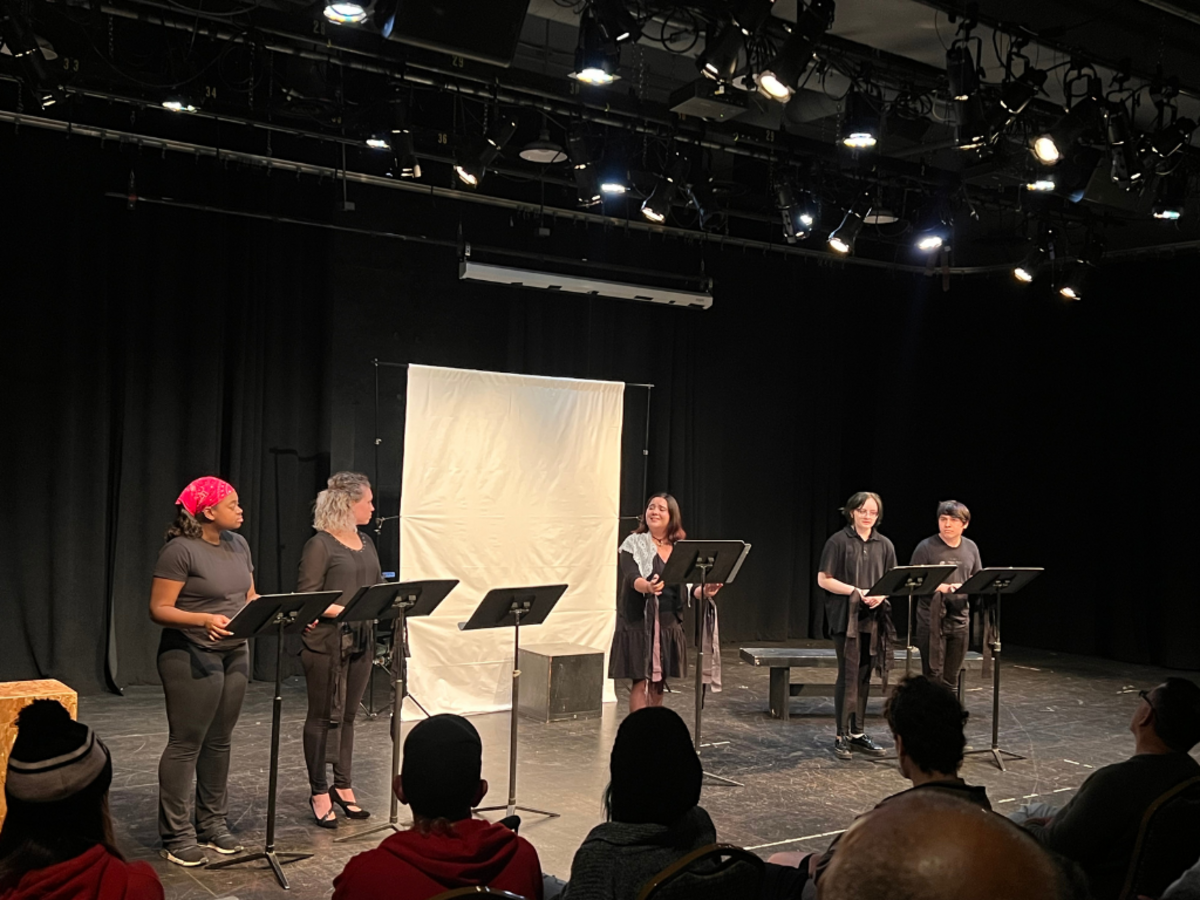
- Actors reading from printed scripts, sometimes in binders
- Music stands or simple chairs, with actors sitting and standing as needed
- Basic blocking, like standing for entrances or turning to face a scene partner
- Limited props, if any, usually hand props only
- Simple lighting, often a general wash rather than fully designed cues
- Minimal costumes, usually rehearsal clothes or a small costume hint, like a jacket or hat
If it is a musical reading
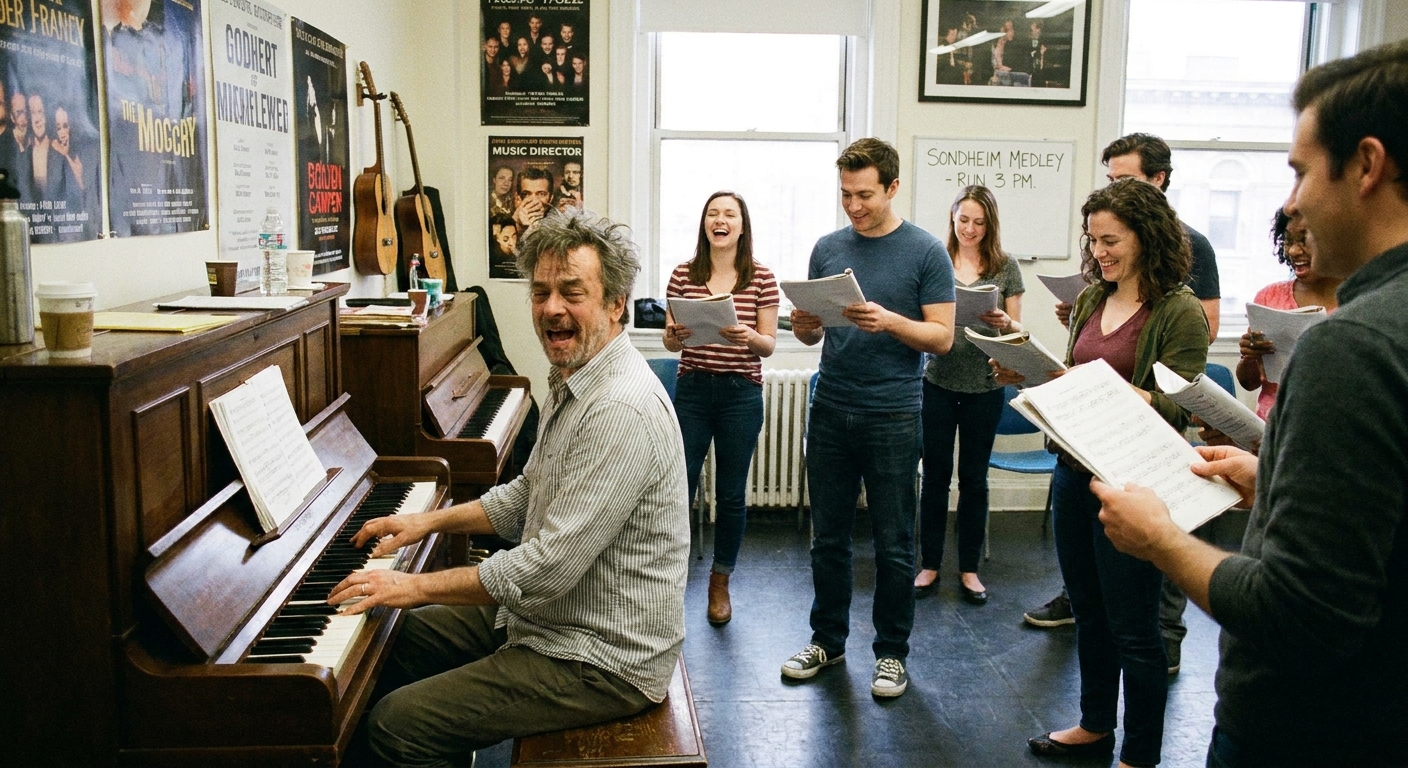
For musicals, you might also see:
- A pianist and music director
- Singers holding both script and score, or a combined book
- Light accompaniment rather than a full orchestra
- Occasional holds, for quick notes or resets, depending on the event
Who is involved
One reason staged readings feel special is that they are often close to the source. The people in the room are not always the same people you would see at a long-run production.
Depending on the project, a staged reading may include:
- Actors, sometimes cast for the reading only
- A director (or a reading facilitator)
- The playwright and, for musicals, the composer and lyricist
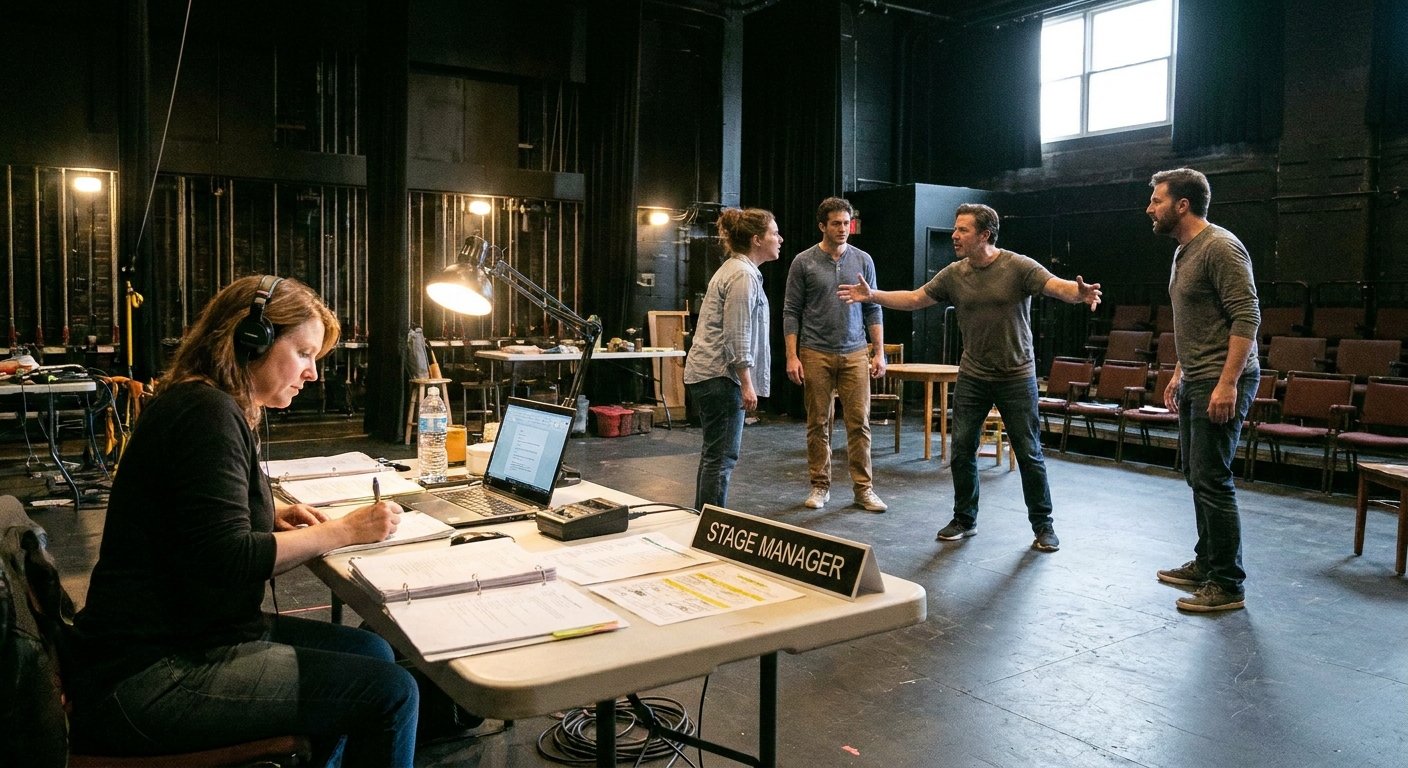
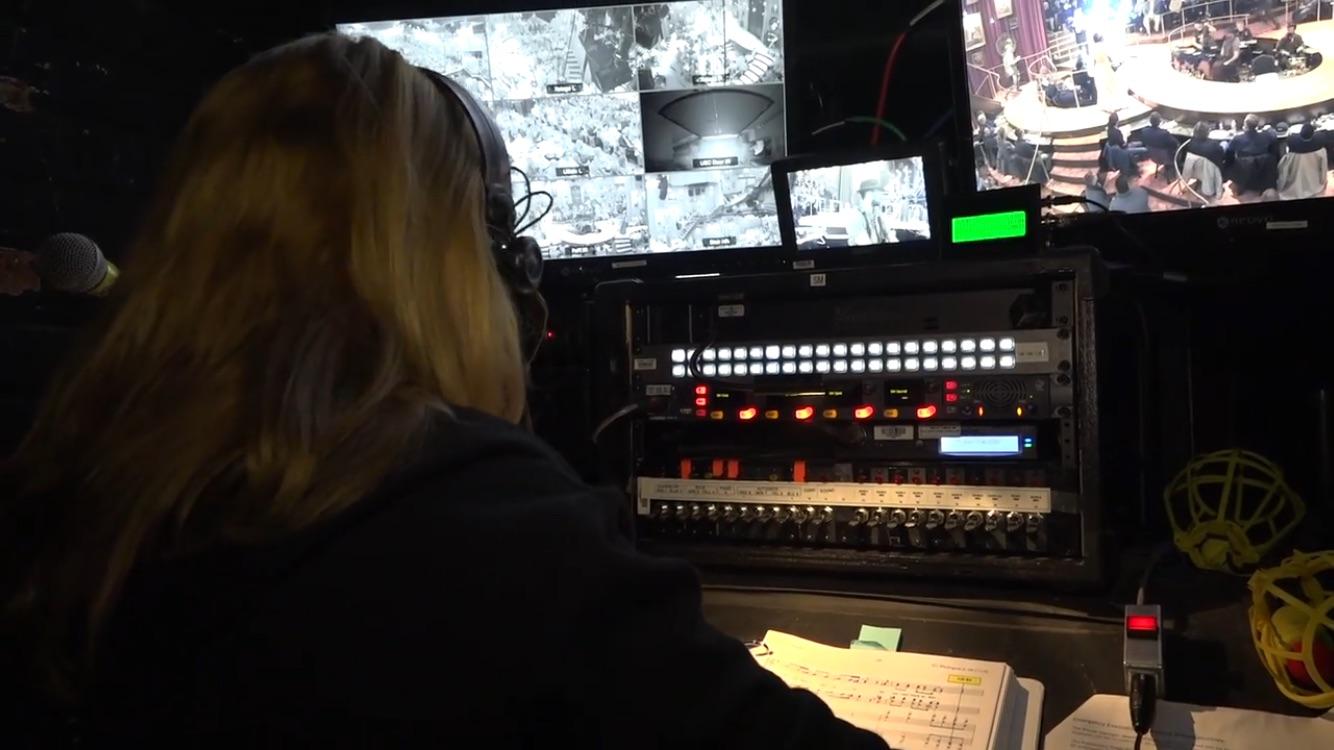
- A stage manager, especially in readings that involve light cues or clear transitions
- Dramaturgs or literary staff, who help track story clarity and structure
- Producers or artistic leadership, when a theater is considering next steps
If the reading is public, there may also be an invited audience of donors, subscribers, students, or general ticket buyers.
Performed or just read?
It is both. The text stays in hand, but the acting is real. Even with minimal movement, performers make choices about:
- Pacing
- Character voice
- Comic timing
- Emotional turns and silence
- Relationships, even if two actors never leave their music stands
The best staged readings can feel surprisingly complete, not because of scenery or spectacle, but because a roomful of people is discovering the story together in real time.
Reading vs full production
Here is the cleanest way to think about it: a staged reading is designed to test and share the script, not to present the final version of the show.
Common differences
- Scripts are visible in a staged reading; in a full production, actors are typically off-book.
- Staging is minimal; in a full production, blocking is fully built and rehearsed.
- Design elements are pared back; in a full production, sets, costumes, sound, and lighting are fully realized.
- The run is often short; a reading may happen once, twice, or over a weekend.
- The purpose is developmental; the team may revise the script after hearing it aloud.
Think of a staged reading as a show that is brave enough to arrive unfinished, so the writing can be heard clearly.
Reading vs table read
It is easy to confuse a staged reading with a table read in film and television, since both involve reading scripts aloud. The difference is mostly about context and audience.
Staged reading (theater)
- Often happens on a stage or in a performance space
- May be ticketed or open to the public
- May include light staging and theatrical pacing
- Usually focuses on developing a new play or musical
Table read (film and TV)
- Typically happens in a private room, seated around a table
- Usually closed to the public
- Used for pre-production, timing, tone checks, and collaboration
- Often includes writers, producers, executives, and sometimes department heads
In other words, a table read is usually an internal step on the way to filming. A staged reading is often a public-facing theater event, even when it is part of development.
Common variants
Theater people love a label. If you see one of these, it is usually adjacent to a staged reading, but not always identical:
- Cold reading: little or no rehearsal. The cast may be seeing the script for the first time.
- Concert reading (musicals): the music is featured more prominently, sometimes with singers at stands and a stronger emphasis on the score.
- Industry reading: invite-only, often for producers or artistic staff, and sometimes used to gauge interest in next steps.
Will the script change?
Sometimes, yes. One of the big reasons readings exist is to answer practical questions that only show up when words are spoken out loud, in order, with an audience listening.
A staged reading can reveal:
- Where the story is confusing
- Which jokes land and which do not
- Whether a scene runs long
- Whether character motivations track clearly
- How the rhythm of a musical number feels in context
Some readings are followed by a talkback or feedback session. Others are simply observed quietly, with notes taken for later revisions.
What to expect as an audience member
If you are attending a staged reading, go in with the right kind of excitement: you are there to listen closely and catch the shape of a piece while it is still becoming itself.
Audience basics
- Expect scripts and less physical action than a full show.
- Expect a simpler format. Many readings run straight through, often without an intermission, but it varies by venue and length.
- React normally. Laugh when it is funny, be quiet when it is not. Your response is part of the point.
- Stay curious. You might be seeing an early form of a play that later gets a full premiere.
If there is a talkback, it usually happens right after the reading, and it is fine to keep comments specific. “I got lost in Scene 3” is more useful than “I did not like it,” and “I loved the relationship between those two characters” is a great note to share.
Quick FAQ
Is a staged reading the same as a workshop?
Not exactly. A workshop is usually a broader development period that can include multiple rehearsals, rewrites, and sometimes a presentation. A staged reading is often a short run or single presentation that may be part of a workshop process.
Do actors memorize lines?
Usually not. Some performers may be partially off-book for comfort, but the defining feature is that the script remains in hand.
Are staged readings ticketed?
They can be. Many are free or low-cost, especially in festivals or new work series. Others are special events for donors or subscribers.
Can a staged reading include sound and lighting?
Yes, but typically in a limited way. You might get simple cues, music underscoring, or microphones, especially in larger venues or musical readings.
The bottom line
A staged reading is theater in its clearest form: people, words, and a room paying attention. It is a script-in-hand performance of a play or musical with minimal staging, often used to develop new work and sometimes offered as a public event. If you love seeing how stories are built, staged readings are one of the best seats in the house.