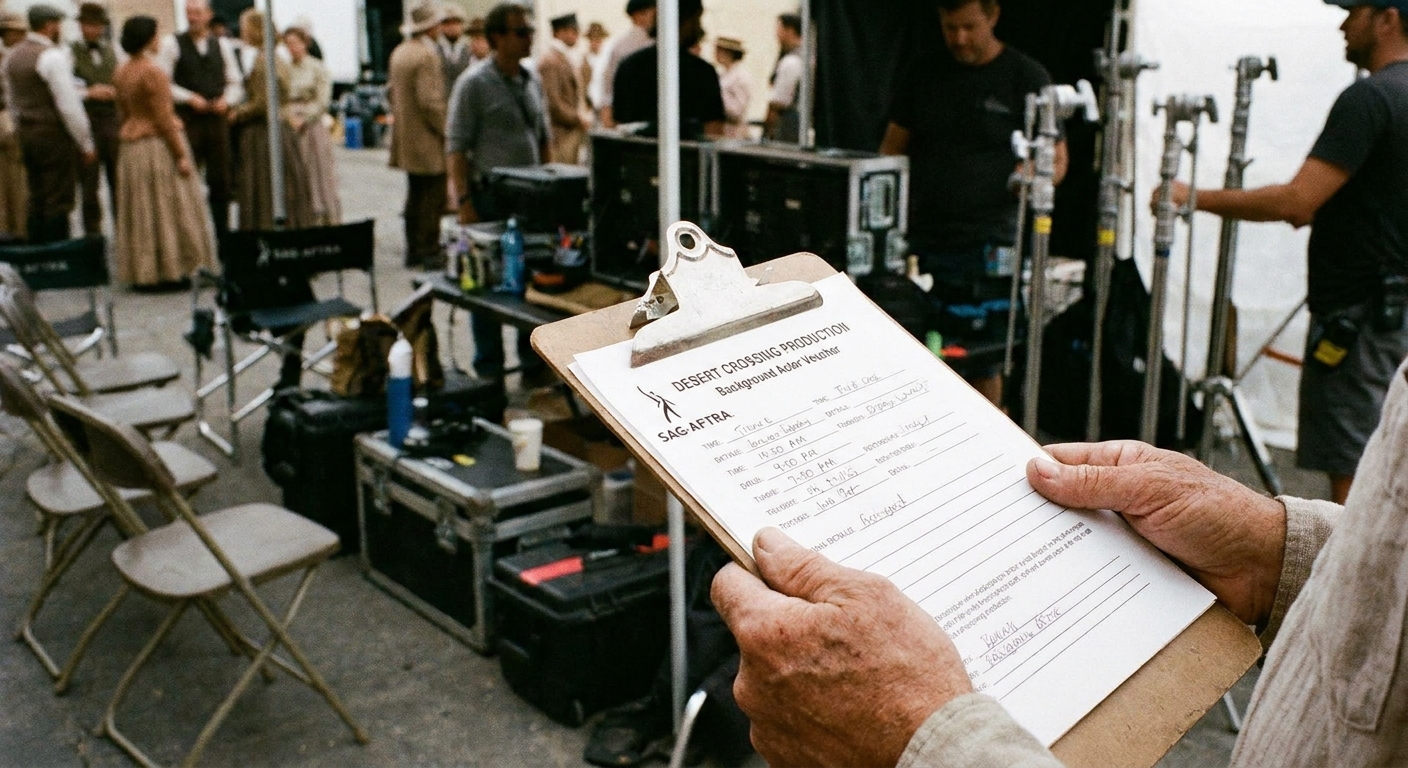
Lights down. Curtain up.
If you have ever been booked for a film or TV job and suddenly found yourself staring at a one- or two-page document full of dates, rates, and legal-sounding phrases, you have likely met the deal memo. It is small, fast, and surprisingly important.
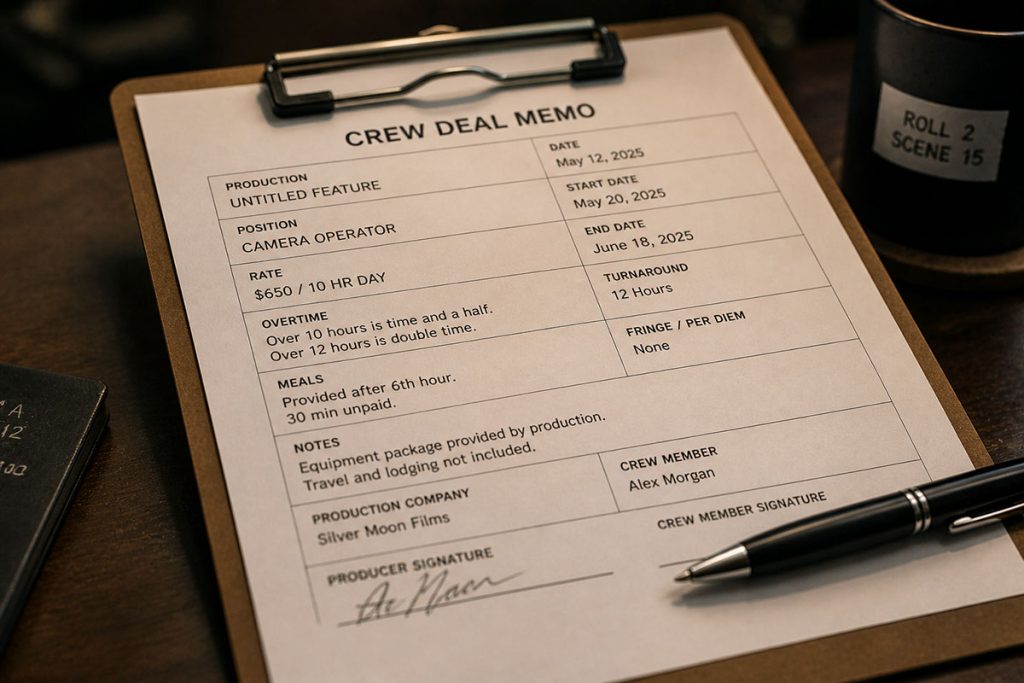
What a deal memo is
A deal memo is a short hiring document used in film and television to confirm the basics of your engagement before a longer contract is prepared or in place. Think of it as the production’s written “yes” that spells out what you are doing, when you are doing it, and what you are being paid.
Deal memos often show up across the industry for performers, background actors, stand-ins, day players, crew, and other hires. The format varies by production, but the purpose stays consistent: to put the core deal points in writing so both sides are on the same page.
What a deal memo usually includes
Every production has its own paperwork personality, but most deal memos cover the same essentials. Here is what you should expect to see.
- Your role (for example: Background, Stand-In, Photo Double, Actor, Day Player)
- Project title (sometimes a working title)
- Employer (often the production entity listed as the employer of record; a payroll company may process your pay)
- Work dates and any holds, options, or tentative dates
- Rate of pay (hourly or daily) and sometimes overtime language
- Guaranteed hours (if any, such as an 8-hour guarantee)
- Location (city and state, and sometimes the general reporting area)
- Call time process (often “TBD” with instructions to watch for a call sheet)
- Wardrobe or special requirements (fittings, specific sizes, grooming rules)
- Meals and rest rules (more common on union or studio shows, or where governed by a CBA, state law, or production policy)
- Credit, billing, or title details (more common for principal performers)
- Use of services and basic terms like confidentiality and conduct
- Signature lines for you and the production
If something major is missing, like the rate or the dates, that is your cue to pause and ask questions before you sign.
Why deal memos matter
In the rush of production, details can get fuzzy. A deal memo helps prevent the classic mix-ups: wrong rate, wrong date, wrong expectation. It also creates a record that you can reference if payroll needs clarification later.
Just as importantly, a deal memo is often the document that confirms whether you are being booked for one day, multiple days, or a window of time that includes holds or options. Those words can affect what other work you can accept.
What to check before signing
Before you put pen to paper, take a slow lap through the memo. You do not need to be a lawyer to spot issues. You just need to be attentive.
1) Role and category
Make sure your role is described accurately. “Background” and “stand-in” are not the same job, and a “featured extra” label can be used informally in conversation while your paperwork still says background. If you were promised something specific, confirm it appears here.
2) Dates, holds, and cancellations
Check every date. If the memo includes holds, read the language carefully. A hold can limit your availability, and some memos specify how much notice you will receive if you are released.
For example, you might see language like: “Hold dates: 10/12 to 10/15, talent to remain available, release with 24-hour notice.” In practice, that can mean you should not accept another job that would make you unavailable during that window, even if you only end up working one of those days.
If you cannot actually be available, do not sign and hope it works out later.
3) Rate, overtime, and guarantees
Confirm the rate matches what casting told you. If the memo lists an hourly rate, see whether it mentions overtime after a certain number of hours. If it lists a daily rate, look for a guaranteed hours note. If anything is unclear, ask the payroll contact or casting office to clarify in writing.
4) Fittings and wardrobe requirements
If you are required to attend a fitting, check whether it is paid, how it is scheduled, and what happens if the fitting runs long. Also make sure the memo does not unexpectedly require you to supply expensive wardrobe items without discussion.
5) Travel, parking, and reimbursements
Some jobs cover parking, mileage, tolls, or certain travel costs and some do not. Look for any mention of reimbursements and what documentation is required. If you are working far from home base, confirm whether there is any travel pay or hotel language.
6) Exclusivity and conflicts
Watch for phrases that limit outside work, especially on commercials or branded projects. If the deal memo includes a conflict clause, make sure you understand what it restricts and for how long.
7) Likeness, publicity, and confidentiality
Many deal memos include a short confidentiality paragraph and a reminder not to post spoilers. That is common. But do not assume a deal memo covers all image rights. Sometimes the image permissions are handled in a separate likeness release or added paperwork on the day.
8) Pay entity and paperwork requirements
Note who is paying you, such as a payroll company. If the memo states you must complete startwork forms, identification checks, or tax paperwork, plan time for it. Payroll delays are often paperwork delays.
Also, many deal memos are digital now, often via DocuSign or a production portal. Treat an e-signature like a real signature and read the attachments before you click anything.
9) Union and policy conflicts
If you are working under a union agreement, the memo should not undercut the terms of the applicable CBA. If something looks off on a union job, raise it with production and, when appropriate, your union rep.
10) Anything that contradicts what you were told
If casting told you one thing and the memo says another, stop and confirm. The deal memo is where misunderstandings can be corrected quickly, before you build a schedule around them.
Practical tip: save a PDF or screenshot for your records, and ask for a countersigned copy (or the fully executed DocuSign) if one is available.

Deal memo vs. voucher vs. release
These three documents get mentioned together because they can all show up around the same time. They do very different jobs.
Deal memo
What it is: A short hiring document that confirms your basic terms.
What it answers: “What job am I doing, on what dates, and for what rate under what basic conditions?”
Background voucher
What it is: A time and payroll record used for background work.
What it answers: “What time did I work, what bumps did I earn, and what should payroll pay me for this day?”
A voucher typically captures call time, wrap time, meal breaks, wardrobe or prop adjustments, and any premium pay items. It is closer to a time card than a contract.
Likeness release
What it is: A document granting permission to use your image, voice, or performance in the project and related materials, depending on the language.
What it answers: “Can production use my likeness, and how broadly?”
A likeness release is about image rights, not your rate or your hours. You can see it as separate paperwork or embedded inside other forms.
Common deal memo red flags
Not every confusing line is a problem, but these are the moments when it is smart to pause and ask for clarification.
- No rate listed or a rate that does not match what you were offered
- Vague dates that effectively hold your calendar without clear boundaries
- Unexpected obligations, like requiring you to provide specialized wardrobe or gear you never discussed
- Broad conflict language that seems unrelated to the job
- Promises that are only verbal but not reflected in the memo
- Pressure to sign immediately without time to read, especially if terms are changing
If you are unsure, ask the production contact or casting to explain a clause plainly. A professional team will not mind a clear question.
How to fix an error
If you spot an error, keep it simple and specific. Point to the exact line and state what you were told.
- Be factual: “The memo lists $X, but I was booked at $Y.”
- Ask for a revised memo or written confirmation of the corrected term.
- Keep records: Save emails or messages that confirm the adjustment.
In most cases, corrections are routine. Productions move fast, and typos happen. The goal is to fix it before it becomes a payroll mystery later.
Quick FAQ
Is a deal memo legally binding?
It depends on the wording and the laws where you are working, and some deal memos explicitly say they are not a contract. In day-to-day industry reality, it is often treated as the written summary of the agreement, which is exactly why it is worth reading closely and getting corrections in writing. This is not legal advice.
Do I have to sign a deal memo to work?
Many productions require it as part of onboarding and payroll setup. If you are uncomfortable with a term, ask about it before you sign rather than hoping it will not matter.
What if I never received a deal memo?
Some jobs handle terms through booking emails, texts, or on-the-day paperwork. If you are unsure about rate, dates, or expectations, ask for written confirmation before you commit your time.
Does a deal memo replace a call sheet?
No. A deal memo is about the deal. A call sheet is about the day: when to report, where to go, and what the schedule looks like.
The bottom line
A deal memo is the industry’s quick handshake on paper. It should clearly state your role, dates, pay rate, and the basic terms that shape your job. Read it like you are protecting your time, because you are. Then, once it looks right, sign and get ready for your cue.