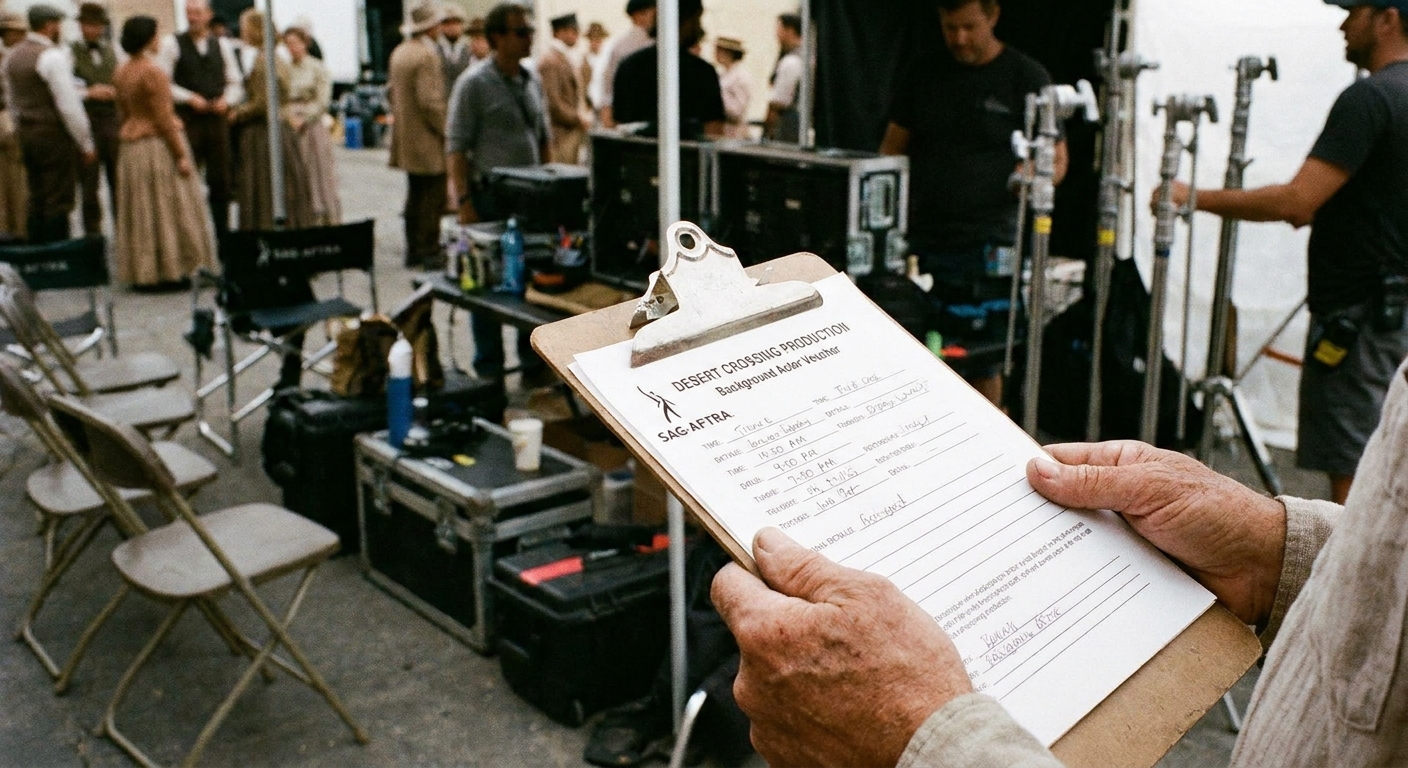
Lights down. Curtain up.
Film sets love short phrases that carry a lot of weight. Two of the most common are picture wrap and company wrap. They can happen minutes apart or hours apart. And if you are a background actor still waiting in holding (the waiting area for background), those words can sound like freedom when they are really just… a plot twist.
Let’s translate both calls into plain language, with special attention to what they mean for background, wardrobe, and the all-important sign-out.

Quick definitions
What is picture wrap?
Picture wrap means the camera is finished capturing what production needed to shoot for that unit in that moment. You will also hear it used in a few slightly different ways:
- Scene picture wrap: The director and camera team have what they need for that scene.
- Day picture wrap: The unit is done shooting for the day. No more shots are planned with camera.
- Show picture wrap: Principal photography is finished for the project or for a unit. In practice, people may still use the phrase loosely to mean “we’re done shooting here,” even if pickups or other unit work exists later.
Key idea: picture wrap is about filming being done.
What is company wrap?
Company wrap means production is releasing the company for the day. It is the general end-of-day dismissal call for the crew, which typically includes departments like camera, grip, electric, sound, art, locations, and more. Some people may still stay on the clock for breakdown, load-out, or paperwork, depending on the production.
Key idea: company wrap is about people being released.
The practical difference on set
Here is the simplest way to separate them:
- Picture wrap: Cameras are done. The work might not be.
- Company wrap: The workday is ending. People are being released.
After picture wrap, there can still be plenty happening: equipment gets packed, locations get restored, wardrobe and props get returned, paperwork gets finished, and transportation gets coordinated. Those tasks can take a while, which is why picture wrap does not automatically mean you can leave.
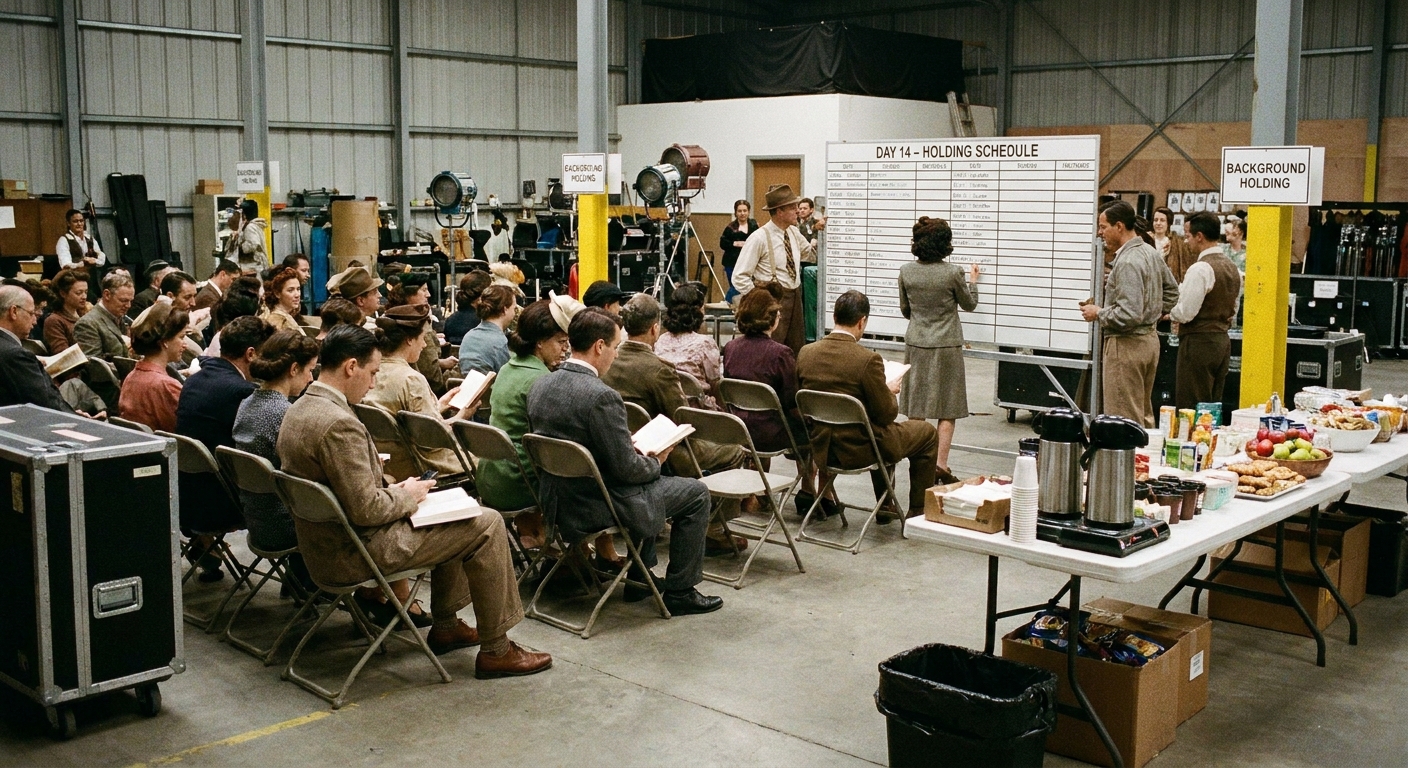
What picture wrap means for background actors in holding
If you are a background actor, hearing “picture wrap” is useful information, but it is not permission.
You might still be working
Even if the main unit is done shooting, background can be kept for:
- Continuity coverage: Extra angles or inserts that help scenes match smoothly.
- Pickups on the same day: Sometimes a small setup is added if time opens up.
- Second unit or splinter unit: Another camera team might still be filming elsewhere.
- Resetting for a company move: Production may need background to travel to a second location.
You cannot assume you can change clothes
Even after picture wrap, background may be asked to stay in costume until production confirms you are wrapped. Reasons include:
- Continuity protection: If you get called back for a last shot, wardrobe needs you ready.
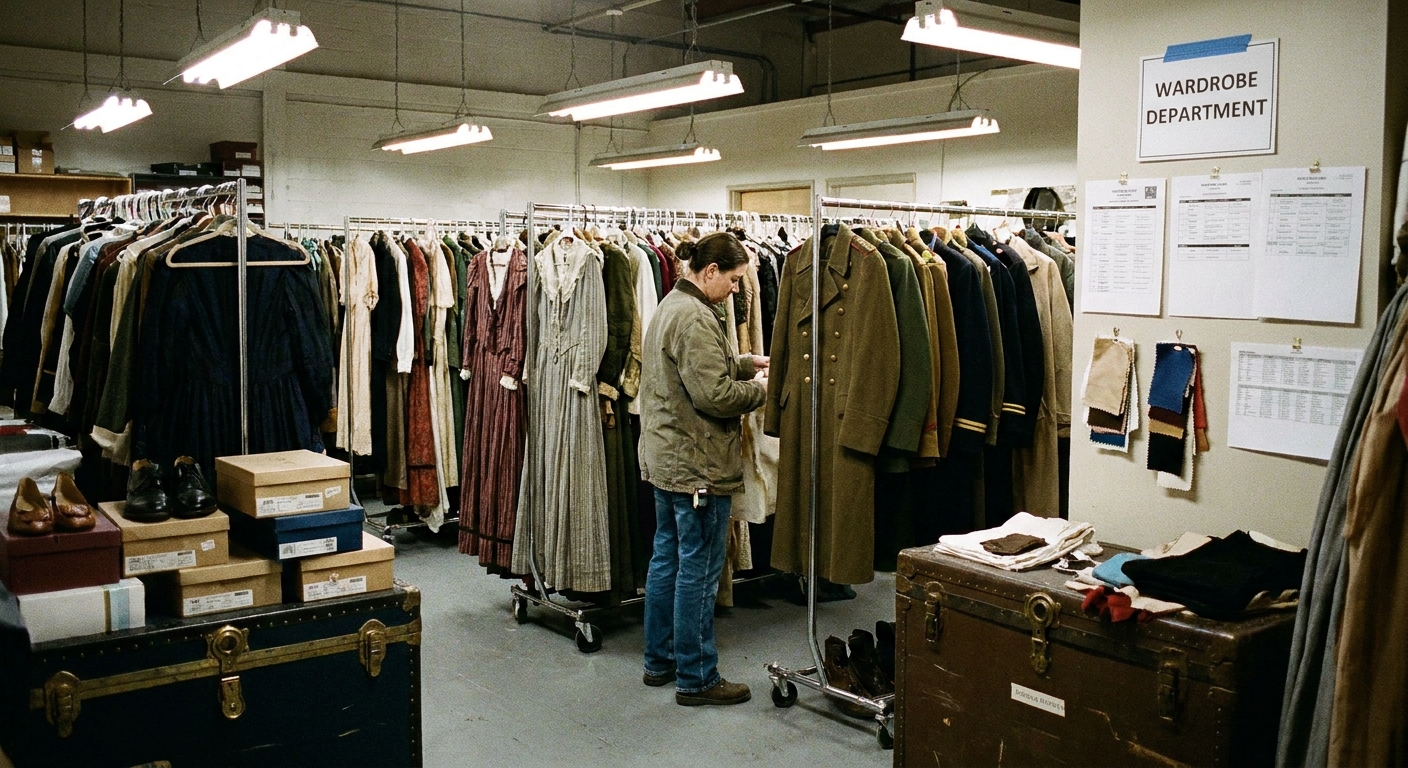
- Wardrobe returns: Production may need to check pieces back in before you change.
- Photos or continuity notes: Wardrobe or script may need a final check.
The safe rule: do not change until wardrobe or the AD team tells you that you are released.
Do not sign out just because you heard the words
Background sign-out is usually tied to a clear release. If you sign out early and then get called back to set, it can create confusion for timekeeping and pay. Wait until you get instructions from:
- Background PA
- 2nd AD or 2nd 2nd AD
- AD team member assigned to background
- Production office representative handling vouchers, if applicable
What company wrap means for background actors
When you hear company wrap, production is releasing the crew for the day. For background, it often lines up closely with being done, but it still does not override your chain of command.
Usually, this is when you are released
In many situations, background is released around company wrap because there is no more filming planned and the set is transitioning into breakdown. But background release can also happen:
- Before company wrap if you were only needed for specific shots
- After company wrap if wardrobe check-in, transportation, or paperwork is still being managed
When can you change?
Typically, changing happens when wardrobe confirms you are wrapped or when the background team gives the release. If you have a wardrobe piece that must be returned, you may be directed to:
- Return costume items first
- Get checked out by wardrobe
- Then change into street clothes
If you brought your own wardrobe (for example, “bring options” days), wait until you are cleared before you pack everything up. Production may still need to see what you wore for continuity notes.
When can you sign out?
After you are officially released, sign out exactly the way your production uses timekeeping:
- If you have a voucher, verify your in and out times, meal penalties if applicable, and any bumps before you hand it in.
- If you sign out on a digital system, follow the background PA’s instructions and double-check you are marked wrapped.
- If you must return props or wardrobe, do that first, then sign out.
One more practical note: company wrap can happen while you are still physically in holding. It may take time for background PAs to process a large group. Stay patient, stay in costume until told otherwise, and keep an ear out for your name or your group number.
A simple timeline
Every set runs differently, but for background, the end of day frequently looks like this:
- The final setup rolls and the last take is completed
- “Picture wrap” is called
- Background waits in holding while departments start to wrap gear
- Wardrobe check-out or return items as directed
- Background release is given
- Sign out (voucher or digital)
- “Company wrap” is called or has already been called
Sometimes company wrap comes earlier in that list, sometimes later. The important part is that your personal end point is release plus sign-out, not just a phrase drifting across set.
Terms vary
Different shows and regions use different language. You might hear “That’s a wrap,” “wrap for background,” “wrap for you,” “unit wrap,” or “location wrap.” Treat them as clues, not instructions. The only call that matters for you is the one directed to you by the AD team, background PA, or wardrobe.
Common mix-ups to avoid
“Picture wrap means I’m done, right?”
Not necessarily. It means filming is done for that moment, but you can still be needed for continuity, a quick pickup, or simply to wait until the background team can release you properly.
“Company wrap means everyone is leaving, so I should go.”
Company wrap means the company is being dismissed, but background release may be handled in an orderly process. If you leave without signing out, you risk pay issues.
“I can change as soon as I’m not on camera.”
Stay in costume until you are released. Productions protect continuity fiercely, even at the end of the day.
Background end-of-day checklist
- Listen for your release from the background team, not just general set calls.
- Do not change until wardrobe or the AD team clears you.
- Return everything that is not yours, including wardrobe pieces, props, and sometimes lav packs if you were wired.
- Sign out correctly and verify your times before you leave the area.
- Ask politely if you are unsure: “Are we released, or should we stay in holding?”
FAQ
Can picture wrap happen without company wrap?
Yes. Picture wrap can be called at the end of a scene or the end of filming, while the crew still has work to do before being dismissed.
Can company wrap happen if a few people are still working?
Yes. Some departments may stay to finish specific tasks, and background may still be processing wardrobe returns or sign-out. “Company wrap” is a general dismissal call, but wrap tasks can continue for select people.
What should I do if I hear picture wrap but no one releases background?
Stay in holding, stay in costume, and wait for instructions. If time passes and there is confusion, ask the background PA or the AD team for clarification.
Do I get paid until picture wrap or company wrap?
Pay is tied to your recorded work time and your official release and sign-out process, not the wording of a call. If you have a voucher, check that your out time reflects when you were released.