Lights down. Curtain up.
If a film set is a stage, a shot list is the call sheet’s artsy cousin: a practical, scene-by-scene roadmap of what the camera needs to capture. Different document, different job. This one is less about poetry and more about making sure you get every angle you need before the light changes, the location kicks you out, or your actor has to sprint to the next setup.

What a shot list is
A shot list is a written list of planned camera setups for a scene, sequence, or an entire shoot day. It breaks the script’s action into the specific shots the production intends to capture, often in a spreadsheet or document that can be shared with the director, director of photography (DP), assistant director (AD), camera team, and other departments.
Think of it as the answer to: “What, exactly, are we filming with the camera today?”
Who makes the shot list
Most of the time, the shot list is built by the director, often in close collaboration with the director of photography (DP), because it sits right at the intersection of storytelling and execution.
- Director: Focuses on story emphasis, performance moments, and what needs to be seen and felt.
- Director of photography (DP): Translates that intent into coverage, lensing, composition, and a plan the camera and lighting teams can realistically achieve.
In practice, ownership varies by format and pace. On some shoots the director will draft it solo and the DP weighs in later. On others, storyboards drive the plan, or the 1st AD helps shape the order for time, light, and company moves. TV can be its own universe, depending on the show’s style and prep time.
What’s in a shot list
Shot lists range from minimalist to wildly detailed, but most include columns that help every department speak the same language. You will often see items like these:
- Scene number: The scene being shot (often matching the numbered shooting script).
- Shot number: A production’s internal numbering for each planned setup (for example, 12A, 12B).
- Shot description: What happens in the frame (for example, “Over the shoulder on Maya as she reads the note”).
- Shot size: Wide, medium, close-up, extreme close-up, etc.
- Angle or framing: OTS, profile, two-shot, top-down, insert, and so on.
- Camera movement: Locked-off, pan, tilt, handheld, dolly, gimbal, crane, etc.
- Lens or focal length: Sometimes included to guide the look and continuity.
- Location and time of day: Helpful when the day’s schedule includes multiple locations or lighting shifts.
- Audio notes: If a boom position is tricky or a line is off-camera, it may be flagged.
- Special requirements: VFX plates, stunts, props continuity, wardrobe notes, or specific lighting needs.
- Priority or must-get: Many teams mark essential shots to protect the story if time collapses.
On some productions, the list also tracks estimated time per setup, company moves, or whether a shot is day-for-night or otherwise cheating reality.
A quick example
Here’s what one row might look like in a simple shot list:
- Scene: 12
- Shot: 12B
- Description: OTS on Maya reading the note
- Size: CU
- Move: Handheld, subtle drift
- Lens: 50mm
- Notes: Must-get, dialogue clean, note needs to be readable
How it’s used on set
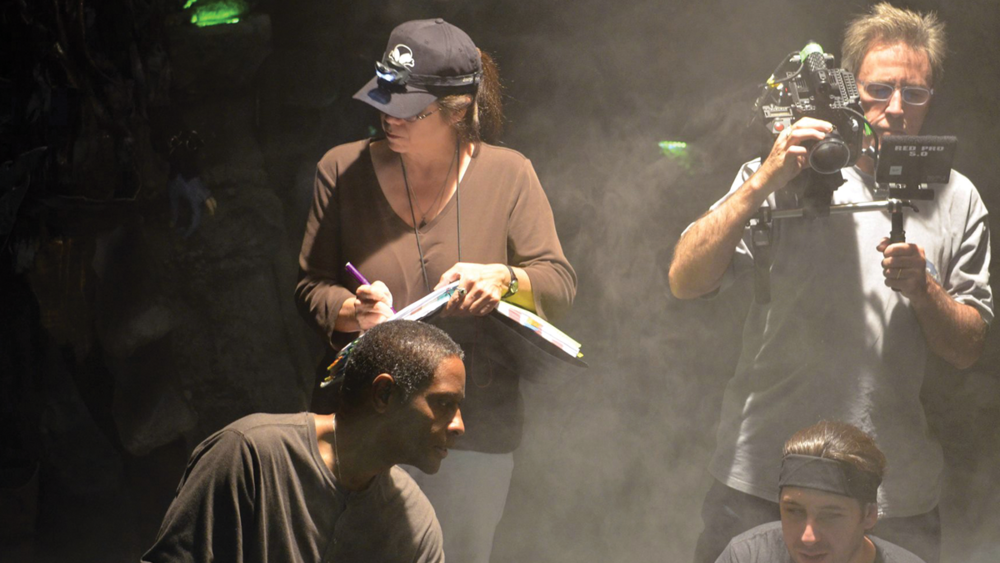
A shot list is both a creative plan and a survival tool. On the day, it helps the team:
- Stay oriented: Everyone knows what the next setup is and why it matters.
- Coordinate departments: Camera, grip, electric, art, and sound can anticipate what is needed.
- Protect continuity: Wardrobe, hair and makeup, and props can track what must match between angles.
- Move efficiently: The AD team can group shots by location, direction, lensing, or lighting needs when time is tight.
- Ensure coverage: Editors need a range of angles and shot sizes to build the scene.
It also plays nicely with the schedule. The stripboard might tell you which scenes are on the docket, but the shot list is where you decide whether you grab the wide master first, chase a sunset with a specific angle, or knock out all the inserts while art and lighting reset.
Importantly, a shot list is not a prison. Directors and DPs adjust constantly for performances, weather, blocking changes, or a location that refuses to cooperate. A good list is detailed enough to guide you and flexible enough to bend.
Shot list vs. storyboard
Shot lists and storyboards often point to the same destination, but they do it in different languages.
- A shot list is written: It describes planned shots in text, often with technical and scheduling columns.
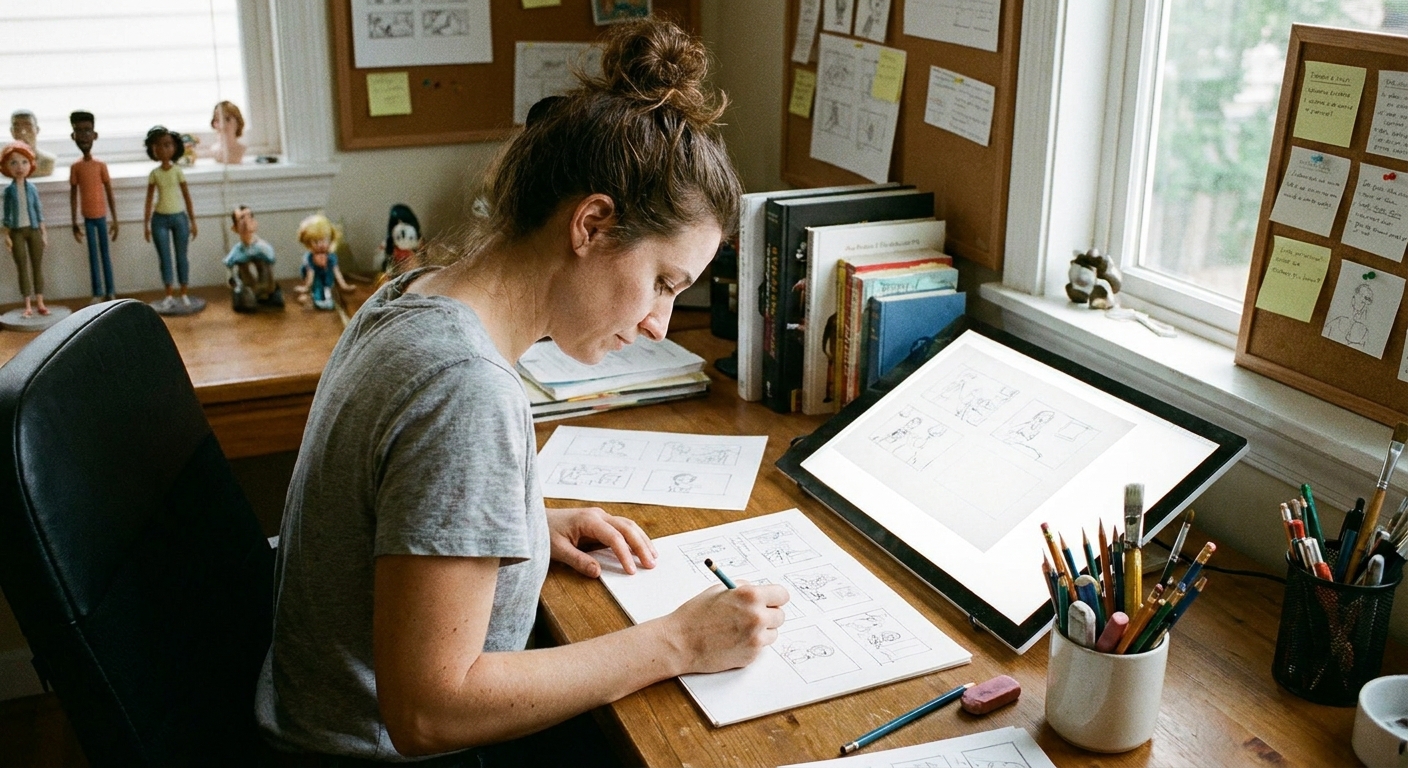
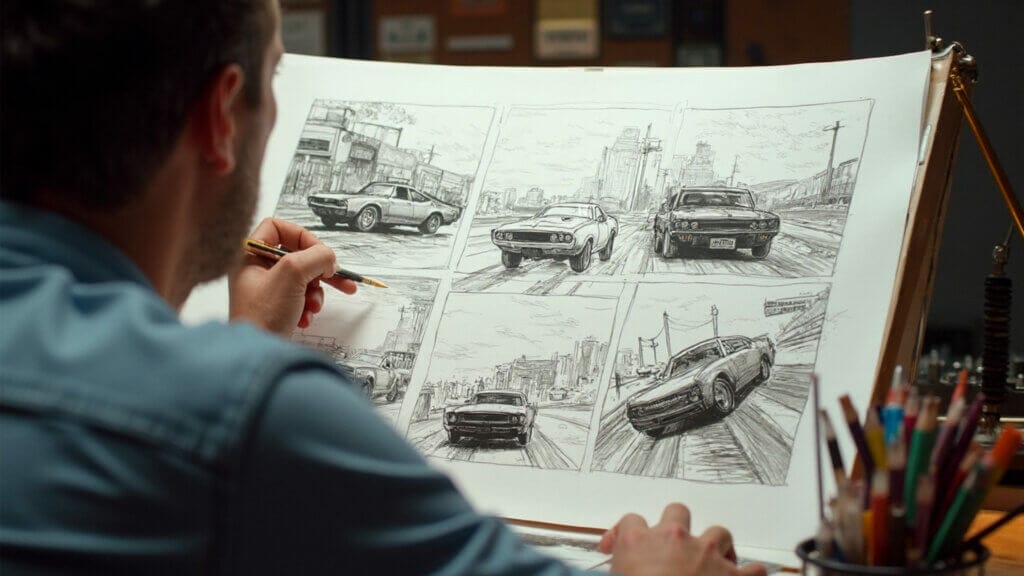
- A storyboard is drawn: It visualizes the frames as images, clarifying composition, staging, and sometimes movement.
In practice, many productions use both: the storyboard for tricky action, VFX, or choreography, and the shot list to organize the day and communicate setups quickly.
Shot list vs. shooting script
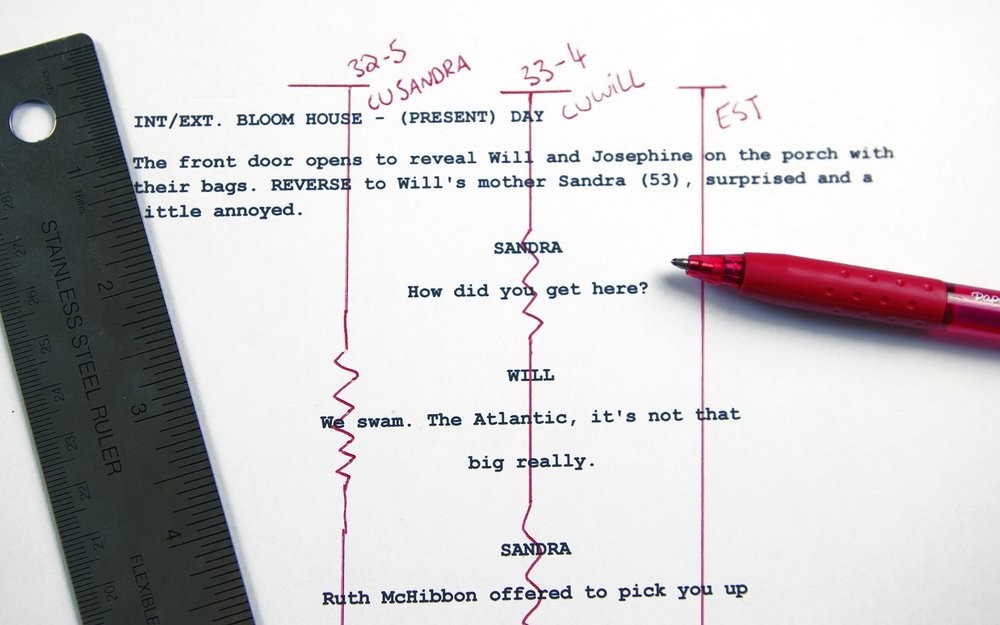
A shooting script is the production draft of the screenplay that is numbered and standardized for scheduling, breakdowns, and coordination. While it is treated as the working blueprint, it can still change through the usual colored revision pages.
A shot list is a plan for how that story will be filmed, meaning camera setups and coverage. A shooting script might tell you “Scene 24: INT. KITCHEN, NIGHT.” The shot list tells you whether you start on a wide master, then go to an over-the-shoulder, then grab an insert of the note, and whether any of that moves on a dolly.
They are connected, but they are not interchangeable.
Common shot list terms
Shot lists tend to be written in shorthand. A few terms that pop up often:
- Master: The shot that covers the full action of the scene, often a wide or wider shot.
- Coverage: Additional angles and sizes that let the editor shape pacing and emphasis.
- Insert: A close-up of an object or detail, like a phone screen or a hand turning a key.
- OTS: Over-the-shoulder framing, usually used in dialogue.
- POV: Point-of-view shot from a character’s perspective.
- Cutaway: A shot that cuts away from the main action, often used to compress time or cover an edit.
- Plates: Clean background or elements captured for visual effects work.
Why shot lists matter
A shot list does not just save time. It clarifies intent. When you have to choose between one more take and one more setup, a clear plan helps you decide what the scene truly needs.
And when the unexpected arrives, which it always does, the shot list becomes a triage tool. You can protect the shots that carry the emotional weight, and let go of the ones that were nice-to-have.
Quick FAQ
Is a shot list the same as a call sheet?
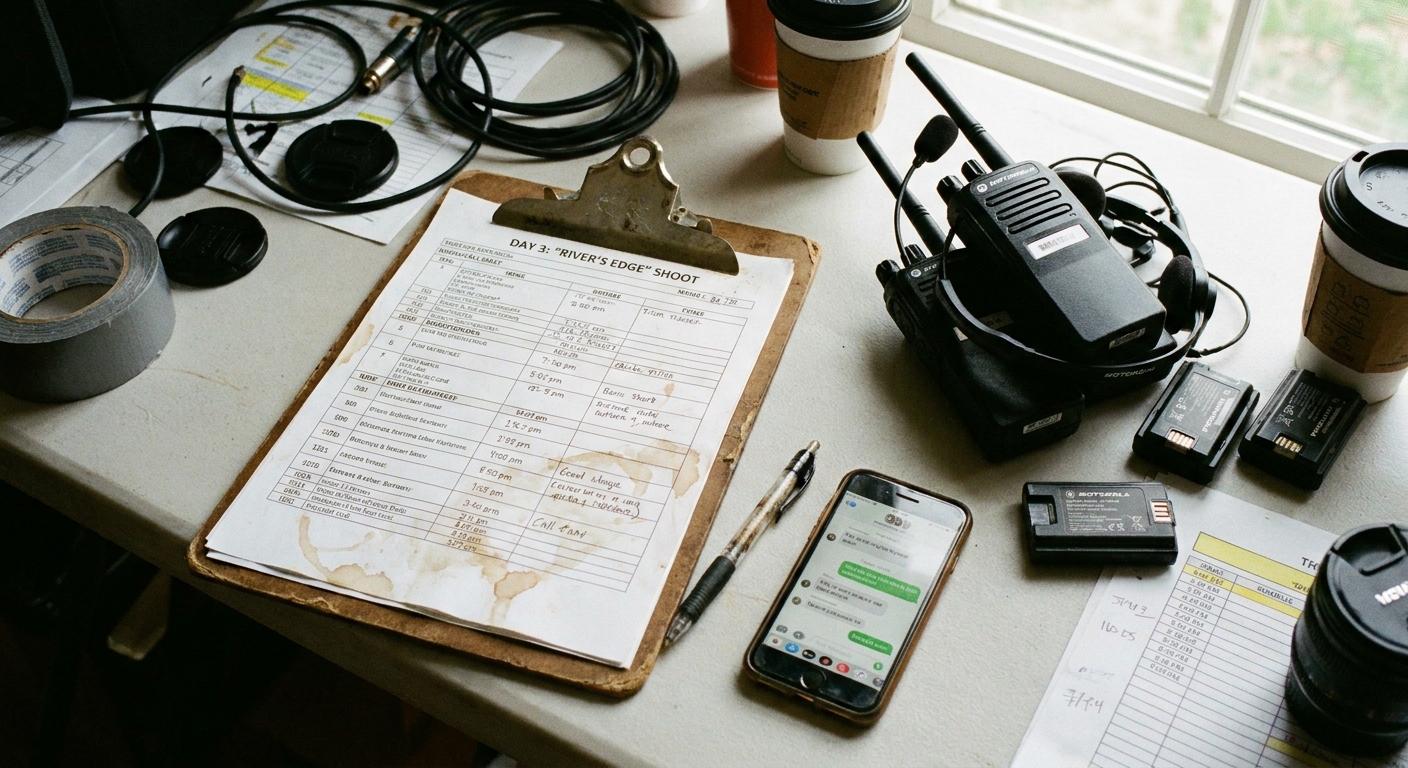
No. A call sheet is the daily schedule and logistics document: call times, locations, scenes planned, cast needed, safety notes, and contact info. A shot list is about the camera setups and coverage plan.
Do TV shows use shot lists?
Yes, although the format can vary by show and pace. Some TV schedules rely on very streamlined lists to move quickly, while others use detailed lists for complex sequences.
Do you have to shoot in the order of the shot list?
Not necessarily. Many teams reorder setups for efficiency, like grouping all shots facing one direction before turning around for the reverse angles. The story order lives in the script. The shot order often serves time, light, and logistics.
What makes a good shot list?
Clarity and usefulness. A good shot list tells the crew what they need to prepare, tells the editor what coverage is coming, and tells the director what story beats are protected, without becoming so complicated that no one can use it on a fast day.