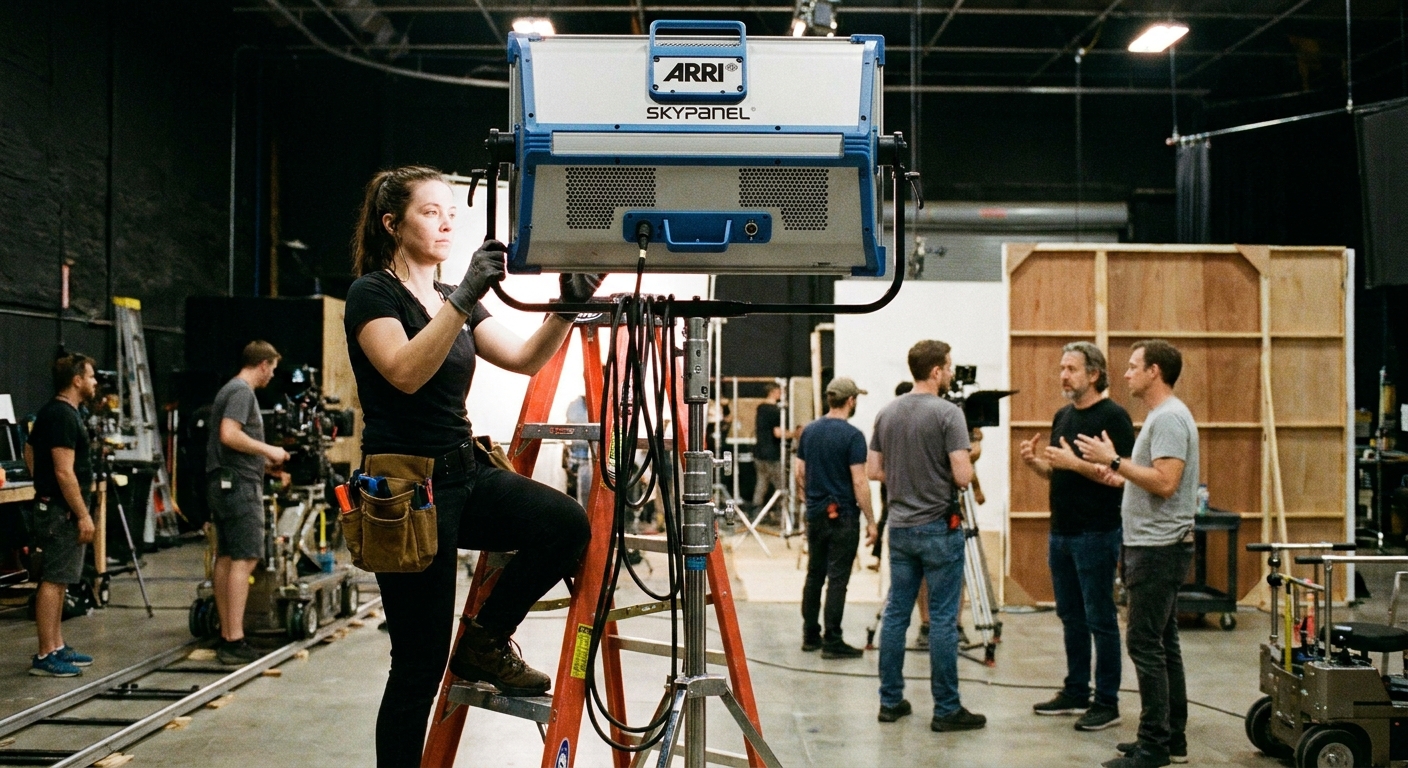
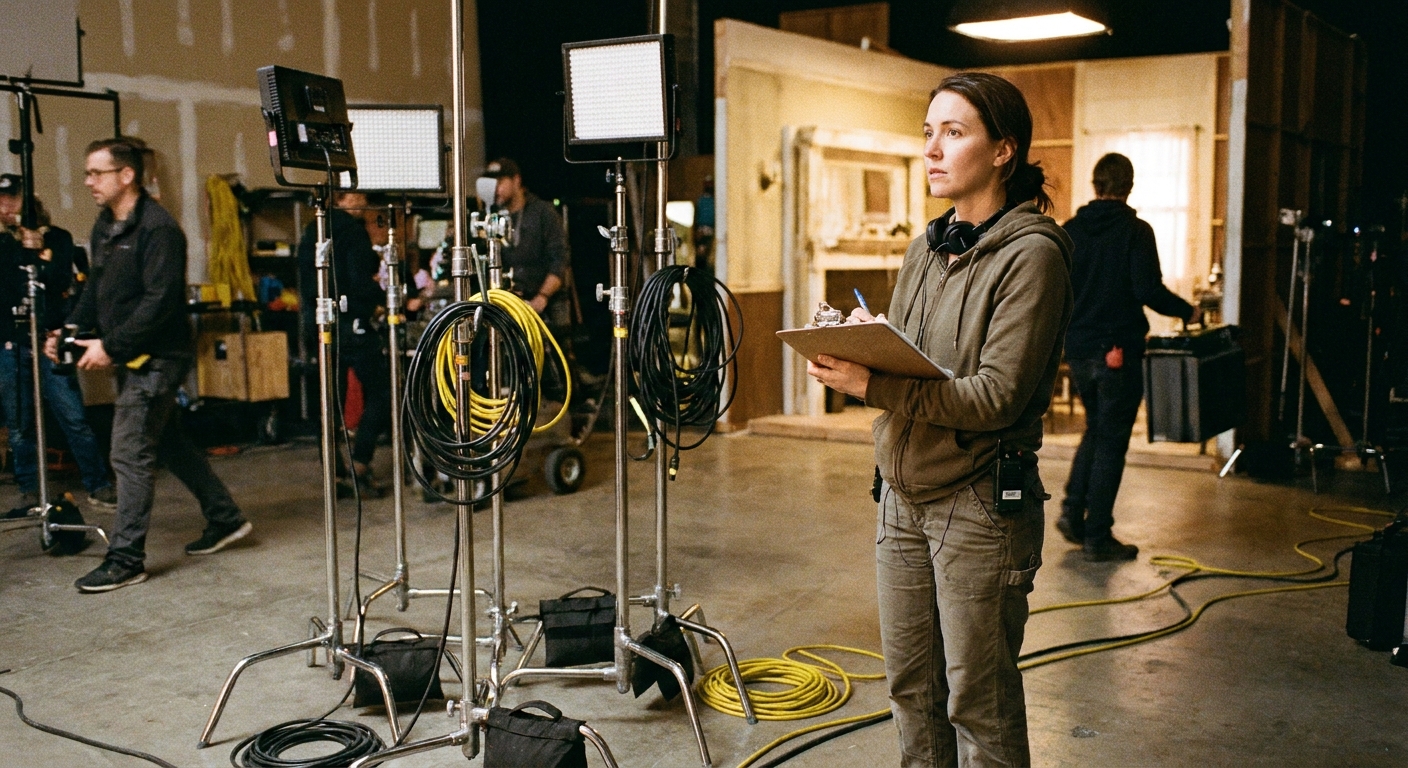
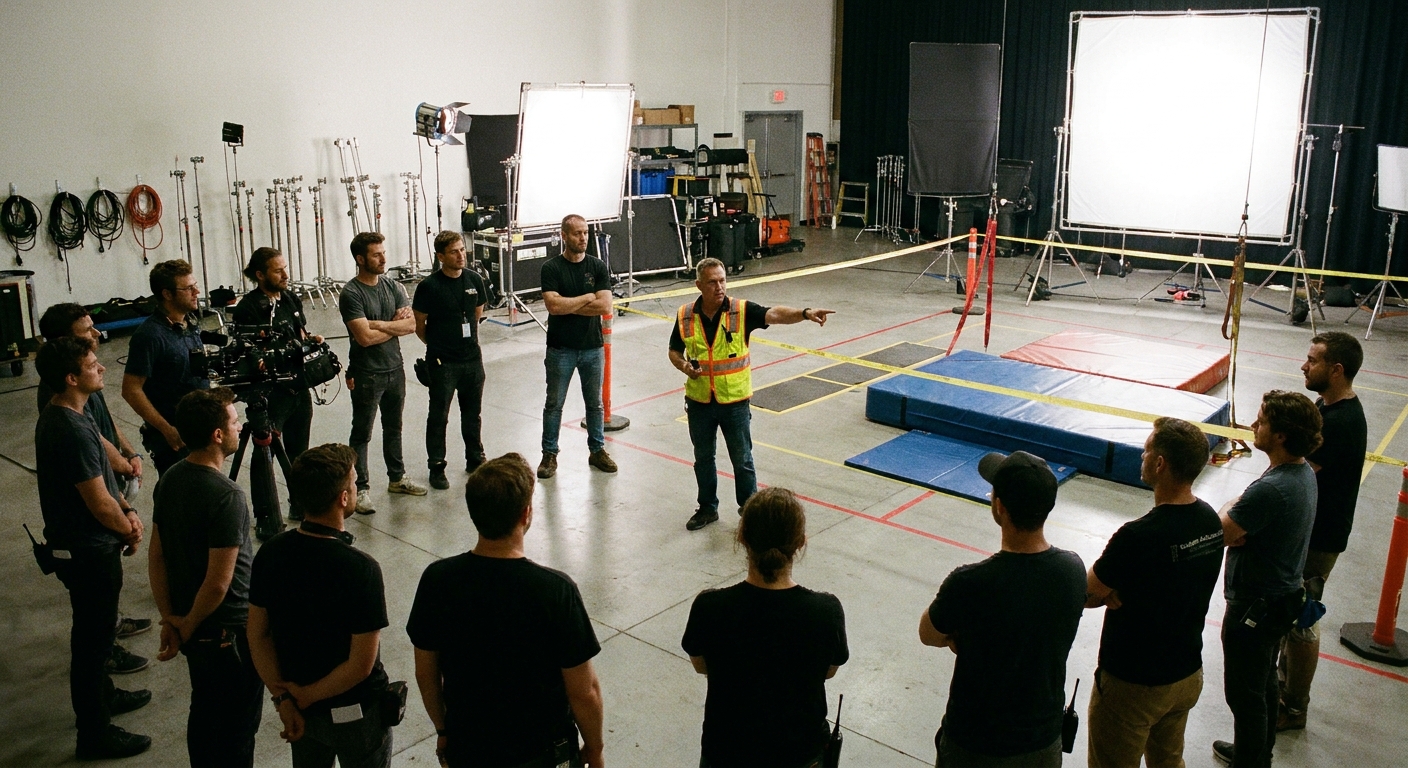
Lights down. Curtain up.
Film sets have their own backstage language, and a few job titles sound like they belong in a circus act. “Key grip” is one of them. But the role is essential: if the cinematographer (DP) is shaping how the movie looks through the camera, the key grip helps make that vision physically possible and safe.
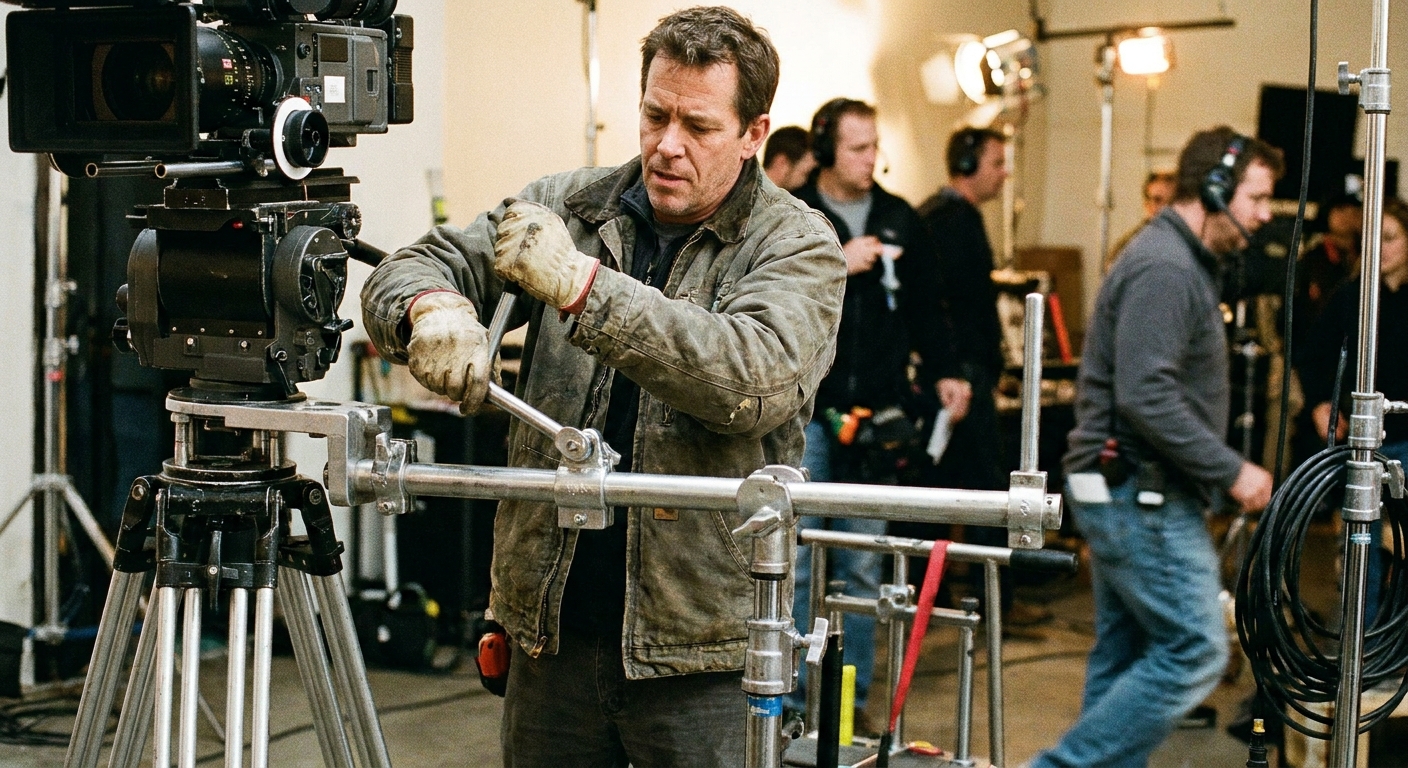
Key grip, defined
The key grip is the head of the grip department. Grips handle the non-electrical side of shaping light and supporting camera work: rigging, mounts, flags (and other light control tools), and support hardware that the cinematographer and camera team rely on.
A quick way to remember it: if it’s equipment that holds, moves, blocks, or stabilizes something on set, it often falls under grips. And if there’s a grip plan, the key grip is the one leading it.
What a key grip does day to day
The job changes depending on the scale of the production, the schedule, and the shooting style, but key grips generally live at the intersection of problem-solving and safety.
Core responsibilities
- Leading the grip team: assigning tasks, supervising setups, and keeping work organized and consistent throughout the day.
- Rigging and mounting: building secure ways to place and support gear such as overhead frames, diffusion, or camera support, whether on a stage, a location, or a vehicle.
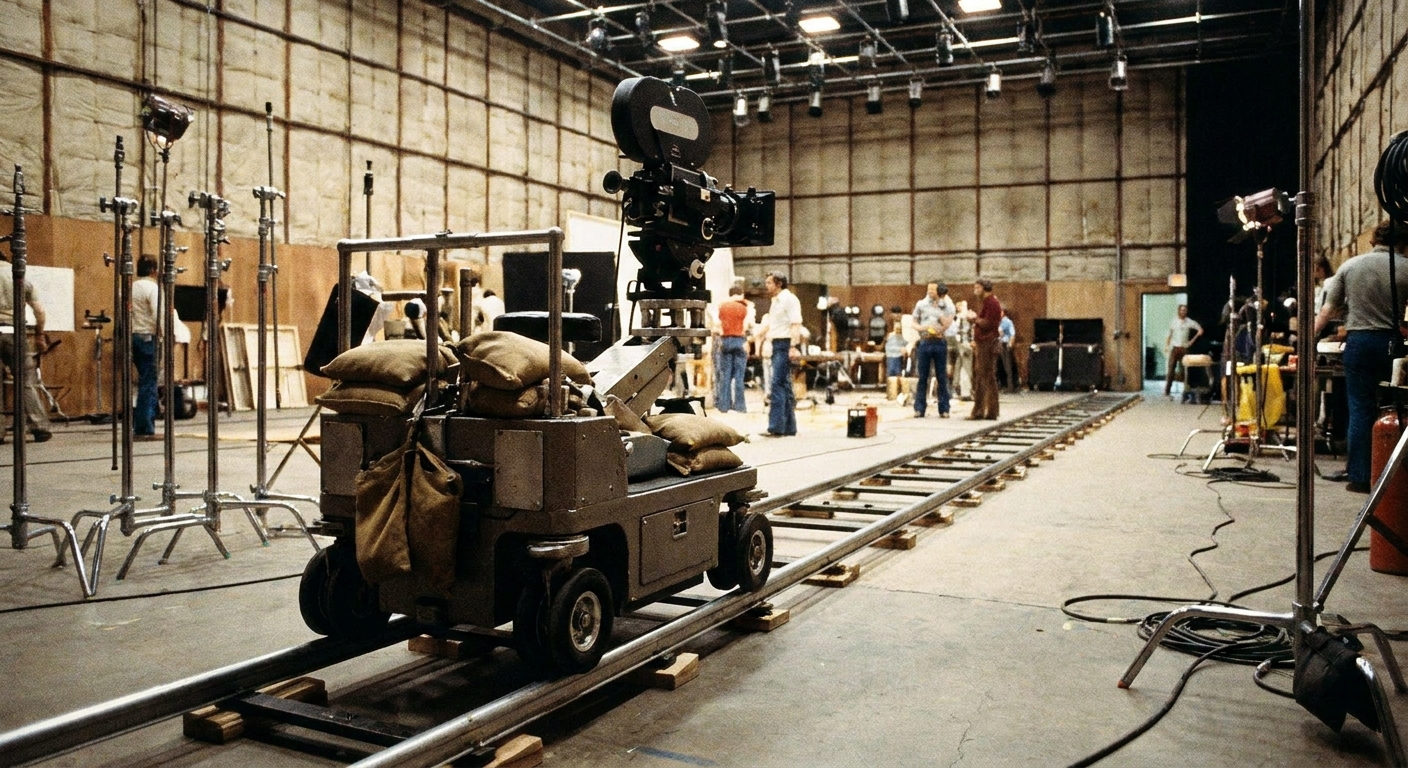
- Camera movement support: managing dollies and dolly track when used, and coordinating the physical side of smooth camera moves. (Some specialty moves are handled by dedicated operators or separate teams, depending on the show.)
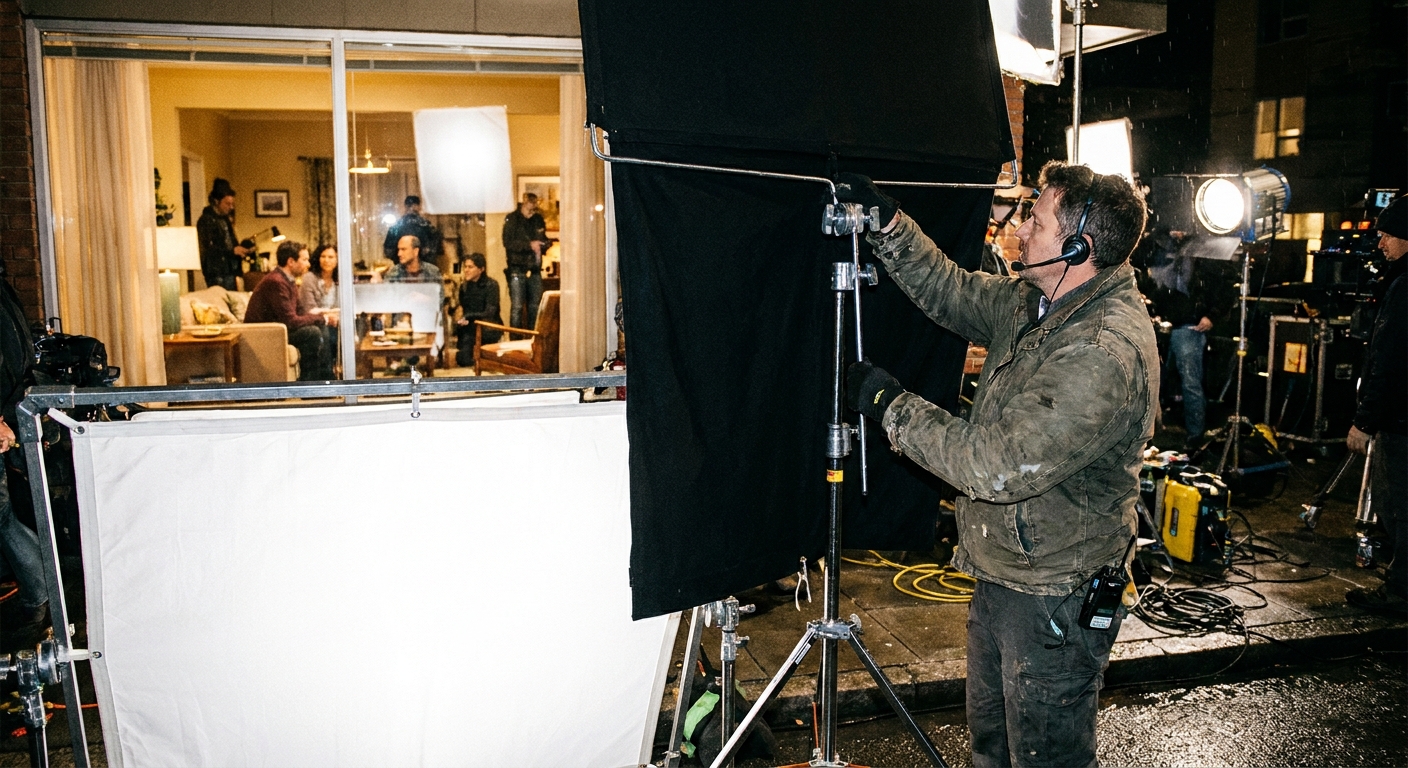
- Light control tools: placing and adjusting flags, nets, silks, diffusion frames, bounce, and other tools that shape or reduce light without changing the electricity.
- Working with the DP: translating a creative request into a practical setup. “Can we cut the spill on that wall?” or “Can we get a top light feel without seeing the source?” often becomes a grip solution.
- Set safety: ensuring stands are secured, loads are appropriate, overhead work is safe, and the crew is protected around moving equipment.
The quiet skill: making it fast
Great key grips are known for speed and calm. When time is tight, the key grip helps the set move forward by offering options: a quicker rig, a safer alternative, or a simpler setup that still delivers the look.
For example, if the ask is “soft overhead light,” that might mean a full overhead frame. Or it might mean a smaller diffusion frame on a stand, a quick bounce, or a safer, faster compromise that still reads beautifully on camera.
Before the cameras roll
A lot of key grip work happens before anyone yells “action.” On many productions, the key grip helps plan the day’s realities long before they show up on screen.
- Tech scouts and walk-throughs: looking at locations with the DP and other heads of department, spotting rigging challenges, and identifying safety issues early.
- Planning rigs: thinking through where frames can fly, what needs to be hidden, what needs extra support, and what should be delegated to a rigging crew.
- Coordinating gear and crew: working with the best boy grip to make sure the right tools, stands, and specialty rigging are ordered and ready.
- Calling the line on safety: flagging when something needs a different approach, additional personnel, or more time because the load, height, or environment demands it.
Who the key grip directs
The key grip is the department head, so they supervise the grip crew on set and coordinate with grips who may be assigned to specialized tasks.
- Grips: the crew members executing setups, moving gear, and handling flags, frames, stands, and support equipment.
- Best boy grip: the key grip’s primary assistant and organizer for the department. On many sets, the best boy grip focuses on logistics while the key grip focuses on the floor and the creative plan.
- Additional specialized support: depending on the production, you might have dedicated rigging grips, dolly grips, or swing grips who float where needed.
The exact hierarchy can shift from show to show, but the big picture stays consistent: the key grip runs grips, and grips handle the physical tools that shape light and support the camera.
Key grip vs. gaffer: what’s the difference?
This is one of the most common confusions, because grips and electrics work side by side all day.
The key grip leads the grip department, focusing on:
- Rigging and support
- Camera support and many forms of on-set movement hardware (dollies, track, mounts), depending on the production
- Light shaping tools that are not powered (flags, diffusion frames, bounce)
- Physical safety around stands, loads, and overhead work
The gaffer is the head of the electric department, often described as the chief lighting electrician. The gaffer focuses on:
- Power distribution and electrical safety
- Placing, operating, and maintaining lights and lighting control that is powered
- Executing the DP’s lighting plan in coordination with the key grip
In practice, the DP, key grip, and gaffer form a tight triangle. The DP sets the creative intent. The gaffer brings the light. The key grip shapes and controls it physically, and builds the support systems that keep everything steady and safe.
Key grip vs. best boy: what’s the difference?
“Best boy” does not mean “the best person on the crew.” It is a long-standing film term for the chief assistant to a department head.
So:
- Best boy grip is the key grip’s assistant.
- Best boy electric is the gaffer’s assistant.
While the details vary, best boys often handle the operational side so the department head can focus on execution and decisions.
What a best boy grip commonly handles
- Scheduling and coordinating crew calls and assignments
- Managing gear lists, orders, and returns
- Helping maintain continuity in setups across shooting days
- Communicating needs between the set and the truck, rental house, or rigging team
On smaller sets, one person may wear multiple hats. On larger productions, the best boy grip can be the organizational engine that keeps the grip department running smoothly.
How the key grip works with the cinematographer
The key grip is one of the DP’s closest collaborators, because “cinematography” is not just choosing lenses and lighting a face. It is also about controlling the environment the camera sees.
Here are a few common DP requests that often become key grip solutions:
- “I want softer light.” The key grip may suggest diffusion frames, overhead rags, or bounce placement that shapes the light the gaffer is providing.
- “Can we keep the background darker?” Flags and cutters can block spill and create contrast.
- “Let’s glide into the scene.” The key grip helps plan how the camera will move, what it rides on, and how to do it safely. (For some shots, specialized operators may run the moving system, with grips supporting the build and safety.)
- “I don’t want to see any gear.” The key grip figures out how to hide support, mount tools out of frame, and keep the set clean.
Common grip tools
Even if you never touch the gear, knowing the vocabulary makes watching behind-the-scenes clips a lot more fun.
- Flags: black fabric on frames that block light.
- Nets: reduce light level without changing the beam as much.
- Silks and diffusion: soften light by spreading it out.
- Bounce: reflective surfaces that redirect light.
- C-stands: sturdy stands commonly used to hold flags, nets, and small frames.
- Sandbags: weight used to keep stands from tipping.
- Apple boxes: wood boxes used as platforms, seats, and quick height adjustments.
- Dollies and track: tools for smooth camera movement.
Where the key grip sits
Every production structures things a little differently, but the relationship between departments is fairly consistent:
- Cinematographer (DP): leads the camera and lighting look of the film.
- Key grip: department head responsible for grip work supporting the DP’s plan.
- Gaffer: department head responsible for electric work supporting the DP’s plan.
- Best boy grip: key grip’s chief assistant.
- Best boy electric: gaffer’s chief assistant.
And then beneath each department head: the crew members who execute the work on the day.
Skills and career path
Key grips are usually built, not appointed. A common path is grip, then best boy grip, then key grip, with a lot of learning in between.
- Practical rigging knowledge: how to build solid support, how to think about load, and how to work safely overhead.
- Communication: translating creative language into physical setups, and keeping multiple departments aligned.
- Safety culture: knowing when to slow down, when to add support, and when to say no.
- Adaptability: every location, ceiling height, weather shift, and schedule change is a new puzzle.
Details like union rules, job boundaries, and crew structure can vary by region and production, but the core expectation stays the same: make it work, and make it safe.
FAQ
Is the key grip in the camera department?
Not exactly. The key grip works closely with the camera team and the DP, but they lead the grip department, which is its own crew line alongside electric and camera.
Does the key grip touch the lights?
Grips routinely shape light using flags, diffusion, bounce, and other non-powered tools. The electric department, led by the gaffer, is responsible for the powered fixtures, power distribution, and electrical safety.
Is a key grip a “boss” on set?
The key grip is a department head, which means they supervise grips and help make decisions about how to execute the DP’s plan safely and efficiently. They also coordinate closely with other department heads, especially the gaffer.
Why is it called “key” grip?
In crew terminology, “key” often signals the lead position for a department role. The key grip is the lead grip in charge of the grip team.
The takeaway
If you are watching the credits and wondering who made that perfectly controlled shadow, that silky window light, or that smooth camera drift possible without a wobble, you are often looking for the key grip’s fingerprints. They are the head of the grip department, building and managing the physical systems that support the DP’s vision, while staying distinct from the gaffer and the best boy roles in each department.