Lights down. Curtain up.
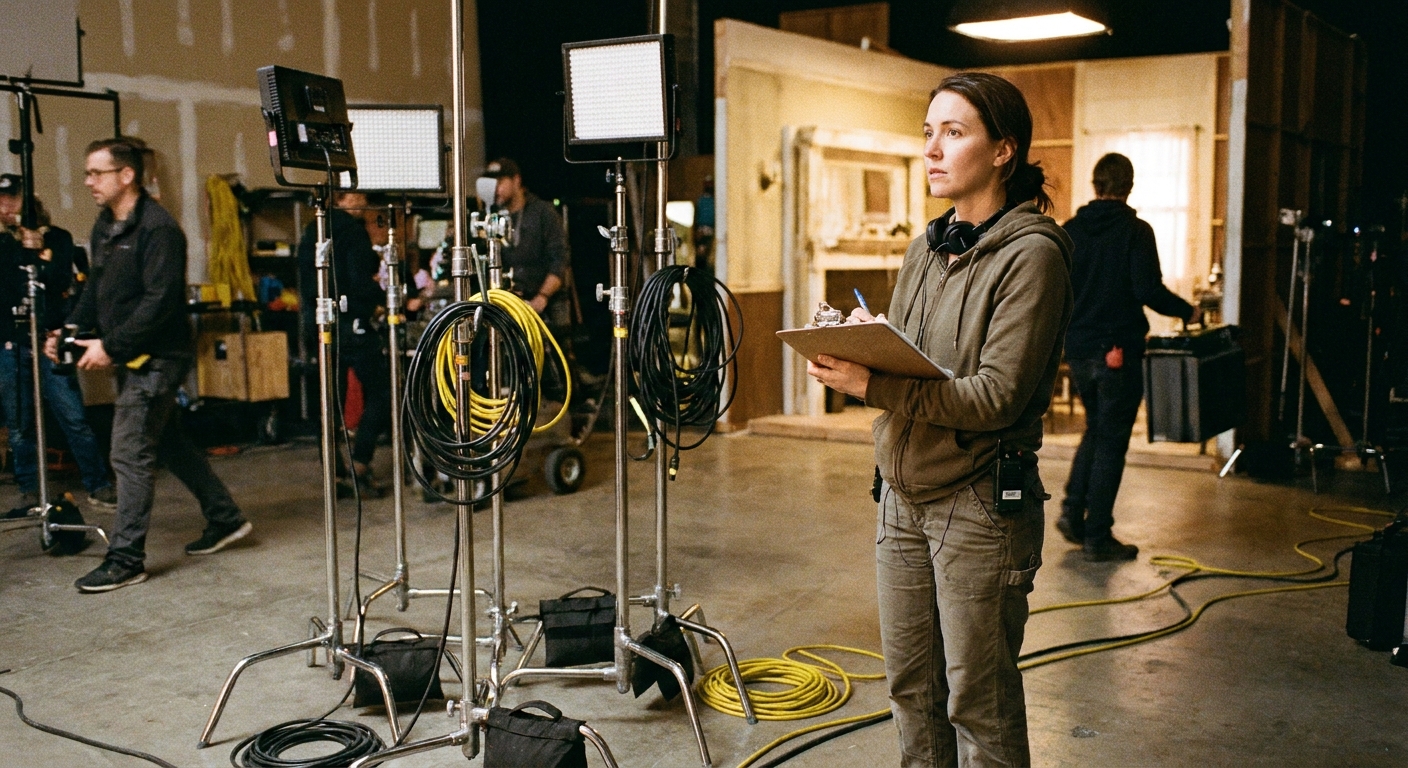
Except on a film set, the “curtain” is usually a flag, a diffusion frame, or a solid that someone is sliding into place just out of frame. If you’ve ever watched a movie scene glow with perfect moonlight, crisp window patterns, or a soft, flattering close-up, there is a good chance the gaffer helped make that happen.
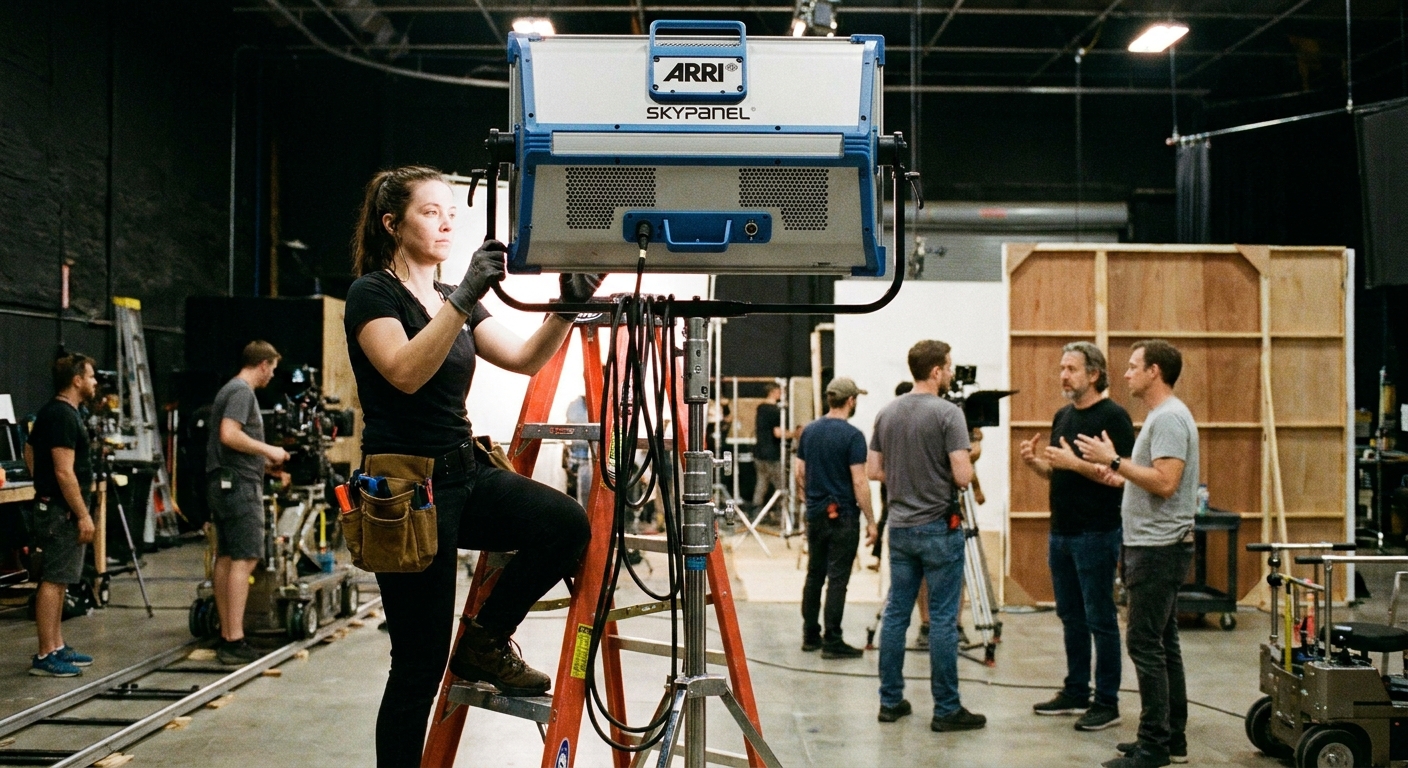
The gaffer is one of those crew titles that sounds mysterious until you see the chain of command. Then it clicks: this is the person in charge of making the cinematographer’s lighting plan real on set, safely, and on schedule.
What a gaffer is
On a film or TV set, the gaffer is the head of the electric department and the production’s chief lighting technician. Working closely with the director of photography (DP or cinematographer), the gaffer helps execute the lighting approach for each scene.
If the DP is responsible for the overall photographic look of the project, the gaffer is the person who translates that look into practical steps: what fixtures to use, where to place them, how to power them, and how to shape and control the light so it matches the shot.
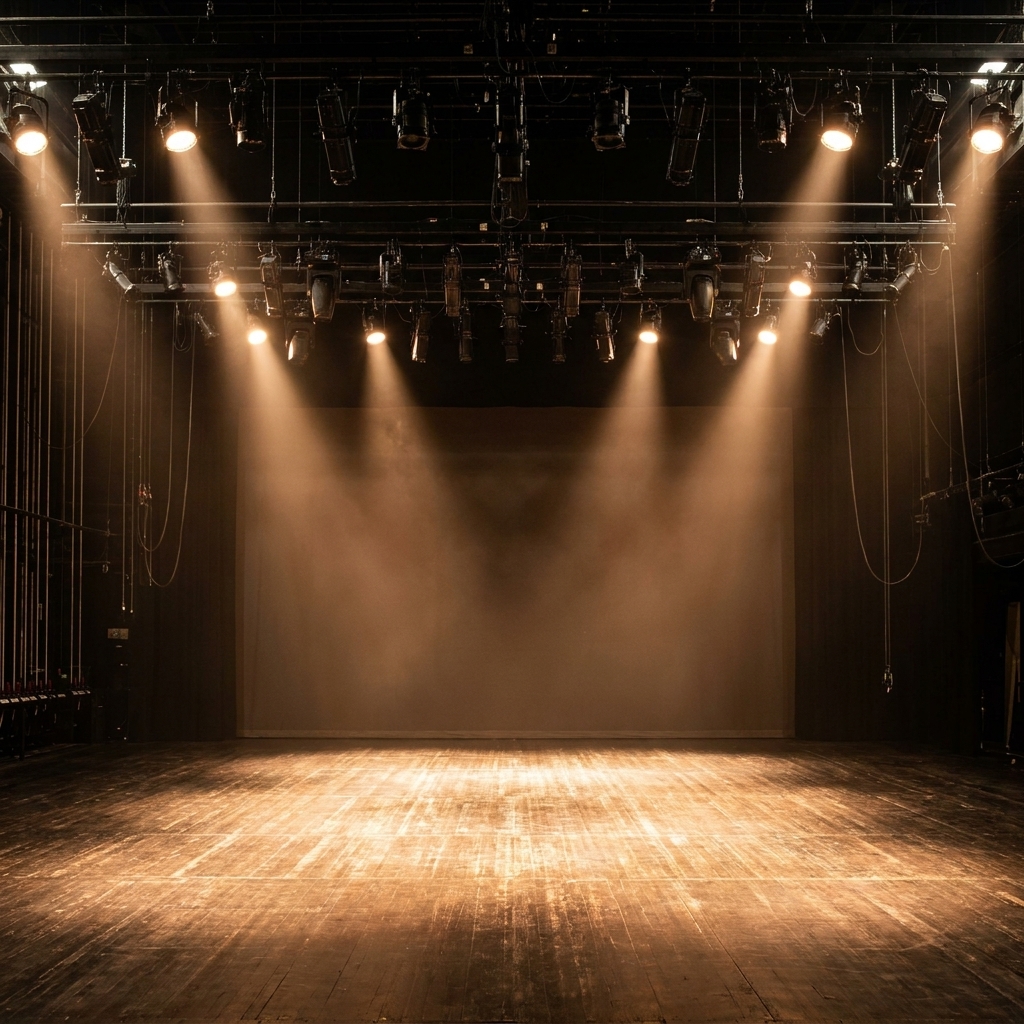
One quick clarity point, since Arts Reel also lives in theater seats: a film set gaffer is not the same job as a stage lighting designer. This role is about the on-set lighting crew and the day-to-day build of lights for camera.
What the gaffer does
The gaffer’s responsibilities shift depending on the scale of the project, but the heart of the job stays consistent: deliver the lighting the DP wants while keeping the set safe and efficient.
Prepping before the shoot
A lot of gaffing happens before the first light is ever switched on. Gaffers often join tech scouts to spot power access, rigging options, and problem areas like low ceilings or reflective surfaces. They may also help plan the lighting package with the DP, coordinate with locations about electrical limits, and flag safety concerns early, when they are easiest to solve.
Interpreting the DP’s plan
On many shoots, the DP will describe the intention and mood, reference a style, or talk through motivation: “late afternoon sun through blinds,” “cool overhead fluorescents,” “warm practicals, soft fill,” and so on. The gaffer helps turn that into an actionable setup, often suggesting options that fit the location, time, and gear.
Fixtures, rigging, and control
Gaffers make calls about what lighting units to use (LED panels, HMIs, tungsten units, tube lights, etc.), how to rig them (stands, clamps, grid rigs, speed-rail rigs such as goalposts), and how to control them (dimmers, wireless DMX lighting control, gels, diffusion, eggcrates, barn doors).
Light shaping is shared territory. Grips often handle flags, nets, overhead frames, and bigger control, while electrics also shape at the unit with diffusion, grids, barn doors, and practical tweaks. Either way, the final image is a team sport.
Power and distribution
Light needs power, and power needs a plan. The gaffer oversees how the electric department powers fixtures safely, whether that means:
- running stingers (extension cables) and keeping cable paths safe
- balancing loads and choosing circuits
- setting up distro (distribution boxes and heavier cable runs) on bigger jobs
- coordinating with a generator operator when the production is running on a genny
This is one of the reasons the gaffer is such a key safety position on set. Electricity, heat, rigging, weather, and water do not leave room for guesswork.
Keeping the day moving
Lighting can eat the clock if it is not planned well. A gaffer is constantly juggling what is ideal versus what is achievable: where to spend time for the money shot, where to simplify, and how to keep the crew moving without compromising safety.
Who the gaffer leads
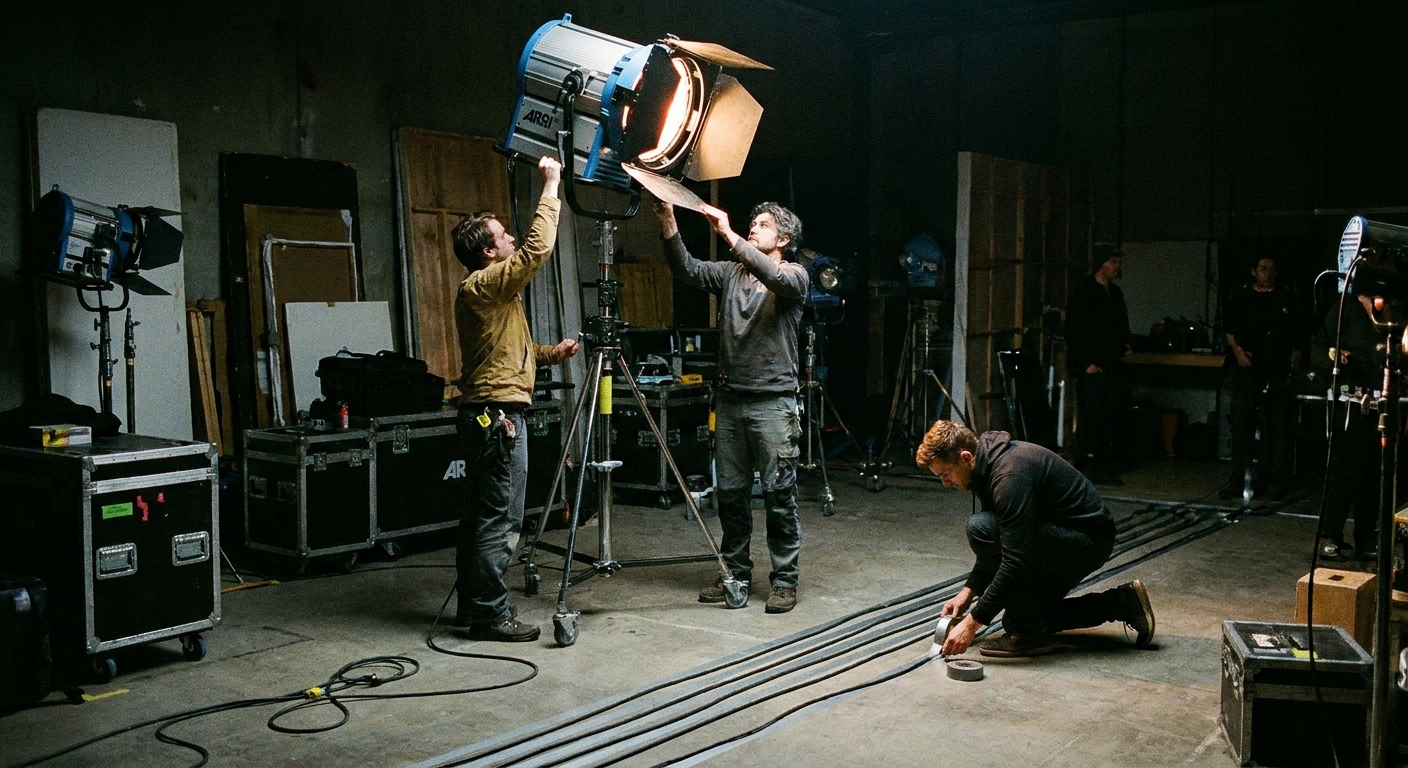
The gaffer leads the electric department and typically reports to the DP. Titles vary by production and region, but you will commonly see:
- Best boy electric (the gaffer’s chief assistant)
- Set lighting technicians (electricians who place, power, and adjust fixtures)
- Rigging electrics (on larger shoots, a separate crew that pre-rigs lighting and power before the main unit arrives)
- Generator operator (sometimes under electrics, depending on the production)
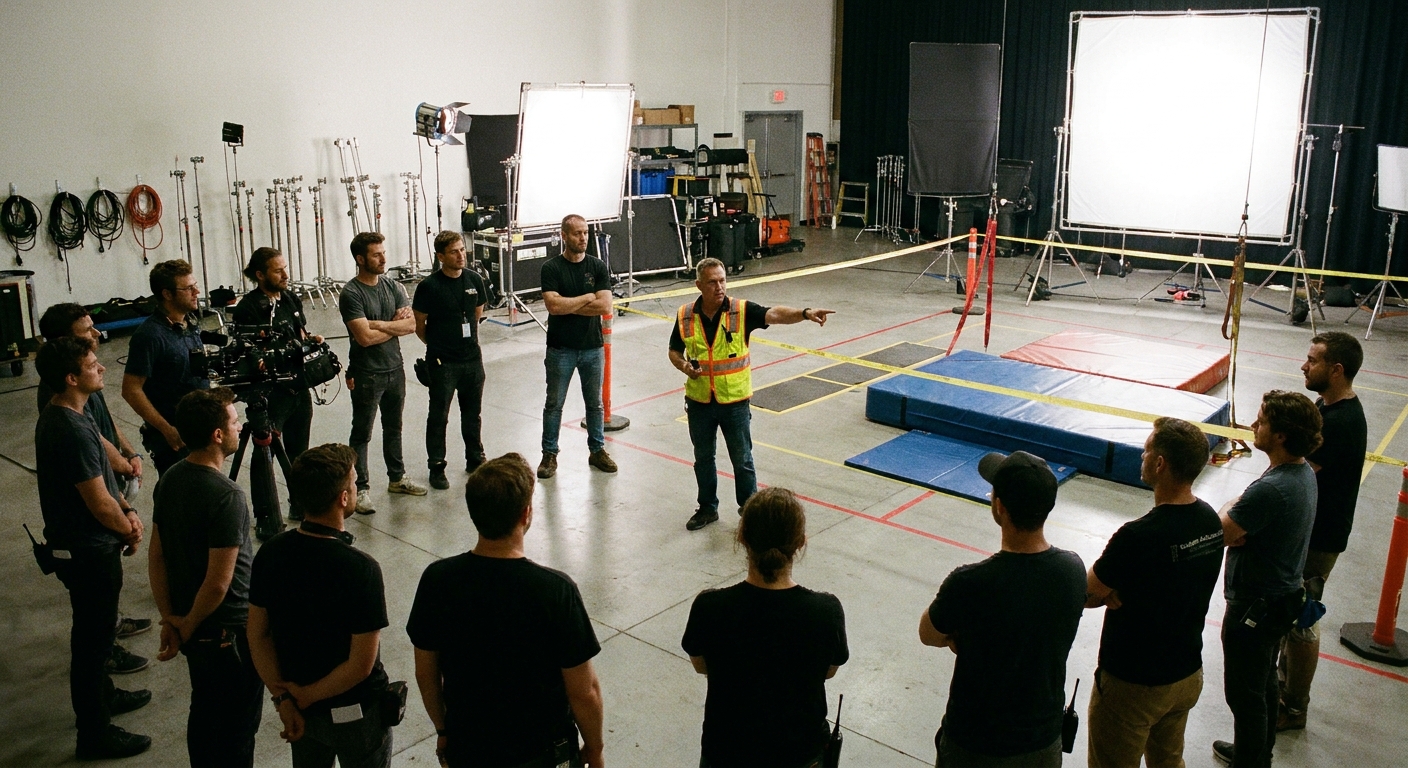
On set, the gaffer is the person you will hear giving electric-specific direction like where to place a unit, what level to set it, or how to reroute a run for safety and speed.
Working with other departments
Film lighting is collaborative, and the gaffer’s relationships with other keys matter.
Gaffer and DP
This is the central partnership. The DP sets the visual goal, and the gaffer helps achieve it with tools, crew, and technique. On many productions, the DP and gaffer share a shorthand built on taste, trust, and problem-solving.
Gaffer and key grip
The key grip runs the grip department, which handles rigging and many light-shaping tools like flags, nets, diffusion frames, and overheads. Grips and electrics work side by side constantly. If the gaffer is putting the sun in the room, the key grip is often helping control and sculpt it.
Gaffer and production design
Light interacts with sets, paint, textures, and practical fixtures. Gaffers coordinate with production design when practical lamps need special bulbs, dimming solutions, or hidden wiring so they read well on camera and remain safe.
Gaffer and sound
Some lights and power solutions make noise. The gaffer may coordinate placement and fixture choice to keep fan noise or generator hum from creeping into dialogue.
Gaffer vs. best boy
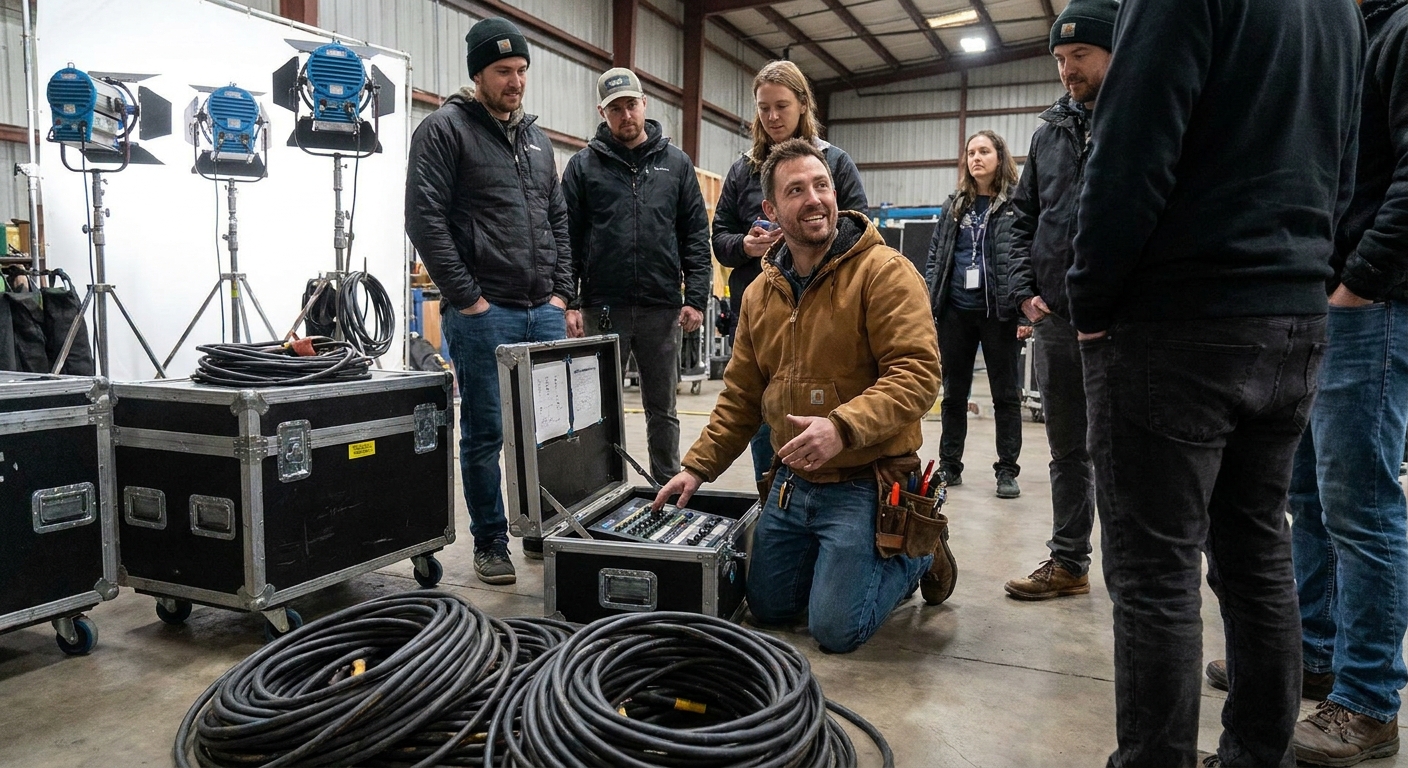
If the gaffer is the department head, the best boy electric is the gaffer’s right hand and the person who helps the plan happen smoothly.
What the gaffer focuses on
- Collaborating with the DP on lighting approach and priorities
- Making the big choices about fixtures, power, and implementation
- Leading the electric department on set and calling adjustments
- Keeping the lighting plan on schedule and within constraints
What the best boy focuses on
- Crew management and assignments for electrics
- Inventory, gear organization, and workflow
- Power distribution logistics and runs, especially on larger shows
- Paperwork, planning, and communication that keeps the department running
In practice, the line can blur depending on budget and crew size. On a small indie shoot, one person might cover most of both roles. On a larger production, the division becomes clearer: the gaffer stays focused on the shot and the DP, while the best boy keeps the machine running.
Why it matters on screen
When lighting feels “invisible,” it is often because it is doing something very specific: guiding your attention, shaping faces, separating the subject from the background, or creating a believable sense of time and place. The gaffer is central to that craft, balancing artistry with the reality of locations, weather, and the ticking clock.
Great gaffing is rarely flashy in the way people talk about a lead performance. But it is everywhere: in the soft edge of a shadow, the clean highlight on a cheekbone, and the way a practical lamp somehow looks perfect even though it should be too bright for camera.
Common questions
Is a gaffer the lighting designer?
On film and TV, the gaffer is best described as the chief lighting technician who executes the cinematographer’s plan. Stage productions may use “lighting designer” as a primary title, but on a film set the DP drives the photographic design, and the gaffer leads the electrics in carrying it out.
Does the gaffer choose the lights?
Often, yes, in collaboration with the DP. The DP may request specific units or a general approach, and the gaffer recommends practical options based on available gear, rigging realities, and time.
Who is in charge of lighting?
The DP is responsible for the overall image and lighting intent. The gaffer is responsible for leading the electric department and implementing that lighting plan on set.
Do gaffers work with color and gels?
Yes. Gaffers and electrics use gels, diffusion, and fixture settings to control color temperature and quality of light. On many modern sets, they also use LED fixtures with adjustable color and wireless control.
What does “gaffer” mean?
In everyday English, “gaffer” has long been used as a term for an older man or a boss or foreman. In film and TV production, it became the widely used title for the person heading set electrics. If you hear someone say “check with the gaffer,” they mean the person running lighting operations.
Quick recap
- The gaffer is the head of the electric department and chief lighting technician on a film set.
- They carry out the cinematographer’s lighting plan, choosing methods, fixtures, rigging, and power strategies to achieve the look.
- They lead the electric team, typically including the best boy electric and set lighting technicians.
- The best boy electric is the gaffer’s key assistant, often handling crew logistics, gear, and operational details so the set stays moving.
Next time you are watching a scene that feels like it is lit by “real life” instead of a movie set, keep an eye on the credits. The gaffer is in there, quietly making the magic look effortless.