Lights down. Curtain up.
If you’ve ever watched an episode of a series and thought, “Wait, why are we staying in this one room all night?” you may have just met a bottle episode. It’s a format that looks simple on the surface, but it can turn into a pressure cooker for character, comedy, and conflict.
Bottle episode, defined
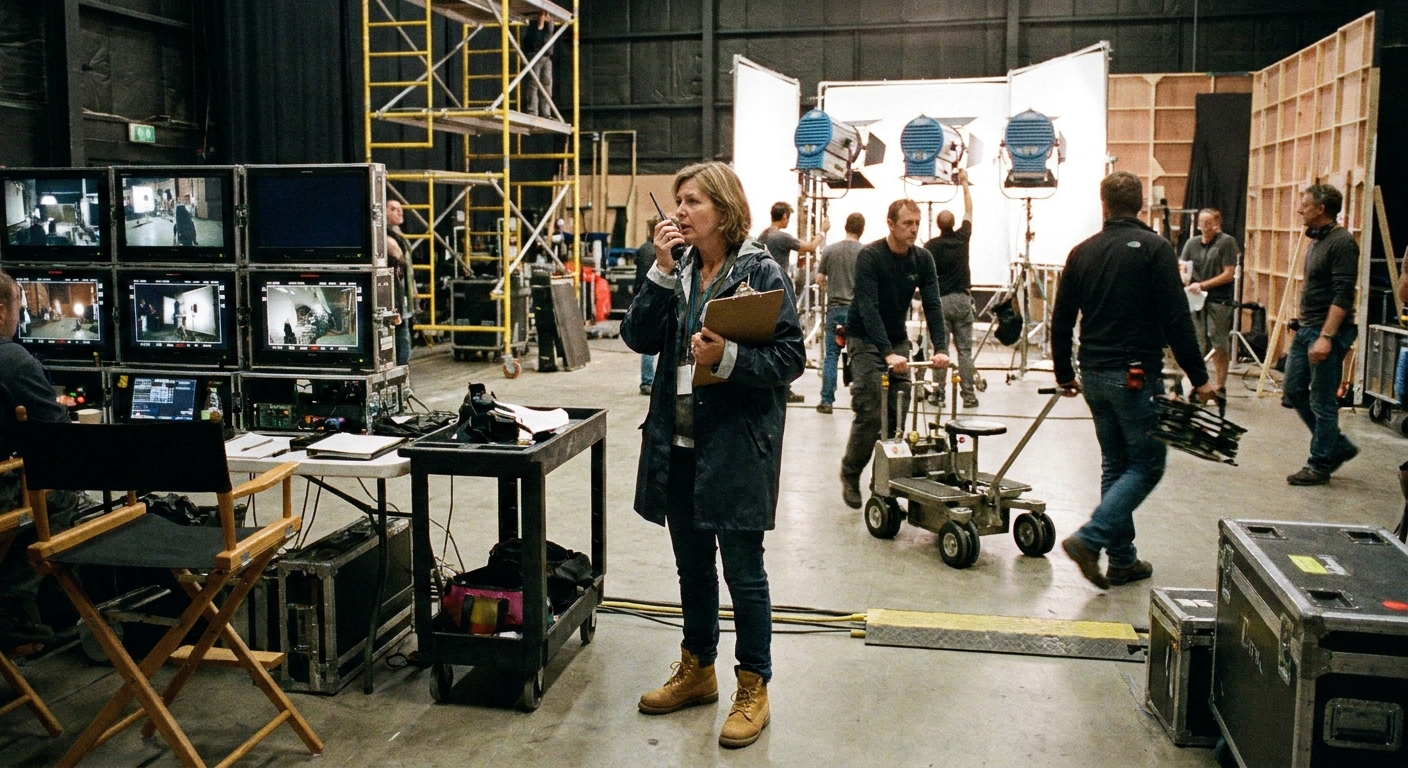
A bottle episode is a television episode that is set in one location, or in very few locations, and typically sticks to a limited cast that is mostly the series regulars. The goal is often practical: bottle episodes are often built to be less expensive than a typical episode because they require fewer sets, fewer guest actors, fewer company moves, and usually fewer complicated sequences.
But a bottle episode is not just “cheap.” It is a creative constraint. When a show cannot rely on big new settings, action set pieces, or a parade of guest stars, the script has to earn its keep with character dynamics, tight staging, and escalating stakes. And yes, some bottle episodes can still be costly if they lean on complex choreography, heavy effects, or intricate technical work inside that one space.
As for the name, it’s industry slang that fits the idea: the story is “kept in the bottle,” contained on a small slice of the show’s world.
Why series use bottle episodes
Most series build a season with a mix of episodes that cost different amounts. Some episodes are naturally bigger: new locations, complex stunts, visual effects, or a long list of speaking roles. A bottle episode helps balance the season’s scope and production load.
Common reasons
- Budget balance: A contained episode can free up resources for a larger episode elsewhere.
- Scheduling flexibility: Fewer locations and fewer day players can make an episode easier to coordinate.
- Focus on the core cast: With fewer outside characters, the main ensemble gets the spotlight.
- Creative challenge: Some series lean into the limitation as a storytelling experiment.
In other words, the bottle is a financial tool, a logistical tool, and sometimes a storytelling dare.
What makes one feel like a bottle episode
There is no single checklist that every show follows. Still, bottle episodes tend to share a few tells. You feel the walls closing in, in a fun way or an intense way, because the episode keeps returning to the same space.
Typical traits
- One primary set: An apartment, a police station, a classroom, a spaceship corridor, a waiting room.
- Limited outside cast: Mostly series regulars, with few or no guest stars.
- Time pressure: Many bottle episodes unfold over a short span, sometimes close to real time.
- Escalation through dialogue: The plot turns on conversation, reveals, arguments, secrets, and shifting alliances.
- A single problem that will not go away: A missing object, a misunderstanding, an argument, a moral dilemma, a locked door.
Because the external world is reduced, the internal world gets louder.
How the limit shapes the script
When a show stays in one place, the writing has to build momentum without the usual tricks of travel, spectacle, or constant scene changes. The good news is that constraint can sharpen everything.
1) Dialogue does more than talk
In a bottle episode, dialogue often carries multiple jobs at once: it moves the plot, deepens character, and creates rhythm. Jokes land harder because there is less distraction. Emotional turns feel bigger because the episode has nowhere else to go.
2) Blocking becomes storytelling
Where characters stand, who sits, who hovers near the exit, who is trapped on a couch, who keeps circling the room. Two characters can orbit each other without ever sitting down. Someone can plant themselves by the door like a bouncer. In a contained episode, movement inside the space replaces movement through the world. That is stagecraft energy, even on a TV set.
3) Small objects become huge
A phone, a pen, a missing jacket, a broken bottle, a door that will not open. Props often take on outsized importance because the episode needs tangible stakes within a limited environment.
4) Conflict escalates in layers
Bottle episodes frequently stack conflicts like nesting dolls. One disagreement starts, then a second issue complicates it, then a third reveal reframes everything. The audience stays engaged because the situation keeps changing even if the location does not.
Famous examples
Not every contained episode is officially labeled a bottle episode by its creators, but a few well known examples have become go-to reference points for viewers.
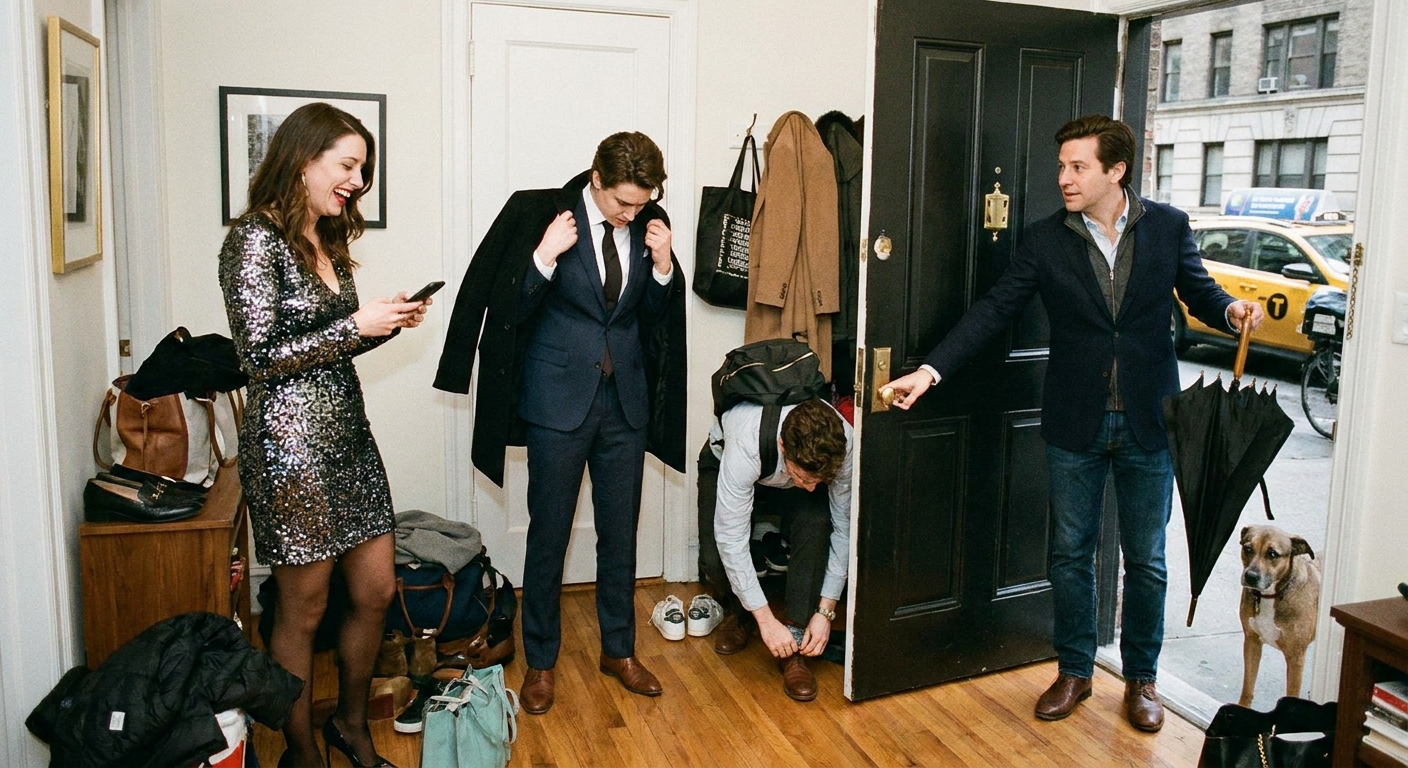
Friends: “The One Where No One’s Ready”
This episode famously stays in the apartment as the group tries to get out the door for an event. The comedy comes from delays, petty feuds, and the way time becomes the enemy. It is a masterclass in turning a simple premise into escalating chaos.
Breaking Bad: “Fly”
Set largely in the lab, this episode uses a nagging problem, a fly, as the spark for obsession, exhaustion, and character unraveling. With fewer moving pieces, the show leans into mood, tension, and what the characters will admit when they cannot escape each other.
Community: “Cooperative Calligraphy”
A missing pen in a study room becomes a social experiment. The episode traps the ensemble with their own personalities, building laughs and discomfort as alliances shift and everyone gets a turn under the spotlight.

Bottle vs. clip show vs. one-take
These formats can get mixed up because they are all “different” from a standard episode, but they are not the same thing.
- Bottle episode: Contained locations and a limited outside cast, often used to keep scope manageable and focus on the main ensemble.
- Clip show: Uses footage from earlier episodes as a major part of the runtime, often framed as characters reminiscing.
- One-take episode (or long-take style): Designed to look like it was filmed in a single continuous shot or a few long shots. It can be contained, but the defining feature is the visual approach, not the location count.
One more nuance: some episodes are single location but not really “bottle” in the classic sense, like a contained story that still brings in a crowd of guest actors or requires a massive new build for that one set. The vibe is contained, but the production footprint is not.
Are bottle episodes filler?
They can be, but they do not have to be. A weak bottle episode can feel like it is killing time. A strong bottle episode can become a fan favorite because it concentrates what people love about the show: the ensemble, the chemistry, the voice.
Some series use bottle episodes for character deepening rather than plot progression. Others use them to pivot relationships, reveal secrets, or set up future turns. The best ones feel intentional, not like a pause button.
Quick FAQ
Do bottle episodes always happen on one set?
Not always, but usually. Some bottle episodes use two or three locations, but still keep the scope tight and the focus on a small, familiar group of characters.
Are bottle episodes cheaper to make?
Often, yes. Fewer locations, fewer new sets, and fewer guest roles can reduce costs. That said, a contained episode can still be demanding in performance and staging, and some are ambitious in ways that are not cheap at all.
Why do some viewers love them?
Because they are character-forward. With less spectacle, you get sharper banter, more tension, and more time living inside the ensemble’s dynamics.
The bottle, uncorked
A bottle episode is a reminder that a series does not need to go bigger to hit harder. Sometimes all it takes is one room, a few characters, and a problem that refuses to leave quietly.
Next time your favorite show shuts the door and stays put, listen closely. The walls are not closing in. They are focusing the spotlight.