Lights down. Curtain up.
Before a camera shows up, before a set goes quiet, before an actor hits their mark, a lot of film and TV has already been “seen.” Not on a monitor, but on paper. That is the job of the storyboard: to turn a script into a visual plan, one shot at a time.
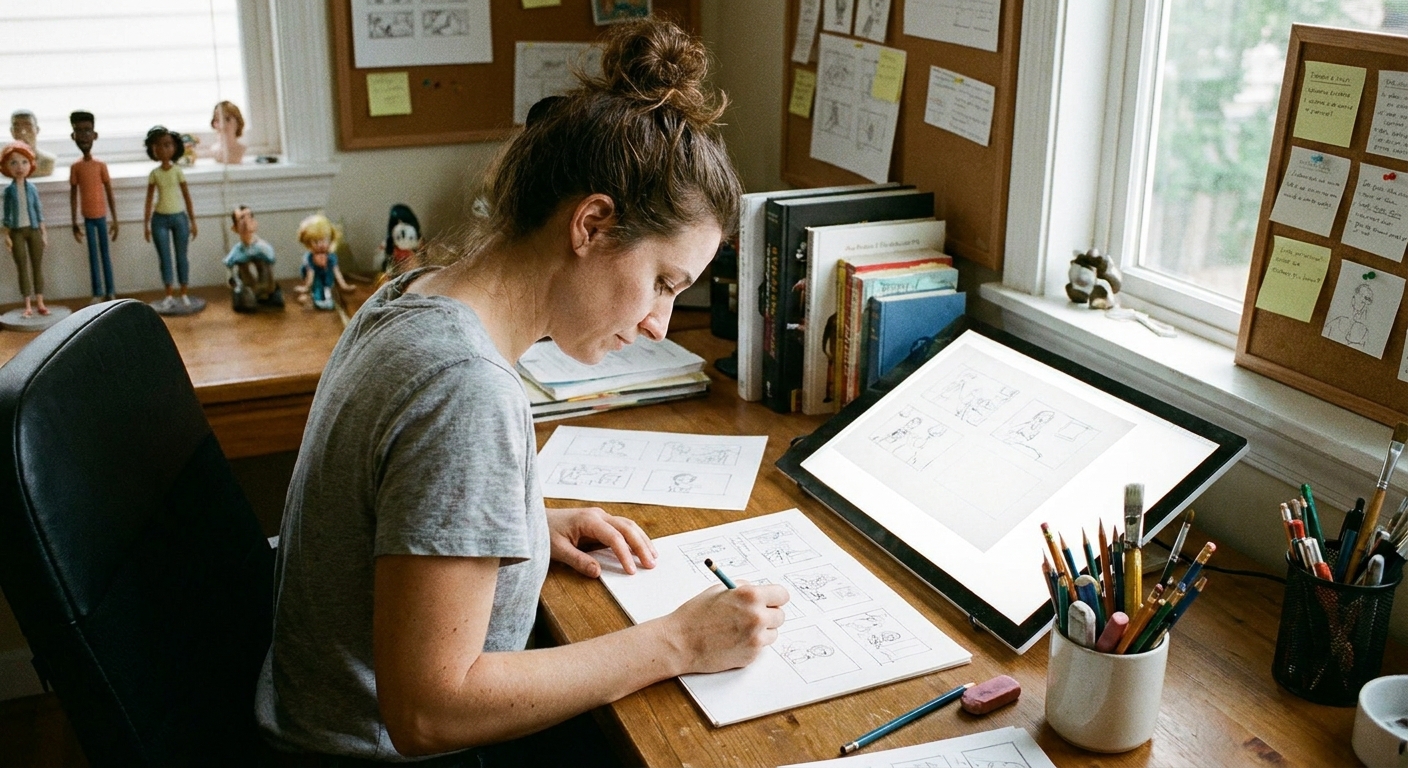
What a storyboard is
A storyboard is a sequence of drawings that maps out how a scene will be filmed or animated. Each drawing, often called a panel, represents a shot and shows key choices like:
- Framing (wide shot, close-up, over-the-shoulder)
- Blocking (where characters are positioned and how they move)
- Camera direction (pans, tilts, push-ins, pull-outs, handheld feel)
- Major beats of action (the moment that matters in that shot)
- Continuity (how one shot connects to the next)
Think of storyboards as the bridge between “what happens” in the script and “what we are actually going to see.” They are not usually meant to be pretty. They are meant to be clear.
How storyboards look
In the simplest form, a storyboard is a row of boxes with sketches inside. Notes under each panel often include:
- Shot size and lens notes
- Camera movement
- Character or prop actions
- Dialogue snippets when timing matters
- Arrows to show motion and eyelines
You might see rough pencil sketches on one production and clean digital boards on another. Either way, the goal is the same: make the visual intent understandable to the whole team.
Who draws them
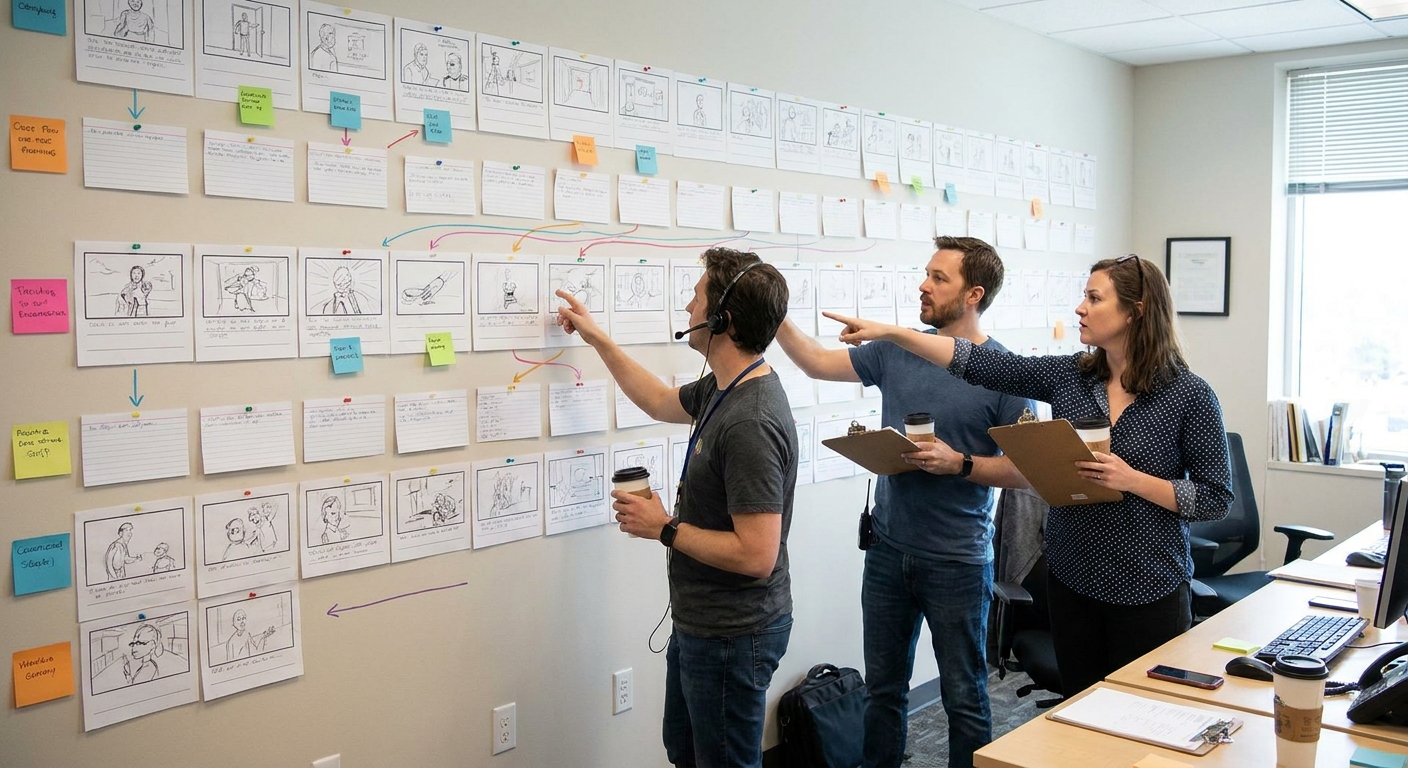
Storyboards are commonly created by storyboard artists. Depending on the production, the director may also sketch ideas, and some directors are known for drawing their own boards. In TV, especially fast-turnaround series, the level of detail can vary by schedule and budget.
In animation, storyboarding is often even more central. Because the “camera” is built rather than captured, boards can function as a primary blueprint for editorial, staging, and performance, usually alongside voice records and ongoing iteration in the story reel.
Who uses them
A storyboard is a communication tool. It helps multiple departments aim at the same target, including:
- Director and cinematographer: agree on shot design, coverage, and visual language
- Producers and AD team: plan the day, estimate time, and avoid surprises
- Production design: understand what parts of a set need to be built and seen
- Stunts and safety: choreograph action, anticipate risk, plan padding and rigging
- VFX: identify plates, green screen needs, and complex transitions
- Editing team: anticipate how the scene will cut together
They are especially useful for sequences that are expensive, dangerous, or complicated. Action scenes. Musical numbers. Crowd work. Visual-effects-heavy moments. Anything where “We’ll figure it out on the day” can become a very pricey sentence.
A quick example
Here is what “shot planning in pictures” looks like in miniature:
- Panel 1: a wide establishing shot that makes the geography clear
- Panel 2: an over-the-shoulder on Character A, aimed at Character B to set eyelines
- Panel 3: a close-up on Character B for the emotional beat
- Panel 4: an insert of the object that matters (a key, a text message, a hand on a doorknob)
Even this basic sequence answers a lot of on-set questions early: where are we, who is where, what does the audience need to notice, and what is the cutting rhythm.
What an animatic is
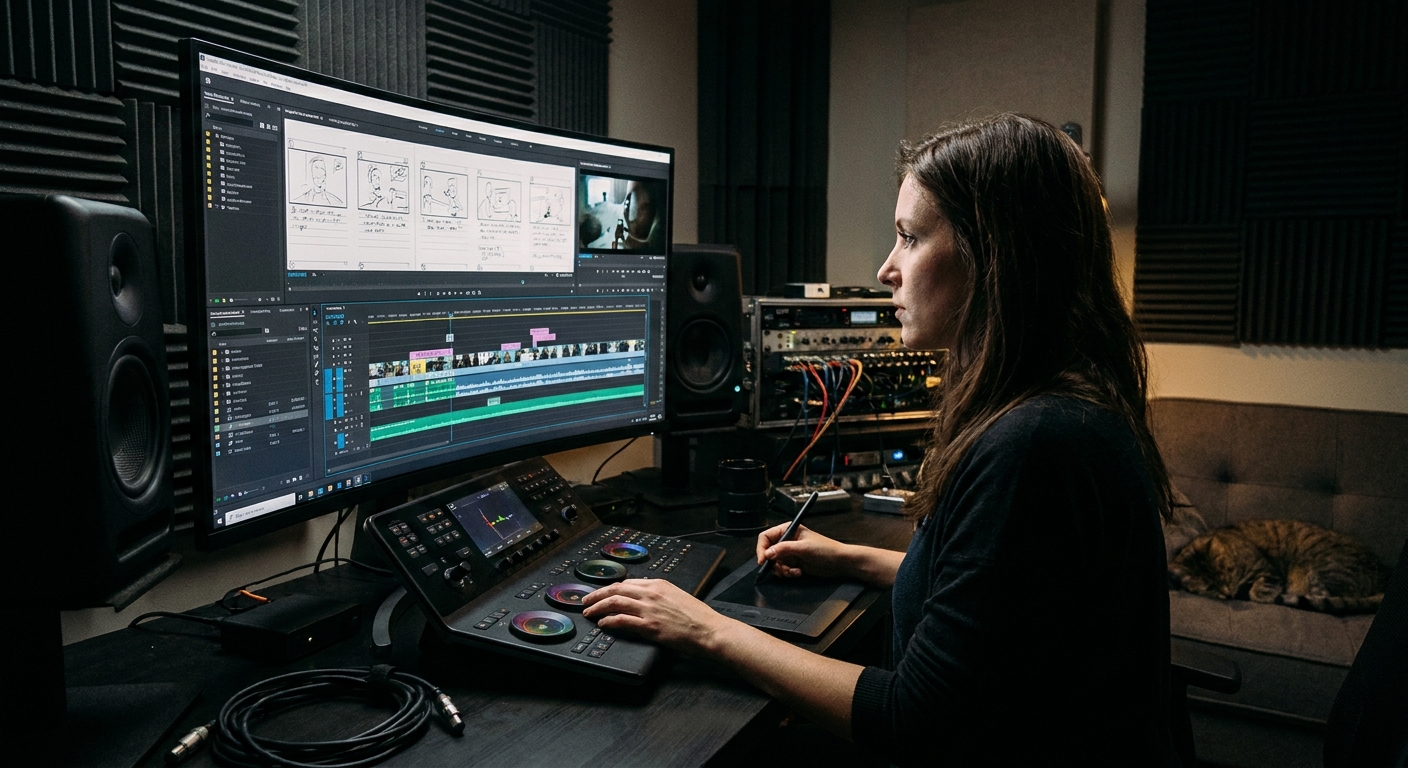
An animatic is what happens when a storyboard starts moving.
Typically, an animatic is a timed video made from storyboard panels cut together in sequence, often with temporary sound such as:
- Scratch dialogue
- Music cues
- Sound effects
- Simple camera moves like zooms or pans added digitally
It is still not the final footage, but it lets the team test pacing, clarity, and rhythm before production spends time and money on shooting or animation.
In animation, animatics are often essential to the editorial process. In live action, they are common for action, VFX, and commercials, where timing and shot logic need to be locked early.
Storyboard vs. shooting script
A storyboard and a shooting script both help plan production, but they are different tools.
Shooting script
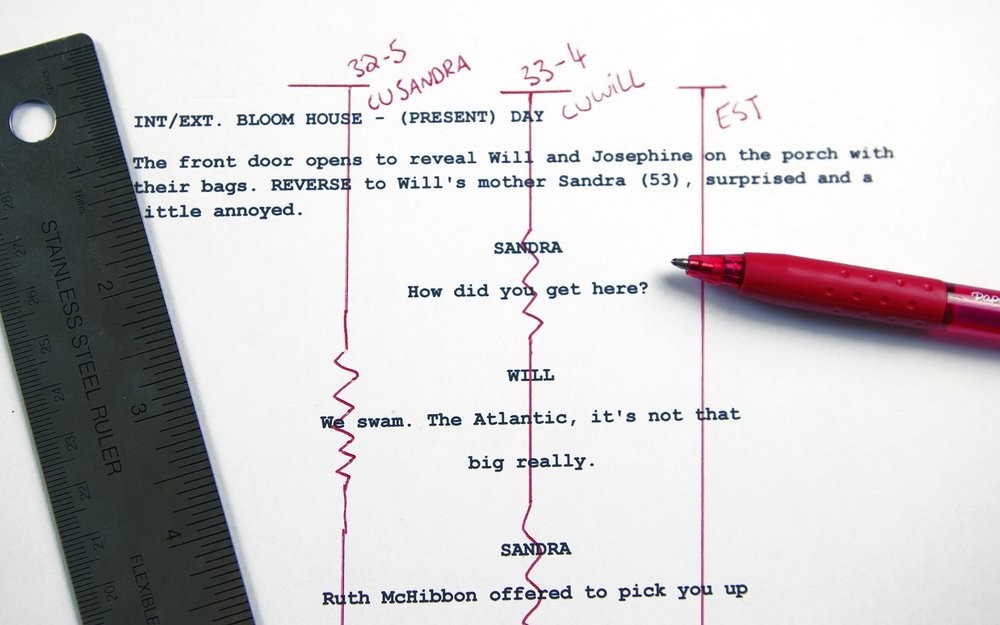
A shooting script is typically a production draft of the script that is numbered for scheduling and logistics, with revisions tracked as the draft changes. It is primarily text: scene headings, scene numbers, dialogue, and action description.
Storyboard
A storyboard is primarily visual: it translates moments into shot choices and makes the coverage plan easier to see at a glance.
Put simply: the shooting script tells you what happens in words and scene numbers. The storyboard shows how it will look shot by shot.
Storyboard vs. dailies
Storyboards live in the before. Dailies live in the after.
Dailies
Dailies are the raw footage already filmed, often reviewed by the director, producers, cinematographer, and other stakeholders to check performances, focus, exposure, continuity, and whether the scene is coming together.
Storyboard
A storyboard is a plan for what the production intends to capture. Dailies show what the camera actually captured.
On a good day, dailies confirm the plan worked. On a complicated day, dailies reveal what needs pickups, coverage adjustments, or editorial problem-solving.
Do all productions use them?
Not always, and not in the same way.
- Big action and VFX projects often rely heavily on storyboards and animatics.
- Animation nearly always uses them as a core part of building the film or episode.
- Character-driven drama may storyboard selectively, focusing on complex sequences rather than every dialogue scene.
- Improvisational or documentary-style shooting may use fewer boards, leaning more on shot lists, references, and on-set discovery.
Even when a full storyboard is not created, the underlying thinking still happens. Someone is deciding where the camera goes, what the audience sees, and when.
What storyboards do not do
Storyboards are powerful, but they are not a magic spell. They typically do not:
- Lock performances, since actors still bring new timing and energy
- Guarantee a scene will cut perfectly, since production realities can change coverage
- Replace collaboration, since departments still interpret and refine the plan
A storyboard is best understood as a shared starting point. It can be strict or flexible depending on the production’s needs.
Quick glossary
- Panel: one storyboard drawing representing a shot
- Sequence: a run of panels that cover a scene or set piece
- Boards: shorthand for storyboards
- Animatic: edited storyboard panels timed like a scene
- Story reel (also called a leica reel): an animatic-like cut used in animation to develop pacing and story
- Previz: more advanced previsualization, often 3D, for complex action or VFX
FAQ
Is a storyboard the same as a shot list?
No. A shot list is typically a written checklist of shots to capture. A storyboard shows those shots visually, including composition and motion. Many productions use both.
Are storyboards only for animation?
Animation uses storyboards constantly, but live-action film and TV use them too, especially for action, VFX, and sequences where timing and geography have to be crystal clear.
Do storyboards include dialogue?
They can, but usually only when it helps with timing or a specific beat. The script is still the primary source for full dialogue.
Why not just find it on set?
Sometimes you can, and some directors prefer that freedom. But for complicated scenes, storyboards reduce confusion, save time, and keep the team aligned on what the audience needs to understand.