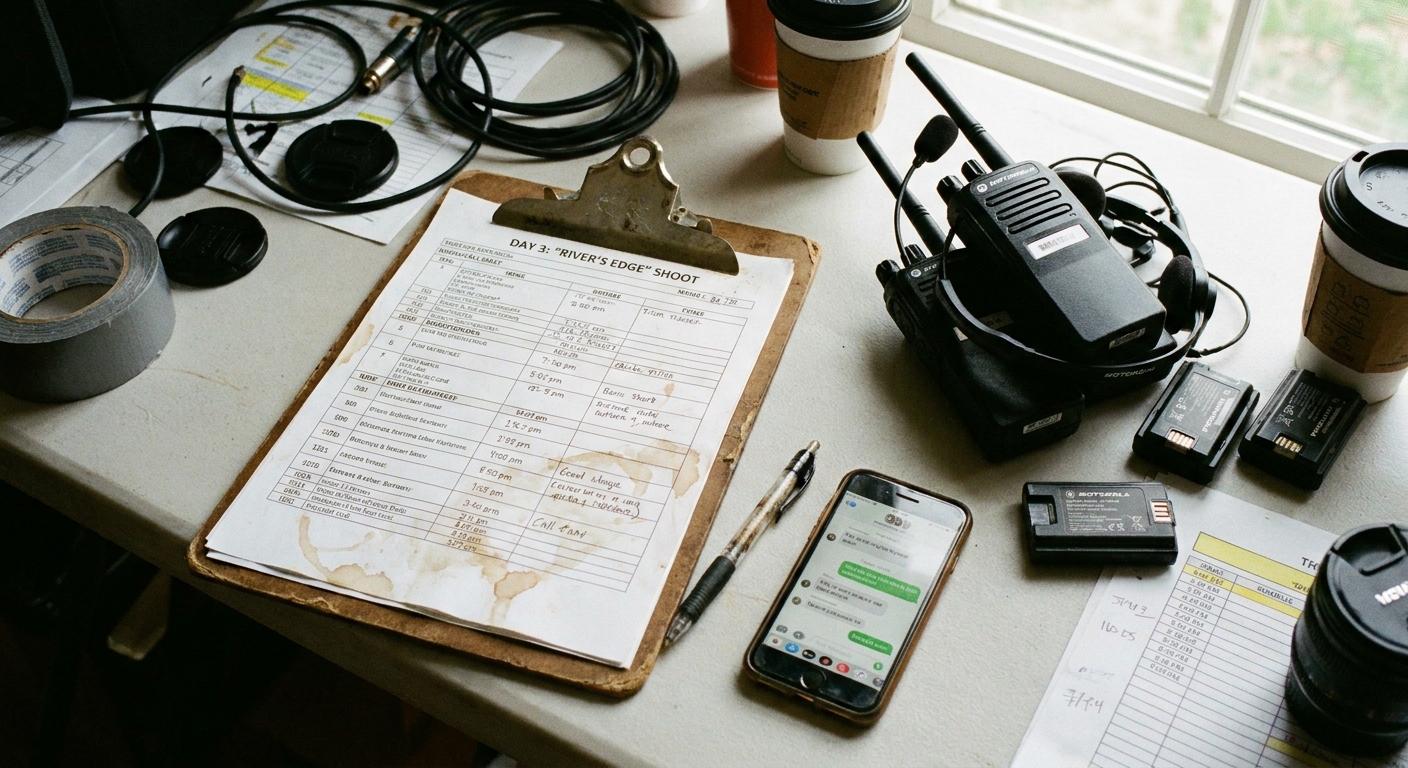
Lights down. Curtain up.
If a showrunner is steering the story, a line producer is steering the plan. They are the production’s get-it-done grownup: translating creative ambition into a schedule people can survive, and a budget the production can actually afford.
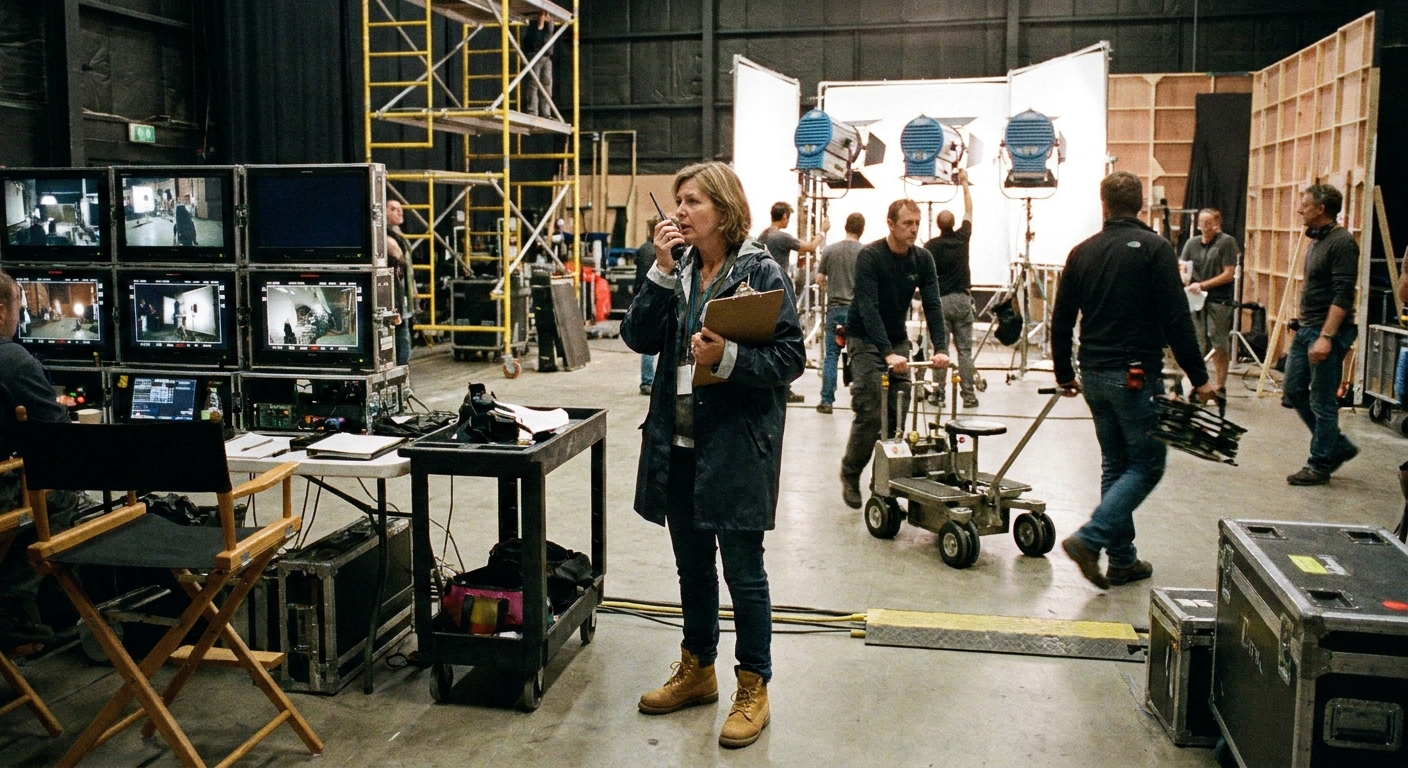
The line producer in one sentence
A line producer manages a project’s budget, schedule, and daily production resources, making sure the production has the people, time, and money to get the work finished.
Depending on the size of the project, the line producer may be hired by the studio, network, or lead producers, or brought in through a production company to build the budget and execute the plan through prep, shoot, and wrap.
What a line producer actually does
The job lives at the intersection of logistics and decision-making. A line producer is not just tracking numbers. They are constantly choosing how to allocate limited resources across departments, locations, and shooting days.
Builds and controls the budget
- Helps build and manage the production budget from a script breakdown: cast, crew, locations, sets, costumes, props, equipment, travel, insurance, contingency, and more. (On some shows, post is budgeted and run by a post producer, with the line producer carrying top-line post allowances or coordinating with post leadership.)
- Sets assumptions that shape everything, like the number of shoot days, company moves, overtime expectations, and contingency.
- Reviews and signs off on costs within delegated authority, in coordination with producers, production accounting, and, when applicable, studio or network production executives.
- Tracks spend as the shoot evolves, adjusting when reality bumps into the plan.
Pressure-tests the schedule
- Partners with the AD team as they build the shooting schedule. Often the 1st AD drafts the schedule, and the line producer and UPM stress-test it against budget, logistics, and crew realities.
- Plans for constraints: actor availability, daylight, permits, stunts, child labor rules, weather, travel time, and location access.
- Balances efficiency with safety, so days are not built on wishful thinking and constant overtime.
Runs resources and logistics
- Staffing: coordinates hiring needs and crew levels with department heads.
- Vendors and rentals: negotiates big-ticket items like camera and grip packages, stages, transportation, and hotels.
- Location and travel strategy: clusters scenes, reduces moves, controls per diem and lodging costs, and helps prevent schedule blowups.
- Problem-solving: when something changes, and it always changes, they help determine what the production can afford to do next.
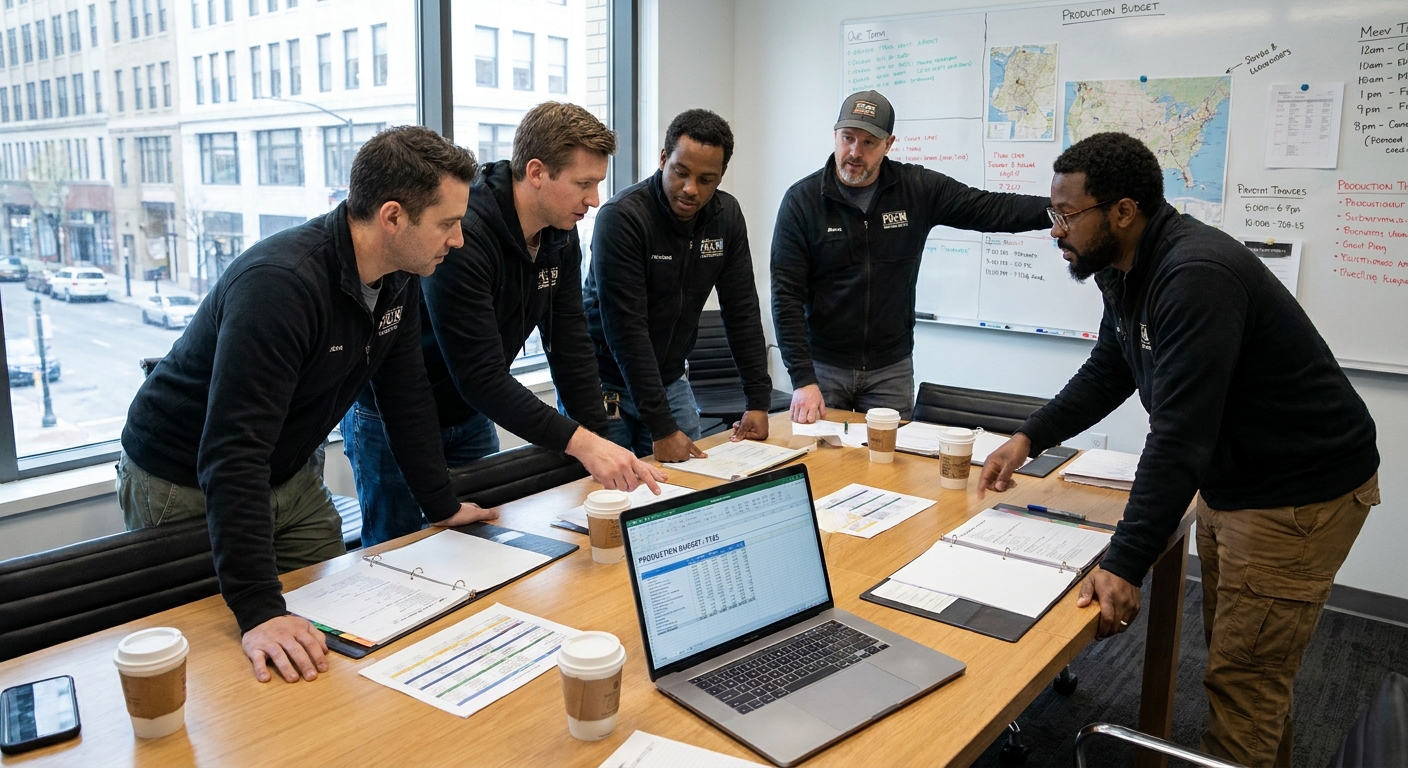
Where the line producer fits
Titles can overlap depending on country, union structure, and the scale of the show, but the basic idea stays consistent: the line producer is a top operational leader focused on execution.
One extra wrinkle: credits and job definitions vary by territory. In some contexts, especially under certain union and guild frameworks, the UPM is a formally defined position and “line producer” may be used more as a functional description, a separate credit, or not used at all.
Line producer vs. showrunner
The showrunner leads the series creatively and is usually the top writer-producer. They decide what the show is, tonally and narratively.
The line producer makes that vision feasible. When a creative choice has a price tag, schedule impact, or staffing ripple, the line producer is typically one of the main voices translating that into options: “We can do it this way in one day, or that way in three.”
Line producer vs. unit production manager (UPM)
A unit production manager is typically the day-to-day driver of physical production: crew logistics, labor compliance, deal execution, safety coordination, and the steady stream of coordination and paperwork that keeps the show legal and moving.
On many productions, the line producer is more senior and strategic, while the UPM executes the operational plan on the ground. On other shows, the titles blur, or one person covers both functions.
Line producer vs. AD team
The AD team builds and runs the set schedule, calling the day and managing set operations. They are timekeepers and traffic controllers for the shoot.
The line producer partners closely with the 1st AD. If the schedule is slipping, scenes are taking longer, or a company move is going sideways, the line producer is typically involved in the bigger decision: add a day, cut a setup, simplify a location, or shift coverage.
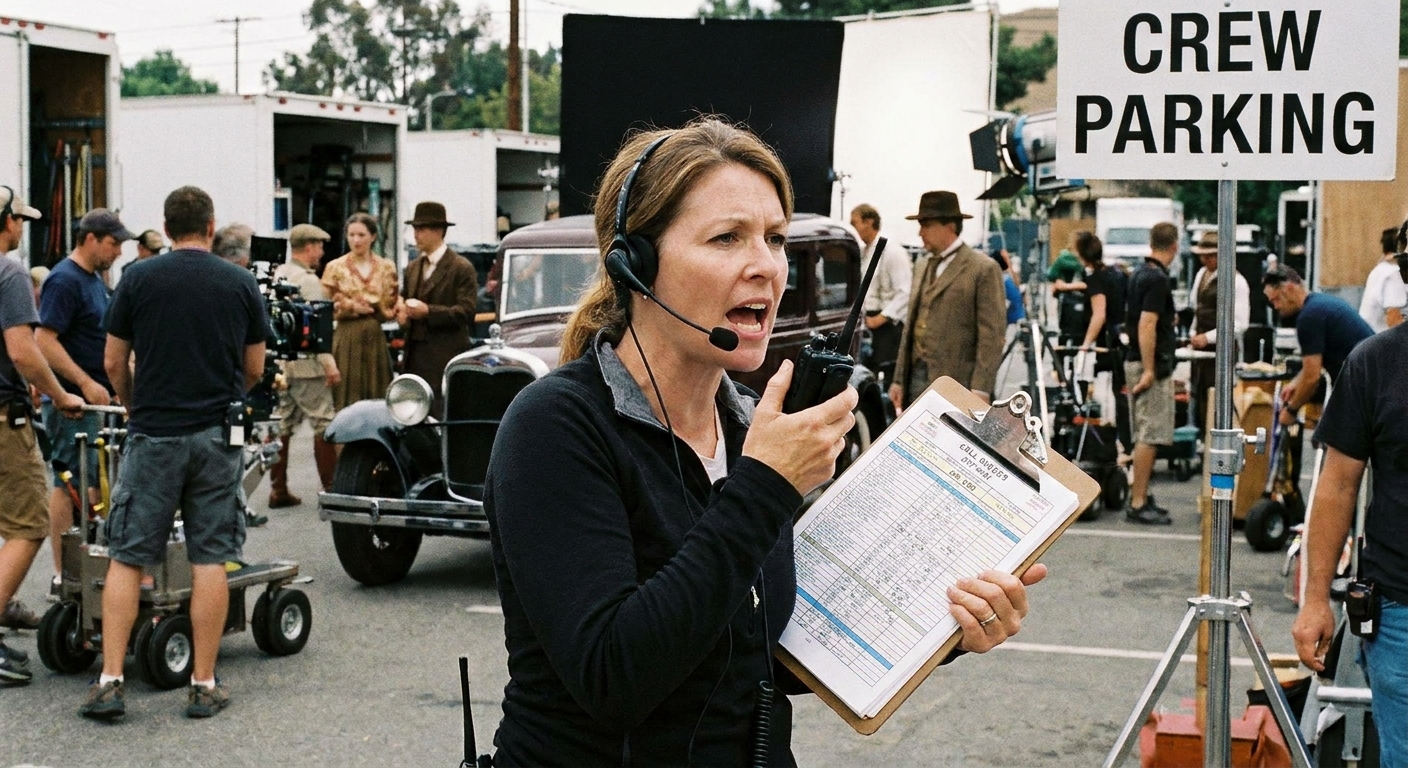
What cast and extras might ask
Performers often meet the AD team more directly day to day, but line producers can enter the picture whenever a question touches resources, time, or money.
For principal cast
- Schedule and availability changes: if dates shift or scenes move, the line producer may be part of the conversation about what is workable.
- Travel and lodging logistics: approvals and constraints around flights, hotels, and per diem planning often run through the line producer, UPM, and production office.
- On-set limits that affect the day: turnaround, meal timing, and union rules are typically communicated and enforced through the AD team and UPM, with the line producer involved when solutions affect cost or schedule.
- Big-impact requests: anything that triggers additional crew, gear, vehicles, locations, or time can come to the line producer for feasibility.
For background actors (extras)
Extras usually interact most with casting, background PAs, and the AD department, but the line producer’s fingerprints are still on:
- How many extras are booked and for how long, because background numbers affect budget fast.
- Holding and transportation resources, like buses, staging areas, and support staff.
- Wardrobe and special requirements, especially for period work, special skills, or large crowd days.
If you are cast or background and something feels unclear, the cleanest path is usually: AD team or your on-set contact first. They will escalate to the production office or line producer when the decision affects the plan.
A day in the life
No two days look identical, but line producer time tends to cluster around a few repeatable rhythms:
- Prep: budgeting, staffing, vendor bids, schedule strategy, location planning, and setting up workflows.
- Production: tracking costs daily, troubleshooting logistical problems, coordinating with UPM and 1st AD, and keeping the schedule and budget aligned.
- Wrap: closing out vendors, reviewing final costs, handling overages, and supporting a smooth handoff into post as needed.
Skills and tools
Line producing is equal parts math, diplomacy, and pattern recognition. The exact toolkit varies, but many line producers rely on:
- Budgeting and scheduling software, often Movie Magic Budgeting and Movie Magic Scheduling, or comparable tools.
- Working knowledge of union and guild rules and local labor requirements, because one “simple” change can trigger penalties, extra staffing, or forced turnaround.
- Negotiation and vendor management, especially for rentals, stages, travel, and services.
- Clear communication under pressure, including the ability to turn bad news into options.
How people become line producers
There is no single path, but a common route runs through production management. Many line producers come up as production coordinators, assistant production managers, and UPMs, building a reputation for planning, budgeting, and calm execution. Over time, they are trusted with bigger budgets, more complex schedules, and higher-stakes decisions.
What makes a great line producer
The best line producers are a blend of calm and ruthless clarity, with a deep respect for crew bandwidth.
- Budget fluency: they understand what costs what, and why.
- Scheduling instincts: they can spot an impossible day from a mile away.
- Communication: they can say “no” without burning the room down, and say “yes” without breaking the production.
- Department empathy: they know the downstream impact of cutting time or resources.
- Contingency thinking: they plan for weather, delays, and human reality.
Common misconceptions
“The line producer is the same as a producer.”
“Producer” can mean many things. A line producer is specifically focused on physical production: budget, schedule, staffing, and logistics. Some producers live more on development, financing, creative notes, or talent relationships.
“Line producers just cut corners.”
Smart line producing is not corner-cutting, it is tradeoff management. The goal is to protect what the audience will feel on screen while keeping the production safe and sustainable.
“If we go over, we can fix it later.”
Overages tend to snowball. A line producer’s job is to spot drift early and adjust while there are still options.
Quick FAQ
Is a line producer above a UPM?
Often, yes. Many shows treat the line producer as the senior operational lead and the UPM as the person running day-to-day physical production under that umbrella. But credits and hierarchies vary widely by production, territory, and union rules.
Do line producers work on set?
They can. Some line producers are frequently on set, especially during complicated sequences or when the schedule is tight. Others operate more from the production office, depending on how the team is structured.
Who does the line producer report to?
Typically to the producing team and, in television, often in close partnership with the showrunner and studio or network production executives.
What should performers do if they have a problem on the day?
Start with your on-set point of contact, usually the AD team, talent wrangler, or production coordinator. They can route the issue to the right person, including the line producer when it affects cost, schedule, or resources.