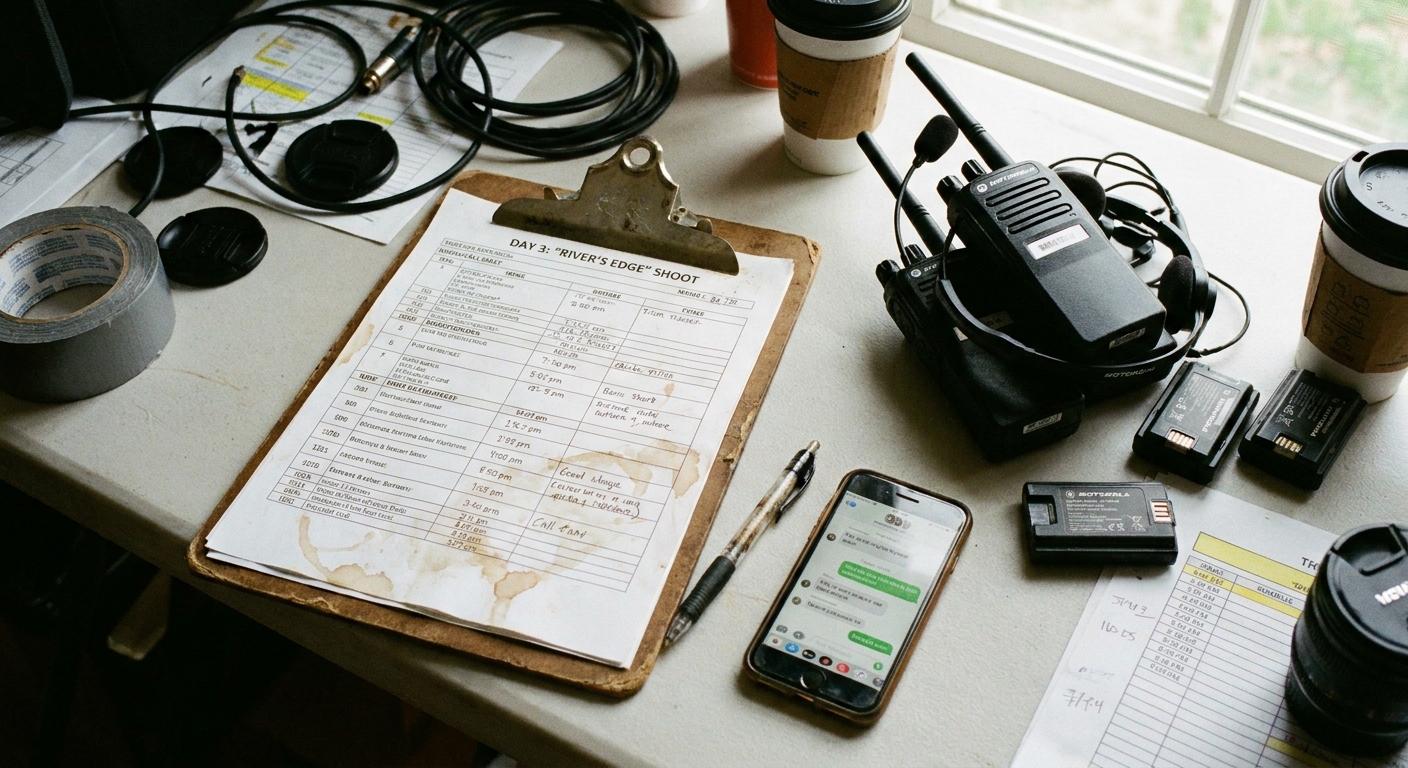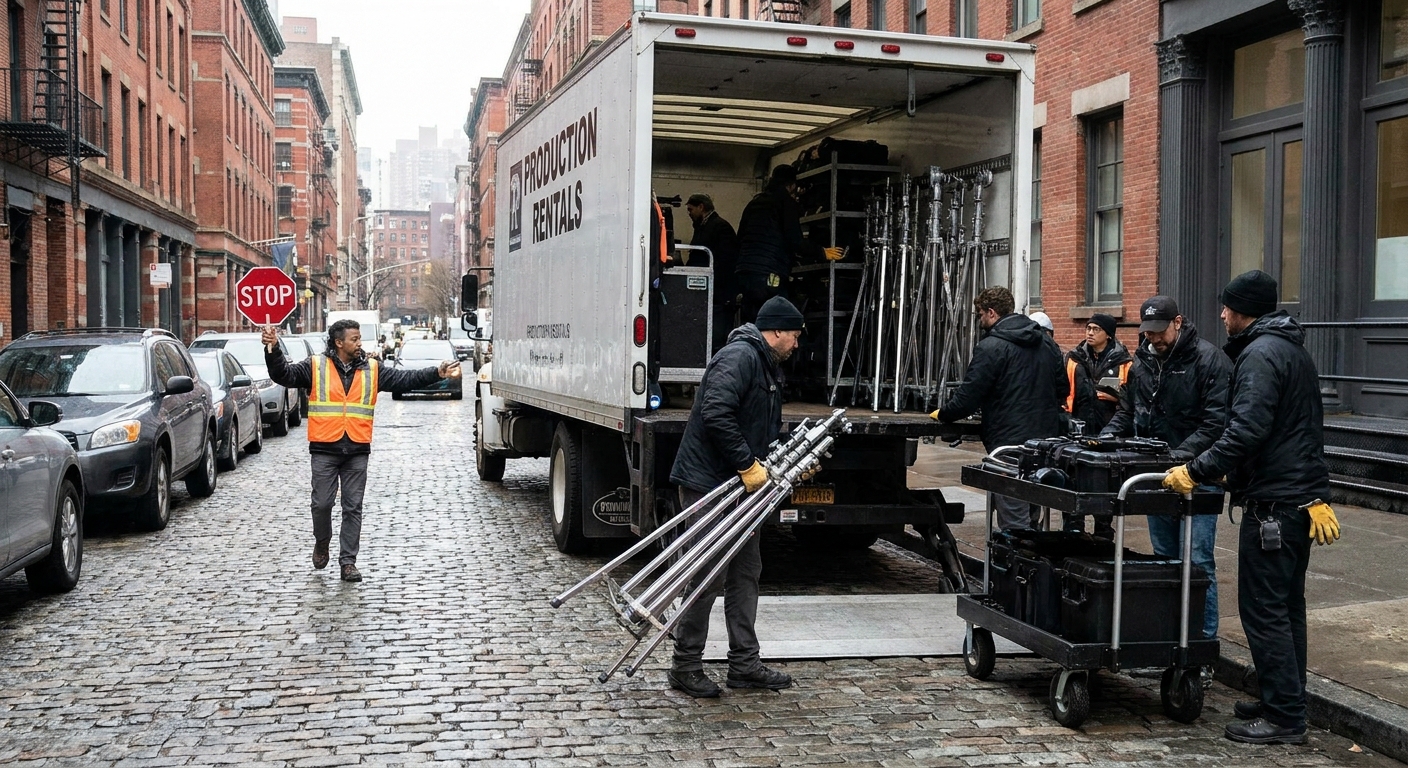
Lights down. Curtain up.
If you have ever stared at a call time and a studio address and thought, Okay, but can my car actually go in, you are already circling the idea of a drive-on pass. In plain terms: a drive-on is the gate credential (or clearance) that tells security your vehicle is authorized to enter a controlled lot.
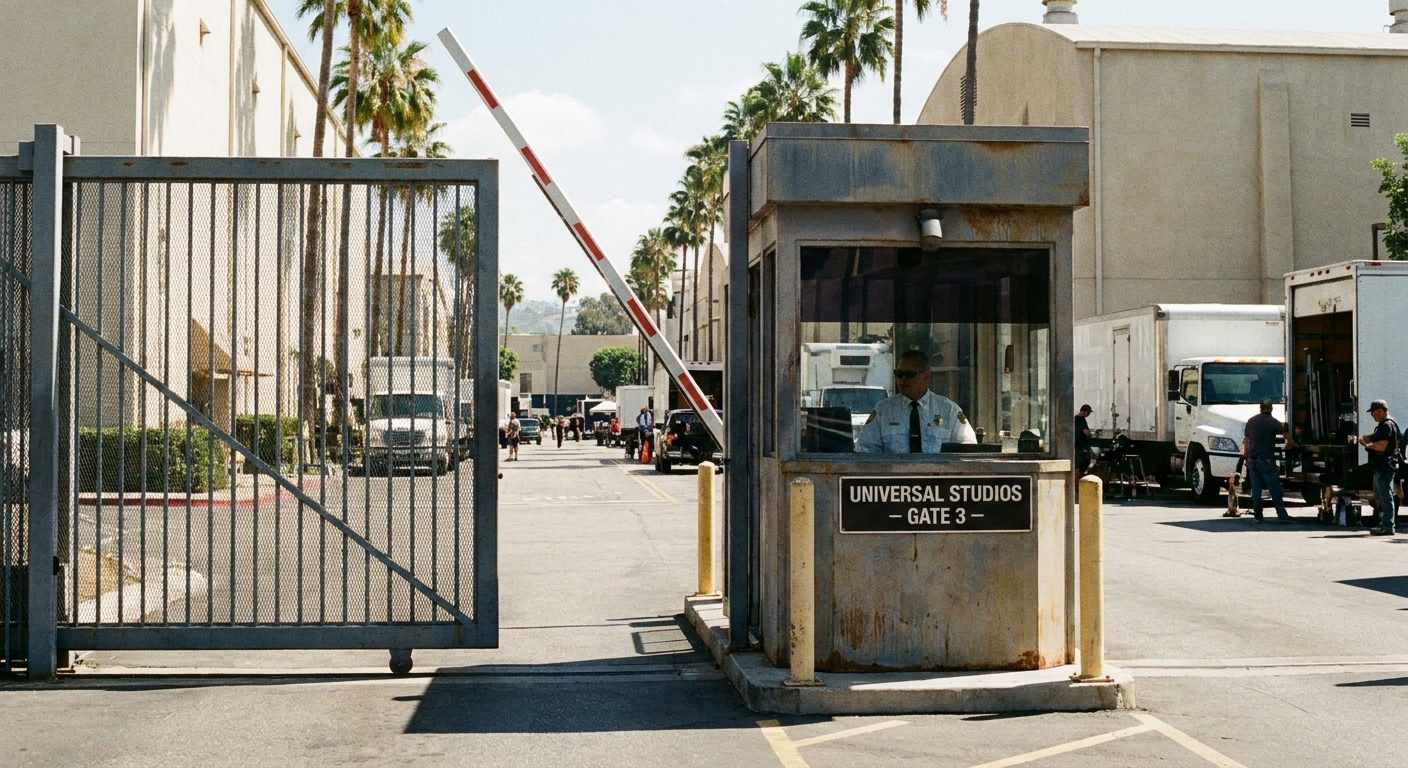
Drive-on pass, defined
A drive-on pass is permission for a specific vehicle to drive onto a controlled studio property or similarly secured location. How that permission shows up varies by lot and by show. It might be:
- a printed placard or hangtag you display in the windshield
- a digital pass, barcode, or QR code tied to the vehicle
- a vehicle approved on a security list (sometimes described as vehicle clearance)
The key point is what it authorizes: lot entry by car. Not just you as a person, and not just parking somewhere nearby. It is the difference between:
- Walking in with your ID and checking in on foot, versus
- Driving in through a security gate with your vehicle cleared for entry.
Terminology varies
Depending on the studio and the production, you might hear “drive-on,” “vehicle pass,” “parking pass,” “hangtag,” or “placard.” People often mean the same basic thing: your car is allowed past the gate.
Who issues a drive-on pass?
On many productions, the drive-on starts with production and is enforced at the gate by the studio’s access office or a contracted security vendor. In practice, it can be handled by:
- Production office staff who manage access lists and distribute passes
- Transportation if the production is coordinating vehicle flow and parking on the lot
- Locations for non-studio locations with controlled access
- Studio security or an access office that maintains the approved vehicle roster
If you are background talent, you usually are not requesting a drive-on from the studio. If you get one, it is because production wants your vehicle on the property that day. Most of the time your real contact point is the background coordinator, BG PA, casting, or the production phone number listed in your instructions.
What you show at the gate
Every lot has its own rhythm, but gate check-ins usually follow a simple goal: security needs to confirm you are you, and the vehicle is cleared.
Common items security may ask for
- Government-issued photo ID that matches the name on the access list
- Drive-on pass or access confirmation (printed, on your phone, or on a list)
- Vehicle details such as license plate, make, model, and color
- Call sheet or work order info as supporting context, if needed
You might be directed to a specific lane, told to place a pass on your dashboard, or asked to wait while security confirms your clearance. That is normal. Gates are designed to slow things down on purpose.
Security checks you might see
On some lots or on high-security days, expect things like mirror checks, trunk checks, or questions about what you are bringing in. Follow instructions, keep your phone down, and do not photograph the gate or the checkpoint area.
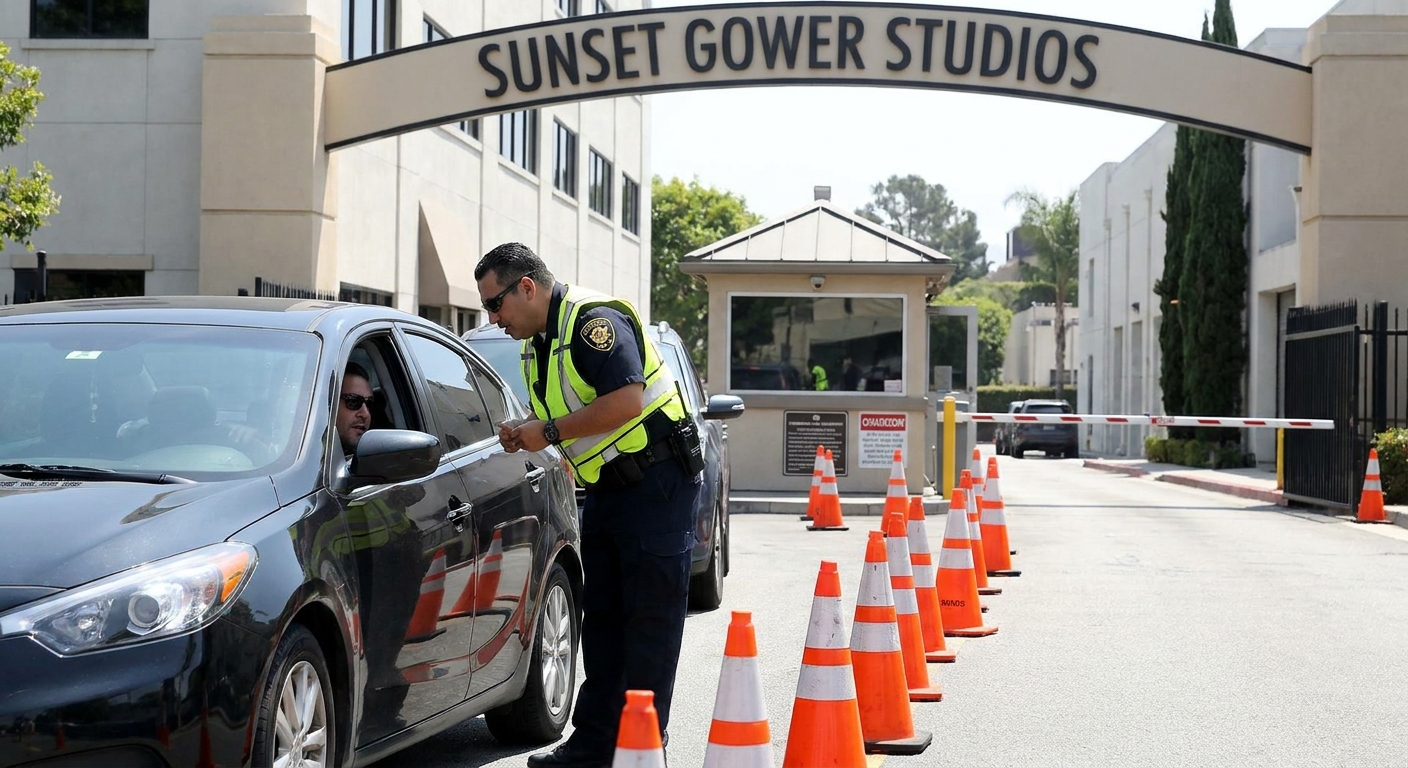
What happens if you arrive without a drive-on
No drive-on usually means your car does not go in. What happens next depends on the lot and the show, but common outcomes include:
- You are turned away from driving in and told to park off-lot
- You are redirected to a pedestrian entrance and must walk in and check in
- You wait while security calls production to see if you can be cleared
- You miss your check-in window if the issue takes too long
If there is one golden rule: do not argue with the gate. Security is doing access control, not negotiating. If you think a mistake was made, contact the production number or coordinator in your instructions and calmly ask them to confirm your access.
Call sheet parking vs drive-on
This is where confusion blooms. A call sheet often includes parking directions, but parking instructions are not automatically gate clearance.
What parking notes usually mean
- Where production wants you to park for the day
- Whether you should park at crew parking, a nearby structure, or a designated lot
- Whether you should take a shuttle from parking to set
Those notes can exist with or without a drive-on. For example, a call sheet might say “Park in Lot B,” but Lot B could be an off-lot structure where you then walk to the pedestrian gate or catch a shuttle.
If the instructions say something like “Do not drive to set” or “Must shuttle from crew parking”, treat that as a big hint that your vehicle is not meant to move freely on the lot, even if you are expected to be there.
Base camp parking vs drive-on
Base camp is the production’s off-set hub for trailers, holding, catering, and support. It is often not the same place as the set, and it is frequently not behind a studio gate at all.
Base camp parking instructions tell you where to put your car so you can enter the day’s check-in flow. A drive-on pass is specifically about entering a controlled property by vehicle.
It is totally possible to have a day where:
- You park at base camp, and
- You never drive onto the studio lot at all
It is also possible, on a studio-based show, to have base camp set up on or near the lot, while only certain vehicles are allowed through the gate.
Why drive-ons are limited
A studio lot is a small city with tight choreography. Drive-ons are limited for practical reasons:
- Security: fewer vehicles inside means fewer risks
- Traffic control: lots have narrow streets and heavy equipment moves
- Space: parking is finite and often reserved by department
- Insurance and liability: productions control who drives where and when
This is why you can be fully booked, fully expected, and still expected to arrive without a drive-on and follow a shuttle or walk-in route.
If you think you need a drive-on
If your instructions are unclear, do not guess. A wrong guess at a studio gate can turn into a late check-in fast.
Quick steps that usually help
- Re-read your instructions for phrases like “drive-on,” “gate pass,” “vehicle clearance,” or “park off-site and shuttle.”
- Check for a specific gate name or number. Lots often have multiple entrances and only some handle visitor processing.
- Look for a contact such as the background coordinator, BG PA, production office number, or check-in phone.
- Ask one focused question: “Am I cleared to drive onto the lot, or should I park off-lot and walk or shuttle in?”
Send vehicle info early
On many shows, vehicle info has to be submitted in advance (plate, make, model, color). Last-minute adds can be denied simply because the list is already locked for the day.
Rentals and borrowed cars
If you show up in a different car than the one on the list, the plate will not match. If you switch to a rental, borrowed car, or a different vehicle at the last minute, tell production as soon as you can. In a lot of cases, security cannot just “wave you through” on vibes.
If you are background talent, it is especially important to follow the parking plan you were given. Productions build their morning around predictable arrival patterns.
FAQ
Is a drive-on pass the same as a studio badge?
Not necessarily. A studio badge often identifies you for ongoing access, while a drive-on pass authorizes a vehicle for entry. Some studios tie these together, others keep them separate.
Does having a call time mean I can drive in?
No. A call time means you are expected to work. Whether your car can enter depends on the lot’s access rules, space, and what production arranged.
If I am dropped off, do I still need a drive-on?
Often, no. Many lots have a designated visitor or ride-share drop-off outside the gate. But on some lots, or at certain times, vehicles may still need to be directed to a specific gate or cleared for a drop-off lane. If you are ride-sharing, check your instructions for a visitor drop-off point or a gate name.
Can I show the guard my call sheet as proof?
A call sheet can help confirm context, but it is not always enough for vehicle entry. Security typically needs your name on an approved list and, for a drive-on, your vehicle cleared.