I learned the phrase “company move” the same way most people do: by hearing it announced with the crisp finality of a stage manager calling places. One minute everyone is calmly doing their jobs, and the next, the whole production is suddenly in motion. If you are working background, it can feel like the day just hit fast-forward.
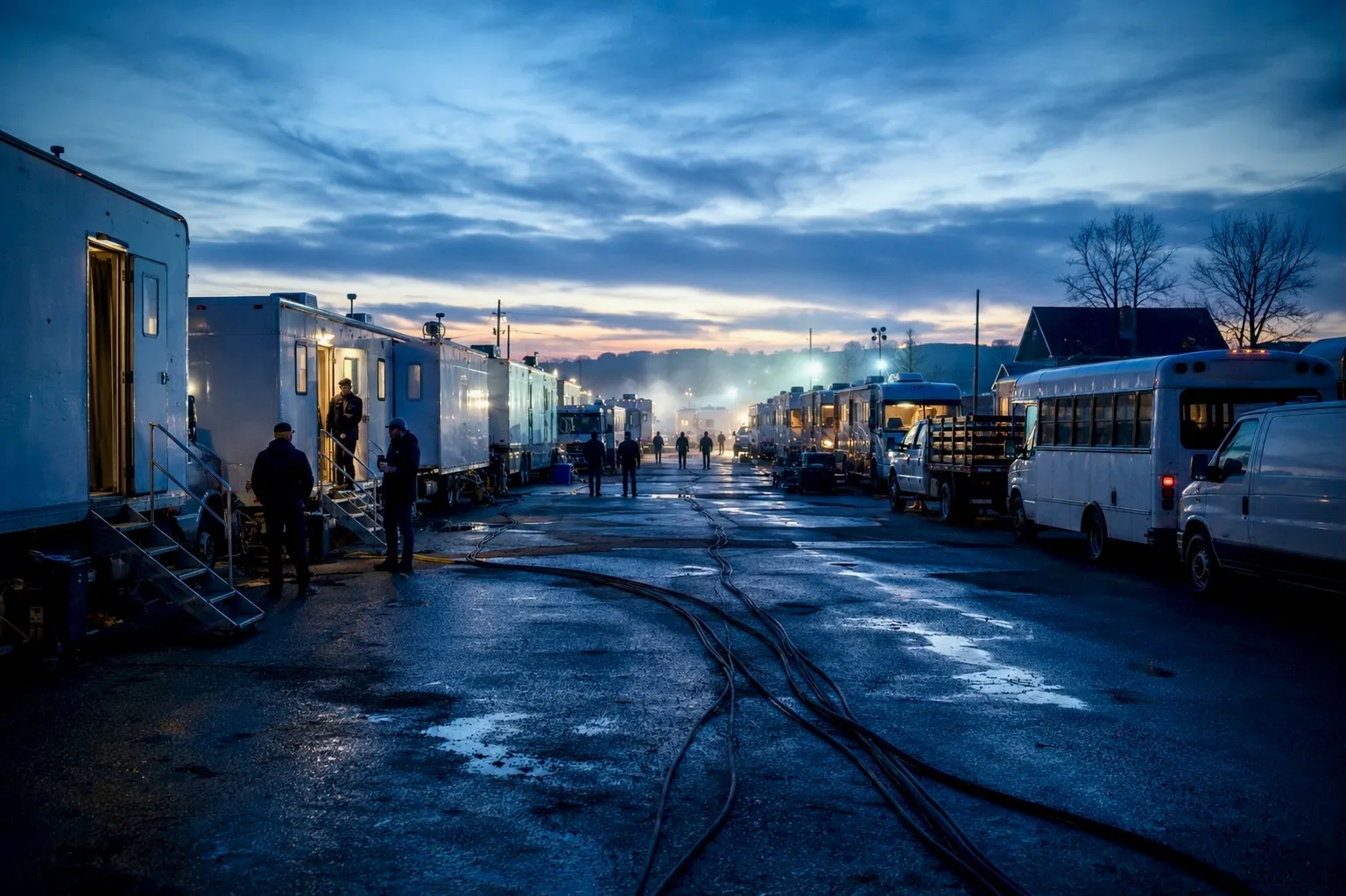
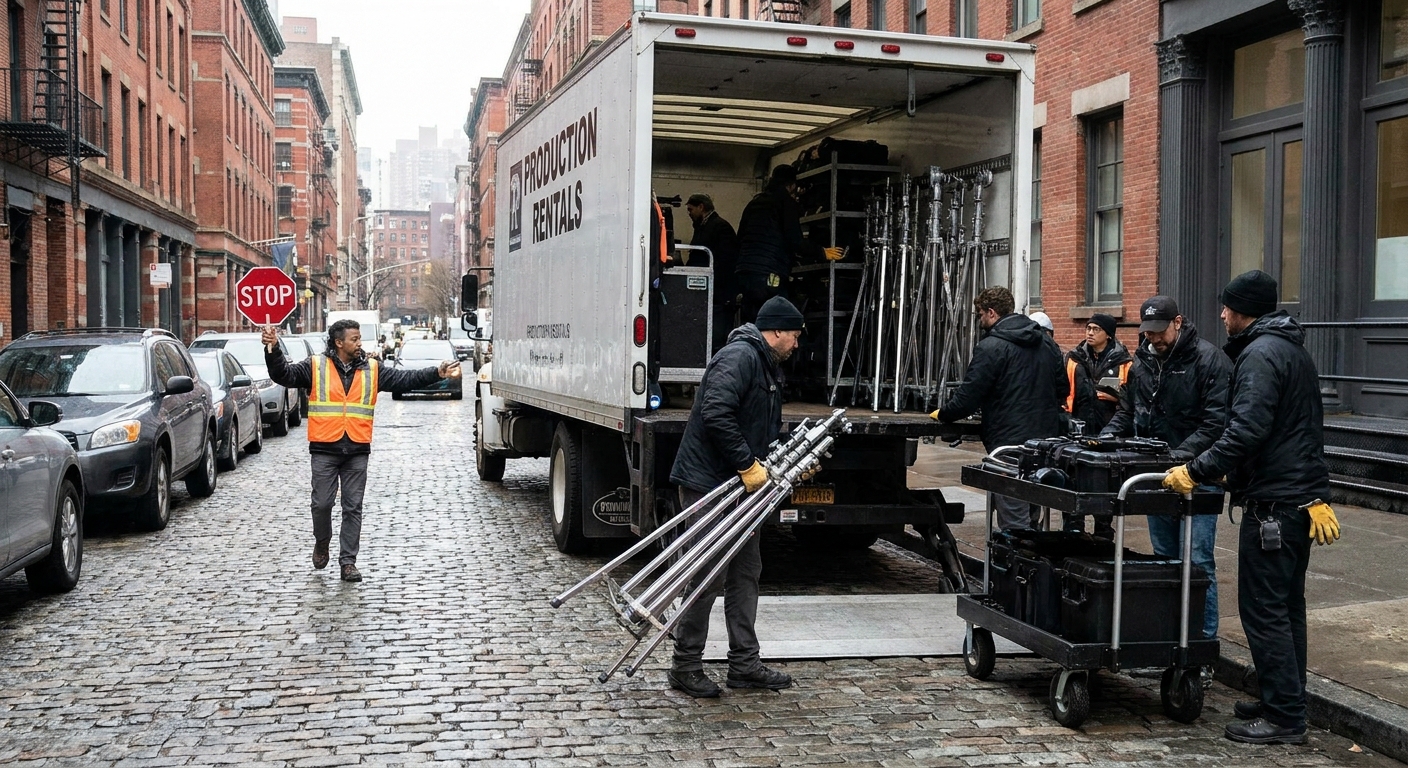
On a film or TV set, a company move simply means the production relocates from one shooting spot to another during the day. That might be across the street, across town, or out to an entirely different location. The key idea is that the production is shifting locations so filming can continue elsewhere, which usually means crew and gear moving, and sometimes cast too.
Company move, defined
A company move is a planned relocation from one filming location to another within the same workday. Productions do it for all kinds of practical reasons:
- Multiple locations in one day: a café scene in the morning, an exterior street scene in the afternoon.
- Changing light: chasing golden hour, or moving indoors once daylight is gone.
- Location availability: permits, business hours, neighborhood restrictions.
- Resetting the world: moving from “Scene 12, Apartment” to “Scene 38, Hospital Corridor.”
Sometimes you will also hear people specify a partial company move (only some departments relocate right away) versus a full company move (most departments relocate).
What it means for background
For background performers, a company move is less about the trucks and more about instructions. Your job is not to guess where to go next, or to “help” by improvising a new plan. Your job is to listen, confirm, and move when you are told to move.
During a company move, background actors are usually given a short set of essentials, often delivered by the AD team and relayed by background PAs:
- Next call time (or a “be ready by” time)
- Where to park at the new place, if you are driving yourself
- Whether shuttles are being used (and where to line up)
- Where holding will be once you arrive
- Whether wardrobe, props, or hair and makeup adjustments happen before or after the move
This is different from the morning’s arrival routine because the move is about keeping the day on schedule while the production changes locations. You are being moved for the next chunk of work, not starting the day from scratch.
The big four details
1) Next call time (mid-day)
Mid-day call times can be blunt and practical. You might hear something like, “We are moving. Background call is 2:30 at the next location,” or “We are targeting wheels up in 20 minutes. Be dressed and ready.”
Two important realities:
- The call time is often an arrival time, not a camera time. You may still need to check in, get counted, be assigned, and settle into holding.
- “Approximate” is common. If the crew is waiting on trucks, permits, weather, or a last take, times can slide. Stay attentive and stay reachable.
2) Parking (if you drive)
If background is self-driving for the move, you will usually be told exactly where to park, or at least what not to do. Typical guidance includes:
- Which lot or street is approved
- If you need to display a pass on your dashboard
- Whether parking reimbursement applies (and what receipts to keep, if any)
- Where to meet the PA after you park
If you did not hear parking instructions, do not assume you can “just find something nearby.” Ask a PA. Parking mistakes are one of the fastest ways for background to arrive stressed, late, or separated from the group.
3) Shuttles or buses
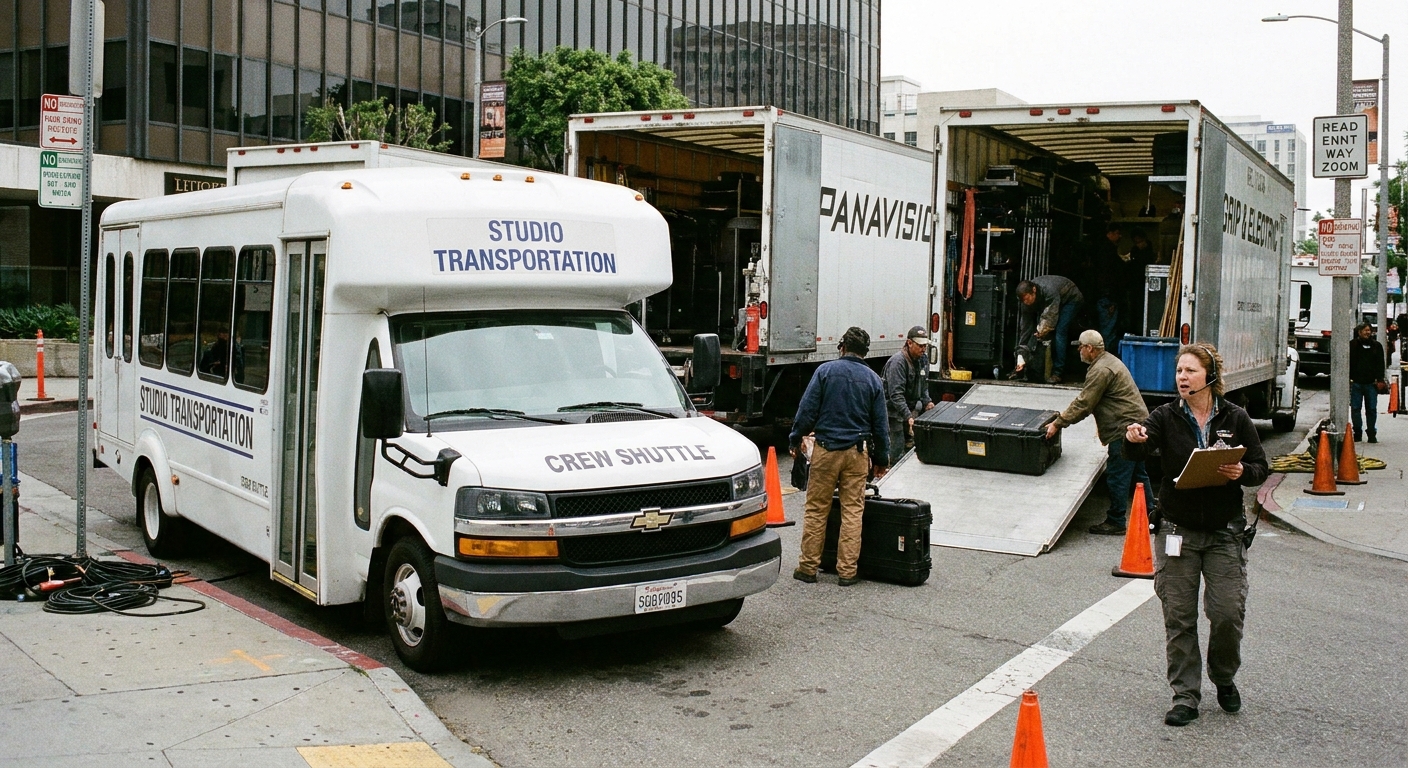
Many company moves involve shuttles, especially when parking is limited or the new location is tight. Background will typically be told:
- Where to line up
- When shuttles start rolling
- Whether you are going in waves (and what wave you are in)
- What you must bring with you (phone, voucher, outerwear, personal items)
This is also when you might hear the AD team talk about first team (principal cast) moving on a different timeline. Sometimes you will hear it directly, sometimes you will just feel it in how quickly things shift. Either way, your best move is to be ready when your group is called, even if someone else is still finishing a final beat.
4) Holding at the new location
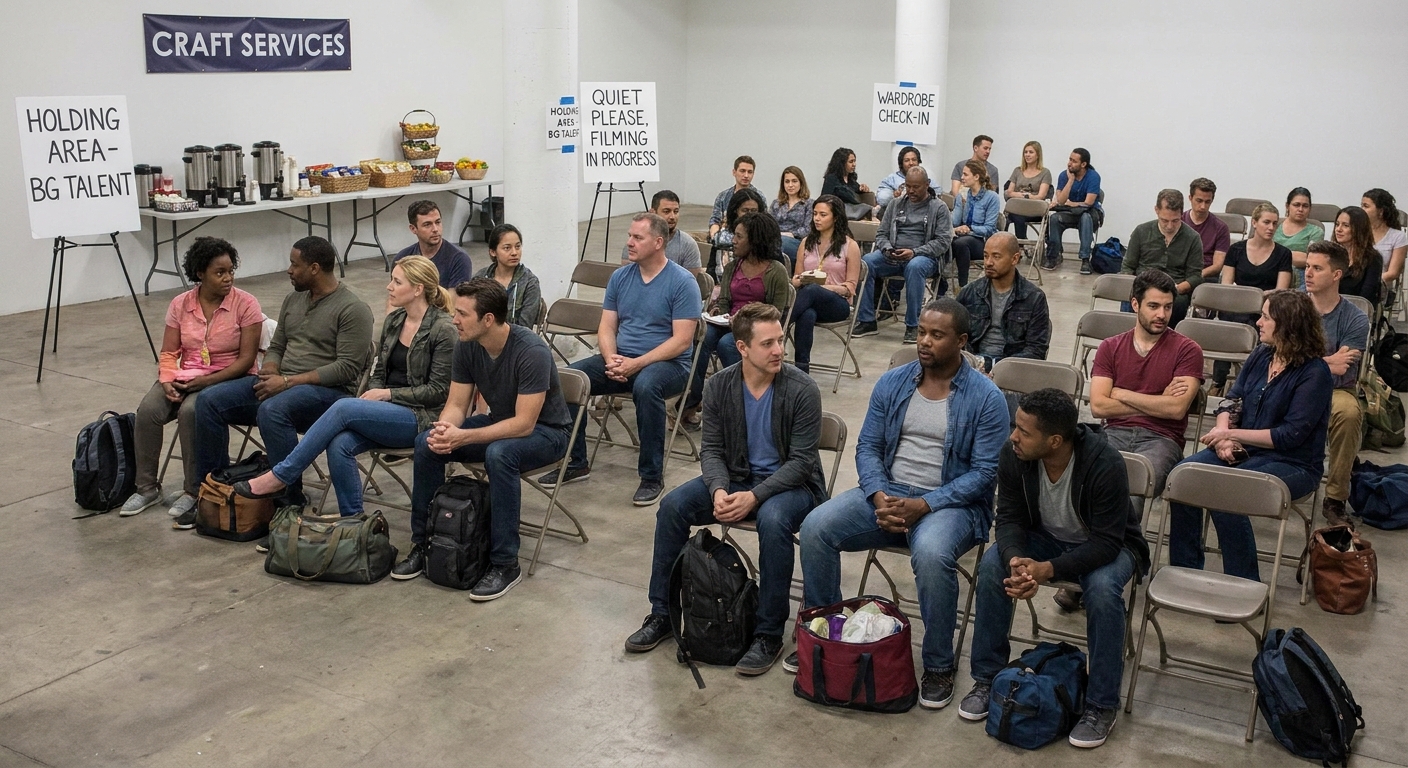
Holding is where background waits between setup and takes. On a company move, the new holding situation might be:
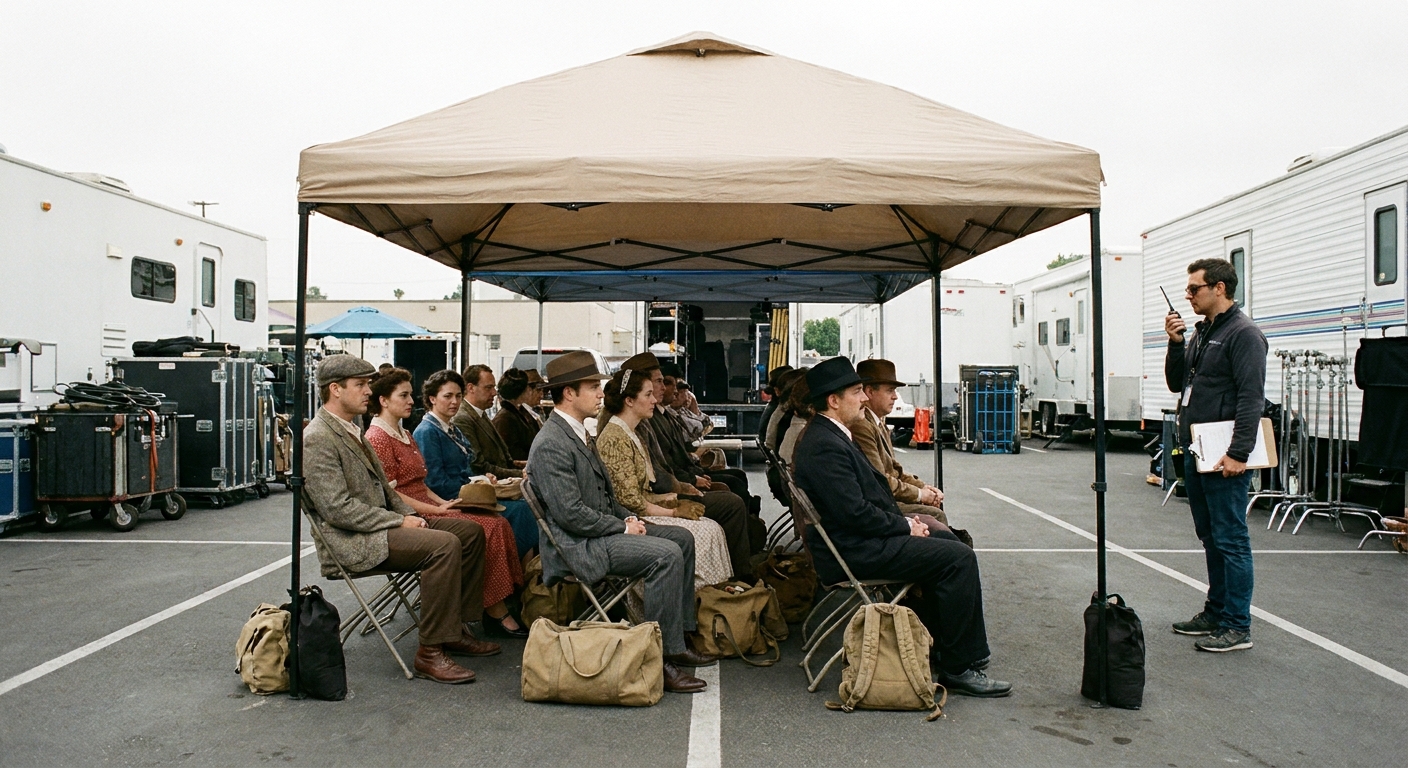
- a tented area near the location
- a rented room inside a nearby building
- a fenced section of a parking lot
- a bus or a cluster of shuttles
What background usually needs to know is where holding is, who you check in with, and whether you are staying in wardrobe the entire time. If there are any continuity rules like “no jackets outside holding” or “keep hats off until instructed,” this is when they are repeated.
Moves vs morning info
The morning is about orientation. A company move is about execution.
In the morning, background often gets a more comprehensive rundown: where to go, how the day is expected to flow, what the general rules are, and how check-in and wardrobe are handled at the day’s start.
During a company move, instructions are usually narrower and time-sensitive. Background is commonly told only what is immediately necessary:
- When to be at the next place
- How to get there (drive yourself or take shuttles)
- What changes (wardrobe adjustments, prop handoffs, weather gear)
- Where to wait once you arrive
That difference is intentional. The set is trying to keep the day moving without re-teaching the entire process.
What to do right away
Company moves are where background actors can quietly stand out as professionals. The goal is not to be a hero. The goal is to be smooth, calm, and easy to account for.
- Listen for your specific instructions. Not all background moves at the same time.
- Confirm your next call time. If you are unsure, ask once, clearly.
- Keep your voucher and essentials with you. Do not leave important items behind in holding.
- Stay in continuity. If wardrobe or props say “do not change anything,” take it literally.
- Do not wander to watch the trucks. It is fascinating, yes, but it is also how people get separated.
One more practical thing that saves headaches: handle basics before you board. If you need the restroom, need water, or have a wardrobe issue, flag a background PA as soon as the move is called. Shuttles leave when they leave, and nobody enjoys being the reason the bus has to be hunted down and turned around.
Also, keep your phone on and check it. A lot of background logistics now come through quick texts from BG PAs, especially if the move turns into waves or the address gets refined.
Common pitfalls
Freelancing the plan
If you decide to grab coffee “real quick” during a move, you can miss the shuttle, miss check-in, and create a scramble for the PA who is counting heads. If you need something, ask if there is time and where you can go.
Changing wardrobe for comfort
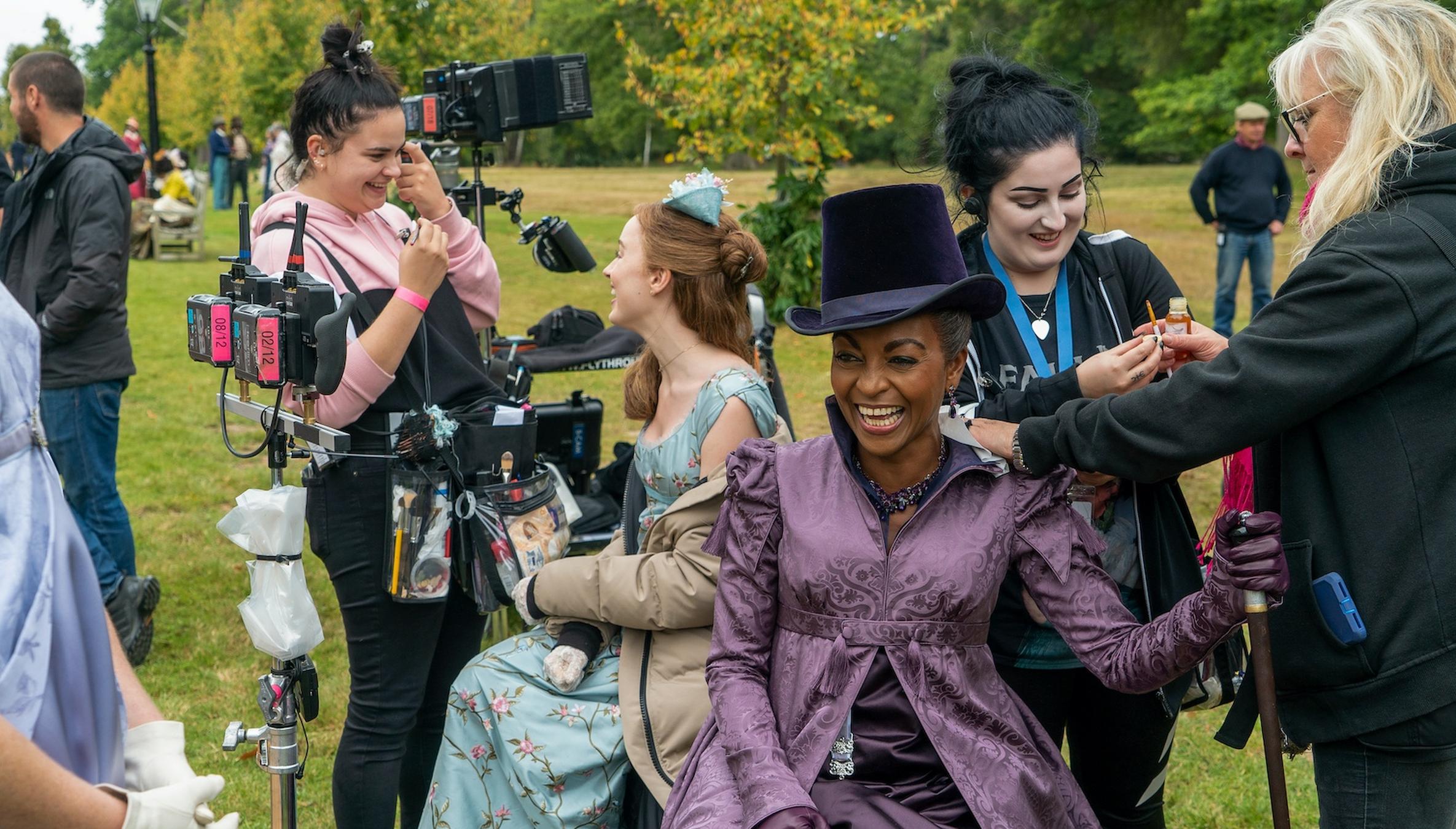
Company moves can mean walking, waiting, and temperature shifts. Still, wardrobe continuity is wardrobe continuity. If you add a hoodie or remove a jacket without approval, you can become unusable for matching shots.
Going to the wrong address
Sometimes locations have similar names, or your phone autocorrects the address into a different neighborhood. If you are self-driving, verify details with production before you leave.
Losing your group
Background is managed as a unit for a reason. The AD team needs to know where you are. Stick with your assigned group unless you are directly told otherwise.
Quick FAQ
Does a company move mean the day is almost over?
Not necessarily. Some days have one move. Some have multiple. A move simply means the next scenes are happening somewhere else.
Do background actors get paid for travel time?
Pay rules vary by production, union versus non-union status, and jurisdiction. In many cases, you stay “on the clock” because you are still working the day, but specifics can depend on what you were booked under and how the move is managed. If you have questions, ask the background PA or payroll discreetly.
Will I need to re-check in?
Often, yes. Even if you already checked in earlier, background may be re-counted or re-assigned after arriving so the AD team knows exactly who is present for the next setup.
What if I get separated during the move?
Call the number you were given for background, usually a background PA. Be ready to share your name, where you are, and whether you are in wardrobe. Do not wander around the new set trying to find someone.
What about lunch during a company move?
Lunch might happen before the move, after the move, or be pushed until the production lands and resets. If you are hungry, do not guess and disappear. Ask the background PA what the plan is and whether you have time to grab food, or whether the move is rolling immediately.
The takeaway
A company move is the production’s mid-day reset button: pack up, relocate, and keep filming. For background actors, it is a moment where clear instructions matter more than ever: next call time, parking or shuttles, and where holding is when you arrive.
If you treat a company move like choreography, hit your marks, move when you are cued, and keep continuity intact, you will make the day easier for the people managing a hundred moving parts. And that is the kind of behind-the-scenes professionalism that gets remembered.