Lights down. Curtain up.
If you have ever heard an usher say “your seats are on house right,” or you have spotted “HL” and “HR” on a seating chart, you have met one of theater’s most useful little shortcuts: house left and house right. They sound simple, but they can be confusing because performers and crew often use a different set of directions.
Here is what the terms mean, how they differ from stage left and stage right, and where you will see them in the real world, from box offices to seat maps to the friendly usher with the flashlight.
What does house left mean?
House left means the left side of the auditorium from the audience’s point of view while facing the stage.
In other words: sit in your seat, look toward the stage, then point to your left. That side is house left.
- House = the audience area (the auditorium)
- Left = the audience’s left when looking at the stage
What does house right mean?
House right means the right side of the auditorium from the audience’s point of view while facing the stage.
Sit, face the stage, point to your right. That side is house right.
- House right is often abbreviated as HR on notes, maps, or internal venue paperwork.
- House left may show up as HL.
House left and right vs stage left and right
This is the moment where a lot of people get turned around, sometimes literally.
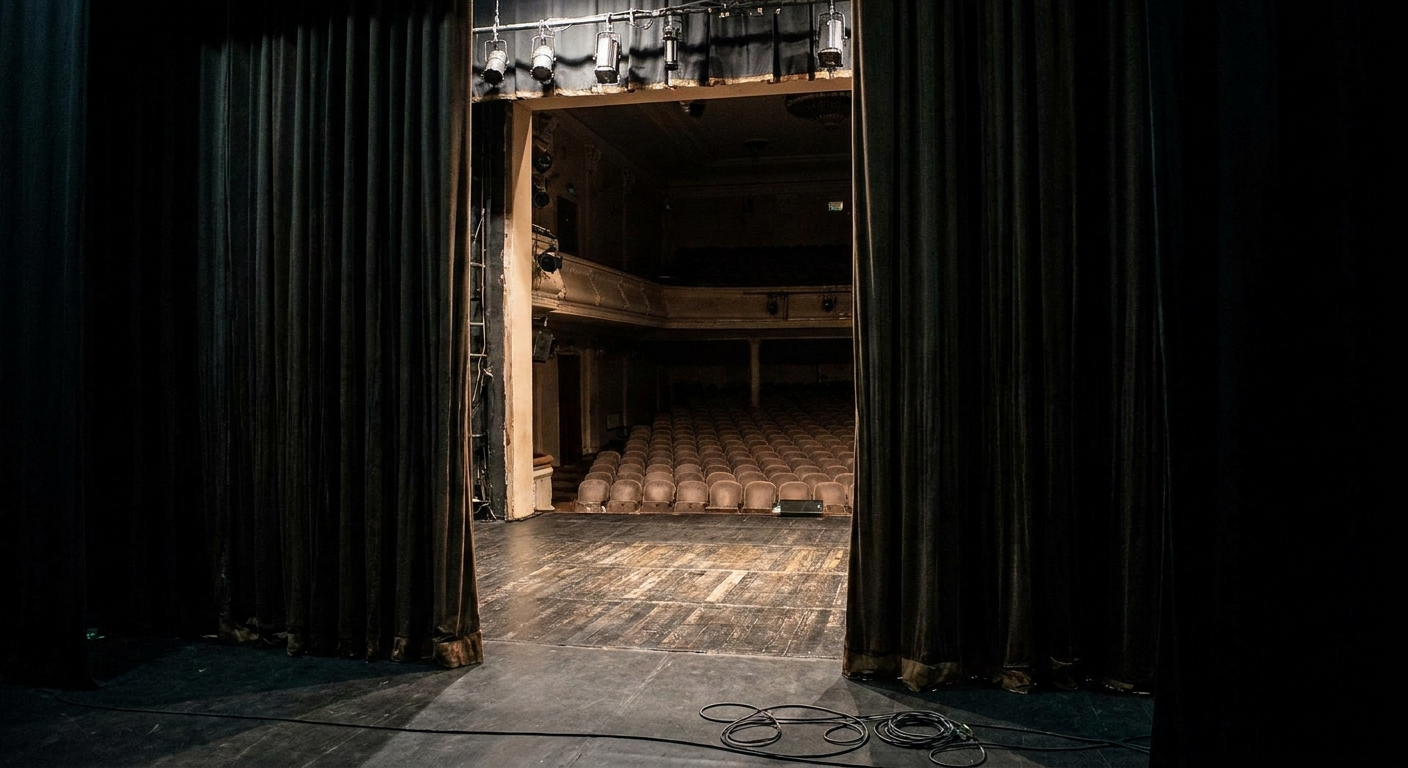
House directions are from the audience’s perspective. Stage directions are from the performer’s perspective while standing onstage and facing the audience.
Quick translation
- House left (audience’s left) is the same physical side as stage right (performer’s right).
- House right (audience’s right) is the same physical side as stage left (performer’s left).
So yes, the words flip depending on where you are standing. That is exactly why theaters stick to these standardized terms. They reduce mix-ups when lots of people are coordinating movement in the same space.
Why theaters use “house” directions
In performing arts venues, “house” is shorthand for the audience side of operations: front of house staff, house management, house seats, and house left and right. These terms help everyone communicate clearly, especially when:
- patrons are arriving and need quick directions
- late seating is being coordinated quietly
- accessibility routes need to be described accurately
- an announcement needs to direct people to a specific aisle or exit area
Even if the building is unusual, like a thrust stage, theater in the round, or a converted historic venue, “house” language gives staff a consistent way to describe where something is in relation to the audience.
How box offices and seat maps use house left and right
You will most commonly see house left and house right used in front of house contexts, especially in ticketing and seating. Here is how it shows up.
On seating charts
Some venues label sections by name (Orchestra Left, Mezzanine Right), but others use house language, particularly on internal maps. You may see:
- HL and HR markings near blocks of seats
- notes like “accessible seating on house right”
- aisle references that assume the audience perspective
When you are looking at a seat map online, the key is to find the stage indicator first. Once you know which way the stage is facing on the diagram, house left is the left side as you look toward the stage.
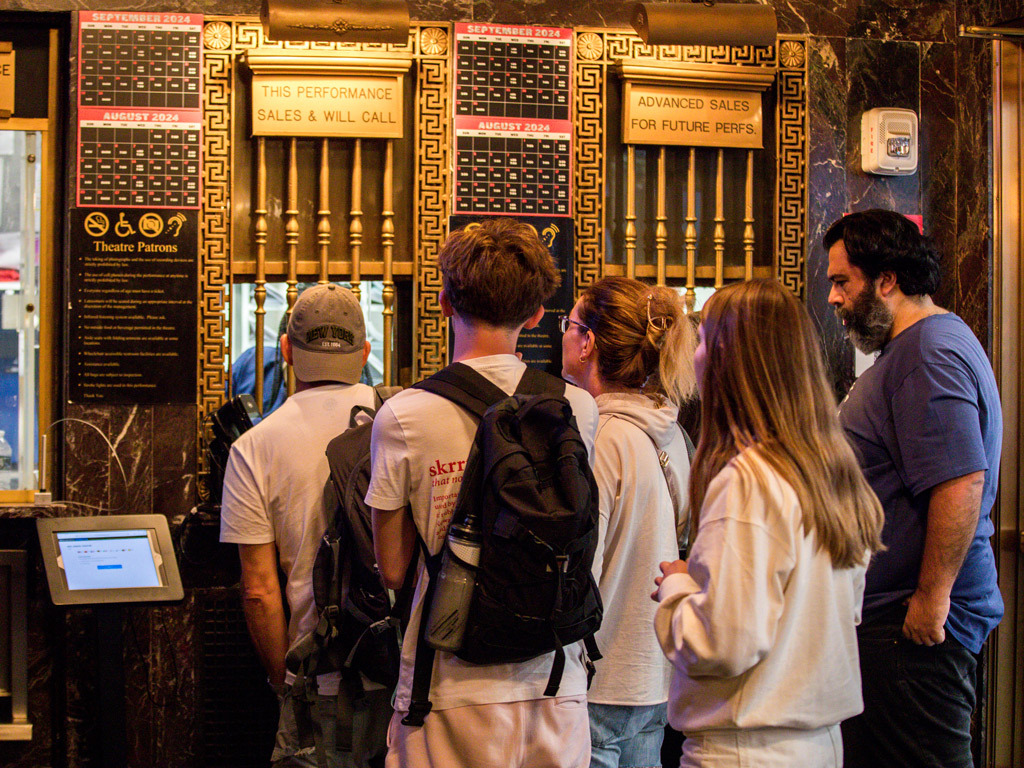
At the ticket window
Box office staff often speak in house directions because it matches how patrons naturally orient themselves. “House right” can be easier for a guest to understand than translating stage directions that are intended for performers and crew.
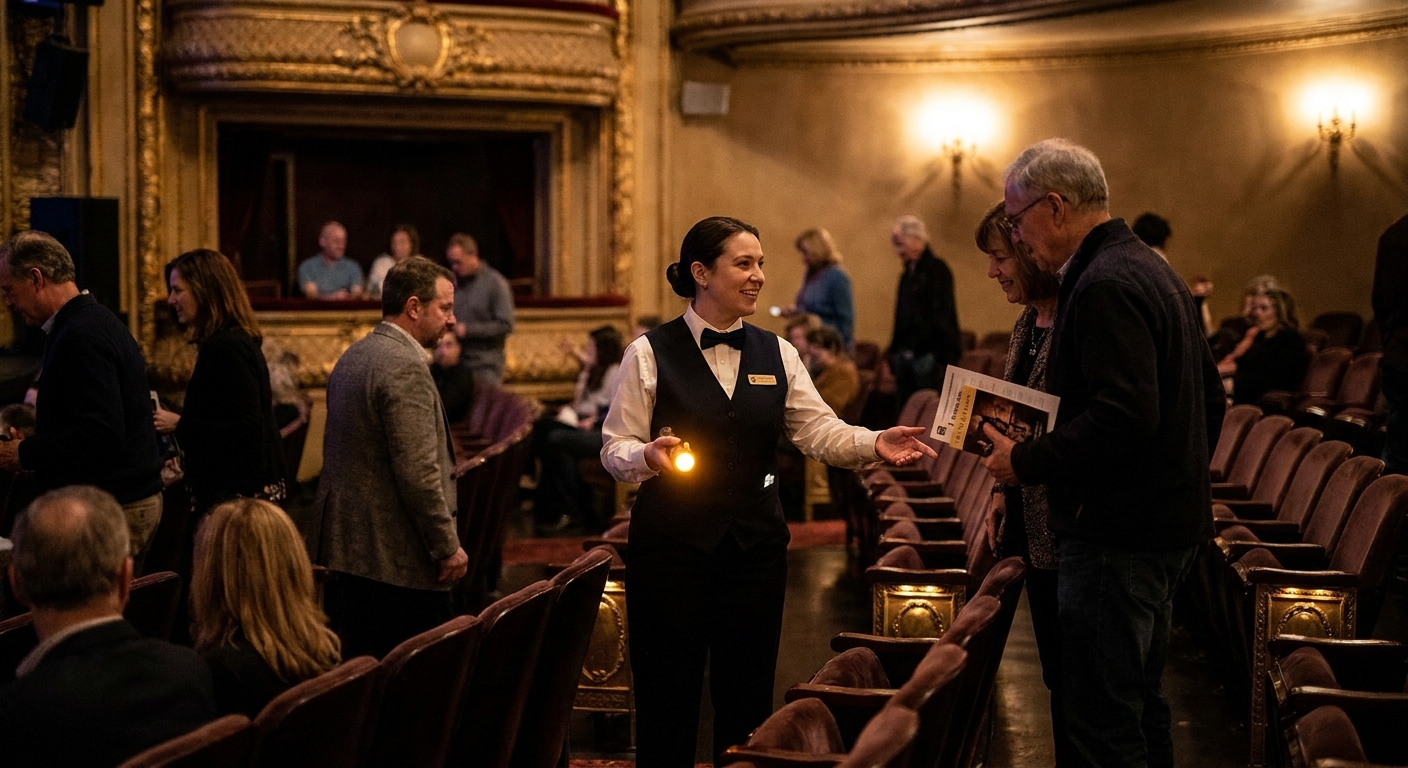
How ushers use the terms in real life
Ushers and house managers may use house left and right to route people efficiently, especially when crowds arrive at once. You might hear:
- “This entrance is for house left seating.”
- “Please use the house right aisle for Row G.”
- “Late seating will be held on house left until intermission.”
If you are ever unsure, a simple question helps: “Is that my left as I face the stage?” In nearly every audience-facing context, the answer is yes.
Common mix-ups (and how to avoid them)
Mistake 1: Assuming house left equals stage left
It does not. Remember: house is audience perspective, stage is performer perspective.
Mistake 2: Forgetting the “facing the stage” part
House left and right are defined while you are looking at the stage. If you turn around to look at the back of the theater, your personal left and right swap, but the house directions do not.
Mistake 3: Reading a seat map without orienting the stage
Some maps rotate the room or place the stage at the top, bottom, or side. Find the stage label first, then apply house left and right from there.
FAQ
Is house left the same as audience left?
Yes. House left is another way of saying audience left, meaning the left side from the audience’s perspective when facing the stage.
Is house right the same as stage right?
No. House right (audience perspective) matches the same physical side as stage left (performer perspective).
Do concerts use house left and right too?
Often, yes. Many venues use house directions for crowd flow, entrances, and seating even when the event is a concert, comedy show, lecture, or awards night.
Does house left or house right have better seats?
It depends on the production, staging, and the specific venue. House left and right are primarily direction terms, not rankings.
The takeaway
House left and house right are audience-based directions: left and right as you face the stage. They are different from stage left and stage right, which are performer-based directions facing the audience.
Once you lock in the perspective, those little labels on seat maps and usher instructions become instantly legible, and you can spend your attention on what really matters: the moment the lights go down.